It is no secret that I like to write book reviews. Except when I’m sleepy. Or if I’m busy. Or if I get distracted by… Where am I?
Anyway, to my mind, book reviews are about helping people find good stuff to read and promoting authors whose work you’ve enjoyed. Of course some reviewers use it as a an opportunity to break away from the internet commenter stereotype and be jerks to others. This can be frustrating for authors and readers, but about par for the course as far as internet comments goes.
Fortunately an author has written a blog post advising people how to properly review books. Because you’re doing it wrong…
As a reader, reviewer, and occasionally sober writer, I don’t think authors should be telling readers what to do or how to do it, so the post doesn’t sit right with me. Actually, a lot of things don’t sit right with me, especially if they aren’t single malt and well aged.
Who are book reviews for?
You might be forgiven for thinking that writing a book review is primarily to flatter the author, or thank the author for writing an enjoyable book.
Book reviews are for prospective readers; to inform those buyers who are browsing the Amazon bookstore, chatting on Goodreads or following on-line bloggers, to decide if they might enjoy the book as much as the reviewer did.
The first major point is one I agree with: book reviews are for readers. But maybe not the readers the author thinks. Reviews are primarily about that reader and their thoughts. Sure, they may be trying to communicate with other readers and make recommendations, but let’s face facts, it is mostly just about sharing an opinion. Or is that shouting into the void? I can never remember the difference.
My philosophy on book reviewing – helping and promoting good stuff – is probably shared by many, or not, I haven’t checked. But I see it as an important aspect of being a reader and writer. Thanks to the wonders of technology we have access to more books than we’ll ever be able to read, and some of them are worth reading. Sharing your opinion of a book can help others find stories that will entertain them. Personally I’m not a fan of sharing reviews of books I haven’t enjoyed, just the ones I think others will enjoy reading, but negative and positive reviews are both helpful.
The next points:
What to include:
The best single rule to remember is this: Only write about the actual book!
You can include a very brief outline of the story, but remember the book description is already right there, so consider these points:
Was the story believable, did it keep you engaged right to the last page?
Did the structure of the plot work for you?
If it’s a mystery, was there one?
The characters. Did they seem real, multi-dimensional people?
The author’s writing style. How was it for you?
The first point on this list is, frankly, rubbish. A book does not exist in a vacuum. Well, unless it was taken into space, but why would anyone do that? Unless they are an astronaut, but they’d want the book in the ship with them. Anyway, all art/media is a product of the space it was created in, it has cultural and philosophical underpinnings that are part and parcel. And following on from that, the cultural landscape changes over time and individuals consuming the art/media are going to evolve as a result. So you can’t just write only about the book in a review, you will always bring baggage with you. Want an example? Try watching the original Ghostbusters movie without thinking Bill Murray’s character isn’t just a tad rape-y by today’s standards.
The next points about the story and how it is written are fair enough advice on things you could include. But you could include all or none of those things and still write a good review. The next part is where this blog post gets juicy:
What not to include:
Your possible relationship to the author, however vague.
If you need to reference the author, then use the surname only or call them the author or include their full name. Never use Christian names as it may compromise the validity of the review and some sites will remove them permanently.
Imagine if you saw this review on the latest Dan Brown: Hello Dan love, fabulous book, Five stars! I expect the vast majority of us would laugh, Dan Brown would most certainly cringe – but most importantly, would this sort of review help you form a decision to buy the book if you’d not read it?
I don’t know about this, I’ve read Dan Brown’s Inferno; I’m not sure he knows how to cringe.
There are two points to unpack here: the first is the idea that your relationship with the author doesn’t have any bearing on a review; the second is the idea that you’re trying to help the author sell books. To suggest that there is a way to refer to an author or that you shouldn’t mention conflicts of interest is wrong. If I like someone I will naturally be inclined to think their book is better than someone whom I don’t know or like. Similarly, if I already like someone’s writing, their lesser works are likely to viewed more favourably than a new author’s work.
It also irks me that the blog is implying that the author is off limits for criticism. That is rubbish. If I know that the book or author is controversial, then that will also colour my review and is worth raising. An example was James Frey’s Lorian Legacies series published under a pseudonym. During my reading of I Am Number Four I noticed several very lazy factual inaccuracies and wanted to know who the author actually was. It was then that I found out that Frey had scammed a bunch of writing students to produce the series. Not only did that colour my (lack of) appreciation of the novel, but it was information I felt other readers should know. Because screw that guy.
This links nicely into the next point about reviews helping to sell books. It is true that book reviews help sell books: who’d have thunk? It is also true that if you want to see more great material from an author one of the things you can do is make sure people know you enjoyed the book. But since when is it the reader/reviewer’s obligation to help sell books for an author? Shouldn’t an author be happy that you bought and enjoyed their book? Well, unless you borrowed the book from a library, friend, or got a freebie. I understand the desire of authors to encourage people to review their book/s, and what it can help do in terms of recognition and thus sales, but a review isn’t about selling a book. The review is about the reader sharing their thoughts on a book they have read. Book store clerks get paid, readers don’t. Worth remembering.
The weather! I’m being tongue-in-cheek here but really, no honestly, there’s no need to mention the weather…
How long the book took to arrive in the post, or that it was damaged. This isn’t the fault of the author – stick to reviewing the book.
Likewise, problems with your Amazon account: It won’t download. This is not the author’s fault and should never form part of a book review.
These next few comments are mainly about Amazon reviews and how people talk about the buying of the book in their review. While it is completely understandable for an author to be frustrated with comments in a review that are unrelated to the story they wrote, this recommendation is not only self-serving drivel, it forgets who the review is for. If someone orders a book from Amazon and the shipment is not filled quickly, or won’t download, or the pricing is ridiculous, or the bonus “massager” didn’t arrive with the romance novel order, then that is a legitimate gripe. Other readers on the Amazon store will want to know this stuff. But even if this wasn’t on the Amazon store, there is legitimate griping to be done. For example, in Australia several major publishers price their ebooks based upon the currently available paper version’s price. So if the hardcover is out, you pay hardcover prices for an ebook. Where else but a book review are you going to express your consumer discontent on this? Well, aside from in a blog post like this one. Or if you are talking to one of the publishers at a writers’ festival. Or if you know someone, who knows someone, who is related to a publisher. If the author was raising the point that there needs to be a distinction made been the store’s service, the publisher’s pricing, and the novels, then that would be something I’d support. Along with free hats. Everyone loves a free hat.
Spoilers: giving away crucial parts of the plot and therefore spoiling it for other readers, e.g. I’m glad Susan was dead by chapter three.
Copying and pasting the entire book description – please dont.
And the worst of all: I haven’t read it yet… so one star. Why on earth do sites allow these ‘reviews’ to remain?
Some people really hate spoilers, others love them, others still are ambivalent, others still still will hunt you down and kill you with your own keyboard for posting them. As such there is an etiquette to posting spoilers in a review. If you are an undefeated Muay Thai fighter with a decent ground game, then you can post whatever spoiler you like. If you are anyone else, you can post spoilers as long as you warn people you are going to do it. Then people can read or skip the spoilers to their heart’s content, assuming the Muay Thai fighter hasn’t ripped their heart out of their chest for posting a spoiler.
I’m not sure I’ve ever seen someone post a book review that includes a copy and paste of the book description. If this actually happens then it is either a compliment to the blurb author for capturing the book perfectly so as to act as an appropriate review, or someone needs to learn how to type their own thoughts.
The final point is about the dismissive one star review. Now some people, such as the blog post author, complain about these sorts of reviews are not legitimate. Nonsense. Books have a cover, a blurb, the reader might have read other books by the author, etc, all of which can be more than enough information for the reviewer. For example, let’s say that someone has written a book – fiction or non-fiction, it doesn’t really matter – that claims climate change is a hoax perpetrated by the Chinese, NWO, Zionist Bankers to something something profit-gravy-train. Do I really need to leave a long and extensive review once I’ve read the book? Or can I just point out that it is nonsense? Is that not legitimate comment?
Now these have all been relatively minor gripes to quibble with. Fun fact: Quibbles are the Earth equivalent of Tribbles. Bonus fact: the most famous Quibble currently sits on the next president of the USA’s head.
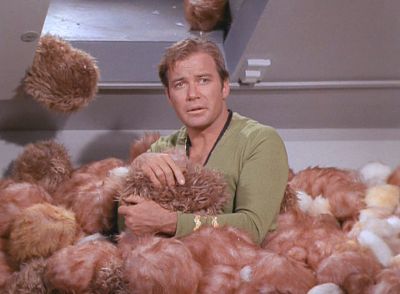
Quibbles and Tribbles aside, let’s talk about complaining about book reviews not being done the way you want when you yourself don’t review books. There is that inspiring – or is that insipid? – quote about being the change you want to see which applies here. The author of the blog post has exactly zero book reviews on their site, not counting the promotion of reviews of their own novels. The author’s Goodreads page has no books listed as having been rated or reviewed. Do as I say, not as I do. I mean, sure, that isn’t demanding at all.
In summary, it’s best to be thankful for readers writing reviews, even the bad reviews.
See also: https://bookstooge.wordpress.com/2017/05/24/i-will-make-them-cry-indie-rant/




 Tyson Adams