Top 5 Most Influential Sci-Fi Writers (Infographic)

scifi-1200x5435

Graphic graciously stolen from Futurism.

I have no argument that these 5 authors are definitely some of the most influential science fiction authors of all time. You could also argue that they would also rank highly in their influence on fiction in general.

When I was younger Jules Verne was an author I devoured. He and HG Wells were well ahead of their time and are still influencing fiction now (see my comments here). While I have read Asimov and Clarke, I can’t claim to be a fan of their writings. Lots of great ideas, but the books I have read fell for the hard sci-fi trap of reading like physics text books rather than entertaining stories. I feel a little remiss in not having read any Bradbury as yet, at least none that I remember – my book reading before Goodreads is a bit of a blur.

What do you think of the list?

Fastest Ships Ever Created

Below is a wonderful infographic that compares a selection of the fastest ships ever created. Very cool.

The Fastest Ship in the Universe : How Sci-Fi Ships Stack Up
The Fastest Ship in the Universe : How Sci-Fi Ships Stack Up Created by: FatWallet.com

Worth heading over to the original page for the discussion section. Highlights include which ships were missing, and a better estimate of the Heart of Gold’s top speed.

Surviving animal attacks

Being an Aussie people kindly send me advice on how to not be killed by animals. Yes, we do have some decidedly deadly animals in Australia, some of the deadliest are not what you would think. But as much as I appreciate the advice, I think it is time that an Aussie set the record straight on how to deal with deadly animals. Let’s start with the most recent piece of advice I received.
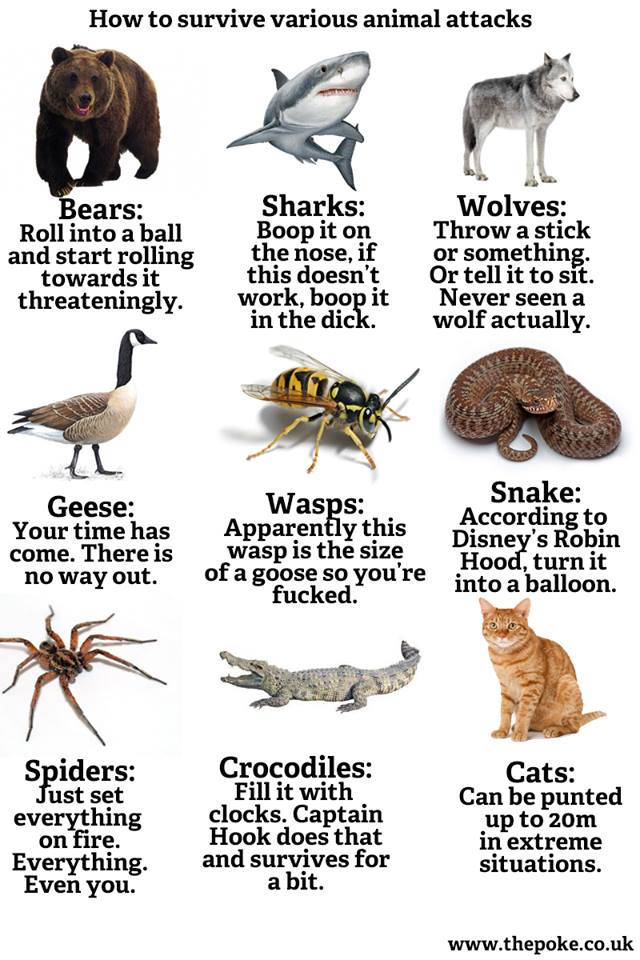
How to survive various animal attacks
Clearly this meme was written by someone from North America, what with the unexotic list of animals (although the meme comes from a UK site). I mean, I know that bears and wolves are scary to some people who have never been to Australia, but we have to remember that the bar is raised when talking to Aussies.

Bears:
You can’t roll toward a bear in Australia as they live in trees and attack from above. The best rule is to use the one borrowed from chemistry, and that is to have a sacrificial (anode) friend with you. This friend should preferably smell delicious; possibly have them carry bacon in their pockets. If someone suggests you carry some bacon then you know exactly how much to spend on presents at Xmas time.

Sharks:
The true nemesis of sharks is dry land, of which we have plenty in Australia. But obviously being so dry we like to crowd down to the coast and chance our hands at being shark food. There are many strategies you can employ on sharks, swimming between the flags being the most popular, as everyone knows flags terrify sharks. Another strategy is having American friends, because sharks love the deep fried marinade of their flesh. In a pinch, there are also plenty of Aussies who could be mistaken for Americans, so just swim with one of them.

Wolves:
These aren’t particularly common in Australia. Instead we have the Dingo. These are actually pretty safe to be around as long as you are over the age of two. Unless we’re talking about Hugh Jackman, in which case just play a samba beat.

Jackman dancing

Geese:
When you are attacked by a goose you just have to accept that you’re going to get bitten. Repeatedly. Geese aren’t apex predators without good reason, but they prefer to eat their prey live and running. As long as you can stay mobile and find a fortified position, such as a bank vault or a KFC, you should survive. Remember to clean and dress your gaping wounds, sepsis is a common cause of death. If there is more than one goose you’re done for, just try to throw your final letter clear of the carnage.*

Wasps:
The only reason people have geese is because they are the only thing terrifying enough to take on wasps. So if you have a bank vault or run a KFC you should be able to avoid wasps. If you don’t then buy a shotgun and practice.

Snakes:
Unlike many other countries who measure snakebites in terms of whether you need to visit a hospital, Australia measures snakebites in terms of minutes until death. The main piece of advice for people thinking of visiting Australia is to not get bitten. Actually, that’s good advice for every Australian animal, since they are all poisonous, or big enough not to need poison. Actually, it’s also good advice for plants, since those are poisonous too. Most Australians prefer to run over snakes with their car, then drop a boulder on them.

Spiders:
The humble spider is a much misunderstood animal. Yes, they are deadly, but in a country like Australia that is par for the course. The fact is that spiders are actually quite cuddly, once you get past the poisonous pincers. They are also easy to train, much easier to train than combat troops. As a result Australia doesn’t have a tank division of the army, but instead has a spider division. Think twice before invading.

Crocodiles:
Yes you should be afraid of crocodiles. Deep down I’m afraid of any apex predator that lived through the K-T extinction. Physically unchanged for a hundred million years, because it’s the perfect killing machine. A half ton of cold-blooded fury, the bite force of 20,000 Newtons, and stomach acid so strong it can dissolve bones and hoofs. But the trick is to keep the animal around that does this to crocodiles:
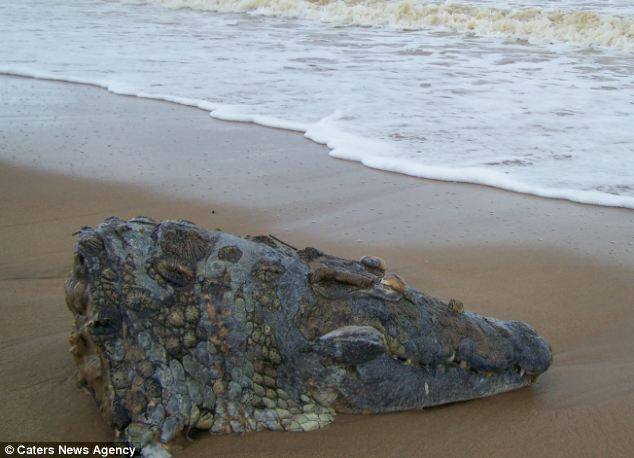
crocodile head


Which animal is that, I hear you ask. Which is odd given this is a written article. The answer is the Australian Budgerigar. Don’t let its small size and cuteness fool you, they form large deadly flocks of ravenous skyborne killers.

Cats:
Let’s be clear: cat’s are m@#$er-f@#$ing dangerous. They are sneaky, silent, killing machines with the world renowned ability for invulnerability and regeneration. How can you possibly take on this harbinger of death that will survive dying repeatedly? Attack it ten times.

This is just a taste of Aussie animal survival techniques. There are obviously many more deadly animals (read: all of them) with advice varying from the examples above to emigrating to a safe country, preferably one that allows the importation of Vegemite.

*A final letter is an Australian government required document that all Australians must carry upon their person at all times. In the event of likely untimely death it acts as the final thoughts and wishes for the deceased, usually just short goodbyes to loved ones and reminders to take the bins out.


Beware the meme!

Memes fly around the internet like quantum accelerated particles. Some are fun, some are informative, others are utterly ridiculously wrong. Unfortunately people get caught up in pretty pictures with inspiring – or is that insipid – quotes printed on them, so they start following someone on social media, someone who spreads as much nonsense as inspirational quotes.

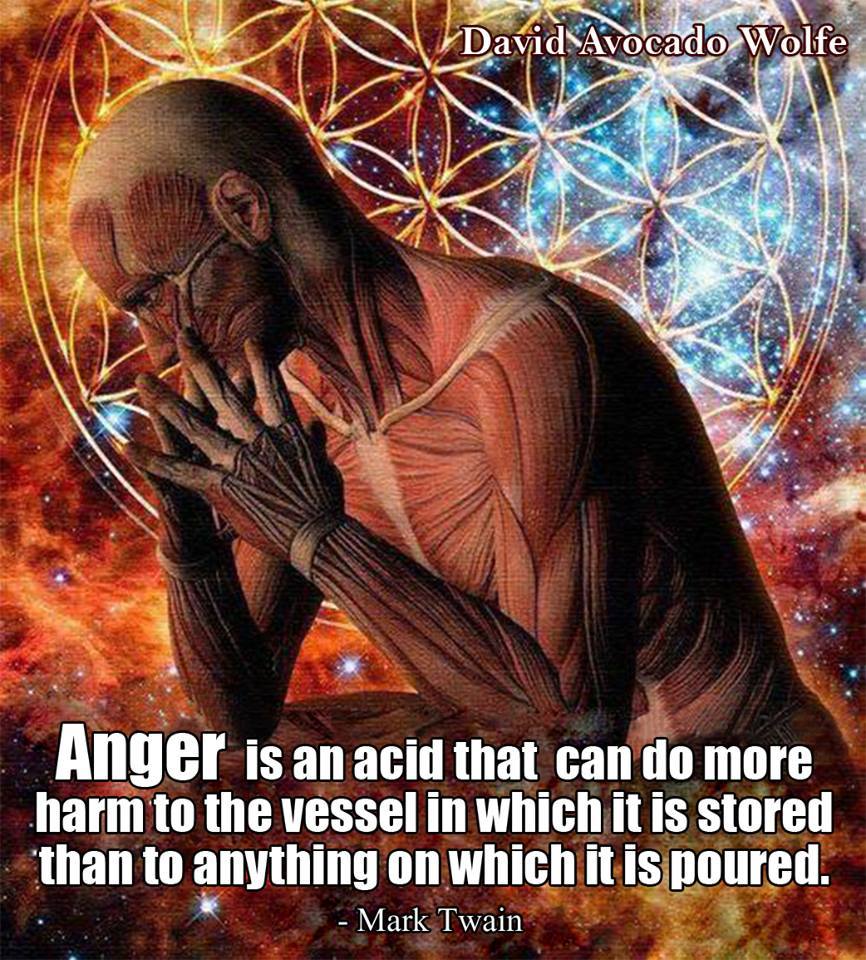
Take for example this quote from Mark Twain:
Mark Twain on nonsense background
At face value there is a great message from Twain about not storing up emotional baggage. Let’s just ignore the scientific inaccuracy of how acids work and how the materials of the respective containers and the Ka (acid dissociation constant) of the acid are going to be the deciding factors in how much damage the acid does. But once you move past the quote and pretty picture you start to notice certain things about the picture, namely that there is some weird design stuff going on it. There’s some spacey looking stuff in the background, there’s a person with no skin, and some sort of lattice work design: what the hell is this stuff? That’s called the Flower of Life, something that has been incorporated into Sacred Geometry, a load of nonsense that would have Mark Twain penning scathing insults toward; Twain loved science.

Let’s take a look at another meme:

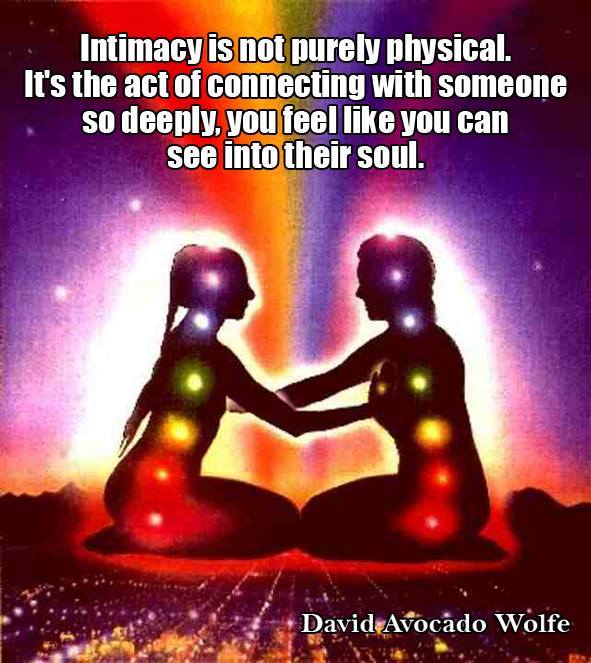
Chakra nonsenseAgain we have a bit of text that implies that good relationships are much deeper than the shallow, fleeting, physical attraction. This one is, however, more obvious in its ridiculousness. In amongst the rainbows and pretty city the two outlines of people are hovering above, there are glowing lights in the bodies of the people. Take a guess at what they are meant to be. Chakras. That’s right, we’ve gone all new-agey nonsense right out in the open. So once you spot the new-age nonsense you realise the word “soul” isn’t being used in the allegorical sense but in the “I believe all sorts of rubbish” sense.
And now we descend into health nuttery:
Milk nonsense

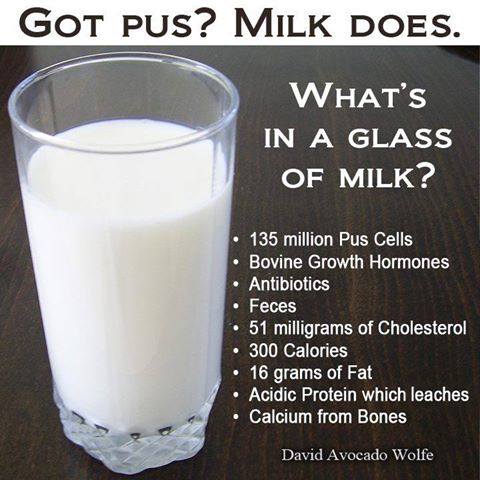
This is a typical health meme that these sorts of social media pages post: half truths, misconceptions, lies and nonsense.

Let’s start at the top: there are no pus cells in milk. The meme seems to be referring to the somatic cell count of milk, which is not the same thing, and just part of the biology fail on display here. The 135 million figure is from the detection levels for mastitis in cows, which says that uninfected cows will have less than 150,000 cells/mL (they’ve clearly scaled up to a litre of milk in that glass, which doesn’t look like a litre glass to me).

Growth hormones: misleading at best. Food has hormones in it, produced by the food, be that plants or animals. Remember how soy is meant to be good for menopausal women? Yep: plant hormones. So milk will have naturally occurring hormones in it. Some countries have limited/banned the use of growth hormones in animal production, others have allowed it. And this brings us to one of the many reasons pasteurisation is used in milk production, as it breaks down most of the hormones.

Antibiotics: nope, they test every truck of milk as it leaves the farm gate to make sure there is no antibiotic contamination.

Feces: again this is misleading, and also one of the main reasons for pasteurisation. You aren’t so much going to end up with feces in the milk as the bacteria associated. So it is important to kill the nasties and why raw milk is considered dangerous.

Cholesterol: I’m not sure where they got the figures from but they seem to be assuming 200 mL of full fat milk. Odd considering they were assuming 1,000 mL for the pus/somatic cells. Yes, milk has 24 mg of cholesterol per 100 mL. And that isn’t necessarily a bad thing.

Calories: I’m not sure why food having calories in it is bad…… Figures are roughly correct for 200 mL of full fat cows milk though.

Fat: Again, I’m not sure why food having fat in it is bad.

Acidic protein: This one is quite funny because there are a lot of acidic proteins. And obviously these acidic proteins leaching calcium from bones is one of those things that “mainstream medicine is ignoring” – aka the rallying cry made by purveyors of nonsense. Pity that dietary protein (which can include dairy) has actually been shown to be good for bones. The issue here is actually a couple of health myths. The first is the acid/alkaline diet that is utter nonsense. The second is the overstating of health benefits of milk, specifically as they relate to bone health and osteoporosis development.

Now I’m not saying that milk is bad for you, but it also isn’t the most awesome drink ever made – that would be whiskey. Milk should be like whiskey: consumed in moderation.

The point about memes is that they are only as good as their creator. The intention of the above memes is clearly to help people, inspire them to lead better lives, even if it is by showing them some pretty pictures with brain droppings written on them. But sadly it is obvious that these memes were created by someone who is not in touch with reality, which makes their health advice something to be avoided. Beware the meme: it could be nonsense!

To block or not to block: that is the question.

funny-graphs-untitled2

The internet is a wonderful place to find information on just about any topic you can imagine and few you can’t. From the latest scientific study to the grumpiest cat, from insightful commentary to rule 34: the internet has it all. The problem is that not everyone is rational, logical, nor well informed, and they still have internet connections and the ability to make webpages and comment on social media.

As someone who tries to share science and knowledge with people, I love to engage and discuss topics. If I can help someone understand or learn something about a complex topic, then I feel like I’ve accomplished something. The more science communicators out there doing the same thing, the slightly better the world becomes. This better understanding leads to better decisions, better ideas, better inventions, better cat photos.

The problem is that not everyone appreciates being told that they are mythtaken or wrong. Others are adamant that they aren’t wrong. People will argue against the overwhelming scientific evidence on topics like climate change (real, man-made, we need to do something about it), genetic modification (breeding technique, cool innovation that is more precise and has great potential), modern medicine (seriously!?!), evolution (as solid a theory as gravity), and even the shape of the Earth (yes, flat-Earthers still exist). This anti-science nonsense is thankfully on the losing team, they just aren’t playing with a full deck.

It is these science deniers that are the most frustrating to deal with on social media and the internet. There is no evidence you can show them that won’t be dismissed – often as a conspiracy – and there is no rationality to their arguments. But they can also be very convincing to people who don’t know enough about a topic, which is how myths get started. And that is dangerous, once myths are started they are very hard to get rid of. So it is actually important to make sure that the science deniers aren’t existing in an echo chamber, which the internet has facilitated to some extent – I’m looking at you Alex Jones, Mike Adams and Joseph Mercola!

These science deniers can be a menacing drain of time, effort and inner calm. The easiest way to deal with them would be to block them, excise the wound, possibly burn the evidence of their existence. But then the science deniers have won. Their echo chamber is just that little bit more echo-y. But the echo chamber is going to keep echoing regardless, as discussed above. But won’t somebody think of the children!

I really hate blocking people on social media. The science denier drivel may pollute my newsfeeds, but blocking them also leaves me open to my own echo chamber. Sure, I might think I’m good at picking good information from bad, but if my thinking is never challenged, how can I be confident I’m not falling for confirmation bias? I guess this is the Catch 22 of the modern age, but with more cats.

We think we’re smart

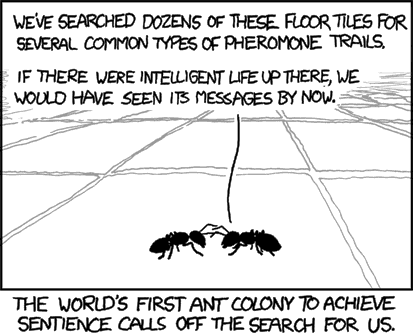
0109xkcd
XKCD nails it again.

Within science fiction and the wider society there is this idea that we’ll find aliens. I always find it funny when humans talk about discovering “other” intelligent life in the universe. Just a wee bit arrogant to consider ourselves intelligent. Yes, I do realise that I’m arguing that point using technology based on quantum mechanics, probably being read on a device that weighs less than 200g and fits in your pocket, linked by a distributed network, connected by orbital satellites. Science: it works….. bitches.

But I would continue my argument by saying that to some people that amazing interface of technology, that is allowing this blog post to be read around the world, might as well be explained as “magic, magic, magic, magic, magic, god did it.” I certainly couldn’t explain how quantum mechanics works, nor how it applies to communications technologies, let alone how it manages to stream all of my favourite porn media to my phone. Thus Arthur C Clarke’s third law – Any sufficiently advanced technology is indistinguishable from magic – holds true for the vast majority of people on this planet.

Now the argument against Clarke’s third law is that technology isn’t magic. In fact, in the entire history of human civilisation, with all the things that have been attributed to magic, all the great mysteries of the universe, once investigated, have turned out to be not magic. But I’m talking about the knowledge gap between the average person and the specialist in the field who develops all this cutting edge stuff that allows other specialists to do cool stuff; like making a hoverboard. We are surrounded by everyday items that most of us would struggle to explain the concept of how they work – magnets, how do they work? – let alone understand the complexities involved – magnets, this is how they work.

Douglas Adams brilliantly satirised this idea in his novel Mostly Harmless. Arthur Dent crash lands on an alien planet where the local humanoid populace are rather backward in comparison to us humans. Arthur comes from a planet of television, cars, planes, computers: all sorts of neat stuff. But he doesn’t know how any of it works, nor how to go about reverse engineering any or it. So he becomes the sandwich maker.

Essentially, we point to all of our human achievements to show how smart we are, but in reality most of us haven’t the first clue about any of those achievements. We just aren’t as smart as we would like to think.

Now compare this to aliens. Humans are pretty proud of having gone to the moon, cashing in on all 12 of us who have done so, but to be visited by aliens requires interstellar travel. That requires technology we probably haven’t even dreamed of yet (possibly not, e.g. warp). An alien race that can do that is so far beyond human achievement and intelligence. Thus,  I’m suggesting that even at our best, we would be babbling morons in comparison to an intelligent life-form that has managed interstellar travel.

Sure, the aliens that decide to cross interstellar space may be the Cleatus of their species. Their technology may actually have reached the point of sentience and doesn’t require anything of its “makers”. But think of how advanced such a species would be, not to mention how arrogant (rightly or wrongly). There is no reason for them to look upon Earth and see humans as intelligent (e.g. climate change and reality TV). There is also no reason to believe that we’d even notice these aliens. An intelligent life-form travels between star systems, has the technology for that not to have taken billions and billions of years, and some dude with an out of focus camera is going to be the only person to see them?

So I think that humans are rather egotistical to think of ourselves as intelligent life in the universe. I also think that it is arrogant to believe that an alien species would regard us as intelligent. I also think that we’d have little chance of encountering intelligent alien life unless they wanted to be encountered. This is just my view, but the main thing is, Neil DeGrasse Tyson agrees with me (or is that I agree with him?):

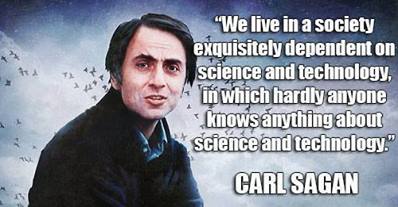
sagan on tech