Are Bob Dylan Lyrics Literature?

43168-1

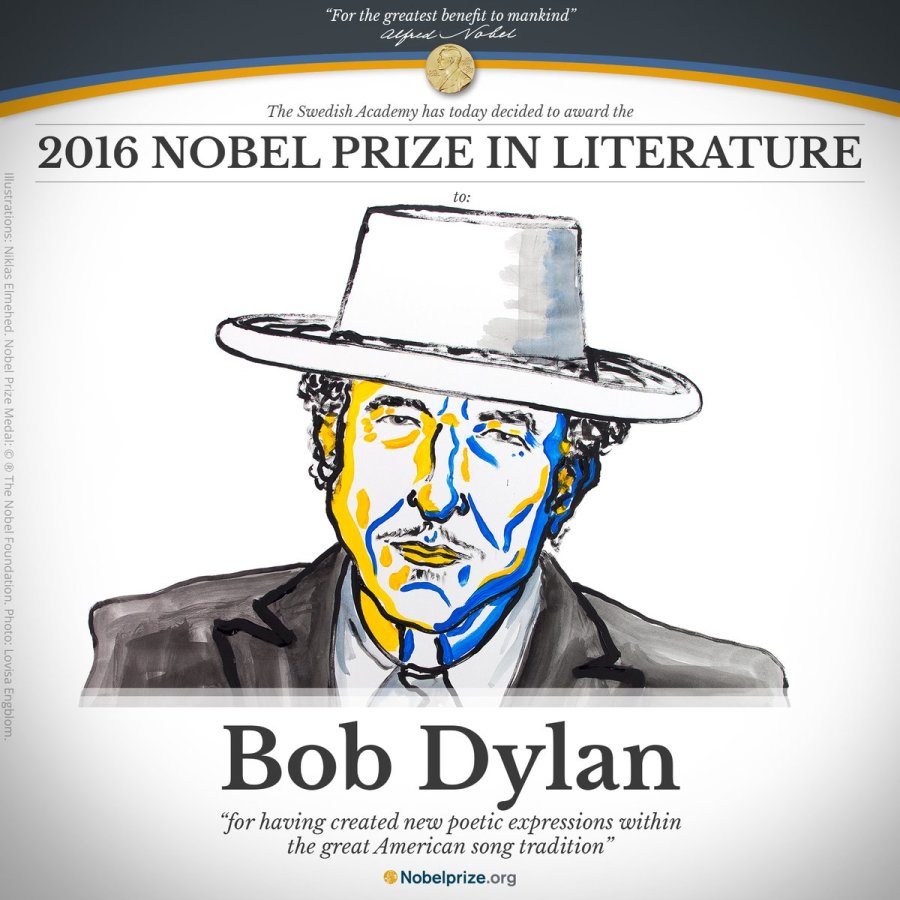
PBS Ideas Channel had an interesting take on this contentious topic. And as is always the case, it isn’t really that simple.

I’m near the front of the queue to criticise literature for being a dry and dreary form of art that sucks the life out of its audience. But of course, as Mike discusses in the video, literature isn’t as easily defined as my dismissive rhetoric would imply. What defines literature isn’t arbitrary, but it is often about who is defining or classifying a work as such. My criticisms of literature stem from who perform this classifying, as they will often be people like Jonathan Jones – who said Terry Pratchett sucked – who will criticise the literary merits of works they haven’t read. These arbiters of artistic merit (i.e. snobs) like certain things, thus those certain things are worthy. They create lists of these worthy things and tell us we need to read them at school, study them at university, and expound on how much better these works are… until they actually read one of the unworthy ones and have to eat humble pie.

So the literary and artistic merit we often operate under in society is more about what a certain group of people like. But as Mike points out, that isn’t a good definition, and literature, and “good” art in general, are harder to define. Essentially anything can be literature. And even then the status of a work being literary may be revoked, or instated, as tastes change. Thus referring to Dylan’s lyrics as literature is probably about making us all think about lyrics as an art-form, something that has social defamiliarization. Lyrics are, after all, a form of poetry that are no less artful. Maybe this award will help us acknowledge that art/literature is all around us.

Don’t worry Nickelback, your literary award is surely just lost in the mail.

More guilty pleasures

Sometime during 1994 I bought one of my favourite albums of all time: Siamese Dream by The Smashing Pumpkins. Even today (boom-tish) that album sits proudly in my music collection and doesn’t sound dated. I can’t say the same for many other albums I own from the same time period. Superunknown from Soundgarden stands as a classic album, but I find it hard to listen to without having had the death of a pet weighing on my mind. I can only listen to Metallica’s Load if I promise myself I’ll put on one of their better albums straight after. Essentially, for me, the Pumpkins hit on music gold with that album.

I’ve commented before how I’ve essentially stopped being a fan of the Pumpkins, finding their offerings since Adore (which promised so much with the first single, and delivered so little with the remainder of the album) to be more filler than awesome. What I liked about the Pumpkins was not what the Pumpkins have been delivering since.

The 5 Worst Kinds of Album Every Music Fan Has Bought: Cracked.com

Your experiences may vary.

Which brings me to a discussion I was having recently on the Pumpkins album Zeitgeist. Despite buying the album, I’ve never bothered adding it to my digital library, because it only has one or two songs on it that hint at what I liked about the Smashing Pumpkins of old. A lot of fans and reviewers agree with me, with Corgan taking a potshot at fans for not even listening to the album (class act), further claiming the fans only wanted to hear the old music (probably). Anyway, the discussion had started because a couple of people were insisting the reason people didn’t like Zeitgeist was because it was too political or had political overtones.

Um, no.

While I’m not trying to imply that no-one was turned off of Zeitgeist due to the political overtones, it is clearly a long bow to draw to suggest that it was a factor, let alone a big factor, in listeners/fans disliking the album. So why would someone make this claim?

Well, simply, this is another example of people trying to justify their taste. Another guilty pleasure moment. I seem to be raising this point a lot (here on literature, here on genre vs literature, here on good vs popular, and here on guilty pleasures). It is perfectly okay for you to like what you like, there is absolutely no need to try and explain away someone else’s dislike for something you enjoy. Does it really matter if you like something everyone else hates? No. So why bother trying to put it down to political ideology or how terrorists did something…. 9/11….

Worthiness, guilty pleasures, justification: all of these things are actually stopping us from just enjoying stuff. I know I’m guilty of it, but I’m trying to get over myself. The great thing about the internet is that it is full of support groups for people who like stuff. So you don’t have to agree with everyone else on what music, books, movies, art, etc, you like. You can find your niche and create memes, gifs and video clips to bombard all your other friends with on Facebook.

My art is better

Things you can only do whilst drunk

This week everyone was so pleased to have another chance to stick the boot into Britney Spears after the release of a recording of her singing rather terribly, allowing us to compare it to the auto-tuned album version. Britney is one of the celebrities people love to hate (South Park parodied this beautifully), and this “proof” that she is undeserving of her success is just the ammunition needed.

Now I’m not exactly the sort of person that would normally try to defend a pop star, because that would require me to listen to some of said pop star’s music, which would count as self-induced torture. But some of the comments that have been made are so intellectually lazy that I’ve felt the need to say something.

The common theme of the comments is that Britney lacks any actual singing talent, that she got where she is by being pretty or that she was manufactured as a pop star, and is undeserving of her success. Which is all utter crap. Spears has been in the entertainment industry since she was referred to a New York talent agent at age 8. Then she got her break after beating out hundreds of other hopefuls to become a Mouseketeer (along with Christina Aguilera, Justin Timberlake, and Ryan Gosling). Spears’ move into the recording industry again required impressing people with her talent, and was noted for her vocal styling and ability.

The producer who recorded Britney’s crappy singing has already addressed the singing and auto-tune issue. I’m not a fan of auto-tune, but I understand its use. While the warming up suggestion could be true, I’d bet money that Spears hasn’t worked on her singing in a decade, thus between not being a teenager anymore, not singing regularly (dancing and singing is not something you can do easily night after night, so miming makes sense), and having had kids, her voice is probably nothing like it was. So it is perfectly understandable that Spears sounded terrible and needs auto-tuning, but that doesn’t mean she has never been able to sing, and as I’ve already pointed out that is a ridiculous claim/insult (see this analysis of her vocals for more).

Essentially, you don’t rise to the top of the heap without some modicum of talent, because there are lots of other hopefuls wanting that same shot at stardom. As for whether Spears’ resulting success is deserved is really subjective, depending upon how much you actually like the music she sings, and how you feel about the “hit factory” style of music creation.

This really shows just how lazy people are with their attacks on successful people. It is very satisfying to pretend that someone’s success is undeserved, that they were just lucky, or pretty, or shagged the right people, or whatever other excuse. Nothing makes you feel more superior than knowing you could have been just as successful, if only you’d been willing to shag that agent, or if you had bigger boobs. Meanwhile, those we deem to be deserving artists, suffer in obscurity. But success takes more than being pretty, or lucky; it takes talent, perseverance, motivation, hard work, perseverance, and lots of hard work. For every successful artist (or any other field for that matter) there are hundreds of wannabes that fell at the first, second, third, fourth, or twentieth hurdle. Maybe they didn’t want to put in the vocal practice, maybe they didn’t make the right connections because they pissed people off, maybe they swapped the dream for a day job, maybe they never took their shot (watch Henry Rollins discuss taking his shot), or maybe the artist is too niche for whatever reason.

We all have that favourite band, singer, author, actor, painter, etc, that we feel is under-appreciated in their field. It is easy to wish that they had the success of the artists we see as unworthy. I doubt I have an artist in my music collection that has been as successful as Britney Spears, and I’d argue that most of them have more talent and write better songs. But the very reason I don’t enjoy Spears’ music is also the reason I love the music I do, which means that my favourite artists aren’t going to be as popular.

Which brings me to the argument I’ve raised before about worthiness (here on literature, here on genre vs literature, and here on good vs popular). It is perfectly okay for you to like what you like, there is no “guilty pleasure”. We should also stop pretending that our subjective taste is better than someone else’s. And as this latest furore about Britney shows, we should stop pretending that successful artists got where they are without talent, or hard work, or that their work is somehow inferior to something we prefer.
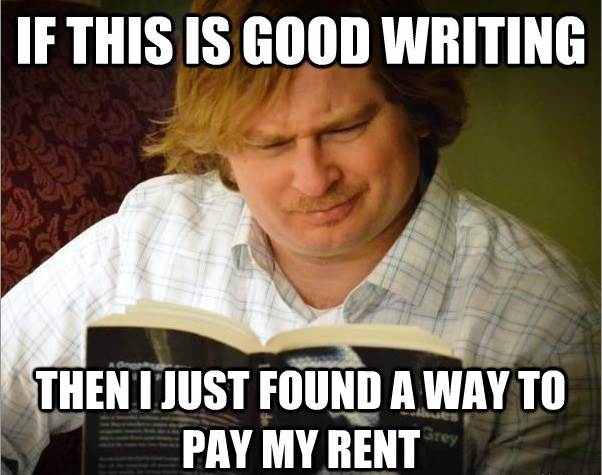
curious-male-fifty-shades-meme-good-writing

Love it or Hate it

To read genre or not to read genre: that really isn’t the question.

With surprising regularity there are articles written explaining why people should be reading certain types of books. It isn’t just books, of course, but I’m trying not to be distracted…. puppy! The thing that these articles have in common is snobbery.

From a young age we are given lessons in snobbery, certain things are cool to read, certain things have value or social importance. These are the things we should be reading. By definition this means everything else isn’t of value and often becomes termed our guilty pleasures. I agree with the sentiments of this article that mentions guilty pleasures as being one of the phrases that makes people hate you.

The idea that something is a guilty pleasure implies that we should feel bad because we enjoy something. Well that’s just stupid. Either we enjoyed reading the book or we didn’t. Do we really have to impress others with our cool choices in reading material? I’d argue that you can enjoy whatever you like and we need to stop with the snobbery and pretence that some books are more highbrow or worthy of reading. I’d also argue that we aren’t in high school anymore and you don’t have to be cool. And reading is cool…. no, you can’t have my lunch money.

Now I don’t want to get into the argument about reasons why people read. Some people read for pleasure, some for entertainment (I’m defining those two categories slightly differently), some to explore social issues, some to learn about a topic, some to experience emotional stories, and on the list goes. For example, I don’t read scientific papers to be entertained, I read them to learn things, but the novels I read are meant to entertain me. So some people will be snobby about what they read because of why they read. I’m more interested in addressing the other type of snobbery about reading things of worth, value and not the guilty pleasures.

A lot of this snobbery comes from English Literature academics, authors, devotees and columnists. They are regularly telling us that we shouldn’t be wasting our time reading genre fiction, we should be reading the important books. You know, the ones so important that the author didn’t bother to make them entertaining. They would have us believe that reading is too important to be just entertaining, that we can’t read a science fiction, fantasy, thriller, romance or similar genre book because that would mean we haven’t read the worthy books.

Is Terry Pratchett worthy? How about Heinlein? They put more social commentary and sophisticated language into their novels than most of the literature I’ve ever read (yes, I was a literary snob at one point). And here is the problem with the snobbery argument: they are closed minded to the idea of genre books having value and thus miss out on entertaining books that also happen to do a better job of being literature.

This is also why we see 38% of people responding to reading surveys saying that they finish a book, not because they are enjoying it, but because they feel they should finish books they start. This is that snobbery having an extended impact upon our reading habits. We’ve been trained/taught to finish books that aren’t entertaining or enjoyable because of the message or value of the book, which we will only truly appreciate by wading through the boring stuff between the book covers. It will make you think, we are promised. Sure. I always think, What a waste of time, I could have read several other books instead of drudging through this crud.

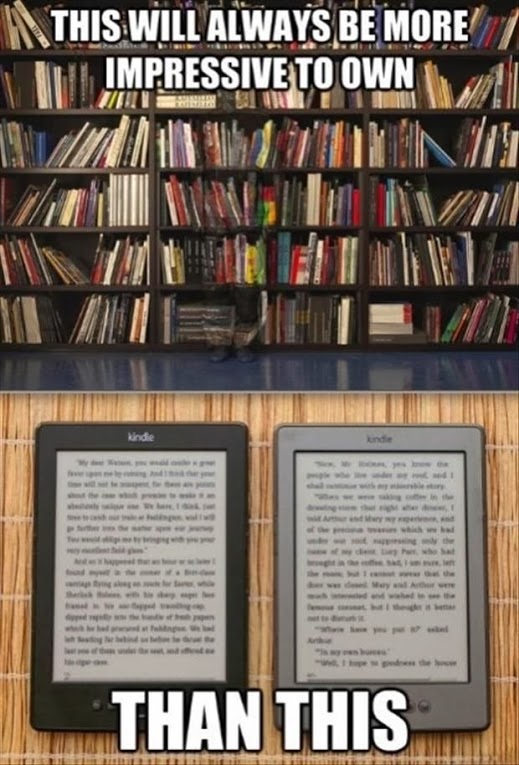
I know that snobbery is very important, because those literary people would be out of a job otherwise, but can people just keep it to themselves, please? It would be nice to see more than 40% of the population being avid readers (a book a month or more). It would be nice if we bought and read books based upon what interests us and not what would look most impressive to be seen reading or have on our bookshelves. Changing this mindset would stop memes like this one:

Stupid meme is stupid.
Stupid meme is stupid – can we just agree that a book is a book, DTB, ebook, clay tablet, whatever?

It’s great that people want to impress others with what they are reading. Currently my toddler has a really impressive array of books scattered all over the house. They make for fantastic things to trip over, stub your toe on, or make us look particularly well read on the adventures of small, overly cute animals. I’m sure all the other toddlers are impressed. I still can’t wait for him to stop impressing everyone and just have them all on an e-reader. We should be reading to enjoy reading, not to decorate our house, impress others, be worthy: no guilty pleasures, just pleasures.

The top 10 books people claim to read but haven’t

tldr

Let’s face it, a large chunk of literature and non-fiction sales are nothing to do with people reading and everything to do with being seen to read. It was no surprise to early e-reader adopters that the romance and erotica genres took off as people on the bus to work could now read the stuff they wanted to without being judged. The Guardian posted this survey of readers (although I can’t find the source) listing off everyone’s favourite reading cred books, you know, the ones you claim to have read but fell asleep at page 2.

A recent survey of 2,000 people suggests that the majority of people pretend to have read classic books in order to appear more intelligent, with more than half of those polled displaying unread books on their shelves and 3% slipping a highbrow cover on books they’d rather not be seen reading in public.

The books most likely to be lied about are, naturally, the books most often filmed, talked about and studied in school (some of the respondents must have been lying since GCSE onwards). Are any of them in your pretend-I’ve-read/never-finished pile, or do you save your literary fibbing for Finnegans Wake and Infinite Jest? Share your guilty secrets below.

1) 1984 by George Orwell (26%) I have actually read this classic. I read it because Animal Farm was one of the only books I had to read in English Lit class that I actually enjoyed (I’m not counting plays, you’re not meant to read plays, you’re meant to see them performed!!!). I enjoyed it, but I can see how people would battle to read this one.

2) War and Peace by Leo Tolstoy (19%) Haven’t read this one and have no intention of trying. People always talk about battling through it in small chunks because it is such an important and blah blah blah book. If it was really important it wouldn’t have been so boring as to necessitate reading it in small chunks.

3) Great Expectations by Charles Dickens (18%) I watched the old black and white film, does that count?

4) The Catcher in the Rye by JD Salinger (15%) I’ve read this many times and hated it every single time. Each time I’ve re-read it I’ve done so because I felt I was too young and/or stupid to get it, so I must re-read it because I’m so much older and smarter now. Although, John Green did manage to convince me of its literary merits via Crash Course Literature, not that I’ll bother revisiting this novel.

5) A Passage to India by EM Forster (12%) I can honestly say I’ve never heard of this book.

6) Lord of the Rings by JRR Tolkien (11%) I’ve read it, but I will admit that I did so only after seeing the first movie. I really enjoyed the book, but it was long and waffly and I can see why others wouldn’t actually finish it. I will also say that I started reading The Hobbit when I was in school and then realised that life was worth living and stopped.

7) To Kill A Mocking Bird by Harper Lee (10%) Okay, I’m guilty of this one. It is on my TBR pile. I have it on Kindle and DTB.

8) Crime and Punishment by Fyodor Dostoevsky (8%) See #2

9) Pride and Prejudice by Jane Austen (8%) I’m going to read the zombie version.

10) Jane Eyre by Charlotte Bronte (5%) If there is a zombie version of this I may read it.