Book Review: The Protector by David Morrell

The ProtectorThe Protector by David Morrell
My rating: 4 of 5 stars

It surprises me just a little that I only just discovered David Morrell’s books. He writes thrillers, he’s been doing so since before I was born, yet I’d never heard of him, let alone realised he was the brains behind the Rambo franchise…. Okay, that latter point is not a huge selling point, unless you like seeing people sawn in half with a machine gun for the final act of a movie (Hint: my answer is yes).

In The Protector we have a protective services operator, Cavanaugh, protecting a client, Prescott, from two groups who want Prescott dead… Guess where the idea for the novel’s title came from. Of course there is more to Prescott than it first appears, the groups after him are highly resourced, and the straight forward protection assignment goes sideways. Car chases, gun fights, black helicopters, several fires and a knife fight for good measure: you know, thriller.

This book moves at a cracking pace and was very entertaining. I’m definitely checking out more of David’s novels.

View all my reviews

More guilty pleasures

Sometime during 1994 I bought one of my favourite albums of all time: Siamese Dream by The Smashing Pumpkins. Even today (boom-tish) that album sits proudly in my music collection and doesn’t sound dated. I can’t say the same for many other albums I own from the same time period. Superunknown from Soundgarden stands as a classic album, but I find it hard to listen to without having had the death of a pet weighing on my mind. I can only listen to Metallica’s Load if I promise myself I’ll put on one of their better albums straight after. Essentially, for me, the Pumpkins hit on music gold with that album.

I’ve commented before how I’ve essentially stopped being a fan of the Pumpkins, finding their offerings since Adore (which promised so much with the first single, and delivered so little with the remainder of the album) to be more filler than awesome. What I liked about the Pumpkins was not what the Pumpkins have been delivering since.

The 5 Worst Kinds of Album Every Music Fan Has Bought: Cracked.com

Your experiences may vary.

Which brings me to a discussion I was having recently on the Pumpkins album Zeitgeist. Despite buying the album, I’ve never bothered adding it to my digital library, because it only has one or two songs on it that hint at what I liked about the Smashing Pumpkins of old. A lot of fans and reviewers agree with me, with Corgan taking a potshot at fans for not even listening to the album (class act), further claiming the fans only wanted to hear the old music (probably). Anyway, the discussion had started because a couple of people were insisting the reason people didn’t like Zeitgeist was because it was too political or had political overtones.

Um, no.

While I’m not trying to imply that no-one was turned off of Zeitgeist due to the political overtones, it is clearly a long bow to draw to suggest that it was a factor, let alone a big factor, in listeners/fans disliking the album. So why would someone make this claim?

Well, simply, this is another example of people trying to justify their taste. Another guilty pleasure moment. I seem to be raising this point a lot (here on literature, here on genre vs literature, here on good vs popular, and here on guilty pleasures). It is perfectly okay for you to like what you like, there is absolutely no need to try and explain away someone else’s dislike for something you enjoy. Does it really matter if you like something everyone else hates? No. So why bother trying to put it down to political ideology or how terrorists did something…. 9/11….

Worthiness, guilty pleasures, justification: all of these things are actually stopping us from just enjoying stuff. I know I’m guilty of it, but I’m trying to get over myself. The great thing about the internet is that it is full of support groups for people who like stuff. So you don’t have to agree with everyone else on what music, books, movies, art, etc, you like. You can find your niche and create memes, gifs and video clips to bombard all your other friends with on Facebook.

Book Review: All You Need Is Kill by Hiroshi Sakurazaka

All You Need Is KillAll You Need Is Kill by Hiroshi Sakurazaka
My rating: 4.5 of 5 stars

I’m not sure that there are enough sci-fi thrillers out there. Maybe we should get James Patterson to churn out a few dozen this year, or maybe someone can point me in the direction of a few dozen authors like Hiroshi Sakurazaka.

People may be aware of All You Need Is Kill because of the film adaptation starring Tom Cruise and Emily Blunt, retitled Edge of Tomorrow because ‘kill’ had such negative connotations. I haven’t watched the film yet, but have heard very good things, which makes sense, since this is a very good book. The premise for the book (and film) is that Earth has been invaded by terraforming robots – Mimics – who are preparing the planet for an alien race to come live here. These robots have a special trick they use to help them win battles: they can send a signal back in time to allow time loops to play out until they win. Keiji Kiriya is a new recruit, but in his first battle he gets caught in the loop, and he is able to alter the future by learning from his mistakes.

Obviously this sounds a lot like the Bill Murray film Groundhog Day, just with less Bill Murray and more giant robots trying to destroy the planet. The story never lets up, despite the fact that the two days (the day before and day of the battle) are on an endless loop until either Keiji or the Mimics succeed. And the twist ending caught me somewhat by surprise. I recommend this book to any fans of thrillers, unless you can’t stand the idea of people in robotic suits fighting alien robots for the future of the planet – which is, of course, impossible not to love.

View all my reviews

Book Review: Criminal by Karin Slaughter

Criminal (Will Trent, #6)Criminal by Karin Slaughter
My rating: 3.5 of 5 stars

If you ever want to feel better about yourself and your life, there is nothing like reading a book with characters that have a litany of personal problems and struggles. I can’t think of too many people with serial killers for dads, so that has to make your lot in life look better.

Unlike the previous Will Trent story I read from Karin Slaughter, this novel novel is split into two timelines, one in the modern day with Will, the other in the 1970s focuses on the early career of Will’s boss, Amanda Wagner. Karin handles the multiple POVs and timelines seamlessly and I really enjoyed the trials and tribulations of Amanda’s first homocide investigation, and the insights it gave into equality. It is really odd to think that only 30-40 years ago that people would have been phoning the police to report women impersonating police officers, because the idea that women could actually do the job seemed too ridiculous. Check out the interview with Karin discussing this:

It’s good to know that society has come a long way in a generation, not that you’d notice on the Youtube comments section.

Despite enjoying this novel, the characterisation, the social insights, the murder mystery, I could only give it 3.5 stars. The only reason for this was that I’ve had a very busy time of late, with many things competing for my spare time, and this book wasn’t compelling me to pick it up and keep reading. I didn’t have to force myself to read the book, by any means, more that I wasn’t drawn to it in the way I am with my favourite reads.

I’d recommend this book for people who’ve already read some of the Will Trent series, as they’ll get more out of the story than someone new to the Will’s world.

View all my reviews

My art is better

Things you can only do whilst drunk

This week everyone was so pleased to have another chance to stick the boot into Britney Spears after the release of a recording of her singing rather terribly, allowing us to compare it to the auto-tuned album version. Britney is one of the celebrities people love to hate (South Park parodied this beautifully), and this “proof” that she is undeserving of her success is just the ammunition needed.

Now I’m not exactly the sort of person that would normally try to defend a pop star, because that would require me to listen to some of said pop star’s music, which would count as self-induced torture. But some of the comments that have been made are so intellectually lazy that I’ve felt the need to say something.

The common theme of the comments is that Britney lacks any actual singing talent, that she got where she is by being pretty or that she was manufactured as a pop star, and is undeserving of her success. Which is all utter crap. Spears has been in the entertainment industry since she was referred to a New York talent agent at age 8. Then she got her break after beating out hundreds of other hopefuls to become a Mouseketeer (along with Christina Aguilera, Justin Timberlake, and Ryan Gosling). Spears’ move into the recording industry again required impressing people with her talent, and was noted for her vocal styling and ability.

The producer who recorded Britney’s crappy singing has already addressed the singing and auto-tune issue. I’m not a fan of auto-tune, but I understand its use. While the warming up suggestion could be true, I’d bet money that Spears hasn’t worked on her singing in a decade, thus between not being a teenager anymore, not singing regularly (dancing and singing is not something you can do easily night after night, so miming makes sense), and having had kids, her voice is probably nothing like it was. So it is perfectly understandable that Spears sounded terrible and needs auto-tuning, but that doesn’t mean she has never been able to sing, and as I’ve already pointed out that is a ridiculous claim/insult (see this analysis of her vocals for more).

Essentially, you don’t rise to the top of the heap without some modicum of talent, because there are lots of other hopefuls wanting that same shot at stardom. As for whether Spears’ resulting success is deserved is really subjective, depending upon how much you actually like the music she sings, and how you feel about the “hit factory” style of music creation.

This really shows just how lazy people are with their attacks on successful people. It is very satisfying to pretend that someone’s success is undeserved, that they were just lucky, or pretty, or shagged the right people, or whatever other excuse. Nothing makes you feel more superior than knowing you could have been just as successful, if only you’d been willing to shag that agent, or if you had bigger boobs. Meanwhile, those we deem to be deserving artists, suffer in obscurity. But success takes more than being pretty, or lucky; it takes talent, perseverance, motivation, hard work, perseverance, and lots of hard work. For every successful artist (or any other field for that matter) there are hundreds of wannabes that fell at the first, second, third, fourth, or twentieth hurdle. Maybe they didn’t want to put in the vocal practice, maybe they didn’t make the right connections because they pissed people off, maybe they swapped the dream for a day job, maybe they never took their shot (watch Henry Rollins discuss taking his shot), or maybe the artist is too niche for whatever reason.

We all have that favourite band, singer, author, actor, painter, etc, that we feel is under-appreciated in their field. It is easy to wish that they had the success of the artists we see as unworthy. I doubt I have an artist in my music collection that has been as successful as Britney Spears, and I’d argue that most of them have more talent and write better songs. But the very reason I don’t enjoy Spears’ music is also the reason I love the music I do, which means that my favourite artists aren’t going to be as popular.

Which brings me to the argument I’ve raised before about worthiness (here on literature, here on genre vs literature, and here on good vs popular). It is perfectly okay for you to like what you like, there is no “guilty pleasure”. We should also stop pretending that our subjective taste is better than someone else’s. And as this latest furore about Britney shows, we should stop pretending that successful artists got where they are without talent, or hard work, or that their work is somehow inferior to something we prefer.
curious-male-fifty-shades-meme-good-writing

Death of the e-reader?


E-Readers Are Cool

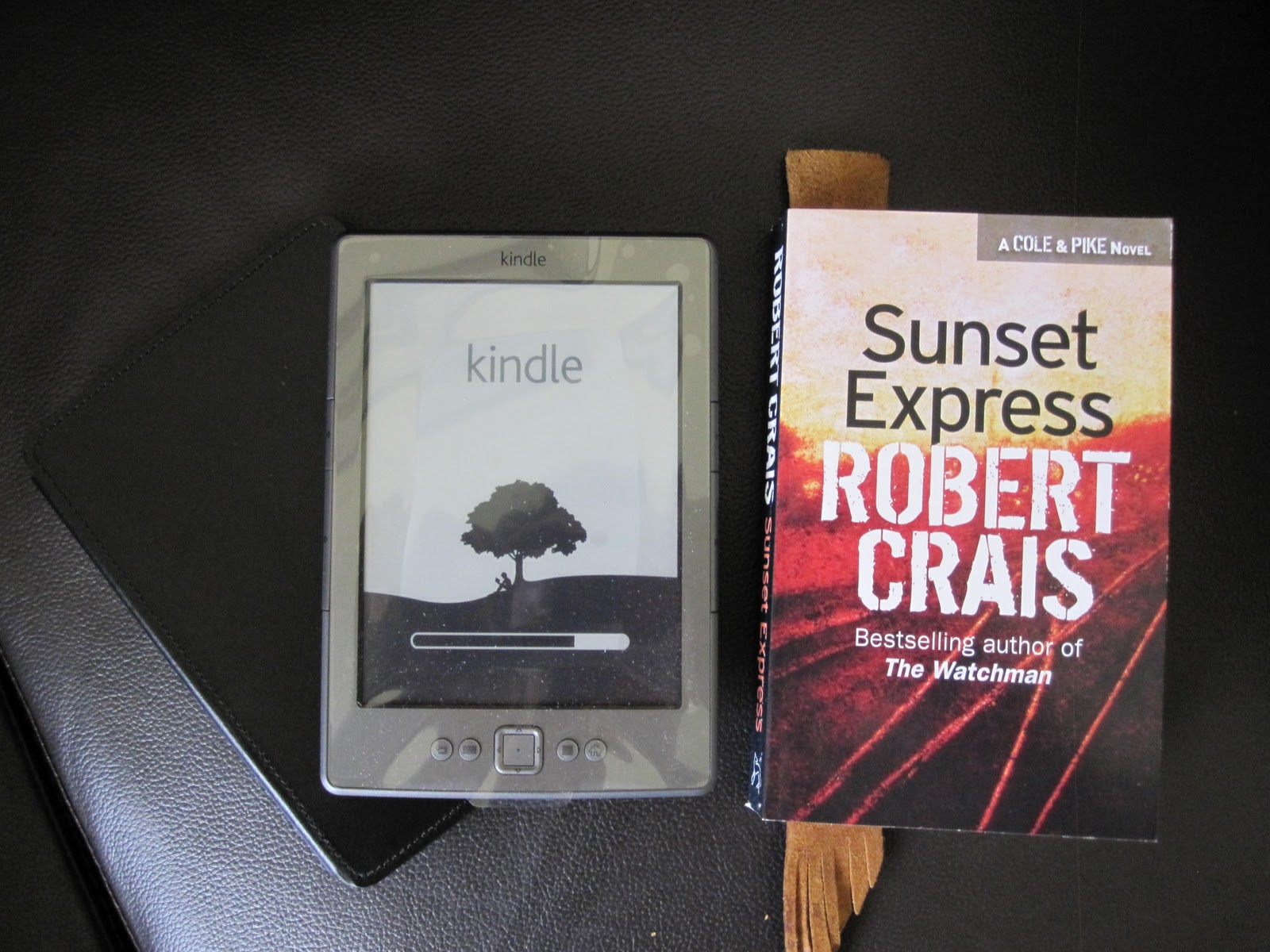
For quite some time now, which is another way of saying I can’t remember when exactly, I’ve been saying that e-readers are one screen improvement in phones/tablets away from redundancy. Now tech writers (whom I love) are coming round to my way of thinking, with a recent article in Salon suggesting that e-readers are going the way of mp3 players and vinyl:

Tech writers have begun rolling out their eulogies for the humble e-reader, which Mashable has deemed “the next iPod.” As in, it’s the next revolutionary, single-purpose device that’s on the verge of being replaced by smartphones and tablet computers. Barnes & Noble is spinning off its Nook division. Amazon just debuted its own smartphone, which some are taking as a tacit admission that more people are reading books on their phone these days, to the detriment of the Kindle. The analysts at Forrester, meanwhile, expect that U.S. e-reader sales will tumble to 7 million per year by 2017, down from 25 million in 2012.

At New York MagazineKevin Roose argues that this is “bad news for the book industry.” He writes:

If you’ve ever tried to read a book on your phone, you’ll know why. Reading on an original Kindle or a Nook is an immersive experience. There are no push notifications from other apps to distract you from your novel, no calendar reminders or texts popping up to demand your immediate attention. And this immersion is partly why people who use dedicated e-readers tend to buy a lot of books. (One survey indicated that e-book readers read about 24 books a year, compared to 15 books a year for paper-and-ink readers.)

A drop in e-book sales, which are actually more profitable for publishers than hardcovers, would certainly mean trouble for the industry. But I’m not convinced that’s where the death of e-readers will lead. Nook and Kindle owners might buy more books than your typical American, but I’m guessing a lot of that is simply because they’re more, well, bookish. As Pew wrote in January, “Adults who own e-readers like Kindles or Nooks read e-books more frequently than those who only own other devices (like tablets or cell phones). However, it is difficult to know whether that is because dedicated e-readers encourage more reading or because avid readers are more likely to purchase e-reading devices.”

Devices come. Devices go. The Kindle and Nook helped teach us all to pay for e-books, and I’m guessing that will be delivering publishers dividends for years to come.

I think we can all agree that e-books themselves aren’t dying, or books for that matter. I’d argue that reading a novel, or similar, will continue to be a pastime for many years to come, regardless of medium: digital, physical, or metaphysical. We’ll probably still be reading books when flame breathing giant lizards enter our dimension to destroy civilisation. After that time we’ll be too busy building something other than giant robots to fight the monsters to worry about reading.

When e-readers originally hit the market, phone screens were much smaller and the iPad was in its infancy, thus the e-ink screens of the e-readers offered a much better reading experience. They were a hit with the avid reading crowd, with the ability to shop for books, read them, shop for more books, read them, maybe do a bit more reading, then think about charging the e-reader in between side-loading some more books. But all of those advantages were heavily reliant upon the better reading experience.

Phones and tablets as e-readers have many advantages: they tend to go everywhere with us; they can access all libraries; they can access all online bookshops, not just the one you bought the e-reader from (*cough* Amazon *cough*); they can be used for audiobooks; they have a larger market share so better technology advancements (i.e. where’s the colour e-ink we were promised?); and they can do things other than be used as a reading device. Now with a range of screen sizes in phones and tablets (e.g. Samsung Note, iPad Mini, iPad, standard phone, etc) there is a non-dedicated e-reader suited to you!

Although, let’s not get ahead of ourselves just yet. This magical new screen I’m seeing in my crystal ball – did I mention I see a breakup on the horizon for Brad and Angelina? – isn’t here yet. Until we have the new screen and e-reader owners are upgrading or replacing their old devices, the dedicated e-ink e-reader is still going to be the device of reading choice for avid readers. The articles are talking about a decline in sales from a peak of 25 million in 2012, to a “predicted” 7 million in 2017. Is this really surprising regardless of a tech upgrade?

You see, this is why I love tech articles so much: the lack of a reality check. 25 million sales in 2012 (26 million in 2011 from my source), on top of other sales in previous years, pretty much taps out the avid reader market to sell e-reader devices to. So any sales after that are going to be from old e-readers dying and needing replacement, which is probably where the 7 million figure comes in (note that my source shows that to occur in 2016, not 2017). That isn’t the death of the e-reader, that is the maturation of the market. I guess we could try to convince avid readers to not spend as much money on books and instead spend more money on buying e-readers, but that would lead to all sorts of problems. We’d need shelves to store all of these e-readers on, maybe even taking up entire walls; file them using some sort of system that allows us to easily find them in order; perhaps hire a person, let’s call them a librarian, to look after these e-readers until someone comes to use them.

So despite my agreement that e-readers will eventually be replaced by other devices, I think that news of the death of the e-reader is greatly exaggerated.