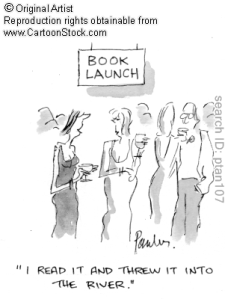
How to interpret online book reviews

p { margin-bottom: 0.08in; }My previous post sought to elucidate some of those oft quoted expressions which plague music reviews. Despite the unequivocally superior standard of articulation amongst the literary fraternity, there are, upon occasion, some idioms that have become rather cliché. Thus it has fallen upon me, dear reader, to compile and define some terms and phrases that require proper denotation, in order to provide clarification of book review terminology definitions.

Page-turner: Meets the bare minimum standards for a book.
Gripping: I got this from a library where kids are allowed to play.
Poignant: Something sad happened in this book, most likely a character gets cancer.
Compelling: I spent so much time reading this book I had to finish it despite wanting to hurt myself after every sentence.
Nuanced: I have no idea what this book was about but I liked it.
Lyrical: Should be a poem instead so that it isn’t as long and self-involved.
Tour de force: The book is too long and waffly.
Readable: Boring but better than watching TV.
Haunting: Either used to describe a book that made the reviewer actually think, or, more likely, is meant to make you think but is just pretentious.
Deceptively simple: Could have been written by a 10 year old.
Rollicking: Something actually happens in this book.
Fully realized: The book has a beginning, middle and end.
Timely: Makes passing reference to something that happened 2 years ago.
X meets Y meets Z: The reviewer hasn’t read the book so is quoting the sales blurb.
Sweeping: Long.
That said: I’ve just insulted this entire book but it is popular for some unknown reason (e.g. Twilight).
Riveting: Was able to finish reading it.
Unflinching: Unpleasant.
Powerful: I read the hardcover.
Unputdownable: Reviewer is unfamiliar with English.
Masterfully or Masterful: The author is familiar with English.
Beautifully written: A lot of long words were used.
Startling: Reviewer was surprised the book was published.
Bold: Controversial.
Accessible: Written for kids.
Memorable: Reviewer didn’t have to look up the author or title to write the review.
Epic: Really, really, long.
A tale of loss and redemption: Someone dies, the protagonist gets over it, the end.
Sensuously, seductively, and/or lushly described: Painstakingly boring descriptions of mundane details.
Must read: Bestseller.
What it is to be human: Someone falls in love or someone dies.
Luminous: Has a pretty cover.
Evocative: Not boring or pedantic.
Poetic: Wordy.
Thought provoking: Reviewer is sure the book is cultural or intellectual but didn’t quite get it.
Rollicking roller-coaster: Kids book, or should be.
Provocative: Annoying.
Lends itself to X: Reading the book X was better.
Opinionated: The reviewer disagrees with everything the author has ever written.
Emotional roller-coaster: Nominated for some literary award.
Only minor quibbles: The book sucked.
Stays in your mind long after the last page is turned: Had a bad ending.
Writing at the peak of his/her powers: Much better than the author’s other books.
At once: The reviewer is about to use more than one of these terms in a sentence.
Also, lets not forget the various terms that are used to tell you what the genre of the book is, rather than just say what the genre is:
Explicit, steamy, romp, raunchy: Erotica or has sex in it.
Charged, taut, woven, layered: Political thriller.
Heart-warming, life-affirming: Romantic drama.
Seamy, gritty, underworld: Crime.
Taut, fast-paced, dynamic: Thriller.
Epic: Fantasy.
Hope this clears things up a bit.

How to interpret online music reviews

p { margin-bottom: 0.08in; }

One of the coolest things about the interwebz is the ability to find TV shows, movies, books/authors, bands/music, or people to argue with. I live a few hundred kilometres from the most isolated city in the world, which means that there isn’t a cinema, there aren’t many international touring acts that come through town, and author book signings are somewhat rare. Since Al Gore invented the internet we are all able to be connected and find things we like through the magic that is The Internet.

“This, Jen, is the internet.”

p { margin-bottom: 0.08in; }

Of course with an abundance of new stuff comes an abundance of indecision’s. How do you tell which books are worth reading, which movies are worth watching and which bands are worth listening too? The obvious answer would be to consult reviews.

Music reviews are often troubling, they use industry jargon that not everyone understands, especially not the people using the jargon. So I have quickly summarised the commonly used phrases and interpreted them.

Solid album: every song sounds the same.

Standout tracks: the only decent songs.
The album grows on you: hated this album the first time I listened to it and after having to listen to it several times to complete the review have found I can tolerate it.
Intricate melodies: pretentious wank.
Outstanding musicianship: lots of solos.
Impressive guitar work: endless guitar masturbation.
Concept album: lots of pretentious filler.
Soulful lyrics: girlfriend/boyfriend just left the singer.
Soulful melodies: all band members/artist depressed.
Heartfelt emotion: band members/artist suicidal.
Best album of the year: only new album I have.
The best release from this artist/band: it’s about time they put out something decent.
Epic: too long.
Pop sensibilities: commercial radio fodder.
Proponents of (insert name) style: I hate this sort of music.
Founders of (insert name) style: the guys that everyone else copied.
Challenging: annoying.
Diverse styles/sounds: imitates everything popular at the moment.
Critically acclaimed: only pretentious and annoying people will like it.
Commercially successful: listen to it on the radio instead.
Uplifting: saccharine.
Back with a vengeance: last album was terrible.
Offers up some great tracks: band/artist only wrote one song then packed in filler.
Career defining: surprisingly good album.
On heavy rotation: has a huge marketing budget to waste.
Staple of radio playlists: inoffensive.
Politically charged lyrics: think they are better than everyone else.
Confrontational: annoying.
Distinguishes itself: will fade into obscurity in a month.
Stamped their mark: all the vapid DJ’s like it.
Most important album/artist of the year: utter crap that is inexplicably selling well.
Taken (insert country) by storm: some DJ overseas thinks that it’s good.
Radio friendly: bland.

Hope that clears things up a bit. At some future date I will attempt to cover the common book review jargon.

E-books: Return of the Reader

Just like the previous two installments of this e-book saga there will be allusions to some non-existent struggle, my thoughts on the changing publishing industry, no Leia in a bikini, and definitely no Wookie. When we left our hero writers, they were diligently trying to decide whether they wanted to sign with a traditional publisher or self-publish like an indie rebel. Publishers had the track record, the self-publishing indies had the jump on the fastest growing segment in the industry: e-books.

Now hold on just a second. Traditional publishing is behind? As has already been stated in this blog, his mouth to my post, Michael Connelly is selling 45% e-books. His publishers are clearly on board of this new market place. James Rollins and Steve Berry have both released exclusive e-book short stories on Amazon and B&N as lead-ins to their next books (pity non-US people can’t buy them, not being close enough to the centre of the universe and all). I even noticed that Aussie authors like Tara Moss and Matthew Reilly are available on Kindle for under $10. Behind isn’t quite right.

On the other side of the great divide, all the cool kids authors are self-publishing. People like Konrath, Eisler, Mayer, some guy named John Locke, are doing well out of self-publishing and doing all the work themselves (or hire for service). Clearly all authors should be grabbing their manuscripts and uploading them now.

I’ll pause so you can upload your book now. Don’t forget to spell check first!

Well it seems that 10’s of thousands are doing just that. Given that 90% of everything published is probably crud, you have to question how wise it is to rush to publish. We also have to remember that e-books are still a minority share of the market place (this will change of course). Shouldn’t quality come first? Spend the time on crafting a fine book, see what industry professionals have to say about it, then publish? Preferably not the professionals that published Snooki. Basically writers will have to find the best publishing deal for them, even if it is swapping their novel for a packet of magic beans.

And here is a startling fact: readers don’t care if writers are traditionally published, indie published, self published, or published by a small Scottish Terrier named Rolf. Readers want to read something entertaining and well written. So writers shouldn’t care how they are published. To quote Nick Spalding:

“Writers on the traditional publishing side of this particular conflict want to be successful and earn a decent living as a writer, appealing to an audience with their work. On the other hand, writers on the self publishing side of this particular conflict want to be successful and earn a decent living as a writer, appealing to an audience with their work.”

What I love about e-books is that they are made for readers. Well Duh! Stick with me on this one. Lets say that it is August 2010 and I’ve just finished 61 Hours by Lee Child. Now Lee may or may not have finished with a cliffhanger in that particular book. Despite the fact that the next Reacher novel is finished and ready in boxes to go on shelves, I have to wait until the end of September to read Worth Dying For. With e-books there is no need to delay because of printing, shipping, and shop displays still being filled with James Paterson’s books. In fact, with e-books I can have the entire Reacher series downloaded the minute after I’ve finished 61 Hours to keep my spirits up while I wait.

Essentially the gap between writer and reader has been shortened. The reader is King.

So what about publishers? Well they sell books. Authors write those books for them. I don’t think that in the long run they will particularly care whether they are selling an e-book or a DTB. In fact e-books could really cut out a lot of their middle men costs.

A lot has changed in the past year or two, some of the big companies are behind to some extent, but are more likely to catchup. I still can’t believe that e-readers weren’t dreamt up by publishers and bookstores. But then again I can’t believe that Australia – lots of sun – has sent solar technology to Germany – no sun – and politicians are wanting to move from coal to gas.

As long as publishers are paying advances, advertising/promoting authors and fronting costs they will be who most authors will turn to in order to publish. And when the publisher rejects it, and the crying has finished, the author will release it, plot holes and all, on their own.

Bookshops look like the real loser here, despite their claims to the contrary. Apparently people love the smell of books. Solved. Apparently people like to browse in bookstores. Yes, nothing like spending hours in a store with your head at a funny angle to find the store doesn’t stock what you are looking for. Apparently people love the feel of books. Admittedly books are much better to throw at an intruder, although War & Peace is regarded as a lethal weapon.

Can I just point out that an e-book is a book. That you can read. Thanks for letting me clear that up.

Tenuous reasons for bookshops continued existence aside, I don’t see why there won’t be purveyors of fine literature, and the stuff I like reading, into the future. Online stores are often seen as more reputable when they have a physical storefront. Even if that storefront is never visited by anyone because it is located down a side street, off a back alley, near a crack den. Plus POD could make book buying like a trip to the deli counter for lunch.

“I’ll have the new best-seller and a long white to go thanks.”
“Did you want that signed or unsigned?”
“Hold the signing, but I will take the first chapter of the sequel at the back.”

As a reader and as a some-day published author, I think that the future is so much brighter for readers and writers. Readers will have access to more good books than ever. Writers will have greater access to an audience than ever. The future of books is very bright and may even step out of the shadow of DVD’s, when DVD’s become obsolete.

Math Shouldn’t Be Taught In Schools

This of course follows on from earlier interviews about whether schools should teach evolution.

I’m glad that people get such a good education in this day and age. My text book on celestial orbits around the Earth – with calculations of how flat our Earth is – will no doubt be in curriculum’s world wide soon. It is entitled The Science of Flat Earth.

Word of the Day: Paraprosdokian

There is definitely too little wit in the world today. The witless wonders that inhabit our world have made Every Body Loves Raymond a popular show. Paraprosdokian is a great example of wit. You take a sentence and then use the latter part of a sentence or phrase to surprise or twist the meaning; preferably using it to create humour. “Where there’s a will, I want to be in it,” is a type of paraprosdokian.
They are so good that famous people have used them:
  • “He was at his best when the going was good.” —Alistair Cooke on the Duke of Windsor
  • There but for the grace of God — goes God.” —Winston Churchill
  • “If I am reading this graph correctly — I’d be very surprised.” —Stephen Colbert 
  • “You can always count on the Americans to do the right thing—after they have tried everything else.” —Winston Churchill
  • “If all the girls who attended the Yale prom were laid end to end, I wouldn’t be a bit surprised.” —Dorothy Parker
  • “I’ve had a perfectly wonderful evening, but this wasn’t it.” —Groucho Marx
  • “A modest man, who has much to be modest about.” — supposedly Winston Churchill, about Clement Attlee 
  • “She looks as though she’s been poured into her clothes, and forgot to say ‘when’.” —P. G. Wodehouse
  • “I like going to the park and watching the children run around because they don’t know I’m using blanks.” —Emo Phillips
  • “If I could say a few words, I’d be a better public speaker.” —Homer Simpson 
  • “I haven’t slept for ten days, because that would be too long.” —Mitch Hedberg 
  • “I sleep eight hours a day and at least ten at night.” —Bill Hicks

In my own writing I am trying to use humour to offset the dark themes and violence so that I can undermine societal values because you don’t see much humour in thrillers. Here are some examples of paraprosdokian sentences that might tickle some funny bones:

  • Do not argue with an idiot. He will drag you down to his level and beat you with experience.
  • The last thing I want to do is hurt you. But it’s still on my list.
  • Light travels faster than sound. This is why some people appear bright until you hear them speak.
  • If I agreed with you, we’d both be wrong.
  • We never really grow up, we only learn how to act in public.
  • War does not determine who is right – only who is left.
  • Knowledge is knowing a tomato is a fruit. Wisdom is not putting it in a fruit salad.
  • Evening news is where they begin with ‘Good Evening,’ and then proceed to tell you why it isn’t.
  • To steal ideas from one person is plagiarism. To steal from many is research.
  • A bus station is where a bus stops. A train station is where a train stops. On my desk, I have a work station.
  • I thought I wanted a career. Turns out I just wanted paychecks.
  • Whenever I fill out an application, in the part that says, ‘In case of emergency, notify:’ I put ‘DOCTOR.’
  • I didn’t say it was your fault, I said I was blaming you.
  • Women will never be equal to men until they can walk down the street with a bald head and a beer gut, and still think they are sexy.
  • Behind every successful man is his woman. Behind the fall of a successful man is usually another woman.
  • A clear conscience is the sign of a fuzzy memory.
  • I asked God for a bike, but I know God doesn’t work that way. So I stole a bike and asked for forgiveness.
  • You do not need a parachute to skydive. You only need a parachute to skydive twice.
  • Money can’t buy happiness, but it sure makes misery easier to live with.
  • There’s a fine line between cuddling and holding someone down so they can’t get away.
  • I used to be indecisive. Now I’m not so sure.
  • You’re never too old to learn something stupid.
  • To be sure of hitting the target, shoot first and call whatever you hit the target.
  • Nostalgia isn’t what it used to be.
  • Change is inevitable, except from a vending machine.
  • Going to church doesn’t make you a Christian any more than standing in a garage makes you a car.
  • A diplomat is someone who tells you to go to hell in such a way that you look forward to the trip.
  • Hospitality is making your guests feel at home even when you wish they were.
  • I always take life with a grain of salt. Plus a slice of lemon, and a shot of tequila.
  • When tempted to fight fire with fire, remember that the Fire Department usually uses water.
  • Words of Wisdom “The early bird may get the worm, but the second mouse gets the cheese.”

Book Review: The Six Sacred Stones – Matthew Reilly

I think I have always loved thriller and adventure novels. Sure I like my fantasy, sci-fi, crime, occasional horror, maybe a book or two about the struggle of a single mother to overcome the loss of her cat, but thrillers are my rock. A well written thriller will always leave me wanting more: the next adventure.

Now understandably some people don’t like thrillers. Just as some people’s idea of fun is finding a rare stamp, some people just don’t care for action, thrills and adventure. Reviews thusly follow these preferences. Whenever I read a review for a Matthew Reilly book I am immediately putting the reviews into one of two categories. Category G – they got it. Category M – missed the point.

Reilly is one of the best at writing books that could be an action movie directed by Michael Bay or Jerry Bruckheimer. They are meant to be a flat out thrill ride of action and adventure. So many reviewers seem to expect Tolstoy or Dostoyevsky and are understandably under-whelmed. I on the other hand was expecting a novelised action film, so I was whelmed or possibly super-whelmed.

I am a huge fan of Reilly’s work. Whenever I read one of his books I can see the Indiana Jones moments written on the page. I read Reilly’s first Jack West Jr book, Seven Deadly Wonders, in 2010 and while it retained Reilly’s breakneck pacing and adventure, it lacked reader involvement. Things just happened, you didn’t feel thrilled by the adventure, and the book had me second guessing the series. This second Jack West Jr novel, The Six Sacred Stones, stands in stark contrast and is Reilly at his sterling best. While the Scarecrow series is his best work this series is impressive and worth reading.

Apparently my view on Seven Deadly Wonders is not uncommon. Rest assured that The Six Sacred Stones is the Matthew Reilly you know and love. Although, a little warning: buy both Six Sacred Stones and Five Greatest Warriors, as you will want to read them back to back, just as I am doing. There may or may not be a cliff-hanger that can’t wait.

Reilly fans will also be pleased to hear that the next Scarecrow novel, Scarecrow and the Army of Thieves, is due out later this year.

Book Review: Graphic Novels/Comics/Whatever

Graphic novel is a nice little term to make us comic fans feel like we have grown up and are reading more sophisticated fare than kids comics. If you want proof that there is no difference, just check the bastions of all knowledge: the Wikipedia topic discussions.

I’ve come up with a simple, definitive difference between comics and graphic novels: bad stuff actually happens in graphic novels. I remember the first Spiderman comic I read; he was fighting The Vulture and Kraven the Hunter. Spiderman got hurt, had work issues, women problems and had a cold. By the end of the comic he had defeated the baddies and only had women issues left to deal with, and they appeared to be on the improve as well. Kraven had the wind knocked out of him and went to jail. The Vulture was out cold from an electric shock and went to jail.

Let us compare this with Garth Ennis’ The Boys first edition. Within the first few pages a woman has been splattered against a wall and our protagonist is left holding her severed arms. A touch more graphic hence; graphic novel. Please excuse the homographic pun, I forgot to take my verbs this morning. Basically comics are not really for adults and graphic novels are definitely aimed at a more mature or adult audience.

As part of a Aussie Goodreads June Challenge I have decided to read a few more graphic novels. After watching The Losers at the beginning of this year I had already decided to read a few more of the works that were clearly taking Hollywood by storm (see what I’ve read here). I think it is always a good idea to follow trends from Hollywood, they always make good stuff.

Watchmen
What review of graphic novels would be complete without Alan Moore’s classic. Great story, great characters, great visuals, greatly depressing ending. Rorschach is quite possibly one of the greatest characters ever created. They made a decent movie of this, but you need the director’s cut with the Black Freighter story included.

The Losers
Andy Diggle wrote an interesting, humorous and offbeat series that was turned into a film in 2010. While the series is enjoyable I found that the witty dialogue and humour seemed to wane as the series continued.

The Gamekeeper
This is another Andy Diggle written work, with Guy Ritchie as the creator. Take one trained killer and give him a job as a manor gamekeeper, then have organised crime kill his boss; do you see where this might be going? Yeah, thought so.

Batman ala Frank Miller
Lets talk Batman: the non-superpowered superhero. Batman is one of my favourite comic book heroes and thank God/Christopher Nolan for actually making a decent film adaptation at last! Frank Miller took a comic book and made a graphic novel of it. Whether it be Year One, The Dark Knight Returns or The Dark Knight Strikes Again, Miller implores you to take Batman seriously. Oh and he has Batman beat seven shades of shit out of Superman.

Batman taken seriously

The Boys
Ever thought that superheroes were always just a little too uppity? Ever get the impression that the good guys would often cause just as much mayhem as the bad guys? Well Garth Ennis has written a series for you. This series seems to have stemmed from Garth’s work for Marvel comics and a specific edition of The Punisher: The Punisher Kills the Marvel Universe. This series has everything you would expect from an episode of The Young Ones. Fantastic.

300
I preferred the movie.

Witchblade
I started reading this Ron Marz series for two reasons. The first was that I had heard there was a movie adaptation planned. The second was:

Empowered women = good thing

Ron Marz and Mike Choi have created a visually stunning and intriguing series. Aside from the obvious teen appeal of the character depictions, it has to be said that the Witchblade series has some fantastic artwork on display.

The Punisher
Three pretty crappy movies have been made of this long running anti-hero series. In my mind there is only one Punisher author: Garth Ennis. I’ve read 3-5 years worth of Punisher comics and graphic novels this year, and I can actually spot when Garth has stopped being the author. You immediately notice that there is something lacking, or in some cases that it just plain sucks. Garth has had two runs at The Punisher, the first under the Marvel Knights imprint, the second under the MAX imprint. The MK series is, well, more aimed at people who don’t need to shave and think that vampires should sparkle. Garth makes it enjoyable, but really MAX is the graphic novel of Punisher. If they followed the Garth Ennis MAX story lines they might even make a decent Punisher movie before the second coming of Brian.

Reading Graphic Novels
I have a few tips for reading graphic novels. Buying your graphic novels as comic book reader (cbr) files is the e-book of the comic world: quick, easy and none of that pesky walking to a store. Of course, just like an e-book, you need a reader for your e-comics. Preferably you want an LCD or similarly sharp screen to enjoy the artwork (Witchblade really pops on an HD screen). Another thing you want to do is wait. Wait for your series to be finished and the collection to be released. Nobody wants to wait a month for the next edition. It’s like waiting for the next episode of Justified (or any other decent TV show), except instead of a week you have to wait a month. More frustrating than explaining the movie Inception to a blind and deaf insomniac.

Wristbands for causes

There is definitely nothing more profound and world changing than buying a wristband for a good cause. What better way to cure world hunger than to slap a piece of plastic on your wrist?

Here are a couple of worthy cause wristbands available now:

Make Deadshits History Wristband

Harden The Fuck Up Wristband

Now of course it would be remiss of me not to mention the wonderful wristbands that cure ailments and enhance performance. Chief amongst these products is of course Placebo. The Placebo bands are available right now:

Nonspecific ailments the placebo effect and confirmation bias may assist with are not limited to:

  • Headache relief
  • Lower back pain
  • Cramping
  • Muscle soreness
  • Restlessness
  • Nausea
  • Insomnia
  • Fatigue
  • Symptoms of the common cold

Wearing the Placebo Band may also seem to improve:

  • Strength
  • Balance
  • Power
  • Confidence
  • Mental alertness
  • Memory
  • Sense of general well being
  • Attractiveness
  • Wit and charisma

International Day of Slayer

Metal fans of the world unite! Today – June 6th – is every metal fan’s public holiday. Ok, the public holiday is still in the works, and this post is a little late, but it is at least a day when all metal fans can proudly proclaim their faith in all things heavy. To represent all that is metal, the band Slayer have been adopted as the international symbol of metal music.

Who is Slayer

Slayer is a band from California. Their music has come to epitomise speed metal music in the latter half of the 20th century. Their 1986 album, “Reign in Blood” is one of the single most influential metal albums of all time, typified by the modern classic “Angel of Death”. Playing “Reign In Blood” has been positively correlated p { margin-bottom: 0.08in; }with reductions in the local infestations of hippies, fundamentalist religious groups and other non-savoury people.

How to Celebrate

  • Listen to Slayer at full blast in your car.
  • Listen to Slayer at full blast in your home.
  • Listen to Slayer at full blast at your place of employment.
  • Listen to Slayer at full blast in any public place you prefer.

DO NOT use headphones! The objective of this day is for everyone within earshot to understand that it is the International Day of Slayer. International holidays aren’t just about celebrating; they’re about forcing it upon non-participants.

Taking that participation to a problematic level

  • Stage a “Slay-out.” Don’t go to work. Listen to Slayer.
  • Have a huge block party that clogs up a street in your neighbourhood. Blast Slayer albums all evening. Get police cruisers and helicopters on the scene. Finish with a full-scale riot.
  • Spray paint Slayer logos on churches, synagogues, or cemeteries.
  • Play Slayer covers with your own band (since 99% of your riffs are stolen from Slayer anyway).
  • Kill the neighbour’s dog and blame it on Slayer. 

But, I hear you ask, what if I’m a metal fan and don’t like Slayer? Well there are many options:

  • You could admit yourself to hospital, as you are clearly ill.
  • You could take this opportunity to grow to like Slayer.
  • You could listen to all of your favourite metal albums whilst watching a Slayer video.
  • You could admit that you aren’t really a metal fan and kill youself in shame or hang out with Justin Beiber fans (same thing really).

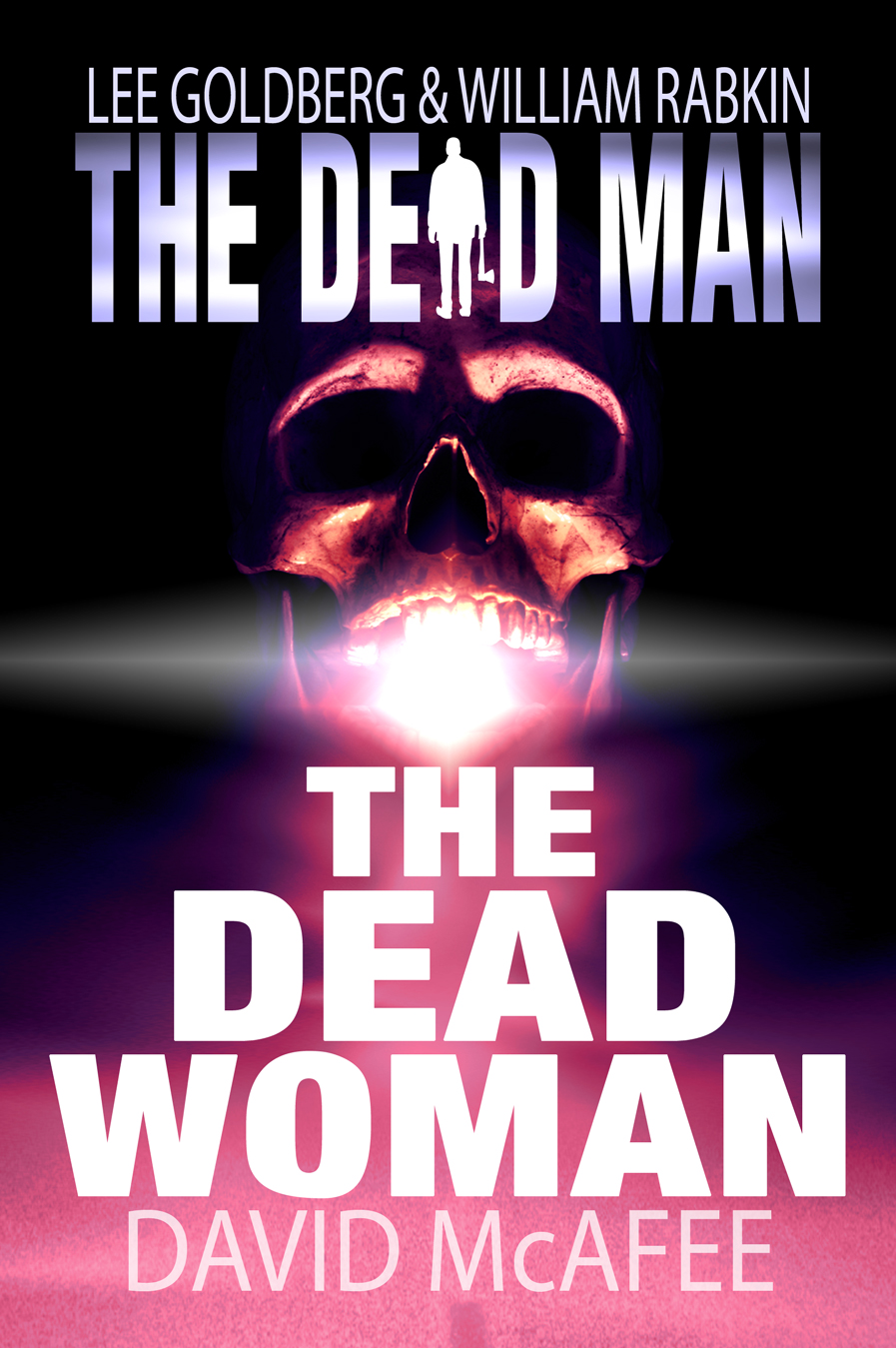
Book review: The Dead Man – The Dead Woman by David McAfee

Yes, that’s right. Matt Cahill is back, visiting another small town, looking for Mr Dark, axe at his side. Welcome to another great episode in The Dead Man series.

David McAfee is the latest author to throw evil at Matt Cahill. It is hard to say too much about the novelette without delving into spoiler territory. Matt is in Crawford, a small town with a big problem. There is a serial killer on the loose, could this be Mr Dark’s handy work? Matt is barely in town a day before he spies the tell-tale-signs, but someone else can see them too, and she could tell Matt who Mr Dark is.

I think it is easiest to liken this series to a TV show. A bunch of writers are called together by Lee and Will and they sit down and come up with a series. While Lee and Will’s original work is adhered to, each writer who pens an episode brings their own flavour and feel. David has brought a subtle mysterious feel to this book, which left me wanting more. Needless to say, this was another Dead Man that was read in one sitting.

Matt will be back when James Reasoner continues the series with The Blood Mesa. In the meantime, once you finish The Dead Woman, you may want to pick up David’s 33 AD.

Print on Demand

Take a look at this little wonder of printing technology:

This, or a machine similar, will be your bookstore of the future. No longer will you be limited for choice. No longer will you have to stand with your head at a funny angle trying to find your next purchase. No longer will stores have to have stock or sell-through rates or large amounts of floor space. No longer will the store clerk be able to stare at you quizzically when you ask for something other than a book from their display at the front of the store.

The bookstore of the future will print your book while you wait. It will be like a drive-thru or lunch bar for books. Granted the pricing I’ve seen for individual books is probably a bit pricey for stores, but that will come down as this technology is taken up. Plus Print On Demand (POD to book fans) is probably one of the few ways fans of dead trees will be able to feed their addiction to non-ebooks. It’s either POD or having a guy in a long coat proposition you in the pub with a “great deal” on an “antique” that just “feel off a tree”.

Books you should read: Climate change

I couldn’t even begin to count the number of peer reviewed journal papers I’ve read. According to my Endnote archive I’m a nerd. It also indicates that I read 800 odd papers for my postgrad thesis. Suffice to say, when it comes to science I tend to read journal papers and not books.

Well I have three science books that I think people should read. You know what I love about science books? Well, it is refreshing to read science written in a way that isn’t so boring! Trust me, I’m a scientist and even I get bored with journal papers.

Climate change science is a funny topic. Since anthropogenic climate change was first proposed in 1824 there has been a lot of research done on climate systems and climate change.

  • 2425 peer reviewed papers on climate change
  • 2042 peer reviewed papers that are neutral (i.e. about climate systems)
  • 186 peer reviewed papers that are sceptical of climate change

Source

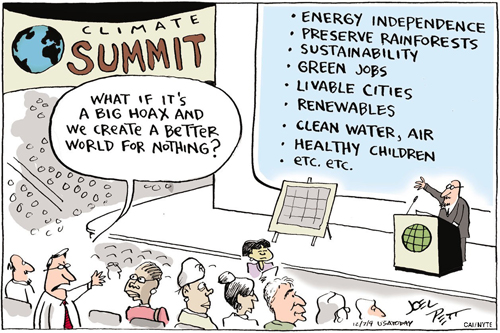
So how could this even be a topic of debate? The science is well understood by 97.5% of climate scientists. Even the most sceptical group in society – scientists (who have a default position of “prove it to me”) – are between 82 and 91% convinced. Who forgot to tell the rest of the world? And how do we break the news to them about the Easter Bunny?

More doctors recommend Camel cigarettes.

Naomi Oreskes talks about why there is doubt, and it isn’t because of the science. What do you get when you cross a lobbyist with a pile of cash? You get a doubtmongerer. After reading this book I’m heartened to know that with enough cash I could successfully convince people that there is doubt about the Earth being flat and that gravity doesn’t really affect us. Newton wouldn’t know an apple if it hit him on the head.

How do you spot a denialist?

Calling someone a climate sceptic is actually incorrect. When the weight of evidence proves climate change is happening, and we have been presented with that evidence, it means that not accepting it is about denial.

Hansen climate predictions, actual observed temperatures, Lindzen “sceptic” claims.

Haydn and John cover two aspects in their book: denial and common climate denial arguments. As such this is a great book for understanding why the message has been lost on some, and also points out the actual science debunking the denial arguments.

This book makes me feel a lot younger.

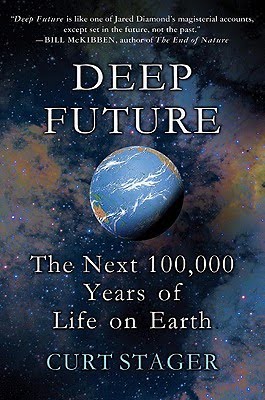
Paleoclimatologists are interesting. They don’t think of things in terms of years, or election cycles, or even decades; they think in terms of millennia. I heard Curt speak at the Sydney Writers’ Festival and he made some very interesting points. My favourite was that we didn’t have to worry about the next ice age due in 50,000 years time, because our climate impacts have upset the Earth enough to negate that little eventuality. His book has even more of these insights.

Edit: I’ve managed to find a short version of Curt’s talk on YouTube that is worth watching. It is from a seminar he gave in Perth, Australia.

Full version is here.

Books You Should Own

The avid reader, like myself, is always on the lookout for a good book to read. I have compiled a list of books that you should add to your downloads, wishlists or next order.

A must for DIYers.
For all you dog lovers.
One of Ben Franklin’s lesser known works.
Another history text.
The slightly less popular sequel to the Kama Sutra

I just have to include part of the sales description for the “Farts: A Spotter’s Guide”

The attached battery powered fart machine reproduces each emanation in accurate sound.

An absolute godsend of a book.

 Hope these books make it onto your buying lists!

My Experiences at the Sydney Writers’ Festival 2011

Yesterday I posted a few observations that I made over a beer between sessions. Today I’m going to go through the highlights and lowlights of the festival. It really was a good event so I feel the need to mention some of the writers and sessions and what I got out of them. Besides, I didn’t take my note pad and netbook in a backpack to every session just for my health – although it could be argued I carried the backpack around to seem more important and to knock drinks out of peoples’ hands in the bookstore.
Some of my signed books from the festival.
Thursday 18th

This is Thriller
The first session I attended was a discussion between LA Larkin and John M. Green about how to make a thrill filled thrilling thriller. Surprisingly this was more a discussion about plot and character rather than explosions and body counts. LA Larkin also seems to go the extra mile for research, having just arrived back from a journey to the end of the earth – 6 months in Antarctica – for her latest book. Worth a look.

Climate Whiplash
Curt Stager is a paleoclimatologist, reformed climate sceptic, and a very interesting and engaging speaker. He described what the two scenarios for our next 100,000 years on planet Earth will be like. It was fascinating to hear how much we have disturbed our natural climate cycles and how big and long ranging our impacts upon the atmosphere are. Seeing the response curve of greenhouse gases, temperature and rectification having impacts out to half a million years really opens the eyes to the staggering the affect we are having upon climate. On the plus side, we’ve eliminated the next ice age due in 50,000 years (Sarcasm warning: it isn’t such a good thing).

Bits and Bytes
This talk should have absolutely fascinated me. It was all about technology, where we have come from and where we are going, and how our view of life/sentience has changed from memory to creativity. Ultimately, though, I found James Gleick boring. The only interesting part for me was the discussion of Ada Lovelace, a mind centuries before its time. Who’d have thought a talk about computers could put you to sleep?

Cracking the Code: The Art of Editing
This session on editing was proof that budding writers – like myself – are hungry for information and are willing to queue for a half hour to attend. Bill Scott-Kerr (he edited the DaVinci Code) and Tom Mayer (thankfully not related to John Mayer, or any other pop musicians) were there to lay out the importance and role of an editor. I liked the summary:

Author = speaks to the audience
Editor = helps to sell the book (to sales directors, industry, etc)

It was great to have two professionals stand up and say that editing wasn’t just about typos and grammar, but about crafting a story. This is a point that I think a lot of people miss. Although as a newsletter editor myself, I really would appreciate if authors actually ran a spell check and read their work before submitting it, as it helps to remove the purple monkey dishwasher.

An aside to this section: apparently professional editors have the same reading cut-off points that I do for reading. Bill stated that his cut-offs for a bad manuscript/novel are page 10 (foreboding) and page 100 (dread).

Criminal Agency
Sydney has an interesting public transport system. Replace the word interesting with rubbish. On the surface it looks decent: plenty of buses and trains departing regularly; plenty of stops; bus lanes; etc. Of course once I was on a bus travelling to this session at Ashfield Library, I realised that it would have been easier to harness up some Husky’s to a sled and find some icy tundra in our Aussie deserts. A 15 minute trip was turned into an hour of watching bored people texting and listening to their iPods. On the plus side, once I arrived Shamini Flint and Garry Disher were into their discussions about crime fiction. Garry served up sex and violence, Shamini pointed out that her mother edits out her books’ sex and violence and we would have to make do with humour.

Friday 19th

Book Design Uncovered
It is really hard to sum up a session that revolved around looking at various covers the designers and artists had produced. So here is the session described in interpretive dance:

But What I Really Want to do is Write Fiction
For some reason most people think they have a novel in them. Personally I blame shoddy surgery practices. It was interesting to hear from former journalists, academics and advertising executives (guess which one was able to plug their book the most) on how they had this career thing interrupt their dream of writing a novel or two. The take home point for me was that spending all day writing for your job helps when you want to take fiction writing seriously. Something about being used to hours of rewriting, editing, and tetris.

Merchants of Doubt
Naomi Oreskes is reasonably well known amongst the scientific and wider community, especially since her book, Merchants of Doubt, hit the promotional circuit. I’m a big fan of her work as she shines a light on the dirty little secret that is media misinformation (Hint: climate change is happening and is our fault; smoking does increase the risk of cancer; a duck’s quack does echo). As a scientist I am always amazed at the nonsense that is thrown around in the media. While this book discussed climate change, it was just the latest example in a long line of doubt-mongering by interest groups that she discusses. Her interview in this session covered a lot of points, so I just advise reading her book.

Daddy, Daddy, I………
Finally a session about being a stay at home writer and Dad.

You’ve Been Warned
Curt Stager and Naomi Oreskes were back for another session on climate change, this time joined by Paul Gilding. I really enjoyed this discussion panel, which primarily revolved around the “where to from here” in regards to climate change and dealing with it. Curt pointed out that this next decade is probably the most important decade in the next 100,000 years. Right now we can decide the future of the Earth’s climate by either listening to science and doing something or sitting in the corner with fingers in our ears yelling “la-la-la-la”. Naomi pointed out that scientists have been their own worst enemy, they publish journal papers that only scientists read, so the rest of the world can make stuff up with impunity. Paul pointed out that the free market is terrible at doing anything until the last possible second, and climate change is an issue that requires action much sooner due to its complexity and impact. As Naomi quoted:

Scientist in 1970s “Climate change is a real problem we need to deal with.”
Politician “When will it start having an impact?”
Scientist “Oh, in about 40 years.”
Politician “Get back to me in 39 years.”

Saturday 21st

Sex Up Your Writing
Linda Jaivin‘s workshop was a completely different kind of session at the festival. I would really have liked to have had her on the Porn Wars panel later in the day. Linda had a very simple message, write so that you get hot and steamy. If it works for you then it will work for someone else. That’s a good sex scene or erotica. Due to the topics discussed we were sworn to secrecy so I’ll let you imagine what the 14 women and two men did in the session.

Porn Wars
It was odd to leave a workshop on writing erotica to enter a panel discussion on porn in society. Catherine Lumby, a social scientist, Kate Holden, a former sex worker turned author, and Gail Dines, a fan of talking over the top of everyone including the moderator, were the experts called upon to discuss what should have been a fascinating topic. Unfortunately Gail decided to throw out unsubstantiated claims as facts, reject any other opinions and evidence, and provide scant evidence of her own. I especially liked her claim that the best selling porn movies were all misogynistic gonzo DVDs. Odd. I could have sworn that the big budget porn movies were couples erotica and that they dominated the market. This session was a waste of time. I have to say that as a male I love being blamed for all societal faults by sexists. Catherine and Kate needed a session without Gail, and, as one audience member pointed out, a male panellist.

Cities of the Dead
This was the session that I had come for. Crime fiction authors discussing their work and how the location of their novels influences them. Shamini Flint was the ‘contributing’ chair for the panel of Michael Connelly, Garry Disher and Michael Duffy. Shamini proved to be a great chair – maybe she could have chaired the Porn Wars session….. – and had everyone interested, discussing and laughing. Connelly could be described as taciturn, but Shamini had him telling jokes before long. I think all four authors sold a lot of books from this session, especially Shamini. At the book signing after she had a lot of people queued with her first Inspector Singh novel under their arms. Also Connelly revealed to me that he didn’t write the dialogue he utters on Castle, yet he loved doing the show and the stuff they give him to say.

The Chaser
I was in the queue for the queue to see The Chaser. Needless to say, I didn’t get in. Pity. They are always funny, despite what the BBC, Channel 7, Channel 9, and the Queen of England think.

Sunday 22nd

Growing Pains
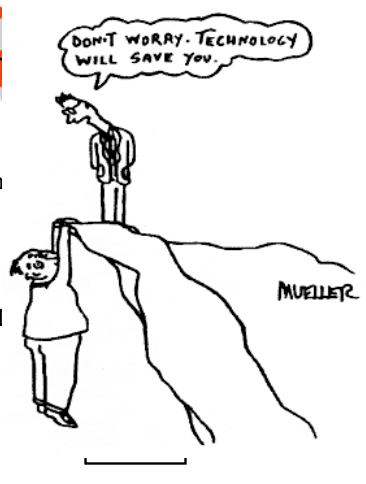
When I was an undergraduate I picked a lot of economics units to pad out my science degree – yes I am a nerd, no I will not let you kick sand in my face. I remember very clearly the day that my economics professor explained the market model to us and my resulting question:

Me “If we have a finite resource base, how can we have infinite growth?”
Professor “Technology will be invented to change the resource base.”

Since then I have had this cartoon on my office wall:

Ross Gittins and Paul Gilding were the first economics commentators to say what I have been saying for, literally, decades: the current economic model is fatally flawed. Yes technology could save us, but how long are you willing to wait for it to save you?

As an aside: don’t you think it fitting/ironic that the stock exchange was founded by a chronic gambler?

Lawyers, Guns and Money
I finished my Sydney Writers’ Festival as I began it, with genre. Michael Connelly was back to discuss his books, his writing, his film adaptations and how much his daughter influences Harry Bosch’s daughter. This was a really interesting session and very well attended. I think this session underlined Connelly as one of the modern masters of crime fiction.

I’d also like to say “Hi” to all of the lovely people who I had a chat with in the queues for various sessions. We had some great discussions and were definitely a big part of what made this festival great.

Observations from the Sydney Writers’ Festival 2011

p { margin-bottom: 0.08in; }

I’m safely home again after my trip to this year’s Sydney Writers’ Festival. I really enjoyed the event and the people I spoke to also enjoyed it. While I was at the event I had an hour between sessions to have a beer and do a bit of writing. I made a few notes on the event that I thought I would share:
  • Writers’ festivals are predominately attended by middle aged women who dream of being an author.
  • Everyone fancies themselves as an intellectual (me included).
  • Actors have to dress eccentrically.
  • Publishers are continually being pitched books, especially by writers who haven’t actually finished a first draft. Publishers refer to random pitches from strangers as “another one”.
  • Writers are always being asked the same 3 questions.
  • Some writers love the crowds, others would clearly prefer to be at home writing. It sucks being a famous/successful introvert.
  • Sessions about writing are very popular, especially amongst those still working on their first book.
  • Sydney has an obsession with coffee culture.
  • Due to the coffee culture they have no idea what a cup of tea is meant to taste like.
  • The smallest population at the event is the male under 40 crowd. I’m sure I was meant to have a minority discount token as a result.
  • Apparently you have to be a feminist to be a female author, even if you write romantic fiction about finding the right man to take care of you.
  • Judging by the Sydney Dance Company’s posters I need to see more productions: all the female dancers are hot and naked.
  • Handing out promotional bottle openers at a writers’ festival is a poorly thought out strategy. It should have been a coffee mug, book mark, or cork screw.
  • Handing out promotional pens is a great idea, the lovely people at Pilot pens gave me a Frixion Clicker that isn’t even on the market yet.
  • Politics at the writers’ festival tends to be a more neutral topic than you would think. The older population and the education level tend to lean towards rational rather than partisan divisions.
  • Most people in the publishing industry are passionate about books, just like the readers. The least passionate people seem to be the ones who make the marketing and buying decisions.
  • People who like dead trees are a largely unaware of what is happening in e-books and the progressions they have made.
  • Readers at the festival were spotted reading on their phones, tablets, e-readers and of course DTB. DTB are still the most popular, but even e-readers are taking off among the older readers.
  • The sales of Michael Connelly’s latest book are apparently 45% e-books.
  • Julian Morrow (The Chaser) and his wife Lisa are really nice.
  • The Chaser, despite the best efforts of Channel 7, 9, BBC and the Queen, are still hugely popular.
  • Shamini Flint probably sold more books and garnered more fans from chairing a crime writers’ session than her advertising for the past year. Witty + Funny + Getting Michael Connelly telling jokes = Sales!
  • Gail Dines probably alienated more people with her polemic vitriol than she intended. Then again she is blind to facts and probably doesn’t care.
  • The people of Sydney were very friendly. They were just like Western Australian’s, except for their constant IV drip of coffee and lack of familiarity with sunny days.

More on the Sydney Writers’ Festival tomorrow; my dog – fur-kid, who am I kidding – needs more attention.

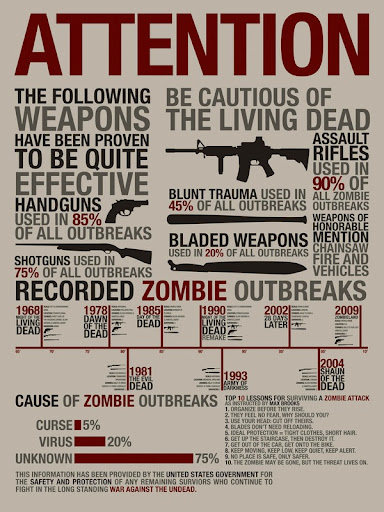
May, the Zombie Awareness Month

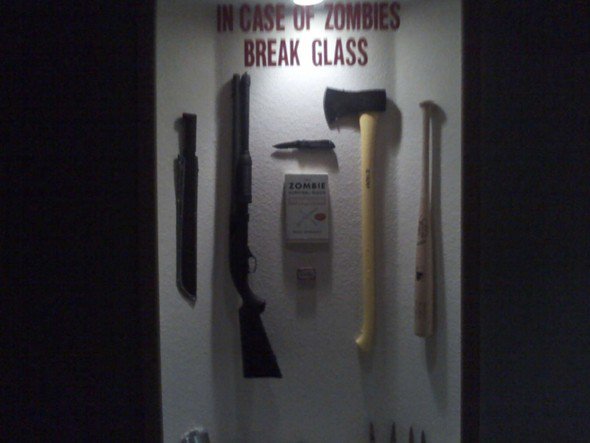
It is time for everyone to buy their gray ribbon for Zombie Awareness.
http://www.zombieresearch.org/awareness.html

Every year we are asked to support worthy causes and this May is the time to recognise those who have been bitten or those who have been chased when their chainsaw ran out of fuel. The awareness campaign also funds vigilance towards the impending doom of the Zombie Pandemic.

Remember to keep your shotgun at hand and chainsaw sharp and fuelled this May!

Be prepared!

 Zombie killer of the month:

Alice. Because I’m male.

Book Review: Unleashed – Emily Kimelman

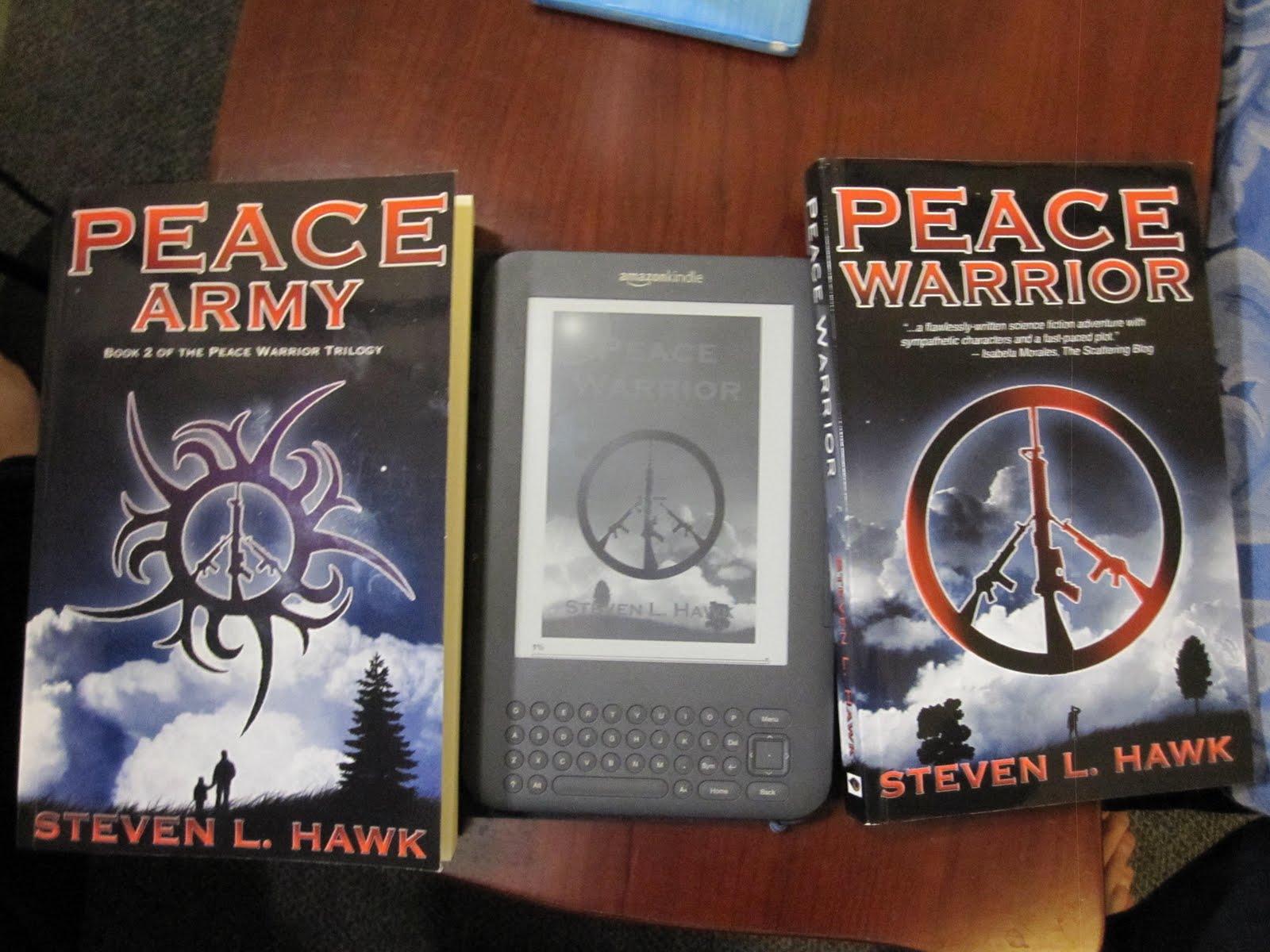
I had some feedback from my sister about how all the books I read have the same covers. I am blessed with siblings, a sister and brother, who are both smart and are not afraid to speak the truth. I think it comes from being raised upon a farm. Farmers and their families tend to be a bullshit free zone because you see life all around you. We all still laugh when we hear someone talk about how they became vegetarian when they realised that animals were made out of food: naive much?

Hopefully my sister will see this book cover and see something different, mainly because while this book sat safely in my favourite categories of reading, it also was something outside the box. I mean, look at the cover: no guns, no macabre hints, no violently stylized text. Read the blurb: how can a dog walker be the hero in a mystery thriller? Which is exactly why you should read Unleashed and enjoy.

I wasn’t surprised to learn that Emily, the author, was a dog walker when she was studying English at university. Dog owners will understand what I mean when they read this book. All of those little things that all dogs do, like proudly displaying the couch they have just chewed to pieces – Iz dones good, huh! – when you come home. For readers who like well written and well constructed novels, Emily’s degree clearly didn’t go to waste, including the ending that caught me off-guard (something that rarely happens).

This was a well paced and involving novel. I literally read it in one sitting today (well if you ignore the break to make lunch), so if it wasn’t an e-book you would call it “a real page turner”. Plus the book has a dog on the cover. A dog!

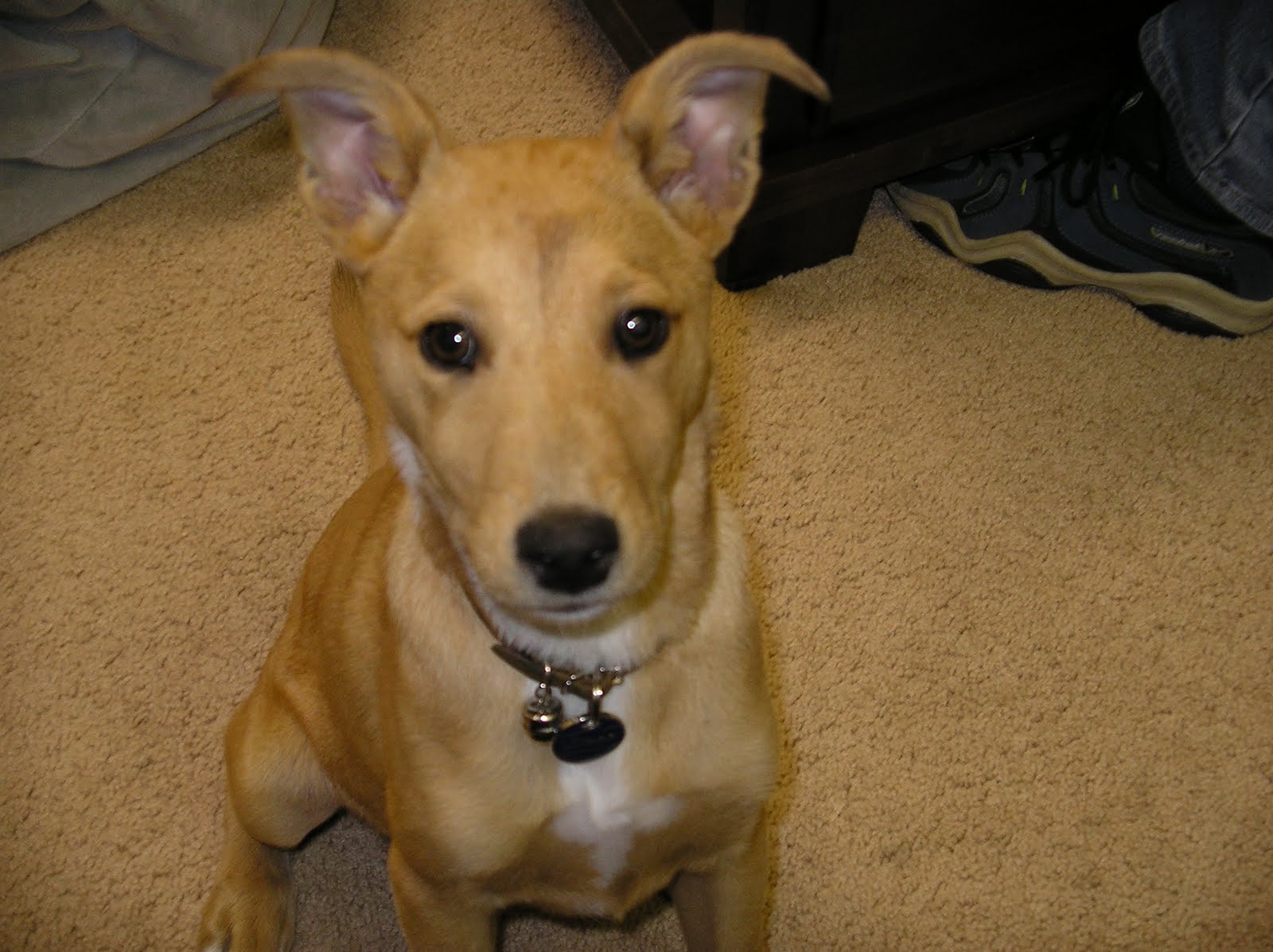
My dog is cute and helps me read by laying on my feet.

Some light reading

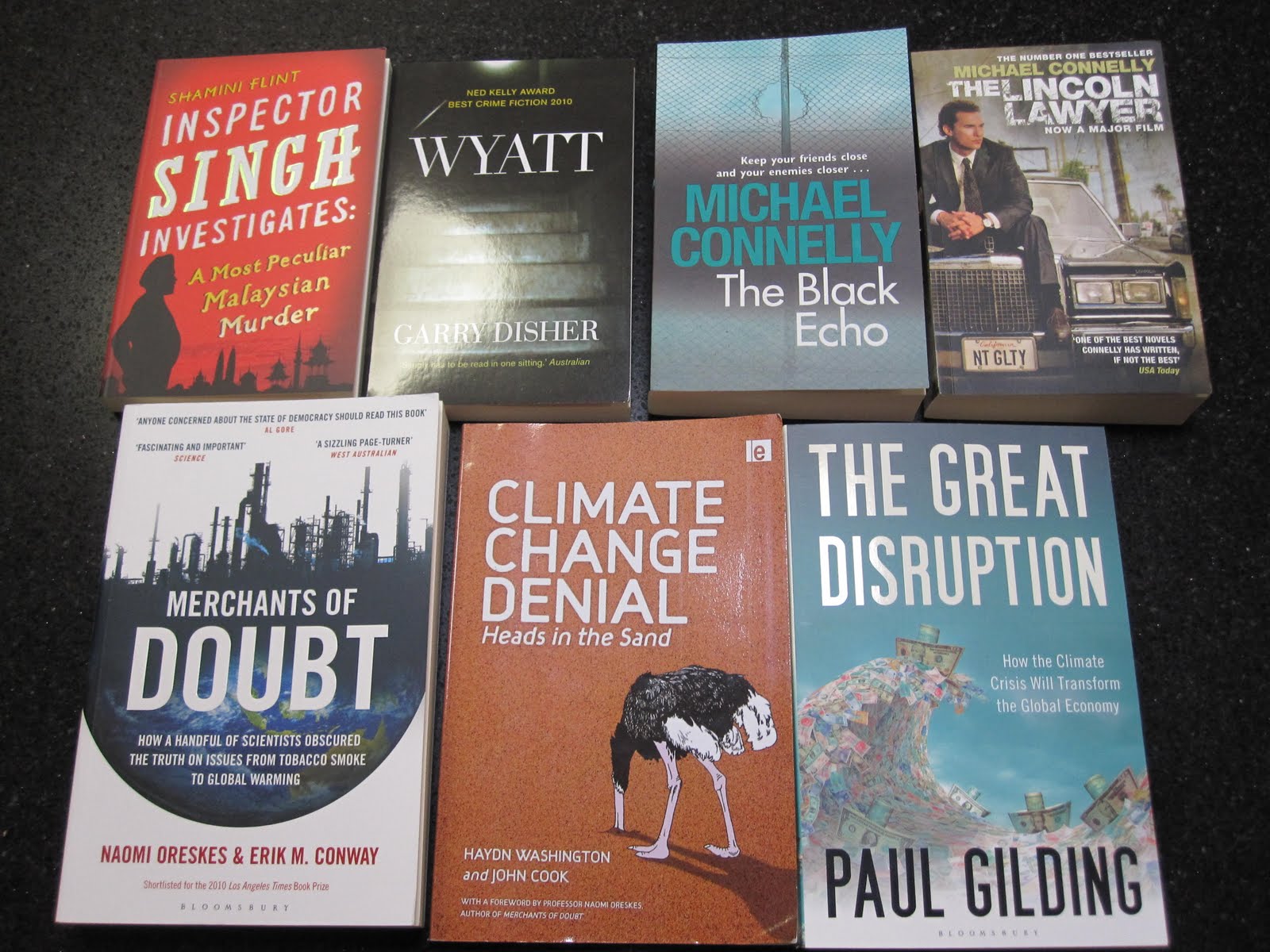
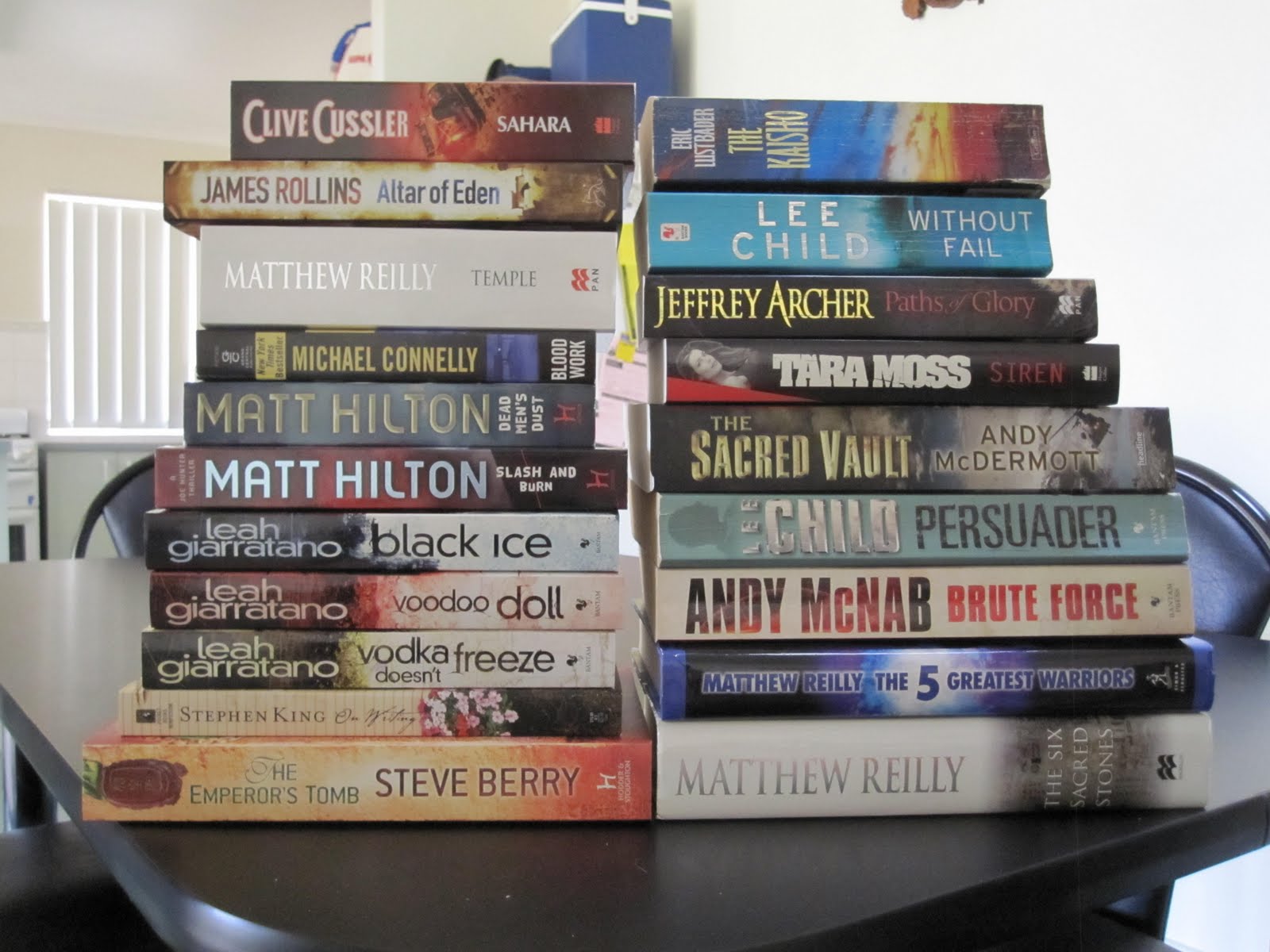
My ‘To Read’ dead tree pile.

I had a few books arrive today. If you don’t have regular arrivals then the pile pictured above dwindles suddenly and before you know it you don’t have anything to read. Suddenly you are desperate for another hit and turn towards the cereal box and the DVD instructions booklet. Fortunately I have 120 or so books to read on my e-reader as well. But after the books pictured above, and the books on my e-reader, I’ll have no books left to read!

Yes, despite being a fan of e-books, I am still a fan of dead trees. I have many fond memories of dead trees. The time I used one to level a table with an uneven leg. The time I threw one at the TV for showing “CSI: Miami” instead of “Burn Notice”. The time I used a bag full of them to prop open a door with a hydraulic hinge. Good times. For the people that haven’t gotten on board of the e-book I thought that I would run through the pros and cons of each.

Dead Tree Pros:

  • They are a book.
  • You can read them.
  • They make you look smart/nerdy when you have lots of shelves of them.

Dead Tree Cons:

  • Being a physical entity they have to be physically moved to your house.
  • Generally more expensive than an e-book.
  • Can’t stop a .45 slug, despite claims to the contrary.

E-book Pros:

  • They are a book.
  • You can read them.
  • When you want another you just download it.
  • Everyone thinks you are reading the latest political biography when you are really engrossed in the love triangle between a teenage girl, a 100 year old pedophile, and a smelly dog (yes I got dragged to the Twilight films by my wife).
  • Text can be resized.

E-book Cons:

  • E-books can’t be used to start a fire in a life threatening situation.
  • E-book files won’t be forever, but the database will be, which means updating your collection.
  • E-readers cost money too.
  • E-readers are even less likely to stop a .45 slug.

What is my key point out of all of this? Well if you like reading you will like both ebooks and dead trees. I can see ebooks replacing a large proportion of the book market in the near future, quite simply because buying (or borrowing) another book is quicker using your ereader. No longer will you have to wait for parcels to arrive in the mail. No longer will you have to travel to a store. No longer will you have to smell the vagrants that camp at the local library. No longer will you have to pray that the store or library actually has the book you are looking for in stock.

The cost of the e-reader is a point which needs considering. Eventually this cost will come down as the technology advances. E-readers are also a great platform and I don’t think that they can be a multi-task tool, unless the battery life and screens can provide a perfunctory reading experience. The marriage of the e-book and e-reader with e-stores may constitute polygamy, but it does result in a great convenience for readers all around the world.

Points to consider with ereaders:

  • LCD screens chew batteries and are just another computer screen.
  • E-ink is like normal dead tree text, has long battery life, even if page turns are a little slow.
  • Screen size has to be roughly book size, unless you enjoy squinting like Clint Eastwood.
  • Pdf’s are not a good format for reading, they are only really made in one size, screens are not.
  • Do you read a lot and want to have a separate e-reader or an all-in-one toy like a tablet?
  • Weight is a big deal. Anything more than a few hundred grams is going to feel heavy if you read for more than 10-20 minutes.

The basic summary of all these points is that the more you read the more you will want an exclusive e-reader. This is true even if you like dead trees. In fact, every person I have met who has made the change has commented that they were unsure until they got one, then they love e-readers and will never go without one again.

I love books in all their forms, you should too.

Book Review: The Deadman: Hell in Heaven – Lee Goldberg and William Rabkin

I’m not a fan of gambling. I once watched a friend of mine place $1000 worth of $1 bets on roulette in the space of half-an-hour before heading to the ATM to get more money to throw away. I’m pretty sure I could have found more fun things to do with that grand, and not all of them would have been immoral. Since I’m not a fan of gambling I’m not a fan of horse racing, a sport that exists merely in order to gamble. In spite of that, I feel the need to use horse-racing vernacular.

Since I have begun receiving each Deadman novella prior to release, I feel like I’ve had the inside running on the Darby winner. Hell in Heaven is the third in the series and once again it is a winner! It will be on sale from tomorrow (4th May) so grab it. If you like a well written, pacy, horror thriller, this book, and series, is for you.

A quick recap is in order, but I’ll try not to add any spoilers, the last time I did friends disowned me, even though I was saving them from The Crying Game. The hero of this series is Matt Cahill and his trusty axe. In the first book, Matt recovered from a mild case of death to discover that he could now see the evil eating away at people’s souls. This lead him to discover he had picked up a nemesis he dubbed ‘Mr Dark’. In the second book Matt has set out to track down Mr Dark and introduce him to his axe. To find answers he stops off at a mental hospital. Nothing bad ever happens in a mental hospital. Now in the third installment Matt has stumbled into Heaven, population 136, actually 137: they were expecting him. Matt may be able to see evil, but does it have to be evil that makes bad things happen?

This series has kept me rapt from the first page, quite an accomplishment considering that the authors have been running a baton relay of writing. Fortunately these authors are the Jamaican sprint team doing the 4x100m relay, each stage just gets better and better. A few thrills, a bit of mystery, a strong overarching storyline, a cool lead character and a few horrifying bad guys, should keep people glued to their e-reader (unless you prefer to read dead trees, in which case glued to the page). Also I should note the bonus chapters for the next installment of the Deadman series, The Dead Woman, will be by David McAfee and appear to promise the series will keep going strong.