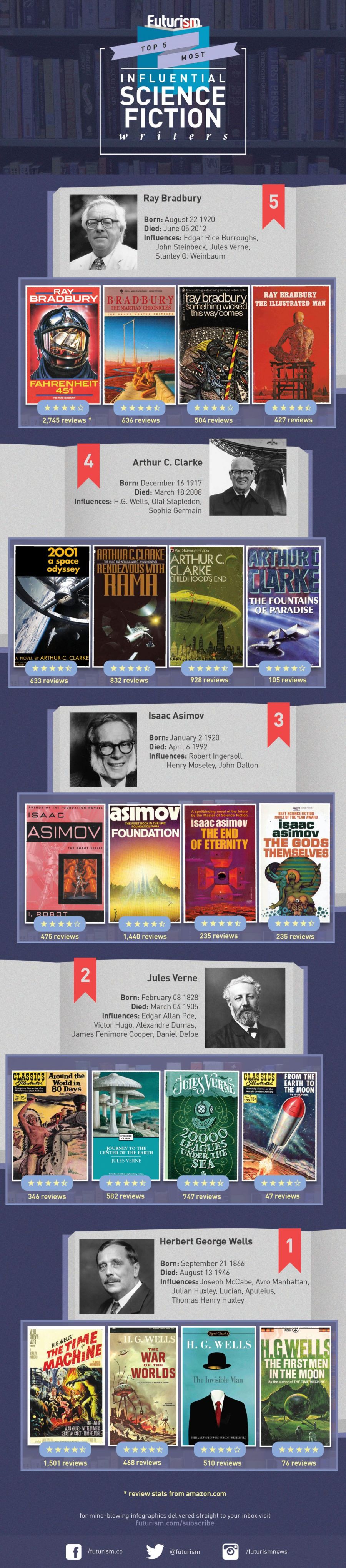
I have no argument that these 5 authors are definitely some of the most influential science fiction authors of all time. You could also argue that they would also rank highly in their influence on fiction in general.
When I was younger Jules Verne was an author I devoured. He and HG Wells were well ahead of their time and are still influencing fiction now (see my comments here). While I have read Asimov and Clarke, I can’t claim to be a fan of their writings. Lots of great ideas, but the books I have read fell for the hard sci-fi trap of reading like physics text books rather than entertaining stories. I feel a little remiss in not having read any Bradbury as yet, at least none that I remember – my book reading before Goodreads is a bit of a blur.
If you go to war with the Mafia do you have to use Tommy Guns?
Mac Bolan is a one man army and he has the Mafia in his sights because reasons. And he gets the girl. I think that sums up the plot. Change Mafia for some other antagonist and you have the plot for the entire series of the long running young-men’s action novels.
When I was young Indiana Jones was the prototype for action-adventure movies. They were amazing. It took a long time for them to be released on DVD, but when they finally did I grabbed them for a movie marathon. I was a little disappointed. They were cheesy. It was hard to tell if they were always cheesy or if they had aged badly because Indiana Jones was the prototype for a genre that had evolved and now looked lame in comparison. NB: don’t take that as a diss on Indiana Jones…. except Kingdom of the Crystal Skull, which was terrible.
The Executioner is similar to Indiana Jones in that it was the prototype – well, one of many – for a genre that has evolved. It’s hard to call this cookie cutter stuff since this was the prototype cutter. It is easy to see the appeal and how this influenced so many people, including my friend Matt Hilton (shameless plug). But so much time has passed since these were new. In that time a generation of authors, TV shows (watch Banshee), and movies have been influenced and created works. The genre has grown, matured, and taken on other elements, such that this feels kinda cheesy. Was it always cheesy? Maybe that was what made this series fun in the first place.
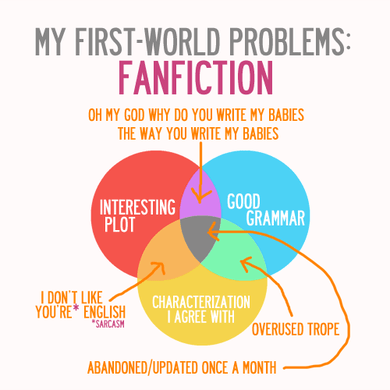
I’ve never understood authors, directors, or other creatives who have a problem with fan fiction (and other derivatives). What is wrong with fans showing their love for something you’ve created by creating something of their own? Sure, it won’t be canon, and they might not get the feel of your work right, but does it really matter?
With that, I give you a fan fiction short from Rocket Jump.*
*Yes, this post is just an excuse to share the above video, even if it is only for the Firefly reference.
Did you know that if you are gaming and say Felicia Day three times into the screen reflection Felicia appears behind you and shoots an arrow into your knee? I heard it on the internet so it must be true.
Memoirs and (auto)biographies are something I generally avoid like the port-a-loos at a music festival. But I make the occasional exception for people I find interesting and humorous. You’re Never Weird on the Internet (Almost) certainly fits this bill, with Felicia sharing her rise from home schooled kid to the Queen of Geeks. I’m not sure if that title comes with lands and tithings or not.
One Xmas many years ago, my sister decided the family was going to watch Dr Horrible’s Sing Along Blog. It was a Joss Whedon production, so there were no objections, at least none that would be taken seriously. There was Doogie Howser, and Captain Mal, and what did I recognise the redhead from? And geez she could sing. That was when I became a fan of Felicia’s work, and also the only reason I’ve watched any Supernatural episodes since the finale in season six. So it was great to hear – yes, the audiobook read by Felicia is the best way to read this book – her talk about her life, career, and how she decided to do what she loved on her terms.
I think the most important chapter in her book is the second to last that covers her thoughts on the dark side of the internet and gaming. As a former gamer I still take a passing interest in things going on the industry, and as a resident of the internet, I’ve taken an interest in that too. To say that guys are dicks to women who dare trespass on “their” turf is to completely fail to understand the level of harassment women endure in trying to enjoy what games and the internet have to offer. But it is worth buying this book just for this chapter.
A much loved book and a classic movie: this month CineFix tackle the differences between the tree and silver halide versions of The Princess Bride by William Goldman.
Many years ago my sister was kind enough to force me to read The Princess Bride. Of course I was a fan of the movie; despite never doing the fancy dress thing for parties I have worn an Inigo Montoya name badge, so yes, I was a fan. But for some reason at the time I had this strange idea that if I had seen the movie then there wasn’t much point in reading the book. I mean, how different could they be?*
Long story short, The Princess Bride is one of my favourite novels, ranking up there with Good Omens and Hitchhikers Guide to the Galaxy. The What’s the Difference? video only makes passing mention to the style of the novel, which is as much about making an abridged version of the original S. Morgenstern novel, as it is about the adventures of Westley and Princess Buttercup. Having to edit out the endless chapters describing trees, the difficult negotiations required to secure the rights to do the abridgement over Florin native Stephen King (who ends up securing the rights to the sequel, Buttercup’s Baby), and generally only including the good parts, are key to the novel. Just about all of this was dropped from the movie, because meta-humour would be too confusing to audiences (trust me, people still don’t understand Inception for some reason). So the novel is quite different from the movie. Read it.
On the subject of the above video, it is interesting in this instance that William Goldman wrote the book and the screenplay. So we are able to see how Goldman has zeroed in on the important parts of the narrative to simplify the movie. Because movie audiences aren’t like us sophisticated book readers. In the anniversary edition of the book, Goldman notes how pleased he was with the movie, particularly the casting that brought the book to life. No mention was made of the budget blow-outs due to Andre The Giant’s alcohol consumption.
*Hence the reason I share this fantastic video series each month: it is my penance for such poor thinking.
One day I’m going to start a think tank and name it after a bodywash – possibly a shampoo – just like Lincoln Child did with his fictional institution, Lux.
There’s a problem in the west wing of the think tank Lux. No, it isn’t that their research is funded by special interest groups. No, it isn’t that they are neo-cons intent on bending governments to their policy wills. Lux has a slight problem with residents going crazy. So they contact Dr Jeremy Logan, a former resident and investigator who specialises in the extraordinary, to figure out what is causing the problems. That’s when they find The Forgotten Room and its contents.
Without realising it, I’ve actually read one of the other Jeremy Logan mysteries. The reason I didn’t realise I had read the first in the series (this being #4) was that Jeremy wasn’t the main character in Deep Storm. But much like Deep Storm, The Forgotten Room is a compelling mystery that hits all the right beats. Where Deep Storm was more techno/sci-fi based, The Forgotten Room has allusions to the supernatural whilst being more conventional. Where Deep Storm had a mysterious illness, The Forgotten Room has a mysterious illness. Where Deep Storm tried to kill off as many characters as possible, The Forgotten Room keeps the fatalities to a minimum. I don’t know why I’m comparing the two books in the series this much, probably because they seem to have the same general plot and feel to them. Although I do prefer the character of Logan to Crane.
As with all Lincoln Child and Douglas Preston books, you can be assured of an entertaining read. Whilst Logan is no Pendergast, he does make for an interesting character to follow as he unravels the mystery. But as with my review of Deep Storm, I did feel this book to be a little too “by the numbers”.




 Tyson Adams