The book business: 2012 vs 2008

There are some interesting claims being levelled in the publishing industry about the death of books (rubbish), that publishers are going broke (only if they messed up) and that the industry is in turmoil (only when scaremongers keep saying it is). Well, the infographic below highlights some statistics on the US book industry – I think I’m going to stop calling it the publishing industry, maybe reading industry is more appropriate. The final figure is the one that everyone should quote the next time a smaller or non-existent advance is offered to authors, or royalty rates are lowered, or high book prices are justified.

This slideshow requires JavaScript.

Source: http://www.newrepublic.com/article/114998/book-business-doing-fine

More anti-Amazon nonsense

This morning I was browsing my various news feeds when I noticed someone had written an article about the arrival of the Amazon Kindle store in Australia. Clearly this article was going to feed my confirmation bias on how awesome it was to have an Aussie version of Amazon available, just like Canada, the UK, India, Germany, Spain, etc. No longer being locked out of some editions of books because of our region, an Aussie store is one step closer to Aussie writers not having all the publishing issues that currently exist, a .au suffix making us feel special: all good! Right?

Well, not according to the article Amazon’s Australian Kindle store: an unhappy ending for the book industry? by Ben Eltham. Rather than stream bile right here, I’ll dissect Ben’s opinion piece about the demise of the protected Aussie book market, and hopefully inject some much needed reality.

Amazon has been prising open the wallets of Australian consumers for years – but what will its local push on Kindle mean for readers, writers and publishers?

It is always good to start an article by using emotive language and by poisoning the well. The use of a logical fallacy so early in the article does not bode well for Ben’s opinion piece.

The local book industry is threatened by Kindle’s entry into the Australian market. When Amazon opened its Australian Kindle store last month, it was to feisty reaction from independent bookshops. Charismatic Sydney bookseller Jon Page of Pages & Pages Booksellers even relaunched his “Kindle amnesty” – a scheme that allows conscientious local readers to swap their Kindle for the Australian book sector’s preferred e-reader, the Kobo, and receive a $50 book voucher for their trouble.

This opening reference to a stand by one independent bookshop being representative of all bookshops is another example of polarizing the argument before raising any actual evidence, essentially further poisoning the well. You see we are set up to believe that the Kobo e-reader is somehow better for Australian bookshops, despite Kobo also being in direct competition with stores in the same way the Kindle is, as well as to love the “feisty” response to the big bully Amazon arriving.

“We’re calling it Kindle Amnesty 2.0,” jokes Page, who is spruiking for the Kobo Aura HD, which he argues is “equal to or better than the Kindle Paperwhite”. Those who read via tablets such as the iPad or Galaxy have access to Kobo reader apps. “We want to take the fight to Amazon because they are so dominant in this market, particularly with the Kindle device,” argues Page. Pointing to the Commonwealth’s 2011 Book Industry Strategy Group report, he claims that Kindle represents about 70% of dedicated e-reading devices. (This figure does not include tablets, phones or laptops). “That’s a problem, because the Kindle locks competition out and locks customers in.”

My idea of a joke is a thing that someone says to cause amusement or laughter, especially a story with a funny punchline. “We’re calling it Kindle Amnesty 2.0” doesn’t really make the grade as a joke, but this is all about, again, poisoning the well and polarizing the reader to the author’s opinion without needing to state facts or evidence.

The next point about the Kobo being as good or better than the Kindle is neither here nor there, it just doesn’t matter. I agree that the Kobo is a great e-reader, but most e-readers are pretty good, you are really choosing an e-reader based upon the stores and catalogue they offer access to. I’ve written before about hearing Kobo Australia’s chief seeming to have a very good idea of what is needed in the market place for readers and authors. But ultimately the raising of Kobo vs. Kindle in a discussion about Aussie bookstores is like raising a conversation about which is the tastier bacon at a vegetarian food store.

Finally we do get some actual data, showing that the Kindle is the biggest e-reading device. Well, d’uh. Amazon have the biggest store and have expanded into the most markets, have invested in technology early, have created new markets themselves, and have….. Okay, let’s not get ahead of ourselves here. The point is that the argument raised is that Amazon and the Kindle have a monopoly. Which is true. What is false about this assertion is the idea that the monopoly isn’t one that can be supplanted by the next generation of technology, or better business models arriving, or the competition preying on Amazon’s weaknesses.

You see, the key weakness for Kindle is also it’s strength. If you lock readers into one store you allow the competition to usurp the market by doing the deals with many stores and libraries (hang on, that’s what Kobo is doing in Australia and Canada!). You also have to remember that the Kindle or any other e-reader is only really for avid readers. Tablets and phones are for the more casual readers, thus they aren’t locked into one device or one store. So we are only another generation of technology away from e-readers losing their advantage over tablets and phones, and the entire Kindle argument becomes moot.

Industry sentiment is divided over the impact of the entry of the tech giant into Australian online retailing. Some have been forecasting impending doom. Others are merely apprehensive about Jeff Bezos’ juggernaut. Amazon’s thin margins terrify competitors. Despite vast revenues, the parent company makes no profit. Amazon raked in US$17bn in net sales last quarter, for an operating loss of US$25m. Analysts and brokers are starting to wonder whether, eventually, Amazon’s gravity-defying stock price will tumble to earth.

This part is a doozy. Ben has framed a false dichotomy in how the industry perceives Amazon. Where is the mention of the people who love their Kindle and the Amazon store? Where is the mention of the people who like their Kindle and Amazon but want to be able to use other formats and borrow e-books from their local library? This is a common false dilemma fallacy used in arguments.

Next the argument goes to Amazon’s business model, providing some facts but leaving out others. Why? Why not mention what the “thin margins” are that terrify competitors? I’d sure like to know. The next point is about how Amazon makes heaps of money, yet doesn’t profit….. Remember above how I mentioned that Amazon had stayed ahead of the competition by expanding and investing? Well that’s where all that revenue is going, straight back into making their business better.

What I’ve always wondered was why an online bookstore was the first one to grab hold of the e-reader concept. E-books are not new, nor are e-readers. They have been waiting in the wings for a decade or more, waiting for a company to invest and make things happen. Why wasn’t this investor a publishing house? Why not a major bookstore chain? Surely they are meant to be knowledgable about their industry and future trends, so why weren’t they the ones creating the new digital marketplace instead of Amazon? The answer is obvious. Amazon had the balls to do it and had an eye on the future, instead of a protectionist view of old and antiquated business and media models. To the victor go the spoils.

But other industry observers have argued that an Australian Amazon presence will be good for consumers and readers. As Kobo’s Malcolm Neil told Melbourne’s Independent Publishing Conference recently: “Amazon is good because the customer likes them … We’re not going to win the argument by telling people they’re wrong.”

Didn’t I say above about Kobo’s boss being a bright guy that knew what the industry wanted? If you’ve heard Malcolm talk about the publishing industry before you know that he has a lot of good points that have been left out, can’t think why. Malcolm’s points are the first example in this article of a different viewpoint being offered. But we’ve already been setup to either disagree with it or ignore it.

Martin Shaw, books division manager at independent retailer Readings, argues that Amazon’s Australia venture may not be such big a deal. “It is only ebooks,” he says. “That market has got so many players in it now, who knows what sort of impact it will have? We will just have to see how the dust settles.” Shaw foresees a coming war of devices in which competitors try to lock customers into competing ecosystems. “I think there will be a lot of devices flooding the market trying to get people to enter the walled garden,” he says. “That will force other e-tailers like Kobo to become more aggressive.”

This speaks to my points above about Amazon and Kindle only being one technology change away from losing market share. I used the example of tablets and phones, but there are other examples in the online stores themselves. Both Kobo and Amazon have exclusive author deals happening. We’ll probably see more of this, which starts to sound like publishing houses and their favoured deals with stores.

Of course the irony is that, in our globalised world, Amazon is not really “starting up” in Australia at all. The retail behemoth has long been prising open the wallets of Australian consumers, who have been buying books and all manner of other things from Amazon in the US for years – estimates of how much that market is worth vary enormously. The move by Amazon to begin an “.au” store that trades in Australian dollars and sells Australian ebooks through Kindle merely makes that custom one step easier. “All that’s changed now is that it’s an Australian-facing site,” Page argues.

I think the irony with this paragraph is the use of the term irony when there appears to be none. But it does give the article a chance to move away from the viewpoints the author disagrees with and move back to more Amazon hate.

There are upsides for consumers. The Gordian knot of digital copyrights, based around various national boundaries, has meant that some US and Australian titles were not available as ebooks in Australia. The new Amazon.com.au store can now stock a much wider range of titles that have Australian-only digital licences.

Lower prices for consumers: Yay!

And prices will be forced lower. Shaw says that we may see “a race to the bottom”. Amazon’s deep pockets, he says, means “they can go there [to low prices] and stay there for as long as they want”. Australian book prices are still much higher than comparable titles internationally. In Amazon’s view, that margin can be returned to consumers in the form of lower prices.

Okay, Yay and Bullshit. Currently Australian e-book prices are ridiculously high. You cannot justify the high cost of an e-book when there are no distribution or printing costs. I have been meaning to post some figures taken from a few publishing houses and their presentation to the shareholder meetings, figures that show just how profitable e-books are for them thanks to the lower costs associated. There is actual irony here, because those same publishing houses are using e-books lower price to justify lower advances and smaller royalty percentages to authors. So Amazon making prices more competitive is a good thing, for readers and authors.

A quick look around the various sites for Australian ebooks revealed some savings. An ebook of Ross Garnaut’s Dog Days worth $9.99 on Kobo, was $9.49 on Amazon. Eleanor Catton’s Booker-winner The Luminaries was $10.68 on Kobo; on Amazon it was $9.35. (As a comparison, a paperback of Dog Days costs $15.29 from Bookworld, while The Luminaries costs $22.49). For other titles, owing to so-called “agency pricing”, Kobo and Amazon’s prices have converged: Christos Tsiolkas’ Barracuda was the same price on both.

Notice that this is the only time “agency pricing” is mentioned. It will not be discussed again. Despite the importance it plays in this entire argument about e-books, pricing, readers, authors, the industry and who is screwing whom.

The other potential winners of Amazon’s entry are successful authors and self-publishers. Amazon’s benefits to authors are controversial, but for the top tier they are real. The Australian publishing industry has been rather wary of embracing the digital world and while it’s hard to pinpoint precise figures, there’s a perception that many local authors have lagged well behind their US counterparts in ebook market penetration. Australian self-publishers will now get a 70% royalty for books sold to Amazon.com.au accounts. International experience has shown that a lucky few will reach big new audiences with bestselling self-published titles. Although on the other hand, mid-rank and lower authors may find themselves little better off.

Well, d’uh. Any new bookstore or way to buy books will favour already successful authors (NB: self-publishers are authors too), because, wait for it, people buy books by successful authors. What is not mentioned is that Amazon algorithms are more likely to expose readers/buyers to authors they haven’t heard of because of purchases they have made or books they have liked. I don’t know if Kobo have a similar system, but I do know that most bookstores do not have anything remotely similar to the promotional power of Amazon for new, emerging or midlist authors.

The statement about Australian self-publishers will “now” get 70% royalties is deliberately misleading. They already get a 70% royalty, that has been the policy from day one at Amazon, it is what all the other self-publishing platforms have come to adopt as well (correct me if I’m wrong on this, I haven’t checked them all).

Meanwhile, agents, publishers and booksellers still face real challenges from digital, Amazon or not. Digital is reshaping the industry and still threatens to cut middlemen out of the chain. Online-only retailers like Bookworld may be the most vulnerable, lacking the size and scale to adequately compete. When Amazon bought Book Depository, the UK retailer popular with Australian consumers, there was consternation in the book industry, despite the Australian Competition and Consumer Commission deciding not to oppose the move.

Yeah, who’d have thought an antiquated business model would be under threat by changes in the industry? And didn’t the article make the point that Amazon has already been in Australia to a large extent for years? So doesn’t this kinda negate any points made here?

As books blogger Patrick O’Duffy wrote recently in a long analysis of Amazon’s entry into the Australian market: “By starting this process of moving into Australia, Amazon is going to permanently affect the local writing, reading, publishing and bookselling world.” That much at least seems certain.

Um, no. This final statement and paragraph are about 10 years out of date. E-books and the ability of authors to manage their own careers without ‘gatekeepers’ is what has changed the industry. This has happened for quite a while now. To say that Amazon opening an Aussie store suddenly changes things completely negates the history and many of the points raised in this article.

Now that I’ve addressed the article by Ben Eltham, paragraph by paragraph, I think it is clear that this article is nonsense. It is just another in the long line of e-book, e-publishing, self-publishing, fear-mongering articles that have come to represent “informed” comment on the publishing industry over the last 5 to 10 years. I for one am sick of these articles, in fact I hate them. It isn’t just the continued “fear of change” mantra they all adhere to. The main reason I hate these sorts of articles is that they are trying to pretend that the publishing industry is hurt by changes that benefit readers and writers. Nothing could be further from the truth. Readers and writers are the publishing industry, everyone else is there at their behest. If those middlemen want to stay in the game then they have to offer something to the readers and writers that is beneficial to both. And the success of Amazon (Kobo, etc) and the various publishing houses (agents, editors, designers, etc) that have adopted/adapted to the new paradigms, only illustrates how out of touch these articles are with the industry. Instead of discussing the real issues, like the squeeze on authors, we get another stream of uninformed bile.

My Top 10 Reading Peeves

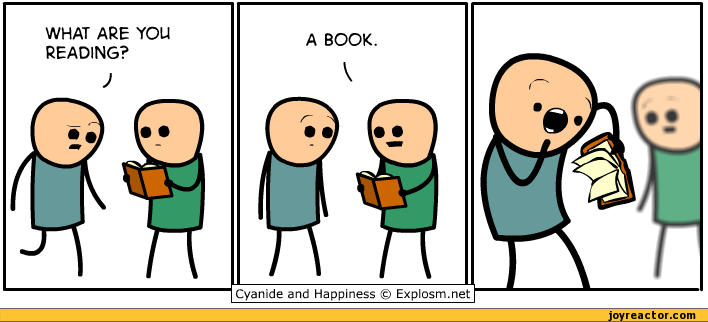
comics-Cyanide-and-Happiness-books-626554

1) Canned laughs
Either a joke is funny or it isn’t. Having the author or characters pointing out that someone has just told a joke – he laughed in response to the hilarious joke – is like beating the reader over the head with the complete Get Smart box set. (insert laughs here) Laugh tracks ruin everything.

2) Street directions
I have a map book and Google Maps works pretty well, I don’t need them included in my novel.

3) Prologues
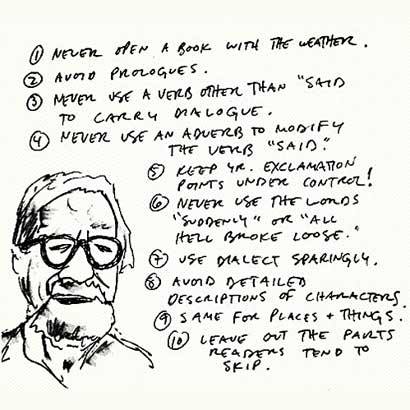
If it doesn’t fit in chapter one it shouldn’t be there. If chapter one isn’t exciting enough then the book has failed to start at the correct spot.

4) Epilogues
I will forgive this if it adds to the story, just as long as it is not just a chapter tying up loose ends. I really don’t care about the hero receiving medals from someone very important. The final chapter should be the end of the story, not a post script of lazy story telling.

5) Purple prose
There are few authors that can get away with flowery language and overly descriptive phrases. I wish authors would stop pretending that they are one of those few authors.

6) That wise old guy character
Why don’t authors just start naming this wise old guy Obi-Wan and be done with it. Sure, there is bound to be a need for a teacher, mentor, or knowledgable character in some stories. But so often the character may as well have been a cardboard cutout, just like Obi-Wan in Star Wars episodes I, II and III.

7) Getting the details wrong
Since when does a Glock have an external safety?* Cordite smell? Racking the slide? Why am I only listing gun mistakes?

8) Including the details
This is similar to the street directions of #2. The excruciating detail that the author has researched is great….. for the author. The reader just wants a story. Accuracy is nice, but overkill is tedious.

9) Using overly common or overly obscure names for characters
Overly common names just blend into the background for me. Overly obscure names might as well be written as @#$%.

10) Having an author name that is very similar to a big name author
I’m looking at you Dale Brown. It really feels like the author has let the marketing department try to rip readers off with the mistaken identity.

See also:
http://kjcharleswriter.wordpress.com/tag/things-i-hate-about-books/
http://101books.net/2013/01/11/9-things-to-do-with-thick-novels-you-hate/

* I actually understand why this one occurs. Often at some stage in editing the types of gun are changed around and ‘Glock’ has become synonymous with ‘gun’. Thus it is quite common for someone to decide that the type of gun originally referenced needs to be changed to a Glock/gun and the details around this aren’t changed to suit.

The Myth of Writer’s Block

Okay, so today I was going to dedicate a post to The Doctor and the 50 year thing, but I got side tracked with watching old episodes and this wonderful video. So instead I’m posting this interesting take on Writer’s Block by Amanda Patterson from Writers Write (original here). As per usual, my comments are in blue.

If you write one page a day you will complete a 365-page novel in a year. TA: Or 500 words a day is 182,500 words or two novels (one if you are writing fantasy, or got carried away).

You are crippling yourself by not starting to write. If it seems an overwhelming task to write a whole book, start with an opening paragraph, then a page, then a chapter. Your first sentence is the first step to being published. TA: Remember, you don’t have to start at the beginning, you can just write down the ideas you’ve had, then link them, or turn the ideas into proper sentences and paragraphs.

Most people who want to write have the belief in their creative success systematically driven out of them – by the business world, by their family, their ‘friends’ and their life experiences. TA: But don’t worry, they’ll be the first ones queuing up for a free copy of your book when it’s published. Tell them you’re busy!

If you were told you were going to die tomorrow, would you regret not having written? TA: Always good to write down the list of people trying to kill you, helps the cops no end.

These are the five most common excuses we hear at Writers Write.

  1. Family:  I have children. I’m the family taxi. I have to be there for my husband/wife. TA: Kids are there to steal your dreams and youth.
  2. Work:  I work long hours. I’m too tired after a day at the office. I have to work overtime so that we can afford a new car / bigger house. TA: Working on someone else’s dream, not yours.
  3. Time:  I’m too busy. I’ll do it tomorrow / next month / next year. I can’t write late at night / early in the morning. TA: Everyone gets 24 hours – well in a solar day at least, 23hrs 56mins in a stellar day – use them wisely!
  4. General:  I’m not inspired. I’m too old/young. I’m too tired/depressed/sick. TA: Seriously? Then just read the books others write.
  5. Our Favourite:  It’s not what you know but who you know in publishing. TA: Publishing isn’t writing, nor is it reading, nor is it the reason you write. Besides, Snookie “wrote” a book; publishers will publish all sorts of trash.

You can have your book or you can have your excuses. You can’t have both. !!!

All of the above are obviously important but don’t fool yourself, writers write; pretenders to the throne make excuses. The reasons for not writing are laziness and lack of self-discipline. TA: Losers always whine about their best. Winners go home and fuck the prom queen.

Do you really want to become a writer?

Writing is lonely. Writing is hard work. Writing is discipline. There is no quick fix and there is no one to applaud or to criticize you. You will be your own boss and you will have to motivate and reward yourself. And after all of this you will face the possibility of rejection – the dedicated writer will not stop here.

Remember: You have permission to write badly. (In your first drafts, of course TA: or if your name is Stephanie Meyer or EL James, all your drafts and finished work are written badly)

Follow @Writers_Write

See also: http://sdwriters.wordpress.com/2011/07/07/how-to-sneak-around-writer%E2%80%99s-block/

Rules of thriller writing

archer-gun

1) If in doubt kill a character.

2) Plot holes can be filled with dead bodies.

3) Nothing screams thriller more than characters screaming for their lives.

4) Car chases and shootouts are mandatory.

5) The hero can’t die, unless you really, really want them to.

6) The bad-guy must die horribly, unless you want them for the sequel. Even then, the sequel could be a zombie thriller.

7) Beloved minor characters must die the most gruesome and pointless of deaths.

8) Minor bad-guys must follow the inverse ninja law.

9) The only reason a gun should ever run out of bullets is if it puts the hero in even more danger.

10) The rules of physics and biology do not apply to the hero, unless it puts them in even more danger.

11) Deus ex machina can only be used once in the story, so use it wisely.

12) If your story hasn’t given your readers a heart attack, rewrite it so that it does.

See also:
http://davidmorrell.net/on-writing/writing-advice/
http://www.creative-writing-now.com/how-to-write-a-thriller.html
http://www.writerscentre.com.au/sydney/thrillerwriting.htm

How Copyright Made Mid-Century Books Vanish

Now this is an interesting study and article. I have actually noticed this phenomenon myself when looking for crime and thriller authors and books from various generations. Everyone knows Robert Howard, Raymond Chandler and Donald E Westlake, they’ve pretty much stayed in print since they were released. But what about the other authors from the 1920s to the mid 1980s? On various writer forums you will find writers re-releasing their novels from the 80s as ebooks. This is the downside of copyright. Read for this article I stole am re-blogging from The Atlantic.

by REBECCA J. ROSEN
A book published during the presidency of Chester A. Arthur has a greater chance of being in print today than one published during the time of Reagan.

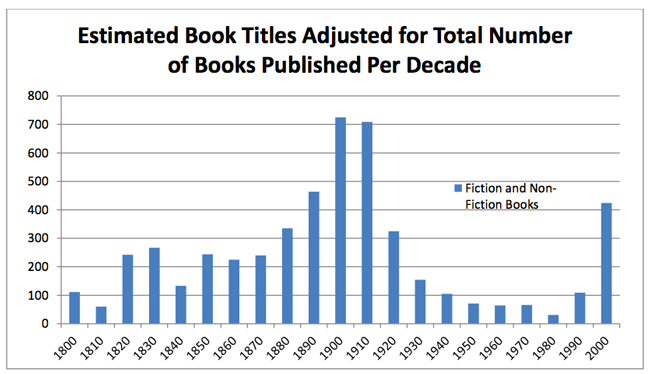
neweditions650-thumb-650x317-128315 Last year I wrote about some very interesting research being done by Paul J. Heald at the University of Illinois, based on software that crawled Amazon for a random selection of books. At the time, his results were only preliminary, but they were nevertheless startling: There were as many books available from the 1910s as there were from the 2000s. The number of books from the 1850s was double the number available from the 1950s. Why? Copyright protections (which cover titles published in 1923 and after) had squashed the market for books from the middle of the 20th century, keeping those titles off shelves and out of the hands of the reading public. Heald has now finalized his research and the picture, though more detailed, is largely the same: “Copyright correlates significantly with the disappearance of works rather than with their availability,” Heald writes. “Shortly after works are created and proprietized, they tend to disappear from public view only to reappear in significantly increased numbers when they fall into the public domain and lose their owners.” The graph above shows the simplest interpretation of the data. It reveals, shockingly, that there are substantially more new editions available of books from the 1910s than from the 2000s. Editions of books that fall under copyright are available in about the same quantities as those from the first half of the 19th century.

Publishers are simply not publishing copyrighted titles unless they are very recent. But this isn’t a totally honest portrait of how many different books are available, because for books that are in the public domain, often many different editions exist, and the random sample is likely to overrepresent them. “After all,” Heald explains, “if one feeds a random ISBN number [into] Amazon, one is more likely to retrieve Milton’s Paradise Lost (with 401 editions and 401 ISBN numbers) than Lorimer’s A Wife out of Egypt (1 edition and 1 ISBN).” He found that on average the public domain titles had a median of four editions per title. (The mean was 16, but highly distorted by the presence of a small number of books with hundreds of editions. For this reason, statisticians whom Heald consulted recommended using the median.) Heald divided the number of public-domain editions by four, providing a graph that compares the number of titles available. titlesavailable650 Heald says the picture is still “quite dramatic.” The most recent decade looks better by comparison, but the depression of the 20th century is still notable, followed by a little boom for the most recent decades when works fall into the public domain. Presumably, as Heald writes, in a market with no copyright distortion, these graphs would show “a fairly smoothly doward sloping curve from the decade 2000-20010 to the decade of 1800-1810 based on the assumption that works generally become less popular as they age (and therefore are less desirable to market).” But that’s not at all what we see. “Instead,” he continues, “the curve declines sharply and quickly, and then rebounds significantly for books currently in the public domain initially published before 1923.” Heald’s conclusion? Copyright “makes books disappear”; its expiration brings them back to life. The books that are the worst affected by this are those from pretty recent decades, such as the 80s and 90s, for which there is presumably the largest gap between what would satisfy some abstract notion of people’s interest and what is actually available. As Heald writes:

This is not a gently sloping downward curve! Publishers seem unwilling to sell their books on Amazon for more than a few years after their initial publication. The data suggest that publishing business models make books disappear fairly shortly after their publication and long before they are scheduled to fall into the public domain. Copyright law then deters their reappearance as long as they are owned. On the left side of the graph before 1920, the decline presents a more gentle time-sensitive downward sloping curve.

But even this chart may understate the effects of copyright, since the comparison assumes that the same quantity of books has been published every decade. This is of course not the case: Increasing literacy coupled with technological efficiencies mean that far more titles are published per year in the 21st century than in the 19th. The exact number per year for the last 200 years is unknown, but Heald and his assistants were able to arrive at a pretty good approximation by relying on the number of titles available for each year in WorldCat, a library catalog that contains the complete listings of 72,000 libraries around the world. He then normalized his graph to the decade of the 1990s, which saw the greatest number of titles published. adjustedtitles650 By this calculation, the effect of copyright appears extreme. Heald says that the WorldCat research showed, for example, that there were eight times as many books published in the 1980s as in the 1880s, but there are roughly as many titles available on Amazon for the two decades. A book published during the presidency of Chester A. Arthur has a greater chance of being in print today than one published during the time of Reagan. Copyright advocates have long (and successfully) argued that keeping books copyrighted assures that owners can make a profit off their intellectual property, and that that profit incentive will “assure [the books’] availability and adequate distribution.” The evidence, it appears, says otherwise.

Further reading: http://artlawjournal.com/can-find-creative-work-copyright-free/

Bookworm problems

Bookworm problems
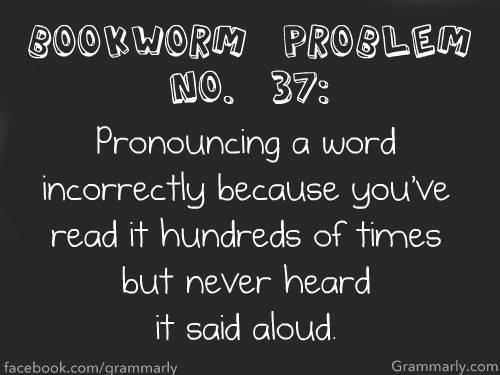
Have you ever suffered from this? I often have this problem with names, especially those from a Dravidian or Sino-Tibetan base. The earliest word I can remember reading but not knowing how to pronounce was acknowledge and its derivatives. It was a favourite verb of WE Johns in his Biggles books, using it instead of said in dialogue. I know, acknowledge is phonetic so there shouldn’t have been a problem, but I was young and my dictionary was very small.

How to commit the perfect murder to paper: Advice from David Thomas, aka Tom Cain

David Thomas’, aka Tom Cain, first novel

I’m not a fan of The Daily Fail. They really do seem to swim in the shallow end of the wading pool of intelligence. That said, today they featured an article from a very good novelist, someone with whom I’ve had some interesting conversations: David Thomas / Tom Cain. So like any good blogger, I’ve stolen the article and reposted it here. Enjoy!

All over the world, on countless flights, heading to an infinite number of sun-loungers people are burying their heads in stories about secret agents, serial killers, ace detectives, evil villains and sexy heroines.

Thrillers are a huge business. They make up about a third of all books sold, and 60 per cent of them are bought by women.

For the very top writers, the rewards are astonishing. In 2009, James Patterson signed a four-year, 17-book deal worth almost £100 million. At the peak of Da Vinci Code mania, Dan Brown was making more than £50 million a year.

For every one of those megastars, of course, there are hundreds of professional thriller writers who just about make it pay – even a best-selling paperback in the UK, shifting 100,000 copies won’t earn much above £50,000 in royalties – and thousands of wannabes. I’m lucky enough to come in the ‘make it pay’ category. So I know what the job entails. And trust me, it isn’t easy.

One Monday morning in June 2006 my literary agent sent out a book proposal to publishers: the first 150 pages of a thriller called The Accident Man that I’d written under the pseudonym Tom Cain. The book had a very simple, high-concept premise. Its hero, Sam Carver, was the man who killed Princess Diana. Her name appeared nowhere in the book. But on the night of August 31, 1997, Carver makes a black Mercedes saloon crash in Paris.

He’s been told the Merc’s passenger is a terrorist. But of course it’s actually a woman – the most famous woman in the world.

By lunchtime on Wednesday, I’d received a six-figure offer for the UK rights to the book and a sequel and Hollywood bought an option on the film rights.

Before you even try to write a thriller, take a good look at how other people have done it. It looked like an overnight success, but I’d spent two years producing one useless draft after another. My agent made it perfectly clear to me that I’d made a bundle of rookie mistakes. My plot didn’t hold together. My writing was hopelessly cluttered with unnecessary descriptions of Parisian streets and buildings as I tried to stuff all my endless research down on to the page.

The characters weren’t believable and the one the agency boss liked best – Carver’s love-interest, a Russian girl called Alix – was killed in the second act. The only crumb of comfort the agency boss could offer me was: ‘I never quite hated it enough to stop reading.’

In the end, we managed to fix all the problems. But in 25 years as a journalist and author, during which I’d written countless articles, edited three magazines and published half-a-dozen non-fiction books, nothing had been as difficult as writing a half-decent thriller.

But what if you want to write a thriller of your own? Here are ten tips that I would give to anyone who dreams of seeing their book piled up in airport bookstores . . .

1) Study the masters…

Before you even try to write a thriller, take a good look at how other people have done it. Read every book you can get your hands on, but watch great TV series and movies, too. The Accident Man was hugely influenced by the way the writers of 24 kept multiple storylines running simultaneously, each with its own cliffhanger, so there was always someone, somewhere, in desperate trouble. 24 was relentless, it never for one moment let you relax. And you always wanted more.

2) …but don’t overdose on them

I devoured Lee Child’s Jack Reacher books. I tried to imitate his terse, punchy, bone-dry style. The result was garbage. Then I realised that Lee writes the way he does because that’s how he naturally expresses himself. So I went back to the way I write naturally, and it made a huge difference. Your book will work best if it’s told in your voice.

3) Structure, structure, structure…

Property is all about location, thrillers are all about structure. Everything has to fit together with the precision of a Swiss watch, powered by a coiled spring. Frederick Forsyth’s The Day of The Jackal is a masterpiece of construction. I once drew a chart on a couple of sheets of A2 paper that consisted of a scene-by-scene analysis of Jackal, showing which characters appeared when, and how Forsyth balanced character development, plot and action over the course of the book. It really helped me understand the structural skeleton beneath the flesh and blood of the words.

4) Show, don’t tell

Always make your point through action and dialogue, rather than exposition. At the beginning of The Accident Man I had a few paragraphs explaining that Sam Carver was an assassin who created fatal ‘accidents’. An American publisher said: ‘Nice idea, but it would be much better if we could see him do it.’ So I wrote a new opening scene in which he killed a people trafficker by sabotaging his helicopter using a miniature spanner, a hacksaw and two blobs of Blu-Tack. So we saw Carver at work. Better.

Some thrillers are whodunits: the hero arrests the bad guy. Some are action thrillers: the hero kills the bad guy. Either way, you’re going to be thinking of new ways to kill people and cool weapons to kill them with

5) It’s the people, stupid

Stieg Larsson thought his Millennium Trilogy was all about the sexism and corruption at the rotten heart of Swedish society. But the millions who devoured The Girl With the Dragon Tattoo couldn’t care less about that. They just fell in love with an emaciated, autistic computer genius called Lisbeth Salander. It’s the characters in a book – and that means the villains, lovers and supporting cast, too – that make it work. So if you ever think, ‘I’ve got a great idea for a thriller,’ make sure you’ve got great characters for it too.

6) Grab them by the throat and their minds will follow

If you don’t grab your readers’ attention in the opening chapter, they’ll find another book. Robert Ludlum’s The Bourne Identity has one of the all-time great opening sequences: a man, fished from the Mediterranean, unaware of who or what he really is, unknowingly possessed of all the deadly skills of a CIA assassin. The men from Hollywood threw away 90 per cent of what Ludlum wrote in the Bourne trilogy. But they kept that opening and it gave them a billion-dollar franchise.

7) Think like a killer

Some thrillers are whodunits: the hero arrests the bad guy. Some are action thrillers: the hero kills the bad guy. Either way, you’re going to be thinking of new ways to kill people and cool weapons to kill them with. So clip grisly news stories. Read books about real killers. Go on the gun-nut channels on YouTube. And read books by Patricia Cornwell and Jonathan Hayes. They’re professional forensic pathologists. Dead bodies are, quite literally, their business.

8) Count the bullets in the gun

If you want your readers to believe your story, get the details right. Either write about what you know, or do your research properly. Don’t have your hero firing 15 bullets from a Walther PPK if it can only hold nine. And speaking of James Bond’s favourite gun, Ian Fleming pulled off a brilliant trick when he created 007. The idea of a cool, sophisticated, lady-killing assassin, touring the world On Her Majesty’s Secret Service, bumping off bad guys who wanted to rule the world was as much a fantasy as Harry Potter playing Quidditch. But because the details were so brilliantly observed – Bond’s cars, his Sea Island cotton shirts, the exotic locations – it all felt completely real.

9) Always think of Option C

The fun part of thriller writing is getting your characters into dangerous situations and then getting them out again. An editor once gave me a great tip: put your protagonist in a situation where they have to choose between two options, A and B. Then write option C. In one of my books, Carver is on holiday in the Greek islands with a girl. They’re having lunch. The restaurant is attacked by gunmen. The girl is shot. Carver just escapes, after a frantic chase. He stops for a second to think. Should he go after the gunmen, or should he get the hell off the island? That’s options A and B. Then the phone rings. He takes the call. It’s the girl – the one who’s just been shot dead. And that’s Option C.

10) If you’re a man, ditch the dumb blondes and tough girls

You have a male lead, and chances are he’s going to want a girl. And she’s going to be sexy, sultry and splendidly beddable. That’s fine – being ravished by the hunky hero works for girls too. Just don’t make her a cliché. Very few men now dare write a ditsy, screaming blonde. But many dream up superchicks who are as tough and deadly as any man. Most women don’t see themselves that way. Strong, yes. Gorgeous, certainly. But intelligent, complex and vulnerable, too, if you don’t mind. And if you’re a woman, bin the bad guys and the goody-goodies. Men are more complicated than that.

…but finally, and most importantly

Forget the rules . . . except one. The first four, clunkingly tabloid words of The Da Vinci Code, ‘Renowned curator Jacques Saunier’ tell you that Dan Brown can’t write for toffee. There’s not a character in the book that’s close to being interesting and the ‘facts’ on which the whole thing depends have been debunked. Yet somehow it’s is completely unputdownable. So in the end, the only rule that really counts is: keep the reader reading.

Revenger’, Tom Cain’s latest Sam Carver novel is published in paperback by Corgi, £6.99. ‘Ostland’, by David Thomas, is published by Quercus, £16.99

Serif and sans-serif fonts

I don’t like to claim a lot of expertise in formatting, layout and graphic design. That isn’t to say I can’t do it, nor that I haven’t produced a couple of my own publications and newsletters. But I found myself in an argument recently defending using both serif and sans-serif fonts, which is like arguing over what colour black you want to wear to a metal concert (that’s a no-brainer: the darker one).

Anyway, there are plenty of anal retentive science nerds like me who have gone and done research into what fonts work best for which applications. There are actually a surprising number of research studies on fonts and readability.

First, let’s define what is meant by serif and sans-serif fonts. (From Scribe Consulting) Consider the following characters. The first is set in Georgia, a lovely serif font. The second is set in Verdana, an easy-to-read sans-serif font.

serif sans-serif
    serif     sans serif

Notice the small decorative flourishes at the ends of the strokes in the left character. These are called serif. The right character does not have these strokes and is said to be a sans-serif font. Sans is the French word for without. So I could be currently sans-pants.

The most common examples of these two font types are Times New Roman (serif) and Arial (sans-serif). Bleeding Cowboys would be an example of an overused serif font that is for try-hards, whilst Comic Sans is an overused sans-serif that shows a lack of taste.

Now there are some simple rules of thumb when it comes to using serif and sans-serif fonts, which are backed up by science. The first rule is that thumbs only hit the space bar once. The second rule is:

Use serif for printed work

Serif fonts are usually easier to read in printed works than sans-serif fonts.

This is because the serif make the individual letters more distinctive and easier for our brains to recognise quickly. Without the serif, the brain has to spend longer identifying the letter because the shape is less distinctive.

The commonly used convention for printed work is to use a serif font for the body of the work. A sans-serif font is often used for headings, table text, captions, and ransom notes.

The third rule is:

Use sans-serif for online work

An important exception must be made for the web. Printed works generally have a resolution of at least 1,000 dots per inch; whereas, computer monitors are typically around 100 dots per inch. Even Apple’s much vaunted retina display is only around 300 dots per inch — much lower than print.

This lower resolution can make small serif characters harder to read than the equivalent sans-serif characters because of their more complex shapes. Yes this does give you an excuse to buy a 4K monitor for your computer. Go nuts.

It follows that small on-screen text is better in a sans-serif font like Verdana or Arial.

Further reading: http://alexpoole.info/blog/which-are-more-legible-serif-or-sans-serif-typefaces/

Cool infographic:

serif-vs-sans-serif

Infographic from here.

Know your knives

The average writer is normally not someone prone to being a gun or knife nut. Sure, they might have a gun or two, they may have a kitchen drawer full of knives, but that doesn’t mean they know which one needs to be used in the scene where the zombies have just broken through the barrier erected by the pirates who were lucky to survive the assault of the purple ninjas. That means extra research. And ninjas.

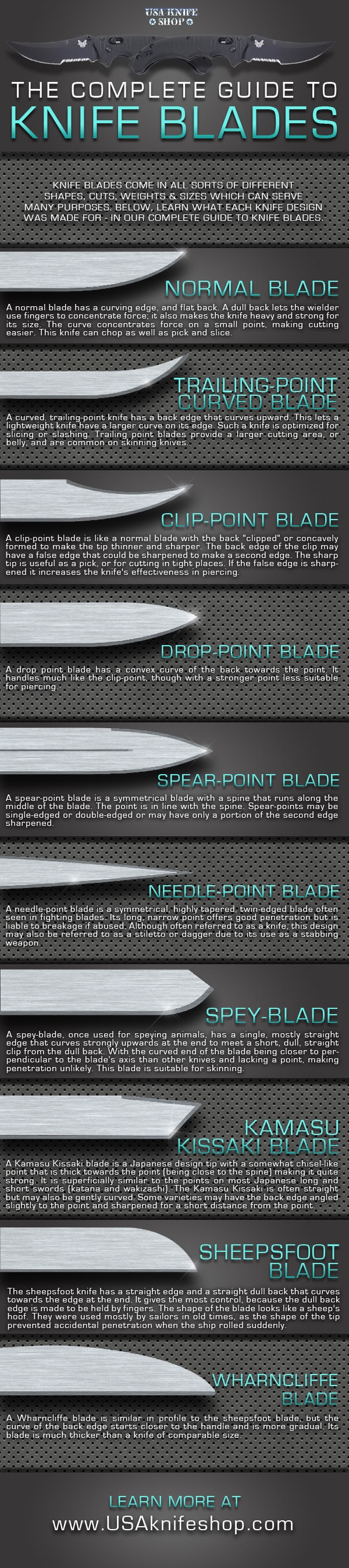
Below is a handy graphic that covers a few of the basic blade types of knives. Obviously there are variations on these types and, of course, the difference between a serrated and plain edged blade.

knife blades

Also check out this handy video:

Update: The knife aficionado from the above video has just produced a new information video that I felt was worth including. He goes into the blade types and what they are best used for and why. Very informative if you want to brush up on knives.

Update: adding another graphic that covers a few more blade types.

Word limits

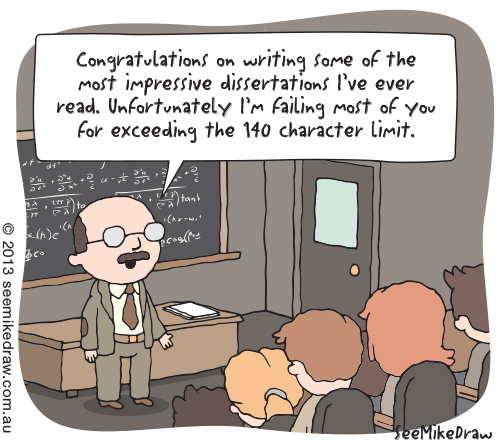
140-charactersWord limits are a funny thing. I’ve never had a problem being succinct, in fact I can be too brief in my writing. Yet other writers are known for sitting down with editors to cull half their manuscript. There are other writers still that should have sat down with an editor and culled half their manuscript and saved the readers all that page skipping.

This is one of the reasons to like Twitter. It forces you to practice creating a thought or sentence in a manner that may be foreign. For example, the complex phrase:

I disagree with your supposition as it is currently unsupported by any evidence, either presented by yourself or in the scientific literature, thus there is no way you can sway my position.

Can be replaced with:

Lol, moron!

This says everything that is needed and doesn’t dance around the topic. Conversely the reply to this can be shortened from:

Whilst you are allowed to disagree with me, my opinion still stands. I cannot provide a summary of the relevant scientific literature at this time, but this is information that is readily understood and referenced in the literature. Thus I will endevour to provide a few examples when I am able to, but in the meantime I’d invite you to read further on the topic, as I suspect that you will agree with me once you have.

Can be replaced with:

Well screw you and the horse you road up on.

The trick is to start with what your key points are and not overuse exposition to explain those points. The 140 character limit can help with this a lot.

In the meantime, if you aren’t a fan of See Mike Draw, I suggest you become one now.

7 Tips on How to Research Your Novel

research

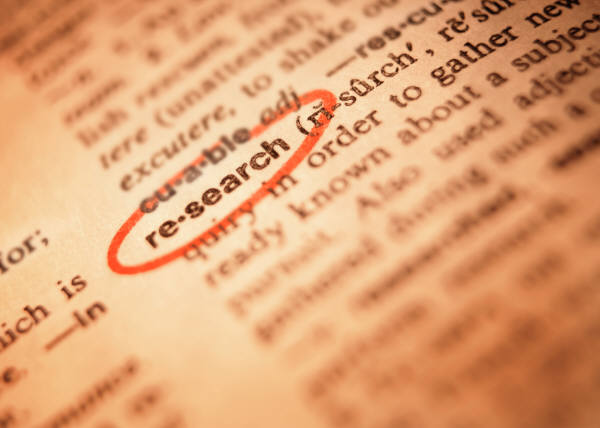
As regular readers here know, I’m a science-a-holic and love research. I actually have an archive dedicated to a minor topic for my first novel, a topic that I make passing reference to, a topic that probably has me on a watch list somewhere. It was book research, I swear!

Below is an article by Chuck Sambuchino which I stole am reblogging from Writer’s Digest with a few of my own comments.

Ernest Hemingway said writers should develop a built-in bullshit detector. I imagine one reason he said that is because readers have their own BS indicators. They can tell when we writers are winging it. We have to know well the worlds in which our characters act. Readers don’t have to believe the story really happened, but they need to believe it could have happened. So with that in mind, I offer a few thoughts on research for fiction.

1) You can’t do too much research.  In the military, we often say time spent gathering intelligence is seldom wasted. The same concept applies in writing a novel. You never know what little detail will give a scene the ring of authenticity. In a college creative writing class, I wrote about how a scuba diver got cut underwater, and in the filtered light at depth, the blood appeared green. Though the professor didn’t think much of that particular story, he did concede he liked that detail. In fact, he said, “The author must have seen that.” And indeed, I had. TA: Whilst I agree with Chuck’s point, there is such a thing as too much research for a novel. At some point you have to be writing and not researching. There will be some things that you just can’t know and some things that your readers really don’t need to know.

2) You can write what you know. We’ve all heard it before. Experience may be a cruel teacher, but it is a thorough one, and experience is the purest form of research. Things you’ve done in life can inform your writing in surprising ways, even if your characters aren’t doing those same things. When I watch the old Star Trek shows, I can tell the creator of those stories knew something about how a military flight crew works together. He understood the dynamics of a chain of command, how a commander learns the strengths and weaknesses of his team, how those team members communicate and work together. Turns out that Gene Roddenberry flew B-17 bombers in World War II. Roddenberry, of course, never flew a starship. But he knew from experience how the crew of a starship might interact. TA: Except that the away team was always the most important members of the crew and one poor guy in a red shirt; how does that make sense? The idea is that you get to be captain so you don’t have to go down to the planet, no matter how hot the green women are. I’ve commented before that Right What You No is not always good advice and that is what research is for. Sometimes research will be spending a day in a squad car or an overnighter in prison. Although, I don’t advise that, felonies are hard to live down.

3) You can do research on the cheap. If you can’t visit an exotic location, you can pick up the phone and ask questions. The worst that can happen is somebody thinks you’re crazy and they hang up. Then you just call somebody else. (Believe me; I used to be a reporter, and I’ve learned a lot by asking questions.) You can visit a museum, or a museum’s website. Develop an eye for small details. TA: Plus we have the internet now.

4) You can find anything on YouTube. Seriously. But you have to know your topic well enough to know how to search for it. In The Renegades, I have a character whose lungs collapse from a bullet wound. I wanted to find out how a medic would treat that condition. Sure enough, someone had posted on YouTube a video with detailed instructions on how to perform a needle decompression. TA: Just check to make sure that the video is reliable. There are some shams and woo on youtube, but that is a topic for my Mythtaken series.

5) You can find things anywhere. You’re a writer, so keep pen and paper within reach during all waking hours. You might get an idea from a news story on television, a song on the radio, or a Tweet from a friend. About a year ago, I was driving along on a warm day, listening to the radio with the windows down. An oldies station played “Wind of Change,” the Scorpions’ 1990 ballad hailing the end of the Cold War. I hadn’t heard that song in a long time, and I cranked it up loud. The power chords brought back memories of flying relief missions to Bosnia while based at a disused Cold War alert facility in Germany. Not really a pleasant memory–for Bosnia, the end of the Cold War brought something worse. But that flashback from early in my military career inspired a scene in the novel I’m working on now. TA: Same goes for inspiration.

6) You can use all of your senses. Find out what things taste like, smell like, feel like. Say, for example, you set your novel in Warsaw. Maybe you can’t afford to go to Warsaw, but you can go to a Polish restaurant. (See item number three above, about doing research on the cheap.) As you write one of your scenes, include a line about the texture and flavor of something your character eats. You’ve just made your writing more alive and authentic. TA: Just remember that you have far more than five senses, more like 14 to 20.

7) You can leave some things out. If you do thorough research, you’ll find more material than you need, and no reader likes a data dump. In my own writing, I could bore you to death with the details of aircraft and weapons. But a very good creative writing professor once advised me to let the reader “overhear” the tech talk. Say, if my character punches off a HARM missile, that might sound authentic and pretty scary. But scary would turn to dull if I stopped the action to tell you that HARM stands for High-Speed Anti-Radiation Missile, which homes in on anti-aircraft missile radars. Who cares? The damn thing goes boom. TA: Very good point. This point is all too often done with weapons or brands or street directions. No-one cares!

Since I began this discussion with a quote from a literary heavyweight of the twentieth century, I’ll end it with another: Ezra Pound said literature is news that stays news. And a novelist has nearly the same obligation for accuracy as a news writer. Your made-up world must ring true. Not even fantasy writers can completely escape reality; the old Star Trek episodes sometimes referred to real science, which made them more believable within their context. Though we invent tales that didn’t really happen, we drape them over a framework of real-life facts.