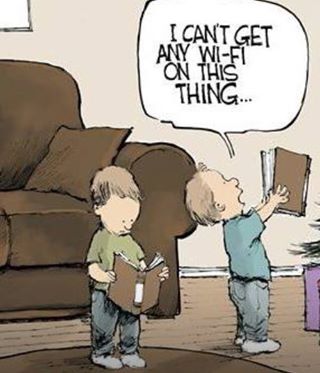
Kids these days

wifiWifi

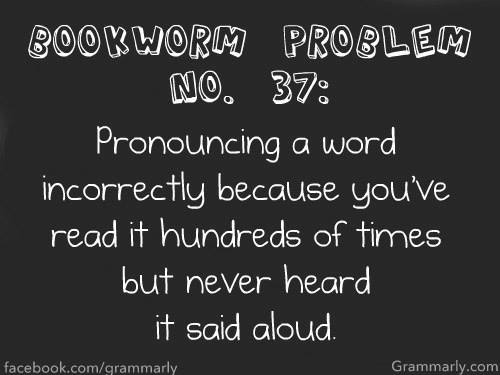
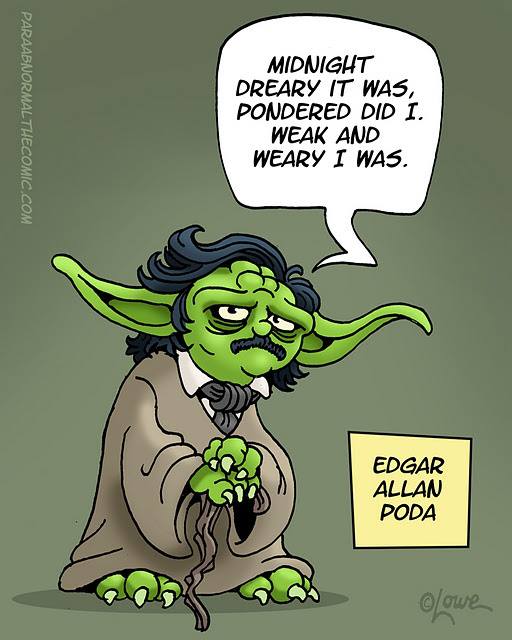
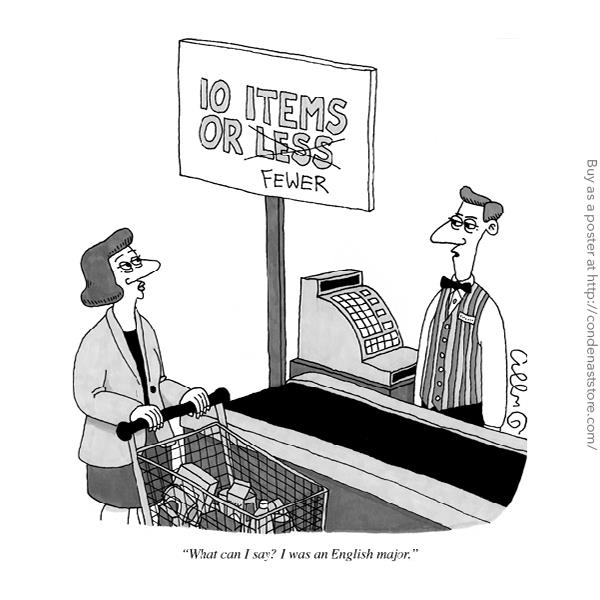
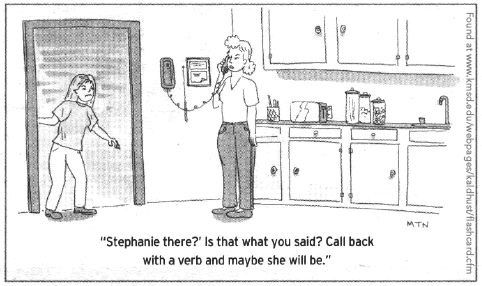
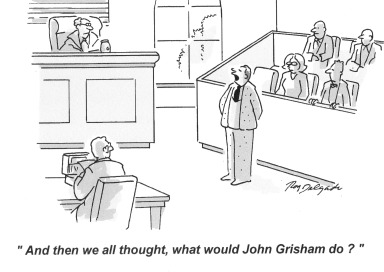
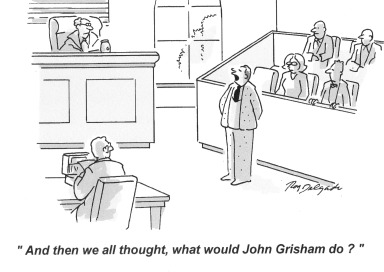
Okay, just to be serious for a moment: Do you see a difference between these two cartoons?

Some of you may have seen the awesomeness displayed on The Oatmeal in response to people stealing his cartoons and taking his authorship off of the picture. Well, here is another example. The second cartoon was the one I was going to post, but I realised that it didn’t have the creator’s signature on it and it would be good to make sure that they were able to be tracked down. Ideally, I’d link to the original, but that isn’t always possible, especially when someone has decided to edit out the part that would help us all identify the author. It is clear that the author isn’t even asking for money, the cartoon is freely published on the web, yet someone has decided to remove the content creator as though they aren’t important.

Free content is great, so many people with great ideas are creating stuff to entertain others just because they enjoy it. I’m going to try and make sure the authors (content creators) are acknowledged when possible, I hope everyone else does too.

What Reader Species Are You?

This is a cool infographic from Laura E. Kelly. I definitely fall into the Book Cherisher genus, but I’m not sure if I’m of the species Hoarder or Compulsive Buyer.

(Click to view at original large size.)
What Species of Reader Are You?--Infographic

Visit Laura-e-Kelly.com for more about books, reading, and authors.

7 Tips on How to Research Your Novel

research

As regular readers here know, I’m a science-a-holic and love research. I actually have an archive dedicated to a minor topic for my first novel, a topic that I make passing reference to, a topic that probably has me on a watch list somewhere. It was book research, I swear!

Below is an article by Chuck Sambuchino which I stole am reblogging from Writer’s Digest with a few of my own comments.

Ernest Hemingway said writers should develop a built-in bullshit detector. I imagine one reason he said that is because readers have their own BS indicators. They can tell when we writers are winging it. We have to know well the worlds in which our characters act. Readers don’t have to believe the story really happened, but they need to believe it could have happened. So with that in mind, I offer a few thoughts on research for fiction.

1) You can’t do too much research.  In the military, we often say time spent gathering intelligence is seldom wasted. The same concept applies in writing a novel. You never know what little detail will give a scene the ring of authenticity. In a college creative writing class, I wrote about how a scuba diver got cut underwater, and in the filtered light at depth, the blood appeared green. Though the professor didn’t think much of that particular story, he did concede he liked that detail. In fact, he said, “The author must have seen that.” And indeed, I had. TA: Whilst I agree with Chuck’s point, there is such a thing as too much research for a novel. At some point you have to be writing and not researching. There will be some things that you just can’t know and some things that your readers really don’t need to know.

2) You can write what you know. We’ve all heard it before. Experience may be a cruel teacher, but it is a thorough one, and experience is the purest form of research. Things you’ve done in life can inform your writing in surprising ways, even if your characters aren’t doing those same things. When I watch the old Star Trek shows, I can tell the creator of those stories knew something about how a military flight crew works together. He understood the dynamics of a chain of command, how a commander learns the strengths and weaknesses of his team, how those team members communicate and work together. Turns out that Gene Roddenberry flew B-17 bombers in World War II. Roddenberry, of course, never flew a starship. But he knew from experience how the crew of a starship might interact. TA: Except that the away team was always the most important members of the crew and one poor guy in a red shirt; how does that make sense? The idea is that you get to be captain so you don’t have to go down to the planet, no matter how hot the green women are. I’ve commented before that Right What You No is not always good advice and that is what research is for. Sometimes research will be spending a day in a squad car or an overnighter in prison. Although, I don’t advise that, felonies are hard to live down.

3) You can do research on the cheap. If you can’t visit an exotic location, you can pick up the phone and ask questions. The worst that can happen is somebody thinks you’re crazy and they hang up. Then you just call somebody else. (Believe me; I used to be a reporter, and I’ve learned a lot by asking questions.) You can visit a museum, or a museum’s website. Develop an eye for small details. TA: Plus we have the internet now.

4) You can find anything on YouTube. Seriously. But you have to know your topic well enough to know how to search for it. In The Renegades, I have a character whose lungs collapse from a bullet wound. I wanted to find out how a medic would treat that condition. Sure enough, someone had posted on YouTube a video with detailed instructions on how to perform a needle decompression. TA: Just check to make sure that the video is reliable. There are some shams and woo on youtube, but that is a topic for my Mythtaken series.

5) You can find things anywhere. You’re a writer, so keep pen and paper within reach during all waking hours. You might get an idea from a news story on television, a song on the radio, or a Tweet from a friend. About a year ago, I was driving along on a warm day, listening to the radio with the windows down. An oldies station played “Wind of Change,” the Scorpions’ 1990 ballad hailing the end of the Cold War. I hadn’t heard that song in a long time, and I cranked it up loud. The power chords brought back memories of flying relief missions to Bosnia while based at a disused Cold War alert facility in Germany. Not really a pleasant memory–for Bosnia, the end of the Cold War brought something worse. But that flashback from early in my military career inspired a scene in the novel I’m working on now. TA: Same goes for inspiration.

6) You can use all of your senses. Find out what things taste like, smell like, feel like. Say, for example, you set your novel in Warsaw. Maybe you can’t afford to go to Warsaw, but you can go to a Polish restaurant. (See item number three above, about doing research on the cheap.) As you write one of your scenes, include a line about the texture and flavor of something your character eats. You’ve just made your writing more alive and authentic. TA: Just remember that you have far more than five senses, more like 14 to 20.

7) You can leave some things out. If you do thorough research, you’ll find more material than you need, and no reader likes a data dump. In my own writing, I could bore you to death with the details of aircraft and weapons. But a very good creative writing professor once advised me to let the reader “overhear” the tech talk. Say, if my character punches off a HARM missile, that might sound authentic and pretty scary. But scary would turn to dull if I stopped the action to tell you that HARM stands for High-Speed Anti-Radiation Missile, which homes in on anti-aircraft missile radars. Who cares? The damn thing goes boom. TA: Very good point. This point is all too often done with weapons or brands or street directions. No-one cares!

Since I began this discussion with a quote from a literary heavyweight of the twentieth century, I’ll end it with another: Ezra Pound said literature is news that stays news. And a novelist has nearly the same obligation for accuracy as a news writer. Your made-up world must ring true. Not even fantasy writers can completely escape reality; the old Star Trek episodes sometimes referred to real science, which made them more believable within their context. Though we invent tales that didn’t really happen, we drape them over a framework of real-life facts.

Why are books abandoned?

Goodreads survey

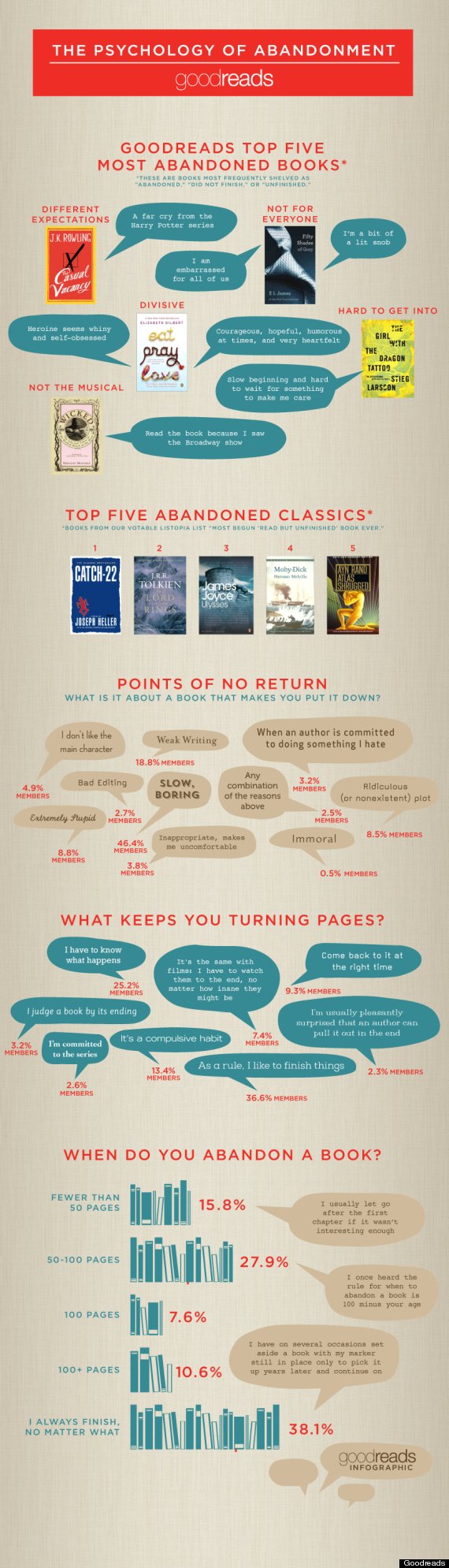
This is a great breakdown of why readers give up on reading and which books are the biggest culprits. I largely agree with most of the sentiments and books listed. It is very interesting to me that “slow and boring” is the #1 reason people abandon a book. Not just #1, it is number two and three as well, as the next reason had less than half the polling. I’ll offer a few comments on each part of the infographic.

Top Five most abandoned:

Casual Vacancy by JK Rowling – This is no surprise really. I’ve heard it is a particularly dark book and the remark that people were expecting it to be more like Harry Potter shows that no-one read the blurb.

Fifty Shades of Grey by EL James – Who’d have thought that Twilight fan-fiction would be poorly written?

Girl With the Dragon Tattoo by Stieg Larsson – When you have a trilogy that could have been edited down to a single book there are bound to be a few readers, like me, who think this ‘thriller’ is slow going.

I haven’t read or heard of anything to do with the other two on the list.

Top Five most abandoned classics:

Catch-22 by Joseph Heller – When people don’t get it then of course they will abandon it. One of the rejection letters for Catch-22 said, “I haven’t the foggiest idea about what the man is trying to say…Apparently the author intends it to be funny – possibly even satire – but it is really not funny on any intellectual level.”

Lord of the Rings by JRR Tolkien – I can see why some people wouldn’t like this book. While I loved it, there are unnecessary characters, events, chapters, scenes, language use… Okay, it’s long and waffly.

Ulysses by James Joyce – At a thousand pages, unless you like an abridged, tiny text, 600 page version, this was never going to be an easy read.

Moby Dick by Herman Melville – I read this when I was in primary school. It made my brain hurt. Very hard to read and spent a long time between the interesting scenes.

Atlas Shrugged by Ayn Rand – Great doorstop, selfish drivel to read.

Reasons for and against abandoning:

It really doesn’t surprise me that the reason most people give up reading a book is that it is boring and slow (46.4%). What does surprise me is that the reason people keep reading a book is not because people are enjoying the book but that they like to finish a book regardless (36.6%). Clearly too many people are reading books that they don’t like. Given the popular books, like the already mentioned Stieg Larsson and EL James, it shouldn’t be surprising. I’ve read instruction manuals with more action than The Girl With the Dragon Tattoo.

I remember working out roughly how many more books I could read in my life. I have averaged reading roughly 100 books per year for the last few years. Now excluding a major accident or the zombie apocalypse, I should be able to continue this average until I die peacefully in my car travelling the wrong way down the freeway at age 90. That means I can only read another 5,500 books in my life! There are more than 8,500 books published every year in Australia, so my chances of reading all the great books I’d like to are slim. We really don’t have time to waste on bad books.

Writing program scams

scam

On the internet there is a scam born every minute. Whilst I love to receive email from Nigerian royalty, ads for another penis enlargement (the first one was enough, thanks), and fat loss supplements that promise not to kill me, there is a line I have to draw in the sand: scamming writers.

Most writers are hobbyists, writing because they love it. The handful that do get paid enough to be full-time writers are few and far between. So targeting writers with scams means that somewhere a monkey at a keyboard is not being fed today.

Yesterday in a writers discussion group a question was raised about whether a New, Amazing, Adjective, program that promises to give you the tools to write a 400 word article in 7 minutes.

Dear Fellow Article Writer (TA: read as mark or sucker),

Did you watch the video above? It’s hard to believe so many people would send me such raving, unsolicited testimonials about my product, “How to Write an Article in 7 Minutes or Less“. (TA: Testimonials!? Wow! I’m sold!)

If you did watch the video, you saw with your own eyes how I was able to take people who spent more than an hour writing an article down to as fast as 5 minutes per article! (TA: 5 minutes? I thought you said 7 minutes. Does this mean I get a 2 minute abs program as a bonus?)

….. (TA: edited out promotional garbage about money back guarantees and how only the scammer found the secret or developed it or whatever)

Here’s how it works.

  1. Open my 3 special research sites. (TA: Wikipedia?)
  2. Use my “skim and grab” research technique to find your
    3 main points (Takes about a minute).  (TA: Yes, because reading comprehension is for suckers.)
  3. Outline each main point with two “sub points.” (another minute here). (TA: What if there is only one point?)
  4. Use the “opening paragraph” template to quickly create the first paragraph (About 30 seconds). (TA: Insert generic filler paragraph, got it.)
  5. Use the “main point” template to write paragraphs for each of your three main points. (2-4 minutes total time) (TA: So, standard writing….)
  6. Use the “conclusion paragraph” template to quickly create the conclusion. (another 30 seconds). (TA: Insert generic filler paragraph at the end.)
  7. Proof read your article, and then submit it to the appropriate directory. (1-2 minutes) (TA: Click spellcheck and hope it doesn’t miss anything.)

The cool thing about using these templates is you never have to pause to think…but… you also enough leeway so each article remains 100% unique, and of the highest quality. (TA: Yes, why would you want to actually put any thought into your writing. Highly overrated for quality content.)

Don’t worry: My method has nothing to do with plagiarism! (TA: Of course not, copy and pasting clearly takes too long.)

Anyway, you can learn all about my 7 minute article technique by reading my special report, “How to Write an Article In 7 Minutes”, and by watching the videos I made showing step by step how I do it.

But that’s not all… (TA: Steak knives?)

My first thought upon seeing the claim that you could learn to write an article in 7 minutes was that it was bullshit. The fact that people would question if it would be possible left me a little stunned, a little thirsty and thinking about having a nap. Clearly some people are going to be taken in by these kinds of scams. So I want to just illustrate my critical thinking process and how I avoided being scammed for $37 (I know, huge amounts of money).

Drawing from personal experience, I know that I’d spend more than 7 minutes just copying in the links to the research I’d be citing, let alone reading those articles. So the first check is to understand just how long certain tasks actually take you. This scam works on the idea that you don’t really measure the time it takes for common activities. You may know how long you spend on a full article or day’s writing, but not on the little parts, like one paragraph or one sentence. So when someone presents you with some figures, you are bound to think, “Well, I do spend a lot of time staring at the screen and checking my Twitter feed.” Suddenly you are partly receptive to the con.

Let’s have a look how long writing actually takes the average person. Being a science nerd, I like to have a few figures around on writing, reading, average number of Facebook posts per hour; you know, important stats. The average person has a typing speed of 60-100 words per minute, which gives you 400-700 words written in 7 minutes. The page claims a 400 word article with 5 minutes actual writing time, which is 300-500 words written. So unless you are setting world speed records, then you won’t have time to do anything other than write.

What about editing? Nothing is perfect on a first draft, nothing! So even if this is a 400 word article written in 5 minutes, you still need to edit. Reading speed is not the same as proofreading speed, with average speeds of 180-200 words per minute. That’s another 2-3 minutes.

This program is essentially promising that you will achieve touch-typing dexterity and speed that will allow you to write fast. It is also promising that you’ll have fantastic reading comprehension skills at skim reading speeds. And yet you will also somehow acquire a time machine to allow you to also plan, research and create a concise article at the same time. The fact that the scam makes no mention of boosting your reading and writing speed and giving you keys to the Deloren, shows that someone is wanting your money and your credules.

In the meantime, send me $40 and I’ll send you some templates that I guarantee will add inches to your penis and bust size, whilst making you an awesome writer and friends with Nigerian royalty. Trust me, no-one lies on the internet.

Ladies and Gentlemen, Stephen King

I’ve just finished reading Carrie so Stephen King is inhabiting my brain. A friend posted a Pink Floyd video (Learning to Fly) and for some reason the video below was one of the suggested “view this next” videos. It’s hard to see the link between a Stephen King lecture and a Pink Floyd live performance, perhaps the members of Pink Floyd were terrorised by a monster clown in their youth.

Regardless, this lecture from Stephen King covers a range of topics in a Q&A format. The most important part is his opinion on the phenomenons of Twilight and 50 Shades of Grey. Don’t fast forward to 48:20 for his Twilight and 50 Shades of Shit comments.

Pulse Pounding Tales is here!

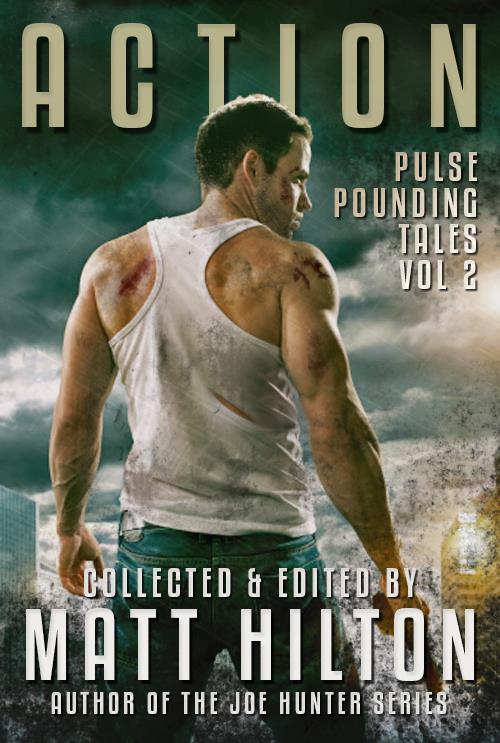
Cover for the second edition.

As I mentioned recently, my short story, Hard Wood, appears in the new compilation of Pulse Pounding Tales from Matt Hilton. You can get your copy from either:

Amazon US

Amazon UK

CONTENTS
Introduction by Matt Hilton
Dirk Ramm: Unsheathed by Matt Hilton
Sins of Omission by Ian Graham
See Saw by James Oliver Hilton
Uninvited Guests by Rod Glenn
The Missionary by Paul D Brazill
Hard Wood by Tyson Adams
Black Tuesday by Alex Shaw
.50 Contingency Plan by Jochem Vandersteen
Cold Redemption By Les Morris
Kokoro by Andrew Scorah
Get Cutter! By James Hopwood
Jardine Rides Again by Ian McAdam
Jack Be Nimble by Gavin Hunt
Exit Wound by Steve Christie
As Heroes Fall By Frank Sonderborg
Goofy Brings The House Down by Richard Godwin
Grand Central: Terminal by Terrence P. McCauley
The Fixer by Dean Breckenridge
Soup Sandwich by Christopher L. Irvin
Pasnuta Means Arena of Death! by Richard Prosch
Mududa’s Revenge by Graham Smith
97 Ways To Die In Istanbul by Paul Grzegorzek
It’s Noir or Never by Absolutely*Kate
Push by Kevin Michaels
You Only Die Once by Rhesa Sealy
Man About Town by Alan Griffiths
Hanoi Heat by Iain Purdie
Hammertime by Asher Wismer
When The Devil Catches Up by Lee Hughes

Bonus Tale
Suited and Booted by Matt Hilton

Good News Everyone!

A while ago I had my short story, Hard Wood, accepted into the second Pulse Pounding Tales compilation by Matt Hilton. I’ve held off on making this announcement until the submissions were officially closed. For those unfamiliar with volume one of Pulse Pounding Tales, buy it now. You’ll thank me later. Volume 2 is due out later this month.

Cover for the second edition.

The first edition included short stories from many renowned and upcoming thriller authors, including: Matt Hilton (duh!), Zoë Sharp, Stephen Leather, Adrian Magson and Steven Savile. If the previous edition and my submission (Hey! I’m allowed to think I’m awesome) are anything to go by, this second installment should be just as awesome. For more on whose stories you will get to read, see here.

Hard Wood is about Steve: disabled in the war in outer Desert-stan, he now makes sure containers at a shipping yard aren’t lonely at night. Steve stumbles across some heavily armed smugglers and decides that he is the only one who can stop them escaping before the police can arrive. Pity that Steve is not heavily armed and is missing a leg. For a little background to the underlying topic of the short, read this little non-fiction synopsis about illegal logging.

I’d like to thank Matt for the opportunity to publish my story with him. I’d also like to congratulate my fellow authors who I will be sharing pages in the compilation with.

Update:

Here’s the final line-up to ACTION: Pulse Pounding Tales Vol 2 everyone:

CONTENTS
Introduction by Matt Hilton
Dirk Ramm: Unsheathed by Matt Hilton
Sins of Omission by Ian Graham
See Saw by James Oliver Hilton
Uninvited Guests by Rod Glenn
The Missionary by Paul D Brazill
Hard Wood by Tyson Adams
Black Tuesday by Alex Shaw
.50 Contingency Plan by Jochem Vandersteen
Cold Redemption By Les Morris
Kokoro by Andrew Scorah
Get Cutter! By James Hopwood
Jardine Rides Again by Ian McAdam
Jack Be Nimble by Gavin Hunt
Exit Wound by Steve Christie
As Heroes Fall By Frank Sonderborg
Goofy Brings The House Down by Richard Godwin
Grand Central: Terminal by Terrence P. McCauley
The Fixer by Dean Breckenridge
Soup Sandwich by Christopher L. Irvin
Pasnuta Means Arena of Death! by Richard Prosch
Mududa’s Revenge by Graham Smith
97 Ways To Die In Istanbul by Paul Grzegorzek
It’s Noir or Never by Absolutely*Kate
Push by Kevin Michaels
You Only Die Once by Rhesa Sealy
Man About Town by Alan Griffiths
Hanoi Heat by Iain Purdie
Hammertime by Asher Wismer
When The Devil Catches Up by Lee Hughes

Bonus Tale
Suited and Booted by Matt Hilton

The 10 Commandments of How to Write a Thriller

I love a good thriller. To me novels are meant to, first and foremost, entertain. Some flowery prose may be interesting, the relationships and settings may be fascinating, but if there isn’t any imminent danger to life, limb and puppies, then I’m likely to be throwing the book away.

Mystery, crime and thriller genres are often lumped together or confused for one another. This is kinda like cars, some people don’t know the difference between cars and will just go by colour. While it’s true that they often overlap, there’s a distinct difference: in a mystery there is a puzzle to solve, in a crime there is a crime to solve after it has occurred (although there may be others committed later in the story), whilst a thriller is all about knowing that a crime is going to be committed and the story details the prevention of it.

In an article on Writer’s Digest, Zachary Petit put forward a list by Brian Garfield. He called this the 10 Commandments of thriller writing, because you can’t have a thriller if someone isn’t breaking some rules.

The 10 Commandments of How to Write a Thriller

Start with action; explain it later. TA: I especially agree with this point. I’m sick of “thrillers” that take the first half of the book to set up the action.
Make it tough for your protagonist.
Plant it early; pay it off later.
Give the protagonist the initiative.
Give the protagonist a personal stake.
Give the protagonist a tight time limit, and then shorten it.
Choose your character according to your own capacities, as well as his/hers.
Know your destination before you set out.
Don’t rush in where angels fear to tread.
Don’t write anything you wouldn’t want to read. TA: You know, like street directions and descriptions of flowers and home renovations.
For the full piece, “10 Rules for Suspense Fiction” by Brian Garfield, click here.

At the 2008 Maui Writers Conference, bestselling thriller writer Gary Braver (Skin Deep) said that dread drives thrillers. You know who the good guys and bad guys are. Dull moments will lose an audience, and writers can’t afford to lose an audience, even for one page. To captivate an audience (and agents and publishers), Braver offers these 10 essential ingredients for a successful thriller.

1. You need to have a good story. Thrillers want to be thrilled. A common element in thrillers is that the protagonist will fall victim to someone else’s scheme and get stuck in a moment of dread. There are only three themes in all of literature: death and rebirth (Stephen King’s Misery); the hero slaying a dragon to restore the world to normalcy (James Bond, Indiana Jones); and the quest to make life better (The Da Vinci Code). Know which theme fits your story.

2. Write about the underdog. Tell your thriller from the point of view of the person with the most to lose. The protagonist gives the story character. Give him baggage and emotional complexity.

3. Multiple points of view can give you great range in a thriller. They allow you inside the heads of many characters, which can build more dramatic tension and irony.

4. Open your book with an action scene. Don’t put biographical information or exposition in Chapter 1 (do that later). Introduce the crime—which tells you the stakes—and introduce the hero and villain, and even some obstacles the protagonist may face.

Don’t sacrifice style—use metaphors and good language—but stick with action.

5. Early on, make clear what your protagonist wants and what he fears. You should know what the protagonist wants and how he would end the novel if he were writing it.
There are two quests: Stopping the bad stuff from happening (In The Silence of the Lambs, it’s to stop Buffalo Bill from killing) and dealing with the character’s baggage (for Clarice to be a good, professional FBI agent in a [then] male-dominated profession).

Think Cinderella: Her main quest is to get to the ball. It’s about liberation. When she gets to the ball she finds freedom.

6. Make your characters miserable. Ask what the worst thing is that could happen to your protagonist and make it worse. Give them grief, false hope, heartaches, anxiety and near-death experiences. We don’t want our protagonist to win until the end.

7. Your main characters have to change. It has to be an emotional change that shows growth and victory over some of his baggage. In The Silence of the Lambs, Clarice is stronger and tougher at the end and she gets a good night’s sleep.

8. Pacing must be high: Strong Narrative Thrust. Each scene should reveal something new, no matter how slight it is. Don’t tell us about stuff that has nothing to do with the story. The villain has a ticking clock, so there’s no time to waste on pages with useless information. Short paragraphs and white space are good. Consider using cliffhangers at the end of every chapter, albeit a sudden surprise or provocative announcement.

9. Show—don’t tell. Avoid the passive voice. Use action verbs (He heard the screams in his bedroom). Avoid adverbs—they are cheesy and cheap ways of telling instead of showing. Don’t start sentences with –ing words (“He stared” vs. “Staring at the …”). Make the subject and verb close and up front in the sentence.

10. Teach us something. Make sure your audience has learned about something—an animal, medical treatment, social issue—so we walk away with more knowledge.

History Repeating – The 7 Plots

A friend made the comment to me recently that a film we had both watched was merely a rip-off of another film. Rip-off is a bit harsh in my opinion. If we think hard about all the books and films we’ve ever watched and then break them down into their general plots you start to see a lot of patterns. Boy meets girl. Girl meets boy. Buddies team up to do something awesome. Odd couple team up to do something awesome. When all said and done, it is hard to identify anything truly original.

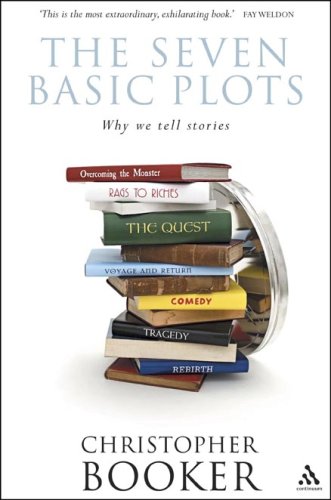
As a result, people often say that there are only a certain number of basic plots and that any story is really just a variation on these plots. Depending on how detailed they want to make a “basic” plot, different writers have offered a variety of solutions. An article I found lists these

1 Plot:

Attempts to find the number of basic plots in literature cannot be resolved any more tightly than to describe a single basic plot. Foster-Harris claims that all plots stem from conflict. He describes this in terms of what the main character feels: “I have an inner conflict of emotions, feelings…. What, in any case, can I do to resolve the inner problems?” (p. 30-31) This is in accord with the canonical view that the basic elements of plot revolve around a problem dealt with in sequence: “Exposition – Rising Action – Climax – Falling Action – Denouement”. (Such description of plot can be found in many places, including: Holman, C. Hugh and William Harmon. A Handbook to Literature. 6th ed. New York: Macmillan Publishing Co, 1992.) Foster-Harris’ main argument is for 3 Plots (which are contained within this one), described below.

3 Plots:

Foster-Harris. The Basic Patterns of Plot. Norman: University of Oklahoma Press, 1959. Foster-Harris contends that there are three basic patterns of plot (p. 66):

  1. “’Type A, happy ending’”; Foster-Harris argues that the “Type A” pattern results when the central character (which he calls the “I-nitial” character) makes a sacrifice (a decision that seems logically “wrong”) for the sake of another.
  2. “’Type B, unhappy ending’”; this pattern follows when the “I-nitial” character does what seems logically “right” and thus fails to make the needed sacrifice.
  3. “’Type C,’ the literary plot, in which, no matter whether we start from the happy or the unhappy fork, proceeding backwards we arrive inevitably at the question, where we stop to wail.” This pattern requires more explanation (Foster-Harris devotes a chapter to the literary plot.) In short, the “literary plot” is one that does not hinge upon decision, but fate; in it, the critical event takes place at the beginning of the story rather than the end. What follows from that event is inevitable, often tragedy. (This in fact coincides with the classical Greek notion of tragedy, which is that such events are fated and inexorable.)

7 Plots

7 basic plots as remembered from second grade by IPL volunteer librarian Jessamyn West:

  1. [wo]man vs. nature
  2. [wo]man vs. [wo]man
  3. [wo]man vs. the environment
  4. [wo]man vs. machines/technology
  5. [wo]man vs. the supernatural
  6. [wo]man vs. self
  7. [wo]man vs. god/religion

20 Plots:

Tobias, Ronald B. 20 Master Plots. Cincinnati: Writer’s Digest Books, 1993. (ISBN 0-89879-595-8)
This book proposes twenty basic plots:

  1. Quest
  2. Adventure
  3. Pursuit
  4. Rescue
  5. Escape
  6. Revenge
  7. The Riddle
  8. Rivalry
  9. Underdog
  10. Temptation
  11. Metamorphosis
  12. Transformation
  13. Maturation
  14. Love
  15. Forbidden Love
  16. Sacrifice
  17. Discovery
  18. Wretched Excess
  19. Ascension
  20. Descension.

36 Plots

Polti, Georges. The Thirty-Six Dramatic Situations. trans. Lucille Ray.

Polti claims to be trying to reconstruct the 36 plots that Goethe alleges someone named [Carlo] Gozzi came up with. (In the following list, the words in parentheses are our annotations to try to explain some of the less helpful titles.):

  1. Supplication (in which the Supplicant must beg something from Power in authority)
  2. Deliverance
  3. Crime Pursued by Vengeance
  4. Vengeance taken for kindred upon kindred
  5. Pursuit
  6. Disaster
  7. Falling Prey to Cruelty of Misfortune
  8. Revolt
  9. Daring Enterprise
  10. Abduction
  11. The Enigma (temptation or a riddle)
  12. Obtaining
  13. Enmity of Kinsmen
  14. Rivalry of Kinsmen
  15. Murderous Adultery
  16. Madness
  17. Fatal Imprudence
  18. Involuntary Crimes of Love (example: discovery that one has married one’s mother, sister, etc.)
  19. Slaying of a Kinsman Unrecognized
  20. Self-Sacrificing for an Ideal
  21. Self-Sacrifice for Kindred
  22. All Sacrificed for Passion
  23. Necessity of Sacrificing Loved Ones
  24. Rivalry of Superior and Inferior
  25. Adultery
  26. Crimes of Love
  27. Discovery of the Dishonor of a Loved One
  28. Obstacles to Love
  29. An Enemy Loved
  30. Ambition
  31. Conflict with a God
  32. Mistaken Jealousy
  33. Erroneous Judgement
  34. Remorse
  35. Recovery of a Lost One
  36. Loss of Loved Ones.

It is therefore inevitable that it is all just a little bit of history repeating.

More examples: The Seven Basic Plots summary and Google answers.

Top 10 Rules for Mystery Writing


Crime_writing_comic
  1. In mystery writing, plot is everything. Because readers are playing a kind of game when they read a detective novel, plot has to come first, above everything else. Make sure each plot point is plausible, and keep the action moving. Don’t get bogged down in back story or go off on tangents.
  2. Introduce both the detective and the culprit early on. As the main character, your detective must obviously appear early in the book. As for the culprit, your reader will feel cheated if the antagonist, or villain, enters too late in the book to be a viable suspect in their minds.
  3. Introduce the crime within the first three chapters of your mystery novel. The crime and the ensuing questions are what hook your reader. As with any fiction, you want to do that as soon as possible.
  4. The crime should be sufficiently violent — preferably a murder. For many readers, only murder really justifies the effort of reading a 300-page book while suitably testing your detective’s powers. However, also note that some types of violence are still taboo including rape, child molestation, and cruelty to animals.
  5. The crime should be believable. While the details of the murder — how, where, and why it’s done, as well as how the crime is discovered — are your main opportunities to introduce variety, make sure the crime is plausible. Your reader will feel cheated if the crime is not something that could really happen.
  6. The detective should solve the case using only rational and scientific methods. Consider this part of the oath written by G.K. Chesterton for the British Detection Club: “Do you promise that your detectives shall well and truly detect the crimes presented to them using those wits which it may please you to bestow on them and not placing reliance on nor making use of Divine Revelation, Feminine Intuition, Mumbo Jumbo, Jiggery-Pokery, Coincidence, or Act of God?”
  7. The culprit must be capable of committing the crime. Your reader must believe your villain’s motivation and the villain must be capable of the crime, both physically and emotionally.
  8. In mystery writing, don’t try to fool your reader. Again, it takes the fun out. Don’t use improbable disguises, twins, accidental solutions, or supernatural solutions. The detective should not commit the crime. All clues should be revealed to the reader as the detective finds them.
  9. Do your research. “Readers have to feel you know what you’re talking about,” says author Margaret Murphy. She has a good relationship with the police in her area, and has spent time with the police forensic team. Get all essential details right. Mystery readers will have read a lot of books like yours; regard them as a pretty savvy bunch.
  10. Wait as long as possible to reveal the culprit. They’re reading to find out, or figure out, whodunit. If you answer this too early in the book, the reader will have no reason to continue reading.

by Ginny Wiehardt

Source for Image

From Writers Write Blog.

Banned Books: The Huff Post sequel

It seems that the Huffington Post are stealing my article ideas. Only three days after my article lamenting censorship of books, they do an article on the 2013 Banned Books campaign (September 22-28th).

Now I’m not bitter, in fact, I’m currently covered in orange sherbet. So this follow-up article is to add my support to the Banned Books Campaign and talk about the most frequently challenged books of last year. The annual report of the American Library Association had a lot of interesting findings. They are still having problems with publishers allowing them to loan ebooks (sigh – I bet the same arguments were made when libraries first started lending books), the people using libraries still think that they offer a very important service, they have become technology and research hubs for people, but visit rates have dropped a bit. The really interesting thing for me – because I’m not American, let alone a member of an American library, so all of those points are belly lint to me – was the top ten list of challenged books for 2012.

Here is the Office of Intellectual Freedom’s Top Ten List of Frequently Challenged Books in 2012:

■ Captain Underpants (series), by Dav Pilkey (offensive language, unsuited for age group) TA: Exactly what were parents expecting from a book with this title?

■ The Absolutely True Diary of a Part-Time Indian, by Sherman Alexie (offensive language, racism, sexually explicit, unsuited for age group) TA: Oh noes, a young adult book that doesn’t treat the readers like kids!!

■ Thirteen Reasons Why, by Jay Asher (drugs/alcohol/smoking, sexually explicit, suicide, unsuited for age group) TA: Another young adult book that deals with real issues, can’t have that!

■ Fifty Shades of Grey, by E. L. James (offensive language, sexually explicit) TA: An erotica book that is sexually explicit….. Words to describe the stupid, fail me.

■ And Tango Makes Three, by Justin Richardson and Peter Parnell (homosexuality, unsuited for age group) TA: Based on real penguins, must be evil!!

■ The Kite Runner, by Khaled Hosseini (homosexuality, offensive language, religious viewpoint, sexually explicit) TA: Be warned, the characters aren’t white or Christian!!

■ Looking for Alaska, by John Green (offensive language, sexually explicit, unsuited for age group) TA: Written by John Green, so clearly the complainants were too stupid to enjoy the book.

■ Scary Stories(series), by Alvin Schwartz (unsuited for age group, violence) TA: The title clearly didn’t give the game away for some sensitive little souls.

■ The Glass Castle, by Jeannette Walls (offensive language, sexually explicit) TA: Real life is clearly too confronting for some readers.

■ Beloved, by Toni Morrison (sexually explicit, religious viewpoint, violence) TA: Someone clearly thinks that slavery is a lot more fun than the author portrayed it.

The thing I find striking about this top ten list is that the books are all multiple award winners (except that crud by EL James, which makes up for lack of awards with sales to keep a publishing house afloat). As such, I’d hazard a guess that most of the complaints are coming from people who haven’t read the book, nor let their little darlings near a book. We can only hope that next year people are too busy reading good books to complain about them.

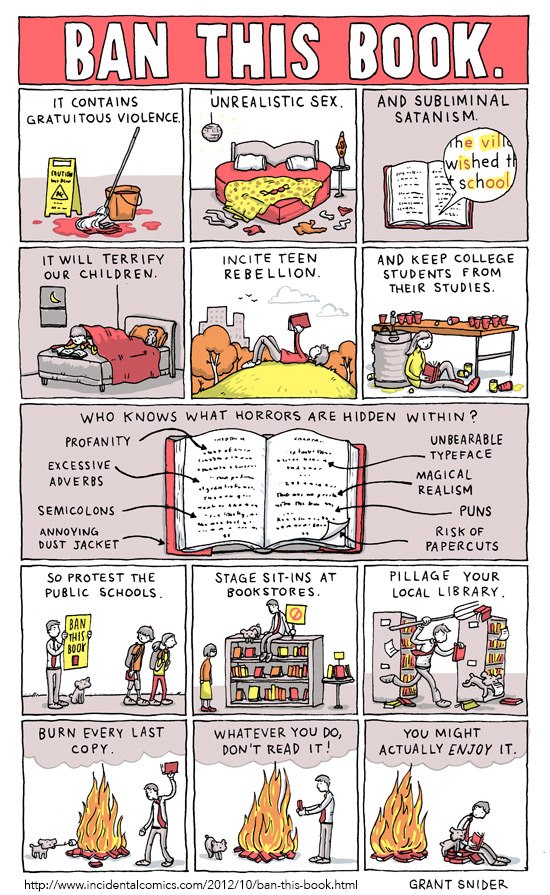
Banning books

306052_582022981816696_1299899960_n

I’m against censorship. Unfortunately many are in favour of censoring books. You may have heard of the outcry over the decision to edit Mark Twain’s classic, Huckleberry Finn, to stop calling the main supporting character, N-word Jim. What you may not have heard is that schools had stopped teaching Huckleberry Finn because they didn’t want to have to explain the historical and racial undertones and themes of the book. We can’t have a literary book actually studied now, can we! Definitely don’t want to look at Twain’s biting commentary on racism in the south of America, because that would mean discussing racism, and we like to pretend it isn’t still an issue.

It isn’t just the school curricula that are being impacted, it is libraries and book stores as well. The list of frequently challenged books is far too long and the reasons cited are far too ridiculous. For example, Brave New World by Aldous Huxley is regularly objected to for being: insensitivity; nudity; racism; religious viewpoint; sexually explicit. Seriously? What about the other complaints?

I’m offended by the word ‘sustainable’ as it is ambiguous term that is used politically as a catch-cry to gloss over reality. Does that mean I can complain about books containing that word? And what is sexually explicit? Is it when two characters embrace for a passionate kiss, or when the ball-gag and whips make an appearance? Are parents really concerned about the level of “smut” in the books their kids read or are they trying to have books banned because readers might enjoy them?

I know I have a complaint about the Twilight books. Now, my reasons aren’t like the other complaints (Reasons: religious viewpoint and violence), I just don’t like them because I’ve been dragged to see four terrible films by my wife. Ban the Twilight books so that husbands and boyfriends everywhere aren’t tortured with Kirsten Stewart’s “acting.”

Bookstore profitability

With the recent changes in publishing everyone has been talking about who the losers from the rise of ebooks has/will be. I think it is safe to say that publishers are still doing okay, if not more profitable. Authors, well, they have more options than ever to publish and make money. Of course, the speculation around the industry has seen authors being nickel and dimed on advances and shelf stocking.

But the big losers have to have been the bookstores, right? We’ve seen plenty of the big chain stores cease to be, we’ve heard about how much bookstores are battling. I’m not really convinced, since I remember that before the Borders collapse in Australia, there was plenty of evidence of financial mismanagement and not paying for books.

Well, I found this American retail business data for bookstores over the last 5 years. Have a look for yourself and see how well you think bookstores are faring.

This slideshow requires JavaScript.

NB: The source for this data covers a lot of the retail sector and makes me think that selling bakery goods is a great idea.