Do wind turbines kill many birds each year?

It has been claimed that due to their large size, and the velocity of their blades that wind turbines kill large numbers of birds that run into them at night, or in fog, and die.

http://www.wildlifeextra.com/go/news/wind-farm-birds112011.html#cr

Do wind turbines kill many birds each year?

Answer:

The simple answer is yes. The more complex answer is that the number of deaths is nothing in comparison to other man made structures and the risks from climate change.

There have been several studies done to find the environmental impact of wind farms on birds. Generally birds lack the ability to dodge humans and their quest for global supremacy. From the American Bird Conservancy there are a list of deaths related to sources as deaths per year in the US:

  • Feral and domestic cats – Hundreds of millions
  • Power lines – 130-174 million
  • Windows – 100 million to 1 billion (NB the high end seems too large to me)
  • Pesticides – 70 million
  • Cars – 60-80 million
  • Lighted communication towers – 40-50 million
  • Wind turbines – 10-40,000 (Table found here)

Obviously wind turbines aren’t as popular as cars, cats and windows, but with the expected increase in wind energy generation, the impacts will likely increase. The thing that has to be borne in mind is that the wind turbines are on an order of magnitude smaller impact than other bird killers. It also has to be remembered that the studies are also showing that newer wind power plants are having less impact on birds due to design upgrades, better placement and better ecological planning.

The real issue here is climate change. Coal power plants kill birds, in fact, they are threatening to wipe out entire species. According to a study reported in Scientific American, at least 950 entire species of terrestrial birds will be threatened with extinction as a result of climate change under several scenarios, even at the lower estimate of temperature gains, just counting species of non-sea birds in the higher latitudes; outside the tropics. Birds in the tropics will be impacted by habitat loss, which brings the total species wiped out to ~1800 (Jetz, Wilcove, and Dobson 2007).

The take home point is that we need clean energy sources to save bird species. Those that fly into turbines each year will be minimised with better designs and locations of turbines. In the meantime, worry about the cats and climate change.

Update: recent studies have shown that birds of prey are more prone to injury and death from wind turbines. Essentially, birds of prey spend a lot of time looking down for prey and not enough time looking where they are going. The usual bird collision rate is 0.08 birds per turbine per day on average (range 0.05–0.19), whilst the ‘smarter’ Eagles are colliding at a rate of 0.112 to 0.133. The study also suggests that bird size and speed of flight are important determinants of collision rates, hence why gliding and hovering prey birds are colliding more often. It is worth bearing in mind that both of these collision rates (that often result in death) still indicate an avoidance rate of 99%.

This avoidance rate is important to compare to the relative deaths per gigawatt-hour of the power sources to realise that wind power is still a very good option. This study estimates that wind farms and nuclear power stations are responsible each for between 0.3 and 0.4 fatalities per gigawatt-hour of electricity while fossil-fueled power stations are responsible for about 5.2 fatalities per gigawatt-hour. Thus, wind turbines could do with some investigation into how to make them safer for birds, but they are already a much better option than fossil fuels.

Update #2: an Australian researcher has recently done an interview on Ockham’s Razor (an ABC science show) to dispel some of the bird myths surrounding wind turbines.

Update #3: Teale commented via Facebook that the upscaling of power generation by wind hasn’t really changed the annual bird deaths per MW/hr despite the increase in the number of wind turbines and areas with wind farms. The bird deaths are ~33,000 pa, which is still in the range cited by the American Bird Conservationists from a few years ago, and the power generated has increased to ~4%. Again we come back to the point above about what other power generation and mining does to birds is a much larger impact. Remove them and the wind turbines can get a lot more prevalent and still not have the same impact. (NB: there may be some circular referencing going on between the sources in this article, so if this is the case,  please send through any revised data sources, especially on data changes with time).

http://www.fws.gov/birds/mortality-fact-sheet.pdf 

http://www.fws.gov/mountain-prairie/pressrel/11-64.html

http://en.wikipedia.org/wiki/Wind_power_in_the_United_States
Top 10 Rules for Mystery Writing


Crime_writing_comic
  1. In mystery writing, plot is everything. Because readers are playing a kind of game when they read a detective novel, plot has to come first, above everything else. Make sure each plot point is plausible, and keep the action moving. Don’t get bogged down in back story or go off on tangents.
  2. Introduce both the detective and the culprit early on. As the main character, your detective must obviously appear early in the book. As for the culprit, your reader will feel cheated if the antagonist, or villain, enters too late in the book to be a viable suspect in their minds.
  3. Introduce the crime within the first three chapters of your mystery novel. The crime and the ensuing questions are what hook your reader. As with any fiction, you want to do that as soon as possible.
  4. The crime should be sufficiently violent — preferably a murder. For many readers, only murder really justifies the effort of reading a 300-page book while suitably testing your detective’s powers. However, also note that some types of violence are still taboo including rape, child molestation, and cruelty to animals.
  5. The crime should be believable. While the details of the murder — how, where, and why it’s done, as well as how the crime is discovered — are your main opportunities to introduce variety, make sure the crime is plausible. Your reader will feel cheated if the crime is not something that could really happen.
  6. The detective should solve the case using only rational and scientific methods. Consider this part of the oath written by G.K. Chesterton for the British Detection Club: “Do you promise that your detectives shall well and truly detect the crimes presented to them using those wits which it may please you to bestow on them and not placing reliance on nor making use of Divine Revelation, Feminine Intuition, Mumbo Jumbo, Jiggery-Pokery, Coincidence, or Act of God?”
  7. The culprit must be capable of committing the crime. Your reader must believe your villain’s motivation and the villain must be capable of the crime, both physically and emotionally.
  8. In mystery writing, don’t try to fool your reader. Again, it takes the fun out. Don’t use improbable disguises, twins, accidental solutions, or supernatural solutions. The detective should not commit the crime. All clues should be revealed to the reader as the detective finds them.
  9. Do your research. “Readers have to feel you know what you’re talking about,” says author Margaret Murphy. She has a good relationship with the police in her area, and has spent time with the police forensic team. Get all essential details right. Mystery readers will have read a lot of books like yours; regard them as a pretty savvy bunch.
  10. Wait as long as possible to reveal the culprit. They’re reading to find out, or figure out, whodunit. If you answer this too early in the book, the reader will have no reason to continue reading.

by Ginny Wiehardt

Source for Image

From Writers Write Blog.

Banned Books: The Huff Post sequel

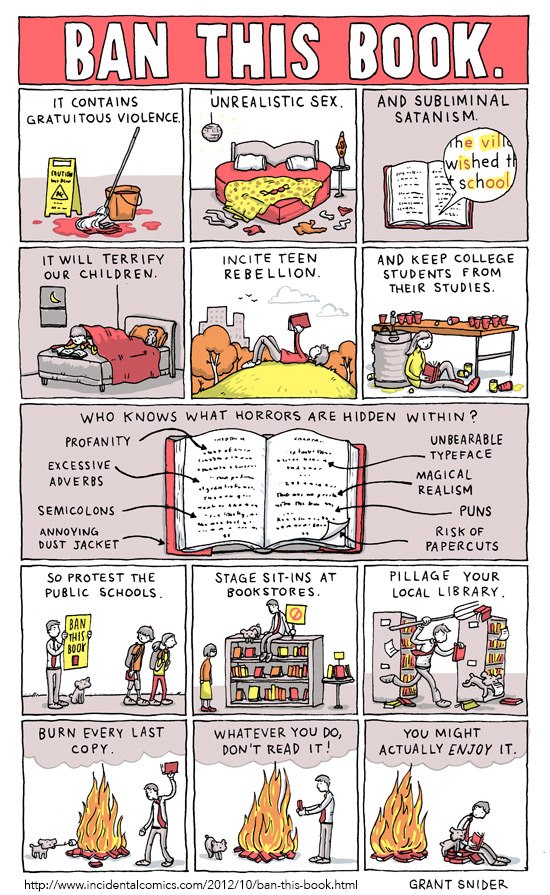
It seems that the Huffington Post are stealing my article ideas. Only three days after my article lamenting censorship of books, they do an article on the 2013 Banned Books campaign (September 22-28th).

Now I’m not bitter, in fact, I’m currently covered in orange sherbet. So this follow-up article is to add my support to the Banned Books Campaign and talk about the most frequently challenged books of last year. The annual report of the American Library Association had a lot of interesting findings. They are still having problems with publishers allowing them to loan ebooks (sigh – I bet the same arguments were made when libraries first started lending books), the people using libraries still think that they offer a very important service, they have become technology and research hubs for people, but visit rates have dropped a bit. The really interesting thing for me – because I’m not American, let alone a member of an American library, so all of those points are belly lint to me – was the top ten list of challenged books for 2012.

Here is the Office of Intellectual Freedom’s Top Ten List of Frequently Challenged Books in 2012:

■ Captain Underpants (series), by Dav Pilkey (offensive language, unsuited for age group) TA: Exactly what were parents expecting from a book with this title?

■ The Absolutely True Diary of a Part-Time Indian, by Sherman Alexie (offensive language, racism, sexually explicit, unsuited for age group) TA: Oh noes, a young adult book that doesn’t treat the readers like kids!!

■ Thirteen Reasons Why, by Jay Asher (drugs/alcohol/smoking, sexually explicit, suicide, unsuited for age group) TA: Another young adult book that deals with real issues, can’t have that!

■ Fifty Shades of Grey, by E. L. James (offensive language, sexually explicit) TA: An erotica book that is sexually explicit….. Words to describe the stupid, fail me.

■ And Tango Makes Three, by Justin Richardson and Peter Parnell (homosexuality, unsuited for age group) TA: Based on real penguins, must be evil!!

■ The Kite Runner, by Khaled Hosseini (homosexuality, offensive language, religious viewpoint, sexually explicit) TA: Be warned, the characters aren’t white or Christian!!

■ Looking for Alaska, by John Green (offensive language, sexually explicit, unsuited for age group) TA: Written by John Green, so clearly the complainants were too stupid to enjoy the book.

■ Scary Stories(series), by Alvin Schwartz (unsuited for age group, violence) TA: The title clearly didn’t give the game away for some sensitive little souls.

■ The Glass Castle, by Jeannette Walls (offensive language, sexually explicit) TA: Real life is clearly too confronting for some readers.

■ Beloved, by Toni Morrison (sexually explicit, religious viewpoint, violence) TA: Someone clearly thinks that slavery is a lot more fun than the author portrayed it.

The thing I find striking about this top ten list is that the books are all multiple award winners (except that crud by EL James, which makes up for lack of awards with sales to keep a publishing house afloat). As such, I’d hazard a guess that most of the complaints are coming from people who haven’t read the book, nor let their little darlings near a book. We can only hope that next year people are too busy reading good books to complain about them.

Banning books

306052_582022981816696_1299899960_n

I’m against censorship. Unfortunately many are in favour of censoring books. You may have heard of the outcry over the decision to edit Mark Twain’s classic, Huckleberry Finn, to stop calling the main supporting character, N-word Jim. What you may not have heard is that schools had stopped teaching Huckleberry Finn because they didn’t want to have to explain the historical and racial undertones and themes of the book. We can’t have a literary book actually studied now, can we! Definitely don’t want to look at Twain’s biting commentary on racism in the south of America, because that would mean discussing racism, and we like to pretend it isn’t still an issue.

It isn’t just the school curricula that are being impacted, it is libraries and book stores as well. The list of frequently challenged books is far too long and the reasons cited are far too ridiculous. For example, Brave New World by Aldous Huxley is regularly objected to for being: insensitivity; nudity; racism; religious viewpoint; sexually explicit. Seriously? What about the other complaints?

I’m offended by the word ‘sustainable’ as it is ambiguous term that is used politically as a catch-cry to gloss over reality. Does that mean I can complain about books containing that word? And what is sexually explicit? Is it when two characters embrace for a passionate kiss, or when the ball-gag and whips make an appearance? Are parents really concerned about the level of “smut” in the books their kids read or are they trying to have books banned because readers might enjoy them?

I know I have a complaint about the Twilight books. Now, my reasons aren’t like the other complaints (Reasons: religious viewpoint and violence), I just don’t like them because I’ve been dragged to see four terrible films by my wife. Ban the Twilight books so that husbands and boyfriends everywhere aren’t tortured with Kirsten Stewart’s “acting.”

Bookstore profitability

With the recent changes in publishing everyone has been talking about who the losers from the rise of ebooks has/will be. I think it is safe to say that publishers are still doing okay, if not more profitable. Authors, well, they have more options than ever to publish and make money. Of course, the speculation around the industry has seen authors being nickel and dimed on advances and shelf stocking.

But the big losers have to have been the bookstores, right? We’ve seen plenty of the big chain stores cease to be, we’ve heard about how much bookstores are battling. I’m not really convinced, since I remember that before the Borders collapse in Australia, there was plenty of evidence of financial mismanagement and not paying for books.

Well, I found this American retail business data for bookstores over the last 5 years. Have a look for yourself and see how well you think bookstores are faring.

This slideshow requires JavaScript.

NB: The source for this data covers a lot of the retail sector and makes me think that selling bakery goods is a great idea.

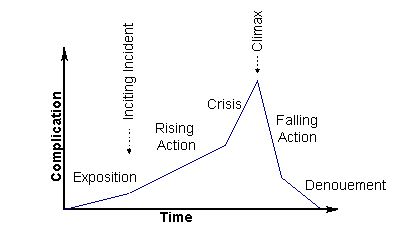
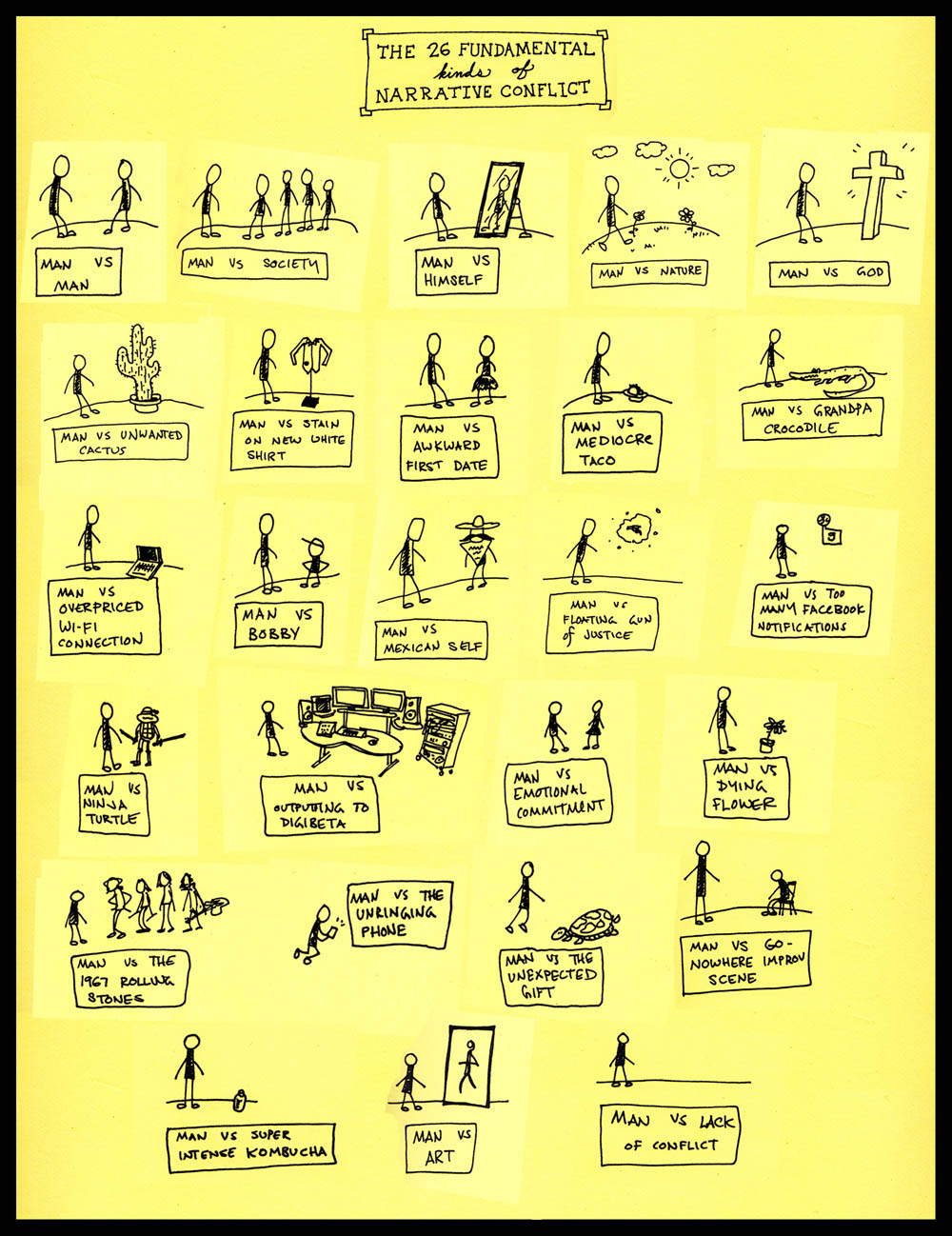
7 Types of Narrative Conflict by Mark Nichol

contemp_freytag

Every work of literature, and much nonfiction narrative, is based on at least one of the following conflicts. When you write a story or a biography, or relate a true event or series of events, you need not focus on such themes, and there’s no reason to state them explicitly (except in passing, perhaps, to provide insight about a biographical subject), but you’re wise to identify the conflicts inherent in your composition and apply them as you write.

1. Person vs. Fate/God
This category could be considered part of conflict with self or with society (many people count only four types of conflict, including those two and conflict with another person or with nature). That’s a valid argument, as one confronts fate as part of an internal struggle and religion is a construct of society, but explicitly naming fate (Oedipus Rex) or God — or the gods (The Odyssey) — as the antagonist is a useful distinction.

2. Person vs. Self
A person’s struggle with his or her own prejudices or doubts or character flaws constitutes this type of conflict (Hamlet).

3. Person vs. Person
Any story featuring a hero and a villain or villains (The Count of Monte Cristo) represents this type of conflict, though the villain(s) is/are often representative of another antagonist in this list, whether a villain is in essence an alter ego of the protagonist (thus representing the conflict of person versus self) or stands in for society.

4. Person vs. Society
When the protagonist’s conflict extends to confronting institutions, traditions, or laws of his or her culture, he or she struggles to overcome them, either triumphing over a corrupt society (I draw a blank here – Tyson says: most thrillers have an element of this), rejecting it (Fahrenheit 451), or succumbing to it (1984).

5. Person vs. Nature
In this conflict, the protagonist is pitted against nature (Robinson Crusoe) or a representation of it, often in the form of an animal (Moby Dick).

6. Person vs. Supernatural
Superficially, conflict with the supernatural may seem equivalent to conflict with fate or God, or representative of a struggle with an evocation of self (Dr. Jekyll and Mr. Hyde) or nature (The Birds). But this category stands on its own feet as well.

7. Person vs. Technology
Humanity’s innate skepticism about the wonders of technology has resulted in many stories in which antagonists use technology to gain power or in which technology takes over or becomes a malign influence on society (Brave New World).

From Daily Writing Tips.

Of course, Mark left out the most important one for writers, especially those working on a series of novels:

Person vs. Expectations.
Someone picked up your book because the publishing house put a picture of a dog on the cover, even though there isn’t a dog in the book (unless you count the love interest), and is expecting a book that will help them get to sleep in the 10 minutes per night that they read just before bed. Anything other than an easy to read, short chapter, low concept novel and the expectations will either result in a sleepless night or dire reprisals on social media. If this is not the first book the person has read by the author, then unfair comparisons will be made if you don’t manage to outshine everything you’ve ever written and will ever write – the latter for those coming late to a series or author.

conflict1000

Top 40 books of all time chosen by Lee Child

Easter is here for another year. I like to celebrate this time of year with bacon (for peace) and chocolate eggs and bunnies. Actually, interesting fact, the reason we celebrate Easter with eggs and bunnies is because they were fertility and sex symbols of the goddess Ishtar (pronounced Easter). In honour of the event, we clearly need the chocolate eggs and bunnies to keep us fuelled up for the fertility long weekend. In some of the spare hours, it might be worth reading a good book.

So, have you read any of Lee’s favourite books and will you be reading any of them this long chocolate fueled sex weekend?

1 To Kill a Mockingbird by Harper Lee
“The greatest legal thriller ever written.”

2 Revolution in the Head by Ian MacDonald
“If you were there, you can’t remember – so read this.”

3 Roots by Alex Haley
“A tragic story we should all know.”

4 Sophie’s Choice by William Styron
“If you read only 10 novels in your life, make this one.”

5 Catch 22 by Joseph Heller
“Started a brief but glorious period of dissent in the United States.”

6 The Day of the Triffids by John Wyndham
“The best what-if sci-fi ever.”

7 Brideshead Revisited by Evelyn Waugh
“An elegant saga and a double love story.”

8 The Grapes of Wrath by John Steinbeck
“A novel that described and defined an era.”

9 Nice Work by David Lodge
“Social realism from a recent but almost forgotten era.”

10 Goldfinger by Ian Fleming
“Iconic, for a reason.”

11 Ragtime by EL Doctorow
“What great novels used to be – and could be again.”

12 The Big Sleep by Raymond Chandler
“The best of the US golden age of crime writing.”

13 Romeo and Juliet by William Shakespeare
“The finest writing EVER.”

14 The Road to Wigan Pier by George Orwell
“How we used to live, think and write.”

15 Churchill by Roy Jenkins
“The best one-volume biography ever.”

16 The Dam Busters by Paul Brickhill
“Guys my age grew up on stuff like this.”

17 Gorky Park by Martin Cruz Smith
“A Californian writing about Russia in a Scandinavian way.”

18 Los Alamos by Joseph Kanon
“My current favourite writer’s debut – excellent.”

19 Postmortem by Patricia Cornwell
“There’s a reason she became so popular – and this is it.”

20 Sleepyhead by Mark Billingham
“An amazing debut with an early ‘reveal’ that will shock you.”

21 The Glittering Prizes by Frederic Raphael
“A time, a place – how we used to live, who we used to be.”

22 Maisie Dobbs by Jacqueline Winspear
“The first in an amazing new series.”

23 The Little Drummer Girl by John le Carré
“The unfairly neglected jewel in le Carré’s crown.”

24 City of Thieves by David Benioff
“Powerful, entrancing, tough, wonderfully imagined.”

25 Have His Carcase by Dorothy L Sayers
“The best of ‘golden age’ mystery fiction.”

26 The Girl Who Loved Tom Gordon by Stephen King
“An example of King’s genius – he can make a story out of the simplest premise.”

27 A Place of Execution by Val McDermid
“Everything plus that vital x-factor that makes you cross when you have to stop.”

28 The Lost by Daniel Mendelsohn
“A heartbreaking work of personal history that reads like a thriller.”

29 Debt of Honour by Tom Clancy
“The best from the man who dominated the genre for a decade.”

30 The Golden Rendezvous by Alistair MacLean
“His first dozen books are all great – why not start here?”

31 The Female Eunoch by Germaine Greer
“That rare thing – a book that changed the world.”

32 Dreams From My Father by Barack Obama
“I read this 7 years ago and wanted him for president right then.”

33 The Power of the Dog by Don Winslow
“A huge multi-generational crime saga – a book of the decade.”

34 The Day of the Jackal by Frederick Forsyth
“ ‘Book Zero’ in terms of recent thriller evolution.”

35 Green River Rising by Tim Willocks
“Maybe the best-ever prison novel – terrific suspense.”

36 The Runaway Jury by John Grisham
“Much more than it seems – a masterclass in narrative drive.”

37 Brilliant Orange by David Winner
“My favourite sport explains one of my favourite cultures.”

38 Night Sky by Clare Francis
“The multitalented Ms Francis unleashes terrific suspense and a great ‘OMG’ moment.”

39 On the Beach by Nevil Shute
“The best of 1950s style – with 1950s concerns.”

40 The Given Day by Dennis Lehane
“A big meaty epic, sprawling and inclusive – like novels use to be.”

Five Animals

download

I have five cats, how many of them are planning to murder me in my sleep?

I have five dogs, how many of them want to play fetch at sunrise?

I have five parrots, how many of them are a pretty boy?

I have five donkeys, how many don’t want to talk about their time in Mexico?

I have five horses, how many bottles of glue will they make?

I have five penguins, is that enough to make a dinner suit?

I have five rabbits, how many will I have tomorrow?

I have five ducks, boy do they hope it is rabbit season.

I have five lions, yes, the neighbour’s house looks like a much better place to rob.

I have five Australian native animals, they are all venomous and want to kill me.

I have five rats, which one is the politician?

I have five lawyers, which one should die first?

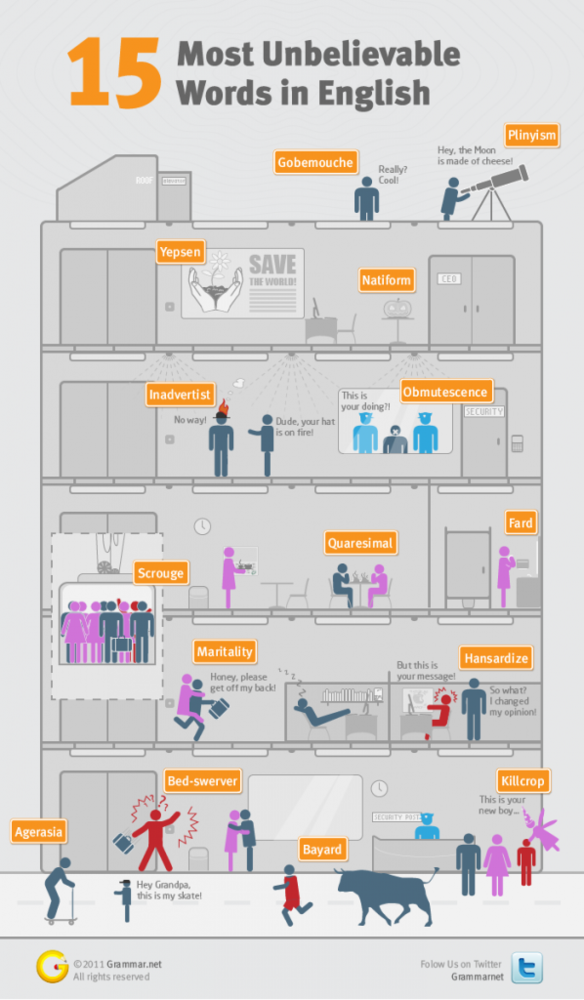
The 15 Most Unbelievable Words in English

Unbelievable_WOrds.png.scaled1000

Agerasia
(n.) A lack of the signs of old ages; a youthful old age
“The agerasia of that fellow is amazing; look at him darting around on those skates!”

Bayard
(n.) A person armed with the self-confidence of ignorance
“Only a bayard would walk past that bull.”

Bed-swerver
(n.) An unfaithful spouse
“Phil refused to believe his wife was a bed-swerver.”

Fard
(v.) To paint the face with cosmetics, so as to hide blemishes
“My wife’s tendency to fard in the bathroom for an hour made us late.”

Gobemouche
(n.) One who believes anything, no matter how absurd
“That guy is a gobemouche–I told him that bull would not chase him, and he believed me.”

Hansardize
(v.) To show that a person has previously espoused opinions differing from the ones he or she now holds
“Tom hansardized Phil by showing us a letter Phil had written to him.”

Inadvertist
(n.) One who persistently fails to take notice of things
“I am an inadvertist when it comes to driving. I run over about 3 things a month.”

Killcrop
(n.) A brat who never ceases to be hungry, and was popularly thought to be a fairy that was substituted for the child
“Once upon a time, wicked faeries kidnapped a child and replaced it with an evil killcrop.”

Maritality
(n.) Excessive or undue affection on the part of a wife for her husband
“Marge’s maritality was driving Burt insane, so he went out with his buddies.”

Natiform
(adj.) Buttock-shaped
“The children giggled when they saw the natiform pumpkin.”

Obmutescence
(n.) The state or condition of obstinately or willfully refusing to speak
“The sullen boy glared at his mother in obmutescence.”

Plinyism
(n.) A statement or account of dubious correctness or accuracy, such as some found in the Naturalis Historia of Pliny the Elder
“Saying that the moon is made of cheese is pure plinyism.”

Quaresimal
(adj.) Said of a meal, having the qualities of food served during Lent; austere, skimpy
“We only had a few pieces of chicken, and after our quaresimal meal, we were still hungry.”

Scrouge
(v.) To inconvenience or discomfort a person by pressing against him or her or by standing too close
“I was standing in the elevator when six other people got in, and one in particular scrouged me into a corner.”

Yepsen
(n.) The amount that can be held in two hands cupped together also, the two cupped hands themselves
“The pond was nearly dry; barely more than a yepsen of water was left.”

From Writers Write blog.

That’s pun-tastic

After my last post, Avery suggested I give up the trumpet. Actually, since he is a fellow blogger, writer and lover of puns, he wanted me to do a pun post. Well, that sounds like pun for everyone.

Before everyone is up in arms and down in legs, I realise that puns are some of the lamest jokes; they are like hurt animals. I mean, puns are just average, in the joke stakes. They’re like a loan shark at a singles bar.

But a good pun is its own reword. There are some very good comedians in the world and only some use puns. So I present the indomitable Tim Vine.

And a full concert for good measure:

The Snowflake Method

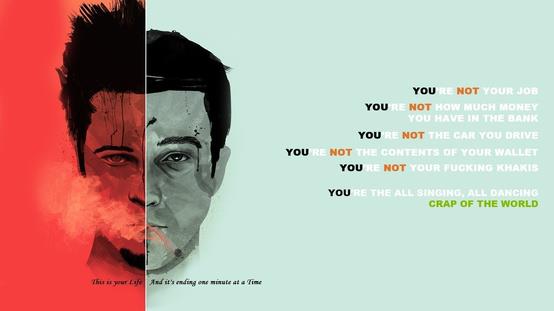
The Snowflake Method always makes my think of Tyler Durden.

14309_10152213444110297_430942664_n

After sinking my teeth into writing workshops at the Perth Writers’ Festival, I have come to realise that there are some fantastic methods for encouraging ideas and story/character development. The thing is, though, you kinda pick up these methods up as you do battle with words. It is great to have these methods on hand, but some methods, like the aforementioned Snowflake Method, really do distract from putting one word after the next. You see, whilst the Snowflake Method may be great for getting to know your characters and your plot (really, really, really) well  and “growing a plot naturally”, it seems specifically designed to bore you to death. To put it simply, you have to finish a project, which means writing and not sitting around contemplating your navel.

So a writing method is only as good as the amount of writing projects it helps you finish. Just a thought: what are yours?

Perth Writers’ Festival 2013

Another year has come and gone for my local writers’ festival. Once again I joined my fellow reading nerds and aspiring authors to descend upon the grounds of UWA. This year there were 30,000 of us who felt the need to spend three days of lovely weather discussing books.

This year I spent a lot of the three day in writing workshops and less time at discussion/interview sessions. There is always room for improvement in writing, so what better way than sitting down with an expert and two dozen peers to discuss and practice. I’d like to thank the various experts who all had some interesting insights and tips: Susan Midalia (short stories – literary focus), Belinda Castles (finding your voice and turning that story into reality), LA Larkin (thriller writing, great tips and she is also running a longer course with the Sydney Writers Centre) and Parker Bilal (crime writing, developing the characters and structure).

This isn’t to say that I didn’t get the chance to see any talks. The discussion of Antarctica was fascinating and puts it on the list of places I’d like to visit before climate change has its wicked way with it. The discussion with Major General John Cantwell and former WA premier Geoff Gallop about why it is necessary to help remove the stigma around mental illness was fantastic. John managed to pretend he wasn’t suffering PTSD for 20 years, which is just amazing considering some of the the ramifications it was having on him. Another great session was with David Petrarca, Sue Masters and James Bradley discussing how TV storytelling now rivals cinema and literature. It is quite clear that subscription TV and services like Netflix are changing the game for production of TV, which is why we are seeing great writing, great acting and decent budgets to give us programming I actually want to watch. James Bradley made a very poiniant comment: we have to stop ragging on Master Chef and other boring and mindless TV shows, their popularity allows decent TV to be funded. Finally, on Sunday I was introduced to two new (for me) authors in the panel discussion on thrillers with Andrew Croome, LA Larkin and Steve Worland. I’m looking forward to reading Andrew and Steve’s books, and of course Louisa’s new novel Thirst.

But, now the festival is over for another year. This picture sums up the take home message for me from this year’s Perth Writers’ Festival:

538064_470914782957833_324528495_n

New climate info graphic

I wrote a little satirical book review about a notorious science journal called Energy & Environment, which is the go-to place for people who think the Earth is flat and that climate change isn’t happening. I’ve written a few articles on the topic myself and I’m also rather active in promoting climate science and renewable energy (just read my Twitter and Facebook feeds). As a result the author of the Infographic below – Allison Lee – contacted me. So enjoy a few climate facts from the graphic below and share it to continue to raise awareness.


dc025d3f71b724ff30194602e1ae1f2b

Created by: Learnstuff.com

Book Review: Arctic Floor by Mark Aitken

Arctic FloorArctic Floor by Mark Aitken
My rating: 3 of 5 stars

There is nothing quite like a marketing executive, especially when they work in publishing. These are the people who come up with the fantastic ideas like: dog on the cover because dogs sell books, no dogs in the book; bright and cheery cover art, book about a serial killer; quotes recommending the book by famous authors, authors that have the same publisher. In this case the marketing department came up with a brilliant idea: Matthew Reilly is an Australian author who sells a lot of books, let’s mention him on the cover, despite the fact that the two authors write in a completely different style.

I grabbed Mark’s book from my local library because I saw he had a new book out, the third in a series, and I hadn’t heard of him previously. A fellow Aussie author, with a comparison to Matthew Reilly on the cover: this should be gold. Needless to say, the marketing people drew me in with false advertising. Mark’s book is a thriller and was a decent read, but he was more Cussler or Archer than Reilly. In fact, I was more reminded of Sahara (swap baking temperatures for freezing cold) than I was of Ice Station.

False advertising aside, this is quite a decent thriller. Worth a read, if you are after a James Rollins or Clive Cussler style novel. I’d expect later books in this series will probably “grab” the reader more, so maybe check out Mark’s new one.

View all my reviews