From Hard Drive: Stephen King helps George R. R. Martin finish the A Song of Ice and Fire series.
I love honey.
Actually, that’s a lie, I’m ambivalent toward honey, I could take it or leave it.
Anyway, bees: kinda important. But not as important as recent internet and media talk would have us believe.
Here’s the problem summed up by the Penn State entomology group (dated August 2013):
At an international pollinator conference held at Penn State last week, the general consensus was that Colony Collapse Disorder (CCD) of honey bees is caused by multiple factors including: a) viruses and diseases; b) two species of mites; c) poor nutrition caused by foraging in sugar poor crops like cucurbits; d) the stress of interstate travel and e) pesticide exposure. Despite this, however, most of the research presented at the conference concentrated on pesticide exposure with a general call for banning a group of insecticides known as the neonicotinoids. This of course seems to be an easy fix to a complex problem that is still not completely understood, but of course is popular with the public and many ecologists that have never worked with pesticides or IPM. This stance does not take into account the reason these products were developed in the first place which was to replace human toxic OP pesticides and replace them with something safer as mandated by the Food Quality Protection Act. Neonicotinoid insecticides have also proven to be safer to most beneficial insects other than bees and promote the biological control of pests such as San Jose Scale, Woolly Apple Aphid, European Red Mite, leafminers, and leafhoppers to name a few. A general ban of neonicotinoid insecticides would cause a reversion back to OP, carbamate and pyrethroid insecticides which would totally destroy current IPM programs and cause growers an additional $50 to $100+ per acre in secondary pest sprays.
But here’s the other point that a lot of scares about pesticides miss:
Moreover, the authors do not account for the fact the France still observes CCD each year, even though they banned neonicotinoids 5 years ago. Nor do they note that beekeepers in Canada and Australia and parts of Europe use neonicotinoids, but do not observe CCD. Finally, they do not note that CCD has been taking place regularly for hundreds of years. We reviewed this in an article last year.
Update and aside:
There’s an important point in this piece that wasn’t covered. The discussion here is completely focused on European Honey Bees that are used in agriculture. They’re domesticated bees. We have plenty. But native bees are suffering the same issues that all animals and plants are faced with: a severe case of humans.
This explainer video from Vox is very good at covering that part of the issue.
Back to the article on honey bees.
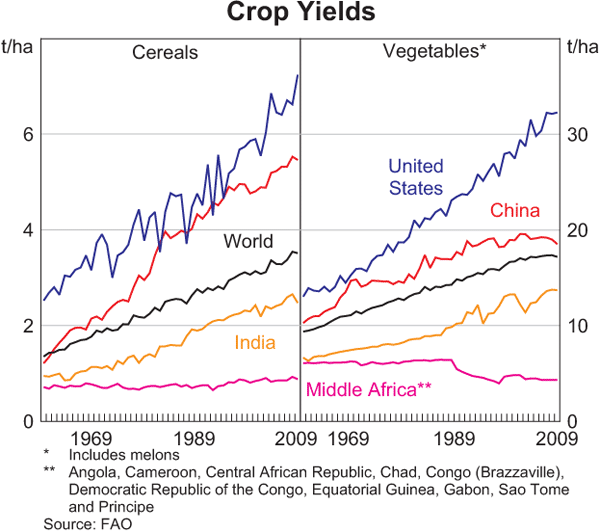
Crops aren’t really affected: http://www.rba.gov.au/publications/bulletin/2011/jun/images/graph-0611-3-02.gif
Beehives aren’t exactly going extinct either: http://faostat3.fao.org/faostat-gateway/go/to/search/bee/E http://www.daff.gov.au/__data/assets/image/0011/1942481/graph1.gif
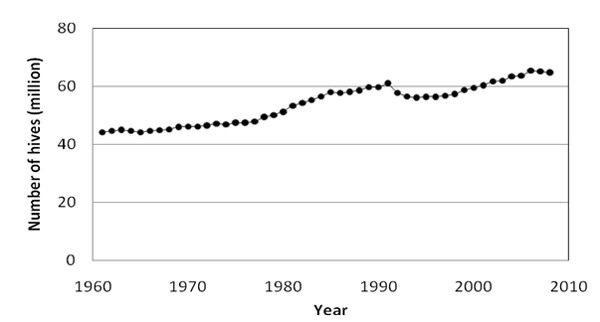
About 30% of our food, mainly fruit and nuts is pollinated by bees, but almonds are the only common crop that relies almost exclusively on bees. Of course not that it’s at all plausible that we will lose bees, as I hope I’ve already demonstrated.The headline of that article; “Scientists discover what’s killing the bees and it’s worse than you thought” is not supported by the text at all.
CCD or events that meet the description have been happening since at least the 19th century, but it’s entirely possible that there are modern reasons for it occurring now, and I’d say that seems especially likely on account of the very stark geography involved – where places like the USA and some European countries are badly hit, while other regions are completely unaffected.
The explanation that’s been favoured by actual scientists for a long time is that it’s a consequence of many factors. People, dare I say with confirming ideologies, are quick to point the finger at various “chemicals” but we know that it’s not just those chemicals, because other places that use them have no CCD.
But I go back to my earlier point, which is that it’s important to remember that this is no threat to the existence of bees, or plants that rely on bees. It’s very easy to breed bees and create new colonies. We could easily make the global bee population 100 times larger than it is now within this year if we really wanted to. CCD increases the costs to bee keepers, increases the costs of honey, and very marginally increases the costs of some fruits and nuts, within particular regions. It doesn’t threaten food security and it doesn’t threaten the existence of bees.
The European honey bee contributes directly to the Australian economy through the honey industry and to a lesser extent the packaged bee, bees’ wax and propolis sectors. Honey bees also contribute to the productivity of many horticultural crops, by providing essential pollination services that improve crop yield and quality. The Australian honey and bee products industry is valued at approximately $90 million per year.
It is estimated that bees contribute directly to between $100 million and $1.7 billion of agricultural production, mostly from unpaid sources such as feral bee colonies, but also from a small paid pollination industry of about $3.3 million, per year.1
This estimate refers to 35 of the most responsive crops to honeybee pollination. If all agriculture is included the estimates have run as high as $4-$6 billion2.
The industry is composed of about 10,000 registered beekeepers. Around 1,700 of these are considered to be commercial apiarists, each with more than 50 hives, and there are thousands of part-time and hobbyist apiarists, with total honey production around 16,000 tonnes of honey each year. http://www.daff.gov.au/animal-plant-health/pests-diseases-weeds/bee
A lot of people like to pretend that there is also a link between GMOs and CCD. This is utter nonsense. Firstly it is a poisoning the well logical fallacy, secondly there is nothing wrong with GMOs (check this list of +600 safety studies, and this list of articles on how good GMOs are, and this series on the Food Wars), and thirdly there is no actual link between GMOs and the supposed chemicals pressuring bee populations. This last point is very important, as it shows a confounding of issues, either deliberately or accidentally, that actually shows a lack of reading/understanding of the science of both GMO and CCD.
http://io9.com/ask-an-entomologist-anything-you-want-about-the-disappe-1616898038
Anyway, the real cause of CCD is the South Carolina divorce rate: http://tylervigen.com/view_correlation?id=558
http://www.examiner.com/article/bees-are-found-to-die-from-insecticide-insignificant-new-paper
More on GMO: Scientific American come out in favour of GMO:
http://www.scientificamerican.com/article/labels-for-gmo-foods-are-a-bad-idea/
http://blogs.scientificamerican.com/the-curious-wavefunction/2013/09/06/scientific-american-comes-out-in-favor-of-gmos/
http://beta.cosmosmagazine.com/society/how-we-perceive-risk-gmos
http://beta.cosmosmagazine.com/society/seeds-deception
http://beta.cosmosmagazine.com/society/environmentalists%E2%80%99-double-standards
Before Daredevil was kicking butt he was trying to bring a fallen star to his girlfriend. Let’s have a look at Stardust.
For me, Stardust was one of those films that someone else had decided to watch in the house. Sure, it didn’t contain Scott Adkins or a single-car chase, but it was enjoyable enough to not find something else to do.
As for the book, I think it is easiest to say that the younger me only successfully finished one Neil Gaiman book. The one he co-wrote. You know which one. The greatest book ever written.
I don’t know how many Gaiman books and adaptations I’ve tried over the years, but I tend to have a similar reaction to them. Aside from Good Omens, I’m always left feeling Gaiman’s work has promise but doesn’t grab me.
Is it just me?
It’s time to discuss Starship Troopers. Again.
The first time I watched Starship Troopers all I saw was a cheesy B-grade action movie. This was also what many movie reviewers thought at the time. Many years later I finally read the book and it clicked.
Verhoeven’s film only made sense to me after I’d read the book as it is as much a critique of the material as it is an adaptation.
“I stopped after two chapters because it was so boring,” says Verhoeven of his attempts to read Heinlein’s opus. “It is really quite a bad book. I asked Ed Neumeier to tell me the story because I just couldn’t read the thing. It’s a very right-wing book. And with the movie we tried, and I think at least partially succeeded, in commenting on that at the same time. It would be eat your cake and have it. All the way through we were fighting with the fascism, the ultra-militarism. All the way through I wanted the audience to be asking, ‘Are these people crazy?’ Source
The cheesy propaganda segments riff on the heavy-handed philosophical lecturing Heinlein does. The proud militarism is given consequence by utilising Heinlein’s own references to disabled veterans and by showing horrible training injuries and battlefield scenes. The fascist elements are played up for farce in the uniforms and sequences mirroring actual Nazi propaganda films.
Michael Ironside asked, “Why are you doing a right-wing fascist movie?”
Verhoeven replied, “If I tell the world that a right-wing, fascist way of doing things doesn’t work, no one will listen to me. So I’m going to make a perfect fascist world: everyone is beautiful, everything is shiny, everything has big guns and fancy ships, but it’s only good for killing fucking Bugs!” Source
Now, I did actually enjoy the book. It is very interesting and many of the ideas were challengingly different. The portrayal of future warfare was, at the time, as imaginative as I’d come across. So Verhoeven’s reaction to satirise the book – one that Heinlein dashed out as an angry response to the US stopping nuclear tests – was probably overwrought by his childhood in the Nazi-occupied Netherlands. But if the movie adaptation had been faithful we’d probably have seen the worst elements of Heinlein’s ideas paraded around like something produced by the Ministry of Enlightenment.
Well, either that or a schlocky B-grade action movie about the military killing alien bugs.
I’ve covered this book previously when other Youtube channels have discussed Starship Troopers. The first was What’s the Difference by Cinefix, which breaks down the differences. The second was from Wisecrack on how the movie makes fascism look good, despite Verhoeven’s intentions.
Let’s talk about Pinocchio and its many adaptations.
Which is your favourite movie adaptation of the book you’ve never read? Is it Disney Classic? Disney Cashgrab? Or cinema auteur?
We have a number of the Disney Classic animated films. Without fail, the movies are ruined by a scene that casually drops in enough racism, sexism, or other general dickishness to have you fumbling for the remote. “Well, you see kids, back then people thought it was okay to mock people based on their skin colour or nationality. How is that different from today? Oh… Well, that’s a good question.”
Ironically, Pinocchio is relatively free of this problem but didn’t interest our kids as much as the ones starring animals. Which also means we weren’t forced to watch the Disney Cashgrab version, unlike the Lion King. Apparently, the soulless modernisation that was the Lion King was something of a high point in Disney Cashgrabs compared to their Pinocchio.
The adaptation that did interest me was Guillermo Del Toro’s effort. For starters, it isn’t a Disney thing – Yay public domain! The other was the idea of doing stop-motion animation for the storytelling suggested a level of care and commitment to the storytelling that has been lacking in many new adaptations of classics.
I suppose at some stage I’ll finish watching it. Potentially when the kids stop interrupting my movie-watching to get me to make snacks.
Let’s dive into the book and movie that made Sean Connery give up acting and Alan Moore give Hollywood the finger.
This is one of those rare instances where I can say I didn’t like the book or the movie.
Back when I was graduating from junior to adult fiction, I went through a phase of reading all of the classic adventure novels. Everything from Tom Sawyer to Dracula. As such, I was familiar with every character Alan Moore put into his comic and none of them sat well with me. They were all slightly facile and nastier versions of the characters and stories I’d appreciated – love is far too strong a word.
When it came to the movie I was blown away by how terribly hamfisted it all was. Nothing in the movie really worked, despite there clearly being some talent involved.
For me, the worst part of the movie was Dorian Grey. I’d actually only gotten to that novel shortly before The League of Extraordinary Gentlemen movie came out so the character was fresh in my mind. To say that the character portrayed and the one from the novel were nothing alike is an understatement. Even the comic version is taking only the cliff notes version of the character.
It makes you wonder why either book or movie versions decided to use these public domain characters rather than make their own?
Oh look, Moore has commented on that, saying:
“The planet of the imagination is as old as we are. It has been humanity’s constant companion with all of its fictional locations, like Mount Olympus and the gods, and since we first came down from the trees, basically. It seems very important, otherwise, we wouldn’t have it.“
And:
“…it could be said that the theme of using popular fictional characters to comment on cultural and political mores has been carried over to “The Black Dossier” and the next volume of “The League of Extraordinary Gentlemen.” Source.
Or in other words, he thought it would be a cool narrative technique that might attract some readers. Not sure what the movie makers were thinking other than “franchise, franchise, franchise” while dancing in a conga line.
If this post has a point, I’m not sure what it is, but rest assured that I can’t find a word to rhyme with is.
I know that Dr Seuss is regarded as something of a big deal, particularly in the USA, but I was never really taken in by his books. Aside from Green Eggs and Ham, none of them has really stuck with me as stories.
And then we have the adaptations, the above-mentioned How the Grinch Stole Christmas and The Cat in the Hat. Both of these films came at a time when I’d had enough of Jim Carey and Mike Meyers. It’s really hard to enjoy a film that feels like more of that actor’s shtick rather than bringing a character to life.
So why am I discussing this Lost in Adaptation episode then?

Look, it was an interesting video, okay! I can find insights into artistic endeavour interesting without having to find that art to my taste!

Let’s have a look at one of the adaptations of Matilda by Roald Dahl in this What’s the Difference?
Recently our youngest has been on something of a Roald Dahl and Dick King-Smith read-a-thon. She is very much looking forward to the new Matilda film coming out soon and very much enjoyed the book.
Part of the reason for her enjoyment was that, unlike The Water Horse by Dick King-Smith, the movie protagonist is a girl just like in the book.
“Why would they make the girl into a boy for the film?”
Yes, Hollywood, why indeed.
I can vaguely remember watching the 90s film Matilda and enjoying it. Our youngest loved it. And we’ll inevitably sit down as a family to watch the new version. And this is in no small part due to the lack of kids books and adaptations featuring a female protagonist. You have to make the most of the handful of female-lead books and movies aimed at the middle-grade audience (YA is better served but comes with slightly more stabbings and blood-drinking than we’re comfortable exposing a kid to).
As with many of Dahl’s children’s books, the treatment of kids comes from a different era. Matilda was published in 1988, yet much of the way schools were run had already begun to change by then. In many ways, the mistreatment of students by teachers would probably feel more familiar to my parent’s generation than it does to me, and feels odd to our kids. Yet it still manages to be entertaining to kids, if our children are any barometer of what kids these days like.
Update: the new adaptation was good. Our youngest has already watched it twice.
For this Book vs Movie post, I’m hitting up a different sort of comparison video as my starting point. Sage from Just Write is not a fan of the I Robot movie and dives into Asimov’s books, adaptations, and the Will Smith movie.
So, I’m actually quite a fan of the I Robot movie and didn’t really enjoy the book. This puts the movie in the rare position of being better (in my humble opinion). Now, in my defence, it is a Will Smith action film and Asimov is a dry author who had busy hands – of course all sci-fi authors of that generation need to be graded from sexist to loving YA just a bit too much.
I haven’t read the detective novels in the I Robot series, which could actually be as good as discussed in the above video. But aside from an interesting series of ideas exploring how robots might come to understand/interpret the “three laws of robotics”, the Asimov novel was pretty bland.
Meanwhile, I Robot the movie is a Will Smith movie. You know, back before the late 2000s when he lost his mojo. Sure, it has all the depth of a Will Smith movie and has the dialogue of a Will Smith movie, but that’s also what you watch it for.
Although, Sage’s insights into the original script make me want to see that film made. I understand that movie studios love keeping hold of the IP they license by slapping it on any script they happen to find lying around, but it’s clear that some of those scripts could be interesting movies all on their own.
Maybe there’s a chance now to get both. Asimov’s The Foundation series TV adaptation – which I felt spent most of its time screaming “This is Sci-Fi” at the audience rather than just getting on with the job of being sci-fi – is getting a second season and seems to have been mostly well received. And remakes, reboots, prequels, sequels, and reimaginings are all the rage at the moment. So maybe someone will dust off that original script and get halfway through making it when they tack I Robot back onto it with (insert major star who hasn’t assaulted anyone at the Oscars lately here) starring.
Let’s talk about depressing sci-fi with Children of Men, book versus movie.
The first time I watched Children of Men I wasn’t a fan. It was bleak, cold, and there was a feeling of pointless hopelessness. Even when I rewatched it, I can’t say I enjoyed the film. But I did become something of a fan of the film.
That’s something I often find with sci-fi movies. They may not be films I enjoy watching but they are rewarding, engrossing, and poignant experiences.
While this isn’t unique to sci-fi, it seems to attract filmmakers to the genre – when they’re not busy getting a hardon for pew pew noises. But I’d say sci-fi novels don’t have this same effect on me. With a few notable exceptions, like 1984, most sci-fi novels I’ve read are enjoyable while being rewarding, engrossing, and poignant.
The question then arises is why novels and movies differ in this way. I’d assert that the reason the books tend to be enjoyable is that I’d have given up on them otherwise. A 90-120 minute film is something you can tolerate a bit of bleakness in to come away rewarded. A book takes a lot longer to read, particularly in the sci-fi genre which is yet to produce a novel under 600 pages in a 6-volume series. You’d better believe the reader needs to be engrossed for the book version, which will require a bit less bleakness than movies can get away with.
If you like spies, then this instalment of Lost in Adaptation will be for you.
Many many years ago I decided I loved spy novels and read the Game, Set, Match series by Len Deighton. Not satisfied with books that mostly went over my head, I was recommended some John Le Carre. Again, I feel like the much younger me got lost in the ins and out of the spy world of Le Carre’s stories.
But then two things happened. The first was they made a pretty decent film adaptation of Tinker Taylor Soldier Spy. Then they cast Tom Hiddleston in a star-studded series adaptation of The Night Manager. So obviously, I was ready for my Le Carre.
I think the TV series was okay. The acting was just terrific, particularly from a relative Aussie newcomer in Elizabeth Debicki, but a lot of the scenes and details felt contrived. This really undermined any tension for me.
For example, the main antagonist played by Hugh Laurie is continually suspicious of everyone around him, but he is just a little bit too ready to accept Tom Hiddleston’s protagonist into the fold. “Here you go, you’re now in charge of one of my shell companies!” This would have been better if it was also great blackmail and/or worked as some sort of leverage against a potential spy (or maybe it was and I just forget that detail).
At some stage, the more mature and debonair me will revisit some of the books and authors I read when I was probably too young to appreciate them. Le Carre and Deighton are on that list.
I will resist the urge to use Burgess’ slang in this entire What’s the Difference with A Clockwork Orange.
Despite having previously covered A Clockwork Orange, Dominic’s video raised some points I didn’t discuss.
The mention of the missing chapter in the US editions of the book reminded me of the far more acceptable British version I had read. Because it has been quite some time since I read the book, I had forgotten entirely that Burgess had ultimately said “people grow up” or can actually change. Leaving this out of the US version and thus the film is both bad form and entirely American.
Given that most of the novel is essentially a drawn-out complaint about kids these days, it’s kinda important to acknowledge that ultimate point by Burgess. But in the land of gun-toting ‘Mericans, it makes sense they’d prefer the ending that justifies them standing on their porch with a shotgun grunting “get off my lawn.”
The other thing I was reminded of was the lexicon glossary. Burgess included a section (at the end? Could have been at the beginning) that roughly translated the slang into something approaching English. I can still remember continuously flipping back and forth as I read, deciphering as I went. It wasn’t a long novel, but I do remember doing this for the whole book.
I wonder if a more mature me would have more or less trouble with this slang aspect? I do know the more mature me would certainly have less patience.
The spice must something something.
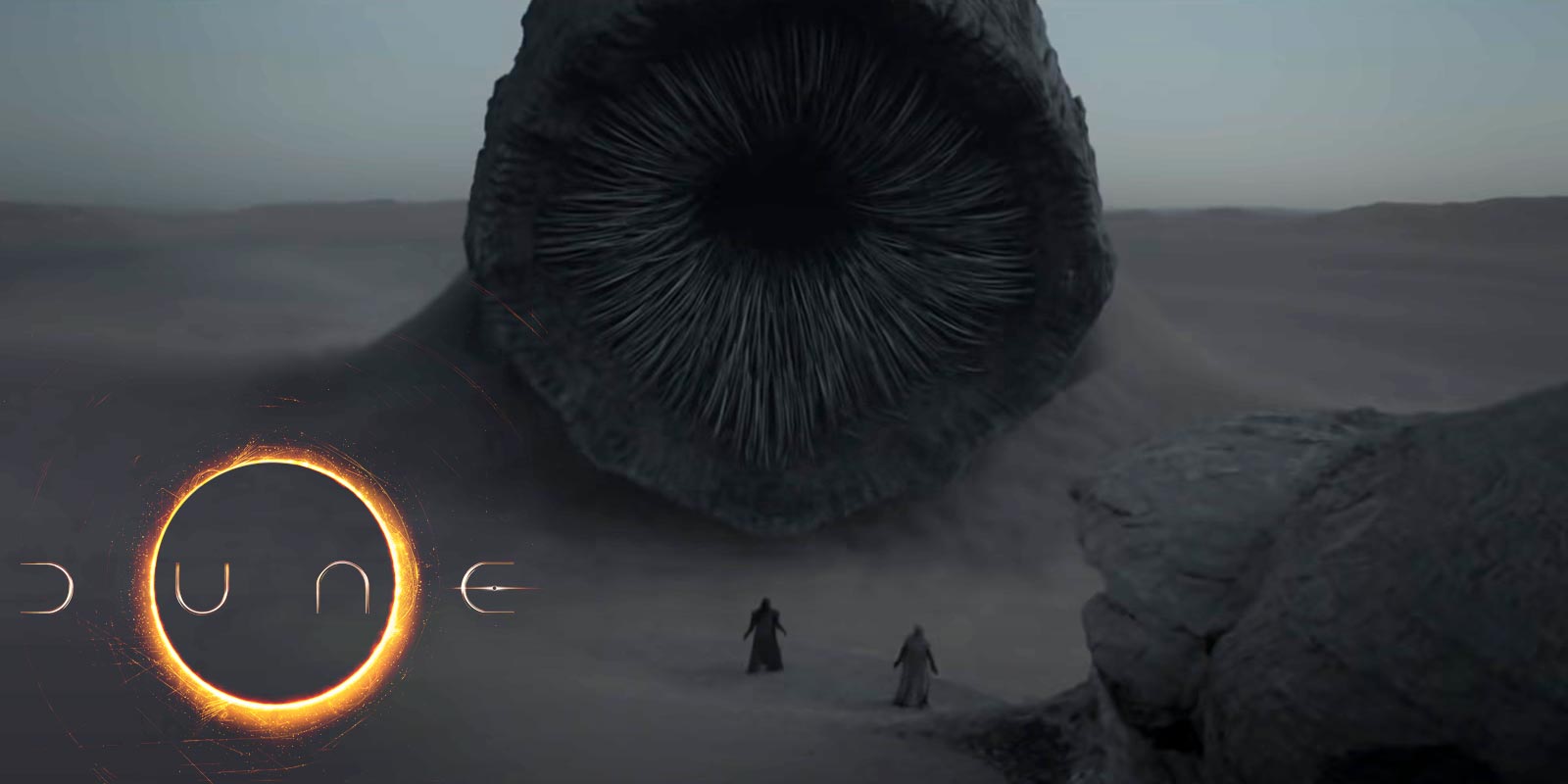
While I don’t want to make a habit of doing multiple posts about books that get multiple movie adaptations, I’m doing it for Dune. Previously I discussed the very 80s adaptation of Dune. And now I’ve finally gotten around to watching the Dennis Villeneuve version.
It was fine.
I’ve watched a few sci-fi adaptations lately that spent a lot of time screaming “THIS IS SCI-FI” at the audience *cough Foundation cough*. So I was happy to see something so obviously sci-fi that didn’t do that. I also really like the world-building, which was mostly just long shots of locations. Made everything feel big.
But the new Dune kinda felt like an overly long and tension/stakes free movie. The soundtrack was bland and built zero themes to call back and emphasise key moments. Given the runtime and world-building, there still managed to be gaping holes in the story and consistency. I liked what they tried to do with the timeline visions, but it was a little confusing and could have been done better. And Jason Momoa managed to stand out in his role despite showing up as Jason Momoa.
To give an example of the consistency issue, I’ll mention the final scene (spoilers). Paul is shown to be capable with a knife early on but doesn’t show himself to be a warrior. Meanwhile, we get a heap of rhetoric about how tough and awesome the Fremen are, even a scene where they ambush and wipe out a unit of elite Sardaukar. Then in the final scene, Paul just casually bests a high-ranking Fremen (/spoilers). This all felt really inconsistent and in desperate need of establishment.
I will say that many of the issues with the movie are also issues with the source material, including the one I highlighted above. But for the most part, this was a pretty good adaptation. I’m just not sure it was a great film.
My review of the Dune novel here, and of the series here.
Let’s talk about the greatest book of all time and its TV show adaptation.
Roughly every decade I re-read Good Omens. It’s a fun novel that I recommend everyone read. They even have it as an audiobook, so no excuses!
When I first heard they were making a TV show adaptation, I wasn’t particularly thrilled. Pratchett’s work has a habit of being turned into forgettable shows and movies. But then I heard about David Tennant and Michael Sheen being cast. With Tennant attached to a project, you can guarantee it will be watchable, and the two real-life buddies have great chemistry (just watch Staged).
I still waited for some confirmation that the show would do the novel justice. My wife bought the series and laughed the whole way through. So I thought I’d ask her if it was any good before diving in myself. She said I might enjoy it.
The thing that impressed me about this adaptation was that it really “got it”. Obviously, it helps that one of the authors took the adaptation on as a labour of love and to honour his late friend. The idea that Gaimen had a good handle on his and Pratchett’s work seems like an obvious thing, but being the author of the book doesn’t make you a good screenwriter or the person to do the adaptation (looking at you Stephen King).
Seeing a show that manages to make changes to the source material that you’d swear were there all along is a testament to nailing an adaptation.
I’m crossing my fingers on season 2.
In this month’s What’s the Difference? it’s time to see which version of the material is the correct one with Rashomon.
I’m going to be honest and say that until watching the above video, I’d never heard of Ryunosuke Akutagawa. Of course, I was aware of the Rashomon Effect, just trust me that my definition of it is correct. And it is hard to call yourself a movie lover if you aren’t able to name at least two Akira Kurosawa films.
I’m not a true movie lower though. I can only name the Kurosawa films made into Spaghetti Westerns: Yojimbo (A Fistfull of Dollars) and Seven Samurai (The Magnificent Seven). At least now I can name three.
Do you remember when Kevin Costner was a star? Then you might appreciate this month’s Lost in Adaptation on Field of Dreams.
The point Dominic Noble makes at the end of the above video is a good one. This is not the sort of book I would have thought would make for a good watchable movie. But often we can get stuck in our favourite genres (or whatever) and a movie adaptation can come along and shake us out of that rut.
That said, the only thing I really ever enjoyed about Field of Dreams was the references made about it in other movies. As for reading the book, this Aussie raised on cricket thinks baseball is too boring to read about.
Let’s explore a Scandinavian crime fiction classic, with Lost in Adaptation.
Many years ago, when I was on something of a crime fiction bender, I stumbled across Jo Nesbo. People were raving about his take on the Scandinavian crime genre and how interesting it was.
Part of this raving was that he was touring Australia promoting the film Headhunters (an interesting thriller movie) and exhibited a charming and charismatic demeanour as he humbly gave credit to his novel’s English translator. Yes, that’s right, despite his fluency in English and the majority of his book sales being to the English-speaking book market, he lets someone else translate them.
So I picked up a few Harry Hole novels and read one.
Nesbo himself referred to the series as being inspired by Michael Connelly’s Harry Bosch, which I think is a fair comparison. But, the difference is that Connelly tends toward the dry real-world investigation influenced by his time as a crime reporter, whereas Nesbo tends toward the excitant – as much as a police procedural can do so.
Why did you read only one of the novels you bought?
That’s a very good assumed question from the assumed audience.
There are a few reasons. The first was that sometime after reading my first Nesbo novel I’d grown tired of the crime genre. As Dominic Noble mentions in the video, there are often numerous contrived red herrings in these sorts of books that start to become tedious rather than exciting and interesting. Often the main character is unlikeable or would be the person everyone at a party avoids due to their predilection for telling stories about linoleum texture styles through time.
The second reason was that, outside of a few exceptions, crime novels are part of the normalisation of the exceptional with a side serve of copaganda. When you start looking at crime data and policing and the giant chasm between that reality and the perceptions of crime and police, it becomes hard to enjoy this type of escapist fiction.
The third reason is something Dominic Noble alludes to in the video. The books aren’t exactly good. With a bit of distance from the genre now, I find myself less enamoured with authors like Nesbo, and thus have no real desire to read more of his stuff.
And on this point, I’m reminded of something Lauren Beukes said about being on a panel with Jo Nesbo. He was describing going to her home country of South Africa and how he got kitted out in body armour, had an armed guard to go places, etc, etc, and she commented how it was nice exaggeration that makes for a good story, but doesn’t really work if you give it any thought or know something about it.*
* I may be putting words in Beukes’ mouth here as this is a remembered comment from at least a decade ago.
Remember that time Leonardo DiCaprio used to date women his own age? Me neither. So let’s reminisce together and look at What’s the Difference between the book and the movie of The Beach.
The Beach was one of those books I picked up and put down. I can’t remember if that was before or after the movie – who am I kidding, it was probably after. But I do know that after watching the film, I’ve felt no compulsion to rewatch the film nor retry reading the book.
As Dominic discusses in his summary of the themes in the video, the hypocrisy of the characters wanting to find the non-tourist trap locations that only they can be tourists in is a great idea. But I’m not sure this idea was explored in an interesting enough way. Maybe it was in the book, hence its word-of-mouth success. Or maybe the book just executed a more engaging narrative that twenty-something me didn’t appreciate – I bet there wasn’t a single chapter devoted to things exploding after someone performed an amazingly athletic flying kick detailed in multiple paragraphs.
Actually, there’s an idea for a reboot: The Beach starring The Rock.
Time for some Toni Morrison and her most cancelled book.
Beloved is the magnum opus of the late, great Toni Morrison. It has become a key piece of literature taught in schools and is considered one of the great pieces of American literature. To understand Beloved, we must first look at the woman behind the pages: Nobel Prize Winner Toni Morrison.
Hosted by Lindsay Ellis and Princess Weekes, It’s Lit! is a show about our favorite books, genres, and why we love to read. It’s Lit is made possible in part by the National Endowment for the Humanities: Exploring the human endeavor.
 Project Hail Mary by Andy Weir
My rating: 5 of 5 stars
The universal jazz hands.
Scientists around the world have discovered two things: a band of radiation (Petrova Line) and the sun is dimming. It soon becomes obvious that the two are related and the problem is getting worse, potentially world-ending worse. Rayland Grace, a high school teacher and former astrobiologist, is enlisted to examine a sample from the Petrova Line and discovers a new lifeform: Astrophage. Can the world and Rayland save the planet?
So let’s get this out of the way upfront: I loved this book.
My problem with reading Andy Weir books continues. Ever since I first purchased a copy of The Martian, I have failed to read a Weir book without it disappearing and requiring me to buy another copy or (in this instance) borrowing from the library. I’m sure there is a valuable lesson for me to learn about reading books as soon as they are purchased, but my TBR pile laughs at the mere suggestion of this idea.
A new twist to this adventure was accidentally ordering a Spanish version of Project Hail Mary from the library to replace my stolen permanently borrowed copy. My passable English (I still don’t have a good handle on American despite my best efforts) and primary school level French was not quite up to that particular challenge.
Weir continues his protagonist sciencing their way through one catastrophe after another disaster style of story with Project Hail Mary. He has a formula of sorts and it works. Even if some of it can feel a bit contrived or an obvious part of the Weir formula at times (my wife made a good point about some similarities between Weir’s protagonists).
My highlight from this book was the character of Rocky. This situation could have been handled any number of ways. A lot of authors would have gone for a much more scared, nasty, or aggressive route, but Weir went for nice and compassionate. Which, in turn, drove a more interesting plot – with the nice addition of some Wittgenstein inspired language problem-solving.
I’m looking forward to having Weir’s next book stolen from me.
 Tyson Adams