Getting your terminology right

Sometimes I cringe, sometimes I laugh, because sometimes writers just haven’t done their homework. Speaking as an avid reader (check my Goodreads stats), it often disappoints me when I see mistakes in a book, TV show or movie. In a movie it isn’t really acceptable, they have consultants whose job it is to make sure they don’t mess up. A TV show might have a consultant who will get a call during their lunch break at their real job to confirm details, the consultant isn’t really listening because they know the scene has already been filmed and the writer has just been told to check to get them out of the director’s hair. In the book there is only the author to blame – editors could care less.

Lets not delve into those little facts and descriptions that always garner criticism, lets talk terminology. Is it too much to ask to have writers use the correct terminology for things? Unless your character is meant to be ignorant, a minute on Google (or one of the competitors) should be able to tell you that a passant is the strap on the shoulder of shirts or jackets that epaulettes are attached to and that a chevron is a ‘V’ shaped insignia that is often used to signify rank and may or may not be on the epaulette or the sleeve. This is just to cite one annoying example I have recently run across. Don’t get me started on CSI – the katana is only one of many swords made of folded steel!!

Anyway, I ran across an interesting list that shows how terminology is often misapplied just to cheer everyone up: mostly me.

1. A firefly is not a fly – it is a beetle

2. A prairie dog is not a dog – it is a rodent

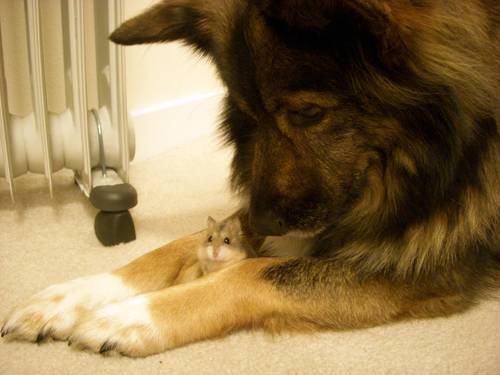
Dogs and rodents are slightly different

3. India ink is not from India – it is from China and Egypt

4. A horned toad is not a toad – it is a lizard

5. A lead pencil does not contain lead – it contains graphite

6. A douglas fir is not a fir – it is a pine

7. A silkworm is not a worm – it is a caterpillar

8. A peanut is not a nut – it is a legume

9. A koala bear is not a bear – it is a marsupial

10. An English horn is not English and it isn’t a horn – it is a French alto oboe

11. A guinea pig is not from guinea and it is not a pig – it is a rodent from South America

12. Shortbread is not a bread – it is a thick cookie

13. Dresden China is not from Dresden – it is from Meissen

14. A shooting star is not a star – it is a meteorite

15. A funny bone is not a bone – it is the spot where the ulnar nerve touches the humerus

16. Chop suey is not a native Chinese dish – it was invented by Chinese immigrants in California

17. A bald eagle is not bald – it has flat white feathers on its head and neck when mature, and dark feathers when young

18. A banana tree is not a tree – it is a herb

19. A cucumber is not a vegetable – it is a fruit

20. A jackrabbit is not a rabbit – it is a hare

21. A piece of catgut is not from a cat – it is usually made from sheep intestines

22. A Mexican jumping bean is not a bean – it is a seed with a larva inside

23. A Turkish bath is not Turkish – it is Roman

24. A sweetbread is not a bread – it is the pancreas or thymus gland from a calf or lamb

Book Review: Blind Eye by Stuart MacBride

Blind Eye (Logan Mcrae, #5)Blind Eye by Stuart MacBride
My rating: 3 of 5 stars

My first Stuart MacBride novel, as read by Stuart MacBride, with funny voices by Stuart MacBride.

My wife and I had this book on CD for our holiday driving, following the adventures of Logan McRae. My wife felt the story was dragged out a bit too much, I felt that Logan really needed to go postal on his bosses.

This was quite a good novel, but would only really appeal to the crime genre fans. If you don’t like the drama of the investigation *cough* my wife *cough* then this story won’t interest you. If you currently feel like hitting your boss repeatedly over the head with office stationery, then this book will make you even more inclined to do so, as you empathise with the protagonist. If you prefer straight-forward plots, once again, not for you. If you like Scottish accents, you’ll love this book.

View all my reviews

Book Review: Cut and Run by Matt Hilton

Cut and Run (Joe Hunter, #4)Cut and Run by Matt Hilton

My rating: 4 of 5 stars

After reading fantasy back to back, I needed a gritty thriller to balance the ledger. Enter Matt Hilton’s Cut and Run.

Yes, Joe Hunter and friends are here to take on the bad-guys. This time someone has hired a professional killer to take out Joe’s former strike team, their families, kill his friends and to frame Joe for their deaths. Pity Joe doesn’t like threats, when most would run, Joe becomes the Hunter (yeah, bad pun, I know).

Matt serves up very consistent thrillers, always enjoyable. Also keep an eye out for Matt’s recent short story compilation – Pulse Pounding Tales – featuring stories from he and Stephen Leather (another very consistent thriller author).

View all my reviews

Toilet with a view

I’ve never quite understood the people who read on the toilet. If you are spending that much time on the toilet that you need a book to keep you occupied, I’d really question how much fibre you are getting in your diet. That said, if I had a toilet with this view I might consider spending a little longer in the brace position.

Book Review: The Broken Shore by Peter Temple

The Broken ShoreThe Broken Shore by Peter Temple
My rating: 4 of 5 stars

I was having a chat with a friend at a party when Peter Temple came up as a must read author recommendation. I’m rather naive when it comes to new and established authors, I don’t seem to have the inside scoop on Aussie writers the way I do with overseas talent. It wasn’t long afterwards that Peter Temple was mentioned again at the Perth Writers’ Festival. So I bought two of his books, Truth (ebook version) and The Broken Shore.

Now the recommendations for Peter Temple came from literary people, people whose recommendations I try to avoid like trips to Canberra and prison showers. But these recommendations carried weight, as one of them was a Lee Child and Michael Connelly fan. I can see why Peter is an award winning novelist, but I can also see why he is highly regarded amongst authors – like I said, naive. This is a crime novel, but not quite like most crime novels. I’d put Peter in the same category as James Lee Burke, Ian Rankin and Michael Connelly, except his work is more literary.

Also, it is sad that Peter isn’t as internationally recognised as those authors I have likened him to. This book was equal to any of those authors. So read Peter and make sure his work hits the international market, where it belongs.

View all my reviews

Magazines and Newsletters that never took off

Our local bookstore is actually the newsagent, so you have to walk past the magazines to find the book (yes, not pluralized). I can’t figure out why some of these magazines never took off with readers.

Particle Physics for the Left-Handed Extrovert

A big field, from what I hear.

American Jihardist Today

The contacts and personal pages must get a lot of attention.

Better than your Neighbour’s Home and Gardens

I believe this has been renamed to Better Homes and Gardens.

TV Shows You Missed

Nothing like hearing about the stuff you missed while you were busying doing something important.

At the Movies with Ben Stiller & Adam Sandler

Why are they still allowed to make movies!?

Outdoor Activities for Agoraphobics

The equestrian edition would be very interesting.

This slideshow requires JavaScript.

Reading is good for the brain

I may have mentioned it before, but I am a science nerd. Now that that is out in the open I’d also like to remind you that I’m also a thriller writer with muscles, so sand kickers; you will need to think twice about that.

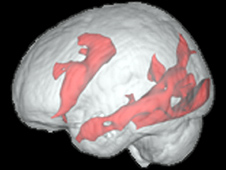
What I love about science is the way it goes about trying to understand the universe. In fact science even came up with a few studies on how reading is fantastic for you. Psychologists from Washington University used brain scans to see what happens inside our heads when we read stories. They found that ‘‘readers mentally simulate each new situation encountered in a narrative”. The brain weaves these situations together with experiences from its own life to create a mental synthesis. Reading a book leaves us with new neural pathways. Read more here. Nicole Speer, also from Washington University, utilized brain-imaging to look at what happens inside the brains of participants while they read. She discovered that as people read, they are constructing a virtual reality inside their heads every time they read. Read more here.

A reader’s brain in action.
I think this is fantastic evidence to wave at people, “See, you should read the book instead of only watching the movie.” Rather than readers having this inkling that their brains are running like a well oiled machine, we have actual evidence of this. Without evidence, claims are not worth the air they consume, just ask anyone who has tried to get conspiracy theorists to provide evidence for their claims.
Need more proof? Well how about this article. So not only is reading good, but exploring and interacting with what you are reading is even better. Surfing the net, getting lost in a fictional world…. wait that is the same point twice. Anyway, it leads to even more brain activity.

Surfing the net brain in action.

Now before you all go in search of internet porn to enlarge your brain, I just wanted to air a gripe I have with science reporting in the media: IT SUCKS. Yes, that’s right. Reporters are probably the least reliable avenue for the dissemination of science to a wider audience. Scientists themselves often rank just as poorly of course, with their annoying habit of wanting to tell you about the 10 years they have just spent looking down a microscope so that you appreciate how much work went into the facts they are about to impart.

So as part of growing your brain with reading and internet browsing, please spend some time searching for and reading the original scientific papers that are reported. If it wasn’t peer reviewed, then it could have been made up, like that rubbish about us only using 10% of our brain.

Social media

In internet terms I’m somewhat of a noob. I was late to Facebook, I held out on joining message boards and forums, I even had a personal campaign to avoid the vapidness of Twitter. Now, of course, I am happy to admit that I was wrong. Social media is awesome.

There are some down sides of course. I’m not a huge fan of the salespeople posing as real people on Twitter, Facebook, Goodreads, and the various forums I frequent. There are only so many times per day that I need to be told that my penis is not big enough, that I could be making money on Twitter by being a douche, or that someone I’ve never conversed with has a book for sale.

What I love about social media is the friends I’ve made, the great conversations I’ve had and all the catching up I’ve managed to do with friends I don’t get to see regularly. I have just joined Linkedin and discovered a friend of mine has two start up companies (check them out: http://www.cockjox.com/ http://tidyclub.com/). How would I have found that out between now and the next time we catch up for a beer?

Anyway, you can join me on the links below. We can chat, I’ll be funny, quote some science and talk books.

Email mePhotobucket

E-reader screens: better than a paperback.

Have you ever wanted to know more about your e-reader? This is an interview with the vice president of E Ink, Sriram Peruvemba. E Ink is the company that makes the displays for all the leading e-book readers worldwide.
I found this interview on e-reader displays very interesting. Did you know that:
  • E ink Pearl display panels are only 200 microns thick.
  • The newer Triton displays are half as thick as the Pearl displays.
  • E ink expects to sell between 25 and 30 million e-reader displays this year.
    • That’s up 10 million from last year and 3 million the year before that.
  • Current displays are 167 dpi and they are hoping to increase that to 300 dpi soon.
  • Current displays actually have better contrast than a paperback book!
    • Older displays were only better than newspaper.

In case you didn’t know, E Ink also makes screens for a bunch of other things besides e-readers. They have E Ink watches, advertising signs, secondary displays on cellphones, USB sticks, and they are even moving onto credit cards. Essentially anything up to a kilometre long, they can make it!

Better than paperback contrast! Imagine the future of these displays.

A Break From Work

I’m going on holiday for a little while, and as such I am unlikely to post.

What? Don’t you find blogging to friends and comrades fun?

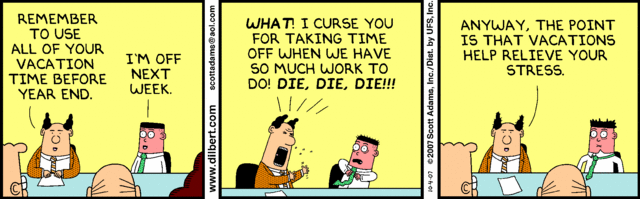
Well of course. But, you see, I have a simple holiday rule that I think makes relaxation better.

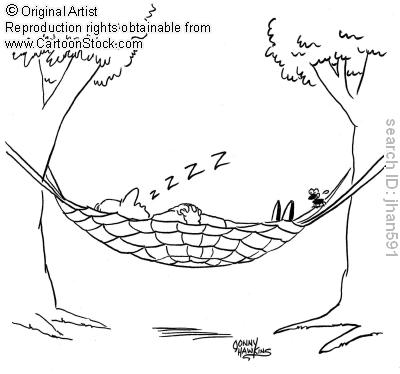
Holiday Rule: Only do things that can be done whilst horizontal.

That’s right, unless I can be laying down during the activity then it can be crossed off the to-do list while on holiday. Internet is mostly a sitting activity, thus the likelihood of being able to view the internet, let alone post, will be limited. I’m sure that if I prop my laptop in the right position and find the correct cushion I could use the internet, but it even sounds uncomfortable to me.

Activities that could be done on holiday:
Sleeping – the King of prone activities.
Reading – rather obvious really.
Eating – have to keep the energy levels up.
Drinking – fluids are important for that fuzzy feeling around noon.
Writing – Truman Capote preferred writing whilst prone.
Bench press – not really exercise if you are laying down.
Sex – much easier laying down.
Guitar playing – it’s still practice, even if you fall asleep, as long as you are still holding the guitar.
Playing fetch with the dog – our little bundle of energy wouldn’t let us lay down for long if she doesn’t get to play fetch!

Activities that are definitely ruled out on holiday:
Anything that could be accidentally construed as work – this includes reading non-fiction, sorry.
Running – far too active.
Squatting – loading a barbell with double bodyweight is too much like hard work.
Listening to social commentators – I can’t stand them, they are usually wrong.
Adopting a stance on anything – mainly pun related.

Yo ho ho and a bottle of rum.

Internet Pirate, Yar!

I can remember back to when computers were nothing more than green text on a black background and made terrific boat anchors. Then suddenly they exploded, usually from a spilt drink or frustration in the 10 minutes it took for anything to load. Just as I was leaving high school the interwebz was suddenly all around us and promised to deliver us information, e-commerce, media and porn. This coincided with computers becoming faster, hard-drives becoming bigger and teenagers becoming hornier.

And that is when media piracy really took off.

Sure Napster popularised it a few years later and the music industry starting jumping up and down about it later again, but someone had forgotten to tell these people that the game had changed. I didn’t have to buy the entire Primus CD for the two songs I was actually going to listen to, now I could have a copy of those two songs on my computer, either downloaded from friends or copied off the CD.

I think we were all waiting for the music industry to catch up. At some point we were expecting all of our favourite songs to be available online for sale. But our computers were growing, so it wasn’t just music, we wanted our TV and movies as well. Why couldn’t we just grab a copy off the internet when we wanted? Where was the store that sold this stuff? And would they sell Debbie Does Dallas?

Well, sensing the growing change in consumer behaviour, the desire for an online store to sell entertainment, the music industry, movie industry and other media decided to band together and sue kids for millions of dollars each.

Brilliant! Rather than sell people stuff lets sue them! What a marketing and sales master stroke.

Instead of responding to consumer demands, the industries concerned decided they didn’t want to play. They thought that would be the end of that. Of course in a free market economy you have to expect the market to dictate terms, not anyone else. Piracy became embedded.

Now of course it isn’t the media industry’s fault that their products were being pirated, it was them damn pesky kids with their computas and iGizmos and and theys gots no respects for da rulz……… The e-generation were blamed for the down-turn in music sales and for massive losses to the music and movie industry. I like the assumption that every download must equal a lost sale, talk about a non-sequitur.

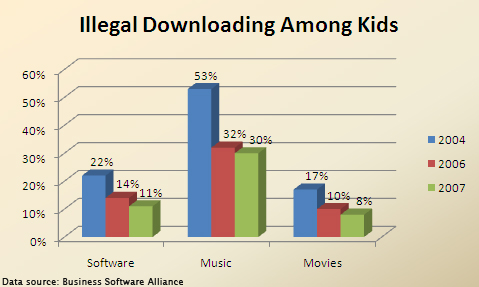
None of these arguments, discussion or history are really relevant though. I’m going to coin a new term SCREEN-GAZING which is the e-version of navel-gazing, because all of this piracy discussion is essentially nothing more than screen-gazing. Lets have a look at the real data that needs to be discussed.

The survey interviewed 1,700 music consumers age 13-60 and found that music is important to social networkers: 39% have embedded music in their personal profiles.
70% said they embed music to show off their taste; half said music is a good way to reflect personality.
Some other survey findings:

  • Some 53% of people actively surf social networking sites to find music.
  • 30% said they went on to buy or download music that they had discovered on a social network site (for MySpace, the proportion is 36%).
  • On popular sites the numbers of people who use sites to find music increase – for MySpace and Bebo, 75% and 72%, respectively, and 66% for YouTube.
  • 46% say they wish it were easier to purchase music they had discovered on social networking sites – for example via a “buy now” button on the site.
  • The number of those saying they illegally download music tracks has increased, from 40% in 2005 and 36% in 2006 to 43% in 2007.
  • Only 33% cited the risk of being prosecuted as a deterrent against illegal downloading, compared with 42% in 2006.
  • Nearly one in five respondents – 18% – claimed an intention to download more unauthorized tracks, up from 8% in 2006.
  • After a dramatic 40% increase in the number of legal downloaders between 2005 and 2006, only 16% growth occurred in the number of legal downloaders from 2006 to 2007.
  • 22% of legal downloaders admitted that they had not paid for a track in the last six months.
  • 84% agreed that digital downloads of older music should be cheaper; 48% said they would be prepared to pay more for newly released music.

So basically iTunes had been on the map for 4 years by the time this survey was performed, downloading had been around for a decade. Big congratulations to the industry for making those inroads into making music accessible. Almost half of the kids would like easier access to music to buy, and most thought it was too expensive.

Another survey shows that downloads of media were decreasing. So clearly the impact of actually selling media to people that they want was a good thing for lowering pirating. Just the industry hasn’t reached enough of the market yet.

How do you dissuade people from illegal downloads? The traditional approach for punishing pirates would be imprisonment, pilloring, flogging, enslavement, branding, keel hauling, and/or hanging. Given how well that worked in ridding the world of pirates maybe we should consider other methods.

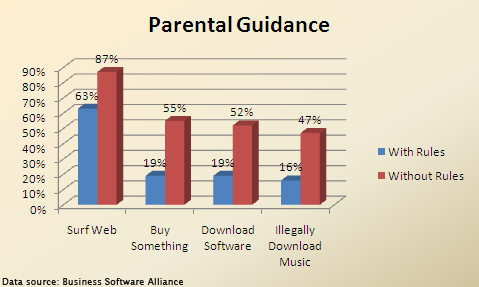
Someone was really bright and had a look at what parental guidance did to downloading.

Who would have thought that parenting had a role in being a law abiding citizen?

What does all of this mean? Well pretty much media – be that ebooks, movies, music, TV shows – need to be easily accessible and priced appropriately. There also needs to be some responsibility taken by everyone to make sure that people expect to pay for media. This can’t be draconian, it has to be encouraged, and part of that encouragement comes from the ease of access and prices that people can afford. And now I hold my breath. Wake me after I pass out waiting for a solution rather than another blame game.

Going For Broke

Everyone will have now read, seen or heard the news that Borders and Amazon have been heading up a fetid creek for far too long. In the land of Oz (the non-magical and not infested by Munchkins version) the media are now weighing in.
See this article

You see I’m to blame. I brazenly buy books from places other than big chain stores. I have a Kindle and enjoy reading e-books. I am, in short, the devil incarnate and will be sacrificed on a pyre of celebrity biographies, cookbooks and other non-selling book store stock.

A Recent Photo of Me.

Lets take a look at some of the points that were made.

I’ll play devils advocate here and talk about taxes first. There are only two sureties in life; taxes and whining about them. In the non-Munchkin land of Oz we have a 10% goods and services tax (GST) on everything except food. This means that imports don’t have this tax, because they aren’t Australian. I guess we evil overseas book buyers paying taxes to a foreign country should pay another tax for daring to participate in the global economy. That way I can be more involved in the global economy with taxes in multiple countries.

Recently we also had a change in the Aussie dollar, it reached parity with the US dollar. For those who haven’t studied economics, this means that if I have one Australian dollar I can trade it for one American dollar, I know because I saw an article on it – tricky stuff that economics. Now that means that if I wanted to, say, buy materials that are needed to print books they would have gotten cheaper. Equipment upgrades, cheaper. Printing ink, cheaper. So clearly a stronger Aussie dollar must mean that it is harder to compete…………

The threat from online sales is, of course, just terrible. How dare our country sign up to a fair trade agreement and actually have its citizens abide by it. Who’d have thought that when you have a business competing in an international market it would mean that you would have to compete with stores all over the globe?

Of course this means that me and my evil kind are killing retail jobs.

One point that Bob Carr (former politician – which means dodgy) makes is about how it is all the government’s fault that books cost so much. He states that they would be 33% cheaper if only his benevolent company Dymocks was able to buy their books from overseas instead of locally. 33%? I think it is basic maths time for this particular businessman.

As an example I will use the latest action-thriller by Andy McDermott. His book Empire of Gold (which I’m looking forward to getting my fiendish hands on) has just come out recently and is available from Dymocks in Australia, or for the evil book buyers, from Amazon.
Dymocks Australia online price: $24.79 (paperback)
Amazon: $9.99 (paperback) or $24.63 (hardcover)
So let us take 30% from the Dymocks price:
$24.79 – 30%(7.44) = $17.35

Well, I’m not a maths genius, but at a guess I’d say that being able to buy a hardcover at USA retail prices for the same price as the paperback retail in Australia is not exactly a 33% difference for a paperback. In fact, to buy it would be more like a 60% difference between the paperback prices. So I’d have to say that I’m not looking as evil as I first thought.

I wonder where that other 33% is going? It certainly isn’t into royalties for writers. I’d just like to be reminded what the wonderful companies that have just left a hole in the heavenly book retail world went bankrupt not paying (analogy: imagine that the authors are Marsellus Wallace, the publishers are Butch, the retailers are Zed and Maynard, and in this version Butch just does a runner). While we are on the subject, I’m unsure whether Dymocks is a discounting chain store driving every other book store out of business or The Coalition for Cheaper Books.

Clearly I’m so evil and my kind are the cause of all problems in the publishing world. It could never be the fault of antiquated business models forgetting that there are only two important parts in the publishing industry, namely the readers and the writers, everything else is clearly expendable. Excuse me while I pay a 70% royalty to a new author for a book that you can’t buy from a publisher or store.