Worth heading over to the original page for the discussion section. Highlights include which ships were missing, and a better estimate of the Heart of Gold’s top speed.
My mother bought me The Great Zoo of China for Christmas, which makes her the best mother in the world. Well, unless your mother bought you a copy as well, in which case the title of best mother in the world would have to be shared.
CJ is a herpetologist specialising in large animals like crocodiles, and being a Matthew Reilly novel, she also specialises in avoiding dying every page or two. She is recruited by National Geographic to take a press junket trip to a new zoo in China. The Chinese government have developed an amazing new zoo that is set to wow the world, assuming their main attractions don’t try to escape and eat everyone. What could go wrong during the promotion junket for a zoo filled with dragons?
Yep. Dinosaurs, sorry, Dragons.
I’ve seen some reviews that suggest Matt’s novel is just a rip off of Michael Crichton’s Jurassic Park. I agree completely. I also like to ignore that Jurassic Park is a rip off of Sir Arthur Conan Doyle’s The Lost World, which is in turn a rip off of Jules Verne’s Journey to the Centre of the Earth, or possibly Off On A Comet – if you want to count dragons as dinosaurs. Because every idea is 100% original and comments complaining about rip-offs don’t primarily show the complainer’s ignorance.
Ignoring that point – because who cares? – Matt’s latest novel is all of the elements we’ve come to love from him. The story is fast paced, life and death, adventurous fun. I really enjoyed The Great Zoo of China: enough said.
I’m not sure that there are enough sci-fi thrillers out there. Maybe we should get James Patterson to churn out a few dozen this year, or maybe someone can point me in the direction of a few dozen authors like Hiroshi Sakurazaka.
People may be aware of All You Need Is Kill because of the film adaptation starring Tom Cruise and Emily Blunt, retitled Edge of Tomorrow because ‘kill’ had such negative connotations. I haven’t watched the film yet, but have heard very good things, which makes sense, since this is a very good book. The premise for the book (and film) is that Earth has been invaded by terraforming robots – Mimics – who are preparing the planet for an alien race to come live here. These robots have a special trick they use to help them win battles: they can send a signal back in time to allow time loops to play out until they win. Keiji Kiriya is a new recruit, but in his first battle he gets caught in the loop, and he is able to alter the future by learning from his mistakes.
Obviously this sounds a lot like the Bill Murray film Groundhog Day, just with less Bill Murray and more giant robots trying to destroy the planet. The story never lets up, despite the fact that the two days (the day before and day of the battle) are on an endless loop until either Keiji or the Mimics succeed. And the twist ending caught me somewhat by surprise. I recommend this book to any fans of thrillers, unless you can’t stand the idea of people in robotic suits fighting alien robots for the future of the planet – which is, of course, impossible not to love.
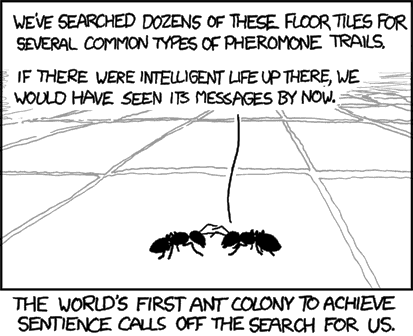
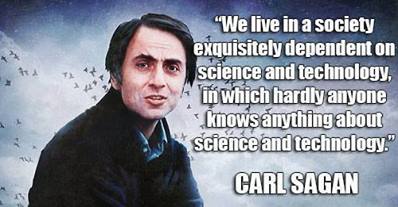
Within science fiction and the wider society there is this idea that we’ll find aliens. I always find it funny when humans talk about discovering “other” intelligent life in the universe. Just a wee bit arrogant to consider ourselves intelligent. Yes, I do realise that I’m arguing that point using technology based on quantum mechanics, probably being read on a device that weighs less than 200g and fits in your pocket, linked by a distributed network, connected by orbital satellites. Science: it works….. bitches.
But I would continue my argument by saying that to some people that amazing interface of technology, that is allowing this blog post to be read around the world, might as well be explained as “magic, magic, magic, magic, magic, god did it.” I certainly couldn’t explain how quantum mechanics works, nor how it applies to communications technologies, let alone how it manages to stream all of my favourite porn media to my phone. Thus Arthur C Clarke’s third law – Any sufficiently advanced technology is indistinguishable from magic – holds true for the vast majority of people on this planet.
Now the argument against Clarke’s third law is that technology isn’t magic. In fact, in the entire history of human civilisation, with all the things that have been attributed to magic, all the great mysteries of the universe, once investigated, have turned out to be not magic. But I’m talking about the knowledge gap between the average person and the specialist in the field who develops all this cutting edge stuff that allows other specialists to do cool stuff; like making a hoverboard. We are surrounded by everyday items that most of us would struggle to explain the concept of how they work – magnets, how do they work? – let alone understand the complexities involved – magnets, this is how they work.
Douglas Adams brilliantly satirised this idea in his novel Mostly Harmless. Arthur Dent crash lands on an alien planet where the local humanoid populace are rather backward in comparison to us humans. Arthur comes from a planet of television, cars, planes, computers: all sorts of neat stuff. But he doesn’t know how any of it works, nor how to go about reverse engineering any or it. So he becomes the sandwich maker.
Essentially, we point to all of our human achievements to show how smart we are, but in reality most of us haven’t the first clue about any of those achievements. We just aren’t as smart as we would like to think.
Now compare this to aliens. Humans are pretty proud of having gone to the moon, cashing in on all 12 of us who have done so, but to be visited by aliens requires interstellar travel. That requires technology we probably haven’t even dreamed of yet (possibly not, e.g. warp). An alien race that can do that is so far beyond human achievement and intelligence. Thus, I’m suggesting that even at our best, we would be babbling morons in comparison to an intelligent life-form that has managed interstellar travel.
Sure, the aliens that decide to cross interstellar space may be the Cleatus of their species. Their technology may actually have reached the point of sentience and doesn’t require anything of its “makers”. But think of how advanced such a species would be, not to mention how arrogant (rightly or wrongly). There is no reason for them to look upon Earth and see humans as intelligent (e.g. climate change and reality TV). There is also no reason to believe that we’d even notice these aliens. An intelligent life-form travels between star systems, has the technology for that not to have taken billions and billions of years, and some dude with an out of focus camera is going to be the only person to see them?
So I think that humans are rather egotistical to think of ourselves as intelligent life in the universe. I also think that it is arrogant to believe that an alien species would regard us as intelligent. I also think that we’d have little chance of encountering intelligent alien life unless they wanted to be encountered. This is just my view, but the main thing is, Neil DeGrasse Tyson agrees with me (or is that I agree with him?):
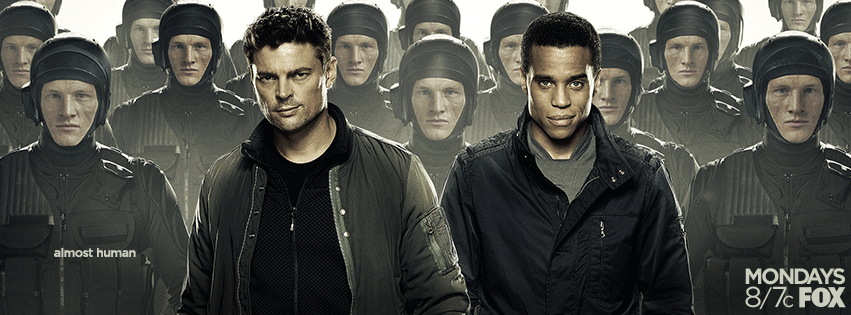
Recently I wrote about the TV shows that have been keeping me entertained, or at least giving my eyeballs some much-needed exercise. One of the TV shows I’d failed to get into was a little sci-fi on Fox called Almost Human. It appears that the reason I’d had trouble appreciating this new show is that Fox is up to its old tricks.
That’s right, Fox is airing the episodes of Almost Human out of order. And before you ask, I did check to see if Joss Whedon was in any way involved in the show: apparently not. So Fox can’t use the “we have to dick Joss’ show around” excuse, like they did with Firefly, Dollhouse, etc.
Obviously I’m not a highly paid TV executive, so my opinion on this topic is really inconsequential. Unless, of course, viewers of TV shows – that reason TV shows are made, aside from selling ad-space – are regarded as important in any way. Sure, I don’t have a degree in TV programming, but I would have thought airing a TV show in order would be the sensible thing to do. I’m not sure if the degree at MITV, the TV university located next to MIT, can be done online yet, but I would like to see their syllabus to get some idea of the inner workings of TV networks.
I know when I write a story I always like to start with the fifth chapter, then come back to the second chapter after I’ve written six or so chapters. I especially like to do this in a story which has a lot of new stuff in it, like sci-fi, and where there is any sort of story arc. This way you can really do your best to alienate readers and confuse them.
Not being privy to the inner workings of TV networks, it is hard to say exactly why they would do this, or how often they do this. With some TV shows you just wouldn’t notice. Take a formulaic story capsule like CSI Wherever. There isn’t usually an episode or season spanning story line; dead bodies show up, someone puts on glasses after making a pun, someone wears a lab coat near some magic ‘science’ boxes, they get the bad guy to confess during a flashback. So you would never know if they were aired out-of-order – which also raises the idea of them actually having an order to begin with. This is the sort of show you could just chop and change around to suit whatever excuse is used for butchering a show. But you can’t do this to a serialised TV show.
This isn’t just about annoying and confusing viewers. This isn’t about the disdain the TV executives are showing toward the show’s fanbase, you know, those people they need to sell stuff to. This is about a lack of respect for the creators of the show, especially the writers. Someone has gone to the trouble of crafting a story, an episodic story that needs to build upon previous instalments in order to continue to attract fans. Almost Human has enough of a “stand-alone” nature to the show to not be damaged too much by the lack of continuity (WTF is ‘the wall’??) but plenty of shows have been damaged or destroyed by these sorts of airing decisions.
Bring back Firefly!
Update: It appears that Fox has cancelled Almost Human, despite renewing The Following which had similar ratings. This shouldn’t be surprising since the network has essentially been trying to cancel the show since they first aired it. Fox didn’t make the show, so there is some chance a network like SyFy might pick it up.
There has been an interesting duo of videos by PBS’ Ideas Chanel. Mike discusses some interesting concepts surrounding fiction, like the fact that fiction is as much real as it is made-up and vice versa. Worth a watch.
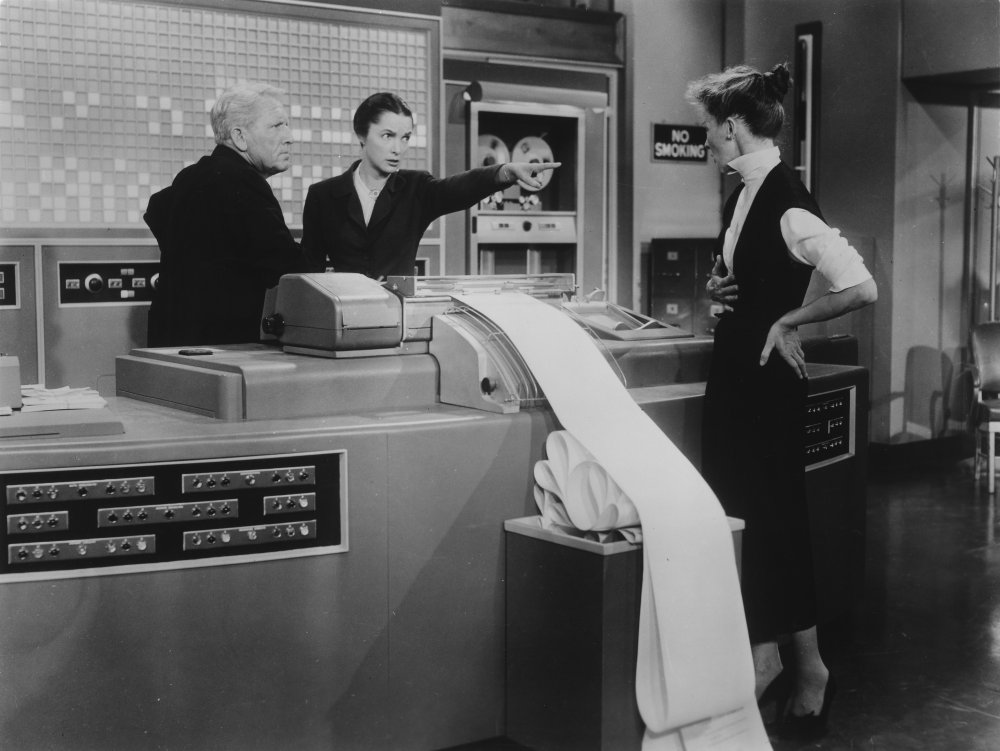
The two videos cover a lot of ground, but one of the more important points I’d like to highlight is the idea that we can’t have fiction without reality. We need something to anchor our ideas and make-believe, shared experiences that allow us to understand and accept these fictions. There are plenty of examples of this, but one of the cooler examples is looking at depictions of the future at various stages throughout history. Compare what sci-fi movies of the 50s thought computers would look like now to what they actually look like, and you see a 1950s computer. Our imaginations actually suck a lot more than we think.
But here’s an idea about our inability to imagine the future: what if our imaginations don’t actually suck, but instead we ignore the outlandish imaginings that are actually more likely in favour of stuff we already know? Think about it. Or don’t, I’m not your boss.
I’ve been making my way through most of the Preston and Child novels, enjoying each in turn, so I thought it was time to hunt down some of their individual efforts. My local library happened to have Blasphemy on the shelves, which came home with me for a few days.
This is a very well written book. Not only is it intriguing, it weaves in several themes, allegories, allusions and straight up social commentaries. At the same time it is a fast paced thriller. I really enjoyed it.
Of course the title is likely to make some people a little nervous about reading the book. It should be made clear that The Flying Spaghetti Monster is not mentioned, nor is his noodliness likely to be happy with the religious comments – beer and pirates are not mentioned once. No doubt some will be offended, especially if they swear blind that Sam Harris and Richard Dawkins have horns and pitch forks. Everyone else will enjoy this interesting and fast paced novel.
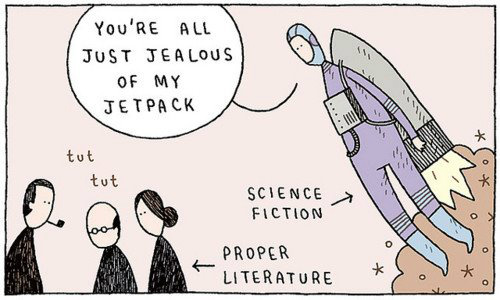
During a discussion the other day my favourite authors and books came up as a topic of conversation. Needless to say I listed off writers like Lee Child, Matthew Reilly, Robert Crais, Matt Hilton, etc. Now these people weren’t exactly literary snobs, but they did respond as if I was supposed to list the authors of classic literature and contemporary literature.
Seriously?
Can we all stop pretending that there is something superior about literary fiction. I’ve seen discussions of social problems in crime fiction, fantastic use of literary techniques in horror, exploration of character and humanity in science fiction; all performed with more skill and insight than I have seen in the literary genre.
How about we go back to judging a book by its cover.
This is the second Crichton thriller I have read and the second time I have come away noticing his anti-science rants and preachy tone. This time the anti-science diatribe was delivered by the character of Malcolm, who only seems to be in the book for his chapter long anti-science rant. I’ve heard Crichton is even worse with this novel State of Fear.
The book itself is a decent techno-thriller. It was enjoyable and moved along swiftly. One thing I did notice, though, was a tendency to weigh the story down with details. I didn’t really need to know what lines of computer code came up on the screen unless it was relevant – it wasn’t. I didn’t really need to see the DNA sequence typed out.
So you can see that I was less than impressed with Crichton again. The book was entertaining, but from this scientist’s point of view, Crichton should have spent more time writing and less time preaching.
Also, before anyone comments, yes, I am aware that this is fiction. The perils of scientific meddling have always been the cornerstone of sci-fi and techno-thrillers. There is a difference between the “what if” fictional supposition and the “look at my reference list and opinions spouted as facts” tact Crichton uses. Fiction is meant to be fun, not didactic.
You may all think that I’m primarily a crime thriller kinda guy, a lot of the book reviews I post here are for crime, crime thrillers and thrillers. My current work in progress is also a crime thriller. So I clearly fit into a very neat little box created out of stacks of James Patterson releases for the month. But I like a lot of genres, I think most readers do, in fact I’d go as far as to say that all readers read more than one genre unless they are still battling with Where’s Waldo.
Needless to say, despite my current work – and several others in the pipeline – being crime thrillers, I have several outlines for stories in other genres. One of my first big ideas – quite literally, as I have a 50 page synopsis and several instalments plotted – was for a sci-fi story. Think Jack Reacher crossed with Jet Li (Did you know Jet Li is a real life hero?) inspired by Heinlein. Anyway, the main character, Caleb, is the last of his kind and is trying to save humans from themselves, whether that be leading a civil war, or deposing dictators at the various human colonies. Of course there have to be aliens in space.
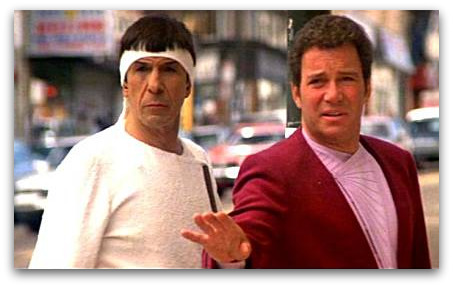
The problem I’ve always had with aliens in books and movies is that they are too much like us. On Star Trek they could even pass for us, as long as they wore a headband. But it isn’t just that they look so much like us, why would aliens even think of us as awesome? Would humans be actually interesting to aliens? If aliens are watching our broadcasts you could just about guarantee that they don’t consider any of the life on this planet intelligent.
Alien: So you consider your race intelligent?
Human: Why yes.
Alien: Explain Glenn Beck.
Human: Okay, some of us aren’t as…
Alien: And you dig up stored gases to change your atmosphere so that it wrecks your climate.
Human: But we needed fuel for power. We’ve got solutions to that now.
Alien: One word: Politicians.
Human: Please don’t wipe out our planet!
So in my alien research for my novel/s I finally found inspiration. Who better to inspire me than Neil DeGrasse Tyson and Richard Dawkins?*
See the rest of the discussion between Dawkins and DeGrasse here.
*Yes Carl Sagan would be inspirational too, but he isn’t in the video.
Edited by Dr Sonja Boehmer-Christiansen
My rating: 5 of 5 stars
There are a lot of publications out there that specialize in short fiction. One that has stood tall amongst the Science Fiction community is the publication Energy & Environment. Published 8 times per year, this periodical prides itself on its consistent quality of short stories. It has become a renowned publication in the sci-fi community, with contributing authors often writing about an alternate reality universe, where the rules of physics do not apply.
Luminaries of the Science Fiction community have been known to publish stories in E&E, notable examples include: Dr Willie Soon, Prof Bob Carter, Prof Ian Plimer, Dr Tim Curtin, Prof Richard Lindzen, Dr Roger Pielke Sr; a veritable who’s who of the Science Fiction world. Energy & Environment attract such great writers because of the favourable editorial standards, allowing startling new sub-genres of Science Fiction to emerge. Some of the most revered works of Science Fiction have been published in Energy and Environment in the last decade as a result of the publication’s regard in the sci-fi community.
Energy & Environment is often regarded as hard sci-fi, due to its heavy use of figures and tables within the stories. These illustrations help to conjure up a vivid impression of the wonderfully weird worlds the stories are based in. Having a science background, these elements of hard sci-fi were an entertaining aside, but most sci-fi fans would be able to enjoy the fictional universes without having to take them in.
Contributors are also known to win the prestigious Heartland Institute award. This is a notable Science Fiction award given by the Heartland Institute to encourage sci-fi writers to continue their work. The award comes with a cash stipend, generously given by Heartland funders such as Exxon. A notable Australian sci-fi author, Bob Carter, is a current recipient of the award, the $1600 a month stipend helping him write sci-fi stories full-time.
If you are looking for funny, entertaining and challenging Science Fiction, then Energy & Environment has a story for you.
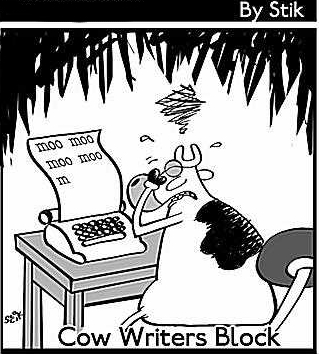
There is no worse disease for a writer than writer’s block. I’d also say that writer’s block is terrible for readers too, uninspired prose is what we expect from policy and political people, not our entertainment. I’m a fan of Stephen King’s writing advice: set a daily word goal and stay at it until you reach the goal. There is something about daily writing and forcing yourself to write that seems to make things flow.
But Tyson, I hear you say, I’m stuck with no ideas for what to write next. Luckily I was procrastinating whilst writing the other day and came up with a definitive fail safe for each major genre. Any additions are welcome in the comments.
Thriller Writers
When writer’s block strikes kill someone or blow something up.
Crime Writers
When writer’s block strikes describe the main character getting drunk and wallowing in self pity.
Mystery Writers
When writer’s block strikes introduce a red herring.
Romance Writers
When writer’s block strikes introduce new character with rock hard abs.
Literature Writers
When writer’s block strikes describe a tree in intimate detail.
Fantasy Writers
When writer’s block strikes have a talking dragon appear, or have the characters go on a long walk somewhere.
Sci-fi Writers
When writer’s block strikes cut and paste physics article from Wikipedia into your novel.
Horror Writers
When writer’s block strikes cut and paste autopsy reports into your novel.
Paranormal Writers
If you already have vampires, ghosts and werewolves in your novel, introduce ninjas and pirates as characters.
If you are really stuck after all of these ideas, then there is no novel in existence that can’t/couldn’t be improved by the addition of pirates and/or ninjas.
Some people love reading their friend’s books, others loath it. I can understand some people’s reticence in reading a friend’s work; what if the book sucks? I’ve found that the best way to have friends who are writers is to choose them on the strength of their writing. That way you can’t be disappointed by their subsequent books. Plus, free books!
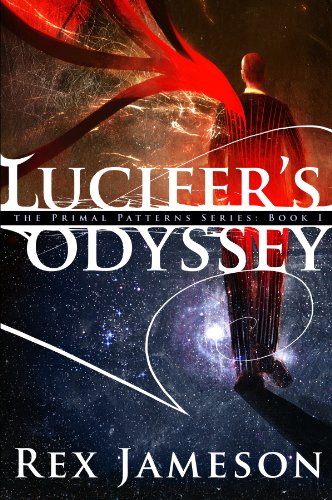
Rex is much like me: a nerd. As a result it isn’t particularly surprising that Rex has come up with a very interesting melding of speculative fiction, fantasy and sci-fi (the sci-fi element could actually be described as part of the fantasy element, from a certain point of view). This novel reminded me at times of some of Heinlein’s work. Earlier in the book I was especially reminded of Heinlein’s Job: A Comedy of Justice.
Now I have an annoying habit. My friends and family will attest to the fact that I inadvertently spoil movies, TV shows and books by giving away key aspects of what is about to happen. My brother recently complained about me spoiling The Wire for him when I mentioned Stringer Bell dies. So I’m not going to go into too many details about the Odyssey of the title, whether there is more to the initial story of betrayal and conspiracy, whether Jehovah was the messiah or just a naughty boy who is b……. Almost. The plot builds upon itself as the book continues and keeps you involved with the layers of the Odyssey. Suffice to say you will be rooting for Lucifer as he pulls his swords to go Conan on……. Almost did it again.
I’m hoping to have a bit of chat with Rex in the near future, so stay tuned for a future guest blog post.
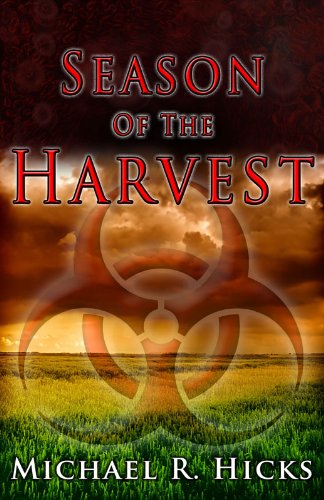
I’ve lived and worked in agriculture for pretty much all of my life. Aside from that short trip to Alpha Centuri to save the universe from Krag the Merciless I can safely say that agriculture is something I have spent a lot of time around and am at least peripherally aware of. Which always makes techno-thrillers and sci-fi books like Season of the Harvest hard to review.
I often wonder if ex-military guys sit down and read a book and think “like we’d ever do that”. I know every scientist would love the GC mass spectrometer that the CSI labs have on TV – nothing like a weeks work being turned into a 5 second task to get scientists hot under the collar. Do police and law enforcement people find it hard to enjoy any book or TV show due to the errors? They have those stairs at booking for a reason, push the guy down them a few times! So many little things that we writers and readers just don’t realise are crap.
In part of my research I found out that one thing that annoys gun nuts enthusiasts is that they hate the smell of muzzle flash being described as “cordite”. You see cordite hasn’t been used in bullet manufacturing for a long time, subsequently a writer describing the smell of cordite after a gun battle is showing ignorance. Clearly never having the need to use a gun to shoot random people is a major character failing in writers.
But are they showing ignorance? This is fiction after all.
To most readers describing that post-gunshot smell as cordite elicits the correct sensory appreciation. Gun powder, ho hum; cordite, ah-hah specific smell! For CSI we know that a case that would normally take months and go through several different investigators and result in absolutely none of the CSI team needing to shoot anyone, has to be wrapt up by your show’s stars in the 42 minute show time.
So really the research and reality of the writing or show only has to be enough to move the plot and characters forward. This is fiction after all.
As a result I can say that I really enjoyed Michael’s novel. He kept up a cracking pace and kept a very tightly woven narrative. At one point about three quarters of the way into the book I remember thinking “there is no way they can get out of this one”. So much tension!
This was a nice mix of sci-fi and thriller and reminded me a lot of James Rollins. This is especially since there are similar themes to Rollins’ novel The Doomsday Key. Just imagine that with aliens!
This brings me to my two criticisms of the book, remember I really enjoyed this book. The first was the narrative structure: it was very well done up until about halfway through when more points of view started to be included. Nothing wrong with that but it broke from the flow established earlier on. Having the cat have a point of view for a scene was my shark jumpy moment. The second point is about agriculture: why don’t people research agriculture when writing instead of listening to scare-mongers and political groups? I know why, it makes for a much more thrilling read than saying “we’ve doubled world population, have less farming land, and yet we still fed the world, yay us!” I guess it would just be nice to have someone say “you rock” rather than “you shouldn’t use chemicals” once in a while.
I guess the real CSI guys might be also dreaming of magical lab equipment too.
What I love about the digital age we now live in is that it has suddenly made communities possible again. All those little sullen teenagers who make statements like “life is pain” can now find other people to bother. For readers and writers it means that, like a readers festival, we can gather in corners of the internet and proudly proclaim “I can read and I actually enjoy it!”
This means that now authors can speak to a writer’s group from the comfort of their own couch. Or they can speak to fans directly without having to wait for a book tour or festival. Writer’s can now grab some readers and ask them “Is it good enough?” and they can tell them “Yay!” or “Ow, my brain!”
I have previously mentioned how I stumbled across Steven’s first book here. Well, when I congratulated him on his first book in an email, he suckered me into being a Beta Reader. By suckered I mean he offered me a free copy; by Beta Reader I mean I got to read it before anyone else!
Now normally a traditionally published author would have a team of publishing house people take a large cut of their book sales in order to tell them to rewrite it so that it is a teenage vampire romance novel – because they are hot right now. But in the world of the indie author, or is that the e-book author, no one can afford to end up co-writing with James Paterson. They have to find ways to turn out a quality product with as few costs as possible. Of course some authors aren’t concerned with things like spelling or grammar, and just release a book. True professionals, like Steven, wouldn’t dream of releasing anything but a professional quality book.
Enter the community.
Once again we find ourselves in touch with our peers. Instead of it being because we all live within a day’s horse ride of one another, now it is because the internet has connected us. Authors can help other authors. Fans can be friends with their favourite authors. Sure, you still get the annoying argumentative people who think ignorance is an opinion, but that is why the internet invented pwnage.
Now my experience in being a Beta Reader has been very positive. By the time I had a copy in my Tablet PC it was clear that Steven had done a lot of work on the novel – Peace Army. I actually spotted less typos, grammatical errors and spelling mistakes in his entire novel than in the middle section of the final Harry Potter novel (you know, the part were Harry, Ron and Hermione are wondering around camping for ages and you wonder when something will actually happen, but nothing does). Since Steve was still sending this book to an editor, myself and the other Betas were tasked with trying to spot plot holes, non-sequiturs, and frivolous inclusions of zombies. I really have to commend Steven on a novel that could have been something I was paying for, not reviewing.
This revival of an ancient (pre-2000 AD) practice is not without its problems. Without going into too much depth, I am actually a professional editor and have a few science degrees – some of them are from real universities! So not only have I been asked to rewrite entire articles that consist of the 7 words you can’t say on television, but I’ve made it coherent. So it is likely that I can contribute something of value as a Beta or editor. As a result I think that authors need to still be reliant on doing a good job themselves, finding Beta’s who can give positive criticism of value, and not be in too much of a rush to publish.
Of course I should offer up a few comments on Steven’s book. Peace Army is an interesting follow-up to the novel Peace Warrior. Once again Steven has hearkened back to the science fiction novels of old, while having an interesting take on a future Earth. The last third of the novel flew past and I had to remind myself to make notes as the book came to its finale. Even if Steven released this book right now without further changes and editing I’d not only be buying a copy myself but would recommend it for anyone who loves sci-fi. Keep an eye out for its release.
I have mentioned before how I am a chronic procrastinator. As part of my procrastination I frequent various forums that discuss topics of interest. Whether it be weightlifting, woodworking, reading or writing, I’ll be there ready to pwn some newb (really I’m a nice guy). Anyway, over at Kindle Forums I stumbled across Steven’s book and was inspired to read it. Basically the cover interested me enough to inspire a download of the sample. It was a lunch time and I wanted something to read, this book fit the bill nicely.
I can’t remember how far I was through the sample before I was convinced to purchase the entire book, but it was within a few pages. This book was reminiscent of my favourite science fiction novels and had me hooked. Not bad for the first book by a self published author.
Steven has done a great job with the book and this is a very entertaining read. It is clear that he has drawn on his military background, whilst not boring the reader with it. I can recommend this book to anyone who enjoys sci-fi or thrillers. Imagine a Buck Rogers type scenario with aliens and you are most of the way to understanding this book. Steve has set up good pacing, an interesting take on the themes, and makes it an enjoyable journey for the reader.
So if you get the chance, look up the indie authors like Steven, they are giving readers something more than just another James Paterson release.








 Tyson Adams