The big take home from this infographic is that readers are more interested in reading, not on the format it comes in. I also found it interesting that people read slower on an e-reader (which I’d guess is because the screen is smaller and requires more ‘page turns’ which breaks reading flow) yet those using e-readers read an average of 9 more books per year (24 vs 15).
In summary: reading is good, go and enjoy a good book.
A homeopathic practitioner answered (paraphrased) that boiling the water resets the memory and that homeopathic remedies are only effective when using boiled water. He makes another comment implying that if a remedy were prepared with tap water, it wouldn’t be effective.
I realize the above related question (“Does water have a memory…?”) is nearly identical. I’m trying to ask it another way as it’s possible to persist with the water memory concept despite the other question’s answer. One could simply say (my hypothetical response),
“Well, we don’t know how it works and perhaps it isn’t by the known mechanism of how water behaves… but trials indicate that it works, nonetheless and that’s all I need.”
Since the audience member in the video indicated tangible predictions, I’m interested if they’ve ever been put to the test. Thus, my question is:
Has a trial ever been conducted in which homeopathic remedies prepared from both unboiled and boiled water were compared against one another in terms of patient response?
If there is another way to answer this question please go for it.
Answer:
It really doesn’t make any difference if the water is boiled or not, homeopathy doesn’t work.
The Minimum Dose and Avagadro’s Number The second and most controversial tenet in homeopathy is that remedies retain biological activity if they are diluted in a series (usually in a 1:10 or 1:100 diluent–volume ratio) and agitated or shaken between each dilution. Hahnemann began this process to reduce toxicity, but later he claimed that this “potenization” process extracted the “vital” or “spirit-like” nature of these substances (2). The limit of molecular dilution (Avagadro’s number) was not discovered until the later part of Hahnemann’s life; by then homeopaths all over the world were reporting that even very high potencies (dilutions lower than Avagadro’s number) produced clinical effects. The implausibility of such claims has led many to dismiss any evidence of homeopathy’s effectiveness as artifact or delusion (3). http://www.annals.org/content/138/5/393.full
But lets pretend for a moment that water does have memory. The aspect of boiling has not been researched. A search of Google Scholar nets no results for boiling and homeopathy. When referring to “how-to” guides of preparations it becomes obvious that homeopaths are merely after clean or unpolluted water to make their preparations in.
Ingredients … 1/2 or 1 litre of boiled water (distilled water may be bought at pharmacies in some countries, if you want that, and bottled, rinsed water is commonly sold in groceries too)
Preparing your own bottle: Boil the glass bottle and dropper in filtered water for 15 min. and let it cool completely. Fill it just to the neck with filtered or distilled water.
So clearly the idea that boiling is the only way to reset the water is not backed up by the practices employed by homeopaths themselves. This combined with the fraudulent claim that water retains memory shows that this is another misdirection to allow justification.
these data highlight signs of hepatorenal toxicity, possibly due to the new pesticides specific to each GM corn.
Monsanto, fomous for its Round Up lawsuit, the manufacturer of two of the studied strains of GM corn, responded, dismissing the article, particularly by criticizing the statistical methods used. Is Monsanto’s criticism valid?
Have their been additional studies done that either support or refute the claim that genetically-modified corn has toxic effects?
Answer:
The simple answer is no.
GM corn has the BT gene that allows lower use of pesticides due to increased or the RR gene that allows the use of glyphosate for weed control. Neither of these alterations have any impacts upon the production of sugars or proteins in the plant. http://www.ca.uky.edu/entomology/entfacts/ef130.asp
The problem that can arise is from the pesticides that are now used on the crops and the timing of their application. These pesticides are known to harm mammals and if the dose is high enough can cause problems. http://www.ncbi.nlm.nih.gov/pmc/articles/PMC2793308/
There is an issue with using corn as a feed supplement in animals though. Corn is not a complete food source and is generally low in protein, especially tryptophan. This means that a feed mix is required, not just straight corn meal. http://www.ag.ndsu.edu/pubs/ansci/beef/as1238w.htm
Another issue is that corn can cause Pellagra. This is due to the niacin and B12 being bound in the corn starches and not being released in normal digestion. Tryptophan is also low in corn and can cause Pellagra.
Another point that should be made is that the paper cited is from a notorious “research” group who produce shoddy science in order to further their biased agenda against GM technology. The big problem with the paper is that it uses the wrong sort of analysis and the data has already been analysed by two other papers and found to say the opposite of what this paper says. Essentially, if you do a statistical test with a 95% confidence margin, you are saying that you have one chance in twenty of being wrong because of natural variability. So if you measure 20 variables with separate tests, you are likely to have one be a false positive result. Measure 40 with separate tests, 2 false positives. This is what the research group did, set up the stats to generate lots of false positives, instead of analysing the data correctly with tests that account for this problem. It should be noted that this is a common problem/tactic with anti-GM research papers.
Additional question: The ACSH source claims Studies Indicate GM Crops Are Safer and Healthier, but last time ACSH reported their funding, they were co-funded by what are now GMO companies. Currently they are not open about their funding at all. Therefore, their independence cannot be established. Can you back up the claim by research where all funding sources are open and independent? – gerrit
Reply: Of course there is plenty of independent data. gmopundit.blogspot.com/ has an entire series devoted to the safety studies of GM crops. The highly respected journal Nature had an entire edition devoted to the topic. But that is beside the point, the underlying mechanism of the Bt is not one that works on humans (it is even sprayed on organic farms). We don’t have an alkaline stomach to activate the chemical (ditto some insects it doesn’t impact either) which means it can’t do anything. So the concerns are completely misplaced.
A recent article in NaturalNews claims that last year there were leaked documents exposing that the U.S. Environmental Protection Agency’s (EPA) illegitimately approved toxic pesticide clothianidin for use, while being aware it might kill bees.
Now, the article says, there’s a new study by Purdue University that confirms that clothianidin is actually killing off bees, and that it’s spread has become systematic in the entire food chain.
The article goes on to warn about the consequenses of all this:
Without bees, which are now dying off at an alarming rate due to exposure to clothianidin and various other insecticides and fungicides, one third or more of the food supply will be destroyed, including at least 100 varieties of fruits and vegetables that rely on bees for pollination.
The claim is that if people in US don’t do something to stop the bees from dying, at least one third of the food supply (in the US) will be destroyed. Because bees are dying. Which is the caused mainly by clothianidin. Which is in use because of EPA’s failure or corruption.
Is this information accurate? Or does the article misrepresent the situation somehow? Is the study legitimate?
There is controversy over the role of neonicotinoids in relation to pesticide toxicity to bees and imidacloprid effects on bee population. Neonicotinoid use has been strictly limited in France since the 1990s, when neonicotinoids were implicated in a mass die-off of the bee population. It is believed by some to account for worker bees’ neglecting to provide food for eggs and larvae, and for a breakdown of the bees’ navigational abilities, possibly leading to what has become generally known as Colony Collapse Disorder.
The results show that almost all the control honey bees returned to the hive, and started again visiting the feeder between 2 to 5 hours after the release. Honey bees fed with the concentration of 100 ppb also returned to the hive, but they returned to visit the feeder only 24 hours after the release. Honey bees fed with 500 ppb and 1000 ppb completely disappeared after the release, and they were not seen during the following 24 hours, neither at the hive nor at the feeding site.
But neonicotinoid insecticides are only one of of many things impacting upon bees, and most research indicates that it is a combination of factors that is behind CCD.
The most recent report (USDA – 2010) states that “based on an initial analysis of collected bee samples (CCD- and non-CCD affected), reports have noted the high number of viruses and other pathogens, pesticides, and parasites present in CCD colonies, and lower levels in non-CCD colonies. This work suggests that a combination of environmental stressors may set off a cascade of events and contribute to a colony where weakened worker bees are more susceptible to pests and pathogens.”[20] Applying proteomics-based pathogen screening tools in 2010, researchers announced they had identified a co-infection of invertebrate iridescent virus type 6 (IIV-6) and the fungus Nosema ceranae in all CCD colonies sampled. (Quoted from Wiki, original USDA report linked above)
So this issue is much larger than any one chemical group and is about environmental management and pesticide usage in general. Most insecticides will kill bees, especially with direct contact. Bees are only one of several pollination vectors in the world, so while they are important, this scare campaign is misguided. What is actually needed is further understanding of CCD, bee breeding programs and management strategies that will actually deal with this issue.
Also, as a general rule of thumb, just about anything that appears on Natural News is likely to be wrong.
Update: A paper published in the middle of last year has some interesting results that could indicate a/the driver of CCD in horticulture. Essentially the article shows that bees don’t just forage on one farm, instead collecting pollen from the surrounding area as they see fit. As such, they come back with all sorts of pollens and all sorts of pesticides and fungicides. It is this combination of pesticides and fungicides in the bees’ found that appears to make the bees a bit sick, so they are more likely to get lost whilst foraging or get infected with mites and fungi. Note the lack of worry about clothianidin and other neonicotinoids, but rather the fungicides being the big problem. To quote:
Our results show that beekeepers need to consider not only pesticide regimens of the fields in which they are placing their bees, but also spray programs near those fields that may contribute to pesticide drift onto weeds. The bees in our study collected pollen from diverse sources, often failing to collect any pollen from the target crop (Fig. 1). All of the non-target pollen that we were able to identify to genus or species was from wildflowers (Table S1), suggesting the honey bees were collecting significant amounts of pollen from weeds surrounding our focal fields.
This indicates that beekeepers and horticultural farmers don’t appear to be respecting withholding periods for agricultural sprays the way they should. Partly because the bees are foraging where they don’t expect them to and partly because they haven’t correctly planned sprays and pollination. It will be interesting to see if these results are backed up by more causative work, although I’m not sure it will apply to broadacre farming (does that mean CCD is mainly a horticulture and small hectare farming issue?).
Update: reasonably balanced TED talk on CCD:
Update: a simple summary of where CCD research is at:
Does global warming make for milder winters? What about specifically North America?
(You often hear people extol global warming for giving us mild winters. Is there evidence of a causal link?)
Two examples claims of global warming causing mild winters in New York, and Tibet are linked in the comments. However, my question is whether this is a global phenomenon.
Answer:
This is a tricky question to answer because weather, what you experience at your house right now, is not really that same thing as climate, the patterns of global air and sea movements that bring weather.
So milder winters can be a possibility in certain locations, as they will be exposed to an overall warming of the entire atmosphere. But colder winters can be experienced.
Since the mid 1970s, global temperatures have been warming at around 0.2 degrees Celsius per decade. However, weather imposes its own dramatic ups and downs over the long term trend. We expect to see record cold temperatures even during global warming. Nevertheless over the last decade, daily record high temperatures occurred twice as often as record lows. This tendency towards hotter days is expected to increase as global warming continues into the 21st Century.
Vladimir Petoukhov, a climate scientist at the Potsdam Institute for Climate Impact Research, has recently completed a study on the effect of climate change on winter. According to Petoukhov,
These anomalies could triple the probability of cold winter extremes in Europe and northern Asia. Recent severe winters like last year’s or the one of 2005-06 do not conflict with the global warming picture, but rather supplement it.
Weather being a local response to climatic conditions means that you have to understand what has changed in the climatic patterns in your region. What are your local weather drivers? How have they changed since the 1970s?
Thus, you could end up with some areas experiencing colder winters; due to greater moisture levels in the air, more precipitation of snow, greater heat loss at night due to clear skies, etc. Or you could have an area that will experience milder temps in winter due to warmer air currents, warmer oceans, localised heat island impacts, etc.
For further information you should investigate the weather and climate agencies publications for your area.
I’ve just come across some interesting research on reading habits by the Pew Research Center. It shows what many readers already knew, that e-books continue to grow in prevalence for readers. But there are also less readers. Although, I will state that comparing 2012 to 2011 and drawing conclusions about people who have read at least one book is always troubling. Might as well be comparing New Year’s weight loss programs prior to February first.
Also: One book? In a year? That isn’t a reader, that’s someone who got an unwanted Xmas present.
Anyway, in 2012 75% of US adults (+16) had read at least one book, down 3% on last year. Print books were generally less popular in 2012 across all age groups not still in school (I guess students get to count class assigned books in a survey), and were read by 67% of US adults, down 5%. E-books were 7% more popular, with 23% of adults having read one in 2012, with all age groups embracing them, especially in the 30-49 age bracket. Audio books were slightly more popular (2%) at 13% in 2012, which would be interesting to relate to the rise of Audible and similar online audio book businesses.
This slideshow requires JavaScript.
I guess now the question is, how do these data compare to avid readers? I’m betting avid readers have a closer split of ebooks to paper books in their reading.
A while back I wrote a post on how sharks aren’t the deadly monsters attacking people all the time that we think they are. Now I’m not suggesting that we all go and hug sharks, they only like to be touched by cleaning fish, nor that we jump in to swim with them, they play tag far too roughly for delicate humans. What I’m suggesting is that we really need to start worrying about stuff that is actually a concern rather than stuff that is just wild gesticulations in front of a camera for ratings.
So here is a list of things that kill more people than sharks annually:
I was having a conversation last night with someone who was questioning why science? Doesn’t it get in the way of creativity? I’ve never seen it that way, I think Heinlein, Assimov and the like would agree with me. Zen Pencils did the comic below which encapsulates why science very nicely.
It has been a while since I’ve blogged one of my book reviews. I guess that is part of the parenting manual that I didn’t read: hobbies are no longer priorities. There have been plenty of good books pass before my eyes since my last review, but I felt content just to let a short sentence, a star rating and an update to my Twitter feed to promote a good read.
This is slightly different. Ben’s book made me annoyed.
I’m a science nerd. I prefer to read the original research papers rather than the media coverage of them, as it is always terrible, usually based on a half-arsed press release and never links to the actual research. I am constantly amazed that in our modern age of computers, internet, vaccines, satellites and zero calorie drinks that people still believe in stuff that wasn’t plausible 200 years ago. And that’s why Ben’s book annoyed me. He made it painfully obvious how deliberate some of the misinformation campaigns have been.
I knew homoeopathy was rubbish (magic water droplets on sugar pills, or as I prefer to call it, a placebo), I knew that complimentary medicine is the term for stuff that hasn’t ever been proven to work, I knew anti-vaccine campaigners clearly didn’t remember that my dad’s generation had polio victims everywhere, I knew that “Big Pharma” are a mixed bag of good and bad science. So if I knew all of this already, why am I annoyed? Because I didn’t realise just how culpable the news media were and how media liaison and PR companies are straight up lying to people.
You see, I always thought, and this is still mostly true, that most media get science wrong because they don’t understand it and it isn’t easy to do the background research to check a press release on a study. I see this as not having the specialist science reporters doing the science journalism (imagine if a science journalist reported on climate change from the beginning, we’d have emissions at zero by now). But with Ben’s section on the MMR “controversy” and the “nutritionists” in the media, he paints a very clear picture of culpability that the media needs to address, or as Ben points out, people will just go to science blogs written by actual scientists in that field.
Excellent book and a must read for anyone who still reads newspapers or watches the TV news.
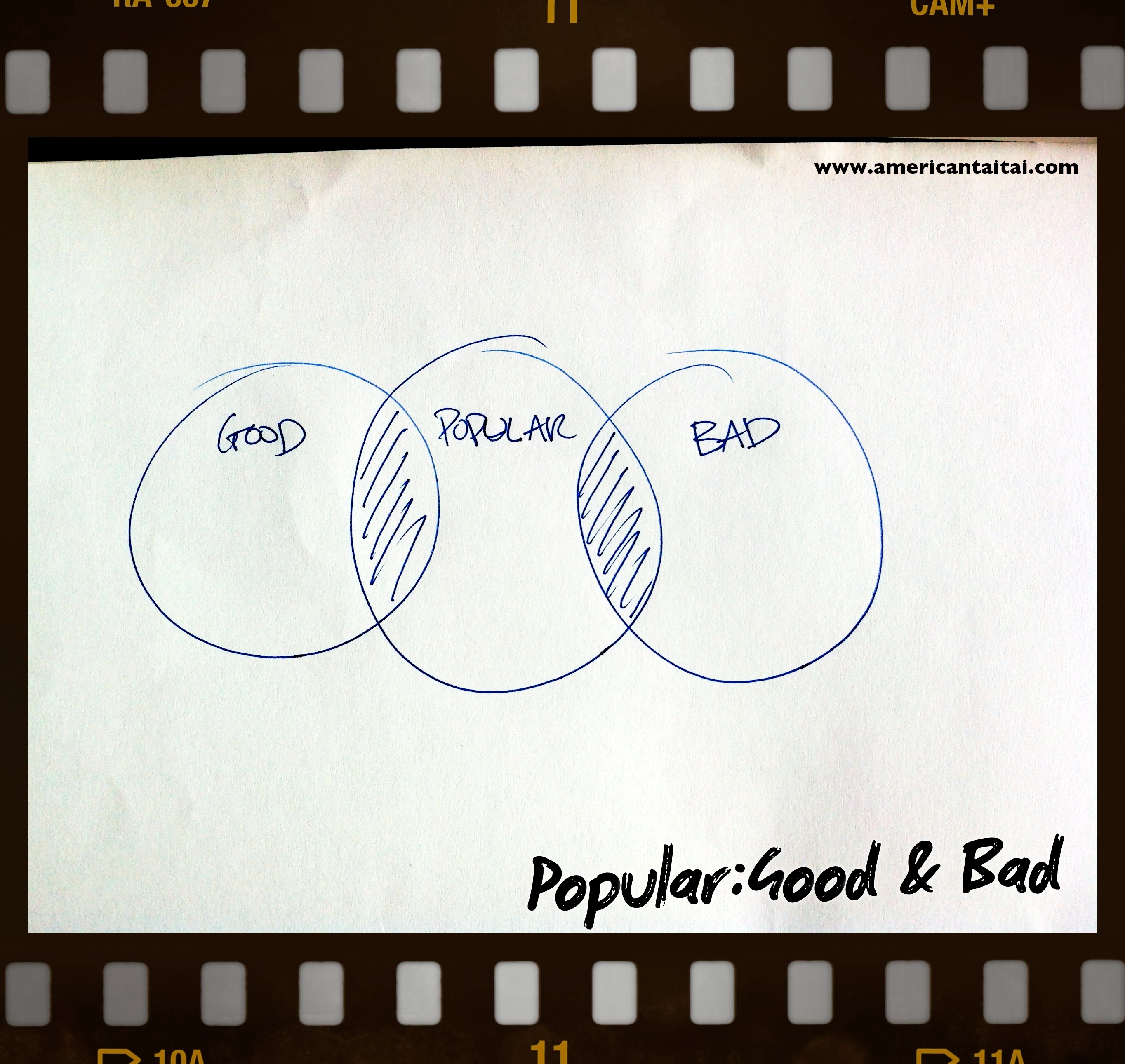
Plenty of what’s popular isn’t good, and plenty of what’s good isn’t popular.
There is a school of thought and snobbery that says anything good is not popular and anything popular is not good. I regard this as a myth. I can’t remember any good stuff that wasn’t popular, because who is going to remember stuff that wasn’t popular and good? Well, it is a little more complicated than that.
Back when I was in high school the music scene changed. No longer were pop bands like New Kids On The Block acceptable on the radio, now it was Grunge and heavier, alternate styles of rock that ruled the airwaves. In 1991 Nirvana released the seminal Nevermind, Pearl Jam released Ten, Soundgarden released Badmotorfinger, and thus the reign of Seattle and Grunge music began. Add to that the release of Guns ‘n’ Roses last decent album, Use Your Illusion (1 and 2), and the cross-over metal album that forced the Grammys to include a new Hard Rock/Metal category, Metallica’s black album, and you can see that it was a good year to be a pimply teen music fan.
At the time you couldn’t talk about music without talking about Nirvana or Grunge. With the release of Smashing Pumpkins’ Siamese Dream, the follow-up albums from Nirvana, Pearl Jam, Soundgarden, and the influx of punk bands like Greenday and The Offspring, alternative music like Grunge was KING. Unless you looked at the charts.
Okay, so some easy listening pop music snuck through with some sales, but Nevermind and the single Smells Like Teen Spirit must have been top 10, right? Nope. Nirvana’s single didn’t make a dent in the charts until 1992, and even then it only cracked the top 50 in Australia (#46) and was #32 in the USA. Of course, rock and metal have never sold singles as much as albums, but Nevermind still only got to #17 in Australia and was beaten by frikin Garth Brooks and Michael Jackson in the USA.
Alright, maybe this is just a once off. The Beatles were huge, right? They combined good music with popularity. Well, in the UK, yes, but in the rest of the world, not so much.*
Before I end up beating you over the eyeballs with this example further, I’ll come to my point: popular has nothing to do with good. Sure, there are examples of good art also becoming popular. The examples I used were still very popular music acts whose influence will continue long after we’ve forgotten what a Bieber is. But people were still more likely to own an album by Garth Brooks or Vanilla Ice than Smashing Pumpkins.
This is why I think that good art is often remembered more fondly after the fact than at the time. Good art stands the test of time, influences others and finds new audiences. Popular art is often shallow, or is transient, which means the audience has forgotten it when the next popular thing comes along.
To quote Neil Gaiman, make good art. Make good art and popularity will be someone remembering your work long after you’re gone.
NB: This article is referring to Survivorship Bias, which is a form of sampling bias, and can be a form of logical fallacy.
* I wasn’t aware when I wrote this article of the actions of the US record label Capitol Records. It appears they did their best to make sure The Beatles weren’t popular in the US. I’d like to say I’m surprised by the things done by The Beatles’ own US record company, but tales of this sort seem to be all too common.
I don’t like to claim a lot of expertise in formatting, layout and graphic design. That isn’t to say I can’t do it, nor that I haven’t produced a couple of my own publications and newsletters. But I found myself in an argument recently defending using both serif and sans-serif fonts, which is like arguing over what colour black you want to wear to a metal concert (that’s a no-brainer: the darker one).
Anyway, there are plenty of anal retentive science nerds like me who have gone and done research into what fonts work best for which applications. There are actually a surprising number of research studies on fonts and readability.
First, let’s define what is meant by serif and sans-serif fonts. (From Scribe Consulting) Consider the following characters. The first is set in Georgia, a lovely serif font. The second is set in Verdana, an easy-to-read sans-serif font.
serif
sans serif
Notice the small decorative flourishes at the ends of the strokes in the left character. These are called serif. The right character does not have these strokes and is said to be a sans-serif font. Sans is the French word for without. So I could be currently sans-pants.
The most common examples of these two font types are Times New Roman (serif) and Arial (sans-serif). Bleeding Cowboys would be an example of an overused serif font that is for try-hards, whilst Comic Sans is an overused sans-serif that shows a lack of taste.
Now there are some simple rules of thumb when it comes to using serif and sans-serif fonts, which are backed up by science. The first rule is that thumbs only hit the space bar once. The second rule is:
This is because the serif make the individual letters more distinctive and easier for our brains to recognise quickly. Without the serif, the brain has to spend longer identifying the letter because the shape is less distinctive.
The commonly used convention for printed work is to use a serif font for the body of the work. A sans-serif font is often used for headings, table text, captions, and ransom notes.
The third rule is:
Use sans-serif for online work
An important exception must be made for the web. Printed works generally have a resolution of at least 1,000 dots per inch; whereas, computer monitors are typically around 100 dots per inch. Even Apple’s much vaunted retina display is only around 300 dots per inch — much lower than print.
This lower resolution can make small serif characters harder to read than the equivalent sans-serif characters because of their more complex shapes. Yes this does give you an excuse to buy a 4K monitor for your computer. Go nuts.
It follows that small on-screen text is better in a sans-serif font like Verdana or Arial.
Yeah, you know that whenever a title/headline asks a question you can almost guarantee the answer is no. In this case the question is also an interesting way of asking about having the blocked up innards of a red faced, bowl gripping, battleship bomber. The most talked about probiotic is Yakult and its patented strain of “good” bacteria. I wonder if “bad” bacteria have a three day growth and shifty eyes?
In terms of the probiotic Yakult, which has “6.5 billion healthy bacteria in every serve,” there was a 2010 review conducted by the European Food Safety Authority. This was a separate study called to support those made on intestinal health claims (which have been covered by Johan already).
The EFSA panel concluded that a cause and effect relationship had not been established between the consumption of the Lactobacillus casei strain Shirota and maintenance of the upper respiratory tract defence against pathogens by maintaining immune defences. This shouldn’t be that surprising considering that 6.5 billion bacteria is 0.0065% of the 100 trillion or so bacteria in the intestines.
The food constituent, Lactobacillus casei strain Shirota, which is the subject of the health claim, is sufficiently characterised. The Panel considers that maintenance of the upper respiratory tract defence against pathogens by maintaining immune defences is a beneficial physiological effect. The applicant identified a total of 12 references as being pertinent to the health claim. These included nine human intervention trials and three animal studies. In weighing the evidence, the Panel took into account that there was no human study from which conclusions could be drawn for an effect of Lactobacillus casei strain Shirota consumption on upper respiratory tract infections, that one human study did not support an effect of Lactobacillus casei strain Shirota consumption on the immune response to influenza vaccination, and that there was a lack of evidence for an effect of Lactobacillus casei strain Shirota consumption on the immune system that could relate to the defence of the upper respiratory tract against pathogens.
Yakult is supposedly backed by a signficant body of science. The number of scientific papers is certainly large, however, most of them are related to in vitro and in vivo experiments, with some human clinical trials done on cohorts (e.g. 1, 2, 3). The trials also tended to use much larger daily consumptions of bacteria, in the order of 40–100 billions of probiotic L. casei Shirota (sorry, links are now behind a paywall in the UK), far above the single bottle concentration of approximately 6.5 billion.
An example of the studies performed shows that the claims are borderline, with both placebo and Yakult treated constipation groups showing improvements (improved constipation 56% vs. 89%, p=0.003) in the second week, or the claims are based on small sample sizes (n=20). This shows why the EFSA concluded as they did.
So, save your money and wait until there is either some conclusive science or you run out of vegetables. In the meantime, this article is of interest on this topic.
Update: The Lancet recently published a paper on antibiotic-associated diarrhoea and Clostridium difficile diarrhoea which showed that multistrain preparations of lactobacilli and bifidobacteria did nothing. This is another example of how the previous smaller studies that have shown benefits are being overturned by more conclusive studies. I could go into the statistical and methodological reasons for this, or you could all thank me for not doing so. Thanks to Ross from Skeptically Challenged for the paper.
This is a cool infographic from Laura E. Kelly. I definitely fall into the Book Cherisher genus, but I’m not sure if I’m of the species Hoarder or Compulsive Buyer.
There are a lot of guns in the world. The figure is something like 639 million firearms, or to put it another way, one gun for every 9 people on the planet. Yet the average person knows diddly squat about guns. People probably have a better idea of how Nicki Minaj managed to become a star than express knowledge about guns. Most of our knowledge is likely to come from movies:
Or professional Russians:
As an author I really wanted to make sure I didn’t base my gun knowledge upon misinformation, otherwise I’d have to work as a reporter covering the gun debate. So here are a few myths to be busted.
Machine guns are not monsters of death
They may fire great big bullets at hundreds of rounds per minute but machine guns really are given the fashion magazine airbrushing treatment. A great big gun letting off a whole lot of explosions in a short amount of time has a habit of getting hot. Really hot. We’re talking change the barrel over every minute hot! Yes, that’s right, at the maximum rate of fire your machine gun needs a new barrel every minute to keep firing without causing problems – which I imagine as a gigantic explosion like Bugs Bunny sticking his finger in the end of Elmer Fudd’s shotgun. But it isn’t just the barrel changes, most of the time you aren’t actually firing the machine gun at people, you’re firing it at super mean looking inanimate objects, or as the military call it, suppressive fire (250,000 rounds for one kill!!!). Essentially the machine gun is a tool that performs a very different role from the one gun noobs think it does. Well, unless you don’t mind the thing catching on fire (yes, I know that isn’t technically a machine gun):
Guns aren’t really death machines
For death machines, these gun things really don’t kill enough people. In science we talk about effects, rates and how to blow up stuff with the things you find under the kitchen sink, as such it is hard to look at the gun deaths and gun injury rates and not think guns kinda suck at their job. The USA use guns to kill roughly 30,000 people a year, one third of those are homicides, but that is less than half the people they injure with guns, roughly 65,000. But that isn’t really fair, because not every time a gun goes off is it being used to shoot at someone else or a particularly nasty piece of paper. If you just look at homicides and attempted homicides, guns are still only getting the job done 21% of the time.
Guns suck for self defence
Not everyone can have Chuck Norris camped out in their house for self defence, nor carry Steven Segal around where-ever they go. But as mentioned above, guns really do suck at their job. Whether it is only being 23% effective in legal interventions, or the fact that you’re 4.5 to 5.5 times more likely to be shot for carrying a gun, you really start to think running away looks like a better option, even if you are as fat as Steven Segal has gotten lately.
Handguns are about as accurate as the horoscopes
A handgun is a really convenient weapon to carry around with you, but if the side of a barn is more than a few metres away, you’re not particularly likely to hit it. Even cops can’t hit much with these things, even when the bad-guy is less than 15m away. Half the problem is that bad-guys shoot back, which means you don’t stand around collecting holes, you run for cover, which really ruins your accuracy. But I’ve already mentioned that guns suck at their job, well, your handgun might hit the bad-guy 55 times and still not kill them.
Guns sure do help kill people
As much as guns suck at their job, as I’ve just pointed out, guns still do a better job of killing than many of the other methods we’ve devised for killing each other. Sure, people love their tools to kill one another, but guns are a really good tool to use for killing one another. I can’t wait to see the military being sent off to war with hammers and cars instead of a gun.
Being shot doesn’t mean you can fly
The trick to flying is throwing yourself at the ground and missing. So being shot clearly can’t make you fly. Don’t know why people think that shooting someone can disobey this simple fact, let alone Newton’s Laws of Motion. But what good is a trope if it isn’t always on display?
Semi-auto rifles are not assault rifles
Every time someone refers to a semi-auto rifle as an assault rifle, or worse, the made up term assault weapon, a puppy dies. You don’t want all the puppies to die do you? Well then, it is time to learn the difference between the military configured select fire rifle, called the assault rifle, which is capable of fully automatic and (sometimes) burst fire, and the civilian one trigger pull, one shot, semi-automatic rifle. I know, they may look the same to the untrained eye, but some people think cars are all the same thing too.
Mags, clips, high capacity…
While we’re on the topic of rifles, I have a dictionary and an abacus for people talking about magazines, clips and high capacity mag clips. A magazine is something you read, a clip is something you watch and high capacity is a Japanese train at rush hour. Different guns have different sizes of magazines (which may or may not be loaded with a clip), which means 30 rounds may be high capacity for one gun and normal capacity for another. Also, when one of these these rifles go through 700 rounds per minute and even soldiers only carry 210 rounds, from a standard 30 round magazine, then no gun fight is really lasting that long.
It’s a suppressor not a silencer!
Remind me, is +120 decibels loud or quiet? It sure is a lot quieter than a normal gunshot sound (+160db), but calling it “silent” is like calling bagpipes a little annoying. When the best suppressors on the smallest calibre weapons still manage to be as loud as a jack hammer or AC/DC, then suppressors have again gotten the Hollywood make-over. But 30db is a decent drop from ear splitting to “say what” territory, so I’d say these things should be compulsory.
There is no smell of cordite
If someone describes the smell of cordite in the air after a gun fight, you either know that the book is set before 1950 or that there is a sub-plot about a time traveller who comes from the past to assassinate a future self. It seems really odd that so many books use the time traveller sub-plot, because it is usually a one off. It would be far more interesting if this was built upon more, maybe have Gengis Khan show up to knock down a wall, or something, as well.
Less guns are a good idea
Shooting is fun, hunting is very primal, but at some point your neighbours start to get worried when you look more like you are going to war than to the shooting range. Aside from guns sucking for self defence, they also suck at not shooting your loved ones, are handy for suicide, and unless you are in a warzone, more guns in society equals more gun violence. But it is also worth thinking about what gun figures actually mean, like 300 million guns in the US, enough for one for every American despite there being only about 80,000 gun owners. Sounds like a lot, but that means each gun owner has a rifle, a handgun and a shotgun, which is clays, targets and pistols at the local range on the weekend. Perfectly reasonable to go shooting, just not at your local school.
You hear a lot of stupid stuff everyday. Sometimes the stupid is funny, like a work colleague saying they believed what a politician said. Sometimes the stupid is cute, like a girl who believes she can change a guy. But sometimes the stupid is actually just annoying, like the list I’ve compiled below.
Dogs can look up, down, sideways and cute.
Whoever keeps forwarding around that email of “facts” that includes this little doozy has clearly forgotten that we humans are taller than dogs and that dogs prefer looking at our faces to our knees.
Hello human.
Ducks quacks echo, especially when it’s rabbit season.
If by some chance ducks were able to break the laws of sound reflection, they would be lining up ducks at every Nickelback and Justin Bieber concert in an effort to stop further brain damage to society. NB: if you don’t get the rabbit season reference, I pity you and the cartoons you watched as a child.
10%
I’d really hope that people don’t use only 10% of their brains, as you would really have to be comatose to do so. Then again, it would explain daytime television and our fascination with the zombie apocalypse.
Lefties vs. Righties
Whilst we are discussing brains, no-one is really left or right brained. If that were the case I’d be able to shoot the writers of Adam Sandler films in the right half of their brain – the imaginative and creative part – and they would still be able to function. How else would people look at a cucumber and remember its taste, feel, look, useful attributes and things that it could be used for, but probably shouldn’t, especially if they put it back in the fridge after?
Update: Another study has been done and again shows, this time with really cool MRI images, that there is no such thing as being left or right brained. See the pretty picture tells us so.
Total Recall
Remember back to your sixth birthday when you had just gotten a bike but weren’t allowed to ride it until you’d hugged grandma, but you didn’t want to hug grandma because she’d forgotten to put her false teeth in, so you gave her a noogie instead? No? Well, if I was to show you a picture and have your mum tell the same story, you’d make up your own ending to that story and swear it was real. Most of our memories are fake. I wasn’t the prom queen, I didn’t win best in show and my stint as President of El Salvador was not a raging success. Yet I choose to remember it this way because otherwise my fragile ego would not give me the courage to throw a brick at Steven Segal to stop him acting.
An Average Complex
It’s odd that being slightly above average height leads to people concluding that the reason you want to create an empire is because you are short. Poor Napoleon. Can’t wait to see history’s explanation of GW Bush’s invasion of Iraq: he confused it with Indiana?
Normally I don’t talk politics. It really hurts my head when I repeatedly bash it against the desk when listening to politicians speak. Being apolitical I see little point in discussing what a bunch of self-serving failed lawyers do on a daily basis. Regardless, I’ve reblogged this post from uknowispeaksense – a fellow science nerd – as he has done a very good breakdown of both the houses of Australian parliament and where they stand on climate change.
Being a scientist, I find the current political inaction on climate change to be unacceptable. I find the denial of climate science to be akin to disputing gravity. Then again, I’m sure we could find politicians that would argue pigs can fly if there were enough votes in it. The science is settled. So I think it is important that people know where their politicians stand on what is quite possibly the most important issue to face humanity.
Also, this link has position statements of various parties.
In September this year, 2013, Australians will head to the polls to exercise their democratic right and vote in the federal election, with each eligible voter hoping the party of their choice wins enough seats to govern for the next 3 years. Recently, Australian politics has seemingly become much like American politics with the right shifting to the extreme right and what were formerly centre left shifting slightly to the centre. In the process, the issue of climate change has become highly politicised. The idea of this page, is to highlight where each party and some selected individuals stand on climate change. In particular, I am interested in whether they accept the science or not.
Recent climate change is real, it is happening now, it is caused by humans and it is serious. This is not up for debate because the science is settled. Every major national scientific body in the developed world and the tens of thousands of scientists researching the climate accept this as fact. In my opinion, and many others, it is hands down the most important global issue and challenge facing humanity, and urgent action is required…now.
In order for global initiatives to be implemented to tackle the threat of climate change we must have governments who are prepared to act, and that means we must first have governments that accept the science. So how does our current crop of politicians stack up? To find out, Hansard, party websites, individual websites, press releases, newspaper, radio and television interview transcripts were searched for definitive statements made by our politicians that demonstrate that they either accept the science or not. Where a definitive statement wasn’t apparent, but the Member had mentioned some aspects of climate change, I emailed the Member requesting clarification of their position. Where no response was provided, the Member was classified as “no data” or “insufficient data”. Two Members made no mention of “climate change” or “global warming” at all in the places searched. They have been placed in the denier category. Retiring politicians (as at February 16, 2013) have been excluded.
An example of a definitive statement accepting the science on climate change is this one from Steve Irons, the Liberal Party Member for Swan, who when rising to speak in parliament on the Carbon Pollution Reduction Scheme Bill 2009 and associated Bills (CPRS2009), said…
“I accept the premise that climate change exists and that greenhouse gas emissions are contributing to the accelerated rate of climate change. There is evidence to support this and I lend my weight to those arguments.”
The link for that speech is here. An example of a definitive statement or statements rejecting the science is this barrage from Warren Truss, the National Party Member for Wide Bay as reported in the Australian newspaper.
”It’s too simplistic to link a finite spell to climate change.”
”These comments tend to be made on hot days rather than cold days.
”I’m told it’s minus one in Mt Wellington at the present time in Tasmania.
”Hobart’s expecting a maximum of 16.
”Australia’s climate, it’s changing, it’s changeable. We have hot times, we have cold times…
”The reality is that it’s utterly simplistic to suggest that we have these fires because of climate change.”
This is the usual grab bag of inane throw away lines, or variations of, one can find on any climate denial website. So, just how many of our politicians accept or reject the science of climate change?
Position on the science of climate change of current Australian members of the House of Representatives. n=150
What is clear from this graph is that the majority of Members accept the scientific consensus on climate change and have made definitive statements to that effect. When we break it down into party affiliations v position, we get an interesting look into the politicisation of the issue.
Position on the science of climate change of Members of the House of Representatives by political party affiliation. n=144 (6 retiring)
The striking thing about this graph that should be immediately apparent, is the fact that nearly every Australian Labor Party Member has made a definitive statement accepting the science of climate change. For the conservatives, the split is nearly 50/50. This can be broken down further…
Position on the science of climate change of Coalition Members of the House of Representatives by political party affiliation n=59
No real surprises here that the Nationals, being the representatives for large areas of “the bush” are climate change deniers. Their constituents tend to be highly conservative. Please note: retiring members and those for which there is no data have been excluded from this graph.
So, who accepts the science and who doesn’t? What is clear is that if you are of the right, there’s a good chance you are in the wrong. Here is a complete breakdown of the results with each member and their position.
Current sitting Members of the House of Representatives and their position on climate change science.
It’s probably fitting that the leader of the opposition, with a bit of help from alphabetisation, tops the list of deniers. This is the man who wants to lead the country and he refuses to accept the science of climate change. Remember, it is Abbott who claimed that “climate change is crap.” Now I’m sure there are supporters of Mr Abbott who will find quotes about his direct action plan to tackle climate change and hold this up as evidence that he is serious about the climate however, this is the man who will say anything for political expediency.
The thing that really bugs me about the list of deniers, is the presence of those National Party Members. While it isn’t surprising, these 8 people are supposed to represent Australian rural communities and have their best interests at heart. Climate change is likely to have very severe impacts on agricultural production in Australia. The CSIRO State of the Climate 2012 report states…
Australian average temperatures are projected to rise by 0.6 to 1.5 °C by 2030 when compared with the climate of 1980 to 1999. The warming is projected to be in the range of 1.0 to 5.0 °C by 2070 if global greenhouse gas emissions are within the range of projected future emission scenarios considered by the Intergovernmental Panel on Climate Change. These changes will be felt through an increase in the number of hot days and warm nights, and a decline in cool days and cold nights.
Climate models suggest long-term drying over southern areas during winter and over southern and eastern areas during spring. This will be superimposed on large natural variability, so wet years are likely to become less frequent and dry years more frequent. Droughts are expected to become more frequent in southern Australia; however, periods of heavy rainfall are still likely to occur.
These changes will require mitigation and adaptation activities to be undertaken not just by the agricultural producers, but also the communities in which they exist, and without government support, many will go to the wall. One wonders if a government full of climate change deniers will be able to make the important decisions that will secure Australia’s food future? For an insight into the potential challenges faced by agricultural producers in the future, as well as what will be required to adapt and mitigate, it is well worth reading the 2012 paper by Beverly Henry et al titled, Livestock production in a changing climate: adaptation and mitigation research in Australia. From the abstract…
Climate change presents a range of challenges for animal agriculture in Australia. Livestock production will be affected by changes in temperature and water availability through impacts on pasture and forage crop quantity and quality, feed-grain production and price, and disease and pest distributions. This paper provides an overview of these impacts and the broader effects on landscape functionality, with a focus on recent research on effects of increasing temperature, changing rainfall patterns, and increased climate variability on animal health, growth, and reproduction, including through heat stress, and potential adaptation strategies.
So, here are a few examples of the kinds of statements made by the deniers in our parliament. Remember, these people are ignoring the advice of tens of thousands of experts from around the world who are all saying the same thing, and they want to make decisions on your behalf, that won’t just affect you, but your children and grandchildren as well.
“The Prime Minister and her ministers have repeatedly declared that the “science is settled” and there is no need for further debate on how to respond to the environmental challenges from climate change. A Nobel Prize-winning scientist told me recently that “science is never settled” and that scientific assumptions and conclusions must always be challenged. This eminent Noble Laureate pointed that had he accepted the so-called “settled science”, he would not have undertaken his important research, which challenged orthodox scientific propositions and led to new discoveries, which resulted in a Nobel Prize.” Julie Bishop
“We are after all only talking about models and forecasts. Just as an aside, when the weather bureau cannot reliably tell me what the weather is going to be like tomorrow and then tells me that in 100 years there are going to be sea level rises of a metre as a result of climate change, I think I am entitled to exercise a level of caution in deciding whether to accept everything that is put to me about weather, climate and long-term trends.” Darren Chester
Darren Chester, failing to understand the difference between short-term weather forecasts and long-term climate trends. Scarily, he then goes on to discuss how wonderful it would be to dig out and burn all the brown coal in the Latrobe Valley. For the uninitiated, burning any coal is bad, but burning brown coal specifically is very bad. It burns much cooler than anthracite due to higher water content and less lithification and so you have to burn more of it to produce the same amount of energy.
“As I rise to speak on the Carbon Pollution Reduction Scheme Bill 2009 and related bills, I do so wondering whether the debate is being driven by alarmists or scientists. Are we debating this subject from a scientific standpoint or are we being caught up in the emotion of the times? We do live in an uncertain world and it is understandable why it can be easier to accept statements at face value rather than questioning what we are being told. I have been reading Professor Ian Plimer’s book on his response to the global warming debate. It makes for very interesting and illuminating reading, and I would recommend it to any member entering the debate on global warming.”Joanna Gash
Joanna Gash basing her uneducated and ill-informed opinion on the writings of a non-expert who has never published a single peer-reviewed paper on the subject of climate change and who is the director of seven mining companies. Can you say “vested interests” Joanna?
“To say that climate change is human induced is to overblow and overstate our role in the scheme of the universe quite completely over a long period of time. I note that the member for Fraser came in here today with a very strong view about how human beings have been the source of all change in the universe at all times. He has joined a long line of Labor backbenchers I have spoken about in this place before—amateur scientists, wannabe weather readers, people who want to read the weather, people who like to come in here and make the most grandiose predictions about all sorts of scientific matters without even a basic understanding of the periodic table, or the elements or where carbon might be placed on the periodic table. So the member for Fraser has joined this esteemed group of people who seem to be great authorities on science.” Alex Hawke
Alex Hawke, also confusing weather with climate but doing so in a spectacularly arrogant way. I love it. He’s not just saying, “I’m an idiot” but rather “I’m really an idiot and you better believe it! So there!” Who wants to ask Mr Hawke where carbon is on the periodic table? I know I do.
“As the only PhD qualified scientist in this parliament, I have watched with dismay as the local and international scientific communities and our elected leaders have taken a seemingly benign scientific theory and turned it into a regulatory monolith designed to solve an environmental misnomer. With a proper understanding of the science, I believe we would not even be entering into this carbon tax debate. To put it simply, the carbon tax, with all its regulatory machinations, is built on quicksand. Take away the dodgy science and the need for a carbon tax becomes void. I do not accept the premise of anthropogenic climate change, I do not accept that we are causing significant global warming and I reject the findings of the IPCC and its local scientific affiliates.” Dennis Jensen
Dennis Jensen, legend in his own lunchtime appealing to his own non-authority and single-handedly dismissing the honest, dispassionate work of tens of thousands of real scientists from around the world. At this point I should point out that Dennis Jensen does indeed have a Phd….in materials engineering on ceramics. Next time it starts raining cups and plates I’ll be sure to look him up. Oh, and he is also tied in with the Lavoisier Group and according to Wikipedia, boycotted parliament the day Kevin Rudd apologised to the Stolen Generation. I know that isn’t relevant to climate change but hey, if he’s a racist arsehole then everyone has the right to know about it. Anyway, I strongly urge my readers to check out the rest of his parliamentary rant. It is a cracker. Every single paragraph is filled with…well….crap. Who voted for this clown?
“Perhaps more concerning is the evidence that suggests climate scientists have engaged in manipulation of data, routine alienation of scientists who dispute the theory of anthropogenic global warming and the overall culture of climate change science that encourages group think and silences dissent.”Don Randall
Don Randall, reflecting on a newspaper article about “Climategate”no less. Obviously 9 independent investigations into “Climategate” all finding no wrong doing isn’t enough for the wilfully ignorant. For a good roundup of the whole saga, skepticalscience is the place to go.
These were just a few of the deniers and their ill-informed statements that I randomly selected. Having read through so many speeches and transcripts and media releases, I can attest that these are representative of the other deniers in the list. For me, the mind boggles when it comes to climate change denial. Presumably, these politicians are meant to be rational people. The appeals to the authority of non-experts really confuse me. It is akin to getting a plumber instead of an electrician to rewire your house. They wouldn’t get a vet to perform the brain surgery some of them clearly need. Why do they think the opinions of non-experts has any weight when it comes to climate science? It is completely irrational.
I guess it may seem to some that I am picking on the conservatives…and that would be correct, but I also have one or two big questions to ask of the ALP. If you all accept the science behind climate change as you claim and see fossil fuel combustion as the primary cause of recent climate change, why do you subsidise the fossil fuel industry to the tune of billions of dollars every year? Why not use that sort of money to develop the renewable energy sector and get us off our dependence on coal quicker?
This year’s election, if recent polling results carry through to September, is going to be won by the conservatives. Their leader, who admits to lying, who is on the record as holding different policy positions based on political expediency, is surrounded by men and women who are irrational in their non-acceptance of the science of climate change, many of them failing to grasp simple concepts such as the difference between weather and climate. Some of them suffer heavily from arrogance and one inparticular the Dunning-Kruger effect. A number of them have links to the mining industry and right-wing think tanks that are funded by mining companies and/or have mining executives on their boards. I wonder where their royalties loyalties lay? Is it with the people who have elected them, or their mining mates? I think I know the answer and it isn’t we the people. But then you’ve got the ALP subsiding the very industries they are claiming are the problem. Decisions decisions. For some, the decision might be about the lesser of two evils. Choose wisely.
Thanks to John Byatt for his valuable assistance with data collection.
If any politicians read this and feel they have been misrepresented, please feel free to contact me at unknowispeaksense@y7mail.com preferably with a definitive statement and I will make the necessary corrections and publish your response.
Tyson Says: A point I should make about the results here, which was also made on The Drum last night: The Labor Party doesn’t allow for crossing the floor or dissenting public comment. Now, it isn’t like there aren’t penalties in the other parties for doing so, but this point needs to be considered when viewing the statistics.
Essentially, where it has all of Labor politicians on board with climate change, that is actually a party stance, not the individuals. I know from first hand discussions that there are Labor politicians who don’t believe in climate change science, but they won’t go on record as such because the party room has voted against them.
This is partly why we see such pathetic policies and hypocritical positions (e.g. mine coal like it is going out of fashion whilst claiming coal is to blame). Remember, politicians don’t care about science or facts, they care about making their supporters happy. Just don’t think that the voting public are their key supporters, because they certainly didn’t donate tens of millions to their party.
(via Climate Central)
From our friends at NASA comes this amazing 13-second animation that depicts how temperatures around the globe have warmed since 1950. You’ll note an acceleration of the temperature trend in the late 1970s as greenhouse gas emissions from energy production increased worldwide and clean air laws reduced emissions of pollutants that had a cooling effect on the climate, and thus were masking some of the global warming signal.
The data come from NASA’s Goddard Institute for Space Studies in New York (GISS), which monitors global surface temperatures. As NASA notes, “All 10 of the warmest years in the GISS analysis have occurred since 1998, continuing a trend of temperatures well above the mid-20th century average.”
I could post a bunch of statistics and the data from various countries, but instead I’m going to post The Daily Show’s three part series on the topic.
1
2
3
Now, I don’t like the idea of making it illegal for people to be able to be involved in the sport of shooting, nor making vermin control prohibitive. I think in some respects that Australian gun laws are probably a little too restrictive. I also think that the figures on how effective our gun control measures have been are a little overstated, as law enforcement had already made inroads into lowering gun crime prior to the new laws in 1996. But overall, in my opinion, Australia doesn’t have much of a gun problem now. Making sure gun owners are responsible people who are involved in the sport of shooting and not a disgruntled time bomb going unnoticed until they start shooting people, seems to be a good thing.
By performing an additional set (50% to 100% more sets) only 0 to 5% more progress will be observed. Each additional set yields even less progress to a point of diminishing return.
Is this statement supported by any research?
Answer:
Many of the low volume or high intensity styled programs make claims about diminishing returns from extra work. The easiest way to address this question is to look at the science of training volume. I agree with one of the commenter’s (Dave) that exercise science is not always a solid science, but his recommendation replaces measurement with opinion.
Volume vs HIT: The Answer There have been many studies that have sought to understand whether it is better to use a single set, many sets, how many sets, etc. Most of the training programs used by athletes today are based upon periodized programs developed by the former eastern block Olympic coaches. But there are two issues: strength and hypertrophy.
Firstly a strength training meta-analysis by James Krieger (Journal of Strength & Conditioning Research. 23(6):1890-1901, September 2009) found that 2-3 sets led to 46% greater strength gains than 1 set.
There has been considerable debate over the optimal number of sets per exercise to improve musculoskeletal strength during a resistance exercise program. The purpose of this study was to use hierarchical, random-effects meta-regression to compare the effects of single and multiple sets per exercise on dynamic strength. English-language studies comparing single with multiple sets per exercise, while controlling for other variables, were considered eligible for inclusion. The analysis comprised 92 effect sizes (ESs) nested within 30 treatment groups and 14 studies. Multiple sets were associated with a larger ES than a single set (difference = 0.26 +/- 0.05; confidence interval [CI]: 0.15, 0.37; p < 0.0001). In a dose-response model, 2 to 3 sets per exercise were associated with a significantly greater ES than 1 set (difference = 0.25 +/- 0.06; CI: 0.14, 0.37; p = 0.0001). There was no significant difference between 1 set per exercise and 4 to 6 sets per exercise (difference = 0.35 +/- 0.25; CI: -0.05, 0.74; p = 0.17) or between 2 to 3 sets per exercise and 4 to 6 sets per exercise (difference = 0.09 +/- 0.20; CI: -0.31, 0.50; p = 0.64). There were no interactions between set volume and training program duration, subject training status, or whether the upper or lower body was trained. Sensitivity analysis revealed no highly influential studies, and no evidence of publication bias was observed. In conclusion, 2 to 3 sets per exercise are associated with 46% greater strength gains than 1 set, in both trained and untrained subjects.
Now the low volume claims are for diminishing returns after the first set. This is clearly not the case, but there is a point that no more strength is gained (4-6 sets) by performing more work. I won’t address it here, but it is to do with how fast the body can restore ATP and how much micro-trauma has been induced.
Hypertrophy is the second part of weight training. Krieger again performed a meta-analysis of the research (Journal of Strength and Conditioning Research: April 2010 – Volume 24 – Issue 4 – pp 1150-1159) and found that increasing the number of sets increased the amount of hypertrophy by 40% (up to 6 sets).
Previous meta-analyses have compared the effects of single to multiple sets on strength, but analyses on muscle hypertrophy are lacking. The purpose of this study was to use multilevel meta-regression to compare the effects of single and multiple sets per exercise on muscle hypertrophy. The analysis comprised 55 effect sizes (ESs), nested within 19 treatment groups and 8 studies. Multiple sets were associated with a larger ES than a single set (difference = 0.10 ± 0.04; confidence interval [CI]: 0.02, 0.19; p = 0.016). In a dose-response model, there was a trend for 2-3 sets per exercise to be associated with a greater ES than 1 set (difference = 0.09 ± 0.05; CI: −0.02, 0.20; p = 0.09), and a trend for 4-6 sets per exercise to be associated with a greater ES than 1 set (difference = 0.20 ± 0.11; CI: −0.04, 0.43; p = 0.096). Both of these trends were significant when considering permutation test p values (p < 0.01). There was no significant difference between 2-3 sets per exercise and 4-6 sets per exercise (difference = 0.10 ± 0.10; CI: −0.09, 0.30; p = 0.29). There was a tendency for increasing ESs for an increasing number of sets (0.24 for 1 set, 0.34 for 2-3 sets, and 0.44 for 4-6 sets). Sensitivity analysis revealed no highly influential studies that affected the magnitude of the observed differences, but one study did slightly influence the level of significance and CI width. No evidence of publication bias was observed. In conclusion, multiple sets are associated with 40% greater hypertrophy-related ESs than 1 set, in both trained and untrained subjects.
So there is no science to support the claim that doing more sets will only see small increases in returns. It is possible the person making this claim has not understood the conclusions of studies such as the ones I have cited, but it is more likely that the claims are unfounded.
The cardio folks usually point out the “afterburner” effect, where the body continues to burn calories even after the workout. And weight lifting people mention that muscles burn more calories than fat, so more muscle is the key.
Are there studies showing if either one is true? Or are both needed? And what about interval training?
Answer:
This is a tough question to answer as there are a lot of ifs and buts.
Weight loss is all about caloric deficit, expend more energy than you consume and you lose weight. Most people do this by dieting, but the body tends to readjust the resting metabolic rate so that you don’t lose too much reserves. Thus exercise plusdiet is needed for weight loss to be effective.
How effective is ‘Diet Only’ versus ‘Diet plus Exercise’ for Weight Loss? Most studies demonstrate that when diet (caloric restriction) and physical activity are combined in a weight management program, encouraging results in weight loss occur. Donnelly and colleagues (2009) explain that a weight loss program design may create an energy deficit (e.g., 500 to 1500) composed of exercise (e.g., 250 kilocalories/day) and caloric restriction (e.g., 250 kilocalories/day) for the daily caloric deficit total (500 kilocalories in this example). In studies where investigators introduce an energy deficit of 700 to 1000 kilocalories per day, ‘diet only’ and ‘diet plus exercise’ result in similar losses. Donnelly explains that this is due to metabolic adaptations that “diminish any additive effect of energy expenditure from physical activity on weight loss”. However, in investigations where the energy deficit is 500-700 kilocalories/day, the ‘diet plus exercise’ group is about 20% greater than the ‘diet only’ intervention.
So weight loss needs to be related to your activity and diet in order to understand your basal metabolism. But weight loss isn’t just about bodyweight as it is about losing bodyfat (as muscle is useful for maintaining basal metabolism and body function). When you calculate this you are able to figure out how many calories need to be removed from the diet in order to lose fat. See here. There are also strategies that can change your metabolism.
Exercise is usually broken down into two categories: cardio and weight training. There are many benefits to both and generally both are recommended for long term health. Weight training is known to burn fat.
This study is the first to directly show that resistance exercise increases adipose tissue lipolysis and thus contributes to improved body composition. This boost in lipolysis is apparently due to the excitatory effect of resistance training on specific hormones (e.g., epinephrine, norepinephrine and growth hormone). As this study design was completed with trained male subjects, it is hoped that the methods and procedures will be completed with other subject populations (e.g., females, untrained persons, youth, seniors, overweight, etc.) in future research.
For cardio training, there is obviously fat burning taking place. The amount of fat burning that occurs is related to the intensity of the cardio.
In summary, that data clearly show that exercise intensity is the main factor in determining the magnitude and duration of EPOC following aerobic exercise. Thus, when developing a cardiorespiratory exercise prescription for weight maintenance and weight loss, the influence of exercise intensity on EPOC and its potential contribution to total caloric expenditure should be taken into consideration.
The same is true of weightlifting (from the same article):
The data on resistance training and EPOC suggest that EPOC is distinctly influenced by the intensity of the resistance training program.
The actual amount of post activity “fat burning” will be related to the intensity and duration of the exercise done. Weightlifting has advantages in terms of encouraging muscle satellite cell accumulation that sustains and grows muscle. Cardio has the benefit that it can be performed for longer durations than weightlifting. So the essential answer will come down to the individual and their strength and fitness.
Essentially any exercise program should incorporate both cardio and weight training for weight loss, especially targeting fat loss.
For more articles on fitness and metabolism see here.
Further question: Hey, do you think I can get the source on your statement that “the body tends to readjust the resting metabolic rate so that you don’t lose too much reserves.”? I’m rather curious about this. – Joel Cornett
Reply: Joel, there is a lot of research related to metabolic rate and how it changes under dieting and exercise regimes. It is quite a complex topic because it depends upon many factors. Someone who has just started dieting will be different from someone who is active already in terms of responses. Here is one paper that looks at the overweight people and weight control. I linked to Kravitz’s other articles that cover some of the athlete side of metabolism in the last link.











 Tyson Adams