Book review: Political Ideals by Bertrand Russell

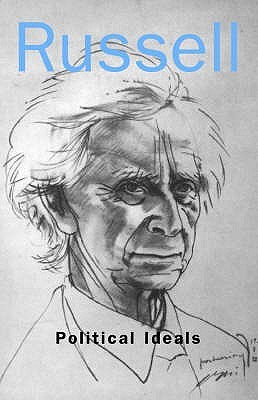
Political IdealsPolitical Ideals by Bertrand Russell

My rating: 5 of 5 stars

Reading old books reminds you that nothing has changed.

Political Ideals is an essay Bertrand Russell wrote during World War 1 – stay tuned for WW3 – that offers critiques of capitalism, socialism, nationalism, politics, education, and offers insights into how we should go about building a better society. He does this in less than 100 pages.

Russell’s essay is filled with interesting and insightful ideas. Even if you disagree with any of them, there is value in engaging with what he is saying. E.g.:

“Few men seem to realize how many of the evils from which we suffer are wholly unnecessary, and that they could be abolished by a united effort within a few years. If a majority in every civilized country so desired, we could, within twenty years, abolish all abject poverty, quite half the illness in the world, the whole economic slavery which binds down nine-tenths of our population; we could fill the world with beauty and joy, and secure the reign of universal peace. It is only because men are apathetic that this is not achieved, only because imagination is sluggish, and what always has been is regarded as what always must be. With good-will, generosity, intelligence, these things could be brought about.” Source.

This quote has been paraphrased, rephrased, and appropriated by many in the last century (although, I’m sure these thoughts weren’t original when he wrote them). It shows Russell’s reputation as a founder of modern analytic philosophy and as having made significant contributions to many subjects is well deserved. Few could so concisely state such a complex social idea.

Worth a read, even if you disagree with Russell on some or all points.

View all my reviews

Book review: Astrophyics for people in a hurry by Neil deGrasse Tyson

Astrophysics for People in a HurryAstrophysics for People in a Hurry by Neil deGrasse Tyson

My rating: 4 of 5 stars

Oppose the gravitational force with your phalanges if you value science.

Science communicator Neil deGrasse Tyson understands that most people don’t have time to read physics books – plus they are hard work to read. So he decided to package together some of his essays into a book that covers the major aspects of astrophysics in a way anyone could enjoy and learn from.

While reading this book I had a revelation. Could there be an explanation other than Dark Matter and Dark Energy for the gravity and expansion of the universe?

I’m going to propose Pratchett’s Theorem as an alternate hypothesis for the expansion of the universe and gravity. Since the universe is flat and there are unexplained gravity and expansion, I postulate that this flat universe is riding on the backs of four large elephants. This explains the gravity pulling everything down. These elephants are riding on the back of a large turtle who swims through the multiverse. The elephants are slowly moving away from one another – which explains the expansion – and walking down the curved shell of the turtle such that each step is larger than the last – which explains the increased speed of expansion.

This, of course, raises the questions of whether it was the elephants who were the prime movers behind the “Big Bang”, whether the elephants will keep walking down the shell until they fall off tearing the universe to shreds, or whether the elephants will eventually decide to walk back toward one another for a reunion? Do they also walk directly away from one another, or do they walk around the shell, such that the universe rotates? Given everything within the universe rotates, it would only make sense that this rotation is caused by the elephant’s motion.

Anyway, NDGT’s book was a good read. It doesn’t dumb things down, nor use too many lay terms, which was refreshing. But as a scientist, albeit in a completely different field, it felt like the book was aimed at a more general audience, particularly those who aren’t familiar with many of the topics discussed. Which made it only a good but not a great read for me.

View all my reviews

Book review: Equal Rites by Terry Pratchett

Equal Rites (Discworld, #3; Witches, #1)Equal Rites by Terry Pratchett

My rating: 5 of 5 stars

Witches ride on brooms and wizards hold a staff in their hands. Nothing phallic about that.

Eskarina “Esk” Smith was born the eighth son of the eighth son and was bequeathed Drum Billet’s wizarding abilities and staff. Minor mixup. Esk is a girl. But too late for any take-backs, Esk’s magical talents have her training with Granny Weatherwax in witching. This isn’t enough for Esk as she is meant to be a wizard, she has the staff and everything, so she journeys to the Unseen University for training.

I’ve come at the Witches instalments of Discworld backward. The first one I read was The Shepherd’s Crown, Pratchett’s last novel before his death, in which Granny Weatherwax dies.* So to come to the first was overdue. I was somewhat disappointed with The Shepherd’s Crown – probably because it was unfinished in terms of Pratchett’s usual revision process – but not so with Equal Rites. This was highly enjoyable and tackled some interesting tropes of fantasy, as well as plotting the rise of grrl power on the Disc.

*That isn’t a spoiler, it’s pretty much the first chapter.**
**Not that Sir Terry was a big fan of using chapters, but you take my meaning.

View all my reviews

Book Review: Capital, Vol 1 by Karl Marx

Capital, Vol 1: A Critical Analysis of Capitalist ProductionCapital, Vol 1: A Critical Analysis of Capitalist Production by Karl Marx

My rating: 5 of 5 stars

If you get to the point does that make you bourgeoisie?

Karl Marx’s classic text is a historical, economic, sociological, and philosophical work. Marx tries to show the ways in which workers are exploited by the capitalist mode of production and argues that the capitalist system is ultimately unstable because it cannot endlessly sustain profits. And this takes 1,100 pages to say.

Since it has become popular to call anyone left of a third-generation venture capitalist with their cash in the Caymans and their Nazi gold in a Swiss vault a communist, I thought it was time to read some Marx. That way when people call someone a Post-Modern Marxist Communist I’ll have some idea of how little they know what any of those words mean.

I was actually surprised by this book since it was completely different from what I had expected. The sort of book I had been expecting was a philosophical or ethics text, instead, this is much more a history and economics book. The historical notes documented in Das Kapital are worth reading alone. They act as a reminder of what working/slavery conditions were deemed acceptable, and how similar the arguments from then are to the defences of sweatshops in poorer nations today.

But this book takes the long way round to make its points. If it had instead made its arguments and then offered up one example, then some appendixes, I’d have “enjoyed” this more. Too often it gets bogged down in labouring* the point rather than documenting history or encouraging you to join a union. Worth reading, but be prepared for a lot of waffle.

*Ahhhh, puns.

View all my reviews

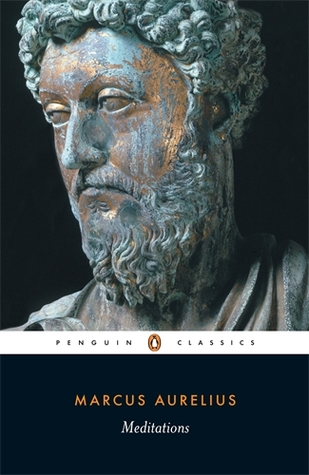
Book Review: Meditations by Marcus Aurelius

MeditationsMeditations by Marcus Aurelius

My rating: 5 of 5 stars

“To read carefully, and not to be satisfied with a superficial understanding of a book.”

[Insert superficial overview of Meditations here]

Meditations were something Marcus (we’re on a first name basis here) wrote for his own moral improvement, to remind himself of and cement the Stoic doctrines he wanted to live by. Things like the world is governed by Providence (which certainly lets him off the hook for all those people fed to the lions during his reign); that happiness lies in virtue and your will to follow it; and that you should not be angry at others. Journalling of this sort was something Epictetus advised, which has resulted in a collection of notes, reminders, aphorisms, and slogans for every occasion.

There is a lot to like about Meditations. It felt like a self-help book but written with a more philosophical bent and less of the “you too can achieve greatness (and give me lots of money) if you follow my twelve rules for life”. It isn’t without problems, such as those outlined in Russell’s History of Western Philosophy. I also found Marcus’ musings on the Deliberative Content Problem to swing between ideas and thus come off as confused.

This is my second major reading of Stoic philosophy. I’m coming to the conclusion that Stoicism does seem to have a lot to offer.

View all my reviews

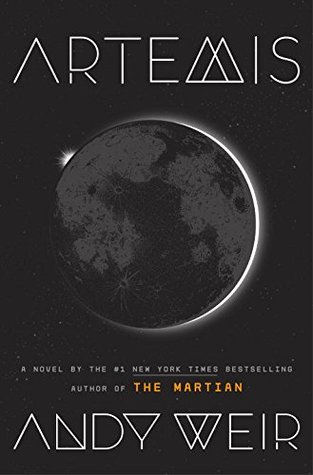
Book review: Artemis by Andy Weir

ArtemisArtemis by Andy Weir

My rating: 5 of 5 stars

You know you’ve been reading too much fantasy when a sci-fi book refers to their currency as Slugs and you just assume they use terrestrial gastropod molluscs as money.

Jazz Bashara is barely making ends meet in Artemis, the moon colony. After a series of bad life decisions, she is living poor and having to hustle to survive. Then Trond Landvik offers her a lot of money to do something shady, a crime that could change her fortunes. Of course it will go smoothly…

Before Artemis was released I tried to get my hands on an Advanced Review Copy. I loved The Martian, the first hard sci-fi novel I’ve enjoyed in decades, so I was really looking forward to Andy’s follow up. Unfortunately, I missed out and had to buy the paper edition when it arrived in stores. My fortunes didn’t improve. Everyone in my family decided they needed to read my copy of the book, so over 6 months later I decided I’d have to get another copy, this time the audiobook read by Rosaria Dawson. No one stole this copy. Yay.

This is obviously a very different novel to The Martian. The narrative format, the main character, and the antagonist are all far removed from the Mark Watney diary about a man vs nature adventure. Instead, Jazz is more akin to a likeable antihero, one who has to use her big brain to solve the continuingly mounting problems.

While this was never going to be comparable to The Martian, this was another very entertaining novel from Andy Weir.

View all my reviews

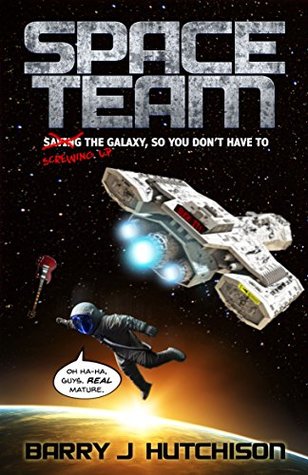
Book Review: Space Team by Barry J Hutchison

Space Team (Space Team, #1)Space Team by Barry J. Hutchison

My rating: 5 of 5 stars

This is a Space Review of a Space Book.

Cal Carver is all charm. That’s why as a low-level crook the warden decides he should spend the night in a cell with the most ruthless cannibal on the planet. This would have been a concern if he wasn’t accidentally recruited for a team whose goal is to stop a pathogenic outbreak that could start a war. In space! Cal is teamed up with a by-the-book rookie, a mechanoid whose abilities are dialled in, a humanoid wolf, and a Splurt. Together they are Space Team… when they aren’t trying to kill each other.

This was lots of fun. As Hutchinson notes in his author comments, this story was meant to be entertaining escapism. No deeper meanings, nothing serious, just fun. And it succeeds masterfully. The pacing is quick, the jokes come thick and fast, and the adventure keeps you entertained.

I’ll be reading more from Barry and this series for sure.

View all my reviews

Book Review: Burn by James Patrick Kelly

BurnBurn by James Patrick Kelly

My rating: 3 of 5 stars

On the Upside, no one will take your calls.

Prosper Gregory “Spur” Leung wakes up in a hospital. All he can remember is the fire and his skin burning. After the docbot patches him up he makes a few calls and heads home to his farm on the utopia of Walden – a planet being gradually terraformed to forest, orchards, and farms. Those few calls make the homecoming… interesting.

Every time I put this book down I made the same comment, ‘I don’t know what this book is about.’ Even now that I’ve finished I’m still at a loss as to what the point of it all was. In the background, there are some ideas. In the foreground, there is a naive protagonist you could use to explore those ideas, but I’m not sure the ground overlapped at any point.

That isn’t to say that this book isn’t well paced, exciting, and entertaining; it is. There are some interesting themes as well, like environmentalism and competing interests. I breezed through and enjoyed reading the book, but can’t help but feel that the story was missing something.

I received an advanced review copy of this book in exchange for an honest review.

View all my reviews

Book review: The Colour of Magic by Terry Pratchett

The Colour of Magic (Discworld, #1)The Colour of Magic by Terry Pratchett

My rating: 4 of 5 stars

Wizards with synesthesia hearing octarine would be an interesting experience.

Twoflower arrives in Ankh-Morpork with his sapient luggage filled with gold. After years in inn-sewer-ants he is looking to become the first tourist on the disc. Rincewind makes his acquaintance thanks to his gift for languages, and they bumble into adventure.

Having read some of the last instalments in the Discworld novels I thought it was time to go back to read the earlier instalments. The writing in the books has changed over the course of the series. Most of the Discworld novels I’ve read so far have been directly satirising a modern-day topic or institutions, but The Colour of Magic is much more concerned with satirising fantasy novels themselves.

It is hard to give this novel a higher rating, however, as it does what all annoying fantasy series do: continue in the next book. Yes, great joke, but it does mean that until I’ve read The Light Fantastic there are no five stars from me.

View all my reviews

Book review: A Briefer History of Time by Stephen Hawking

A Briefer History of TimeA Briefer History of Time by Stephen Hawking

My rating: 5 of 5 stars

Well, that was brief.

In the late 1980s, Stephen Hawking became the name synonymous with smart people, science, and computerised voices when he released A Brief History of Time. In the intervening 27 years (this book was published in 2005) a lot of progress has been made in physics and our understanding of the universe, so this is an update on curved space, quantum gravity, black holes, Newtonian physics, relativity, the Big Bang (everywhere stretch), wormholes and time travel, and the search for a grand unifying theory of reality.

Obviously, this all sounds like very complicated stuff that you’ll battle to wrap your head around. I have to admit, when I read A Brief History of Time in my 20s I struggled with it. Imagining 4-dimensional space was confusing, imagining another 6 dimensions on top of that with string theory was just too much for me. So maybe I’m older, wiser, smarter, and have added centimetres to my head circumference, because I found this book clear and easy to understand. Or maybe this updated version is clearer than the original. Or maybe I’m just more familiar with physics now and can kid myself that it isn’t that hard to understand.

Either way, I found this to be a clear, concise, and easy to understand overview of spacetime physics.

View all my reviews

Book review: An Introduction to Greek Philosophy by David Roochnik

An Introduction to Greek PhilosophyAn Introduction to Greek Philosophy by David Roochnik

My rating: 4 of 5 stars

If Western Philosophy is just footnotes to Plato, does that mean western society is just all Greek to us?

Professor Roochnik presents 24 lectures as an introductory course to Greek Philosophy… as it says in the title. This was quite a good overview of the pre-Socratics, Socrates, Plato, and Aristotle. Like any lecture, insights are given into the further scholarship that can inform a topic – such as how Plato structures his writing so as to make you think rather than tell you what he thinks – and some points are hammered repeatedly for the sleepy students in the back row.

Having recently read The Republic, the insights this book offered would have been handy beforehand. The advantage of having a philosophy professor step you through philosophy rather than just winging it yourself is well worth it. So as a background pre-reading, this is a good place to start.

I was also reminded during one of the earlier chapters of how much knowledge has been lost to history. We have this common misconception about great works rising to the top and being revered through the ages. But the example of the prolific writer Democritus whose works have largely been lost shows us how even recognised intellectual giants can’t be guaranteed their works will be preserved.

View all my reviews

Book review: Obscura by Joe Hart

ObscuraObscura by Joe Hart

My rating: 4 of 5 stars

In space, everyone goes a bit crazy.

Dr Gillian Ryan is frustrated. She is trying to develop a brain scanning technique in order to help her daughter to avoid the same fate as her late husband. Losian’s disease is thought to be caused by the rapidly increasing environmental destruction and affects memory and concentration. Then a team from NASA show up promising money and technology to help her work if she agrees to go to a space station to figure out what is wrong with their crew. Of course, NASA hasn’t been completely honest with her about where they are going and the risks involved, but that’s okay, she didn’t tell them about her painkiller addiction.

This novel was a lot of fun. Joe Hart has mixed together sci-fi, thriller, and suspense in good measures. The main character’s addiction and frustrations pour out on the page as you wonder if she is going mad or something more nefarious is happening. Added to that is the brisk pacing that doesn’t get bogged down like some novels with similar themes tend to. I don’t know what a hydro is, but after reading this novel I feel like I need one.

Well worth a read for sci-fi and thriller fans.

NB: I received an advanced review copy in exchange for an honest review.

View all my reviews

Book Review: The Republic by Plato

The RepublicThe Republic by Plato

My rating: 4 of 5 stars

Old white guys sit around discussing how to set up a totalitarian military state with them as the rulers.

Plato’s famous text covers a lot of ground as it tries to establish what justice is. It covers politics, personal and political ethics, idealised states (democracy ranks third out of four), education, and virtue. The Republic is a heady read, whilst being fascinating.

The strawman style to the interlocuter dialogue did annoy me as a reader. Whilst it was in service of making a larger point, it did make the discourse feel more shallow than it is. Plato’s thinking was also amazingly progressive for an age that predates the enlightenment by the best part of a millennium. But this thinking was also confined by the times.

Plato, along with Socrates and Aristotle, were the drivers behind western society. Books like The Republic put forward a lot of ideas for discussion and dissection, opening the dialogue that would lead to progress. That alone makes The Republic worth reading, but I also found it was worth reading if only to see much of it in context rather than discussed second-hand. E.g. The famous allegory of the cave takes on a slightly different light when not viewed in isolation.

For a more detailed understanding:
https://plato.stanford.edu/entries/plato-ethics-politics/

View all my reviews

Book Review: Electric Dreams by Philip K Dick

Philip K. Dick's Electric DreamsPhilip K. Dick’s Electric Dreams by Philip K. Dick

My rating: 3 of 5 stars

Sometimes you learn that aliens are better than people, so don’t be a jerk and you could stop an invasion.

Electric Dreams is a small sampling of an array of Philip K Dick short stories that were used as the basis for 10 episodes of a TV series of the same name. Dick wrote a huge number of short stories in his career – publishing 121 in a 30-year career, alongside 44 novels. So this selection (collection?) is probably best described as a taste-tester of PKD.

I find it hard to classify PKD as an author. What I have read of his works so far have left me thinking things like: “I was expecting more from this classic”*; “More interesting than engaging”; “Oh look, Deckard realised he lacks empathy so suspects he might be an android.”*** While I think PKD deserves to be acknowledged as a highly influential author I feel this is mainly for his ideas rather than their execution.

This collection was enjoyable on the ideas front and makes for a good sampler of PKD’s work.

*We Can Remember It For You Wholesale
**The Minority Report
***Really? You don’t know what book that is referring to? Would it help if I quoted some lines from the movie?

View all my reviews

Book Review: The Hoodoo Man by Steve Harris

The Hoodoo ManThe Hoodoo Man by Steve Harris

My rating: 5 of 5 stars

Budgie as a weapon? Sure, why not.

Danny Stafford was an ordinary kid until his brother shot him in the face. It was an accident that changed Danny, but it isn’t until his 30s that the change fully takes hold. Now in a stable relationship, renovating a house, and working a dead-end job, Danny’s life is turned upside down. And that’s before the Hoodoo Man starts coming for him.

Back in my formative years, the local librarian introduced me to the adult section of the library after I’d read everything on offer for young adults and kids. This novel, The Hoodoo Man, was the first she pulled off of the shelf for me to try. A brand new horror novel by a UK author. Bit of a leap. But I was hooked. I clearly remember devouring this book, to the point that I missed at least one meal.

Twenty-six years later I wanted to test if my memory of this novel held up. Was The Hoodoo Man as good all these years later, or was I just an impressionable kid who had just discovered his first horror novel? Oh, it stands up alright. It has aged very well and I wasn’t disappointed at all. My immediate response upon finishing was to exclaim “Well, I’m going to have to find more of Steve Harris’ books.”

This is where this story becomes interesting. The Hoodoo Man was Steve’s third novel and it was his most successful, it put him on the map, and became his website’s name. But his career was all but over by the time his seventh novel was released and he retired at the end of the 90s. His career came to an end after his publisher was bought out and he was dumped. He had one completed novel he was shopping around, another in the works, and a third that had originally been intended as his sixth novel but was deemed too terrifying*. Harris’ novels went out of print and after no success in finding a new publisher, he retired from writing and ran to the hills**.

In this day and age, a writer in this situation would probably take their back-catalog and self-publish, then release their new material. Of course, a publisher would be unlikely to let an author go out of print. But it does make me wonder how many authors are in a sense lost to us because of the machinations of the publishing world. I guess they won’t be getting any money from me*** hunting down Harris’ back-catalog in the secondhand stores.

*The Switch was an attempt by Steve to bring the reader as close to feeling actual pain as possible. Back when his website was active I read an excerpt and can confirm that he succeeded. I have never looked at liver the same since.
**This bad reference to Iron Maiden’s bass player of the same name brought to you by the number 666.
***Obviously, Steve won’t be either.
http://www.shadow-writer.co.uk/kinter…

View all my reviews

Book Review: Riot Act by Zoe Sharp

Riot Act (Charlie Fox, #2)Riot Act by Zoë Sharp

My rating: 4 of 5 stars

Those in council housing shouldn’t throw stones. Molotov cocktails are much better.

Charlie Fox is dog and house sitting in a rough neighbourhood for her friend. After some kids manage to seriously injure her neighbour during a robbery, a vigilante mob and a security group move into the area. Ulterior motives abound and Charlie is stuck in the middle of it all as the violence is let loose.

It has been awhile since I’ve picked up a Zoe Sharp thriller. After reading a couple several years ago I went on a spending spree, but haven’t gotten to them until now. I do enjoy reading a female lead thriller written by a female author. Zoe brings something very different to the story that you don’t get from her contemporaries in the genre – her writing has been compared to Lee Child, similar to how all comedy shows are compared to The Office.

Riot Act keeps the intrigue and action coming in steady measures. This was an enjoyable thriller.

View all my reviews

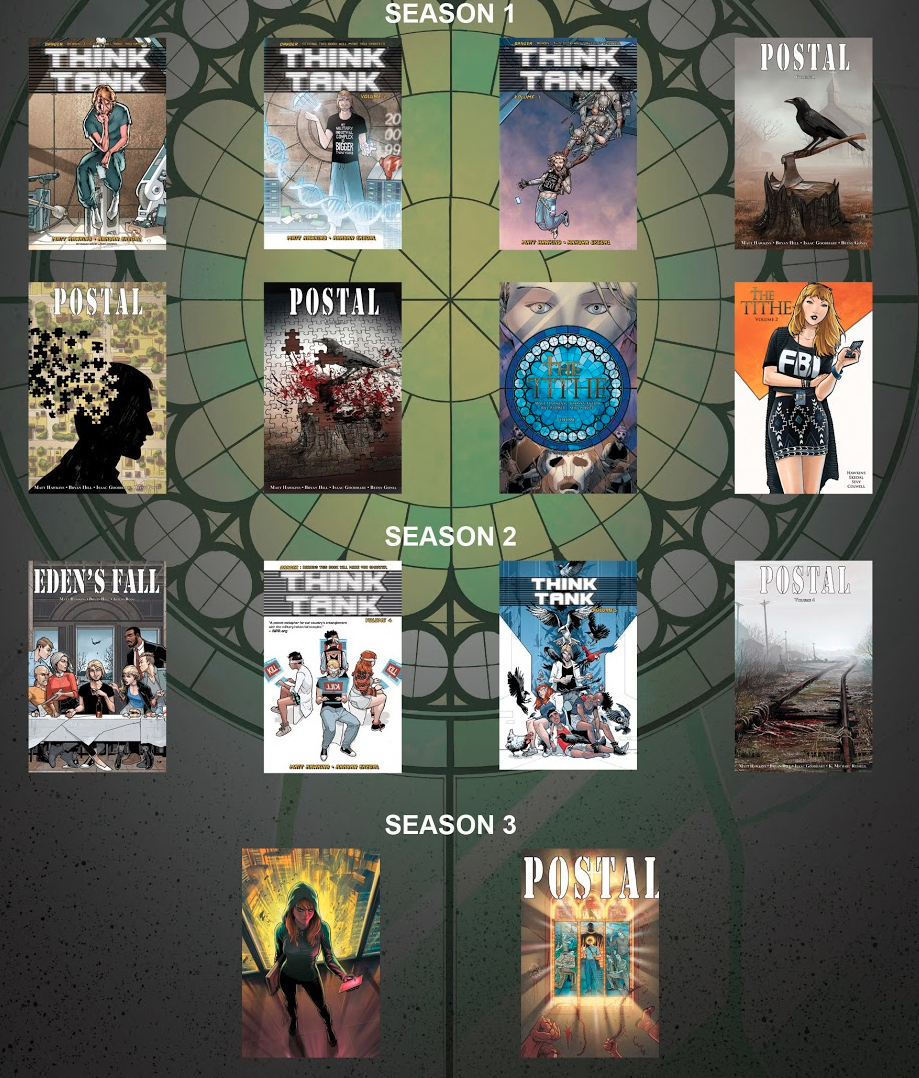
Book Review: Edenverse by Matt Hawkins

Screen Shot 2018-04-19 at 8.19.16 PM
Edenverse: Think Tank, Postal, The Tithe, Eden’s Fall, Samaritan by Matt Hawkins

My rating: 4 of 5 stars

Smart people take on the government. Because they should.

Back in 2012, I stumbled upon the first instalment of Think Tank from indie comic publisher Top Cow. This was back when online stores selling e-comics were still not completely up with technology. I bought Issue #1 and then tried to read it. It wouldn’t download to my comic reading app. I tried to send it to my iPad. It didn’t like the strange format. I tried reading it in the store’s very own comic app. It suggested my iPad and computer were too new.

I won’t go into the details of exactly how I read that first issue (hint: comic files are just a bunch of pictures if you can slice them open), but even with all of the frustration of this first purchase I still enjoyed the story.

Dr. David Loren is many things: child prodigy, inventor, genius, slacker… mass murderer. When a military think tank’s smartest scientist decides he can no longer stomach creating weapons of destruction, will he be able to think his way out of his dilemma or find himself subject to the machinations of smaller men?

So started a five-year avid following of one of the more interesting techno-thriller series I’ve come across. Unfortunately, I switched from buying individual issues to the collected volumes, which were entirely more reliable in those early years of e-comics. I say unfortunately because as a result, I didn’t realise that Think Tank was part of an expanded universe – something the last few pages of regular issues highlights with previews.

Now I’m caught up. In particular, The Tithe and Samaritan are excellent additions to the Think Tank universe (Edenverse, named after the town in the Postal series). Matt Hawkins and illustrator Rahsan Ekedal have pulled together a collection of political machinations, high-tech possibilities, real-world issues, and social commentary for a brilliant collection of comics. Seriously, they have references for the topics, tech, and background at the end of each book, something that tickles my inner scientist with delight.

I highly recommend these series to comic fans, especially those who like techno-thrillers or crime-thrillers.

View all my reviews

Book review: How to Build a Universe by Brian Cox and Robin Ince

How to Build a Universe: An Infinite Monkey Cage AdventureHow to Build a Universe: An Infinite Monkey Cage Adventure by Brian Cox

My rating: 5 of 5 stars

I’m going to bake some chocolate muffins from scratch, so this book should be useful.

Professor Brian Cox, Robin Ince, and Alexandra ‘Sasha’ Feachem are the team behind the popular The Infinite Monkey Cage, a BBC science show that pairs scientists and comedians for laughs and education. From 2009 they have produced +100 shows covering all sorts of topics. This book encapsulates some highlights and essays around their favourite topics and common science communication issues* they have covered in that time.

From the opening forewards to the covering of Schrodinger’s Strawberry I was heartily entertained. As a science nerd and fan of comedy, this book seems to have been written specifically for me. It actually left me feeling a bit annoyed that I haven’t, as yet, listened to The Infinite Monkey Cage show, despite having been aware of it for quite some time. So I guess I’ll be rectifying that soon.

What I like most about this approach to science is that it doesn’t seek to sex up science (or dumb down, depending upon the preferred flavour of marketing), but instead make it accessible and entertaining. There is a line between those two that too often those in the media can’t tell the difference between. Science is interesting, but it is complicated, it is often dry, and communicating scientific knowledge as done here is hard to do.

* Yes, I do mean how people aren’t willing to honestly engage with science, either through pseudoscience co-opting, or denial of evidence, or wanting certainty instead of the probability that science offers.

View all my reviews

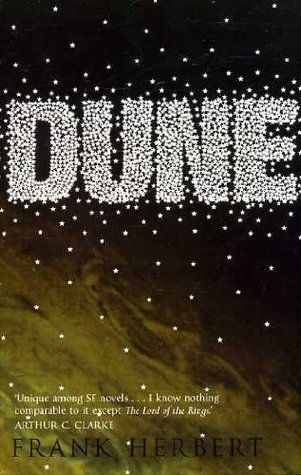
Book review: Dune by Frank Herbert

Dune (Dune Chronicles, #1)Dune by Frank Herbert

My rating: 4 of 5 stars

Tangential foreshadowing from the Collected Sayings of Maud’Dib by the Princess Irulan.

After his dad is asked to take over keeping the oil supply flowing out of the Middle East, Paul, a promising MMA fighter, witnesses the death of his family and friends, narrowly escaping into the desert with his pregnant mother. Befriending a small band of freedom fighters, Paul becomes their holy leader and prophesied deliverer. Meanwhile, the military-industrial-complex of the infidel are trying to apply their bootheel to the impoverished desert people. Can Paul use guerrilla tactics to overthrow the infidel, become Emporer and bring jihad to the west?*

Okay, so Dune does predate the general cluster-truck that is the Middle East conflict, but you do have to wonder if Herbert was munching on a bit of spice for inspiration when writing.

Unlike some other sci-fi classics, Dune does hold up as a novel in the modern day. There are some aspects that mark this as a book of the 60s (e.g. anything related to women) but it isn’t as jarring thanks to the complex worldbuilding. A lot has been poured into this novel that had me marveling at the efforts involved for one book. And yes, I know about the sequels and expanded universe novels, but this was clearly written as an open-ended standalone.

I have previously tried the expanded universe books that were co-written by Kevin J Anderson and Herbert’s son Brian. They did not grab me. The amazing worldbuilding that defined many of the concepts of space opera sci-fi** didn’t appear to have enough legs for those novels. I’m glad I picked up the original Dune to understand what the fuss was all about.

* https://www.goodreads.com/review/show…

** https://www.goodreads.com/review/show…

https://www.newyorker.com/books/page-turner/dune-endures

https://www.theguardian.com/books/2015/jan/30/frank-herbert-dune-at-50-sci-fi-masterpiece

View all my reviews

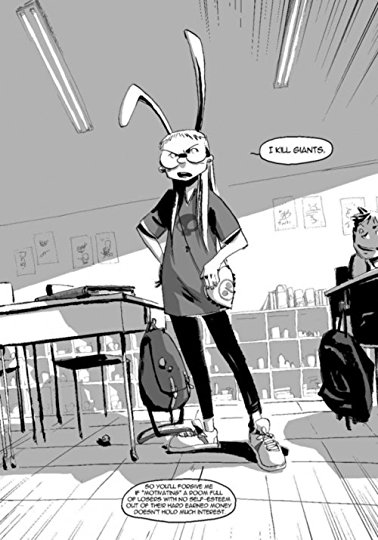
Book Review: I Kill Giants by Joe Kelly

I Kill Giants

I Kill Giants by Joe Kelly

My rating: 5 of 5 stars

Welcome to Superheroes Annonymous. Barbara, would you like to tell us why you’re here?
854547-_sy540_

I really enjoyed this comic. Barabara isn’t a nice character, she is a loner, outsider, and she is battling personal problems, so she takes this out on everyone around her. Layered over this is the ambiguous threat of Giants who are coming to destroy everything she holds dear.

[Spoiler] I liked the ambiguity of whether the Giants are just a fantasy world and an analogue for the troubles Barbara is battling. We see her face those troubles and grow, and (hopefully) become a better person, if one still dealing with loss. [/spoiler]

This isn’t a story for everyone, but it will pull at the heartstrings if you give it a chance.

View all my reviews