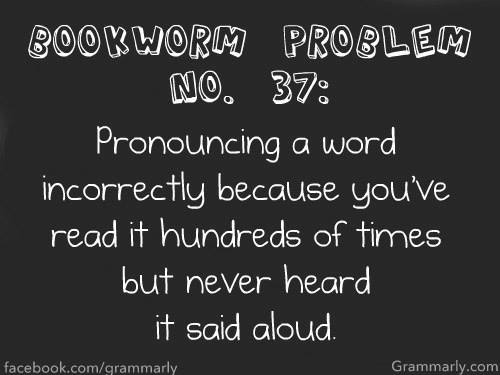
The average writer is normally not someone prone to being a gun or knife nut. Sure, they might have a gun or two, they may have a kitchen drawer full of knives, but that doesn’t mean they know which one needs to be used in the scene where the zombies have just broken through the barrier erected by the pirates who were lucky to survive the assault of the purple ninjas. That means extra research. And ninjas.
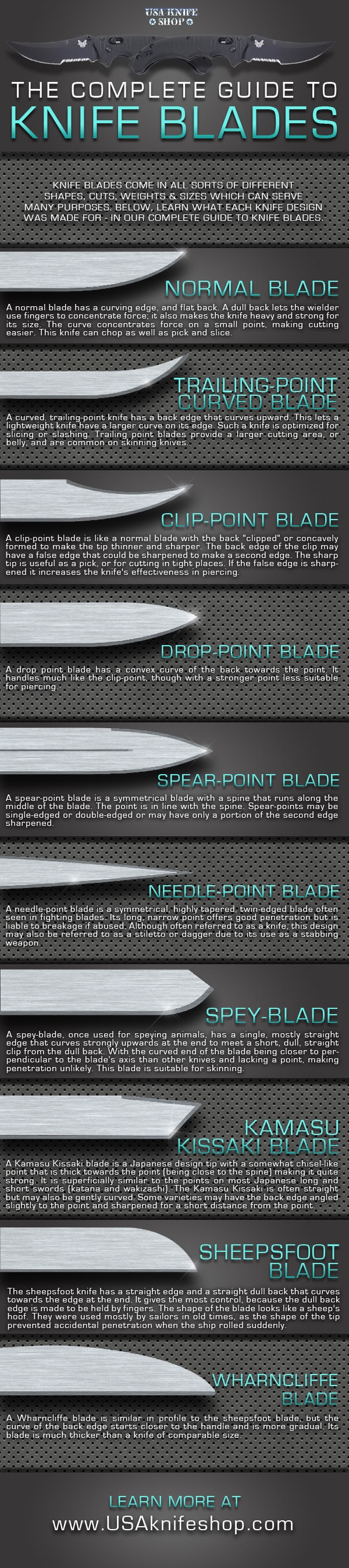
Below is a handy graphic that covers a few of the basic blade types of knives. Obviously there are variations on these types and, of course, the difference between a serrated and plain edged blade.
Also check out this handy video:
Update: The knife aficionado from the above video has just produced a new information video that I felt was worth including. He goes into the blade types and what they are best used for and why. Very informative if you want to brush up on knives.
Update: adding another graphic that covers a few more blade types.
Yeah, you know that whenever a title/headline asks a question you can almost guarantee the answer is no. In this case the question is also an interesting way of asking about having the blocked up innards of a red faced, bowl gripping, battleship bomber. The most talked about probiotic is Yakult and its patented strain of “good” bacteria. I wonder if “bad” bacteria have a three day growth and shifty eyes?
In terms of the probiotic Yakult, which has “6.5 billion healthy bacteria in every serve,” there was a 2010 review conducted by the European Food Safety Authority. This was a separate study called to support those made on intestinal health claims (which have been covered by Johan already).
The EFSA panel concluded that a cause and effect relationship had not been established between the consumption of the Lactobacillus casei strain Shirota and maintenance of the upper respiratory tract defence against pathogens by maintaining immune defences. This shouldn’t be that surprising considering that 6.5 billion bacteria is 0.0065% of the 100 trillion or so bacteria in the intestines.
The food constituent, Lactobacillus casei strain Shirota, which is the subject of the health claim, is sufficiently characterised. The Panel considers that maintenance of the upper respiratory tract defence against pathogens by maintaining immune defences is a beneficial physiological effect. The applicant identified a total of 12 references as being pertinent to the health claim. These included nine human intervention trials and three animal studies. In weighing the evidence, the Panel took into account that there was no human study from which conclusions could be drawn for an effect of Lactobacillus casei strain Shirota consumption on upper respiratory tract infections, that one human study did not support an effect of Lactobacillus casei strain Shirota consumption on the immune response to influenza vaccination, and that there was a lack of evidence for an effect of Lactobacillus casei strain Shirota consumption on the immune system that could relate to the defence of the upper respiratory tract against pathogens.
Yakult is supposedly backed by a signficant body of science. The number of scientific papers is certainly large, however, most of them are related to in vitro and in vivo experiments, with some human clinical trials done on cohorts (e.g. 1, 2, 3). The trials also tended to use much larger daily consumptions of bacteria, in the order of 40–100 billions of probiotic L. casei Shirota (sorry, links are now behind a paywall in the UK), far above the single bottle concentration of approximately 6.5 billion.
An example of the studies performed shows that the claims are borderline, with both placebo and Yakult treated constipation groups showing improvements (improved constipation 56% vs. 89%, p=0.003) in the second week, or the claims are based on small sample sizes (n=20). This shows why the EFSA concluded as they did.
So, save your money and wait until there is either some conclusive science or you run out of vegetables. In the meantime, this article is of interest on this topic.
Update: The Lancet recently published a paper on antibiotic-associated diarrhoea and Clostridium difficile diarrhoea which showed that multistrain preparations of lactobacilli and bifidobacteria did nothing. This is another example of how the previous smaller studies that have shown benefits are being overturned by more conclusive studies. I could go into the statistical and methodological reasons for this, or you could all thank me for not doing so. Thanks to Ross from Skeptically Challenged for the paper.
Word limits are a funny thing. I’ve never had a problem being succinct, in fact I can be too brief in my writing. Yet other writers are known for sitting down with editors to cull half their manuscript. There are other writers still that should have sat down with an editor and culled half their manuscript and saved the readers all that page skipping.
This is one of the reasons to like Twitter. It forces you to practice creating a thought or sentence in a manner that may be foreign. For example, the complex phrase:
I disagree with your supposition as it is currently unsupported by any evidence, either presented by yourself or in the scientific literature, thus there is no way you can sway my position.
Can be replaced with:
Lol, moron!
This says everything that is needed and doesn’t dance around the topic. Conversely the reply to this can be shortened from:
Whilst you are allowed to disagree with me, my opinion still stands. I cannot provide a summary of the relevant scientific literature at this time, but this is information that is readily understood and referenced in the literature. Thus I will endevour to provide a few examples when I am able to, but in the meantime I’d invite you to read further on the topic, as I suspect that you will agree with me once you have.
Can be replaced with:
Well screw you and the horse you road up on.
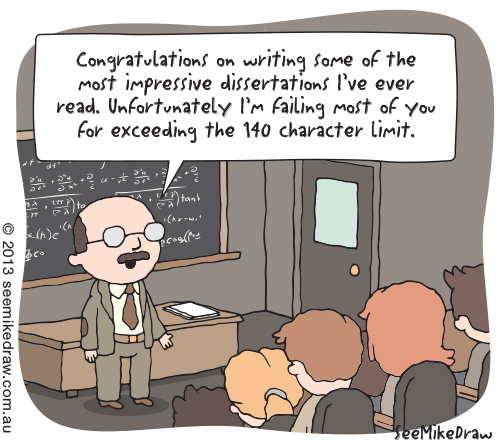
The trick is to start with what your key points are and not overuse exposition to explain those points. The 140 character limit can help with this a lot.
In the meantime, if you aren’t a fan of See Mike Draw, I suggest you become one now.
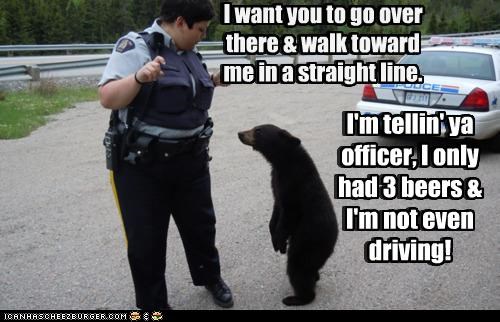
Walk in a crooked line
Let’s face it, walking in a straight line is something people now practice. Make the line crooked and you’ll quickly have people staggering like drunken zombies, regardless of the number of drinks they’ve had.
Not buy a kebab
Somewhere between the pub and home there is always a kebab store. If someone can walk past it and not buy a kebab, then they are sober.
Discuss politics without yelling
Although this may just mean the person yelling is a politician. Either way, just lock them up to be on the safe side.
Not heckle a comedian
Unless they are on this list, in which case don’t stop at heckling, molotov invented a drink that needs to be served to them.
Check that they don’t use the phrase “I’m not drunk.”
May be combined with the phrases “I’ve only had one/couple of drinks” or “Just a wine with dinner.”
Refuse to sing karaoke
Much like the kebab, there is no way a drunk person can refrain from busting out a classic tune in all its warbling, tone deaf, shouted glory.
Look for Picasso abstract facial features.
You may have to wipe away the drool from their face to properly assess this.
Look them directly in the eye and then glance sideways to see if they have another head.
Not to be mistaken with conjoined twins or a couple with separation anxiety.
Do you have to shake their hand or just hold it?
Could they also mix some paint or a good martini for you?
Check for matching leg lengths.
Some inbreeding mountain people have one leg longer than the other to aid with circumnavigation of mountainous terrain.
Problems answering questions in clear English.
Although this could just mean they work for Fox News and don’t have the teleprompter on.
Okay, just to be serious for a moment: Do you see a difference between these two cartoons?
Some of you may have seen the awesomeness displayed on The Oatmeal in response to people stealing his cartoons and taking his authorship off of the picture. Well, here is another example. The second cartoon was the one I was going to post, but I realised that it didn’t have the creator’s signature on it and it would be good to make sure that they were able to be tracked down. Ideally, I’d link to the original, but that isn’t always possible, especially when someone has decided to edit out the part that would help us all identify the author. It is clear that the author isn’t even asking for money, the cartoon is freely published on the web, yet someone has decided to remove the content creator as though they aren’t important.
Free content is great, so many people with great ideas are creating stuff to entertain others just because they enjoy it. I’m going to try and make sure the authors (content creators) are acknowledged when possible, I hope everyone else does too.
This is a cool infographic from Laura E. Kelly. I definitely fall into the Book Cherisher genus, but I’m not sure if I’m of the species Hoarder or Compulsive Buyer.
As regular readers here know, I’m a science-a-holic and love research. I actually have an archive dedicated to a minor topic for my first novel, a topic that I make passing reference to, a topic that probably has me on a watch list somewhere. It was book research, I swear!
Below is an article by Chuck Sambuchino which I stole am reblogging from Writer’s Digest with a few of my own comments.
Ernest Hemingway said writers should develop a built-in bullshit detector. I imagine one reason he said that is because readers have their own BS indicators. They can tell when we writers are winging it. We have to know well the worlds in which our characters act. Readers don’t have to believe the story really happened, but they need to believe it could have happened. So with that in mind, I offer a few thoughts on research for fiction.
1) You can’t do too much research. In the military, we often say time spent gathering intelligence is seldom wasted. The same concept applies in writing a novel. You never know what little detail will give a scene the ring of authenticity. In a college creative writing class, I wrote about how a scuba diver got cut underwater, and in the filtered light at depth, the blood appeared green. Though the professor didn’t think much of that particular story, he did concede he liked that detail. In fact, he said, “The author must have seen that.” And indeed, I had. TA: Whilst I agree with Chuck’s point, there is such a thing as too much research for a novel. At some point you have to be writing and not researching. There will be some things that you just can’t know and some things that your readers really don’t need to know.
2) You can write what you know. We’ve all heard it before. Experience may be a cruel teacher, but it is a thorough one, and experience is the purest form of research. Things you’ve done in life can inform your writing in surprising ways, even if your characters aren’t doing those same things. When I watch the old Star Trek shows, I can tell the creator of those stories knew something about how a military flight crew works together. He understood the dynamics of a chain of command, how a commander learns the strengths and weaknesses of his team, how those team members communicate and work together. Turns out that Gene Roddenberry flew B-17 bombers in World War II. Roddenberry, of course, never flew a starship. But he knew from experience how the crew of a starship might interact. TA: Except that the away team was always the most important members of the crew and one poor guy in a red shirt; how does that make sense? The idea is that you get to be captain so you don’t have to go down to the planet, no matter how hot the green women are. I’ve commented before that Right What You No is not always good advice and that is what research is for. Sometimes research will be spending a day in a squad car or an overnighter in prison. Although, I don’t advise that, felonies are hard to live down.
3) You can do research on the cheap. If you can’t visit an exotic location, you can pick up the phone and ask questions. The worst that can happen is somebody thinks you’re crazy and they hang up. Then you just call somebody else. (Believe me; I used to be a reporter, and I’ve learned a lot by asking questions.) You can visit a museum, or a museum’s website. Develop an eye for small details. TA: Plus we have the internet now.
4) You can find anything on YouTube. Seriously. But you have to know your topic well enough to know how to search for it. In The Renegades, I have a character whose lungs collapse from a bullet wound. I wanted to find out how a medic would treat that condition. Sure enough, someone had posted on YouTube a video with detailed instructions on how to perform a needle decompression. TA: Just check to make sure that the video is reliable. There are some shams and woo on youtube, but that is a topic for my Mythtaken series.
5) You can find things anywhere. You’re a writer, so keep pen and paper within reach during all waking hours. You might get an idea from a news story on television, a song on the radio, or a Tweet from a friend. About a year ago, I was driving along on a warm day, listening to the radio with the windows down. An oldies station played “Wind of Change,” the Scorpions’ 1990 ballad hailing the end of the Cold War. I hadn’t heard that song in a long time, and I cranked it up loud. The power chords brought back memories of flying relief missions to Bosnia while based at a disused Cold War alert facility in Germany. Not really a pleasant memory–for Bosnia, the end of the Cold War brought something worse. But that flashback from early in my military career inspired a scene in the novel I’m working on now. TA: Same goes for inspiration.
6) You can use all of your senses. Find out what things taste like, smell like, feel like. Say, for example, you set your novel in Warsaw. Maybe you can’t afford to go to Warsaw, but you can go to a Polish restaurant. (See item number three above, about doing research on the cheap.) As you write one of your scenes, include a line about the texture and flavor of something your character eats. You’ve just made your writing more alive and authentic. TA: Just remember that you have far more than five senses, more like 14 to 20.
7) You can leave some things out. If you do thorough research, you’ll find more material than you need, and no reader likes a data dump. In my own writing, I could bore you to death with the details of aircraft and weapons. But a very good creative writing professor once advised me to let the reader “overhear” the tech talk. Say, if my character punches off a HARM missile, that might sound authentic and pretty scary. But scary would turn to dull if I stopped the action to tell you that HARM stands for High-Speed Anti-Radiation Missile, which homes in on anti-aircraft missile radars. Who cares? The damn thing goes boom. TA: Very good point. This point is all too often done with weapons or brands or street directions. No-one cares!
Since I began this discussion with a quote from a literary heavyweight of the twentieth century, I’ll end it with another: Ezra Pound said literature is news that stays news. And a novelist has nearly the same obligation for accuracy as a news writer. Your made-up world must ring true. Not even fantasy writers can completely escape reality; the old Star Trek episodes sometimes referred to real science, which made them more believable within their context. Though we invent tales that didn’t really happen, we drape them over a framework of real-life facts.
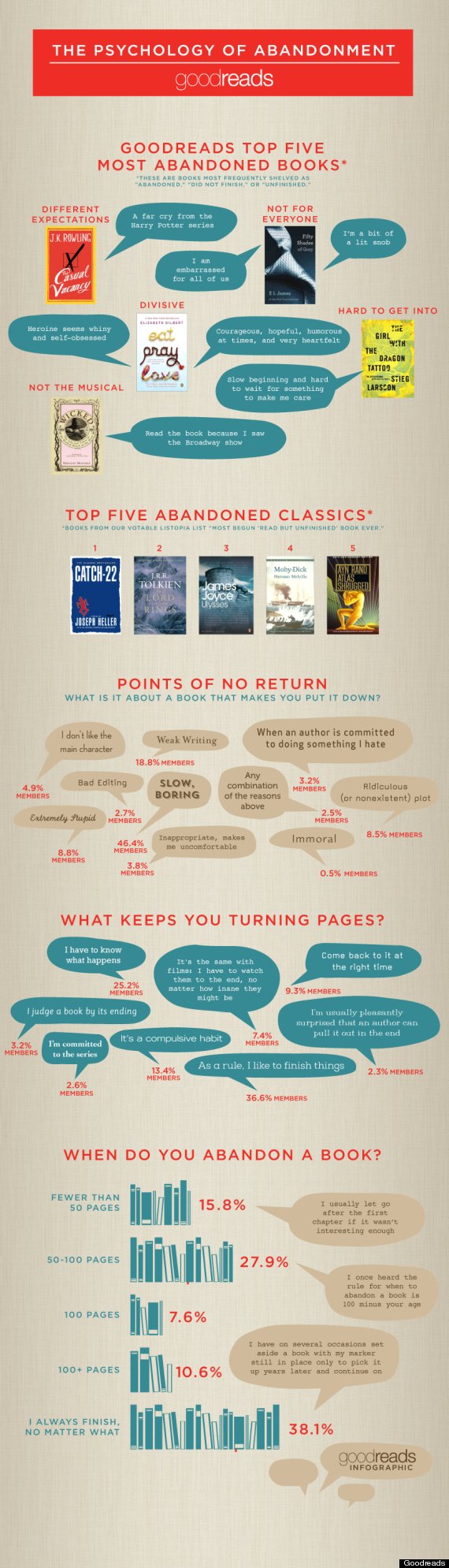
This is a great breakdown of why readers give up on reading and which books are the biggest culprits. I largely agree with most of the sentiments and books listed. It is very interesting to me that “slow and boring” is the #1 reason people abandon a book. Not just #1, it is number two and three as well, as the next reason had less than half the polling. I’ll offer a few comments on each part of the infographic.
Top Five most abandoned:
Casual Vacancy by JK Rowling – This is no surprise really. I’ve heard it is a particularly dark book and the remark that people were expecting it to be more like Harry Potter shows that no-one read the blurb.
Fifty Shades of Grey by EL James – Who’d have thought that Twilight fan-fiction would be poorly written?
Girl With the Dragon Tattoo by Stieg Larsson – When you have a trilogy that could have been edited down to a single book there are bound to be a few readers, like me, who think this ‘thriller’ is slow going.
I haven’t read or heard of anything to do with the other two on the list.
Top Five most abandoned classics:
Catch-22 by Joseph Heller – When people don’t get it then of course they will abandon it. One of the rejection letters for Catch-22 said, “I haven’t the foggiest idea about what the man is trying to say…Apparently the author intends it to be funny – possibly even satire – but it is really not funny on any intellectual level.”
Lord of the Rings by JRR Tolkien – I can see why some people wouldn’t like this book. While I loved it, there are unnecessary characters, events, chapters, scenes, language use… Okay, it’s long and waffly.
Ulysses by James Joyce – At a thousand pages, unless you like an abridged, tiny text, 600 page version, this was never going to be an easy read.
Moby Dick by Herman Melville – I read this when I was in primary school. It made my brain hurt. Very hard to read and spent a long time between the interesting scenes.
Atlas Shrugged by Ayn Rand – Great doorstop, selfish drivel to read.
Reasons for and against abandoning:
It really doesn’t surprise me that the reason most people give up reading a book is that it is boring and slow (46.4%). What does surprise me is that the reason people keep reading a book is not because people are enjoying the book but that they like to finish a book regardless (36.6%). Clearly too many people are reading books that they don’t like. Given the popular books, like the already mentioned Stieg Larsson and EL James, it shouldn’t be surprising. I’ve read instruction manuals with more action than The Girl With the Dragon Tattoo.
I remember working out roughly how many more books I could read in my life. I have averaged reading roughly 100 books per year for the last few years. Now excluding a major accident or the zombie apocalypse, I should be able to continue this average until I die peacefully in my car travelling the wrong way down the freeway at age 90. That means I can only read another 5,500 books in my life! There are more than 8,500 books published every year in Australia, so my chances of reading all the great books I’d like to are slim. We really don’t have time to waste on bad books.
1. The Twilight series has sold more than the Wheel of Time series, the Dark Tower series, the Song of Fire and Ice series, and the His Dark Materials series COMBINED.
TA: Not to mention how crappy the Twilight films were.
3. Firefly lasted one season, and had terrible ratings. The Big Bang Theory is in its sixth season, and has incredible ratings.
TA: Firefly and Serenity are the best. Period. I can’t watch TBBT as it is just one great big stereotype. Although, Mayim Bialik, who plays Sheldon’s girlfriend, is actually a real life neuroscientist with a proper PhD.
On the internet there is a scam born every minute. Whilst I love to receive email from Nigerian royalty, ads for another penis enlargement (the first one was enough, thanks), and fat loss supplements that promise not to kill me, there is a line I have to draw in the sand: scamming writers.
Most writers are hobbyists, writing because they love it. The handful that do get paid enough to be full-time writers are few and far between. So targeting writers with scams means that somewhere a monkey at a keyboard is not being fed today.
Yesterday in a writers discussion group a question was raised about whether a New, Amazing, Adjective, program that promises to give you the tools to write a 400 word article in 7 minutes.
Dear Fellow Article Writer (TA: read as mark or sucker),
Did you watch the video above? It’s hard to believe so many people would send me such raving, unsolicited testimonials about my product, “How to Write an Article in 7 Minutes or Less“. (TA: Testimonials!? Wow! I’m sold!)
If you did watch the video, you saw with your own eyes how I was able to take people who spent more than an hour writing an article down to as fast as 5 minutes per article! (TA: 5 minutes? I thought you said 7 minutes. Does this mean I get a 2 minute abs program as a bonus?)
….. (TA: edited out promotional garbage about money back guarantees and how only the scammer found the secret or developed it or whatever)
Here’s how it works.
Open my 3 special research sites. (TA: Wikipedia?)
Use my “skim and grab” research technique to find your
3 main points (Takes about a minute). (TA: Yes, because reading comprehension is for suckers.)
Outline each main point with two “sub points.” (another minute here). (TA: What if there is only one point?)
Use the “opening paragraph” template to quickly create the first paragraph (About 30 seconds). (TA: Insert generic filler paragraph, got it.)
Use the “main point” template to write paragraphs for each of your three main points. (2-4 minutes total time) (TA: So, standard writing….)
Use the “conclusion paragraph” template to quickly create the conclusion. (another 30 seconds). (TA: Insert generic filler paragraph at the end.)
Proof read your article, and then submit it to the appropriate directory. (1-2 minutes) (TA: Click spellcheck and hope it doesn’t miss anything.)
The cool thing about using these templates is you never have to pause to think…but… you also enough leeway so each article remains 100% unique, and of the highest quality.(TA: Yes, why would you want to actually put any thought into your writing. Highly overrated for quality content.)
Don’t worry: My method has nothing to do with plagiarism! (TA: Of course not, copy and pasting clearly takes too long.)
Anyway, you can learn all about my 7 minute article technique by reading my special report, “How to Write an Article In 7 Minutes”, and by watching the videos I made showing step by step how I do it.
But that’s not all… (TA: Steak knives?)
My first thought upon seeing the claim that you could learn to write an article in 7 minutes was that it was bullshit. The fact that people would question if it would be possible left me a little stunned, a little thirsty and thinking about having a nap. Clearly some people are going to be taken in by these kinds of scams. So I want to just illustrate my critical thinking process and how I avoided being scammed for $37 (I know, huge amounts of money).
Drawing from personal experience, I know that I’d spend more than 7 minutes just copying in the links to the research I’d be citing, let alone reading those articles. So the first check is to understand just how long certain tasks actually take you. This scam works on the idea that you don’t really measure the time it takes for common activities. You may know how long you spend on a full article or day’s writing, but not on the little parts, like one paragraph or one sentence. So when someone presents you with some figures, you are bound to think, “Well, I do spend a lot of time staring at the screen and checking my Twitter feed.” Suddenly you are partly receptive to the con.
Let’s have a look how long writing actually takes the average person. Being a science nerd, I like to have a few figures around on writing, reading, average number of Facebook posts per hour; you know, important stats. The average person has a typing speed of 60-100 words per minute, which gives you 400-700 words written in 7 minutes. The page claims a 400 word article with 5 minutes actual writing time, which is 300-500 words written. So unless you are setting world speed records, then you won’t have time to do anything other than write.
What about editing? Nothing is perfect on a first draft, nothing! So even if this is a 400 word article written in 5 minutes, you still need to edit. Reading speed is not the same as proofreading speed, with average speeds of 180-200 words per minute. That’s another 2-3 minutes.
This program is essentially promising that you will achieve touch-typing dexterity and speed that will allow you to write fast. It is also promising that you’ll have fantastic reading comprehension skills at skim reading speeds. And yet you will also somehow acquire a time machine to allow you to also plan, research and create a concise article at the same time. The fact that the scam makes no mention of boosting your reading and writing speed and giving you keys to the Deloren, shows that someone is wanting your money and your credules.
In the meantime, send me $40 and I’ll send you some templates that I guarantee will add inches to your penis and bust size, whilst making you an awesome writer and friends with Nigerian royalty. Trust me, no-one lies on the internet.
I’ve just finished reading Carrie so Stephen King is inhabiting my brain. A friend posted a Pink Floyd video (Learning to Fly) and for some reason the video below was one of the suggested “view this next” videos. It’s hard to see the link between a Stephen King lecture and a Pink Floyd live performance, perhaps the members of Pink Floyd were terrorised by a monster clown in their youth.
Regardless, this lecture from Stephen King covers a range of topics in a Q&A format. The most important part is his opinion on the phenomenons of Twilight and 50 Shades of Grey. Don’t fast forward to 48:20 for his Twilight and 50 Shades of Shit comments.
There are a lot of guns in the world. The figure is something like 639 million firearms, or to put it another way, one gun for every 9 people on the planet. Yet the average person knows diddly squat about guns. People probably have a better idea of how Nicki Minaj managed to become a star than express knowledge about guns. Most of our knowledge is likely to come from movies:
Or professional Russians:
As an author I really wanted to make sure I didn’t base my gun knowledge upon misinformation, otherwise I’d have to work as a reporter covering the gun debate. So here are a few myths to be busted.
Machine guns are not monsters of death
They may fire great big bullets at hundreds of rounds per minute but machine guns really are given the fashion magazine airbrushing treatment. A great big gun letting off a whole lot of explosions in a short amount of time has a habit of getting hot. Really hot. We’re talking change the barrel over every minute hot! Yes, that’s right, at the maximum rate of fire your machine gun needs a new barrel every minute to keep firing without causing problems – which I imagine as a gigantic explosion like Bugs Bunny sticking his finger in the end of Elmer Fudd’s shotgun. But it isn’t just the barrel changes, most of the time you aren’t actually firing the machine gun at people, you’re firing it at super mean looking inanimate objects, or as the military call it, suppressive fire (250,000 rounds for one kill!!!). Essentially the machine gun is a tool that performs a very different role from the one gun noobs think it does. Well, unless you don’t mind the thing catching on fire (yes, I know that isn’t technically a machine gun):
Guns aren’t really death machines
For death machines, these gun things really don’t kill enough people. In science we talk about effects, rates and how to blow up stuff with the things you find under the kitchen sink, as such it is hard to look at the gun deaths and gun injury rates and not think guns kinda suck at their job. The USA use guns to kill roughly 30,000 people a year, one third of those are homicides, but that is less than half the people they injure with guns, roughly 65,000. But that isn’t really fair, because not every time a gun goes off is it being used to shoot at someone else or a particularly nasty piece of paper. If you just look at homicides and attempted homicides, guns are still only getting the job done 21% of the time.
Guns suck for self defence
Not everyone can have Chuck Norris camped out in their house for self defence, nor carry Steven Segal around where-ever they go. But as mentioned above, guns really do suck at their job. Whether it is only being 23% effective in legal interventions, or the fact that you’re 4.5 to 5.5 times more likely to be shot for carrying a gun, you really start to think running away looks like a better option, even if you are as fat as Steven Segal has gotten lately.
Handguns are about as accurate as the horoscopes
A handgun is a really convenient weapon to carry around with you, but if the side of a barn is more than a few metres away, you’re not particularly likely to hit it. Even cops can’t hit much with these things, even when the bad-guy is less than 15m away. Half the problem is that bad-guys shoot back, which means you don’t stand around collecting holes, you run for cover, which really ruins your accuracy. But I’ve already mentioned that guns suck at their job, well, your handgun might hit the bad-guy 55 times and still not kill them.
Guns sure do help kill people
As much as guns suck at their job, as I’ve just pointed out, guns still do a better job of killing than many of the other methods we’ve devised for killing each other. Sure, people love their tools to kill one another, but guns are a really good tool to use for killing one another. I can’t wait to see the military being sent off to war with hammers and cars instead of a gun.
Being shot doesn’t mean you can fly
The trick to flying is throwing yourself at the ground and missing. So being shot clearly can’t make you fly. Don’t know why people think that shooting someone can disobey this simple fact, let alone Newton’s Laws of Motion. But what good is a trope if it isn’t always on display?
Semi-auto rifles are not assault rifles
Every time someone refers to a semi-auto rifle as an assault rifle, or worse, the made up term assault weapon, a puppy dies. You don’t want all the puppies to die do you? Well then, it is time to learn the difference between the military configured select fire rifle, called the assault rifle, which is capable of fully automatic and (sometimes) burst fire, and the civilian one trigger pull, one shot, semi-automatic rifle. I know, they may look the same to the untrained eye, but some people think cars are all the same thing too.
Mags, clips, high capacity…
While we’re on the topic of rifles, I have a dictionary and an abacus for people talking about magazines, clips and high capacity mag clips. A magazine is something you read, a clip is something you watch and high capacity is a Japanese train at rush hour. Different guns have different sizes of magazines (which may or may not be loaded with a clip), which means 30 rounds may be high capacity for one gun and normal capacity for another. Also, when one of these these rifles go through 700 rounds per minute and even soldiers only carry 210 rounds, from a standard 30 round magazine, then no gun fight is really lasting that long.
It’s a suppressor not a silencer!
Remind me, is +120 decibels loud or quiet? It sure is a lot quieter than a normal gunshot sound (+160db), but calling it “silent” is like calling bagpipes a little annoying. When the best suppressors on the smallest calibre weapons still manage to be as loud as a jack hammer or AC/DC, then suppressors have again gotten the Hollywood make-over. But 30db is a decent drop from ear splitting to “say what” territory, so I’d say these things should be compulsory.
There is no smell of cordite
If someone describes the smell of cordite in the air after a gun fight, you either know that the book is set before 1950 or that there is a sub-plot about a time traveller who comes from the past to assassinate a future self. It seems really odd that so many books use the time traveller sub-plot, because it is usually a one off. It would be far more interesting if this was built upon more, maybe have Gengis Khan show up to knock down a wall, or something, as well.
Less guns are a good idea
Shooting is fun, hunting is very primal, but at some point your neighbours start to get worried when you look more like you are going to war than to the shooting range. Aside from guns sucking for self defence, they also suck at not shooting your loved ones, are handy for suicide, and unless you are in a warzone, more guns in society equals more gun violence. But it is also worth thinking about what gun figures actually mean, like 300 million guns in the US, enough for one for every American despite there being only about 80,000 gun owners. Sounds like a lot, but that means each gun owner has a rifle, a handgun and a shotgun, which is clays, targets and pistols at the local range on the weekend. Perfectly reasonable to go shooting, just not at your local school.
Not all music can be as awesome as AC/DC or Steel Panther, some of it has to suck like Nickelback and *inset generic pop star name here*. The problem is that amongst all of that suck there is the occasional gem that rises above its mediocre origins and digs deep into my skull like a Ceti-Aal. So here is some of the music that is on my iPod despite how bad it is.
Katrina and the Waves – Walking on Sunshine
This saccharine peppy pop song revels in its bouncy good-times vibe: how can you not enjoy it? Little known fact: Nine Inch Nails were created to counter the peppiness of this song. During my aspiring musician days (also known as my terrible poetry phase) I was actually trying to develop a cover version of this song that took all the peppy pop and blend it with my favourite dark-angst driven rock music. This would have been the music equivalent of dividing by zero.
Dragonforce – the entire Sonic Firestorm album
At some point you have to turn off Dragonforce to remove the copious build up of cheese from your ears. The insanely fast riffs, the power metal vocals, the lyrics inspired by too many fantasy novels, the video game inspired guitar sounds, all add up to something everyone should be embarrassed to listen to. Still rocks.
The Beatles – most of their career
She loves you…. Yeah, Yeah, Yeah… Need I say more? The Beatles are awesome, but you really have to cringe when you step back to look at some of the banal pop music they produced. Not to mention their drug phase which produced such gems as I Am The Walrus and Dude, Where’s My LSD? My favourite Beatle moment was the guitar duel between Clapton and Harrison over Harrison’s wife, Pattie Boyd. Now you’d battle to find two great musicians who wouldn’t just resort to a threesome.
Dream Evil – The Book of Heavy Metal
It is a good thing these guys don’t take themselves seriously, because otherwise the joke would be all on them. They absolutely rock, are made up of fantastic musicians from metal bands across Europe, and are doing the “we love metal” fandom with tongue planted firmly in cheek.
Creed – Higher
A bunch of God botherers form a band and produce pretentious pop-rock albums swamped with FM-radio friendly rock-ballads. They should suck. Actually, they do. But in among the trash is this little gem. Now if only a decent band would cover it.
Bon Jovi – Wanted: Dead or Alive
The highest praise that can be heaped upon Bon Jovi is that they wrote a couple of songs that didn’t suck. Sam and Dean even cranked out a rendition of Wanted: Dead or Alive. The main thing is that the Northern Kings did a cover of this song so you don’t have to listen to Bon Jovi to enjoy this song.
Poison – Unskinny Bop and Nothing But a Good Time
If there was an iconic example of everything wrong with hair metal of the 80s, it was Poison. Before there were metrosexuals, there were hair metal-ers wearing eye-liner, lip gloss and getting their hair permed so that they could jump around on stage in crotch stuffed spandex pants. At least they knew how to party.
MC Hammer – U Can’t Touch This
A guy I used to know was in a band that did a cover of this song. Before I heard them do their cover I couldn’t stand this song. After hearing it, I now don’t cringe when I see Hammer-time jokes on the internet.
You hear a lot of stupid stuff everyday. Sometimes the stupid is funny, like a work colleague saying they believed what a politician said. Sometimes the stupid is cute, like a girl who believes she can change a guy. But sometimes the stupid is actually just annoying, like the list I’ve compiled below.
Dogs can look up, down, sideways and cute.
Whoever keeps forwarding around that email of “facts” that includes this little doozy has clearly forgotten that we humans are taller than dogs and that dogs prefer looking at our faces to our knees.
Hello human.
Ducks quacks echo, especially when it’s rabbit season.
If by some chance ducks were able to break the laws of sound reflection, they would be lining up ducks at every Nickelback and Justin Bieber concert in an effort to stop further brain damage to society. NB: if you don’t get the rabbit season reference, I pity you and the cartoons you watched as a child.
10%
I’d really hope that people don’t use only 10% of their brains, as you would really have to be comatose to do so. Then again, it would explain daytime television and our fascination with the zombie apocalypse.
Lefties vs. Righties
Whilst we are discussing brains, no-one is really left or right brained. If that were the case I’d be able to shoot the writers of Adam Sandler films in the right half of their brain – the imaginative and creative part – and they would still be able to function. How else would people look at a cucumber and remember its taste, feel, look, useful attributes and things that it could be used for, but probably shouldn’t, especially if they put it back in the fridge after?
Update: Another study has been done and again shows, this time with really cool MRI images, that there is no such thing as being left or right brained. See the pretty picture tells us so.
Total Recall
Remember back to your sixth birthday when you had just gotten a bike but weren’t allowed to ride it until you’d hugged grandma, but you didn’t want to hug grandma because she’d forgotten to put her false teeth in, so you gave her a noogie instead? No? Well, if I was to show you a picture and have your mum tell the same story, you’d make up your own ending to that story and swear it was real. Most of our memories are fake. I wasn’t the prom queen, I didn’t win best in show and my stint as President of El Salvador was not a raging success. Yet I choose to remember it this way because otherwise my fragile ego would not give me the courage to throw a brick at Steven Segal to stop him acting.
An Average Complex
It’s odd that being slightly above average height leads to people concluding that the reason you want to create an empire is because you are short. Poor Napoleon. Can’t wait to see history’s explanation of GW Bush’s invasion of Iraq: he confused it with Indiana?
Normally I don’t talk politics. It really hurts my head when I repeatedly bash it against the desk when listening to politicians speak. Being apolitical I see little point in discussing what a bunch of self-serving failed lawyers do on a daily basis. Regardless, I’ve reblogged this post from uknowispeaksense – a fellow science nerd – as he has done a very good breakdown of both the houses of Australian parliament and where they stand on climate change.
Being a scientist, I find the current political inaction on climate change to be unacceptable. I find the denial of climate science to be akin to disputing gravity. Then again, I’m sure we could find politicians that would argue pigs can fly if there were enough votes in it. The science is settled. So I think it is important that people know where their politicians stand on what is quite possibly the most important issue to face humanity.
Also, this link has position statements of various parties.
In September this year, 2013, Australians will head to the polls to exercise their democratic right and vote in the federal election, with each eligible voter hoping the party of their choice wins enough seats to govern for the next 3 years. Recently, Australian politics has seemingly become much like American politics with the right shifting to the extreme right and what were formerly centre left shifting slightly to the centre. In the process, the issue of climate change has become highly politicised. The idea of this page, is to highlight where each party and some selected individuals stand on climate change. In particular, I am interested in whether they accept the science or not.
Recent climate change is real, it is happening now, it is caused by humans and it is serious. This is not up for debate because the science is settled. Every major national scientific body in the developed world and the tens of thousands of scientists researching the climate accept this as fact. In my opinion, and many others, it is hands down the most important global issue and challenge facing humanity, and urgent action is required…now.
In order for global initiatives to be implemented to tackle the threat of climate change we must have governments who are prepared to act, and that means we must first have governments that accept the science. So how does our current crop of politicians stack up? To find out, Hansard, party websites, individual websites, press releases, newspaper, radio and television interview transcripts were searched for definitive statements made by our politicians that demonstrate that they either accept the science or not. Where a definitive statement wasn’t apparent, but the Member had mentioned some aspects of climate change, I emailed the Member requesting clarification of their position. Where no response was provided, the Member was classified as “no data” or “insufficient data”. Two Members made no mention of “climate change” or “global warming” at all in the places searched. They have been placed in the denier category. Retiring politicians (as at February 16, 2013) have been excluded.
An example of a definitive statement accepting the science on climate change is this one from Steve Irons, the Liberal Party Member for Swan, who when rising to speak in parliament on the Carbon Pollution Reduction Scheme Bill 2009 and associated Bills (CPRS2009), said…
“I accept the premise that climate change exists and that greenhouse gas emissions are contributing to the accelerated rate of climate change. There is evidence to support this and I lend my weight to those arguments.”
The link for that speech is here. An example of a definitive statement or statements rejecting the science is this barrage from Warren Truss, the National Party Member for Wide Bay as reported in the Australian newspaper.
”It’s too simplistic to link a finite spell to climate change.”
”These comments tend to be made on hot days rather than cold days.
”I’m told it’s minus one in Mt Wellington at the present time in Tasmania.
”Hobart’s expecting a maximum of 16.
”Australia’s climate, it’s changing, it’s changeable. We have hot times, we have cold times…
”The reality is that it’s utterly simplistic to suggest that we have these fires because of climate change.”
This is the usual grab bag of inane throw away lines, or variations of, one can find on any climate denial website. So, just how many of our politicians accept or reject the science of climate change?
Position on the science of climate change of current Australian members of the House of Representatives. n=150
What is clear from this graph is that the majority of Members accept the scientific consensus on climate change and have made definitive statements to that effect. When we break it down into party affiliations v position, we get an interesting look into the politicisation of the issue.
Position on the science of climate change of Members of the House of Representatives by political party affiliation. n=144 (6 retiring)
The striking thing about this graph that should be immediately apparent, is the fact that nearly every Australian Labor Party Member has made a definitive statement accepting the science of climate change. For the conservatives, the split is nearly 50/50. This can be broken down further…
Position on the science of climate change of Coalition Members of the House of Representatives by political party affiliation n=59
No real surprises here that the Nationals, being the representatives for large areas of “the bush” are climate change deniers. Their constituents tend to be highly conservative. Please note: retiring members and those for which there is no data have been excluded from this graph.
So, who accepts the science and who doesn’t? What is clear is that if you are of the right, there’s a good chance you are in the wrong. Here is a complete breakdown of the results with each member and their position.
Current sitting Members of the House of Representatives and their position on climate change science.
It’s probably fitting that the leader of the opposition, with a bit of help from alphabetisation, tops the list of deniers. This is the man who wants to lead the country and he refuses to accept the science of climate change. Remember, it is Abbott who claimed that “climate change is crap.” Now I’m sure there are supporters of Mr Abbott who will find quotes about his direct action plan to tackle climate change and hold this up as evidence that he is serious about the climate however, this is the man who will say anything for political expediency.
The thing that really bugs me about the list of deniers, is the presence of those National Party Members. While it isn’t surprising, these 8 people are supposed to represent Australian rural communities and have their best interests at heart. Climate change is likely to have very severe impacts on agricultural production in Australia. The CSIRO State of the Climate 2012 report states…
Australian average temperatures are projected to rise by 0.6 to 1.5 °C by 2030 when compared with the climate of 1980 to 1999. The warming is projected to be in the range of 1.0 to 5.0 °C by 2070 if global greenhouse gas emissions are within the range of projected future emission scenarios considered by the Intergovernmental Panel on Climate Change. These changes will be felt through an increase in the number of hot days and warm nights, and a decline in cool days and cold nights.
Climate models suggest long-term drying over southern areas during winter and over southern and eastern areas during spring. This will be superimposed on large natural variability, so wet years are likely to become less frequent and dry years more frequent. Droughts are expected to become more frequent in southern Australia; however, periods of heavy rainfall are still likely to occur.
These changes will require mitigation and adaptation activities to be undertaken not just by the agricultural producers, but also the communities in which they exist, and without government support, many will go to the wall. One wonders if a government full of climate change deniers will be able to make the important decisions that will secure Australia’s food future? For an insight into the potential challenges faced by agricultural producers in the future, as well as what will be required to adapt and mitigate, it is well worth reading the 2012 paper by Beverly Henry et al titled, Livestock production in a changing climate: adaptation and mitigation research in Australia. From the abstract…
Climate change presents a range of challenges for animal agriculture in Australia. Livestock production will be affected by changes in temperature and water availability through impacts on pasture and forage crop quantity and quality, feed-grain production and price, and disease and pest distributions. This paper provides an overview of these impacts and the broader effects on landscape functionality, with a focus on recent research on effects of increasing temperature, changing rainfall patterns, and increased climate variability on animal health, growth, and reproduction, including through heat stress, and potential adaptation strategies.
So, here are a few examples of the kinds of statements made by the deniers in our parliament. Remember, these people are ignoring the advice of tens of thousands of experts from around the world who are all saying the same thing, and they want to make decisions on your behalf, that won’t just affect you, but your children and grandchildren as well.
“The Prime Minister and her ministers have repeatedly declared that the “science is settled” and there is no need for further debate on how to respond to the environmental challenges from climate change. A Nobel Prize-winning scientist told me recently that “science is never settled” and that scientific assumptions and conclusions must always be challenged. This eminent Noble Laureate pointed that had he accepted the so-called “settled science”, he would not have undertaken his important research, which challenged orthodox scientific propositions and led to new discoveries, which resulted in a Nobel Prize.” Julie Bishop
“We are after all only talking about models and forecasts. Just as an aside, when the weather bureau cannot reliably tell me what the weather is going to be like tomorrow and then tells me that in 100 years there are going to be sea level rises of a metre as a result of climate change, I think I am entitled to exercise a level of caution in deciding whether to accept everything that is put to me about weather, climate and long-term trends.” Darren Chester
Darren Chester, failing to understand the difference between short-term weather forecasts and long-term climate trends. Scarily, he then goes on to discuss how wonderful it would be to dig out and burn all the brown coal in the Latrobe Valley. For the uninitiated, burning any coal is bad, but burning brown coal specifically is very bad. It burns much cooler than anthracite due to higher water content and less lithification and so you have to burn more of it to produce the same amount of energy.
“As I rise to speak on the Carbon Pollution Reduction Scheme Bill 2009 and related bills, I do so wondering whether the debate is being driven by alarmists or scientists. Are we debating this subject from a scientific standpoint or are we being caught up in the emotion of the times? We do live in an uncertain world and it is understandable why it can be easier to accept statements at face value rather than questioning what we are being told. I have been reading Professor Ian Plimer’s book on his response to the global warming debate. It makes for very interesting and illuminating reading, and I would recommend it to any member entering the debate on global warming.”Joanna Gash
Joanna Gash basing her uneducated and ill-informed opinion on the writings of a non-expert who has never published a single peer-reviewed paper on the subject of climate change and who is the director of seven mining companies. Can you say “vested interests” Joanna?
“To say that climate change is human induced is to overblow and overstate our role in the scheme of the universe quite completely over a long period of time. I note that the member for Fraser came in here today with a very strong view about how human beings have been the source of all change in the universe at all times. He has joined a long line of Labor backbenchers I have spoken about in this place before—amateur scientists, wannabe weather readers, people who want to read the weather, people who like to come in here and make the most grandiose predictions about all sorts of scientific matters without even a basic understanding of the periodic table, or the elements or where carbon might be placed on the periodic table. So the member for Fraser has joined this esteemed group of people who seem to be great authorities on science.” Alex Hawke
Alex Hawke, also confusing weather with climate but doing so in a spectacularly arrogant way. I love it. He’s not just saying, “I’m an idiot” but rather “I’m really an idiot and you better believe it! So there!” Who wants to ask Mr Hawke where carbon is on the periodic table? I know I do.
“As the only PhD qualified scientist in this parliament, I have watched with dismay as the local and international scientific communities and our elected leaders have taken a seemingly benign scientific theory and turned it into a regulatory monolith designed to solve an environmental misnomer. With a proper understanding of the science, I believe we would not even be entering into this carbon tax debate. To put it simply, the carbon tax, with all its regulatory machinations, is built on quicksand. Take away the dodgy science and the need for a carbon tax becomes void. I do not accept the premise of anthropogenic climate change, I do not accept that we are causing significant global warming and I reject the findings of the IPCC and its local scientific affiliates.” Dennis Jensen
Dennis Jensen, legend in his own lunchtime appealing to his own non-authority and single-handedly dismissing the honest, dispassionate work of tens of thousands of real scientists from around the world. At this point I should point out that Dennis Jensen does indeed have a Phd….in materials engineering on ceramics. Next time it starts raining cups and plates I’ll be sure to look him up. Oh, and he is also tied in with the Lavoisier Group and according to Wikipedia, boycotted parliament the day Kevin Rudd apologised to the Stolen Generation. I know that isn’t relevant to climate change but hey, if he’s a racist arsehole then everyone has the right to know about it. Anyway, I strongly urge my readers to check out the rest of his parliamentary rant. It is a cracker. Every single paragraph is filled with…well….crap. Who voted for this clown?
“Perhaps more concerning is the evidence that suggests climate scientists have engaged in manipulation of data, routine alienation of scientists who dispute the theory of anthropogenic global warming and the overall culture of climate change science that encourages group think and silences dissent.”Don Randall
Don Randall, reflecting on a newspaper article about “Climategate”no less. Obviously 9 independent investigations into “Climategate” all finding no wrong doing isn’t enough for the wilfully ignorant. For a good roundup of the whole saga, skepticalscience is the place to go.
These were just a few of the deniers and their ill-informed statements that I randomly selected. Having read through so many speeches and transcripts and media releases, I can attest that these are representative of the other deniers in the list. For me, the mind boggles when it comes to climate change denial. Presumably, these politicians are meant to be rational people. The appeals to the authority of non-experts really confuse me. It is akin to getting a plumber instead of an electrician to rewire your house. They wouldn’t get a vet to perform the brain surgery some of them clearly need. Why do they think the opinions of non-experts has any weight when it comes to climate science? It is completely irrational.
I guess it may seem to some that I am picking on the conservatives…and that would be correct, but I also have one or two big questions to ask of the ALP. If you all accept the science behind climate change as you claim and see fossil fuel combustion as the primary cause of recent climate change, why do you subsidise the fossil fuel industry to the tune of billions of dollars every year? Why not use that sort of money to develop the renewable energy sector and get us off our dependence on coal quicker?
This year’s election, if recent polling results carry through to September, is going to be won by the conservatives. Their leader, who admits to lying, who is on the record as holding different policy positions based on political expediency, is surrounded by men and women who are irrational in their non-acceptance of the science of climate change, many of them failing to grasp simple concepts such as the difference between weather and climate. Some of them suffer heavily from arrogance and one inparticular the Dunning-Kruger effect. A number of them have links to the mining industry and right-wing think tanks that are funded by mining companies and/or have mining executives on their boards. I wonder where their royalties loyalties lay? Is it with the people who have elected them, or their mining mates? I think I know the answer and it isn’t we the people. But then you’ve got the ALP subsiding the very industries they are claiming are the problem. Decisions decisions. For some, the decision might be about the lesser of two evils. Choose wisely.
Thanks to John Byatt for his valuable assistance with data collection.
If any politicians read this and feel they have been misrepresented, please feel free to contact me at unknowispeaksense@y7mail.com preferably with a definitive statement and I will make the necessary corrections and publish your response.
Tyson Says: A point I should make about the results here, which was also made on The Drum last night: The Labor Party doesn’t allow for crossing the floor or dissenting public comment. Now, it isn’t like there aren’t penalties in the other parties for doing so, but this point needs to be considered when viewing the statistics.
Essentially, where it has all of Labor politicians on board with climate change, that is actually a party stance, not the individuals. I know from first hand discussions that there are Labor politicians who don’t believe in climate change science, but they won’t go on record as such because the party room has voted against them.
This is partly why we see such pathetic policies and hypocritical positions (e.g. mine coal like it is going out of fashion whilst claiming coal is to blame). Remember, politicians don’t care about science or facts, they care about making their supporters happy. Just don’t think that the voting public are their key supporters, because they certainly didn’t donate tens of millions to their party.















 Tyson Adams