As I mentioned recently, my short story, Hard Wood, appears in the new compilation of Pulse Pounding Tales from Matt Hilton. You can get your copy from either:
CONTENTS
Introduction by Matt Hilton
Dirk Ramm: Unsheathed by Matt Hilton
Sins of Omission by Ian Graham
See Saw by James Oliver Hilton
Uninvited Guests by Rod Glenn
The Missionary by Paul D Brazill Hard Wood by Tyson Adams
Black Tuesday by Alex Shaw
.50 Contingency Plan by Jochem Vandersteen
Cold Redemption By Les Morris
Kokoro by Andrew Scorah
Get Cutter! By James Hopwood
Jardine Rides Again by Ian McAdam
Jack Be Nimble by Gavin Hunt
Exit Wound by Steve Christie
As Heroes Fall By Frank Sonderborg
Goofy Brings The House Down by Richard Godwin
Grand Central: Terminal by Terrence P. McCauley
The Fixer by Dean Breckenridge
Soup Sandwich by Christopher L. Irvin
Pasnuta Means Arena of Death! by Richard Prosch
Mududa’s Revenge by Graham Smith
97 Ways To Die In Istanbul by Paul Grzegorzek
It’s Noir or Never by Absolutely*Kate
Push by Kevin Michaels
You Only Die Once by Rhesa Sealy
Man About Town by Alan Griffiths
Hanoi Heat by Iain Purdie
Hammertime by Asher Wismer
When The Devil Catches Up by Lee Hughes
Metal fans of the world unite! Today – June 6th – is every metal fan’s public holiday. Ok, the public holiday is still in the works, and this post is a little late, but it is at least a day when all metal fans can proudly proclaim their faith in all things heavy. To represent all that is metal, the band Slayer have been adopted as the international symbol of metal music.
Who is Slayer
Slayer is a band from California. Their music has come to epitomise speed metal music in the latter half of the 20th century. Their 1986 album, “Reign in Blood” is one of the single most influential metal albums of all time, typified by the modern classic “Angel of Death”. Playing “Reign In Blood” has been positively correlated with reductions in the local infestations of hippies, fundamentalist religious groups and other non-savoury people.
This year the International Day of Slayer takes on greater significance due to the death of Slayer’s guitarist, Jeff Hanneman.
How to Celebrate
Listen to Slayer at full blast in your car.
Listen to Slayer at full blast in your home.
Listen to Slayer at full blast at your place of employment.
Listen to Slayer at full blast in any public place you prefer.
DO NOT use headphones! This year find a way to make the music of Slayer even louder, in honour of Jeff. The objective of this day is for everyone within earshot to understand that it is the International Day of Slayer. International holidays aren’t just about celebrating; they’re about forcing it upon non-participants.
Taking that participation to a problematic level
Stage a “Slay-out.” Don’t go to work. Listen to Slayer.
Have a huge block party that clogs up a street in your neighbourhood. Blast Slayer albums all evening. Get police cruisers and helicopters on the scene. Finish with a full-scale riot.
Spray paint Slayer logos on churches, synagogues, or cemeteries.
Play Slayer covers with your own band (since 99% of your riffs are stolen from Slayer anyway).
Kill the neighbour’s dog and blame it on Slayer.
But, I hear you ask, what if I’m a metal fan and don’t like Slayer? Well there are many options:
You could admit yourself to hospital, as you are clearly ill.
You could take this opportunity to grow to like Slayer.
You could listen to all of your favourite metal albums whilst watching a Slayer video.
You could admit that you aren’t really a metal fan and kill yourself in shame or hang out with Justin Beiber fans (same thing really).
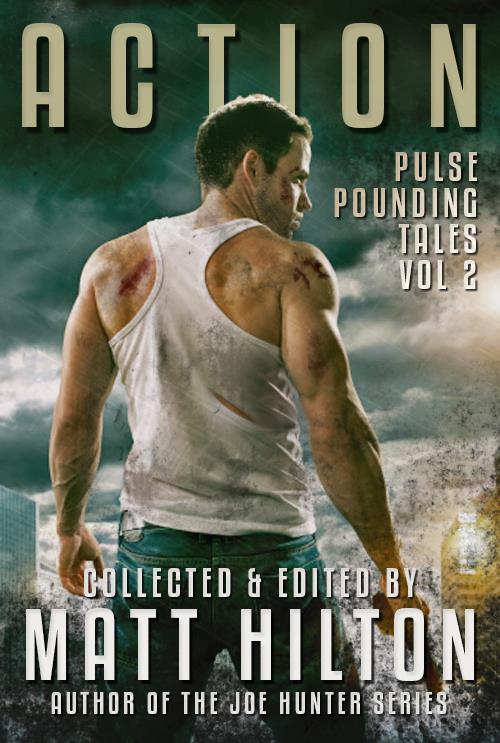
A while ago I had my short story, Hard Wood, accepted into the second Pulse Pounding Tales compilation by Matt Hilton. I’ve held off on making this announcement until the submissions were officially closed. For those unfamiliar with volume one of Pulse Pounding Tales, buy it now. You’ll thank me later. Volume 2 is due out later this month.
Cover for the second edition.
The first edition included short stories from many renowned and upcoming thriller authors, including: Matt Hilton (duh!), Zoë Sharp, Stephen Leather, Adrian Magson and Steven Savile. If the previous edition and my submission (Hey! I’m allowed to think I’m awesome) are anything to go by, this second installment should be just as awesome. For more on whose stories you will get to read, see here.
Hard Wood is about Steve: disabled in the war in outer Desert-stan, he now makes sure containers at a shipping yard aren’t lonely at night. Steve stumbles across some heavily armed smugglers and decides that he is the only one who can stop them escaping before the police can arrive. Pity that Steve is not heavily armed and is missing a leg. For a little background to the underlying topic of the short, read this little non-fiction synopsis about illegal logging.
I’d like to thank Matt for the opportunity to publish my story with him. I’d also like to congratulate my fellow authors who I will be sharing pages in the compilation with.
Update:
Here’s the final line-up to ACTION: Pulse Pounding Tales Vol 2 everyone:
CONTENTS
Introduction by Matt Hilton
Dirk Ramm: Unsheathed by Matt Hilton
Sins of Omission by Ian Graham
See Saw by James Oliver Hilton
Uninvited Guests by Rod Glenn
The Missionary by Paul D Brazill Hard Wood by Tyson Adams
Black Tuesday by Alex Shaw
.50 Contingency Plan by Jochem Vandersteen
Cold Redemption By Les Morris
Kokoro by Andrew Scorah
Get Cutter! By James Hopwood
Jardine Rides Again by Ian McAdam
Jack Be Nimble by Gavin Hunt
Exit Wound by Steve Christie
As Heroes Fall By Frank Sonderborg
Goofy Brings The House Down by Richard Godwin
Grand Central: Terminal by Terrence P. McCauley
The Fixer by Dean Breckenridge
Soup Sandwich by Christopher L. Irvin
Pasnuta Means Arena of Death! by Richard Prosch
Mududa’s Revenge by Graham Smith
97 Ways To Die In Istanbul by Paul Grzegorzek
It’s Noir or Never by Absolutely*Kate
Push by Kevin Michaels
You Only Die Once by Rhesa Sealy
Man About Town by Alan Griffiths
Hanoi Heat by Iain Purdie
Hammertime by Asher Wismer
When The Devil Catches Up by Lee Hughes
With the run-away box office success of some of the comic book movie adaptations, you could be excused for thinking that comic book movies don’t suck. Sure, stick Robert Downey Jnr. in a movie and you are bound to bask the movie in his reflected awesome. Put Joss Whedon in the director’s chair and he could make paint drying fun to watch. But when all said and done, comic book movies are fatally flawed for the following reasons.
Origin Story
I was bitten by a cat. No increased agility, but I do clean myself with my tongue now.
Did John McClane need an origin story? Did we need to see him join the police academy, walk the beat in montage form and get his detective shield before taking on Hans Gruber? NO! So why do we need to go back and see how every superhero became a superhero? If Charlies Angels can get away with having us believe that three rake thin girls can successfully beat the crap out of a group of guys twice their size whilst wearing stilettos without an origin story, I think we can just take it on faith that The Punisher has issues with criminals.
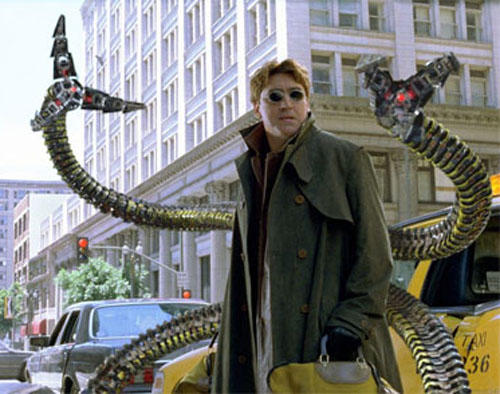
Superhero beating up normal people
Super arms, normal pudgy body ripe for the beating.
He can leap tall buildings in a single bound, he can change the course of rivers with his bare hands, but he still needs to punch a normal person like he’s Ali squaring off against Foreman. Let’s face it, if a superhero actually wound up and threw a punch like we see in the movies (or comics for that matter) to hit a normal person, their fist would go clear through the person’s body, which would be kinda cool to see on the big screen.
The most egregious use of this strength imbalance, in my opinion, is in Spiderman 2. Remember how Spiderman stops a speeding train using just upper body strength? Remember how he then has an extended fight with Doc Oc where he repeatedly punches the mad scientist in the face? Now I know that the Doc did have some cool new appendages attached to his body, but the rest of his body is still pretty normal. Yet we are meant to believe that Spiderman can’t throw a punch to save his life or that Doc Oc’s head can withstand a blow that is stronger than a speeding train.
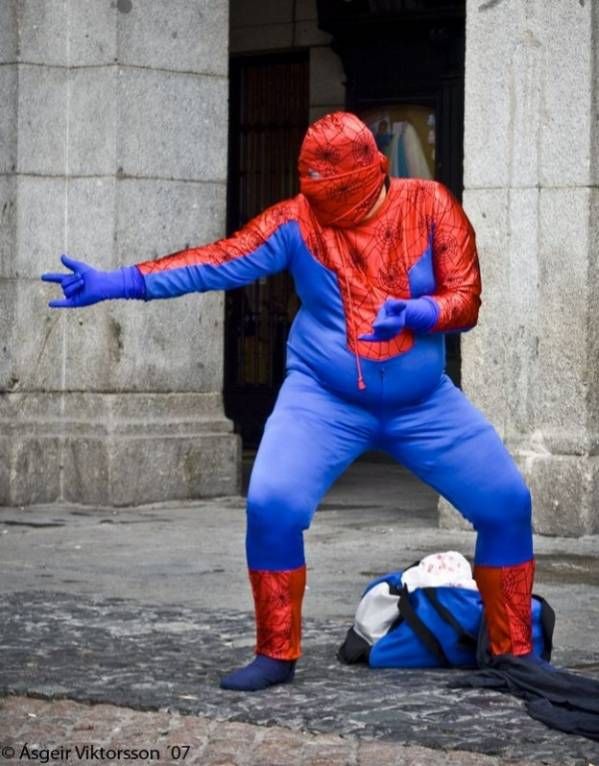
Spandex/Lycra
In reality land, never a good look.
I’m almost certain that superhero costume designers and comic artists are BSDM fans, nothing else can explain Catwoman’s costume. Now being a heterosexual male I find nothing wrong with the casting of attractive women to be wearing spandex or lycra bodysuits. Sure, it must be hard for the women to stay in shape, kick ass and say their lines, but we sure do appreciate it! I’m sure the flip side is also true, that the female audience members love to see the chiselled muscle of the male actors displayed either shirtless or clad in the most figure enhancing costumes possible. I’m sure that the LGBT crowd have their respective tastes sated as well.
But here is my problem with spandex and lycra: no-one actually looks good in it and it is not very practical. If Batman were really deciding on what to wear when fighting crime, he wouldn’t be deciding on a cape and cod piece, he’d be looking for body-armour and a backpack for lugging around all of his Bat-gadgets. What about pockets? Where do you keep your phone and spare cash? And what happens if the superhero hasn’t had a chance to fight crime recently or has had a lot of charity dinners of late? Spandex and lycra are just going to display those meals and extra flab straight away. They’d become too self conscious to leave the house to fight any crimes. Norman Osbourne has taken hostages down-town Sorry, I have a muffin top and can’t be seen in public.
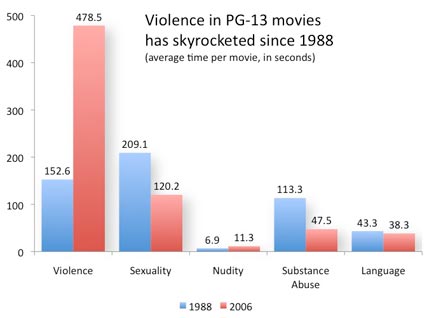
Gratuitous PG rated violence
I’m a science nerd, that means one graph per article; minimum.
After an epic fight that levels half the city the bad guy goes to prison and we have ambulances treating all the poor people who sustained a few cuts and bruises. After beating the living crap out of each other for 20 minutes, the good guy and bad guy have a sum total of a bloodied lip and a bad case of out-of-breathness. Then, of course, the bad guy dies in some elaborate death scene that cuts-away just before the gory bit.
On the plus side, there is plenty of shooting, explosions, car chases, fight scenes and general mayhem to keep anyone amused. But no tits. Definitely no tits. Because we wouldn’t want kids to see anything that could harm their little minds.
The laws of physics don’t apply
I may weigh over 110kg, but this seat thinks I’m 50kg.
You know how when fat people sit down on something you hear it complain? What about the bowing that occurs? What about those permanent dents that your poor couch has from your fat uncle at Xmas time, not to mention the smell? Well, in the movies that doesn’t happen. Iron Man sits on a couch and doesn’t look a gram over 80kg, yet all that armour should be making it bow like your fat uncle after a plate of turkey. But it isn’t just that. Where are the crumple zones in that suit? What about air-bags? What about how squidgy Tony Stark would become being rattled around inside that suit?
Superheroes defy all sorts of laws of physics, whether it be jumping off a building and landing on the ground in high heels as though they just needed to tie their shoes, or casually picking up a car to throw at someone without their fingers tearing straight through the light aluminium panels. Also, why is it that the superhero always has super-clothes? Whether it be Wolverine’s amazing self healing singlets or the general indestructible nature of most costumes. Whoever designs those things could make a fortune!
Secret identity that isn’t really
The mask makes me look less like Ryan Reynolds, don’t you think?
Is it a bird? Is it a plane? No, it’s quite clearly Clark Kent without the glasses.
How stupid are the people of Gotham? A Dark Knight rocks up wearing expensive high-tech gadgets, driving a really cool car at the same time a troubled billionaire returns home: how much of a leap do people have to take here? Even Hal Jordan was unmasked by his girlfriend, how long would it take other people to catch on? At least Tony Stark just came out and admitted it.
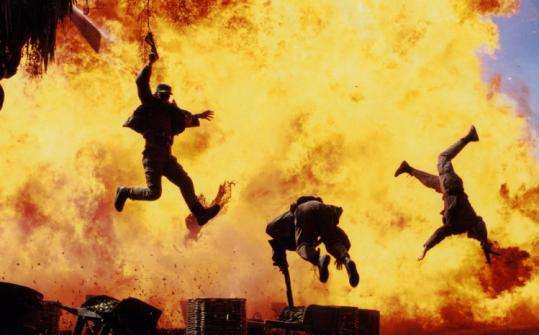
Big ass explosions
They’re cool because they aren’t looking at it.
This is related to the physics point. Explosions in real life are never as spectacular as movie explosions. Car falls off a cliff: instant fireball. Helicopter stops helicopting: instant fireball. Gas from the stove left on for a few seconds: house explodes into a million pieces. Captain America ducks his head behind his shield as grenade explodes: doesn’t have exposed legs blown off.
In comic book movies everything explodes at the lightest touch. Somehow The Hulk crushing a car causes it to explode, rather than just leak. But not just explode, EXPLODE!!! I don’t know how much high-octane petrol and C4 the average person keeps in their car, but it must be a lot more than I do.
I love a good thriller. To me novels are meant to, first and foremost, entertain. Some flowery prose may be interesting, the relationships and settings may be fascinating, but if there isn’t any imminent danger to life, limb and puppies, then I’m likely to be throwing the book away.
Mystery, crime and thriller genres are often lumped together or confused for one another. This is kinda like cars, some people don’t know the difference between cars and will just go by colour. While it’s true that they often overlap, there’s a distinct difference: in a mystery there is a puzzle to solve, in a crime there is a crime to solve after it has occurred (although there may be others committed later in the story), whilst a thriller is all about knowing that a crime is going to be committed and the story details the prevention of it.
In an article on Writer’s Digest, Zachary Petit put forward a list by Brian Garfield. He called this the 10 Commandments of thriller writing, because you can’t have a thriller if someone isn’t breaking some rules.
Start with action; explain it later. TA: I especially agree with this point. I’m sick of “thrillers” that take the first half of the book to set up the action.
Make it tough for your protagonist.
Plant it early; pay it off later.
Give the protagonist the initiative.
Give the protagonist a personal stake.
Give the protagonist a tight time limit, and then shorten it.
Choose your character according to your own capacities, as well as his/hers.
Know your destination before you set out.
Don’t rush in where angels fear to tread.
Don’t write anything you wouldn’t want to read. TA: You know, like street directions and descriptions of flowers and home renovations.
For the full piece, “10 Rules for Suspense Fiction” by Brian Garfield, click here.
At the 2008 Maui Writers Conference, bestselling thriller writer Gary Braver (Skin Deep) said that dread drives thrillers. You know who the good guys and bad guys are. Dull moments will lose an audience, and writers can’t afford to lose an audience, even for one page. To captivate an audience (and agents and publishers), Braver offers these 10 essential ingredients for a successful thriller.
1. You need to have a good story. Thrillers want to be thrilled. A common element in thrillers is that the protagonist will fall victim to someone else’s scheme and get stuck in a moment of dread. There are only three themes in all of literature: death and rebirth (Stephen King’s Misery); the hero slaying a dragon to restore the world to normalcy (James Bond, Indiana Jones); and the quest to make life better (The Da Vinci Code). Know which theme fits your story.
2. Write about the underdog. Tell your thriller from the point of view of the person with the most to lose. The protagonist gives the story character. Give him baggage and emotional complexity.
3. Multiple points of view can give you great range in a thriller. They allow you inside the heads of many characters, which can build more dramatic tension and irony.
4. Open your book with an action scene. Don’t put biographical information or exposition in Chapter 1 (do that later). Introduce the crime—which tells you the stakes—and introduce the hero and villain, and even some obstacles the protagonist may face.
Don’t sacrifice style—use metaphors and good language—but stick with action.
5. Early on, make clear what your protagonist wants and what he fears. You should know what the protagonist wants and how he would end the novel if he were writing it.
There are two quests: Stopping the bad stuff from happening (In The Silence of the Lambs, it’s to stop Buffalo Bill from killing) and dealing with the character’s baggage (for Clarice to be a good, professional FBI agent in a [then] male-dominated profession).
Think Cinderella: Her main quest is to get to the ball. It’s about liberation. When she gets to the ball she finds freedom.
6. Make your characters miserable. Ask what the worst thing is that could happen to your protagonist and make it worse. Give them grief, false hope, heartaches, anxiety and near-death experiences. We don’t want our protagonist to win until the end.
7. Your main characters have to change. It has to be an emotional change that shows growth and victory over some of his baggage. In The Silence of the Lambs, Clarice is stronger and tougher at the end and she gets a good night’s sleep.
8. Pacing must be high: Strong Narrative Thrust. Each scene should reveal something new, no matter how slight it is. Don’t tell us about stuff that has nothing to do with the story. The villain has a ticking clock, so there’s no time to waste on pages with useless information. Short paragraphs and white space are good. Consider using cliffhangers at the end of every chapter, albeit a sudden surprise or provocative announcement.
9. Show—don’t tell. Avoid the passive voice. Use action verbs (He heard the screams in his bedroom). Avoid adverbs—they are cheesy and cheap ways of telling instead of showing. Don’t start sentences with –ing words (“He stared” vs. “Staring at the …”). Make the subject and verb close and up front in the sentence.
10. Teach us something. Make sure your audience has learned about something—an animal, medical treatment, social issue—so we walk away with more knowledge.
A friend made the comment to me recently that a film we had both watched was merely a rip-off of another film. Rip-off is a bit harsh in my opinion. If we think hard about all the books and films we’ve ever watched and then break them down into their general plots you start to see a lot of patterns. Boy meets girl. Girl meets boy. Buddies team up to do something awesome. Odd couple team up to do something awesome. When all said and done, it is hard to identify anything truly original.
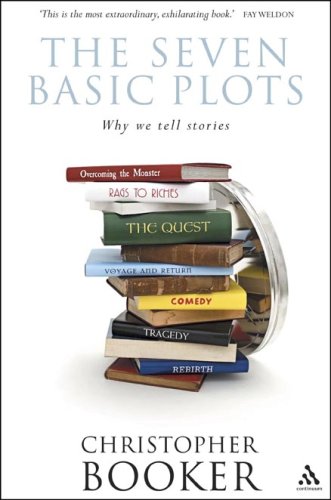
As a result, people often say that there are only a certain number of basic plots and that any story is really just a variation on these plots. Depending on how detailed they want to make a “basic” plot, different writers have offered a variety of solutions. An article I found lists these:
1 Plot:
Attempts to find the number of basic plots in literature cannot be resolved any more tightly than to describe a single basic plot. Foster-Harris claims that all plots stem from conflict. He describes this in terms of what the main character feels: “I have an inner conflict of emotions, feelings…. What, in any case, can I do to resolve the inner problems?” (p. 30-31) This is in accord with the canonical view that the basic elements of plot revolve around a problem dealt with in sequence: “Exposition – Rising Action – Climax – Falling Action – Denouement”. (Such description of plot can be found in many places, including: Holman, C. Hugh and William Harmon. A Handbook to Literature. 6th ed. New York: Macmillan Publishing Co, 1992.) Foster-Harris’ main argument is for 3 Plots (which are contained within this one), described below.
3 Plots:
Foster-Harris. The Basic Patterns of Plot. Norman: University of Oklahoma Press, 1959. Foster-Harris contends that there are three basic patterns of plot (p. 66):
“’Type A, happy ending’”; Foster-Harris argues that the “Type A” pattern results when the central character (which he calls the “I-nitial” character) makes a sacrifice (a decision that seems logically “wrong”) for the sake of another.
“’Type B, unhappy ending’”; this pattern follows when the “I-nitial” character does what seems logically “right” and thus fails to make the needed sacrifice.
“’Type C,’ the literary plot, in which, no matter whether we start from the happy or the unhappy fork, proceeding backwards we arrive inevitably at the question, where we stop to wail.” This pattern requires more explanation (Foster-Harris devotes a chapter to the literary plot.) In short, the “literary plot” is one that does not hinge upon decision, but fate; in it, the critical event takes place at the beginning of the story rather than the end. What follows from that event is inevitable, often tragedy. (This in fact coincides with the classical Greek notion of tragedy, which is that such events are fated and inexorable.)
7 Plots
7 basic plots as remembered from second grade by IPL volunteer librarian Jessamyn West:
[wo]man vs. nature
[wo]man vs. [wo]man
[wo]man vs. the environment
[wo]man vs. machines/technology
[wo]man vs. the supernatural
[wo]man vs. self
[wo]man vs. god/religion
20 Plots:
Tobias, Ronald B. 20 Master Plots. Cincinnati: Writer’s Digest Books, 1993. (ISBN 0-89879-595-8)
This book proposes twenty basic plots:
Quest
Adventure
Pursuit
Rescue
Escape
Revenge
The Riddle
Rivalry
Underdog
Temptation
Metamorphosis
Transformation
Maturation
Love
Forbidden Love
Sacrifice
Discovery
Wretched Excess
Ascension
Descension.
36 Plots
Polti, Georges. The Thirty-Six Dramatic Situations. trans. Lucille Ray.
Polti claims to be trying to reconstruct the 36 plots that Goethe alleges someone named [Carlo] Gozzi came up with. (In the following list, the words in parentheses are our annotations to try to explain some of the less helpful titles.):
Supplication (in which the Supplicant must beg something from Power in authority)
Deliverance
Crime Pursued by Vengeance
Vengeance taken for kindred upon kindred
Pursuit
Disaster
Falling Prey to Cruelty of Misfortune
Revolt
Daring Enterprise
Abduction
The Enigma (temptation or a riddle)
Obtaining
Enmity of Kinsmen
Rivalry of Kinsmen
Murderous Adultery
Madness
Fatal Imprudence
Involuntary Crimes of Love (example: discovery that one has married one’s mother, sister, etc.)
Slaying of a Kinsman Unrecognized
Self-Sacrificing for an Ideal
Self-Sacrifice for Kindred
All Sacrificed for Passion
Necessity of Sacrificing Loved Ones
Rivalry of Superior and Inferior
Adultery
Crimes of Love
Discovery of the Dishonor of a Loved One
Obstacles to Love
An Enemy Loved
Ambition
Conflict with a God
Mistaken Jealousy
Erroneous Judgement
Remorse
Recovery of a Lost One
Loss of Loved Ones.
It is therefore inevitable that it is all just a little bit of history repeating.
Have you found Jesus?
First of all, I didn’t know he was missing. So I did a bit of checking, turns out Jesus is the reining world hide and seek champion, 33AD to present. Given how many people are now out door-knocking, trying to find him, it must be only a matter of days before Jesus will be found and people will stop knocking on our doors.
Are you happy with your telecommunications provider?
It seems odd that none of the telecommunications providers offer a service that stops you being bothered by marketers trying to get you to switch providers.
Would you like to donate to a good cause?
I love donating to good causes. Sadly I’m often lacking in cash on hand and none of the donation collectors seem willing to accept sperm bank cheques.
Our ball went into your backyard….
As long as there has been neighbours there have been kids deciding their backyard is too small for the games they play. Thankfully children are very useful for household chores like hand weeding my backyard in order to find the lost ball that may, or may not, have found its way inside with the dog.
We’re from the Church of Latter Day Saints, could we come in to speak to you?
Religious people are interesting, going out and visiting everyone and wanting to have a chat about their religion. How do they coordinate their visits so that all the religious people aren’t all out door-knocking so no-one is home to talk about religion with them? I wonder how many Mormons (or others) have been invited in so they can help with the filming of the low budget home movies that are popular on the internet.
I’m campaigning for the local member of parliament.
You really have to wonder how these people manage to avoid the bear traps I set in our front yard. Thankfully our dog enjoys chasing down fair game.
We’re going door to door to see if anyone saw or heard anything?
Do the police actually get much useful information out of this? Won’t most people who heard or saw something be out at the crime scene taking pictures on their phone? Sometimes it is very tempting to reply with, “No, I was too busy going all Dexter on my neighbour. “
We need to read your meter.
Why?
So we can bill you the correct amount.
Wouldn’t it better if I don’t let you read my meter and have you not charge me?
(via Climate Central)
From our friends at NASA comes this amazing 13-second animation that depicts how temperatures around the globe have warmed since 1950. You’ll note an acceleration of the temperature trend in the late 1970s as greenhouse gas emissions from energy production increased worldwide and clean air laws reduced emissions of pollutants that had a cooling effect on the climate, and thus were masking some of the global warming signal.
The data come from NASA’s Goddard Institute for Space Studies in New York (GISS), which monitors global surface temperatures. As NASA notes, “All 10 of the warmest years in the GISS analysis have occurred since 1998, continuing a trend of temperatures well above the mid-20th century average.”
I could post a bunch of statistics and the data from various countries, but instead I’m going to post The Daily Show’s three part series on the topic.
1
2
3
Now, I don’t like the idea of making it illegal for people to be able to be involved in the sport of shooting, nor making vermin control prohibitive. I think in some respects that Australian gun laws are probably a little too restrictive. I also think that the figures on how effective our gun control measures have been are a little overstated, as law enforcement had already made inroads into lowering gun crime prior to the new laws in 1996. But overall, in my opinion, Australia doesn’t have much of a gun problem now. Making sure gun owners are responsible people who are involved in the sport of shooting and not a disgruntled time bomb going unnoticed until they start shooting people, seems to be a good thing.
By performing an additional set (50% to 100% more sets) only 0 to 5% more progress will be observed. Each additional set yields even less progress to a point of diminishing return.
Is this statement supported by any research?
Answer:
Many of the low volume or high intensity styled programs make claims about diminishing returns from extra work. The easiest way to address this question is to look at the science of training volume. I agree with one of the commenter’s (Dave) that exercise science is not always a solid science, but his recommendation replaces measurement with opinion.
Volume vs HIT: The Answer There have been many studies that have sought to understand whether it is better to use a single set, many sets, how many sets, etc. Most of the training programs used by athletes today are based upon periodized programs developed by the former eastern block Olympic coaches. But there are two issues: strength and hypertrophy.
Firstly a strength training meta-analysis by James Krieger (Journal of Strength & Conditioning Research. 23(6):1890-1901, September 2009) found that 2-3 sets led to 46% greater strength gains than 1 set.
There has been considerable debate over the optimal number of sets per exercise to improve musculoskeletal strength during a resistance exercise program. The purpose of this study was to use hierarchical, random-effects meta-regression to compare the effects of single and multiple sets per exercise on dynamic strength. English-language studies comparing single with multiple sets per exercise, while controlling for other variables, were considered eligible for inclusion. The analysis comprised 92 effect sizes (ESs) nested within 30 treatment groups and 14 studies. Multiple sets were associated with a larger ES than a single set (difference = 0.26 +/- 0.05; confidence interval [CI]: 0.15, 0.37; p < 0.0001). In a dose-response model, 2 to 3 sets per exercise were associated with a significantly greater ES than 1 set (difference = 0.25 +/- 0.06; CI: 0.14, 0.37; p = 0.0001). There was no significant difference between 1 set per exercise and 4 to 6 sets per exercise (difference = 0.35 +/- 0.25; CI: -0.05, 0.74; p = 0.17) or between 2 to 3 sets per exercise and 4 to 6 sets per exercise (difference = 0.09 +/- 0.20; CI: -0.31, 0.50; p = 0.64). There were no interactions between set volume and training program duration, subject training status, or whether the upper or lower body was trained. Sensitivity analysis revealed no highly influential studies, and no evidence of publication bias was observed. In conclusion, 2 to 3 sets per exercise are associated with 46% greater strength gains than 1 set, in both trained and untrained subjects.
Now the low volume claims are for diminishing returns after the first set. This is clearly not the case, but there is a point that no more strength is gained (4-6 sets) by performing more work. I won’t address it here, but it is to do with how fast the body can restore ATP and how much micro-trauma has been induced.
Hypertrophy is the second part of weight training. Krieger again performed a meta-analysis of the research (Journal of Strength and Conditioning Research: April 2010 – Volume 24 – Issue 4 – pp 1150-1159) and found that increasing the number of sets increased the amount of hypertrophy by 40% (up to 6 sets).
Previous meta-analyses have compared the effects of single to multiple sets on strength, but analyses on muscle hypertrophy are lacking. The purpose of this study was to use multilevel meta-regression to compare the effects of single and multiple sets per exercise on muscle hypertrophy. The analysis comprised 55 effect sizes (ESs), nested within 19 treatment groups and 8 studies. Multiple sets were associated with a larger ES than a single set (difference = 0.10 ± 0.04; confidence interval [CI]: 0.02, 0.19; p = 0.016). In a dose-response model, there was a trend for 2-3 sets per exercise to be associated with a greater ES than 1 set (difference = 0.09 ± 0.05; CI: −0.02, 0.20; p = 0.09), and a trend for 4-6 sets per exercise to be associated with a greater ES than 1 set (difference = 0.20 ± 0.11; CI: −0.04, 0.43; p = 0.096). Both of these trends were significant when considering permutation test p values (p < 0.01). There was no significant difference between 2-3 sets per exercise and 4-6 sets per exercise (difference = 0.10 ± 0.10; CI: −0.09, 0.30; p = 0.29). There was a tendency for increasing ESs for an increasing number of sets (0.24 for 1 set, 0.34 for 2-3 sets, and 0.44 for 4-6 sets). Sensitivity analysis revealed no highly influential studies that affected the magnitude of the observed differences, but one study did slightly influence the level of significance and CI width. No evidence of publication bias was observed. In conclusion, multiple sets are associated with 40% greater hypertrophy-related ESs than 1 set, in both trained and untrained subjects.
So there is no science to support the claim that doing more sets will only see small increases in returns. It is possible the person making this claim has not understood the conclusions of studies such as the ones I have cited, but it is more likely that the claims are unfounded.
Senator Joyce claimed that publications featuring small-breasted women were encouraging paedophilia.
Is that true that this legislation exists in Australia? Is such a law legally feasible?
Answer:
The short answer is no, there is no ban on small-breasted porn models. The problem is that the actual laws on what meets classification standards are open to interpretation, so there is an “in practice” reality to the claim due to how the censors categorise and interpret the classification systems in Australia.
There is no specific rule stating that small breasts are bad, but in practice many complaints are registered and material is refused classification due to models not looking “adult” enough and can thus be categorized as either child sexual abuse or offensive sexual fetishes.
(a) if they promote or provide instruction in paedophile activity; or if they contain:
(b) descriptions or depictions of child sexual abuse or any other exploitative or offensive descriptions or depictions involving a person who is, or appears to be, a child under 18;
(c) detailed instruction in:
(i) matters of crime or violence,
(ii) the use of proscribed drugs;
(d) realistic depictions of bestiality; or if they contain gratuitous, exploitative or offensive descriptions or depictions of:
(e) violence with a very high degree of impact which are excessively frequent, emphasised or detailed;
(f) cruelty or real violence which are very detailed or which have a high impact;
(g) sexual violence;
(h) sexualised nudity involving minors; (i) sexual activity involving minors; or of they contain exploitative descriptions of:
(j) violence in a sexual context;
(k) sexual activity accompanied by fetishes or practices which are revolting or abhorrent;
(l) incest fantasies or other fantasies which are offensive or revolting or abhorrent.
As you see, this list is quite open to interpretation. Thus the review board for published materials and the complaints board for online material often do classify materials as RC, regardless of their legality.
It is illegal to sell RC material in, say, a newsagent. It’s also illegal to make it available for viewing publicly.
But it’s not by any means illegal for me to own or possess these things myself and view them in the comfort of my own lounge room. It’s quite legal, for example, for me to own and view (or read, or listen to):
An RC film, TV program or other video such as Ken Park or Baise Moi;
Material on euthanasia such as The Peaceful Pill Handbook;
Material that instructs on bomb-making, theft or any other crime.
Now, sure, some of these things are distasteful to many people. Even offensive. Or morally problematic. And they are all refused classification.
But they are not illegal.
So the RC classification often has material on its list despite that material being perfectly legal. This list includes movies, books, video games and internet sites.
But how do small breasted models fall under this classification system? Well, in practice, many RC classifications have been passed against many magazines, such as the Hustler Barely Legal series, Just 18 magazine, New Climax, and of course, various DVDs like this and this. The TV show Hungry Beast did several segments on censorship of porn in Australia, including covering the issue of small breasts and exposed labia lips, which was leading to photoshoppingof models.
The best example of the bias against small breasts is from the leaked Australian Internet Filter Blacklist compiled by ACMA. This list of sites was not only a disgrace, as legitimate sites were being blacklisted and didn’t realise, but many of the supposed “illegal” or RC sites were perfectly legal. The problem was that they sometimes featured small breasted women. For example, Abby Winters, Just Teen, Teens Naked and Tube8, all legal, all acceptable, all models over 18, are on the blacklist. The common theme to many of the banned porn sites is that there are small breasted women or women who “appear to be” too young. The distinction of “too young” is obviously ambiguous and thus many models are RC’d because small breasts is a sign of “young” women.
It is also worth reading the list to see the sort of sites that were being RC’d, because you will see many perfectly legal sites on the list. I suspect, as is outlined in the Wikileaks article, that complaints are lodged for any hardcore sex sites that a complainant comes across “by accident” and it is duly listed regardless of whether content ticks the points I outlined above.
The cardio folks usually point out the “afterburner” effect, where the body continues to burn calories even after the workout. And weight lifting people mention that muscles burn more calories than fat, so more muscle is the key.
Are there studies showing if either one is true? Or are both needed? And what about interval training?
Answer:
This is a tough question to answer as there are a lot of ifs and buts.
Weight loss is all about caloric deficit, expend more energy than you consume and you lose weight. Most people do this by dieting, but the body tends to readjust the resting metabolic rate so that you don’t lose too much reserves. Thus exercise plusdiet is needed for weight loss to be effective.
How effective is ‘Diet Only’ versus ‘Diet plus Exercise’ for Weight Loss? Most studies demonstrate that when diet (caloric restriction) and physical activity are combined in a weight management program, encouraging results in weight loss occur. Donnelly and colleagues (2009) explain that a weight loss program design may create an energy deficit (e.g., 500 to 1500) composed of exercise (e.g., 250 kilocalories/day) and caloric restriction (e.g., 250 kilocalories/day) for the daily caloric deficit total (500 kilocalories in this example). In studies where investigators introduce an energy deficit of 700 to 1000 kilocalories per day, ‘diet only’ and ‘diet plus exercise’ result in similar losses. Donnelly explains that this is due to metabolic adaptations that “diminish any additive effect of energy expenditure from physical activity on weight loss”. However, in investigations where the energy deficit is 500-700 kilocalories/day, the ‘diet plus exercise’ group is about 20% greater than the ‘diet only’ intervention.
So weight loss needs to be related to your activity and diet in order to understand your basal metabolism. But weight loss isn’t just about bodyweight as it is about losing bodyfat (as muscle is useful for maintaining basal metabolism and body function). When you calculate this you are able to figure out how many calories need to be removed from the diet in order to lose fat. See here. There are also strategies that can change your metabolism.
Exercise is usually broken down into two categories: cardio and weight training. There are many benefits to both and generally both are recommended for long term health. Weight training is known to burn fat.
This study is the first to directly show that resistance exercise increases adipose tissue lipolysis and thus contributes to improved body composition. This boost in lipolysis is apparently due to the excitatory effect of resistance training on specific hormones (e.g., epinephrine, norepinephrine and growth hormone). As this study design was completed with trained male subjects, it is hoped that the methods and procedures will be completed with other subject populations (e.g., females, untrained persons, youth, seniors, overweight, etc.) in future research.
For cardio training, there is obviously fat burning taking place. The amount of fat burning that occurs is related to the intensity of the cardio.
In summary, that data clearly show that exercise intensity is the main factor in determining the magnitude and duration of EPOC following aerobic exercise. Thus, when developing a cardiorespiratory exercise prescription for weight maintenance and weight loss, the influence of exercise intensity on EPOC and its potential contribution to total caloric expenditure should be taken into consideration.
The same is true of weightlifting (from the same article):
The data on resistance training and EPOC suggest that EPOC is distinctly influenced by the intensity of the resistance training program.
The actual amount of post activity “fat burning” will be related to the intensity and duration of the exercise done. Weightlifting has advantages in terms of encouraging muscle satellite cell accumulation that sustains and grows muscle. Cardio has the benefit that it can be performed for longer durations than weightlifting. So the essential answer will come down to the individual and their strength and fitness.
Essentially any exercise program should incorporate both cardio and weight training for weight loss, especially targeting fat loss.
For more articles on fitness and metabolism see here.
Further question: Hey, do you think I can get the source on your statement that “the body tends to readjust the resting metabolic rate so that you don’t lose too much reserves.”? I’m rather curious about this. – Joel Cornett
Reply: Joel, there is a lot of research related to metabolic rate and how it changes under dieting and exercise regimes. It is quite a complex topic because it depends upon many factors. Someone who has just started dieting will be different from someone who is active already in terms of responses. Here is one paper that looks at the overweight people and weight control. I linked to Kravitz’s other articles that cover some of the athlete side of metabolism in the last link.
Vegetarianism is heavily promoted. But let’s say all people on Earth stop eating animal products. Can we grow enough crops so all people on the Earth are provided with enough healthy, nutritious food?
The question is of course very theoretical, but without discussing future possibilities to cultivate deserts and oceans, is there enough space to grow enough crops?
Answer:
This question is a very contentious one as it relies upon a lot of variables that are largely poorly understood.
The first part is arable land mass. Currently animal production is focussed on either high value grazing areas or low value extensive areas. Extensive grazing areas cannot be cropped. That area of production would have to be made up by increased crop production in other areas. 56% of Australia is extensive agriculture, worldwide it is ~5,000,000,000 hectares. That is a large amount of low production land to make up for.
Simply put, we can increase food availability (in terms of calories, protein and critical nutrients) by shifting crop production away from livestock feed, bioenergy crops and other non-food applications….. But even small changes in diet (for example, shifting grain-fed beef consumption to poultry, pork or pasture-fed beef) and bioenergy policy (for example, not using food crops as biofuel feedstocks) could enhance food availability and reduce the environmental impacts of agriculture.
Also, the areas quoted vary so much, because the figures are not fully understood. Cropping land is rarely cropped every year, instead rotated or rested at intervals, dependant upon crop type, soil type and amount of water/rainfall. Some countries just don’t have accurate records.
The second part is feed conversion. There are methods, such as mixed enterprise systems (crops plus grazing) and of course feedlotting that use grain feeding. The feedlotting is what people refer to the most, not understanding that cattle have a much higher energy conversion rate for vegetable matter than humans (being ruminants) and are not regularly fed for their entire lives. Thus grazing remains a large part of production.
Humans also preferentially eat higher protein foods like meat (see rise in meat demands from Asia with increasing wealth). This is because it is more calorically and nutritionally dense as a food, which is linked to satiety.
The third part is grain types. Most grains that are fed to animals are what is referred to in the grains industry as “feed grains”. These are generally lower quality grains that are unsuitable for human food production. Some of the grains used cannot be eaten by humans (e.g. lupins have high alkaloid levels that give both a bitter taste and become toxic when consumed regularly). Obviously the category of feed grain varies from “could be used” through to “cannot be used” for humans. This is once again a shorfall in the production required to replace meat in the diet. Remembering that feed crops are often grown where human crops cannot be grown, or not grown regularly (e.g. see wheat classes and agronomy).
Conclusion: These factors combine to create quite a different picture than what is normally presented in the “can we grow enough crops to replace meat eating” discussion. There would be less land available for cropping than is available for producing a mixed diet. There would be crops produced that would not be suitable for human consumption. We would also need slightly higher production or quality of crops to make up the energy conversion gap. This all makes for a large hole in the argument. There is nothing wrong with a vegetarian diet, nor an omnivorous one for that matter, but the environmental argument is not black and white and cannot be used as grounds for switching diets.








 Tyson Adams