Book review: The Time Traveler’s Wife by Audrey Niffenegger

The Time Traveler's WifeThe Time Traveler’s Wife by Audrey Niffenegger

My rating: 4 of 5 stars

If you have a lot of naked adventures, wouldn’t you move to a more agreeable climate?

Henry “library boy” DeTamble is unstuck in time. He visits moments from the past and future unbidden and with a lack of clothes. Claire is his wife. She has loved him since she met Henry as a little six-year-old girl and he was thirty-six. This is the story of their complicated life together.

I’ve been meaning to read The Time Traveler’s Wife since I saw the movie on our honeymoon. Achievement unlocked before the tenth anniversary! This isn’t the sort of book I’d normally read as it is a relationship focussed story with a heart-rendingly sad conclusion. Yet I really enjoyed it.

There were two things that let the novel down for me. The first is that this book runs long. There isn’t any needless rambling or overuse of exposition, but it felt like the story had a lot of filler. None of that filler was bad, per se, but I couldn’t help but feel this novel was about a third longer than it needed to be.

The second thing was the slightly uncomfortable relationship between Henry and Claire. While I was reading there were only a few moments that felt “wrong” and that those moments were handwaved a bit too much (e.g. teen Claire and adult Henry having the hots for one another). But those moments tie to the larger issues with the relationship being fated to mess with Claire’s whole life, and to a lesser extent Henry’s. If this had been discussed more directly and given more weight I’d have been happier.

Overall, I enjoyed The Time Traveler’s Wife and would recommend it.

View all my reviews

Book review: Bleak Harbor by Bryan Gruley

Bleak Harbor: A NovelBleak Harbor: A Novel by Bryan Gruley

My rating: 3 of 5 stars

If you received a dollar for everytime someone said “X business is a license to print money” you’d have the first instance of that statement being true.

On the day before the Dragonfly Festival in Bleak Harbor, Danny Peters goes missing. Pete Peters, his stepdad, is having a quick beer after work at his medicinal marijuana shop before he and Danny go fishing when he receives a strange text message. Carey Peters is halfway through her long commute, thinking of her work problems, when she receives the message. At first, they aren’t sure if Danny has run off again or if something more sinister has happened until they receive the photo. But which of their secrets has gotten Danny in trouble?

From the very start, we see that this mystery will be built upon the layers of secrets Danny’s parents have been keeping. The twists and turns this gives us are tightly woven together. Pete and Carey feel like painfully human characters stumbling through life and now stumbling through the disappearance of their son. Danny is a refreshing and interesting portrayal of someone with autism, steering clear of the usual cliches and errors.

But I really did find it hard to engage with this novel. I liked Danny, but Pete and Carey weren’t particularly interesting or charismatic. It is hard to follow along with their trials and tribulations when you just want to slap them and tell them to talk to one another. As a result, it was hard to give this more than three stars despite how well the mystery was structured and the book was written.

I received an advance review copy of this book in exchange for a fair review.

View all my reviews

Book review: Choke by Stuart Woods

ChokeChoke by Stuart Woods

My rating: 3 of 5 stars

Given the title, you’d think at least one person would be strangled in this story.

Former Wimbledon contender and now tennis club pro, Chuck Chandler, has moved to Key West after sleeping with the wrong person’s wife. Learning from his recent lesson, he starts sleeping with someone else’s wife. This does not end well and he’s soon in the frame for murder. A retired NYC homicide detective, Tommy Sculley, is seeing out his days as the Key West detective training a local rookie. He thinks there is more to this murder than Chuck’s philandering would suggest. A lot more.

In my efforts to explore my local library’s offerings, I came across NYT Bestselling Author Stuart Woods. I didn’t really have any expectations and was rewarded with as much. The twist was something I figured out before the first murder. Admittedly, I didn’t pick the entirety of the finale, but those extra details were window dressing. Figuring out the twist that early would have been fine if the rest of the novel was more compelling, but it just wasn’t. An example of this is that the two main characters – Chuck and Tommy – aren’t particularly interesting. How can you make a philandering tennis pro boring?

To summarise, Choke was only okay. It was just interesting enough to keep you reading but once you’ve finished you can’t think of anything noteworthy about it. Well, except that the local tennis pro is probably trying to have sex with your wife.

View all my reviews

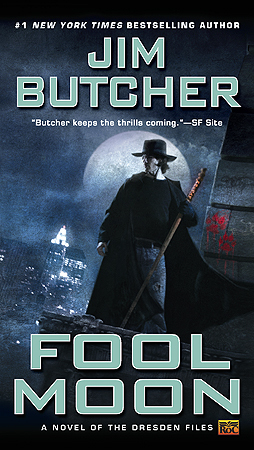
Book Review: Fool Moon by Jim Butcher

Fool Moon (The Dresden Files, #2)Fool Moon by Jim Butcher

My rating: 4 of 5 stars

The chief said, ‘I’m going to need your badge, your gun, and your ability to turn into a werewolf.’

Harry Dresden is living on the memory of ramen noodles and hasn’t heard from his contact at the Chicago Police in ages. But with the full moon dawning, a spate of murders leads Lieutenant Murphy to call on his wizard skills. With the FBI sticking their nose in, Murphy under investigation, and a pack of werewolves on the prowl, Harry is up to his neck in trouble before the moon has risen.

Jim Butcher really does love to make Harry suffer. He is obviously a big believer in creating a large stack of insurmountable odds for each of Dresden’s adventures. This is both entertaining and frustrating. Entertaining because it keeps the suspense up. Frustrating because you kinda want there to be fewer fires layered under the frypan Dresden falls out of. Or to put it another way, you start asking, ‘Isn’t it time to kill the bad guys yet?’ Or to put it another way, the damned suspense nearly killed me.

This was another enjoyable Dresden adventure. I’m looking forward to my next one.

View all my reviews

Book review: The Carpet People by Terry Pratchett

The Carpet PeopleThe Carpet People by Terry Pratchett

My rating: 4 of 5 stars

‘Don’t do that! You’ll disturb the carpet people.’

The Munrungs have just had their village destroyed by fray, a natural phenomenon from above The Carpet. In the aftermath, Glurk and Snibril try to help their village flee the attacking Mouls, a people who regard all others as animals and rather good eating. It is then they realise that fray is pushing a path of destruction through The Carpet and that the Mouls are attacking every city and town in its wake. Can they save civilisation so that people don’t go back to hitting each other?

While I was reading this novel I kept having to remind myself that it was the heavily revised edition written by the 40-something Pratchett, not the 20-something of the original edition. This was Pratchett’s first novel and as an ode to fantasy fiction had just the right amounts of absurdism and humour, which I can’t see a 20-something nailing. If Pratchett was this good out of the gate then every other author would be left weeping into the keyboard. Hopefully, someone who has read both versions can point out the differences.

This is, of course, not a Discworld novel. Apparently, all reviewers have to point this out for some reason. As such, Pratchett’s style, particularly his satire, is less pronounced here. While I thoroughly enjoyed reading The Carpet People, for long-time Discworld fans this may feel a little light or insubstantial. Or maybe they just feel guilty about having vacuumed their house.

View all my reviews

Book Review: Humans Need Not Apply by Jerry Kaplan

Humans Need Not Apply: A Guide to Wealth and Work in the Age of Artificial IntelligenceHumans Need Not Apply: A Guide to Wealth and Work in the Age of Artificial Intelligence by Jerry Kaplan

My rating: 4 of 5 stars

ABS brakes were the first step. The last will be us humans in observation cages next to the monkeys.

Jerry Kaplan is an expert in Artificial Intelligence and Computational Linguistics and attempts to guide the reader through what impacts AI and Robots will have on our future. In doing so, he raises many of the economic, ethical, and societal problems we are going to have to start addressing.

I first became aware of this book via CGP Grey’s short documentary of the same name (see below). To say there is a storm coming is an understatement. Kaplan guides us through the technological aspects of this topic with knowledge and skill. Where this book falls down is in his blind adherence to free-market solutions – ironically whilst pointing out several examples of where the free-market has failed in the past.

For example, some of his ideas about education are problematic. What he proposes with “job mortgages” is essentially traineeships and cadetships* that in my parents’ and grandparents’ generations were paid for by employers, with his modern twist being that employees should take out a job mortgage for. In other words, all of the cost and risk is moved from employers to employees.** How can anyone suggest that sort of thing as though they aren’t talking about slavery or indentured servitude?*** Sci-fi has been imagining that sort of scenario for decades and they weren’t calling it a good idea.

His comments about how rich people being in charge isn’t all bad, like back in ancient Eygpt… Because monarchies worked so well for everyone, who was a monarch.

Another gem was the idea that the free market could be in charge of wealth redistribution… Because it does such a great job of that right now. Now, in fairness, his plan was actually pretty good, but there were built in assumptions he didn’t really question despite laying out the framework with his discussion of automation taking our jobs.

Kaplan spent most of his book outlining what amounts to a post-scarcity world, a world where human “work” would essentially cease to exist, and thus cost, value and products become meaningless. How can you maintain our current economic system in that world? Don’t we need to be rethinking about what utopia we wish to design and the machines that will make that happen?

The final chapter has some interesting questions and ideas about what role humans can play in a world that the robots run and own. Whilst the ideas aren’t new, since science fiction has been prodding that topic for the best part of 70 years, he has grounded them in reality. If there is one takeaway from this book, it is that we all need to start planning the future now.

Overall, this was a fascinating book that is well worth reading.

* A point he acknowledges he is updating to be free-market and more “beneficial”
** It could be argued that this has already happened and Kaplan is just taking it one step further.
*** Again, a point he acknowledges with reference to AIs becoming free of ownership.

https://www.reddit.com/r/Futurology/c…
https://www.theguardian.com/culture/2…

View all my reviews

Book review: The Fifth Elephant by Terry Pratchett

The Fifth Elephant (Discworld, #24; City Watch, #5)The Fifth Elephant by Terry Pratchett

My rating: 5 of 5 stars

Do sugar lumps disappear or were they never there in the first place?

Sam Vimes is making sure The Watch is moving with the times and keeping Ankh-Morpork in line when Lord Vetinari summons him for a new job: ambassador. He is despatched to Uberwald for the upcoming coronation of the Low King. It isn’t long before he is using diplomacy to take care of bandits, solve a mystery, break traditions, and stop a coup. As Vimes says, “So this is diplomacy. It’s like lying, only to a better class of people.”

The first Discworld novel I read was Guards! Guards! so the City Watch series are always among my favourites. The Fifth Elephant is more plot orientated than some other Discworld novels, so it feels more streamlined and ordered than some others. That doesn’t mean that the humour or satire are lacking, even if they can be a bit subtle at times (e.g. feudalism vs capitalism commentary is rife but takes a backseat to the plot).

I really enjoyed this novel. Nothing more to say really.

View all my reviews

Book review: Stone Cold by Robert B Parker

Stone Cold (Jesse Stone, #4)Stone Cold by Robert B. Parker

My rating: 3 of 5 stars

I wonder if new sex partners actually enjoy being told how much you love your ex?

In the affluent town of Paradise, someone has decided to start killing people. Two shots to the chest. The victims are unconnected and there are no clues for Jesse Stone to investigate. As the pressure mounts, he has to balance the murder investigation against getting justice for the rape of a high school girl, and his love life. Especially when one of Jesse’s sex partners becomes a victim of the serial killer.

I’ve been meaning to read some of Robert B Parker’s novels for quite some time. Parker was regarded as one of the best detective crime novelists in contemporary (American*) fiction, like Michael Connelly or James Lee Burke. I can see the similarities between Parker and Connelly, both having a relatively bleak and realism to their investigative tales. The life of an investigation is important to Parker and Connelly’s narratives, which often involves waiting on the lab results, or going home without having solved the crime, or going on a drive to chase a dead-end – a Connelly staple. Parker tends to pare back the prose, however, which made this feel like quite a short and fast-paced novel.

I’m not sure if Stone Cold is a good representation of Parker’s writing or not, but this was only a serviceable crime novel. Nothing really elevated it above okay to my mind.

*An important caveat that is often left out of these accolades for American authors.

View all my reviews

Book review: Torment by Hank Janson

TormentTorment by Hank Janson

My rating: 4 of 5 stars

Dames: amiright?!

Hank Janson spots an old friend who has a new mentalist act they claim is really clairvoyance. He offers to promote the friend and his female assistants’ act via a test. Meanwhile, a woman approaches Janson about helping her find her sister’s killer. Also meanwhile, another woman approaches Janson about helping her brother with a pornography conviction. Then finally, the police contact Janson about covering a gruesome suicide – no women needing help with this one, so he was a bit disappointed. How are all of these things linked? Janson intends to find out.

A friend from my writers’ group recommended the Hank Janson novels to me last year. Janson was the pseudonym of Stephen D Frances and was used as the main character in a series of highly successful pulp crime novels in the 40s and 50s. It is immediately obvious why these novels were popular: fast-paced, women wanting Janson, intriguing plot, women wanting Janson, noir sensibilities, and women wanting Janson.

Noir, particularly crime noir, doesn’t date as badly as some other genres. Even with the dated attitudes and ideas, Torment didn’t make you start shaking your finger in admonishment of the -isms on display. For example, a subplot about going to prison for possessing (run-of-the-mill) porn might seem ridiculous today, but it doesn’t feel odd here.

These re-released 50th Anniversary Janson novels by Telos Publishing are worth a read for anyone chasing a crime noir or great pulp crime novels from yesteryear.

View all my reviews

Book review: Ice Station by Matthew Reilly

Ice Station (Shane Schofield, #1)Ice Station by Matthew Reilly

My rating: 4 of 5 stars

Suddenly I have a sudden urge to suddenly write a review of this book. Very sudden.

Shane “Scarecrow” Schofield has been dispatched to Wilkes Station after receiving their distress call. Some of the Wilkes science team have mysteriously disappeared after finding an unidentified “alien” craft deep under the ice. His crack team of Marines arrive to find they aren’t the only ones who responded. Clearly, more than one nation are interested in securing the craft, less so rescuing the scientists. With no support, and enemies coming from everywhere, Scarecrow will have to stay alive long enough to be in even more danger.

I can’t remember exactly when I first read Ice Station, but it must have been roughly a decade ago. It has been interesting to revisit a novel I enjoyed from an author who reinvigorated my love of reading. Some books lose their magic the second time around, and Ice Station, despite its fun and fast-paced narrative, wasn’t the novel I remembered.

Ice Station was still entertaining but the flaws stuck out this time. I found myself laughing a little bit every time Reilly used the word sudden or suddenly. I’m not sure if I’m being too harsh or too forgiving – I derided a book for using a phrase I saw in this book – so I’ll have to revisit all of Reilly’s novels to check.

View all my reviews

Book review: Zen in the Age of Anxiety by Tim Burkett

Zen in the Age of AnxietyZen in the Age of Anxiety by Tim Burkett

My rating: 4 of 5 stars

Clear your mind, relax, and read this review.

Zen in the Age of Anxiety is a guidebook and teaching manual that focuses on how to deal with stress, anxiety, and address the underlying mental behaviours that cause them. Burkett lays out the teachings and key points with easy to follow explanations and a series of anecdotes from his +50 years as a Zen practitioner and draws on his background in psychology.

This was a very interesting book. I originally borrowed a copy from the library because I’d previously read Lao Tzu’s Dao De Jing. Okay, a bit of a leap between the two, but Zen teachings have their roots in Buddhism, which in turn has roots in the Dao (Tao), something Burkett mentions in passing. There are a lot of helpful insights and practices in this book that could help most people in their lives. At the very least, it was interesting to read something with such a different perspective on life.

My only gripe was a minor one. A lot of practices and philosophies, especially those with “Eastern” origins, tend to be tied up with spiritualism and mysticism. As a result, there tends to be a blending of nonsense (both ancient and modern) with the good stuff. As an example, in a later chapter, there is an example given that involves an analogy with how vaccines and homoeopathy work. Except that it incorrectly describes how vaccines work, and incorrectly describes homoeopathy as working at all. So best to use a critical eye when reading.

View all my reviews

Book review: American Assassin by Vince Flynn

American Assassin (Mitch Rapp, #1)American Assassin by Vince Flynn

My rating: 3 of 5 stars

Apparently, covert operations groups keep an eye out for future killers on lacrosse teams.*

Mitch Rapp lost his high school sweetheart in the Pan Am Lockerbie terrorist attack. He then dedicates himself to becoming a covert operative to kill terrorists rather than grieve and move on to a professional sports career. For some reason, the government decide Rapp is totally mentally stable and they should train him to become an assassin and hope that decision doesn’t backfire.**

Okay, so I’m being a little unkind in my review of American Assassin. Flynn’s book is a pretty solid thriller with plenty of action. It avoids the common flaw of these sorts of thrillers by not painting the terrorists as one-dimensional zealots. Even the decidedly gauche flag-waving moments that any book with “American” in the title is obliged to have are well handled. As long as you accept the basic premise – that Rapp is awesome because everyone around him says so, despite Rapp himself being a rather bland character – you have a good time.

But ultimately this book fails to actually put a character arc in for Rapp. College athlete turns into an assassin should involve some sort of an arc, but Rapp just kinda glides through. At some points, Rapp is even described as not pushing himself, because this gruelling training is just that easy for him. That makes American Assassin all feel a bit flat.

*Think how many school shootings they’d be preventing if they were keeping an eye out for budding killers!

**Which it kinda does. I don’t know what happens in later books in this series, but you’d have to conclude from this one that Rapp will be a loose cannon.

View all my reviews

Book review: Hombre by Elmore Leonard

HombreHombre by Elmore Leonard

My rating: 3 of 5 stars

So now you want to ride with me. I’m sure I won’t regret this…

John Russell is headed back to “civilisation”* on the last stagecoach headed north. Some of the folks onboard think Russell is an “Indian”* and don’t want to ride with him. But when bandits come for the stolen money one of the other passengers has with him, suddenly they want to ride with Russell.

Since this is an Elmore Leonard story, I really expected more from it. There isn’t anything bad about it, but this is far from Leonard’s best. It reminded me of a collection of Leonard’s short stories I own and how his best stories were immediately memorable, while the rest feel like just so many words in comparison.

It surprised me to learn that this story was turned into a Paul Newman film in the 60s. Given the positive reviews the movie has, it may be better than the book.

*I’ve used these terms as they relate to the text despite them being inaccurate.

View all my reviews

Book Review: Great Minds of the Western Intellectual Tradition

Great Minds of the Western Intellectual TraditionGreat Minds of the Western Intellectual Tradition by Darren M. Staloff

My rating: 4 of 5 stars

That moment when you realise there is an age-old profession for people who want to tell others that their way of thinking is the best.

Great Minds of the Western Intellectual Tradition is an 84 lecture course on Western Philosophy. It covers the usual suspects while drawing in contemporary or subsequent criticisms, and it also adds in a few more modern thinkers (see links below for the full list). There is the added benefit that no one lecturer covers more than a few topics, so you get many perspectives and expert insights.

I’ve been on the road a lot lately and so +40 hours of audiobook seemed like a suitable way to keep myself entertained. There is also a good chance I learnt something, even if that thing was that even university lecturers pronounce Satre and Nietzsche incorrectly, just like everyone else.

It’s hard to offer up a substantial review of such a diverse mix of topics, lectures, lecturers, and background reading. I think some of the material was presented without enough critical examination (e.g. Nozik’s propositions are only dealt with on a superficial level and aren’t critiqued for how easily they would break down thanks to power accumulation), whilst other parts offered insights I wouldn’t have made otherwise (e.g. Nietzsche’s Ubermensch is clarified as being about “your best self”, which makes his work much more palatable).

The summary I’d offer is that I feel more educated. Do the course and you’ll understand how hilarious that sentence is.

The course: https://www.thegreatcourses.com.au/co…
The list of lectures included: https://www.scribd.com/doc/159220021/…

View all my reviews

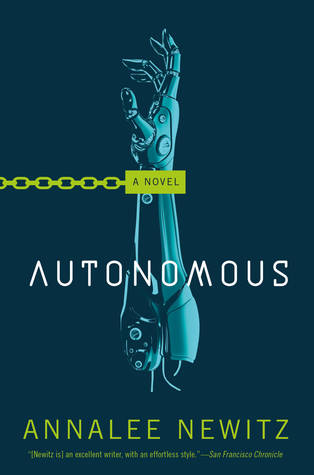
Book review: Autonomous by Annalee Newitz

AutonomousAutonomous by Annalee Newitz

My rating: 3 of 5 stars

Future slavery gets around slavery laws by cleverly using a different word.

Jack reverse engineers pharmaceuticals so that poor people can afford life-saving drugs. She reverse engineered a new wonder work drug but finds out too late that a BigPharma company made it 100% addictive, and now people are dying. In this (dystopian) future, intellectual property and patents are protected by private armies with killer robots. One agent and his bot, Eliasz and Paladin, are hunting Jack down for her crimes as she is desperately trying to engineer a treatment for the addictive drug.

This book was difficult to review. As a novel, the writing, plotting, characters, and themes are all interesting and well done. On that basis, it is a solid 4-star book. But there was quite a bit about the premise and key plot devices/points that had me making squinty faces as my scepticism was triggered. And the more I think about those points and the premise, the more flaws I see with them.

For example, slavery is a theme discussed for humans and bots – giving rise to the title of the book. In the future companies and governments were so clever they were able to reintroduce* slavery by calling it “indentured”. This felt lazy and unrealistic. Especially since there was another part of this idea explored with franchising – parents paying to set their kids up with an education and ability to get a job – that extrapolates on the current situation for haves vs have-nots and draws upon the criticisms of capitalism. To my mind, the two ideas don’t sit together that well and meant the latter idea was wasted.

Others had some interesting things to say about the bot-human relationship. Suffice to say, it could have been done a bit better.

I suppose I was disappointed with this book. For a novel that was so well written and had clearly had a lot of thought put into it, Autonomous just couldn’t manage to drag itself away from lazy anti-corporate conspiracy ideas to the more interesting material it had on offer.

*It could be argued that slavery never stopped.

View all my reviews

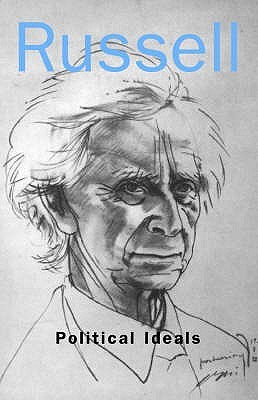
Book review: Political Ideals by Bertrand Russell

Political IdealsPolitical Ideals by Bertrand Russell

My rating: 5 of 5 stars

Reading old books reminds you that nothing has changed.

Political Ideals is an essay Bertrand Russell wrote during World War 1 – stay tuned for WW3 – that offers critiques of capitalism, socialism, nationalism, politics, education, and offers insights into how we should go about building a better society. He does this in less than 100 pages.

Russell’s essay is filled with interesting and insightful ideas. Even if you disagree with any of them, there is value in engaging with what he is saying. E.g.:

“Few men seem to realize how many of the evils from which we suffer are wholly unnecessary, and that they could be abolished by a united effort within a few years. If a majority in every civilized country so desired, we could, within twenty years, abolish all abject poverty, quite half the illness in the world, the whole economic slavery which binds down nine-tenths of our population; we could fill the world with beauty and joy, and secure the reign of universal peace. It is only because men are apathetic that this is not achieved, only because imagination is sluggish, and what always has been is regarded as what always must be. With good-will, generosity, intelligence, these things could be brought about.” Source.

This quote has been paraphrased, rephrased, and appropriated by many in the last century (although, I’m sure these thoughts weren’t original when he wrote them). It shows Russell’s reputation as a founder of modern analytic philosophy and as having made significant contributions to many subjects is well deserved. Few could so concisely state such a complex social idea.

Worth a read, even if you disagree with Russell on some or all points.

View all my reviews

Book review: Astrophyics for people in a hurry by Neil deGrasse Tyson

Astrophysics for People in a HurryAstrophysics for People in a Hurry by Neil deGrasse Tyson

My rating: 4 of 5 stars

Oppose the gravitational force with your phalanges if you value science.

Science communicator Neil deGrasse Tyson understands that most people don’t have time to read physics books – plus they are hard work to read. So he decided to package together some of his essays into a book that covers the major aspects of astrophysics in a way anyone could enjoy and learn from.

While reading this book I had a revelation. Could there be an explanation other than Dark Matter and Dark Energy for the gravity and expansion of the universe?

I’m going to propose Pratchett’s Theorem as an alternate hypothesis for the expansion of the universe and gravity. Since the universe is flat and there are unexplained gravity and expansion, I postulate that this flat universe is riding on the backs of four large elephants. This explains the gravity pulling everything down. These elephants are riding on the back of a large turtle who swims through the multiverse. The elephants are slowly moving away from one another – which explains the expansion – and walking down the curved shell of the turtle such that each step is larger than the last – which explains the increased speed of expansion.

This, of course, raises the questions of whether it was the elephants who were the prime movers behind the “Big Bang”, whether the elephants will keep walking down the shell until they fall off tearing the universe to shreds, or whether the elephants will eventually decide to walk back toward one another for a reunion? Do they also walk directly away from one another, or do they walk around the shell, such that the universe rotates? Given everything within the universe rotates, it would only make sense that this rotation is caused by the elephant’s motion.

Anyway, NDGT’s book was a good read. It doesn’t dumb things down, nor use too many lay terms, which was refreshing. But as a scientist, albeit in a completely different field, it felt like the book was aimed at a more general audience, particularly those who aren’t familiar with many of the topics discussed. Which made it only a good but not a great read for me.

View all my reviews

Book review: Equal Rites by Terry Pratchett

Equal Rites (Discworld, #3; Witches, #1)Equal Rites by Terry Pratchett

My rating: 5 of 5 stars

Witches ride on brooms and wizards hold a staff in their hands. Nothing phallic about that.

Eskarina “Esk” Smith was born the eighth son of the eighth son and was bequeathed Drum Billet’s wizarding abilities and staff. Minor mixup. Esk is a girl. But too late for any take-backs, Esk’s magical talents have her training with Granny Weatherwax in witching. This isn’t enough for Esk as she is meant to be a wizard, she has the staff and everything, so she journeys to the Unseen University for training.

I’ve come at the Witches instalments of Discworld backward. The first one I read was The Shepherd’s Crown, Pratchett’s last novel before his death, in which Granny Weatherwax dies.* So to come to the first was overdue. I was somewhat disappointed with The Shepherd’s Crown – probably because it was unfinished in terms of Pratchett’s usual revision process – but not so with Equal Rites. This was highly enjoyable and tackled some interesting tropes of fantasy, as well as plotting the rise of grrl power on the Disc.

*That isn’t a spoiler, it’s pretty much the first chapter.**
**Not that Sir Terry was a big fan of using chapters, but you take my meaning.

View all my reviews

Book Review: Capital, Vol 1 by Karl Marx

Capital, Vol 1: A Critical Analysis of Capitalist ProductionCapital, Vol 1: A Critical Analysis of Capitalist Production by Karl Marx

My rating: 5 of 5 stars

If you get to the point does that make you bourgeoisie?

Karl Marx’s classic text is a historical, economic, sociological, and philosophical work. Marx tries to show the ways in which workers are exploited by the capitalist mode of production and argues that the capitalist system is ultimately unstable because it cannot endlessly sustain profits. And this takes 1,100 pages to say.

Since it has become popular to call anyone left of a third-generation venture capitalist with their cash in the Caymans and their Nazi gold in a Swiss vault a communist, I thought it was time to read some Marx. That way when people call someone a Post-Modern Marxist Communist I’ll have some idea of how little they know what any of those words mean.

I was actually surprised by this book since it was completely different from what I had expected. The sort of book I had been expecting was a philosophical or ethics text, instead, this is much more a history and economics book. The historical notes documented in Das Kapital are worth reading alone. They act as a reminder of what working/slavery conditions were deemed acceptable, and how similar the arguments from then are to the defences of sweatshops in poorer nations today.

But this book takes the long way round to make its points. If it had instead made its arguments and then offered up one example, then some appendixes, I’d have “enjoyed” this more. Too often it gets bogged down in labouring* the point rather than documenting history or encouraging you to join a union. Worth reading, but be prepared for a lot of waffle.

*Ahhhh, puns.

View all my reviews

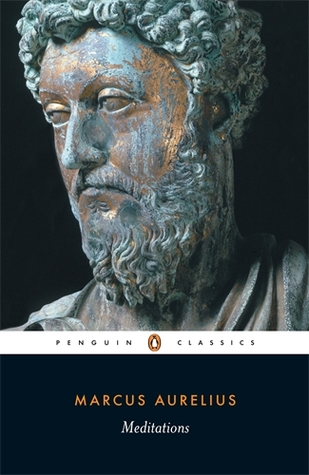
Book Review: Meditations by Marcus Aurelius

MeditationsMeditations by Marcus Aurelius

My rating: 5 of 5 stars

“To read carefully, and not to be satisfied with a superficial understanding of a book.”

[Insert superficial overview of Meditations here]

Meditations were something Marcus (we’re on a first name basis here) wrote for his own moral improvement, to remind himself of and cement the Stoic doctrines he wanted to live by. Things like the world is governed by Providence (which certainly lets him off the hook for all those people fed to the lions during his reign); that happiness lies in virtue and your will to follow it; and that you should not be angry at others. Journalling of this sort was something Epictetus advised, which has resulted in a collection of notes, reminders, aphorisms, and slogans for every occasion.

There is a lot to like about Meditations. It felt like a self-help book but written with a more philosophical bent and less of the “you too can achieve greatness (and give me lots of money) if you follow my twelve rules for life”. It isn’t without problems, such as those outlined in Russell’s History of Western Philosophy. I also found Marcus’ musings on the Deliberative Content Problem to swing between ideas and thus come off as confused.

This is my second major reading of Stoic philosophy. I’m coming to the conclusion that Stoicism does seem to have a lot to offer.

View all my reviews