Book to Movie: Winter Solider – What’s the Difference?

This month’s CineFix edition of What’s the Difference cover the Ed Brubaker comic that inspired the Captain America: Winter Soldier movie.

Unlike Civil War, I managed to read the Ed Brubaker series of comics before watching the Winter Solider movie. Obviously there are a lot of differences, especially in terms of the expanded universe and “realism” of the movie world. The comics have decades of plots, sideplots, overlapping arcs from other parts of the Marvel Universe, characters, and general junk that is impossible to pack into a 2 hour movie. I actually find the way Marvel and DC have their stables of comics overlap and exist in the same universe to be annoying. The movies are starting to head that way as well, what with Age of Ultron essentially spending a third of its run time building the associated Thor, Ironman, Captain America, etc, movies.

One of the differences not really covered in the CineFix video is the other Captain Americas. That’s right, several other Caps wore the…. cap. Anyway, while Steve Rogers was chilling (Bucky too, but in a separate location) America didn’t want to lose its figurehead so they had some other people fill the role. From memory, at least one of them was integral to the plot, despite being no longer all there. This part of the plot also fed into the series that came immediately after Winter Soldier, with Bucky donning the costume and hefting the shield. For anyone about to complain about spoilers with that last sentence, try not to think about what could have happened to Steve Rogers to require Bucky to become Captain America.

In my original review for the Winter Soldier movie I commented that the writers had managed to capture Brubaker’s cold war spy story feel. They did this with very little similarities between the comic and movie. In some ways I think the movie is better, certainly I like the Steve Rogers of the film more, and they hadn’t quite gone overboard with the expanded universe stuff at that time, but in others the usual restrictions of the shorter format lessens the possible storytelling (Crossbones, the other Captain Americas, the relationships). Two very different stories were told but I still think this was a good adaptation.
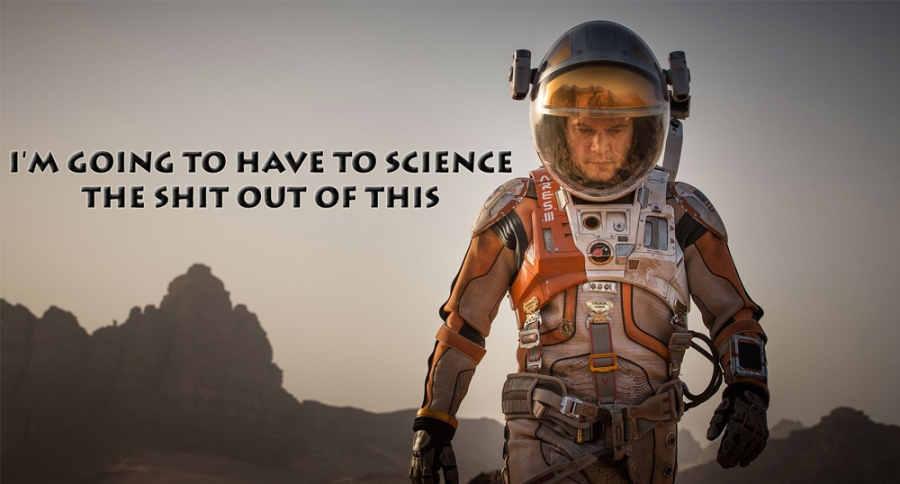
Book to Movie: The Martian – What’s The Difference?

This instalment of CineFix’s What’s The Difference? covers one of my favourite books: The Martian by Andy Weir.

As you can see from the breakdown, the film was a very faithful adaptation of the book. I thought the casting was spot on – can you believe some people didn’t think Matt Damon could get Watney’s tone right? – and they didn’t dumb anything down. Probably why I enjoyed both the book and the movie so much.

For me the main difference I noticed was the curtailing of some struggles in order to serve the larger plot and not have a 3 hour run-time. The continuous stream of problems that Watney had to McGyver his way out of really brought the “science the shit out of this” aspect to the fore. Most notable was the rover crash after the sandstorm. But for the movie you can see why they would cut that scene: it would have taken a fair bit of screen time, it would have detracted/distracted from the build-up to the big finish, and they’d probably have been tempted to go all Michael Bay with the crash. Car crashes have to explode: movie rule.

So if you haven’t read the book or watched the movie, do both ASAP.

Science-the-shit-out-of-this

Book vs Movie: The Princess Bride – What’s the difference?

A much loved book and a classic movie: this month CineFix tackle the differences between the tree and silver halide versions of The Princess Bride by William Goldman.

Many years ago my sister was kind enough to force me to read The Princess Bride. Of course I was a fan of the movie; despite never doing the fancy dress thing for parties I have worn an Inigo Montoya name badge, so yes, I was a fan. But for some reason at the time I had this strange idea that if I had seen the movie then there wasn’t much point in reading the book. I mean, how different could they be?*

Long story short, The Princess Bride is one of my favourite novels, ranking up there with Good Omens and Hitchhikers Guide to the Galaxy. The What’s the Difference? video only makes passing mention to the style of the novel, which is as much about making an abridged version of the original S. Morgenstern novel, as it is about the adventures of Westley and Princess Buttercup. Having to edit out the endless chapters describing trees, the difficult negotiations required to secure the rights to do the abridgement over Florin native Stephen King (who ends up securing the rights to the sequel, Buttercup’s Baby), and generally only including the good parts, are key to the novel. Just about all of this was dropped from the movie, because meta-humour would be too confusing to audiences (trust me, people still don’t understand Inception for some reason). So the novel is quite different from the movie. Read it.

On the subject of the above video, it is interesting in this instance that William Goldman wrote the book and the screenplay. So we are able to see how Goldman has zeroed in on the important parts of the narrative to simplify the movie. Because movie audiences aren’t like us sophisticated book readers. In the anniversary edition of the book, Goldman notes how pleased he was with the movie, particularly the casting that brought the book to life. No mention was made of the budget blow-outs due to Andre The Giant’s alcohol consumption.

*Hence the reason I share this fantastic video series each month: it is my penance for such poor thinking.

Book vs Movie: Casino Royale – What’s the Difference?

In the latest instalment of the What’s the Difference? series, the CineFix team have broken down the Ian Flemming novel and Daniel Craig movie, Casino Royale.

Unfortunately Casino Royale is not one of Bond novels I’ve read. The change between generations is very marked when reading a Bond novel, the little changes like letters and radio to texts and mobile phones (cells to US people) are expected. But the social change that has occurred is the biggest noticeable difference, mostly with the role of women and minorities in society. Felix Leiter being African-American in the movie? Vesper Lynd being the intellectual equal of Bond? These are not things that Flemming would have imagined for his world.

I like Daniel Craig’s Bond and think that Casino Royale was a shot in the arm for the long running series. The gritty take on things was needed after the cheese that was Die Another Day (etc). And you can’t help but love any film that has Eva Green in it. With rumours flying that Craig’s Bond will be no more, it will be interesting to see what the next take on Bond will bring us. Will the producers push back to a suave Connery take on Bond, or a tongue-in-cheek Moore version, or an in-between like Brosnan, or something really lame and poorly written like Dalton and Lazenby’s outings?

Whatever happens with the Bond series it is clear that the social update to the novels will continue.

Book vs Movie: V For Vendetta – What’s the difference?

In this outing for the CineFix team they have covered the classic graphic novel and movie adaptation of Alan Moore’s V For Vendetta.

So, truth be told, I’m not a huge fan of the Alan Moore graphic novel V For Vendetta – yeah, yeah, I know: sacrilege. I actually gave up on it about a third of the way through, as such, it is hard for me to compare the book to the movie. Actually, that’s not true, I can compare how entertained I was, since I enjoyed the movie and couldn’t be bothered finishing the book. That should say a lot.

Moore distancing himself from all adaptations of his work is odd, but completely understandable given it is based upon having watched* The League of Extraordinary Gentlemen movie. That was the film that caused Sean Connery to quit acting, which gives you some idea of just how bad that movie was. But you are still left with his admonishments of adaptations, like V For Vendetta or The Watchmen, that were good films (IMHO) and captured the essence of the source material. Like most of the book to movie adaptations discussed in the What’s the Difference? series, when you see the breakdowns of differences you can completely understand why the changes were made. The example in this video was of Evie’s character arc to help the audience empathise with both her and V in a shorter format. The book and movie occupy different spaces, have different constraints, and are often made at different times for society.

Which is why I find Moore’s stance – or is that complaints – on adaptations of his work to be a bit precious. I mean, he was, and I quote, “getting money for old rope” as well as a much wider exposure as an artist. He has managed to influence popular culture (The Killing Joke was the primary reference material for Heath Ledger’s portrayal of The Joker). Not much to complain about. Unless the movie studios paid him in beard trimmers.

*Being a little flippant here as he was also sued over accusations that someone else’s script was plagiarised.

Update: I rewatched V for Vendetta recently and started reading the comic again. I haven’t finished the comic, but after watching the video below, I think the sentiments expressed by Moore and Wisecrack are valid. I’m not sure if I’m just 5 years older and wiser, or if I’m just impressionable and a sound argument will sway my views.

Book vs Movie: Psycho – What’s the difference

Another great instalment of CineFix’s What’s the Difference? series. This time it is the famous Hitchcock film Psycho and the novel it was based upon.

Some interesting differences in the storytelling, aren’t there! The most interesting was the way Hitchcock sets up his viewers to empathise with the victim, Mary/Marion, as much as possible, whilst also moving away from the cliché of Norman being a chubby-loser. My highlight from the video is the revelation that the book, and obviously the subsequent movie, were based upon a real murderer. I suppose skin is pretty durable stuff, it would be a shame to just throw it away.

Book vs Movie: Alice in Wonderland – What’s the difference?

Another great instalment from the CineFix team. And don’t worry, they didn’t do the Depp/Burton movie comparison. Dodged a bullet there.


I can’t claim to have read all of Alice in Wonderland. I can’t even claim to be much of a fan of the movie; Disney animation or otherwise. My main reason for not liking either is that this is a classic example, and possibly the progenitor, of the “and then she woke up” ending. My wife dislikes the book because it lacks a point and is boring and waffly. Since it is a “classic children’s book” it could explain why kids used to hate reading: thank FSM for Harry Potter!

Book vs Movie: X-Men Days of Future Past – What’s the difference

The latest instalment of Cinefix’s What’s the Difference is out. This time they tackle the ridiculously named X-Men: Days of Future Past.

So this is one book in the book vs movie series that I haven’t read. Although, in my defence, the Marvel Comic Universe is such an overlapping, rebooted, reshaped, alternate-time-lined, mish-mash of ridiculous proportions that it probably wouldn’t matter if I had. Watching the breakdown it becomes obvious that the screenwriters did a good job of streamlining the plot and picking characters who would work for the movie adaptation. Less clear is why the movie got so lazy with the “and then he woke up” ending.

Book vs Movie: 2001 A Space Odyssey – What’s the difference

The Cinefix team are back once again with their series on movies based on books. This instalment is in two parts and is slightly different. 2001: A Space Odyssey wasn’t so much a movie based upon a book as much as it was a collaboration between Kubrick and Clarke.

I think the summary in the second video (from about 9:40 onward) encapsulates the main differences between the book and the movie nicely. Essentially Kubrick dispensed with the pedantic explanations and descriptions in favour of stunning visuals and esoteric story telling. Whereas Clarke made that esoteric story telling understandable with all the motivations and insights. I.e. to understand the film read the book, to experience the book watch the film.

Book vs Movie: Watchmen – What’s the difference

Another great breakdown of the differences between the book and the movie from Cinefix. This time it is Alan Moore’s Watchmen.

If I’m honest I’d have to say I prefer the movie over the book in this instance. I liked both, but I thought the changes they made for the movie made for better spectacle and entertainment. Obviously that wasn’t Moore’s original intention, so it is unsurprising that fans were annoyed with these changes. I felt that Snyder’s adaptation remained relatively faithful to the source material whilst also creating a film that cinema goers would enjoy. This is the hard path to tread in any adaptation: making sure the film works but remains true to the source.

Of course Snyder managed to make a film that people didn’t watch in the cinema and that fans of the book complained about. Guess there is just no pleasing some people.

Book vs Movie: Fight Club – What’s the Difference?

Another great installment from the Cinefix team.


A point I’d make about the final chapter of the novel is that I thought the implication was that the narrator was so drugged up in the mental hospital that he wasn’t sure what was going on. And I also thought that the people with the tell-tale bruising were the Project Mayhem members implying they were waiting for him to escape so they could try again.

Also one plot point I really liked in the book was the bit about the type of explosive used, the Narrator preferring one, Tyler the other. This explained why the explosives failed and also implied that the Narrator had been able to sabotage the plan.

Update: Wisecrack discussed the differences as well. Worth a watch.

Book vs Movie: Rambo – What’s the Difference?

Did you know the Rambo franchise started with a novel about a man bringing the war back home with him? Let’s watch What’s the Difference and Lost in Adaptation.

Video: Rambo – What’s the Difference? David Morell told me he liked this video.
Video: Rambo – Lost in Adaptation

David Morell’s career was really kicked off with Stallone wanting to make his first book into a movie. It wasn’t just that the franchise allowed him to become a full-time author, it was that he’d been rather savvy in retaining a few of the rights to the character and spinoffs.

Essentially, despite the fact that very little of his character remains in the sequels, Morell wrote the novelisations of the films, keeping his piece of the franchise $$. He has said that those sorts of IP negotiations can make a huge difference to a writer’s career.

Having read several of Morell’s books, I think most thriller fans would enjoy his work. And if you like the entire third act of a film being a buff guy shooting a large calibre machine gun at people, you’ll probably enjoy the Rambo films.