Book vs movie: Pet Cemetary – What’s the Difference?

maxresdefault-2

It was inevitable that someone in Hollywood would try to reanimate the corpse of yet another classic film. So with the upcoming release of the remake of Pet Cemetary, what better time for CineFix to discuss the original book and movie in What’s the Difference?

Pet Cemetary is one of the many books lingering on my shelf in the TBR pile. While I have decided that this year will involve a concerted effort to make a dent in said pile*, it is unlikely I’ll get to read this novel anytime soon. If I’m completely honest, I want to read The Stand first.

What about the movie, I hear you ask. Back when I was a young lad – walking the obligatory 10 miles (whatever a mile is in real measurements) to school through 10 feet of snow (why would there be feet in snow?) after working 10 hours at the coal mine – Stephen King novels and movies were all the rage. Whether it was Needful Things, Carrie, Misery, Lawnmower Man, IT, or Children of the Corn, there always seemed to be someone bringing a Stephen King VHS** to watch. And after my hard lesson learnt with IT, I tried to avoid the obviously scary films – hence I have seen Lawnmower Man and most of Needful Things, but not Children of the Corn.

At this point, I probably sound like a wimp. It is odd that I generally don’t find horror novels that bad, and even movies with horror elements are fine. But movies whose goal is to creep you out or gross you out (think Saw franchise or Hostel) just aren’t for me, particularly the latter. It’s a little hard to be entertained by that sort of thing.

Yes, yes, more excuses as to why I haven’t read or watched something. Don’t worry, plenty of horror in my TBR pile. Stay tuned.

*I’ve managed to read one from the pile and added two more to it this month. That counts as progress, right?

**VHS, that’s right. I am truly that old.
Book vs Movie: Hellboy – What’s the Difference?

maxresdefault

This month’s instalment of What’s the difference? from CineFix looks at Mike Mignola’s graphic novel and Guillermo Del Toro’s Hellboy?

In the interest of full disclosure, I’m not a fan of Hellboy: movie or comic. Yes, I know, how dare you not love Del Toro’s amazing artistic vision! I’ve watched both Hellboy movies multiple times and have not loved them (and despite liking the Blade trilogy, Blade 2 isn’t my favourite – but Pan’s Labyrinth was fantastic). The comics I probably didn’t give them a fair chance, as I tried reading one omnibus after not enjoying the first film.

Anyway, the point I wanted to highlight from the video was something I think too many adaptations fail to do. When you are talking about a series of comics or books, there is often some prevailing themes, motifs, and imagery to them that may be less noticeable in any one edition, but taken as a whole it is important.

Because movies are often only drawing on one book at a time, or drawing on one run (or story arc) of a comic, important aspects may be lost. An example would be the Tim Burton or the Adam West takes on Batman versus the Christopher Nolan version. The latter drew upon more of the Batman comics than the earlier adaptations (not that either of those adaptations was bad*).

So while this doesn’t necessarily result in a direct adaptation, it does result in an adaptation that is faithful to the source material in the elements that matter.

*I’m pretending that the Joel Schumacher adaptations don’t exist. Akiva Goldsman is probably more to blame, given he has a long track record of making everything he is attached to that bit worse.

Book to Movie: Mary Poppins – What’s the Difference?

maxresdefault-1

This month’s What’s the Difference? from Cinefix looks at one of the movies that you probably only realised was based on a book when they made a film pointing that fact out: Mary Poppins.

Having not read the books, I don’t have much to say about this month’s What’s the Difference? I would like to segue into a topic that the recent Saving Mr Banks raised. I think there are some interesting points to be made about the differences between mediums when it comes to how and what is remembered.

Truly great books will generally be read by fewer people than the number who will watch a middling film adaptation. Make a great film from a great book and you will still reach more people with the film. I’ve previously mentioned how as many people saw the final Harry Potter movie as there were sales of all of the Harry Potter series of novels. So even if we just go on audience size alone, it is fair to say that a movie adaptation will shape people’s memory of an artwork.*

Of course, it is worth noting that the movie Saving Mr Banks is somewhat revisionist. Tad important to know this as large media companies dominate the landscape of society. I mean, next thing you know Americans will use movies to try and tell us they turned the war by capturing an Enigma machine

This video essay by Lindsay Ellis talks about the Revisionist World of Disney:

*Further to this point is should this influence the author’s decision to allow a movie/TV adaptation knowing that their writing will take second place to the more popular medium?

Book vs Movie: Starship Troopers – What’s the Difference?

maxresdefault

This month’s What’s the Difference? from Cinefix looks at one of the more blatantly different book adaptations: Verhoeven vs Heinlein’s Starship Troopers.

The first time I watched Starship Troopers all I saw was a cheesy B-grade action movie. This was also what many movie reviewers thought at the time. Many years later I finally read the book and it clicked.

Verhoeven’s film only made sense to me after I’d read the book as it is as much a critique of the material as it is an adaptation.

“I stopped after two chapters because it was so boring,” says Verhoeven of his attempts to read Heinlein’s opus. “It is really quite a bad book. I asked Ed Neumeier to tell me the story because I just couldn’t read the thing. It’s a very right-wing book. And with the movie we tried, and I think at least partially succeeded, in commenting on that at the same time. It would be eat your cake and have it. All the way through we were fighting with the fascism, the ultra-militarism. All the way through I wanted the audience to be asking, ‘Are these people crazy?’ Source

The cheesy propaganda segments riff on the heavy-handed philosophical lecturing Heinlein does. The proud militarism is given consequence by utilising Heinlein’s own references to disabled veterans and by showing horrible training injuries and battlefield scenes. The fascist elements are played up for farce in the uniforms and sequences mirroring actual Nazi propaganda films.

Michael Ironside asked, “Why are you doing a right-wing fascist movie?”
Verhoeven replied, “If I tell the world that a right-wing, fascist way of doing things doesn’t work, no one will listen to me. So I’m going to make a perfect fascist world: everyone is beautiful, everything is shiny, everything has big guns and fancy ships, but it’s only good for killing fucking Bugs!” Source

Now, I did actually enjoy the book. It is very interesting and many of the ideas were challengingly different. The portrayal of future warfare was, at the time, as imaginative as I’d come across. So Verhoeven’s reaction to satirise the book – one that Heinlein dashed out as an angry response to the US stopping nuclear tests – was probably overwrought by his childhood in the Nazi-occupied Netherlands. But if the movie adaptation had been faithful we’d probably have seen the worst elements of Heinlein’s ideas paraded around like something produced by the Ministry of Enlightenment.

Well, either that or a schlocky B-grade action movie about the military killing alien bugs.

Update: Here’s another take on the movie that, whilst missing Verhoeven’s critique, shows how much imagery and rhetoric is utilised. Although, it makes a good point that Verhoeven may have missed the mark a little in his critique.

Book vs Movie: Dracula – What’s the Difference?

maxresdefault1

Since the annual American lolly festival is almost upon us, Cinefix is covering one of the classics. Bram Stoker’s Dracula and Francis Coppola’s 1992 Dracula.

Time for some straight talk. I don’t know how you discuss this particular adaptation without mentioning just how bad Keanu Reeves is in this film. Embarrassingly bad.

I actually tried to rewatch Dracula a couple of years ago and just couldn’t bring myself to sit through it all. Despite it being a bit of a who’s who of actors in the cast – and people like Tom Waits – it all feels so camp and silly. Even when I first saw it in high school, I remember Dracula being only average – with possibly the best visual explanation of the link between Dracula and Vlad the Impaler ever.

It is harder for me to talk about the book as I read it so long ago. And, let’s be honest here, I’ve since read way too many Anne Rice novels to not get the details confused. I read Dracula and Frankenstein at roughly the same time; because gothic horror novels are what pre-teen kids should be reading. Neither stood out for me as novels, but it is amazing how influential they have both been to genre fiction.

I wonder if there will be any modern equivalent. A novel that establishes an entire genre that is continuously reimagined, refined, and redefined such that we get analogues ranging from True Blood (coming out of the closet analogy) to Buffy (girl power).

Book vs Movie: Fear and Loathing in Las Vegas – What’s the Difference?

maxresdefault2

This month’s What’s the Difference? from Cinefix covers Fear and Loathing in Las Vegas.

This month I’m just sharing.

Yep, that means I’ve neither read the book nor watched the movie.

Feel superior in the comments.

20 years ago a new generation was introduced to the peak of Gonzo Journalism with Terry Gilliam’s adaptation of Hunter S. Thompson’s Fear and Loathing in Las Vegas. Really great filmmakers have tried and failed to bring the savage journey into the American Dream, so what makes Terry Gilliam’s version so successful? Time to get cracking and ask What’s the Difference?!

Book vs Movie: Ready Player One – What’s the Difference?

maxresdefault

This month’s What’s the Difference? from CineFix covers Ready Player One.

Normally I’d add a few comments here about what I thought about the book and/or the movie, particularly the adaptation. But Ready Player One falls into an odd realm for me. I’d initially had the book on my TBR pile but ended up removing it after a discussion at a writers’ group. The gist was that the book is a great example of the “you’re not a real geek” toxicity that pervades geek culture, exemplified by rating pop culture references.

Then when the movie trailers came out, it too looked like one long list of pop culture references that only true geeks would appreciate… By appreciate, I mean argue and post overanalysed articles and Youtube videos online for weeks after most people have moved on.

Hey look, here’s a video of all the pop culture references:

This is a roundabout way of saying I haven’t read the book nor watched the movie, nor do I feel particularly inspired to do either. Enjoy the video anyway.

Update – This covers Ready Player One from a writer’s perspective:

Further Update – This video expands on my point above about toxic geek culture with reference to GamerGate.

Book vs Movie: The Running Man – What’s The Difference?

maxresdefault

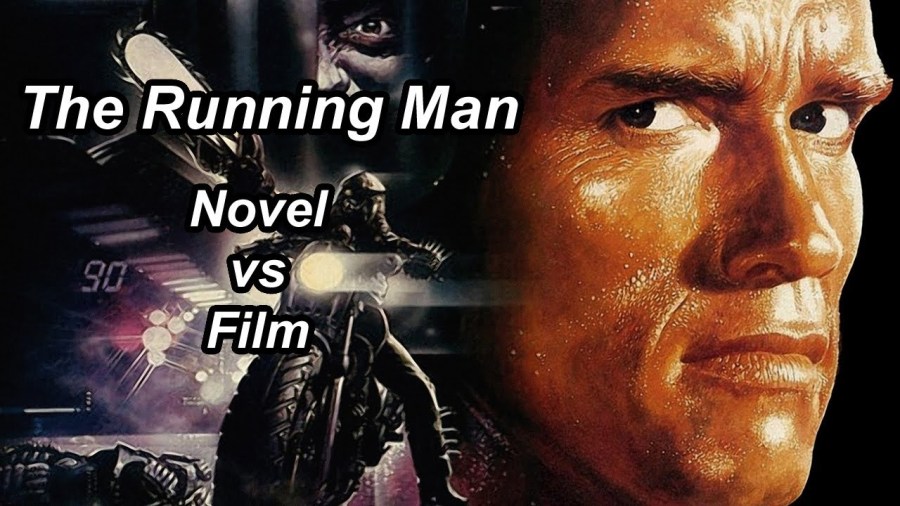
Given the impending authoritarian regimes and mega-media corporations forming, CineFix decided that this month’s What’s the Difference? would look at our near future. Reality TV will soon bring us The Running Man.

Back when I first saw Arnold Schwarzenegger in The Running Man the title sequence credited the source material as being written by Richard Bachman. One of the people with me, turned to us all with one of those know-it-all looks and said, “That’s really Stephen King.” So as we watched Arnie take down hulking professional killers with his trademark killer puns, we wondered if he was correct. Spoiler: he was.

Decades later I finally got around to reading and enjoying the novel. The movie and the novel were starkly different in so many ways. For starters, no half-starved, poverty stricken Running Man contestant is going to look like Arnie. But many of the themes are the same, if explored in differing ways.

This made The Running Man more than just a standard action film. By exploring the themes of totalitarianism, class subjugation, and media control while Arnie slices a guy in half with a chainsaw, we got a movie that was subversive and satirical. While not on the same level of social commentary as King’s novel, it does stand as an example of how you can do a loose adaptation of source material as an action movie but retain the exploration of themes.

And watch a guy with no pants get electrocuted when the fire sprinklers are set off. Way better than reading the description of Ben Richards’ entrails getting caught on plane seats.

Book vs Movie: Oldboy – What’s the Difference?

oldboy

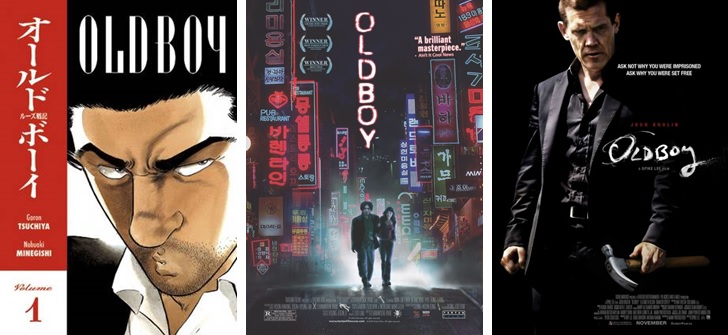
This month in CineFix’s series What’s the Difference? they cover Oldboy. Live octopus not included.

Not having read the Manga, I don’t really have much to add to the above video. The film is amazing. It redefined “off-the-wall” and managed to make it compelling watching.

Let’s not talk about the Spike Lee remake. Because it wasn’t very good. Although, because it is an American adaptation of a South Korean adaptation of a Japanese work, it can be interesting in an intercultural sense. This article is very interesting in that regard.

Book vs Movie: The Amityville Horror – What’s the Difference?

293101

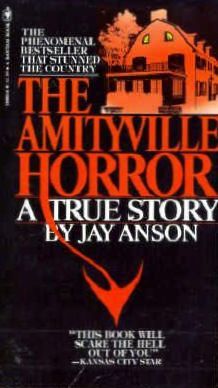
Because some people are obsessed about the official candy holiday based upon on former harvest festival, Halloween brings about the discussion of the horror genre. This month’s What’s the Difference? from CineFix covers the movie based upon a hoax, The Amityville Horror.

One great thing about horror novels is the ability to go wild with creepy ideas that will scare people. Blood suckers, flesh eaters, scary clowns in the closet, demonic possession, crazy inbreds, mild mannered fathers who go crazy and murder their family: all great ways to scare people and haunt their dreams.

But it is always hilarious to see the line “Based on a True Story” or similar at the start of a book or movie. Any time that has to be stated up front you can guarantee that the tale is pure fiction. It’s like how smart people don’t go around having to tell people they have a high IQ, or people who are successful don’t have to go around telling people how rich they are.

Needless to say, The Amityville Horror has long been known to be a hoax cooked up by the Lutzs and their lawyer, and then sensationalised in the “totally non-dramatised” book by Jay Anson.

To this day, the fact that The Amityville Horror story was an admitted hoax is still not widely known — as we often say, the truth never stands in the way of a good story. Though the story was made up by the Lutzes and further sensationalized by Anson, there were real victims of The Amityville Horror (the film, not the demons). In addition to the murdered DeFeo family, the subsequent occupants of the Amityville home have suffered a continual stream of harassment by curiosity seekers, horror fans, and gawkers who want to photograph and tour their infamous house. Then there are the people who, fooled by the films’ and book’s tagline, think they are partaking of works based on true events. (Source)

Book vs Movie: Blade Runner – What’s the Difference?

https3a2f2fblueprint-api-production-s3-amazonaws-com2fuploads2fvideo_uploaders2fdistribution_thumb2fimage2f819902f97f8b20c-fbe6-4286-ba92-722eb5dc6bd4

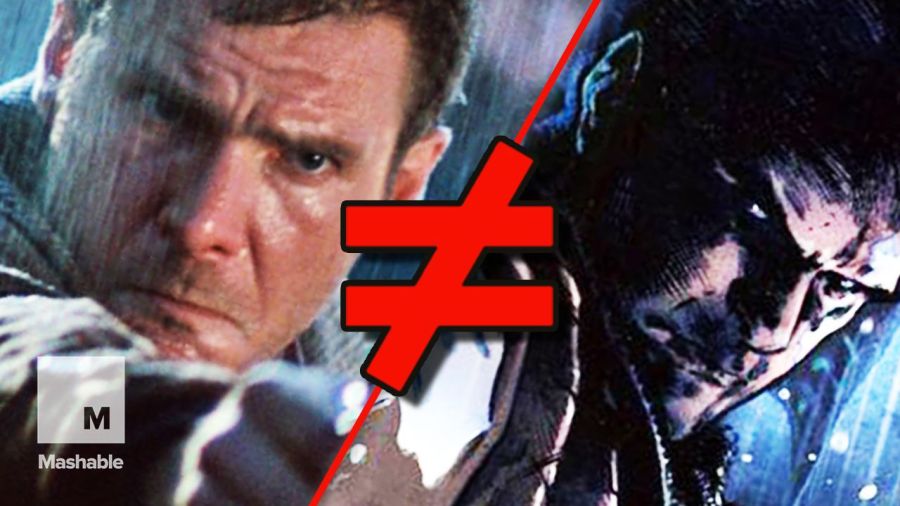
Since Blade Runner 2049 is coming out soon, CineFix have dedicated this month’s What’s the Difference? to breaking down Blade Runner and Do Androids Dream of Electric Sheep?

I can’t remember the first time I watched Blade Runner. I do know that it sucked. So that early experience was of a version of the movie that was about shooting androids rather than about empathising with them. I later watched the director’s cut and the Ridley Scott preferred version and concluded that this was a classic movie. I know, how prescient of me.

The novel, Do Androids Dream of Electric Sheep?, was something I read a long time ago. I have a very poor recollections of it, in fact the only bit I can remember was the section where Deckard hooks himself up to the Voight-Kampff machine. The idea of humans not really being able to empathise with others, that we are just playing a meaningless game of life, whilst other beings would love to be human, is an interesting idea I should probably revisit. I’m sure I’ll get a chance before 2049.

I also read the sequel, Blade Runner: Edge of Human, which was more a sequel to the movie than the book. Again it has been a long time since I read this. I have more memories of borrowing this from the library than I do of reading it. This sequel was a gritty crime noir that was all about hunting down androids, double crosses, and absolutely nothing deep and meaningful.

Blade Runner is a good example of the “inspired by” version of movie adaptation. Very little of the book remains in the film and you could be forgiven for thinking they were unrelated. Yet neither the movie nor the book suffer as a result. Kinda like the Bourne films. And like Bourne, you honestly wonder why they bothered licensing the property when the screenwriters took so little material from the book.

Book vs Movie: Stephen King’s It – What’s the Difference?

maxresdefault

With the release of the new movie adaptation of Stephen King’s It, unsurprisingly this month’s What’s the Difference? from CineFix is covering the book vs the 1990 mini-series.

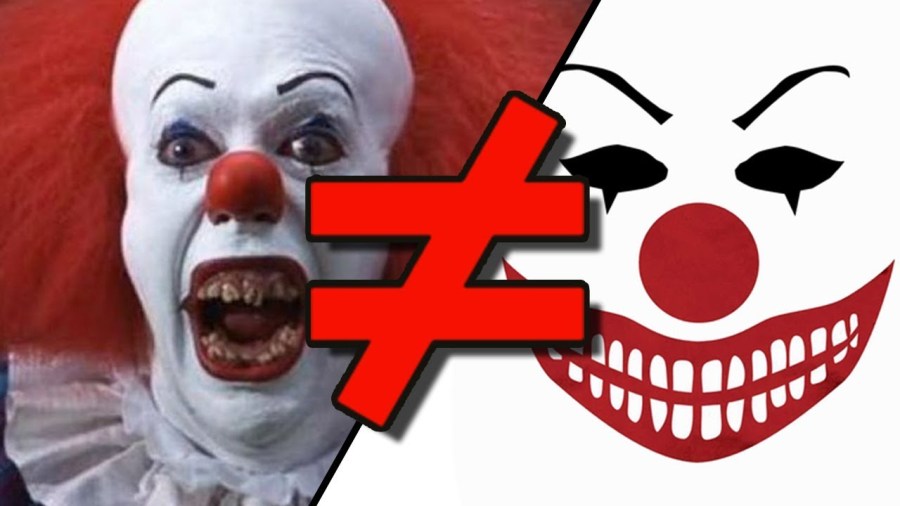
The It mini-series come out on video – yes VHS, yes I am old – when I was just at the start of my teenage years. The adolescent characters facing the genuinely scary Pennywise was too much for me. Tim Curry’s portrayal of the demonic clown left me sleepless for a week. It is the only movie to have ever had this much of an impact on me.

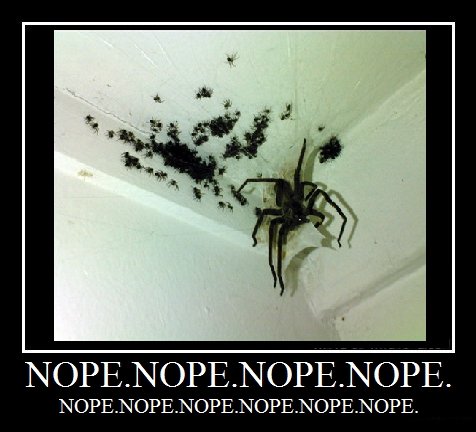
I mean Pennywise is already a scary clown. But he turns into a giant nope. In Australia we’re wary of tiny nopes. A giant nope is a ticket to nightmares.

nopenopenope_e5af97_2685388

So guess what book I refuse to read and which recent adaptation I won’t be watching.*

Although, apparently the new movie is genuinely good:

*Yeah, I know, I probably wouldn’t find it scary now. I probably will eventually read the novel and watch the new movie. Maybe.

Book vs Movie: Logan vs Old Man Logan – What’s the Difference?

maxresdefault

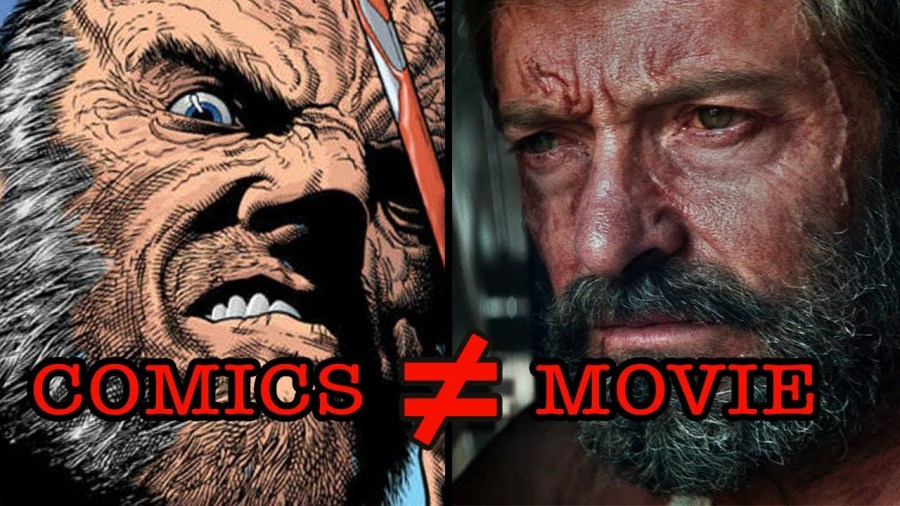
Nothing like a comic book movie to analyse for differences. Much less reading. This month’s What’s the Difference? from CineFix looks at Logan and Wolverine: Old Man Logan.

Logan was a rare treat for me this year. I’m not saying it was a fantastic film that blew me away, more that I actually got to see the movie in the cinema for once. The film itself was okay. Probably one of the better X-Men films, if not the best. The strengths of the film are in it taking on the aesthetics of the Western genre. It’s weaknesses are the not unobtrusive plot holes.

The comic that inspired the movie is vastly different. While also enjoyable, the source material was never going to be adapted to the big screen. Just the number of superhero name rights they’d have to license would have made it an expensive two-hour name dropping session. But it would have been cool to see Wolverine get eaten by The Hulk and then suffer a few digestive problems.

So rather than this being an adaptation, it is more akin to thematic borrowing. Or to put it another way, they looked at the cover and thought that grey and scarred look would be a good idea for Hugh’s final outing as Wolverine. The film has more in common with Shane and Unforgiven than it does with the comic, in a good way. And I suppose if that is the sort of adaptation the movie goes for, it is a better idea than some of the others covered in this series.

And now for a philosophical take on Logan:

Book vs Movie: The Sex of Game of Thrones – What’s the Difference

hqdefault

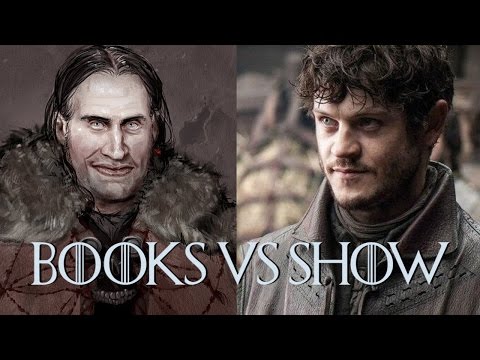
This month CineFix do the episode of What’s the Difference? you’ve been waiting for. No, not The Game of Thrones differences. The sex scene differences of The Game of Thrones.

People are often surprised when I tell them I’m not a fan of The Game of Thrones. But after abandoning both the first book and first season, there isn’t much that could get me interested in coming back.

Some people have tried to convince me that there is plenty of nudity and sex in the books and show. I like to point out that 4% of the internet is porn. When I’ve tried pointing out that most of the characters either die or aren’t protagonists you want to follow, the response is always Tyrion Lannister is awesome…. So that’s one character. I can see why many people love both the books and TV show, but just not for me. Unless it is in a highlights reel format.

Thug Notes summary and analysis of A Song of Fire and Ice.

Wisecracks comparison to The Sopranos and Interregnum

Book to Movie: All You Need Is Kill – What’s the Difference?

maxresdefault

This month Cinefix’s What’s the Difference? tackles the underappreciated Edge of Tomorrow, and it’s source material, All You Need Is Kill. I’d so watch a film called All You Need Is Kill, even if it did have Tom Cruise in it.

Unfortunately I haven’t read the Manga, which appears to have some differences between it and the novel. I read the light novel of All You Need Is Kill before watching the movie. Whilst there are major similarities between the two, they are quite different. Edge of Tomorrow flirts with comedy, while anything with the title All You Need Is Kill is clearly going to have a darker tone. A film starring Tom Cruise is always going to have a Hollywood glamour to it that a novel can dispense with.

The biggest difference between the two is the ending. I said in my review of the film that they should have stuck with the book’s ending. The way the movie ended was the equivalent of “it was all a dream”, whilst the book ending had consequence and substance. Admittedly, watching Tom Cruise kill Emily Blunt would have had audiences outraged (#TeamBlunt) but I’m sure they could have deus ex machina-d something better than what was served up.

Interestingly, Hiroshi is writing a Manga sequel and they’ve announced a movie sequel. I wonder how similar those two will be?

Book to Movie: Lord of the Rings The Return of the King – What’s the Difference?

Previously in What’s the Difference? the Cinefix team have covered The Fellowship of the Ring and The Two Towers. So it is time to wrap up their coverage of Lord of the Rings with The Return of the King… and enough partings to make you think you are a hairdresser.

A lot of epic stuff happens in the last third of the Lord of the Rings. A lot of tearful goodbyes happen as well. Honestly, when you are reading the paper version you reach the first ending and can’t figure out why there are so many pages left. By the third ending you start wondering if it will ever end.

As I’ve previously discussed for the other instalments, I think the movie is a fantastic adaptation. The minor changes, like Sam not putting on the ring, don’t make much difference – but that one didn’t make much sense either. The major differences are actually quite welcome. Except one.

First I’d like to comment on Sam not wearing the ring. I actually thought that whilst being a minor point, it was also very important to his character and the later act of carrying Frodo. Sam experienced just for a short moment the burden Frodo bore. It helped him redouble his efforts. And also made for a more believable way for Sam to infiltrate the Orc camp.

The major difference that I thought should have been in the film was the reclaiming of The Shire from Saruman. Obviously we’d already had too many endings and needed another one like an extra hole in our heads. But the heroes returned from war to a village ignorant/indifferent to the war and the sacrifice – can anyone say Vietnam vet myths? That isn’t really a happy ending. By having the heroes come home and expel the evil from their village as well, it would have shown their growth as warriors, but also tied their sacrifice to the people they had defended…. Plus, it would have been another action scene in a boring section of the film.

Now that Cinefix have finished with Lord of the Rings it is hard to know what they will cover next. Fingers crossed that is a 6 video coverage of the 3 movie adaptation of the 1 book story The Hobbit.

Edit: Since posting this article I’ve come across a video that explains why the ending of The Return of the King feels so long. The video below argues that it isn’t too long, but rather there is a gap between when the plot finishes and where the story does.

Of course, there is a 30 minute gap between the plot finishing and the story ending. The tension has been resolved so the film feels to drag on, entering Ending Fatigue. 30 minutes out of 558 is 10.7% of your run time devoted to that gap. That’s a lot of time. If they had managed to use less screen time for the story ending/s then we wouldn’t have noticed. Or if people were first watching the films in a marathon, such that 30 minutes out of +9 hours feels shorter, then they’d notice less.

Book to Movie: Lord of the Rings Two Towers – What’s the Difference?

Last month Cinefix covered The Fellowship of the Ring. This month they cover The Two Towers with What’s the Difference?

For me the middle third of the Lord of the Rings was both the most enjoyable and most annoying. As mentioned in the video, there are three tales running separately and rather than moving between these tales as they unfold in the narrative, we jump back to start again for each perspective. The book has some of the most memorable moments in this section – I may or may not have named one of my computers Entwash – but the order of events feels confused. Sorry, not confused, more drawn out, which for a novel that includes a hell of a lot of walking is something unneeded.

As with The Fellowship of the Ring, I think the movie is a fantastic adaptation. Seeing the battles brought to life was certainly a highlight. Nothing quite like watching Ents smash up Isengard rather than just reading about it.

Next month we’ll see the last instalment from Cinefix. Well, until the 6 video coverage of the 3 movie adaptation of the 1 book story The Hobbit.

Book to Movie: Lord of the Rings – What’s the Difference?

This month’s What’s the Difference? from CineFix covers the Fellowship of the Ring section of Lord of the Rings.

Let’s be honest here, the movies were better.

Whilst I enjoyed the Lord of the Rings in both movie and book form, to call the books waffly and slow-moving is an understatement. As pointed out in the CineFix video, huge passages of time elapse before anything actually happens in the book. The adventure Frodo sets out upon literally takes decades to start, such that you forget what the inciting call to adventure is.

The movie also establishes the stakes and opposing forces better. This not only sets the clock ticking but raises tension and consequence. Meanwhile the book has plenty of pipe smoking and walking. In fairness, Tom Bombadil is a highlight that is sorely missing from the movie – although I doubt that the lyricism of his presence would translate to the screen from the page.

In all, this is one of the few examples where the movie was superior. And shorter. Much shorter.

Book vs Movie: Shawshank Redemption – What’s the Difference?

Nothing quite like comparing one of the best movies of all time with its source material. This month CineFix do with What’s the Difference? on The Shawshank Redemption.

It’s odd that I have read Stephen King’s The Body but haven’t read Rita Hayworth and the Shawshank Redemption, given that they shared space in the same collection. But then I don’t often read novellas and short stories, as I prefer novels. I often think that shorter stories make for easier movie adaptations as the filmmakers don’t have to trim material the same way. Of course there are two problems with that thinking:

  1. It assumes that filmmakers actually read the source material (see here, here, here, here….)
  2. It assumes that filmmakers aren’t quite content to stretch source material out to fill as much cinema time as possible, no matter how bad an idea that is. *cough* The Hobbit *cough*

I recently saw a listicle that suggested Shawshank was one of the movies you should have in your collection. That is clearly wrong. If you can’t turn on the TV and catch it on rerun then your TV is broken or you have found Die Hard on instead. Why own it? Which brings me to possibly the only real gripe there is to be had with Shawshank, and that is its over-popularity. Exactly how many times can it play on TV before people start becoming annoyed? At what point does the audience start to groan at what was once a great movie? Can great art remain timeless if you beat everyone over the head with it? I fear the answers.