Can we grow enough crops to feed all people on Earth?

Vegetarianism is heavily promoted. But let’s say all people on Earth stop eating animal products. Can we grow enough crops so all people on the Earth are provided with enough healthy, nutritious food?

The question is of course very theoretical, but without discussing future possibilities to cultivate deserts and oceans, is there enough space to grow enough crops?

Answer:

This question is a very contentious one as it relies upon a lot of variables that are largely poorly understood.

The first part is arable land mass. Currently animal production is focussed on either high value grazing areas or low value extensive areas. Extensive grazing areas cannot be cropped. That area of production would have to be made up by increased crop production in other areas. 56% of Australia is extensive agriculture, worldwide it is ~5,000,000,000 hectares. That is a large amount of low production land to make up for.

Simply put, we can increase food availability (in terms of calories, protein and critical nutrients) by shifting crop production away from livestock feed, bioenergy crops and other non-food applications….. But even small changes in diet (for example, shifting grain-fed beef consumption to poultry, pork or pasture-fed beef) and bioenergy policy (for example, not using food crops as biofuel feedstocks) could enhance food availability and reduce the environmental impacts of agriculture.

Also, the areas quoted vary so much, because the figures are not fully understood. Cropping land is rarely cropped every year, instead rotated or rested at intervals, dependant upon crop type, soil type and amount of water/rainfall. Some countries just don’t have accurate records.

The second part is feed conversion. There are methods, such as mixed enterprise systems (crops plus grazing) and of course feedlotting that use grain feeding. The feedlotting is what people refer to the most, not understanding that cattle have a much higher energy conversion rate for vegetable matter than humans (being ruminants) and are not regularly fed for their entire lives. Thus grazing remains a large part of production.

Humans also preferentially eat higher protein foods like meat (see rise in meat demands from Asia with increasing wealth). This is because it is more calorically and nutritionally dense as a food, which is linked to satiety.

The third part is grain types. Most grains that are fed to animals are what is referred to in the grains industry as “feed grains”. These are generally lower quality grains that are unsuitable for human food production. Some of the grains used cannot be eaten by humans (e.g. lupins have high alkaloid levels that give both a bitter taste and become toxic when consumed regularly). Obviously the category of feed grain varies from “could be used” through to “cannot be used” for humans. This is once again a shorfall in the production required to replace meat in the diet. Remembering that feed crops are often grown where human crops cannot be grown, or not grown regularly (e.g. see wheat classes and agronomy).

Conclusion: These factors combine to create quite a different picture than what is normally presented in the “can we grow enough crops to replace meat eating” discussion. There would be less land available for cropping than is available for producing a mixed diet. There would be crops produced that would not be suitable for human consumption. We would also need slightly higher production or quality of crops to make up the energy conversion gap. This all makes for a large hole in the argument. There is nothing wrong with a vegetarian diet, nor an omnivorous one for that matter, but the environmental argument is not black and white and cannot be used as grounds for switching diets.

References:

Info on ME and DE for humans: http://fao.org/DOCREP/006/Y5022E/y5022e04.htm

This paper covers come of the conversion ratios for different animals that are grain fed (Cattle 7:1, Pigs 4:1, Chicken 2:1): http://ncbi.nlm.nih.gov/pmc/articles/PMC1240832

Another reference for the protein claims:http://sciencedirect.com/science/article/pii/S0301622699000196

Can Australian farmers take on the challenge of climate change?

By Tim Scanlon and John Cook

Farmers are some of the most innovative Australians – since 1970 they have lost 7.5% of arable land, but they’ve found ways to increase production by 220%. They’re also some of the most conservative, expressed in their reluctance to accept the science of climate change. So what will win as they face a changing climate: innovation or conservatism?

The agriculture industry has been developing for the past 10,000 years, but it could be argued that the biggest advances have come in the last 50 to 60 years. Since 1970, the world population has doubled, yet farming area has stayed the same.

Essentially farmers and the research that has supported them have been fantastic. A recent Conversation article highlighted this. But now agriculture faces, possibly, its biggest challenge: climate change.

Australian agriculture: the greatest story never told.

Research in Western Australia found that over half (52%) were uncertain whether human-induced climate change was occurring. This is in sharp contrast to the 97% of climate scientists who agree that humans are causing global warming. Only 31% thought climate change represented a major threat to the future of their farm businesses. Results also showed that only 33% of all respondents found climate change information easy to understand.

In Western Australia since July 2010, the Farm Business Resilience program has, in part, been seeking to educate farmers about climate change. Before the initial sessions, farmers were surveyed by Chris Evans for their perceptions, knowledge and attitudes to climate change. Only 33% reported that they agreed climate change was occurring and just 19% believed climate change was human induced. Surveys at the end of the course assessed perceptions, knowledge and attitudes again, now showing that 80% of the farmers understood the impact of climate change and variability change on their businesses.

This was a staggering improvement, considering the difficulties that communicators face when they’re trying to correct misinformation. Numerous social studies have found misinformation is notoriously difficult to dislodge and debunking myths can sometimes have the effect of reinforcing them (known as the backfire effect). The backfire effect is particularly potent when presenting climate science to conservative audiences. If myths are not replaced with an alternative, plausible explanation, their influence can persist like returning weeds.

Farmers live and breathe a changing climate. Anthony Georgeff

The key to the program’s success came down to knowing how to contextualise information. An example is that most scientists present science to the public but fail to make their knowledge understandable. The authors know how important it is to explain that information and doing so in a program like this allows clear explainations and discussion. The advantage of speaking with farmers about climate is that they live and breathe it. Million dollar business decisions often hinge on seasonal outlooks, so farmers usually have a good knowledge base to work with.

So why is it important to educate farmers about climate change? Because successful farming is really important. Need proof? Don’t eat for a week.

Even without climate change, farmers have a lot to deal with in the next few decades. There are pressures on productive land from:

There are also social and political pressures for chemical usage, access to technology and production practices. The current debates over access to GM technologies and use of pesticides are just two examples of social pressures on farming. There are also the ever-present economic pressures, as returns decline and costs increase – the cost price squeeze.

Under all of this pressure, agriculture has to supply increasing food demands, all while climate change is forcing down productivity. Given that most of the world’s agriculture is rainfed (73%), agriculture has a lot to lose with changes in rainfall resulting from climate change.

A recent article on The Conversation highlighted how little people outside of agriculture know about where and how their food is produced. It is important for everyone to understand how modern agriculture works, to see the science and technology that is involved. Just as farmers need to know about climate change and how it will impact them, the wider community has to understand what agriculture needs into the future.

Agriculture has a lot to lose from changes in rainfall. Jane Rawson

Without community support, farmers will not have access to the latest technologies, trade agreements will be jeopardised and production will leave our nation without needed food security. And without more knowledge about farming, the wider public won’t understand proposed strategies for agriculture under climate change.

So the agriculture industry needs to be involved in an informed discussion of its future. Having farmers and the wider public meet will also help non-agricultural people understand where their food comes from and how it is produced. The better this link between producer and consumer, the better the industry will be. Through programs like Farm Business Resilience we can improve agriculture. But it can’t stop there: if farming doesn’t come to grips with climate change, it will affect us all.

This article was co-authored by Tim Scanlon. Tim is a scientist who is primarily involved in the agriculture industry as an extension specialist. His current focus is in climate change extension to rural Australia as part of a national program being trialed in Western Australia.

John Cook does not work for, consult to, own shares in or receive funding from any company or organisation that would benefit from this article, and has no relevant affiliations.

The ConversationThis article was originally published at The Conversation.

Read the original article.

Do wind turbines kill many birds each year?

It has been claimed that due to their large size, and the velocity of their blades that wind turbines kill large numbers of birds that run into them at night, or in fog, and die.

http://www.wildlifeextra.com/go/news/wind-farm-birds112011.html#cr

Do wind turbines kill many birds each year?

Answer:

The simple answer is yes. The more complex answer is that the number of deaths is nothing in comparison to other man made structures and the risks from climate change.

There have been several studies done to find the environmental impact of wind farms on birds. Generally birds lack the ability to dodge humans and their quest for global supremacy. From the American Bird Conservancy there are a list of deaths related to sources as deaths per year in the US:

  • Feral and domestic cats – Hundreds of millions
  • Power lines – 130-174 million
  • Windows – 100 million to 1 billion (NB the high end seems too large to me)
  • Pesticides – 70 million
  • Cars – 60-80 million
  • Lighted communication towers – 40-50 million
  • Wind turbines – 10-40,000 (Table found here)

Obviously wind turbines aren’t as popular as cars, cats and windows, but with the expected increase in wind energy generation, the impacts will likely increase. The thing that has to be borne in mind is that the wind turbines are on an order of magnitude smaller impact than other bird killers. It also has to be remembered that the studies are also showing that newer wind power plants are having less impact on birds due to design upgrades, better placement and better ecological planning.

The real issue here is climate change. Coal power plants kill birds, in fact, they are threatening to wipe out entire species. According to a study reported in Scientific American, at least 950 entire species of terrestrial birds will be threatened with extinction as a result of climate change under several scenarios, even at the lower estimate of temperature gains, just counting species of non-sea birds in the higher latitudes; outside the tropics. Birds in the tropics will be impacted by habitat loss, which brings the total species wiped out to ~1800 (Jetz, Wilcove, and Dobson 2007).

The take home point is that we need clean energy sources to save bird species. Those that fly into turbines each year will be minimised with better designs and locations of turbines. In the meantime, worry about the cats and climate change.

Update: recent studies have shown that birds of prey are more prone to injury and death from wind turbines. Essentially, birds of prey spend a lot of time looking down for prey and not enough time looking where they are going. The usual bird collision rate is 0.08 birds per turbine per day on average (range 0.05–0.19), whilst the ‘smarter’ Eagles are colliding at a rate of 0.112 to 0.133. The study also suggests that bird size and speed of flight are important determinants of collision rates, hence why gliding and hovering prey birds are colliding more often. It is worth bearing in mind that both of these collision rates (that often result in death) still indicate an avoidance rate of 99%.

This avoidance rate is important to compare to the relative deaths per gigawatt-hour of the power sources to realise that wind power is still a very good option. This study estimates that wind farms and nuclear power stations are responsible each for between 0.3 and 0.4 fatalities per gigawatt-hour of electricity while fossil-fueled power stations are responsible for about 5.2 fatalities per gigawatt-hour. Thus, wind turbines could do with some investigation into how to make them safer for birds, but they are already a much better option than fossil fuels.

Update #2: an Australian researcher has recently done an interview on Ockham’s Razor (an ABC science show) to dispel some of the bird myths surrounding wind turbines.

Update #3: Teale commented via Facebook that the upscaling of power generation by wind hasn’t really changed the annual bird deaths per MW/hr despite the increase in the number of wind turbines and areas with wind farms. The bird deaths are ~33,000 pa, which is still in the range cited by the American Bird Conservationists from a few years ago, and the power generated has increased to ~4%. Again we come back to the point above about what other power generation and mining does to birds is a much larger impact. Remove them and the wind turbines can get a lot more prevalent and still not have the same impact. (NB: there may be some circular referencing going on between the sources in this article, so if this is the case,  please send through any revised data sources, especially on data changes with time).

http://www.fws.gov/birds/mortality-fact-sheet.pdf 

http://www.fws.gov/mountain-prairie/pressrel/11-64.html

http://en.wikipedia.org/wiki/Wind_power_in_the_United_States

New climate info graphic

I wrote a little satirical book review about a notorious science journal called Energy & Environment, which is the go-to place for people who think the Earth is flat and that climate change isn’t happening. I’ve written a few articles on the topic myself and I’m also rather active in promoting climate science and renewable energy (just read my Twitter and Facebook feeds). As a result the author of the Infographic below – Allison Lee – contacted me. So enjoy a few climate facts from the graphic below and share it to continue to raise awareness.


dc025d3f71b724ff30194602e1ae1f2b

Created by: Learnstuff.com

Reading stats for 2012

Hot off of the presses we have two new American reading surveys: Reading Habits in Different Communities and E-book Reading Jumps; Print Book Reading Declines

Actually, the phrase “hot off of the presses” is rather antiquated now. News stories that are breaking generally hit electronic mediums, or in some cases, such as celebrity gossip, they hit the TV and radio mediums. Interesting research or data is normally promoted virally via Twitter and the like. Should we have a new phrase like “just blogged” or “trending tweet” instead?

Back to the survey. While not all of us live in the USA, despite what some American congress-people might say, their trends in reading can be seen as indicative of what is happening elsewhere or is likely to happen elsewhere. The Pew Institute have done a pretty decent survey, it would be great if a few others were done for other countries.

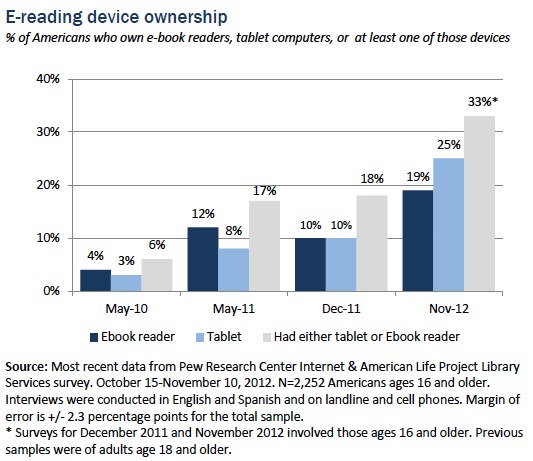
What I found interesting was the growth in e-books and e-readers. There are further breakdowns in the full reports about why the change is happening, but suffice to say, e-books have many advantages over paper, despite paper books still being the most popular reading format.

Ereading-device-ownership

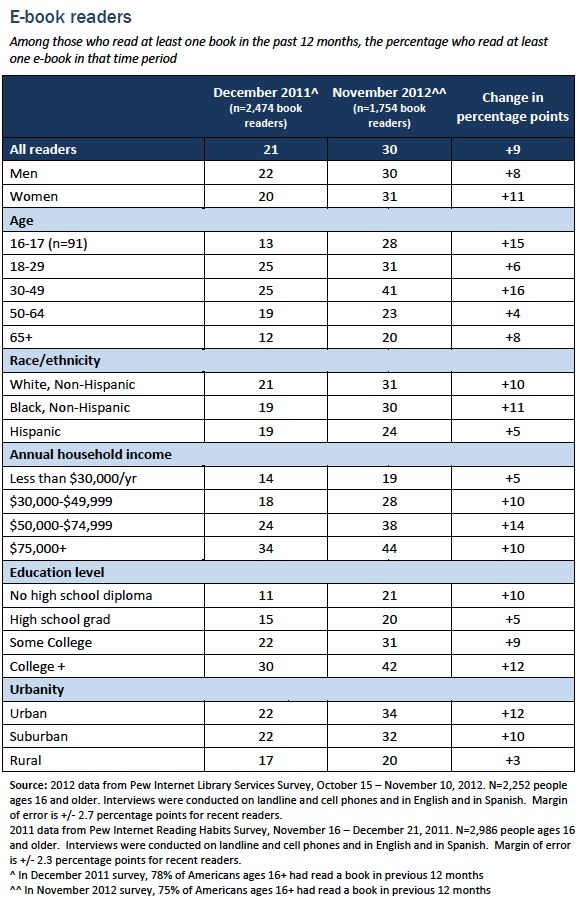
We can see a growth of 9% in people reading e-books during 2012, up from 21% to 30%. In terms of age demographics we can see that most age groups are taking up e-books, although the big growth is still in the middle age (30-49) group.

02-reading-and-ebooks

The next point of interest was who the readers were and how much they read. We can see that there is still a sizeable chunk of the community that don’t read and another chunk that pretend to read. I’d hazard a guess that light readers read non-fiction and the latest talked about bestseller only. Because they never really read good books it takes them ages to read one book and thus don’t read often.

22-reading-frequency

Among those ages 16 and older who had read a book in the past 12 months:

  • 8% read 1 book
  • 17% 2-3 books
  • 16% 4-5 books
  • 19% 6-10 books
  • 18% 11-20 books
  • 22% more than 20 books (this is my category)

Book-readers

And my final comment, women are still the readers. They make up a bigger proportion of book readers and they read more books. I have my own hypotheses as to why this is: boys are expected to like sport and reading is the opposite of sport; and reading doesn’t make you look as sexy as playing sport, so boys think you are less likely to get laid if you read. The big change I’d like to see, and this seems to be the case with e-readers and e-books, is for the average reader to read more books in a year, even if it is only so that people read the book before they make the movie of it.

Skill vs. Fame

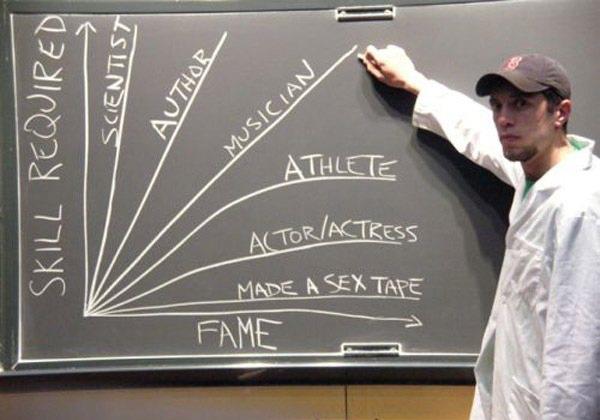
You can always trust a guy in a lab coat, they know stuff. This relationship of skill required versus fame really does show that I have really decided to limit my levels of fame. Scientists aren’t really cool enough to be famous, authors are similarly nerdy, just better with words. Maybe it is time for scientists and authors to start making sex tapes.

Science Wins!

I shall call this land… This Land.


Like a few other people today, I watched the live feed of the Curiosity Rover landing on Mars. NASA were suitably pleased, I was suitably impressed and we had another win for science. Humans are capable of just about anything, it is really nice when they try to be capable. The first photo (above) was followed shortly by the second photo (below). I’ll be interested to see what it all means over the coming weeks.

Intelligent life

You may all think that I’m primarily a crime thriller kinda guy, a lot of the book reviews I post here are for crime, crime thrillers and thrillers. My current work in progress is also a crime thriller. So I clearly fit into a very neat little box created out of stacks of James Patterson releases for the month. But I like a lot of genres, I think most readers do, in fact I’d go as far as to say that all readers read more than one genre unless they are still battling with Where’s Waldo.

Needless to say, despite my current work – and several others in the pipeline – being crime thrillers, I have several outlines for stories in other genres. One of my first big ideas – quite literally, as I have a 50 page synopsis and several instalments plotted – was for a sci-fi story. Think Jack Reacher crossed with Jet Li (Did you know Jet Li is a real life hero?) inspired by Heinlein. Anyway, the main character, Caleb, is the last of his kind and is trying to save humans from themselves, whether that be leading a civil war, or deposing dictators at the various human colonies. Of course there have to be aliens in space.

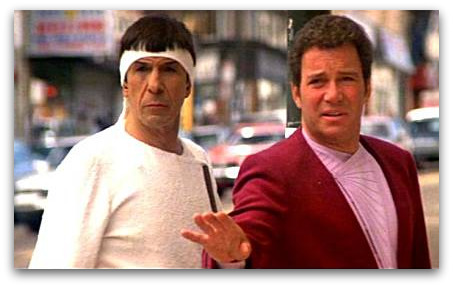
The problem I’ve always had with aliens in books and movies is that they are too much like us. On Star Trek they could even pass for us, as long as they wore a headband.
But it isn’t just that they look so much like us, why would aliens even think of us as awesome? Would humans be actually interesting to aliens? If aliens are watching our broadcasts you could just about guarantee that they don’t consider any of the life on this planet intelligent.

Alien: So you consider your race intelligent?
Human: Why yes.
Alien: Explain Glenn Beck.
Human: Okay, some of us aren’t as…
Alien: And you dig up stored gases to change your atmosphere so that it wrecks your climate.
Human: But we needed fuel for power. We’ve got solutions to that now.
Alien: One word: Politicians.
Human: Please don’t wipe out our planet!

So in my alien research for my novel/s I finally found inspiration. Who better to inspire me than Neil DeGrasse Tyson and Richard Dawkins?*

See the rest of the discussion between Dawkins and DeGrasse here.

*Yes Carl Sagan would be inspirational too, but he isn’t in the video.

Idiots are getting smarter

Ever had an argument on the internet and realise that the person you are arguing with is putting their gross ignorance on display for others to see? Have you then noticed that far too many people support their ignorance?

This post is dedicated to all the people out there who try to bring science and knowledge to the internet: may all your posts be peer-reviewed.

Compulsory viewing for thinkers

The first time I came across Brian Brushwood it was a video on how to escape from hand restraints and using those restraints to shim a door lock. I swear that I was educating myself so that I could write an escape scene in my novel. You can’t prove different!

Anyway, this video is part of a lecture that covers a lot of the scams that are going around and how to spot them. Once you’ve seen this video, check out the rest of the lecture here.

Why being smart sucks

I like to think of myself as smart. My friends and work collegues would refer to me as that annoying know-it-all. Being smart is not actually as good as you would think. For example, having knowledge and understanding puts you at a severe disadvantage in an argument, as you are trying to be correct, rather than win the argument with made up nonsense. And, lets face it, everyone hates a know-it-all.

So here are 5 reasons being smart sucks (Original article from Cracked.com with some edits by Tyson Adams. Original here).

5) You’re Probably a Night Owl – And That’s a Bad Thing

Recently, scientists discovered a quirky side effect to having a high IQ: You tend to stay up until later hours and get up later in the morning. That’s right – the more intelligent are also much more likely to be night owls. Which isn’t such a surprise when you consider that intelligent people are infamous for burning the midnight oil to cram for tests, write papers, touch up those earnings reports, etc.It appears to just be evolution – the more intelligent members of a species are, in general, the first to change habits. Since humans have been day-dwellers during most of their existence, it’s primarily the smarties who prefer to habitually stay up until the wee hours and to do the types of tasks that are easier to accomplish when you don’t have the day-dwellers hanging around and distracting you.

Of course being a night owl does have some negative side effects, or rather a lot that will screw up your health. For starters, studies have found that “eveningness” is associated with a high degree of emotional instability. That means you tend to be less agreeable and conscientious than the average Joe. Oh, and you don’t just make others’ lives miserable. Thanks to your late-night habits, likely brought on by high intelligence, you’re also three times more likely to suffer symptoms of depression. According to a number of studies, night owls are at higher risk for heart disease and suffer more arterial stiffness than those who go to bed early. People who tend to stay up late also tend to do other unhealthy things at night, such as overeating. Then, once they do eventually hit the hay, they experience more sleep interruptions when those pesky morning larks get up and start noisying about. All this adds up to some nasty artery stress and whacked-out circadian rhythms, a nice recipe for a massive coronary.

4) You’re Less Likely to Pass On Your Genes


Another unfortunate stereotype of smart people is that they’re socially awkward nerds who are doomed to lives of celibacy until they get out of high school hell. Unfortunately, that one turns out to be totally true. But it’s not all bad news. There’s evidence that the highly educated get more enjoyment out of sex than the dumb jocks and that they make the woman in their lives happy. Yes, monogamy.

It all starts with the smart ladies. A 2008 national census reported that women who had dropped out of high school had the most children on average. And the more education women achieved, the fewer children they were likely to have, with the fewest children being born to women who had finished graduate school. Good news for overpopulation, bad news for picking up. Well, unless you want a dumb chick, who is likely to trap you with an unwanted child, as research found that women with lower IQs are less likely to know how to use birth control properly, leading to more unplanned pregnancies. Looks like Idiocracy was a startling insight into our future society.

 3) You’re More Likely to Lie

Tyson note: I’m not sure I agree with this point because it assumes we are manipulative bastards. From my own experience managers are moronic manipulative bastards and they are usually following the Dilbert  Principle.

The problem with being the smartest guy in the room is that you usually know you’re the smartest guy in the room. For some people, that’s not a big deal. They can relate to others just fine and know how to navigate around everyone else’s deficiencies without being complete pricks. Others, however, know they have an intellectual edge and can’t help but abuse it.

In order to lie and get away with it, you also have to keep the truth in mind and manipulate it, and you might even have to cover up your lies upon further questioning. All of this involves integrating several brain processes in much the same way that you would solve a complex calculus problem. This means that the age at which you start lying, and the effectiveness with which you do it throughout your life, are controlled by how smart you are.

In one study, scientists put people in brain-imaging machines and found that the regions of the brain that light up when a person metaphorically sets his pants on fire are the same that control “executive functioning.” These are high-order thinking and reasoning abilities that include working memory, which, you guessed it, is the single biggest component of your IQ.

2) You’re More Likely to Believe Bullshit

We’re sure that at some point, someone has told you that you can’t get anywhere without an education, and for the most part, they’re right. And you’re much more likely to pursue that education if you’re starting out with a high IQ. According to renowned intelligenceologists who painstakingly measured every goddamn thing that you can associate with IQ, test scores were “the best single predictor of an individual’s years of education.”

The problem is that education leads to one overall inaccurate belief: You think you’re smarter than you are. Three studies have found that people who fall for investment scams are better-educated than the average person but don’t seek advice because they think they’re immune to making mistakes. In one study, researchers found that 94 percent of college professors think their work is superior to their peers’. These fellows fail to realize that intelligence doesn’t always translate to real-world ability, and thus they tend to overestimate the quality of their work.

Via Smartiq.com
Whoa! Sure is getting crowded at the smart end of the bell curve. Right, guys?

It seems to go back to the old saying about how the wisest man is the one who realizes he knows nothing. Or, as Michael Shermer, the author of Why People Believe Weird Things, puts it: “Smart people believe weird things because they are skilled at defending beliefs they arrived at for non-smart reasons.”

That’s why the more education you get, the more likely you are to believe in, say, ghosts and the supernatural. One study found that 23 percent of college freshman believed in the paranormal, compared with 31 percent of seniors and 34 percent of graduate students. Which leads us to wonder … what the fuck are schools teaching these days?

1) You’re More Likely to Be Self-Destructive

On one hand, it seems like the smarter you are, the greater your ability to know the dangers of, say, shooting heroin. So self-destructive habits are traits of the low-class and stupid, right? Eh, not really…

The thing is, the great minds have something in common with proverbial death-prone kitties: curiosity. Researchers have finally begun to understand the link between curiosity and intelligence on the molecular level, thanks to scientists from the University of Toronto and Mount Sinai Hospital who discovered a protein in an under-explored part of the brain that controls both traits.

Via Wiredtowinthemovie.com
It’s always in the last place you look.

Makes sense. Weird shit like monkey-powered time machines can be invented only by people with enough brain smarts to make them work and enough curiosity to want to see such awesomeness in the first place.

So extra-curious people are also extra-likely to be substance abusers. British scientists published the results of a long-term study showing that smart people were more likely to be drunks. People who fell into the “very bright” category (IQs of 125 or greater, that’s me) were not only more likely to experiment with alcohol but also were more likely to drink excessively and binge drink than their dimwitted counterparts. And they found the same link between high intelligence and psychoactive drug use. It also turns out that intelligent people are much more likely to indulge in illicit substances such as marijuana, Ecstasy, cocaine and heroin. The smarter you are, the more likely you are to be tripping balls at any given moment.

As for why, remember when we said earlier that smart people’s brains seek out novelty and thus are the first to experiment with any new habit? Well, one theory explaining the link between substance abuse and intelligence is that both alcohol and drugs are novel substances, in evolutionary terms. Humans have been consuming alcohol for only about 10,000 years, and the earliest recorded drug was only 5,000 years ago. So when something is novel, the curiouser and most intelligent among us are more likely to want to try it out.

You know. For science.

Reason Rally – Adam Savage

As a fiction author I am rather disturbed by the anti-science trend that appears to be occurring in society. If the real world treads into fictional territory all the time then fiction authors will have to start writing non-fiction. I think we can all agree that science is a good thing and that fiction should remain in the books that we read and movies/TV that we watch.

Adam Savage gave a good speech at the Reason Rally on the weekend, check it out.

Guide to becoming an omnivore

The internet is filled with guides on how to go vegetarian, and increasingly how to go vegan. Of course the reality of these diet changes is that at some stage vegans and vegetarians are going to have to come back to eating meat, as they discover they lack energy, are anemic and their B12 and calcium levels require them to eat real food.

In an effort to help my malnourished friends before their bones shatter, I thought I would put together this quick guide to becoming an omnivore.

It isn’t as easy as just starting to eat real food again. If it were that easy, vegans would be jumping back on a normal diet all the time. The problem is that the human digestive tract changes so that your body doesn’t starve without meat in the diet. As a result it stops making the digestive enzymes that help you digest meat. Changing back to a meat diet would then mean there is a shortfall in pancreatic secretions required to digest the meat in the short-term. The changed flora in the gut would also be affected. The “sick” feeling is just your body getting used to eating properly again.

Step 1:
Go to your local butcher and purchase meat.

Step 2:
Start off small. The longer you have been unhealthy the smaller the amount of meat you want to start eating to become healthy again. Remember, you are restarting your body, so you need to be consistent and gradual so that you can adapt.

Step 3:
Increase the portion of meat in the diet gradually until you are eating normally again. This will take time, as pointed out. The end goal is to avoid all the problems of not eating meat, so stick at it.

Step 4:
Make sure you are still eating your vegetables, they make a great side dish to meat.

Step 5:
Congratulations on becoming normal again. As an omnivore you are now able to keep up with the kids, won’t have the nutrient deficiencies, will be eating complete protein sources with a good balance of amino acids and will have lowered that osteoporosis risk.

FAQ:

How soon should I make the change to eating meat again?
ASAP.

Will I be healthier as an omnivore?
As long as you eat right (meat+vegetables+fruit+cereals = right) without going all Hurley on the food you will be much healthier.

But I heard meat gives you cancer?
And I heard Elvis is still alive. Most foods contain carcinogens, that’s why you are meant to eat a balanced diet and not get fat. All of the studies that claim you will die of cancer from eating meat are lying, as they forgot to mention you also have to be inactive, fat, not eating vegetables, smoking and drinking like a fish as well.

Will I be sexier eating meat?
There is nothing sexy about salad.

But won’t I be hurting animals?
No. Animals like sheep and cattle have been bred for thousands of years to enjoy being your food. They even try to eat as much garnish as possible to make themselves tastier.

But aren’t animals farting too much for the environment?
Animals fart and burp, that’s natural. Digging up coal, oil and gas to burn for energy is damaging the environment. Plus animals are cuter and friendlier than oil executives.

Book Review: Energy & Environment – short story collections

Edited by Dr Sonja Boehmer-Christiansen
My rating: 5 of 5 stars

There are a lot of publications out there that specialize in short fiction. One that has stood tall amongst the Science Fiction community is the publication Energy & Environment. Published 8 times per year, this periodical prides itself on its consistent quality of short stories. It has become a renowned publication in the sci-fi community, with contributing authors often writing about an alternate reality universe, where the rules of physics do not apply.

Luminaries of the Science Fiction community have been known to publish stories in E&E, notable examples include: Dr Willie Soon, Prof Bob Carter, Prof Ian Plimer, Dr Tim Curtin, Prof Richard Lindzen, Dr Roger Pielke Sr; a veritable who’s who of the Science Fiction world. Energy & Environment attract such great writers because of the favourable editorial standards, allowing startling new sub-genres of Science Fiction to emerge. Some of the most revered works of Science Fiction have been published in Energy and Environment in the last decade as a result of the publication’s regard in the sci-fi community.

Energy & Environment is often regarded as hard sci-fi, due to its heavy use of figures and tables within the stories. These illustrations help to conjure up a vivid impression of the wonderfully weird worlds the stories are based in. Having a science background, these elements of hard sci-fi were an entertaining aside, but most sci-fi fans would be able to enjoy the fictional universes without having to take them in.

Contributors are also known to win the prestigious Heartland Institute award. This is a notable Science Fiction award given by the Heartland Institute to encourage sci-fi writers to continue their work. The award comes with a cash stipend, generously given by Heartland funders such as Exxon. A notable Australian sci-fi author, Bob Carter, is a current recipient of the award, the $1600 a month stipend helping him write sci-fi stories full-time.

If you are looking for funny, entertaining and challenging Science Fiction, then Energy & Environment has a story for you.

View all my reviews

What can you achieve?

There was something on the TV last night, I think it was a moth attracted to the bright screen. Fortunately the ‘moth’ flapping around didn’t distract me from someone talking about being your best. Best? There is always the question of ability and effort. No one would doubt that effort is involved in achieving something, but some people have to work really hard just to be average, just visit any shopping mall for confirmation. And what if you are lazy, are you aiming too high in your career? My inner science nerd sent me to Google Scholar to find out what various people can achieve.

Real-life accomplishments

Average adult IQs associated with real-life accomplishments:

  • MDs or PhDs (postgraduates) 125

  • College graduates 115

  • 1–3 years of college 105-110

  • Clerical and sales workers 100-105

  • High school graduates, skilled workers (e.g., electricians, cabinetmakers) 100

  • 1–3 years of high school (completed 9–11 years of school) 95

  • Semi-skilled workers (e.g., truck drivers, factory workers) 90-95

  • Elementary school graduates (completed eighth grade) 90

  • Elementary school dropouts (completed 0–7 years of school) 80-85

  • Have 50/50 chance of reaching high school 75

Average IQ of various occupational groups:

  • Professional and technical 112

  • Managers and administrators 104

  • Clerical workers; sales workers; skilled workers, craftsmen, and foremen 101

  • Semi-skilled workers (operatives, service workers, including private household; farmers and farm managers) 92

  • Unskilled workers 87

Type of work that can be accomplished:

  • Adults can harvest vegetables, repair furniture 60

  • Adults can do domestic work, simple carpentry 50

  • Adults can mow lawns, do simple laundry 40

There is considerable variation within and overlap between these categories. People with high IQs are found at all levels of education and occupational categories. The biggest difference occurs for low IQs with only an occasional college graduate or professional scoring below 90.

So there you go, now you know just how hard you have to work. And just remember, in a democracy the vote of the highly educated is given the same value as those who think mowing a lawn is mentally challenging.

Shark attack

I don’t normally comment on current affairs or the news in this blog, because normally the news can be summarized as: war, death, famine, kitten in tree, sport. Of course that is the 24 hour news channel version, the network news shows are more along the lines of: human interest, war, kitten in tree, tragedy, dog puppy in tree, sport, sport gossip. But this news is somewhat baffling.

Apparently Western Australia is going to have a shark cull in an effort to try and kill a white pointer believed to have killed three people recently (article here).

Not too difficult to understand is it? Three deaths in a short amount of time when the world averages 5 deaths per year is something that people start worrying about. What is baffling though is that we are concerned about 3 deaths. People are 300 times more likely to drown than die from a shark attack in Australia. Or put another way, if you wanted to get rid of that jerk at work, you could save the expense on the shark and just use water (see this article on sharks and risk).

Human Deaths in Australia Between 1980-1990, Inclusive (from Stevens & Paxton, 1992)
Cause of Death
Total Deaths
Average per year
Crocodile Attacks
8
0.7
Shark Attacks
11
1.0
Lightning Strikes
19
1.7
Bee Stings
20
1.8
Scuba Diving Accidents
88
8.0
Drownings/Submersions
3,367
306
Motor Vehicle Accidents
32,772
2,979

Last time I checked the Great White Shark was an endangered species and humans are at near plague proportions, especially Americans – the shark’s favourite food. Sixty one percent of the world’s shark attacks are in North America and American’s are making popular shark food in Australia as well. See the big mistake here is that sharks keep mistaking Americans for food.

Now I’d be the first to admit that Americans are very tasty, something has to come of that high fat and sugar diet. But what we really need to do is help Americans to stop looking like food. Is it just that Americans are tastier than the rest of the world’s people? Is it genetic? Or are is it just that the people who were attacked by a shark looked too much like a seal? Either way it is clear that the worry over sharks is more about them not being cute enough, maybe Spielberg should do a revised Jaws movie that focuses on the danger of mosquitoes: When you hear them buzz, you’re DEAD!

Sir Ken Robinson – Do schools kill creativity?

I have fond memories of school. I fondly remember coming home from it each day. I remember English class: ‘I want to write a story about robot spies.’ ‘Well you can’t, we’re writing about the Eureka Stockade.’ Ahh, good times.

So today’s blog is about how schools are designed and operated.

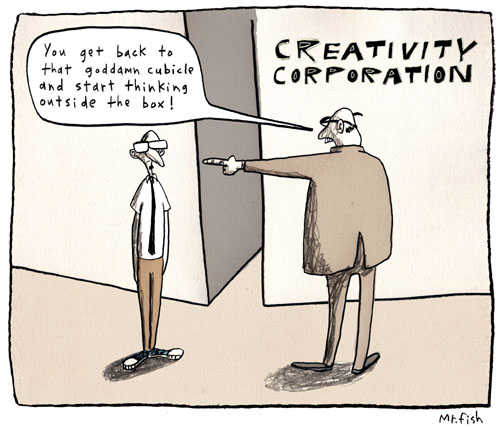
If anyone has any idea how they are actually designed and operated I believe there is a highly underpaid position available for you to take up to improve the situation. Sir Ken Robinson presents an interesting polemic in the video below, essentially saying that creativity is beaten out of kids in order to make it easier to manage them in a class. What are your experiences?

The only part I wholly disagree with is the bit about multitasking. The research on that is fundamentally flawed. That research has usually compared people who multitask all of the time with people who don’t at all. I.e. they compared pot addicted college students who needed the study participation fee to buy beer with people who actually did stuff; usually housewives.

Real multitasking is largely a myth. You can do several tasks at once but you will do them all poorly in comparison to focussing on them one at a time.

So did you have your creativity killed off by going to school like I did?