I wouldn’t make much of a supervillain. My weakness is chocolate. And quality whiskey. And a beautiful guitar. And a great novel. And…. this would make a long list of things to kill me with.
Steelheart is the first book in the Reckoners series by Brandon Sanderson. David was only a child when the Epics (supervillains) appeared. He also has a secret: he saw the greatest of the Epics bleed. The supposedly invincible and invulnerable Steelheart is now the Dictator of Newcago and David wants to avenge his father’s death at the hands of Steelheart.
After enjoying the Mistborn series I have been trying other Sanderson book series, expecting more great novels from him. I struck out with The Way of Kings, which could best be described as using 100 words when 10 would suffice, but Steelheart promises an exciting series.
Leaving aside the (acknowledged) improbable superpowers and raised middle finger to physics, the novel manages to be engaging and intriguing. In this David versus Goliaths tale there is plenty of suspense and fear that the heroes may not triumph. The series is intended as a Young Adult adventure, but YA is the new A must read, so don’t be put off by that.
Can’t wait to read the rest of the series and see how the handwavium works.
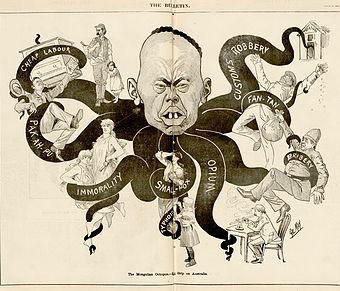
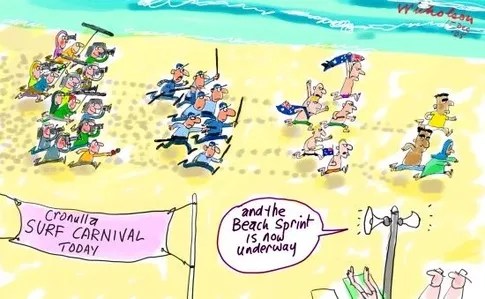
1, there’re many industries like dairy & realestate purchased by Chinese and their govt.
2, more CHN immigrated to Oz, but didn’t integrate into local society. They’re criticised coz of their “traditional” habits.
3, many Chinese prefer profits rather than quality. many ppl argue oz will be destroyed*
Little known fact: the entire world will be owned by the Chinese in the next two decades. Unfortunately, when Western governments stopped their wars against the “reds under the bed” they left the door open to the great peril. Since that time, China has been buying up everything it can get its hands upon. So it isn’t a matter of if Australia and the rest of the world become a Chinese state, but when.
Let’s look at some facts. So much of Australian land is being bought up by the Chinese. Of the 134,000 farm businesses in Australia, only 99% of them are family owned and operated.
Aussie farms – after providing 93% of the domestic food requirement – export a massive 14% of produce to China. Australian Social Trends, Dec 2012
You also have to look at the huge influx of non-Aussie farmers. It won’t be long before we’ll be overrun with non-Aussies. It may be 11% of farmers being born overseas, and most of those being from the UK or Europe, but won’t somebody think of the Aussie Children!!
More broadly the immigration of Chinese people to Australia threatens to displace all those good white Aussies. Including second, third, fourth and fifth generation Chinese-Australians, they make up a whopping 4% of the population. They don’t integrate at all, since only 3.4% are Catholic, with most of them (63.2%) practicing the heathenish No Religion. Clearly they can’t integrate if they don’t follow the traditional religions of this nation.
And it is just like those socialist commies to prefer profits above all else!!
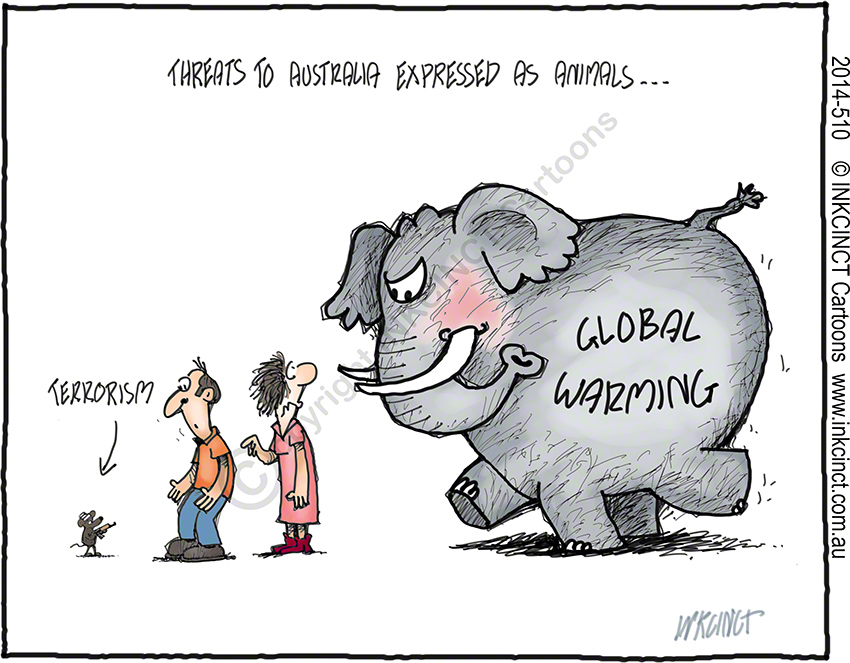
We should live in deep fear of China. Definitely don’t worry about real issues, like climate change.
Update: Some more scary figures are available now that the Australian Government have created a register of farm owners. It is worse than first thought!
Only 86.4% of Aussie farmland is owned by Aussies – you know, the ones born here, with the right skin colour. The biggest foreign owners are definitely the Chinese, who rank 5th with 0.29% of the farmland ownership. They were narrowly beaten by the UK with 7.2% of farmland, USA with 3.5%, Netherlands with 0.57%, and Singapore with 0.38%.
And by foreign owned it was definitely owned and not mostly leased.
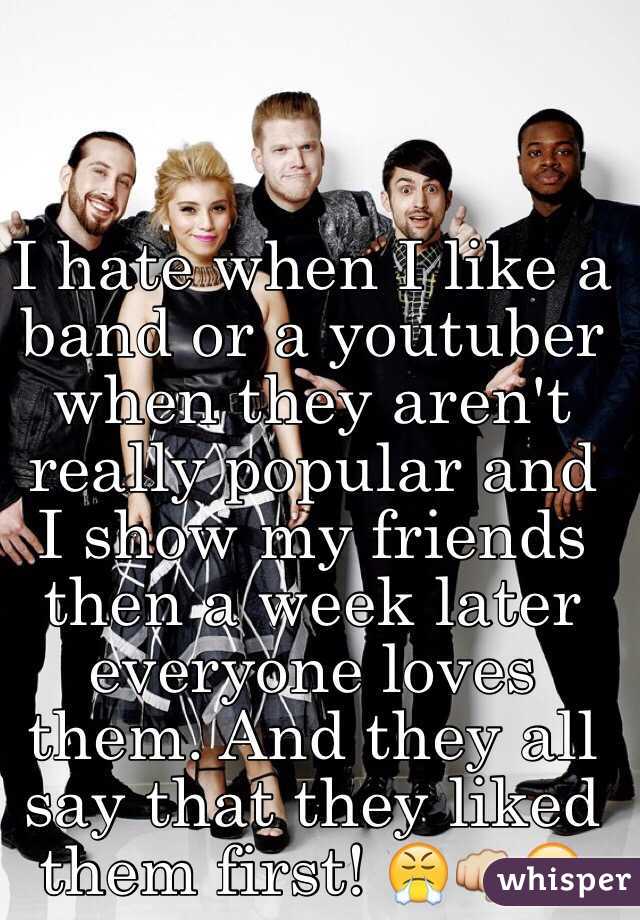
What is term for when you like a band and then they become popular and more people like their music and you become jealous because it’s “your band”?
It’s called being a wanker.
Wankers only really think of themselves. They love everything about themselves and hate to think that someone else could intrude on them. So when a wanker becomes fixated on something, they hate the idea that someone else might intrude or interrupt their joyful moment alone.
The reality is that most wankers are so self-absorbed that they fail to realise just how precious they are being about sharing the love. Say a wanker goes to a gig and listens to a new band, and thinks to themselves, “This is mine.” Except they fail to remember that they were standing in a room full of people, some enjoying the show, some cringing, and some utterly disgusted. So when that band starts playing bigger and bigger gigs, the wanker is now surrounded by more and more people, many of whom aren’t the sort of people the wanker likes being around. They start getting performance anxiety because they will be surrounded by people that “don’t get it” like the wanker does. They are afraid of being judged, because they are so judgemental.
Music is meant to be a shared experience and wankers don’t generally like to share. Don’t be a wanker.
There are so many cool bookshelves around – yes, cool still applies to books. Here are 20 cool designs that will keep your books safe, albeit only a few as the shelves themselves are the centrepiece, not the books. I mean, who needs a bookshelf to actually store books? The Tardis and Tree bookshelves are my favourites.
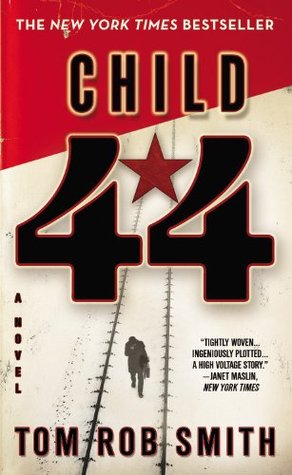
Child 44 follows MGP – Russian police- security officer Leo Demidov. Leo tows the party line until circumstances force him to accept that crime does actually does exist in the Soviet Union. Leo is the only person interested in bringing a prolific serial killer to justice.
I’d heard many great things about Child 44 by Tom Rob Smith. It won a pile of awards, even being included on the Man Booker long list, and became a must read for crime fiction fans. You know there is a ‘but’ coming. I like my buts big, and I cannot lie.
But Child 44 annoyed me. The story itself is well told. The characters are interesting. The antagonist is based on the real serial killer Andrei Chikatilo. Those points didn’t stop the nagging at the back of my brain. The premise is a great example of a nagging point. If the Soviet Union didn’t believe there was crime, let alone murder, after the revolution, then why the hell did they keep crime statistics? And there were no serial killers in… Oh wait, there are 9 acknowledged from Russia alone in the 20th Century.
The problems don’t stop there, of course. The usual Russian tropes are rolled out like an “In Russia” joke. I’m not really in a position to judge how valid any of these tropes are, nor how accurate a portrait of post-WW2 Soviet Union Tom paints. But when I’ve read Russian authors in the past their novels didn’t give the sense of place that Tom does. This really did feel like a British author’s take on what the Soviet Union was like based upon those Cold War films they watched as a kid.
Another minor problem I had with the book was the way it dragged scenes out. This was meant to be about creating tension and suspense, but all it did was annoy me. My annoyance on this point may have been driven by my heightened sense of “vodka to wash down amphetamines… really?” moments from the novel.
If you can get past the generic tropes, this is a book worth reading. I’m sure I would have rated it more highly if I hadn’t read a few Russian authors and seen a few Russian films to realise how much of a Western view of the East this novel is.
Studying Aussie films to figure out our culture is tough to do. Most of the movies or TV shows that are spoken about tend to offer up stereotypes of Aussies to showcase a facet of our larrikin humour (e.g. The Castle). Our culture is wide and varied, as can be evidenced by our films, which are as good as any other film industry world wide. I’m going to give some examples.
Aussie cinema in general is noted for producing some absolute rubbish *cough* Australia *cough* whilst audiences ignore the fantastic films. I think some of the best Aussie films have been made in the last decade and didn’t get much, if any, attention. E.g. The first one on my list is bound to become a cult classic. Non-existent distribution deals, lack of interest in lower budget movies in favour of the latest loud noises and fireballs from Michael Bay, and the generally undeserved ignominy that Australian films suffer under, and you could be excused for never having heard of any of these films. This is by no mean an exhaustive list either.
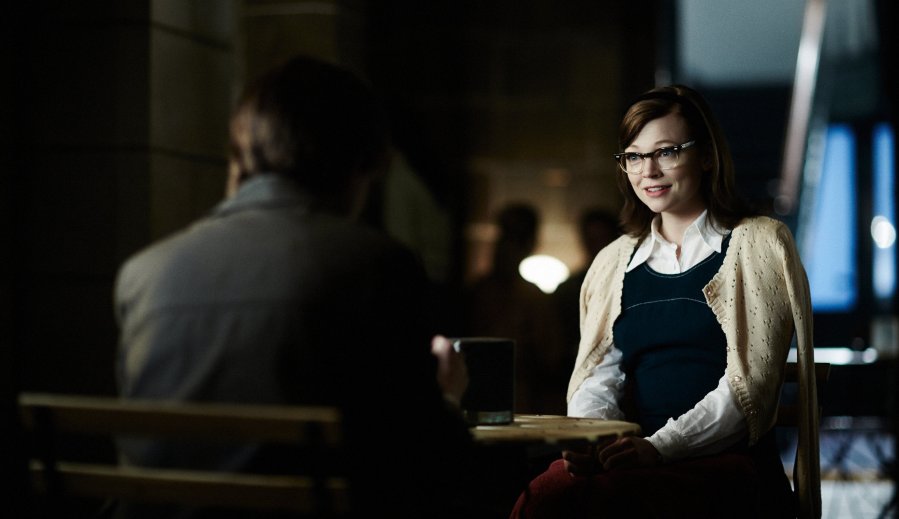
Predestination: Sarah Snook and Ethan Hawke in an adaptation of the Robert Heinlein story All You Zombies. The cast are amazing, the story is excellent, and the film just oozes intrigue. Snook is an actor to watch.
Sarah Snook is a chameleon in this film.
Daybreakers: From the same creative team behind Predestination comes this earlier vampire film. Ethan Hawke again stars along with Aussie icon Sam Neill – yeah, we’re going to claim him as an Aussie, screw you New Zealand!
Jack Irish: This series of crime films – and now a TV series – were released on the small screen and star Guy Pierce. Adapted from the excellent Aussie author Peter Temple’s book series, you’d be hard pressed to find a better cast and layered characters.
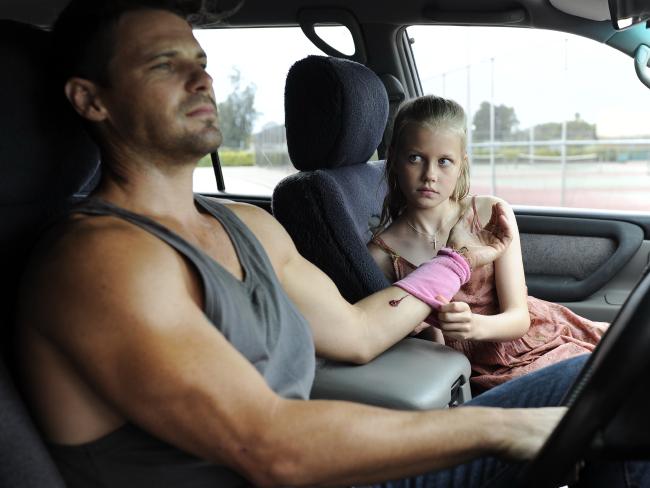
These Final Hours: With a pretty much unknown cast and made in Western Australia on a small budget, this fantastic film went completely under the radar. Set as the world is about to end, it follows Nathan Phillips as James as he tries to get to a party for the end of the world, but instead finds what he really needs to do in his final hours. Lot’s of unglamorous Perth scenery.
The Babadook: Quite simply the best horror film made in years regardless of where it was made.
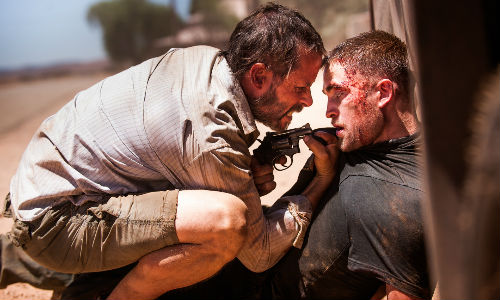
The Rover: Another Guy Pierce film and also starring some guy that sparkles. Post-apocalyptic tale about Australia becoming a wasteland after the global economic collapse. Pretty much what everyone assumes Australia is like anyway, especially if they are Mad Max fans.
The Tracker: This is a historical tale about an Aboriginal tracker tasked with helping a colonial policeman find the killer of a white woman. This is a bit older than some of the other films on this list, but worth a watch as it has been overshadowed by the film The Rabbit Proof Fence.
Son of a Gun: Ewan McGregor and Brenton Twaites star in this crime drama set in Western Australia. A young crook is recruited by the experienced armed robber McGregor to pull off a gold heist. Lot’s of true Aussie scenery.
Cargo: Short zombie film that will tear your heart to shreds. Seriously, watch it now.
Special mention for Let’s Get Skase as an Aussie comedy that covers some interesting parts of recent Aussie culture.
With pork-barrelling season in full swing, we will be seeing plenty of politicians hitching their wagons to prominent sports and sporting teams. The proclamations that sports are True-blue, dinky-di, Aussie will come to win over voters, with a little somethin’ somethin’ in the budget to sweeten the deal. Because sport is king in Australia, right?
Aussies are routinely described as sports mad, sports addicts, and that we love watching and playing sports in sporty sports ways. But how many of us actually play sports? How many of us actually watch sports? Given that you could describe weekly matches of football as repeats of the same teams doing the same thing for months on end annually, it is worth taking a look at a few of our assumptions about the claims.
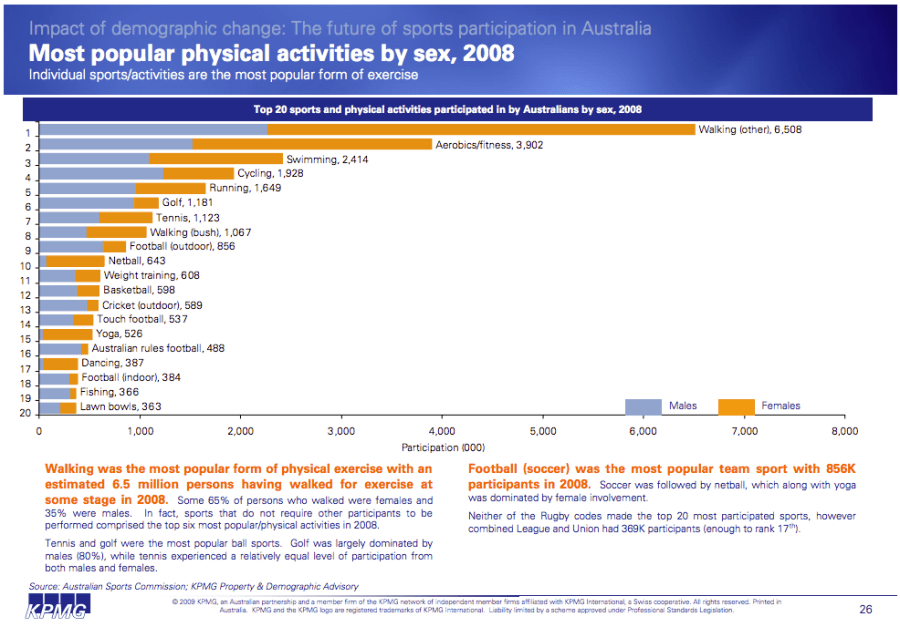
Let’s start with a look at how many Aussies play “sports”. Inverted commas around sports? Yes, because when people say that 60% (11.1 million) of Aussies play sports – down 5% compared to 2 years previous – what they actually mean is that we’re classifying walking and generally not sitting on the couch watching TV as sport. Let’s make it fairer on sports and subtract the walkers from being classified as sport participants. And let’s not succumb to temptation and call golf just more walking with intermittent cursing. That means that our 11.7 million “sports” participants is suddenly 7.5 million, which is 41.4% of the population (and falling with the ageing population). That figure sounds impressive until you realise that figure is participation of at least once in the past year and doesn’t account for the regularity of participation. How regularly someone is involved in sports is a much better indicator of our interest and love of sports. As opposed to accounting for that time you went to the gym because of a New Year’s resolution or because the doctor ordered you too out of concern for being dragged into an orbit around you at your next visit. The reality is that less than half of the population engage in regular (3 times per week on average) physical activity, with roughly a third of those people being gym junkies (NB: young men are more likely to play a sport, that drops with age and isn’t replaced with other activities, whilst women are more likely to be involved in non-organised sports and remain doing so).
The Top 20 most popular physical activities are dominated by fitness activities like the already mentioned walking, aerobics/fitness, swimming, cycling, and running. One of the big name sports, AFL, ranks 16th on the list behind yoga. When yoga beats football for popularity it must only be a matter of time before the PM declares it the most exciting sport. For those wondering where rugby is on the list, the rest of Australia says ‘hi’.
Of course, this is only looking at sports. How does sports participation compare to other activities? Well, ABS figures show that we spend roughly 23 minutes a day reading, versus 21 minutes on sports and outdoor activities (NB: this varies between genders and age groups). The US figures show similar results with more time reading than playing sports, but they also spend less of their day on both activities. So at least we are still better read and fitter than Americans in the low barmetrics.
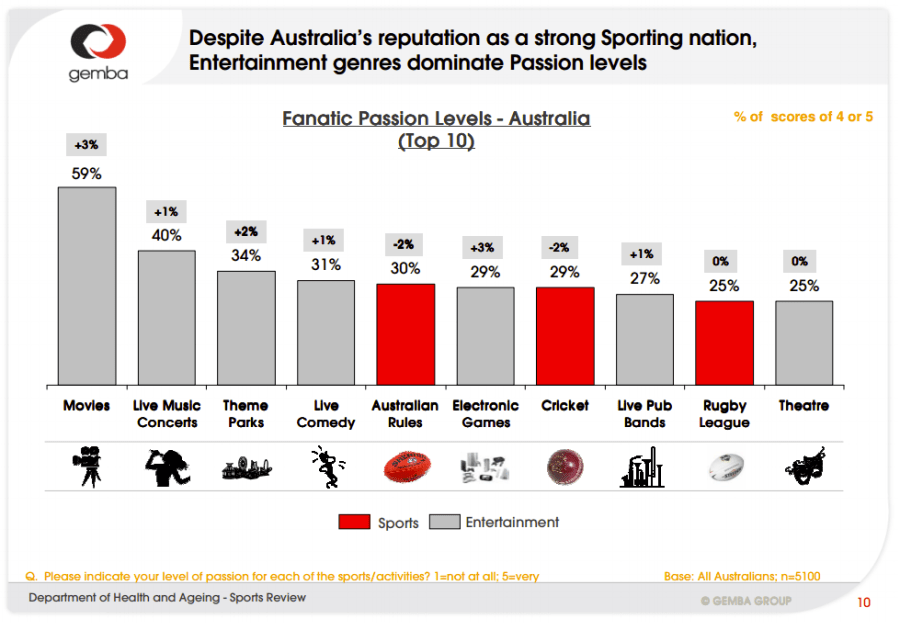
Obviously sports aren’t all about participation and most would regard themselves as avid armchair sportspeople. It could be argued that the best way to stay injury free in sports is to participate from the comfort of the couch in front of the TV at home. The other option is to attend a sporting stadium dressed in clothes made from random assortments of gaudy colours to cheer on a team who are wearing similar clothes but are less inebriated. Or would the most appealing option be to go to a movie, concert or theme park? The correct answer is that people would prefer to attend a movie (59%), a concert (40%), or a theme park (34%). Live Comedy (31%) was more popular than Football (30%), Cricket (29%) and Rugby (25%).
Of course, someone is bound to point to spectator numbers for AFL, A-League, and NRL that look very impressive. With average match attendances in the tens of thousands, and millions annually, sports are clearly important.
At a glance the figures look mildly impressive, but much like enhancement pouch underwear, things aren’t nearly as impressive when you look at the attendance figures in the cold light of day.
Even if we disregard the doubling up and totalling of attendance occurring in the stats, it is easy to see that even the most popular sport in Australia would rank behind visiting Botanic gardens, zoos and aquariums, and libraries. They aren’t even in the same ballpark as cinema attendance. But we can go deeper on the reading, library and cinema figures, even getting frequency statistics so we can tell the difference between the people doing something “at least once” versus people doing something regularly in the past year. 47.7% of people are reading a book weekly, 70% of library attendees (mostly women) visited at least 5 times in the past year, 65% of Australians are (computer) gamers, and 65% of Aussies go to the cinema an average of 6-7 times a year. And yet sport has a segment in news broadcasts whilst reading, gaming, and parks and zoos battle to get media coverage. Technically if we wanted to be fair then the sport segment would be cut to make way for movie news and a live cross to the local library.
What about the economy? How much are households spending on sports? That’s a great question and a great segue into a discussion of howtrickle-down economicsdoesn’t work in sports either. I mean, funding sports that way when it hasn’t worked in the economy must be a no-brainer, right? [Insert low IQ athlete joke here] Or we could stay on topic and discuss the $4.4 billion sports and physical recreation spend by households annually. Let’s not complicate things by talking about the buying of stuff like footwear, swimming pools, and camper vans. Seriously, camping is in the sport spending category? Either way, $4.4 billion sounds like a lot of money, until you realise that gaming is a $3 billion industry, and that households spend $4.1 billion on literature and $4.7 billion on TV and film.
We allow governments to spend a lot of money on big sports and big sporting events. Think that hosting the Olympics will encourage people to play sports? Nope. Actually, seriously, nope. One report described this idea as nothing more than a “deeply entrenched storyline”, sort of like a fairy tale handed down from one Minister for Sport to the next. Part of the problem is that we buy this narrative hook, line, and sinker, such that the sports themselves (and surrounding data agencies) never really bother to keep statistics to prove the claims. But they make for great announcements and ribbon cutting events on the election campaign trail, so the myth keeps on keeping on.
Ultimately the argument isn’t that sports are unpopular or bad but rather that we spend an inordinate amount of time pretending we like them far more than the reality. And that is impacting our elected officials more than a chance to wear a high-viz vest at a press conference. Maybe it is time to rethink what media and funding we throw at sports, and perhaps consider a gaming segment on the news.
So this pork-barrelling season look forward to the announcement of a new multi-million dollar yoga stadium in a marginal electorate near you.
Update: Charlie Pickering and The Weekly team cover some similar points for the Grand Prix events in Australia.
NB: I haven’t covered sports injuries, particularly how over half a million Aussies have long term health conditions as a result of sport. Please see this report for more.
There are so many great fantasy fiction novels out there, I’m just going to list a few of my favourites.
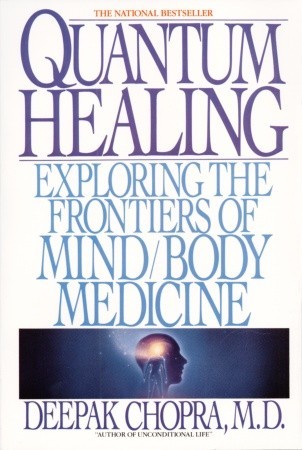
Deepak Chopra: Quantum Healing
Let’s face it, Chopra has been a bestselling fantasy author for decades now, so I could have named any of his books. He never fails to churn out the most epic of fictional nonsense, but Quantum Healing has to be his most mind-boggling work.
Various: Climate Change: The Facts
Okay, I’m cheating a bit here, as this treads into science fiction territory, but as a work of fantasy, it also holds its own. This collection of short stories is by a who’s who of fantasy authors on the theme of an alternate reality where climate change isn’t real.
Jeffrey Smith: Seeds of Deception
From everyone’s favourite flying yogi comes his groundbreaking fantasy novel about conspiracies, genetics, food, and how to ignore several fields of science and scientists by shouting la-la-la-la. Also qualifies as a comedy due to being so laughable.
An homage to Roald Dahl’s George’s Marvellous Medicine, this piece of fantasy is notable for being written as though the author were a child who never learnt English. Such an amazing piece that is sure to have you queueing for the iron lung.
I guess it was only a matter of time. CineFix have finally gotten around to comparing the Harry Potter series of books to the movies. This is part 1 of 3. Grab a butterbeer and enjoy.
Truth be told, I had to be dragged kicking and screaming to the Harry Potter series. I disliked the first film – it was clearly made for children – and could not be convinced that this phenomenon was anything more than overhyped rubbish.
Yeah, I was wrong.
It was after the movie series took on the darker and more adult tone that I became interested. I decided to see what all the fuss was about and began reading; an easy thing to do since my wife had the books in our collection. I loved the books, reading the final two on our honeymoon.
With the fandom surrounding the books, this was always going to be a series that was as faithful to the source material as possible. Last thing you want to do is piss off a bunch of kids you’re planning to milk for the next decade with film, merchandise, and costume sales. Even though the CineFix guys talk about the first three films being largely faithful adaptations, I can think of a few minor points that were glossed over in the movies, such as the Phoenix tears healing all wounds. That moment in the film seemed to smack of deux ex machina, unless you had read the books. And that is a liberty you aren’t meant to be able to take with adaptations, as the reading audience is always smaller than the movie audience… usually.
I’m looking forward to the other instalments in this book versus movie comparison, as they may explain why the movies made some of the changes they did.
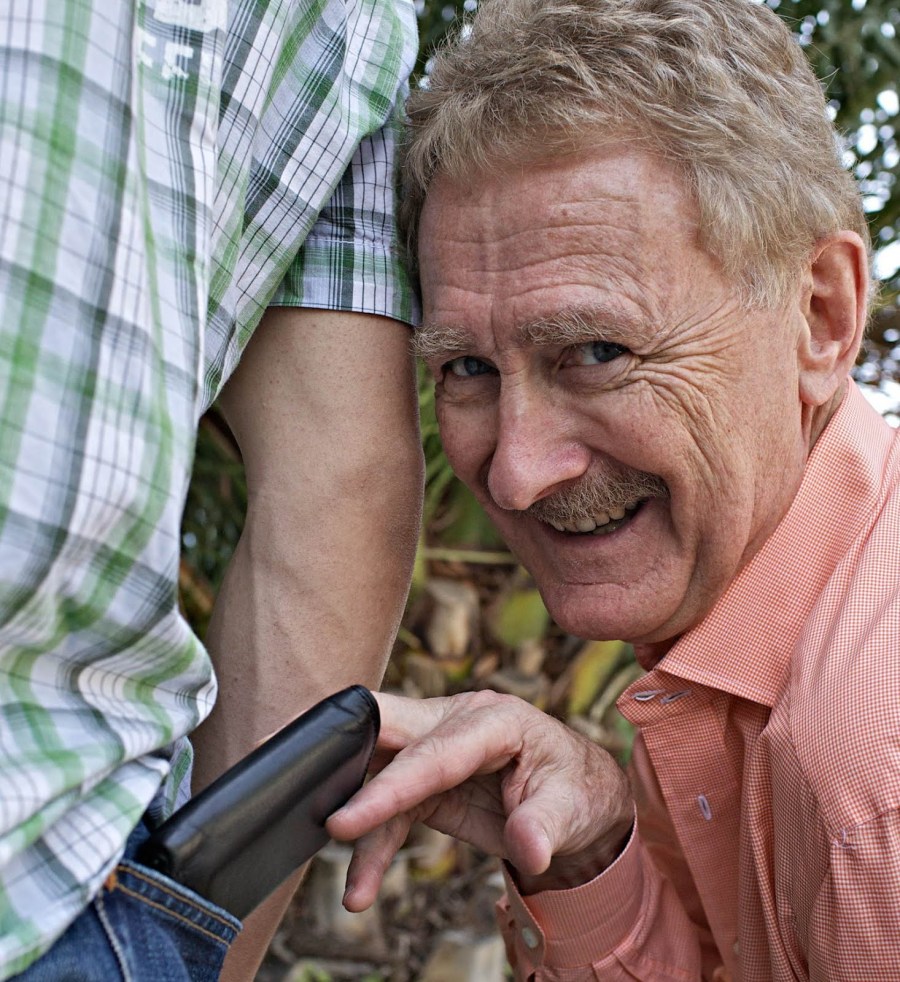
The main reason Aussies are so helpful and nice is that it is really hard to pick someone’s pocket if they are suspicious of you. By distracting the mark with a greeting, smile, an offer to hold your bag while you fumble with your car keys, it gives the crook more time to smoothly lift your wallet and other valuables.
Generations of breeding among convict settlers has perfected the balance required to be the perfect thief. A large part of being the perfect thief is charm.
Thanks for reading this answer, and ignore the strange purchases on your credit card.
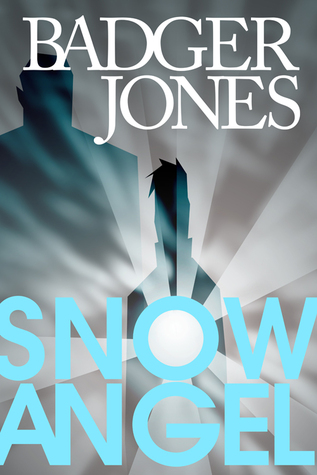
What if your Guardian Angel is watching you right now? Yeah, better close that other browser tab. You know the one.
Alex is a bum. His daily adventures revolve around stomping through the snow to buy the best “bang for buck” beverages after begging for money. And then he meets his Guardian Angel who is a huge fan of his lifestyle. Oh, and apocalypse. Gotta avoid another one of those.
In the interests of full disclosure, my friend Badger wrote this novel. He didn’t offer me financial, reciprocal, nor sexual favours for a favourable review: the bastard.
There is a lot to like about this novel. There is a hard reality to the main character’s life as the supernatural intrudes upon the tale. There is humour combined with a grittiness throughout. But I also found myself wanting the novel to advance a little faster. It wasn’t laboured, it’s actually quite fast paced, but it felt like I was having to sit still for too long as Alex wrapped his head around what was happening. Although, this is often the risk with the loser anti-hero; you can get annoyed at them.
What did the one eyed monster say to the art thief….. Wait, this isn’t that sort of novel.
Gideon Crew has been tasked with stealing a page out of a rare and valuable Book of Kells in order to uncover a map. Like any good map, it leads to a treasure worth killing for; something Google Maps really needs to work on. To follow the map Gideon needs a sidekick who knows ancient Greek and the tale of Odysseus. Off Gideon and Ami romp to find the McGuffin.
Douglas Preston and Lincoln Child rank somewhere on my favourite author list, since I’m a fan of their individual novels and their joint Pendergast series. So I was somewhat disappointed in my first outing with the Gideon Crew series. This isn’t a bad book, but it isn’t good either.
Normally the usual “historical artefact can save/doom the world” trope is deftly handled by Preston and Child. They wrap enough interesting characters and plotting around the improbable to make it all work. But the minor characters weren’t that interesting and Gideon was not a character I connected with. You could probably replace Gideon with an amorphous blob of sentient putty and I’d have been more engaged. And you need this engagement because you have to ignore how ludicrous a race of cyclops are – seriously, just wouldn’t have evolved: not plausible at all.
I doubt I’ll return to the Gideon Crew series and will instead stick with Preston and Child’s other (superior) works.
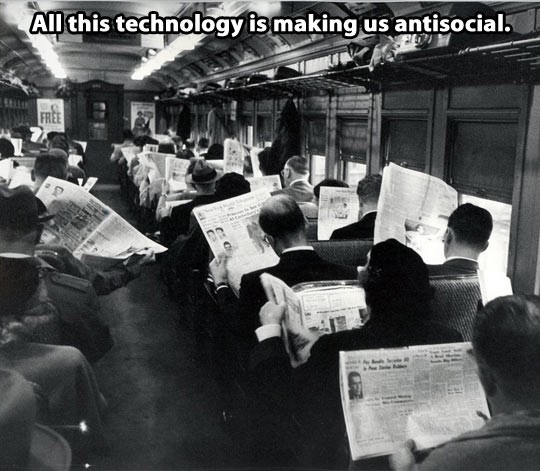
I’m not a fan of the “kids these days” arguments and memes that make their way through social media via the express head shaking admonishment brigade. I’ve written previously how the arguments are recycled garbage, as old people have been complaining about young people since the invention of youths.
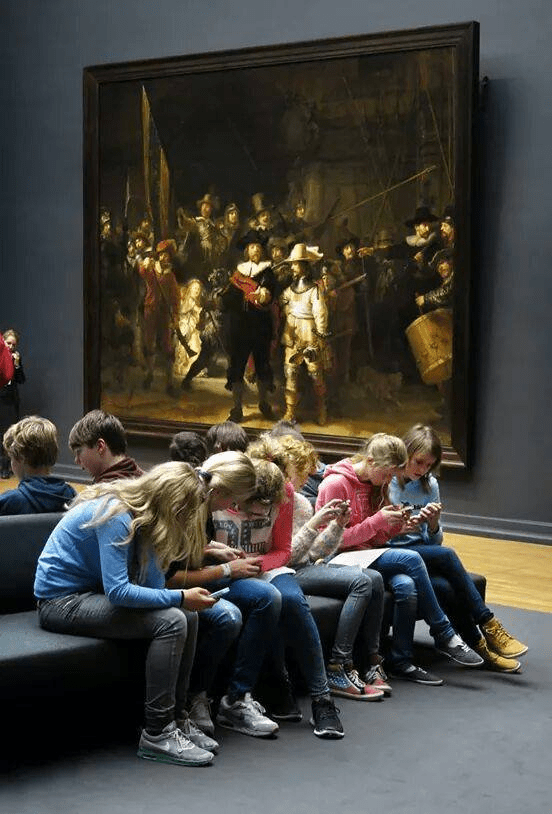
You may have seen this image:
That’s right: self-involved kids looking at their phones instead of the amazing work of art behind them. How dare they! Shake your fist at the sky.
Of course, they aren’t self-involved narcissists, at least not any more so than other people in society. That is actually a group of students that have just finished admiring the artwork and receiving a lecture on the Rembrandt and are now using the museum guided tour app to learn more. To quote:
Late last year this photograph of children looking at their smartphones by Rembrandt’s ‘The Night Watch’ in the Rijksmuseum in Amsterdam started doing the rounds on the web. It quickly became viral. It was often accompanied by outraged, dispirited comments such as “a perfect metaphor for our age”, “the end of civilisation” or “a sad picture of our society”.
Only they weren’t. It turns out that the Rijksmuseum has an app that, among other things, contains guided tours and further information about the works on display. As part of their visit to the museum, the children, who minutes earlier had admired the art and listened attentively to explanations by expert adults, had been instructed to complete an assignment by their school teachers, using, among other things, the museum’s excellent smartphone app.
I would like to think that all those who liked, posted, shared and tweeted the picture of children on smartphones by Rembrandt’s masterpiece in the erroneous belief that it illustrated everything that is wrong with society feel a tiny bit silly and a little more humble as a consequence. But it won’t happen. The tragic thing is that this — the truth — will never go viral. So, I wonder, what is more likely to bring about the death of civilisation, children using smartphones to learn about art or the wilful ignorance of adults who are too quick to make assumptions?
Whether it be art, technology, manners, or just plain old fashioned respect for elders, people seem far too quick to complain about kids these days. It always seems to have been better in the good old days, as long as you ignore the wars, child death rate, education levels, work and social rights, equality, food…. actually I’ll stop that list now before I run the point into the ground. So take any of these arguments, images, and claims with huge pinches of salt, as there is probably a parallel version from a previous generation.
The White Australia Policy was a fantastic piece of legislation that was brought in just after Australia’s federation in 1901. Back then it was popular to think that Aboriginals didn’t exist, or weren’t worthy of acknowledgement, and women were still a year away from full voting rights nationwide. Great time to be alive.
After the second world war – commonly referred to as WW2 and the go-to source of movie badguys (Nazis: hate those guys) for the next 50 years – the Menzies and Holt governments started rolling back pieces of the legislation. In 1975 Gough signed in the Racial Discrimination Act to stop any further problems. Totally worked.
After the war there was a lot of people wanting to immigrate, preferably to countries that hadn’t been turned into massive craters by years of bombing. There were also a lot of ex-servicemen who were stationed overseas and had discovered the local non-white women. They’d also made friends with non-white people in general. Suddenly there were Aussies who wanted their non-white wives, friends, and associated families to come to Australia. In 1949 Harold Holt allowed Japanese war brides into the country. Ten years later legislation was passed so that they were able to be sponsored for citizenship. Holt later introduced the Migration Act in 1966, effectively dismantling the White Australia Policy. Holt was so pleased he went swimming a year later, he’s due back any day now.
This month’s CineFix edition of What’s the Difference cover the Ed Brubaker comic that inspired the Captain America: Winter Soldier movie.
Unlike Civil War, I managed to read the Ed Brubaker series of comics before watching the Winter Solidermovie. Obviously there are a lot of differences, especially in terms of the expanded universe and “realism” of the movie world. The comics have decades of plots, sideplots, overlapping arcs from other parts of the Marvel Universe, characters, and general junk that is impossible to pack into a 2 hour movie. I actually find the way Marvel and DC have their stables of comics overlap and exist in the same universe to be annoying. The movies are starting to head that way as well, what with Age of Ultron essentially spending a third of its run time building the associated Thor, Ironman, Captain America, etc, movies.
One of the differences not really covered in the CineFix video is the other Captain Americas. That’s right, several other Caps wore the…. cap. Anyway, while Steve Rogers was chilling (Bucky too, but in a separate location) America didn’t want to lose its figurehead so they had some other people fill the role. From memory, at least one of them was integral to the plot, despite being no longer all there. This part of the plot also fed into the series that came immediately after Winter Soldier, with Bucky donning the costume and hefting the shield. For anyone about to complain about spoilers with that last sentence, try not to think about what could have happened to Steve Rogers to require Bucky to become Captain America.
In my original review for the Winter Soldier movie I commented that the writers had managed to capture Brubaker’s cold war spy story feel. They did this with very little similarities between the comic and movie. In some ways I think the movie is better, certainly I like the Steve Rogers of the film more, and they hadn’t quite gone overboard with the expanded universe stuff at that time, but in others the usual restrictions of the shorter format lessens the possible storytelling (Crossbones, the other Captain Americas, the relationships). Two very different stories were told but I still think this was a good adaptation.
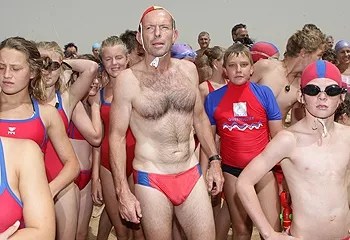
Sure why not. We’ve elected people who can’t swim, people whose claim to fame was drinking beer fast, and people who think it is appropriate to wear these in public:
So it isn’t unreasonable to think that there are better qualified people who could rise to the top despite our casual racism. We still can’t get sexism right, but we managed to have a female Prime Minister.
It should be pointed out that while Australia has a proud history of treating Aboriginals like fauna, Indigenous Australians have been elected to state and federal seats. The big problem would be getting the support of one of the major parties to be leader, and that major party holding the balance of power.
I notice that the question implies Aussies elect the Prime Minister directly. We’re not silly here in Australia. The last thing you want in a democracy is the people getting to decide important decisions like who is preselected to run for a political seat, how their elected representative should represent them, or who is Prime Minister. Best to keep these decisions out of the hands of the people they impact and make sure only the political insiders get to make those calls.
Our Prime Minister is the leader of the political party that holds the balance of power. Thus, the party decides who is Prime Minister, and is not directly elected. For an Indigenous Aussie to become leader of the party would be no small feat, and they’d have to watch out for knives to the back.
Hopefully we will see an Indigenous Australian Prime Minister. Hell, they might even be non-male just to shake things up a bit. Just hard to tell how many old white guys we’ll see before that happens.

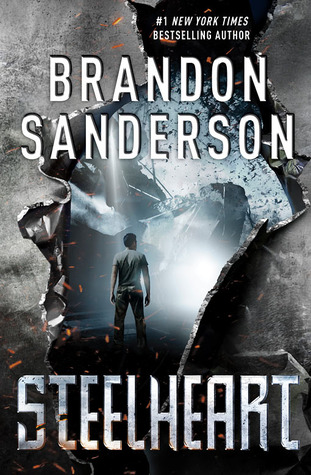 Steelheart by Brandon Sanderson