M: Is there anything you haven’t blown up?
N&E: Pyramids.
M: Wanna go to Eygpt?
After their last adventure, Nina has been disgraced and is out of work, while Eddie is playing bodyguard to entitled movie stars. Things are looking depressing until an undergraduate on a dig in Eygpt sees something she shouldn’t have and turns to Nina for help. In no time at all, they are all running for their lives from a dangerous new cult. What secrets does the dig hold that is worth killing for?
It’s been two years since my last Nina and Eddie adventure. I commented in that review how comforting it is to slip back into one of these novels. Andy manages to combine outlandish action, ridiculous plots, larger than life bad guys, a spot of humour, and manages to keep you on the edge of your seat. Many try to do this and fail. Andy manages to do it with the amp cranked to eleven.
The Cult of Osiris was very much like that experience. It was exactly the right kind of fun I needed. This was one of several Andy McDermott novels I bought to fill in the instalments I’ve missed. It was interesting to come back to an earlier adventure after having read several later ones. Artefact-McGuffin-Adventure novels are hard to do this well, but every Nina and Eddie adventure has managed to be extremely fun to read.
When society stops being violent someone will try to genetically re-engineer violence.
Carl Marsalis is a specialist bounty hunter. Genetically engineered and indoctrinated from birth to be a dangerous weapon, he now hunts others like him. After landing in prison in the wrong part of the former USA – Jesusland – he is seconded to track down someone who is killing his way across the former USA after eating his way through the crew of a Mars-to-Earth flight. But the cannibal seems to be a step ahead of the game and not picking targets at random. It’s as though he has help and is possibly working for someone as their hitman.
After recently finishing the Altered Carbon series, I decided to see what other Morgan novels I could get my hands on. Thirteen promised to be similar to Altered Carbon. The setting was similarly cyber-punk, the mystery/detective narrative is front and centre, and Marsalis likes to get violent and have sex with any and all female characters.
But where Altered Carbon used those elements in a compelling way, Thirteen was too indulgent with them. The novel feels padded out and runs far too long. This leads to pacing problems, with some sections really bogging down. The charisma of Kovacs is not present in Marsalis, despite their similarities, so you don’t feel the same thrill from him dispatching a bad guy or having the love interest* throw herself at him.
I think I could have forgiven those aspects a bit more if it weren’t for the “conversations” between characters about genetics. These were long discussions that bashed the reader with the point. I’d have had less of a problem with them if they weren’t quite so wrong on the science. The “conversations” amounted to telling us that we are essentially only our genetics. That’s not only nonsense (GxExM is how we discuss genetics in science) but is pretty much spouting modern-day scientific racism.**
That point is particularly ironic given the obvious analogies for racism and backward thinking being drawn. “Look at how backward these religious bigots are. Look at how badly they treat black people. Hey, check out my thinly veiled racism disguised as science!” I don’t know if I missed something, but this really did read to me as admonishing racism whilst justifying it as not something we can get over. If that was Morgan’s point, then it would have been great if he could have done it in about 150 pages less.
With all that said, this was still enjoyable and I am looking forward to reading more from Morgan.
* I’m being overly flippant and critical here. Sevgi Ertekin is a fairly well-developed character but her role does appear to be just the love interest and character motivation.
** Yes, scientific racism is back. Modern-day phrenology comes in many forms. Often it is IQ studies and hereditarianism, sometimes it is labelled Human Biodiversity (HBD), other times it will be straight up eugenicists and white nationalists. Reading about its insidious creep into academia and mainstream discourse is sickening.
I don’t want to see the final season of Game of Mates, I’ve heard the entire thing falls flat.
Cameron Murray and Professor Paul Frijters set out to expose the inner workings of the Australian economy in Game of Mates. Through a series of case studies, they outline how a few (the Jameses) take from the many (the Bruces) by blurring the line between business and the regulators. Then, knowing that their readers will be suitably gobsmacked and annoyed, call for the masses (Bruces) to make a change.
As with any book about real-life grifting in the halls of power, this book made me annoyed and disillusioned. There is nothing more galling than to have someone show you how the grift is endemic and then realise you kinda knew. We kinda all know. There is no surprise here. And that means there is no “justice”. Cue scene of me staring out the window as rain drips down it.
Murray and Frijters conclude with some ways to stop the grift:
1) Reclaim the value of grey gifts for the public.
Essentially, when the grifters rig the system they gift themselves advantage/money/power. We have to tear that down. One example was Public-Private Partnerships on infrastructure developments, which essentially end up being a gift of public assets to private businesses with a guaranteed profit underwritten by the public.
2) Disrupt (James’) the grifters’ coordination.
This is fairly obvious, stop the revolving door between public and private interests, put in oversight, make sure the oversight isn’t part of the problem, etc.
3) Bust the myths (James) the grifters use.
This isn’t just about addressing the claims cherry-picked “experts” will make, such as promoting projects that aren’t needed (examples are given, there are plenty). This is also about reclaiming the narrative from these grifters. In Australia, this is particularly difficult as many of the media outlets are either owned or have close links to the same people grifting.
4) Fight back.
Disillusion can lead to apathy. That’s what keeps us on the losing end.
Speaking of the losing end, the costs of this game are:
New Housing – 70% of the gains from rezoning;
Transportation infrastructure – 68% of the investment;
Superannuation – 27% gobbled up;
Mining – 48% of the profits;
Banking – 60% more expensive for the masses;
Taxes – 23% extra taxation borne by the masses (I’ve seen a figure suggesting this is a global issue and sees the average person taxed proportionally more);
Pharmacies, medicines, and health – 10% more expensive;
Higher education – 100% more expensive…
Okay, so clearly this book hit the mark and is enlightening. Why only three stars, I hear someone say? Well, while I appreciate your question, I’m wondering what you’re doing in my house.
I think the problem I had with this book was the polemic style to it. We are told. I listed the figures above, and whilst those numbers are backed up, they are big claims that require fairly solid evidence. I felt the evidence was a bit flimsy. Not wrong, but maybe selective, or misrepresentative.
Another example was around how to stop the revolving door which amounted to banning people from getting a different job in the same industry. That’s probably not as well thought out as it needs to be.
Game of Mates is worth reading but it felt underdone.
The world is only days away from destruction. Again. Again.
With only a few hours rest after winning The Great Games, Jack West Jr is thrown back into the fray. The secret ruling elite’s world has been thrown into disarray with only a few days to save the world. They don’t think they need Jack’s help, so they send a secretive order of assassins after him. But without Jack and his team, the chances of saving the world are close to zero.
I finally got around to reading my Xmas present. I have a standing order for Matthew Reilly books that my parents dilligently fulfil. Ever since picking up my first Scarecrow adventure, I’ve been hooked on Reilly’s fast-paced thrill-rides. The Three Secret Cities was once again a fast-paced thrill-ride.
But…
After thoroughly enjoying The Four Legendary Kingdoms I was excited to see what else would happen in this three-part Jack West Jr adventure. One of my earlier criticisms of the Jack West Jr series was that it often felt like stuff just happened, that you were reading a series of explosions without the peril and tension. The Four Legendary Kingdoms didn’t have that feeling. But after finishing The Three Secret Cities that sense of stuff just happening was back.
This left me with a troubling thought: have Reilly’s books always been heavy on the explosions and light on the peril of those explosions, has Reilly lost a step, or am I just not as entertained by Reilly as I once was? I noted in my revisit review of Ice Station that several things suddenly annoyed me and were suddenly distracting. So it is possible that I’m not enjoying Reilly’s novels like I once did.
While this does sound like strong criticism, The Three Secret Cities was still solidly entertaining. I just hope the next instalment has plenty of peril. Suddenly.
Cat burglary seems like a career that should involve more standing near open doors deciding whether to go out.
Inspector Hal Challis is reaching the end of a chapter in his life. A new relationship, a career he’s frustrated with, a dying car, and a finished hobby. But the town of Waterloo has become the scene of a series of sexual assaults by a man disguised as a copper, a bank robber is making the rounds, and a cat burglar is making her presence felt. A great time to tell the local press exactly what you think about budget cuts.
If I’m remembering correctly, this is my third Garry Disher novel and second Challis story. Disher is to Australian crime writing what Ian Rankin is to the UK and Michael Connelly is to the US. He is respected, consistent, and knows how to tell a tale. Whispering Death is one of those solid and consistent crime novels.
I’m writing this review a few days after having finished reading Whispering Death. And I think my characterisation of this novel as “solid and consistent” is also partially a criticism as well as praise. It’s an entertaining read and I think many will want to read more about Grace the cat burglar in a future instalment (or spinoff). But I’m also noticing that even though it has only been a few days, I can’t really think of anything that memorable about the book to mention here.*
That said, Disher continues to entertain and I look forward to reading more of his Challis (and Wyatt) series.
* As my wife pointed out to me, this could be a factor of my age. I’m no longer a twenty or thirty-something. A solid book has plenty of other solid books to blend in with in my increasingly fuzzy memory (having kids ruins your brain) compared with a decade or more ago. So as I age and read more, the harder it will be to entertain me. The fewer thrills I will receive from even great authors with great books. Until finally, no longer able to find joy in the simple pleasure of reading, I commit suicide by Dan Brown.
The only thing you have to lose is your car keys. And chains.
“The ruling ideas of each age have ever been the ideas of its ruling class.”
The Communist Manifesto was part of my reading project to have some actual knowledge about the current bogeymen of cultural discourse. How could it not be? Various (sarcasm alert) intellectual giants, including Canadian self-help gurus and fake universities, have blamed Marx personally – poor Engels, always the bridesmaid, never the bride – and communism generally for every malady of the last 150 years. Obviously, they would know this after having studiously analysed the Manifesto… oh, and all of the hundreds of other texts on the subject.
What struck me about this text is how it captures a few essences of society, both then and now, with an insight that resonates. But it also manages to feel immature and underdeveloped compared to the later writings from Marx and Engels. From my further reading, this appears to be a common criticism.
There were interesting insights into women’s and workplace rights. These ideas from Marx and Engels’ have had to be implemented in our society. They realised that a capitalistic society couldn’t function the way it did. So those changes have been implemented. And it took social and union movements to make our society function, but not the communist revolution Marx and Engels expected.
Another interesting aspect was the definition of bourgeoise socialists. The idea of people advocating for small manageable changes to gradually improve society sounded an awful lot like centrist liberals or socially conscious millionaires/billionaires. They will admit the system is rigged and that it is unfair, but do you honestly expect them to sleep on less than 800 thread count sheets? Who is the real victim here?*
That isn’t to say there aren’t valid criticisms of the Manifesto. As an example, people like Sloterdijk have criticised Communism for channelling rage from their life in the direction of an “other” – in this case, the rich/capitalists. This rage is channelled by the ruling class of the communist movement and used to empower themselves. I.e. it becomes just another control mechanism, exchanging one oppressive power for another.
But it is clear from the Manifesto that this is/was not the intention. Something many critics miss.** Marx refused to speculate in detail about the nature of communism, arguing that it would arise through historical processes, and was not the realisation of a pre-determined moral ideal. Maybe this was a fatal flaw in his thinking, such that if he had been more prescriptive his writings wouldn’t have been used by authoritarian/totalitarian people to seize power.
There has been a lot of academic and scholastic work on Marxism since The Communist Manifesto. But this short work still remains a worthwhile read.
** And let’s be honest, it is deliberately missed. Communism is the “other” of the 20th century. They were the evil we could rally together to defeat. So actual understanding of communism has been deliberately negatively framed. “Look at all those starving people under communism! Ignore all the starving people under capitalism!”
Sometimes it does take PhDs in math and physics to explain where babies come from.
In 1952 Elma York and her husband are on a weekend retreat when a meteorite wipes out the east coast of the USA. Elma flies them to safety only to realise that this strike was an extinction-level event. The fledgeling space program is thrown into overdrive, with Elma and her husband deeply involved. But in the race to colonize space, a few people are being overlooked for humanity’s future, and Elma wants to see women go into space too.
Quite simply, I loved this book.
There were so many moments where you feel the frustrations, joys, and unfairness of the 1950s. This is a very human tale mixed with the fascinating behind-the-scenes look at the early space program – reimagined, of course. And while this comes across as hard sci-fi, it doesn’t make the plot nor pacing drag.
Normally I’m not a fan of the alternate history tales. Often they feel gratuitous and unnecessary, like dragging in various famous historical figures for cameos – hey look, Mark Twain is on the Enterprise!! But here the alternate history felt like it served the plot and themes well, and not just some stoned writer saying, hey, what if…
Those feels when you have to take time off from murdering religious zealots to overthrow the establishment.
Kovacs is a one-man army stalking a series of religious zealots on his home planet of Harlan’s World. In the aftermath of one assassination, he runs afoul of the Yakuza and befriends a mercenary. The merc, Sylvie, invites him to join her team decommissioning sentient military hardware in the un-settlement zone. During this operation, Sylvie collapses and appears to take on a new personality, the long-dead revolutionary Quellcrist Falconer. Together they are being hunted by the ruling elite, a revived younger Kovacs, and the Yakuza. Their only hope is to restart the Quellist rebellion.
I’ve read all three Takeshi Kovacs novels over the last two months and have enjoyed them all. There is the entertaining surface level to the stories: a hard-boiled noir detective story, military adventure, and in this instalment a more standard thriller. Then underneath that, there is an interesting socio-political discussion that has culminated in the plot of this final novel in the series. In some respects, Woken Furies is the most in-depth look at the socio-political world Morgan has created, as well as having the most social criticism. For some, this could be a bit offputting, but I’ve really enjoyed this aspect of the series.
The only problem I had with Woken Furies was that it felt as though it was padded out a bit too much. It is significantly longer than the previous novels (probably 40% longer at a guess) and I’d have preferred it at roughly the same length as those other two. It’s a little churlish to complain about a book you’re enjoying giving you hours more entertainment, but in many ways, I’m a petty man.
That feeling when you call someone a young whippersnapper and realise it’s your reflection in the mirror.
Widower John Perry has reached his seventy-fifth birthday and enlisted. The Colonial Defense Force are waging war across the universe and need old feeble bodies to join their fighting forces. After some upgrades and basic training, Perry and his new comrades are sent off to meet strange new people and cultures and kill the sons of bitches as quickly as possible.
When I finished reading I knew exactly what I was going to say about Old Man’s War. My entire review could be summarised as: It was fine. Just fine.
I decided to read Old Man’s War after my mixed feelings from reading Redshirts. To assuage those mixed feelings, I picked up Scalzi’s highest-rated book. And in many respects, it delivered. The “fresh” take on classic sci-fi novels from the likes of Heinlein was entertaining. But unlike those classics, I found myself nitpicking at various ideas and premises rather than being filled with wonder.
One of the premises I found hard to swallow was that in the infinite reaches of space, habitable planets are hotly contested property. Sorry, I just can’t wrap my head around that one. Even Scalzi’s handwaving explanation in the book feels like someone fully cognizant of just how much hand flapping he’s doing.* Given that this is the central conceit for the novel, it felt like there either needed to be better groundwork or less attention drawn to how close that premise circles the plot hole.
In my review of Redshirts, I noted two things that apply to Old Man’s War as well. He said. He said. The first is that this novel is nowhere near as funny as it thinks it is. It’s only upon reflection that I realised that many of the scenes were meant to be funny. Not the ideal time to notice the jokes. The second was the dialogue tags that often felt redundant and only there to remind you that the dialogue that could have been said by anyone had been said by a specific anyone.
This was an okay novel. Old Man’s War was entertaining enough to read but after two novels I’m not sure Scalzi entertains me enough for a third.
* And related to that particular scene was a scene that justified war and implied diplomacy didn’t have a place in this world. I’m not sure if that scene was meant to be ridiculously heavy-handed or if it was meant to be funny. Bit of a fail whichever way it was meant to fall.
It’s so unrealistic to have Disney gradually taking over the world.
Jules has moved in with his girlfriend Lil – someone 15% his age at ~20 – at Disney World. As members of the ad hoc who had taken over Disney with the rise of the post-scarcity, post-death, Bitchun Society, they were there to have fun and accumulate Whuffie. His old friend Dan reappears in his life and someone murders Jules. Then another ad hoc tries to take over Jules and Lil’s part of Disney. Where reputation is everything, they have to put theirs on the line to fight back.
I’d heard of Cory Doctorow long before I realised he was an author. Sure, he was at writers festivals and associated events, but he never seemed to be there promoting a book so much as talking about copyright or Amazon or what sort of barrel publishing houses used with authors. So it has taken me quite a while to pick up one of his books.
I’m not sure how to rate this book. It was a fun read. The world-building was done effortlessly and didn’t pad things out – refreshing after the last sci-fi novel I read and DNF’d. Cory has also added in some very interesting ideas and explorations, particularly around what would happen post-scarcity and post-death. He even manages to stick the satirical boot in.
But now that I’ve finished the book, I’m not sure there was anything particularly remarkable about it. Possibly my feelings on the matter are related to the somewhat bland ending. Possibly it is related to how the moral questions raised were answered with a shoulder shrug. Maybe it’s just that this was a good but not great novel that promised more.
An entertaining read that explores some interesting territory.
The Beastie Boys said you gotta fight for your right to… exist?
The Geek Feminist Revolution is a collection of Kameron Hurley’s essays that tie to the themes of feminism, representation in media, and not putting up with bullshit. Some of the essays also discuss being an author and all the fun that entails.
After finishing this collection I feel remiss for not having read any of Hurley’s work previously. I picked up a copy from the library after my sister recommended it to me – it’s literally the only title they have of Kameron’s. Hurley is passionate, often angry, and always eyeing off ways to make the world suck a little less.
It is difficult to go into specifics given the range of topics covered. Some highlights were around the 20-30% figure and women’s erasure from “the narrative” of history. That statistic is the fairly consistent proportion of women involved in conflicts throughout history. They have always fought, but that is not the way history is told to us. The concept of a dominant narrative that suits and reinforces ruling social structures is not new to me, but one I don’t feel I’ve heard enough about, making it always welcome in my reading. The insights on being a speculative fiction author were also excellent.
The only aspect that I didn’t enjoy in this collection was that it was a tad repetitive. That is to be expected with a collection of previously published essays. There’s bound to be a bit of overlap.
A very interesting collection of essays, particularly for those interested in speculative fiction and pop-culture.
Your voice is powerful. Your voice has meaning. If it didn’t, people wouldn’t work so hard to silence you.
Remember that.
In Kill All Normies, Angela Nagle attempts to document and explain the rise of the Alt-Right out of the online space and into the Oval Office. She discusses many of the toxic forums and their leading mouthpieces and their war against the left/liberals in their forums/safe-spaces.
This book hit my TBR list as it was highly recommended and one of the few to document the online culture that lead to the rise of a change in political and social discourse worldwide. Having existed online and been familiar with many of the “players”, I was hoping for some deeper insights and analysis of how these forums become toxic and how that spreads out.
Let’s just say that this is not the book I was hoping for.
For much of Kill All Normies, I found myself thinking that I don’t just disagree with many of the points made, but that Nagle gets many things factually incorrect or offers up a very poor understanding of points raised.* If I was unfamiliar with much of the material, this book would have been very misleading. Just one example of this, in a later chapter Nagle refers to Germaine Greer being de-platformed over transphobic comments, to which she claims Greer hadn’t written about trans-issues in 15 years. That’s blatantly false. In fact, worse, it is a lie from transphobic sources that this book is meant to be, in part, critiquing.
This article offers a few more examples, including the Greer example. Another accuses her of plagiarism. Apparently, Nagle and Zero Books (her publisher) had both offered rebuttals to these pieces, but they are now dead links.
Another problem I had with Kill All Normies was that a lot of Nagle’s expressed opinions seemed to utilise the terms of reference used by those she was supposedly exposing. But only in one direction. For example, when Nagle criticised the online misogynists she would treat their claims as having merit, but when she was criticising the multiple genders of Tumblr** they were treated as though they didn’t have merit.
There was also a level of misrepresentation or laziness in the accurate portrayal of several events mentioned. One of the above-linked articles discusses a Jordan Peterson example. I noted an egregious one about Milo Yiannopoulos. The Berkley campus protests that shut down Milo’s talk supposedly shows an unwillingness to engage him in debate and challenge his ideas, instead resorting to shutting down free speech… Except that’s revisionist nonsense that ignores several hard facts. Milo wasn’t actually available for a debate, he was there to lecture and browbeat unprepared audience members during Q&A. Given that these examples were key to Nagle’s argument about how these bad ideas should be addressed and challenged with the liberal idea of debate and free speech and the market place of ideas and… Well, that might be a tad hard to do when you don’t get to have any free speech other than protests outside the venue.
There were also several things I felt were lacking in the coverage of the online culture wars. Very little was said about the atheist and skeptic YouTube movements that are noted for their early adoption of anti-SJW and anti-feminist stances. This is especially important given many are seen as gateways to the Alt-Right, often platform Alt-Right figures, and would fit the definition of Alt-Lite. I mean, Carl “Sargon” Benjamin even went into politics with the far-right UKIP party and was referred to as a great entry point to the Alt-Right by white nationalist*** Richard Spencer. How can you leave that out?
Nagle also didn’t cover a very important part of the Alt-Lite and Alt-Right, particularly the online media it has created. The money. While much of the book makes it sound like the internet is filled with communities living off of one another, crowdfunding being racist or bronies – depending upon your kink. This ignores the documented money coming from rich conservatives interested in promoting their agenda on one side of this culture war. And prior to this, there was also the organised astroturfing that occurred, again funded by rich conservatives, that fed into a lot of the online communities (some of this was documented in training sessions organised during the Tea Party movement). Suddenly that crowdfunded “both sides” feel to the online communities takes on a more one-sided and darker reality than portrayed in the book.
Finally, I come to my main critique which is also the underlying thesis of the book. Nagle is essentially arguing throughout that all of these really nasty, racist, sexist, bigoted forums and subsequent culture is the left’s**** fault because they have been successful in getting gay married, not having women tied to the kitchen sink, and having public discussions of other progressive ideas. The Shock! The Horror! This is the classic “the left caused people to drop liberal principles and become alt-right extremists” argument that Matt Bors skewered. It is no less stupid and unsupported here than elsewhere.
I’d be near the front of the line to agree that “the left” is filled with smug intolerant people, a la the Vampire Castle. But much like the criticism of Exiting the Vampire Castle, it’s a tad unwise to treat the issues being raised by those “lefties” as somehow wrong or a valid reason for someone to pushback and become a Nazi. There has always been pushback against successful progressive social changes, and while many of the reactionary behaviours we see in the culture wars exist across the political spectrum, a proper critic of these culture wars would address these arguments more carefully, with more insight, and would stop pretending that Alt-Right propaganda claims are valid points to base a thesis around.
I was highly disappointed and annoyed with this book.
* There is also a very important point to be made about Nagle’s lack of quantitative insight. One piece of data I keep thinking back to is the demographics of various online platforms. It is interesting to note that male-dominated forums (4chan, sub-Reddits, Youtube comments sections) tend to be more toxic than those with a neutral or female dominant audience (Tumblr). Almost as if there is an important point to be made here. With stats. With some analysis. Something. Side note, women are larger users of social media than men.
** The Tumblr list used in the book wasn’t actually from Tumblr and most likely a satirical version.
*** Richard Spencer loves to dance around being called a white nationalist or neo-Nazi, but that’s just because he knows those terms are toxic. It’s why he coined the rebranding term Alt-Right.
**** A lot of the points being made about left/liberal people (two very different groups that appear to be used somewhat interchangeably in the book, odd given that Nagle identifies as a feminist lefty) amount to lefties can be reactionaries too (call-out culture, etc). Oddly, not much discussion of the reactionary nature of all the groups being discussed and how that feeds the culture wars.
I apologise for posting a negative review. As I said in my negative review of Neil Postman’s Amusing Ourselves to Death, I will try to keep my blog reviews 3 stars and above. I will endeavour to keep the exceptions to a minimum.
Invent technology to make interstellar travel possible. Use it to make rich people immortal.
Takeshi Kovacs is a former elite soldier – Envoy – who becomes a criminal on Harlan’s World and has his body killed. Thanks to the technology of stored consciousness – via cortical stacks – he is revived on Earth to solve the body death of one of the richest men on the planet. The police think Bancroft committed suicide, the evidence suggests suicide, but Bancroft is convinced he wouldn’t kill himself after centuries of living. Kovacs starts treading through the underbelly of Earth and tries to discover if it was suicide or murder.
Altered Carbon has been on my TBR pile for almost a decade. My uncle recommended it again a few years ago, which got it bumped up the list. But, as with all TBR piles, it took a TV adaptation to get the novel read. I enjoyed the TV series, particularly on a second viewing. I’d say I enjoyed the book a similar amount but in a different way.
I commented in a blog post about the show that I enjoyed the themes even if the aesthetic was borrowed from Blade Runner. Kovacs in the show is a grumpier and more adept character than the novel. The show also has a more personal feel to many of the characters and makes the female characters feel less like a description of sexy body parts. Pretty amazing given the amount of nudity in the show.
What I think I liked most about the novel was one of the themes. Morgan expressed it like this:
“Society is, always has been and always will be a structure for the exploitation and oppression of the majority through systems of political force dictated by an élite, enforced by thugs, uniformed or not, and upheld by a wilful ignorance and stupidity on the part of the majority whom the system oppresses.” Source.
This resonated with me given the sorts of non-fiction I’ve been reading lately. Not to mention some of the things happening in the world these days… It made this hard-boiled cyberpunk novel very entertaining.
Well worth reading before or after watching the TV show.*
A couple of quotes related to that theme:
“Kristin, nothing ever does change.” I jerked a thumb back at the crowd outside. “You’ll always have morons like that, swallowing belief patterns whole so they don’t have to think for themselves. You’ll always have people like Kawahara and the Bancrofts to push their buttons and cash in on the program. People like you to make sure the game runs smoothly and the rules don’t get broken too often. And when the Meths want to break the rules themselves, they’ll send people like Trepp and me to do it. That’s the truth, Kristin. It’s been the truth since I was born a hundred and fifty years ago and from what I read in the history books, it’s never been any different. Better get used to it.”
“You live that long, things start happening to you. You get too impressed with yourself. Ends up, you think you’re God. Suddenly the little people, thirty, maybe forty years old, well, they don’t really matter anymore. You’ve seen whole societies rise and fall, and you start to feel you’re standing outside it all, and none of it really matters to you. And maybe you’ll start snuffing those little people, just like picking daisies, if they get under your feet.”
* Is it accurate to call them TV shows now? We watch them on TV, but would it be more accurate to call them streaming shows since they aren’t made for TV networks?
Capitalist Realism is a long essay or short book that argues we – as in Americans, but pretty much everyone on the planet – are so emersed in capitalism that we have no frame of reference for anything else. Mark Fisher argues that this both impedes our ability to reform or fight back against the worst aspects of capitalism, and/or to develop other socio-political societies. This is, of course, he argues, bad.
This was an interesting book. There were some truly eye-opening and enlightening moments where Fisher managed to capture an idea or concept in a concise and accessible way. He makes high-level critical analysis easy to read and understand, and not like an obtuse – or is that acute? – philosophy textbook.
It was somewhat less interesting when it drew upon pop-culture references. These references were often very good and served as a great way to make points or analogies. But some undermined any points being made by the very subjective interpretations and associations used. E.g. Kurt Cobain being the last self-aware musician was a little too reductionist. Trying to argue that Cobain could see himself being commodified and thus sought escape ignores so much of what made Cobain the person he was.
Then there were the Zizek references… and so on and sniff so on. I’ve only a passing knowledge of Zizek, but many of the philosophers I follow on social media have the same thoughts on him as I have. That is, Zizek is a sloppy thinker who gets distracted from any point he is trying to make and ends up chasing his tail around. To quote Chomsky: “There’s no theory in any of this stuff, not in the sense of theory that anyone is familiar with in the sciences or any other serious field. Try to find in all of the work you mentioned some principles from which you can deduce conclusions, empirically testable propositions where it all goes beyond the level of something you can explain in five minutes to a twelve-year-old. See if you can find that when the fancy words are decoded. I can’t.” Which, again, tends to undermine the points a bit, as it can be seen as selective and potentially misrepresentative.
Overall, this was fascinating. I think Fisher’s main points are worth serious thought and action. And at 80 pages, this probably needs to be read a few times.
You will never find a more wretched hive of scum and villainy than a group of rich people travelling together.
Hercule Poirot decides that he has earned himself a holiday and thinks it would be nice to travel up The Nile in Eygpt. As he ventures out he meets a newlywed couple, their stalker, their maid, their trustee, a romance novelist and her daughter, a socialite and her cousin and nurse, a mother and son, a communist, an archaeologist, a solicitor, a doctor, and Poirot’s friend Colonel Race. He is soon taken into the confidence of newlywed Linnet and her stalker Jacqueline and thinks that it will not be long before something tragic happens. But more than one person is targeting Linnet and it isn’t long before Poirot has another mystery to solve.
I read my first Agatha Christie Poirot novel a couple of years ago and felt that it was time for another. In that previous outing, I had enjoyed discovering many of the mystery tropes in their original form. This time, knowing what to expect, I was more interested in the story itself. Which was okay.
This mystery was interesting and I enjoyed the use of multiple crimes to muddy the waters. Christie certainly earned her reputation. But it did all feel just a little bit quaint. Whether it be the characters reminding you of the class system the Brits loved (and still do), or that the setting could have been the steamer or a country manor – as long as it had a sitting room. You can’t help but agree with the commie character that a few more could do with shooting.
I’m probably being a little harsh. This was a quick and entertaining read that was enjoyable. And they are making it into a movie soon, so best to read it before watching the movie.
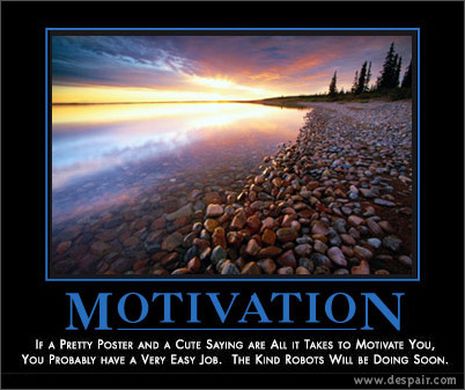
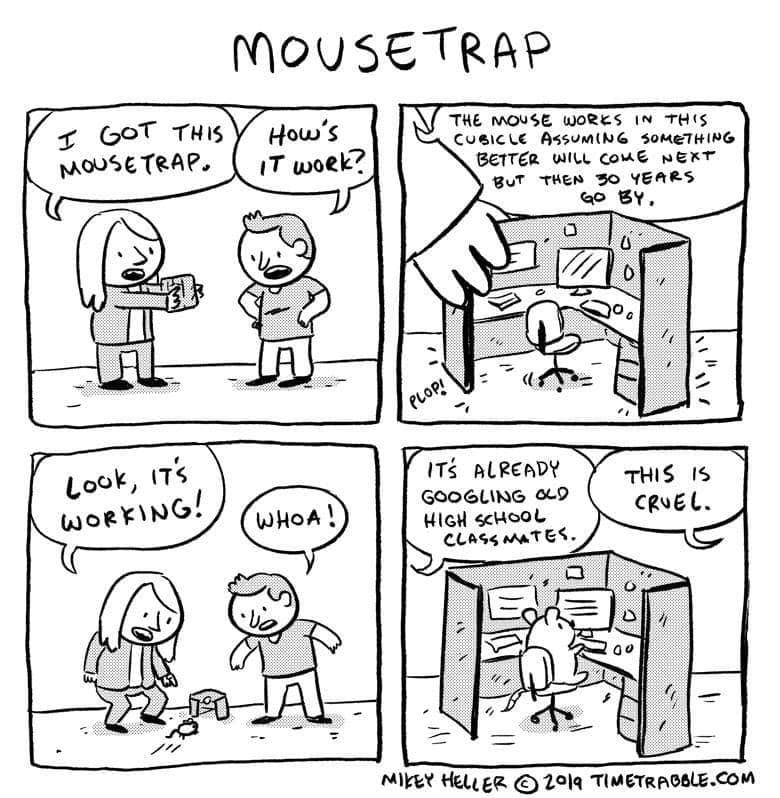
Bullshit Jobs builds upon David Graeber’s 2013 essay titled On the Phenomenon of Bullshit Jobs. He posits that many of us are working in jobs that we know don’t need to be done, that we could stop doing them and no one would notice. And he suggests that these jobs are bad for us as individuals and society. If you’re nodding at this point, my condolences.
When David’s essay was released in 2013 it was something of a viral hit. It resonated with people.* For evidence supporting his proposed phenomenon, you need look no further than that response. Since then, some studies and a lot of discussions have taken place, which led David to more fully explain his ideas and evidence them with this book. He tries to distinguish between bullshit jobs, shit jobs, and bad jobs, and why they come about.
It is this discussion of the larger system that brings about bullshit jobs that is the most interesting aspect of the book. While the idea of bullshit jobs is still hazy – the definition is subjective when all said and done – the changes to our society, economy, and personhood are well documented and discussed. The combination of this discussion with the theory lends weight to another idea presented within: that the role of jobs in society needs to change.
Currently, we place a large amount of prestige and identity on what we do for work.** Our exchange of labour for money is how we afford to live and often how we understand our contribution to society. But is that all we have to offer? Will we be remembered by our job titles? Does that mean that unpaid work doesn’t have value, either in the identity or contribution sense? The answer to these questions is clearly no, making this discussion a highlight of the book.
This was a very interesting book and tied in well with Rutger Bregman’s Utopia for Realists.
* Nope, I’m not going to comment one way or the other about it resonating with me. That would give away how I feel about my day job slowly killing me.
** One of the first questions you will be asked is, ‘What do you do for a living?’
Update: this review at Current Affairs is also worth a read.
Update Sept 2020: David Graeber has passed. It is sad to hear that someone who got dirt under their nails as well as brought intellectual depth to their work is gone. Rest in Power!
“Advertising has us chasing cars and clothes, working jobs we hate so we can buy shit we don’t need.”*
Richard Denniss’ Curing Affluenza seeks to define the problems our current consumerist society has and how to address it. He posits that we need to abandon consumerism and opt instead for materialism if we have any chance of changing the shape of our economy, which will, in turn, allow us to address issues like climate change and environmental degradation.
For many years now I’ve been a fan of Richard and The Australia Institute’s work. He and they manage to talk economics without making it feel like you’ve been hit with a brick made of buzzwords.** As such, this book has been on my TBR pile since its release. It has not disappointed.
Richard makes his arguments simply and clearly, in a way that make sense. Even if you disagree with him politically, you would have to agree with his points about economics and politics being about choosing a shape for the economy – the shape being what we choose to spend money on and value. You may argue that we need more spending on tanks and less on healthcare, which has a different shape than an economy where I want fewer tanks and more healthcare. This also applies to our purchases; so if I’m buying tickets to see bands play live rather than upgrading my phone every 6 months, the economy changes shape.
On the Affluenza front, Richard suggests 7 principles for tackling it:
1) First, do no harm.
Think of this as consumer boycotts and active decisions about consumer/lifestyle choices.
2) Some change is better than no change.
Baby steps. It isn’t possible to stick 100% to #1, and larger changes may take longer.
3) It’s not about sacrifice and denial; it’s about saving money and having a better life.
We’re trying to change the shape of the economy, not become monks.
4) Services are good for you.
New status symbol phone or see a live music act? Stuff doesn’t make you happy but experiences do, and they help change the economy’s shape.
5) When you are full, stop consuming.
Because there is such a thing as too many books… Wait, what?
6) Get yourself and your country into better shape.
Our saving and spending, especially when organised with others, can reshape the economy.
7) Flatter is fairer.
Equality of resources and opportunity for all. I.e. redistribution.
Whilst this was a very good book, I did have two problems with it. The first issue was that the middle chapters labour the point, so much so that it felt like needless padding. This was frustrating because as someone who has read various articles and essays from Richard before, I know he can be very concise. It also didn’t help that I was already familiar with what he was trying to argue and the examples used. Though, this may be from that familiarity, so others may appreciate these chapters more.
The second issue was that Richard was largely dismissive of options that didn’t involve capitalism. There was a big assumption that we still need/want capitalism and thus should be reforming/tinkering with it. This assumption was never examined nor justified adequately. It would have been nice to see some discussion addressing those other options, especially in a pros and cons manner.***
* Quote is obviously from Fight Club and not this book. I’m almost certain that Richard is not advocating young men beat each other up and try to destroy capitalism.
** Richard appropriately calls the indecipherable economics talk Econobabble.
*** Richard responded to this point on Twitter. He felt it was outside of the scope of the book and would have muddied the message. I think that is a fair point.
Don’t believe everything you see in the news… but which bits?
There is a narrative we hold to be true: that the news media are trying to inform us of the facts; that they search high and low for the truth; that they are honest and hardworking; and that they hold truth to power. Manufacturing Consent presents the argument that they often don’t do that at all but instead operate under the Propaganda Model of media.
Almost a decade ago, I attended a panel session about news journalism that billed itself as to how award-winning journalists hunted down and exposed the truth. I walked out about half-way through from disgust. You see, these award-winning journalists had been patting themselves on the back for having done what I regard as the bare minimum of fact-checking on a story and had managed to discover something. These were the people we relied upon for our information.
While that wasn’t the first time (nor the last) that I’d run up against the failings of the media, it was the moment that has come to summarise my view of the media. I think that is why Chomsky and Herman’s thesis in the book feels familiar.* The way media act to perpetuate the status quo and the interests of power and influence is well articulated if unsurprising.
There were a few issues I had with Manufacturing Consent. The first was that the introductory chapters, including the preface written in the early 2000s, and the final chapter were excellent, but the middle case study chapters erred on the side of exhaustively labouring the point. I mean, the history of various conflicts was fascinating, but not exactly what I signed up for when I started reading.
The second issue I had was that this book feels somewhat out-of-date. The examples were from a previous generation of media. While it appears that much of the propaganda model still holds, you have to question if it isn’t far more nuanced now. Media ownership has become even more consolidated, the diversified online media landscape has made attention seeking and funded agenda pushing the norm, partisanship is leveraged for audience retention, media owners and management are more overtly pushing agendas, and lobbyists and other bad faith actors exist in all aspects of public discourse driving narratives. Power is Feeding the Chooks** now more than ever. It feels like the propaganda model and the 5 filters are still highly relevant but in need of an update to capture the new realities.
Another issue was one that was briefly touched upon in the final chapter. The propaganda model tends to assume a level of competence and diligence to journalism and the media. I often use Hanlon’s Razor: Never attribute to malice that which is adequately explained by stupidity. A lot of the reporting being attributed to a propaganda model may actually fall under the lazy, incompetent, and uninterested model instead. Although, that could be seen as part of the 5 filters of media selection – or to paraphrase Chomsky: if they were actually good at journalism they wouldn’t be working there.
My final issue was around solutions: what are they? There aren’t any solutions posed, both from the point of view of a media consumer trying to be well informed and from the point of view of a society wanting a reliable media. Some ideas are alluded to, such as the reports from independent groups covering an issue (e.g. Amnesty and America Watch were mentioned), which also requires an active audience who seek out information (i.e. lateral reading and fact-checking). But I feel as though this was an important set of recommendations to explicitly state.
A very interesting and insightful book that is well worth a read. Be warned that the case studies are more of a history lesson than you’d probably be expecting.
* Although, it may feel familiar because this text has been in the “mainstream” for decades, so much of it will have found its way to me without having read it directly.
** For the non-Aussies, Feeding the Chooks was a term for Press Conferences from one of Australia’s most corrupt politicians. Sir Joh would wait until journalists were desperate for information and then feed them timed propaganda that they wouldn’t question due to deadlines – hence, feeding the chooks. He was an authoritarian who rigged elections (sorry, gerrymandered…), essentially ran a police state, held the press in disdain, was generally racist and homophobic (although, kinda standard for an Aussie conservative from Queensland), and marginalised workers and unions.
Update: I’ve learned that Matt Taibbi wrote a book called Hate Inc. that was originally intended to be a modernising of Manufacturing Consent with Chomsky’s approval. It changed a bit, but addresses some of the issues I raised above.
“You can’t pull yourself up by your bootstraps if you have no boots.”
Rutger Bregman’s Utopia for Realists starts with a simple premise: since we are already living in the utopia imagined by previous generations, what’s the utopia we’re aiming for now? We need big ideas to strive toward in order to keep progressing forward.
I have been meaning to read Utopia for Realists for several years now. Prior to the book’s publication, I read the sections Bregman had made available from two of his chapters on Medium. Those were my first introduction to the concept of a Universal Basic Income and how there was some fairly compelling, if limited, evidence for just giving people money to fix just about every problem. Poverty, it seems, isn’t a moral failing or a lack of work ethic, it’s a lack of cash. Since then I have watched several of his interviews and discussions (yes, including the Davos inequality panel) and still managed to gain more insights from his book.
It seems odd to note that we’ve stopped thinking about our future utopia. Outside of Star Trek*, most of our future visions are of dystopias which warn us of our mistakes, but also underline what happens when we stop thinking of a utopia to strive for. We can only see the negative futures, not the potentially great futures.
Bregman spends a lot of Utopia for Realists outlining several of our current societal problems and then introduces some of the evidence for his utopian vision of a Universal Basic Income, lower inequality, and a shorter working week as solutions. These are not new ideas – Mill, Russell, and Keynes have all written on these topics – but they are the utopia that Bregman thinks we need to be aiming for. In outlining the evidence in favour of this vision, he also shows how close we have come on several occasions to implementing some of these reforms and how easy it is for naysayers to win the day.
Utopia for Realists is very well written**, is easy to read, and not particularly long. The only reason I didn’t finish this quickly was that I kept tracking down the extensive references and surrounding literature for further reading. My own fault for being a giant nerd. One of my favourite references was this one on the value created by various professions, which suggests that we are rewarding some who are actively bad for the economy, whilst under-paying those who are good for the economy.
* Although, how much of a utopia is Star Trek, what with the wars, the planet of hats, and Borg collectives? Discussed further here.
** Not sure whether to credit this to Bregman or his translator – Elizabeth Manton.
Tedious job, flexible hours, remuneration package includes invisibility powers, some harassment involved, and if quotas not met world will end in darkness.
Charlie Asher’s world is turned upside down the day he becomes a father. His wife dies, he becomes a grim reaper, his daughter can kill by pointing at things, and he may never get laid again. His new job is confusing – the JDF is in the mail – the forces of darkness are calling to him from the sewers and people are starting to suspect he’s a serial killer. At least the pay is good.
Over the last month, I’ve tried to read several humorous novels, and have only managed to complete two of them. The two I have finished – A Dirty Job and Redshirts – have had similar pros and cons. Both have had a strong premise, were mostly well executed and were reasonably entertaining. But neither were as funny as they thought they were.
Moore’s absurdist writing style is a strength to this novel. But I couldn’t help but feel he didn’t capitalise on that with more humour. And some of the humour that he does inject… Let’s just say that cringy white guy jive-talking or ethnic caricatures probably don’t amuse me as much as they used to.*
I think it was because of this only mildly amusing level of humour that I started nitpicking aspects of the story. The continuous references to ‘beta males’ became tiresome as, aside from being scientifically debunked, it made the author sound like he was posting on Reddit subforums. Another was the use of weapons against the forces of darkness.** Whilst the humour of this was done well, it did trivialise the threat at several points.
So, much like I said in my review of Redshirts, I think A Dirty Job wasted its potential as a comedic novel and was only okay.***
* I’m going to pretend it wasn’t deliberately racist.
** Also, since when does an American not have access to an arsenal of firearms? One handgun? One?
*** I feel as though I’m being a bit too harsh/critical of humorous novels of late. Maybe all the Terry Pratchett I’ve been reading has spoiled regular books for me.

 The Cult of Osiris by Andy McDermott









 Tyson Adams