
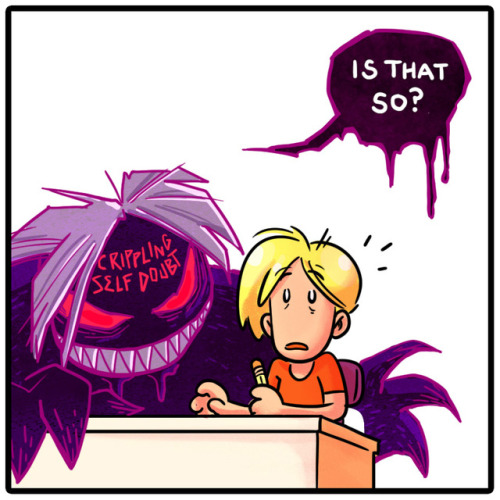
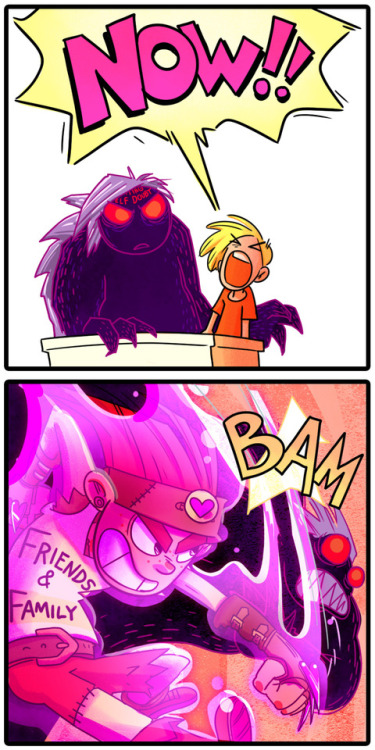
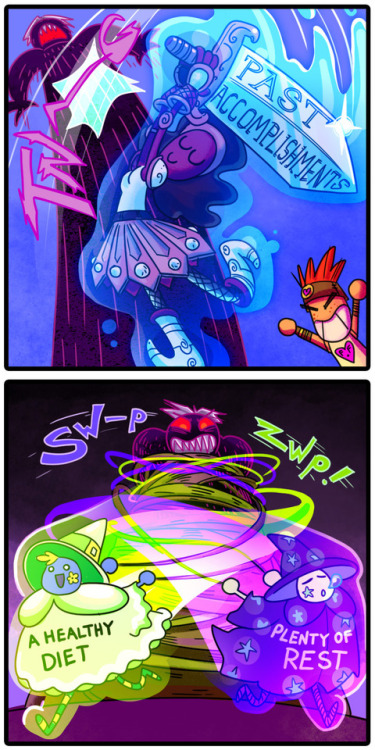
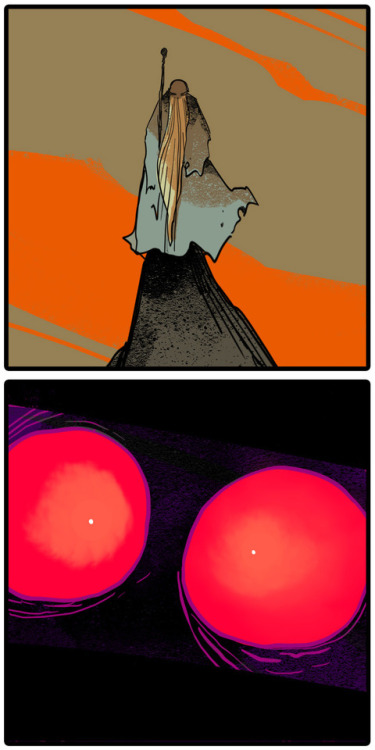
This comic from Nateswinehart captured my attention today. It was too good not to share. Visit his Tumblr to see more great stuff.





Tag: Comics
When do people start to hate reading?
For us readers, the answer is “Never! How could you ask such a silly question? What’s wrong with you? Do you even book, bro?” But the reality is that a significant chunk of the population have not read a book in the last year, and/or aren’t regular readers. We have to admit: some people don’t like reading.*
I have a pet hypothesis** on this. During school, mainly high school, kids start to hate reading. This is because teachers, academics, literary people, policy makers, and general busybodies, start to decree what kids should and shouldn’t be reading. As a result, kids are “forced” to read books that they aren’t interested in or that have won an award or are a “classic” or that fill a certain level of appropriate snootiness that appeases book snobs.
Or as Blackadder put it:
In the academic text – From Striving to Thriving: How to Grow Confident, Capable Readers – Stephanie Harvey and Annie Ward discuss this issue. They outline this problem and have summarised reluctant readers with a cartoon from Dav Pilkey (of Captain Underpants fame).

One of the authors, Annie Ward, presented at a readers summit recently and one of her slides has made it to social media. It covers some key points for how educators become “book wardens” who restrict reading and undermine reading ownership and choice. Book Wardens tend to:
- Confine kids to “just right” books.
- Express book snobbery.
- Look askance at funny, edgy, or forbidden topics.
- Frown upon rereading.
- Impose accountability measures for reading.
Sound familiar?
While I have frequently focussed on the snobbery aspect to this problem, particularly from the reading/publishing industry itself, there is more to this. Take for example “just right” books and adults. What image do we conjure up when someone mentions comic book readers? Pimply teenage boy? An obese virgin loser who still lives with his parents? You know, this guy:
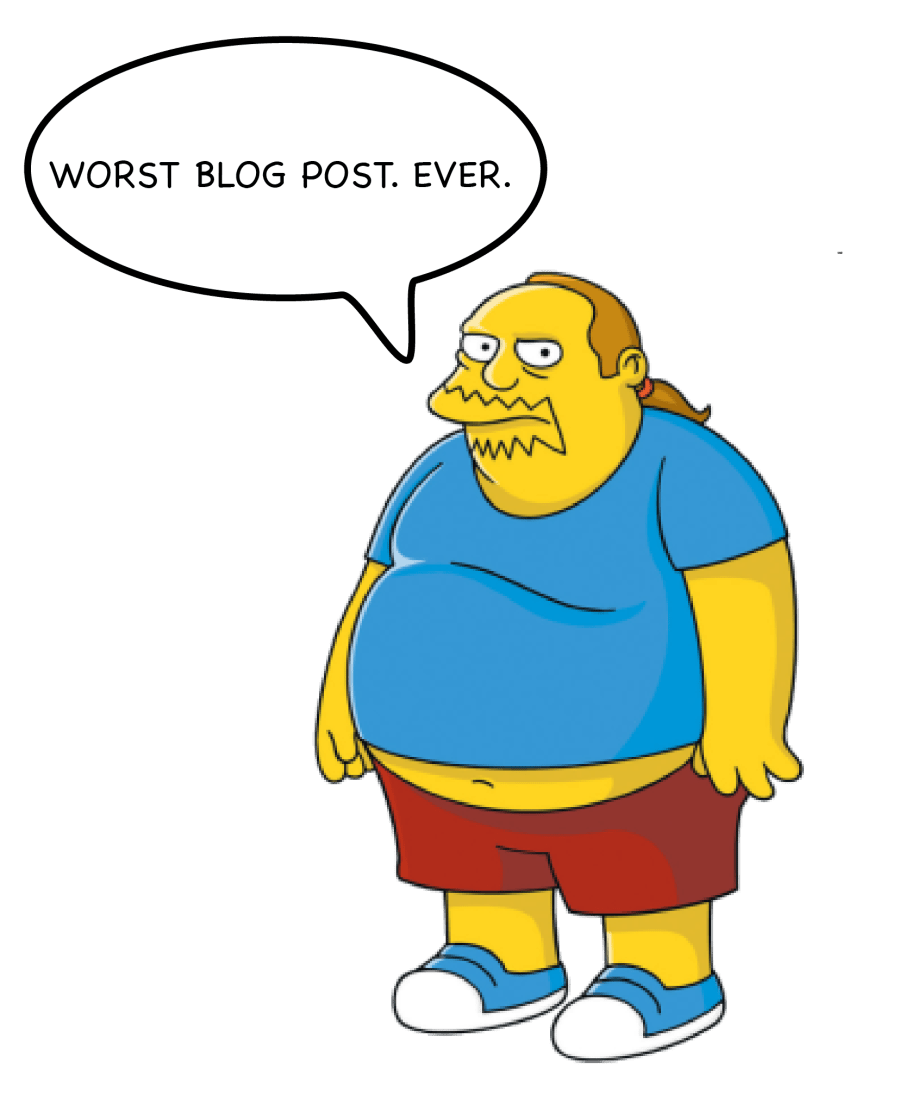
The problem with that series of assumptions is that it is a form of reading snobbery. How could a comic be entertaining to anyone who isn’t a loser? Or similar statements that you’ll hear from people who have never read a comic book and battle to wrap their head around the art form.
In other words, even as adults, we are encouraging people not to read.
But don’t worry, as Dav’s second-page shows, we can all make a difference to people by encouraging them.***

*A quarter of people (24-26%) haven’t read a book recently. I’ve previously discussed the reading figures for the US, UK, and Australia and it is interesting how the figures come together. Suffice to say, reading is not a favourite hobby for most people.
**Hypothesis because a theory is something pretty solidly supported, whereas a hypothesis is a question you want to answer. Join me in my scheme to change the values that will stop the positive feedback of the colloquial usage of theory today!
***Although in fairness, the literary snobs are trying to encourage people to read. Their failing is that they think what they like should be what everyone reads. They have us talking about guilty pleasures and judging what we read by their standards rather than just letting us read stuff we enjoy.

Growing up I was a huge Tintin and Asterix fan. So when I saw this article on artist Muzski’s take on Tintin I just had to share it.

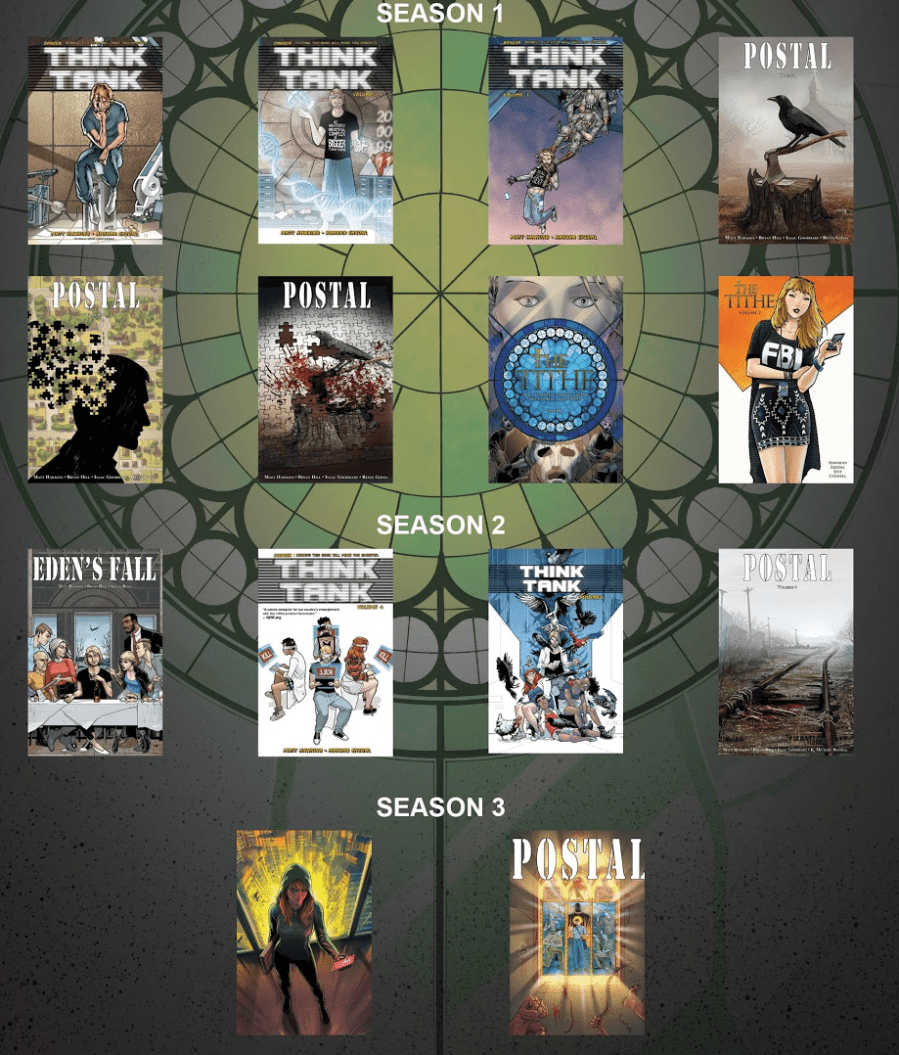
Edenverse: Think Tank, Postal, The Tithe, Eden’s Fall, Samaritan by Matt Hawkins
My rating: 4 of 5 stars
Smart people take on the government. Because they should.
Back in 2012, I stumbled upon the first instalment of Think Tank from indie comic publisher Top Cow. This was back when online stores selling e-comics were still not completely up with technology. I bought Issue #1 and then tried to read it. It wouldn’t download to my comic reading app. I tried to send it to my iPad. It didn’t like the strange format. I tried reading it in the store’s very own comic app. It suggested my iPad and computer were too new.
I won’t go into the details of exactly how I read that first issue (hint: comic files are just a bunch of pictures if you can slice them open), but even with all of the frustration of this first purchase I still enjoyed the story.
Dr. David Loren is many things: child prodigy, inventor, genius, slacker… mass murderer. When a military think tank’s smartest scientist decides he can no longer stomach creating weapons of destruction, will he be able to think his way out of his dilemma or find himself subject to the machinations of smaller men?
So started a five-year avid following of one of the more interesting techno-thriller series I’ve come across. Unfortunately, I switched from buying individual issues to the collected volumes, which were entirely more reliable in those early years of e-comics. I say unfortunately because as a result, I didn’t realise that Think Tank was part of an expanded universe – something the last few pages of regular issues highlights with previews.
Now I’m caught up. In particular, The Tithe and Samaritan are excellent additions to the Think Tank universe (Edenverse, named after the town in the Postal series). Matt Hawkins and illustrator Rahsan Ekedal have pulled together a collection of political machinations, high-tech possibilities, real-world issues, and social commentary for a brilliant collection of comics. Seriously, they have references for the topics, tech, and background at the end of each book, something that tickles my inner scientist with delight.
I highly recommend these series to comic fans, especially those who like techno-thrillers or crime-thrillers.

My rating: 5 of 5 stars
Welcome to Superheroes Annonymous. Barbara, would you like to tell us why you’re here?

I really enjoyed this comic. Barabara isn’t a nice character, she is a loner, outsider, and she is battling personal problems, so she takes this out on everyone around her. Layered over this is the ambiguous threat of Giants who are coming to destroy everything she holds dear.
[Spoiler] I liked the ambiguity of whether the Giants are just a fantasy world and an analogue for the troubles Barbara is battling. We see her face those troubles and grow, and (hopefully) become a better person, if one still dealing with loss. [/spoiler]
This isn’t a story for everyone, but it will pull at the heartstrings if you give it a chance.
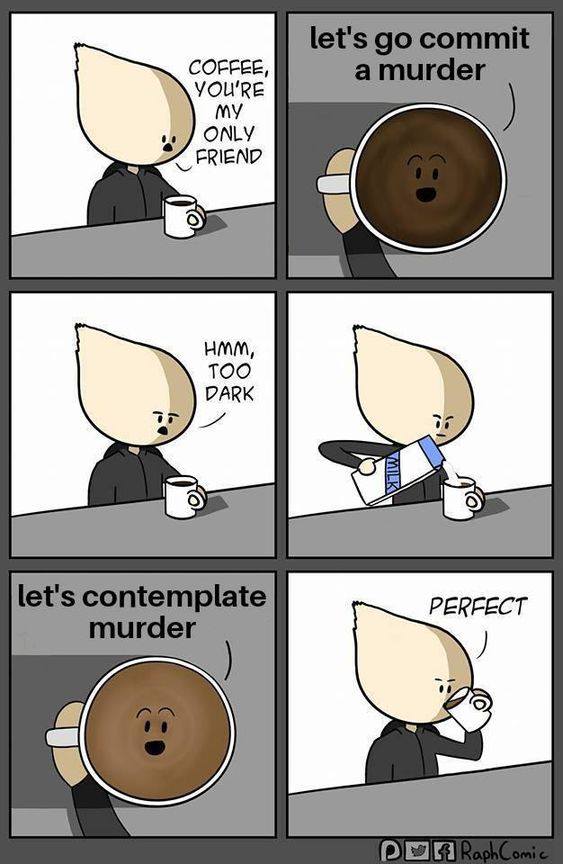
So this isn’t the original cartoon, but I prefer it. Since this is pitch perfect for adding different text to, it has become a meme. Original here.
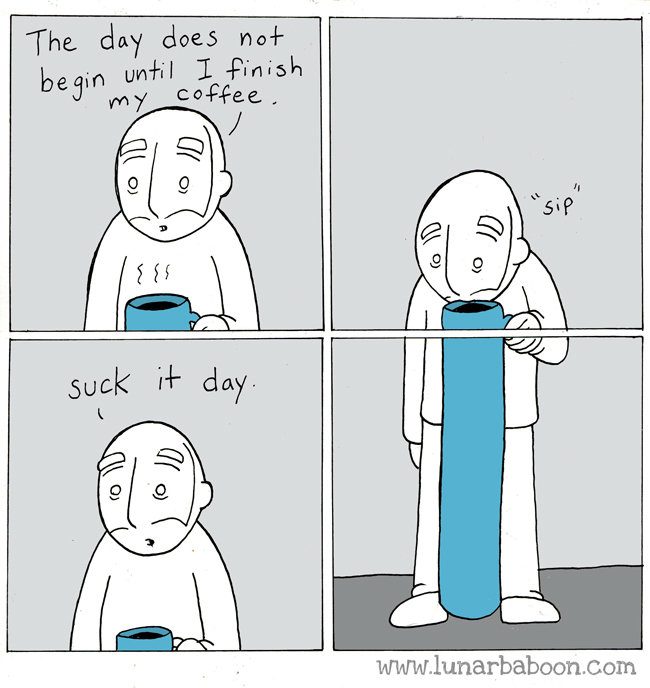
Check out Lunarbaboon.com
Do you like comics? I’m not talking about movies based on comics. I’m not talking about comic fandom that can only be solved Utopia style. I’m talking about the art of storytelling that only the mix of art and narrative can manage.
How Utopia deals with comic fans:
I have previously discussed how some fail to give due respect to comics and graphic novels. The TL/DR is that literary snobs don’t like non-worthy genres to be discussed. I mean, how dare someone dilute words with pictures! Yet the comic format allows for a form of storytelling that other mediums would love to have. Literally showing can condense a novel to a few dozen pages whilst retaining all of the important details, as I discussed in my review of the Parker comics. Text can be used in a way that neither movies nor novels can utilise. An example is the way authors construct their ideas into sentences, paragraphs, and chapters to transition between ideas and moments. When you add the visual artwork you can add effect and impact to those transitions, ideas, and moments. You can’t do that in other mediums. Well, unless you’re Edgar Wright merging movies and comics.
The way the art is used to tell a story is an often overlooked aspect of comics and graphic novels. This is despite the fact that the art is their most distinguishing feature. That and the impossible physiques covered in spandex.
As an example, I’d like to share a page from a comic I bought when I was 10.* On this page is a panel that has stuck with me as an example of the combination of art and narrative. Comics can do this so easily. It would make movies jealous – unless they have the CGI budget. No big illustrated fight scene. No words like ZAP or KAPOW as a blow is struck. And within the context of this larger story, the minimalism is an important narrative device.
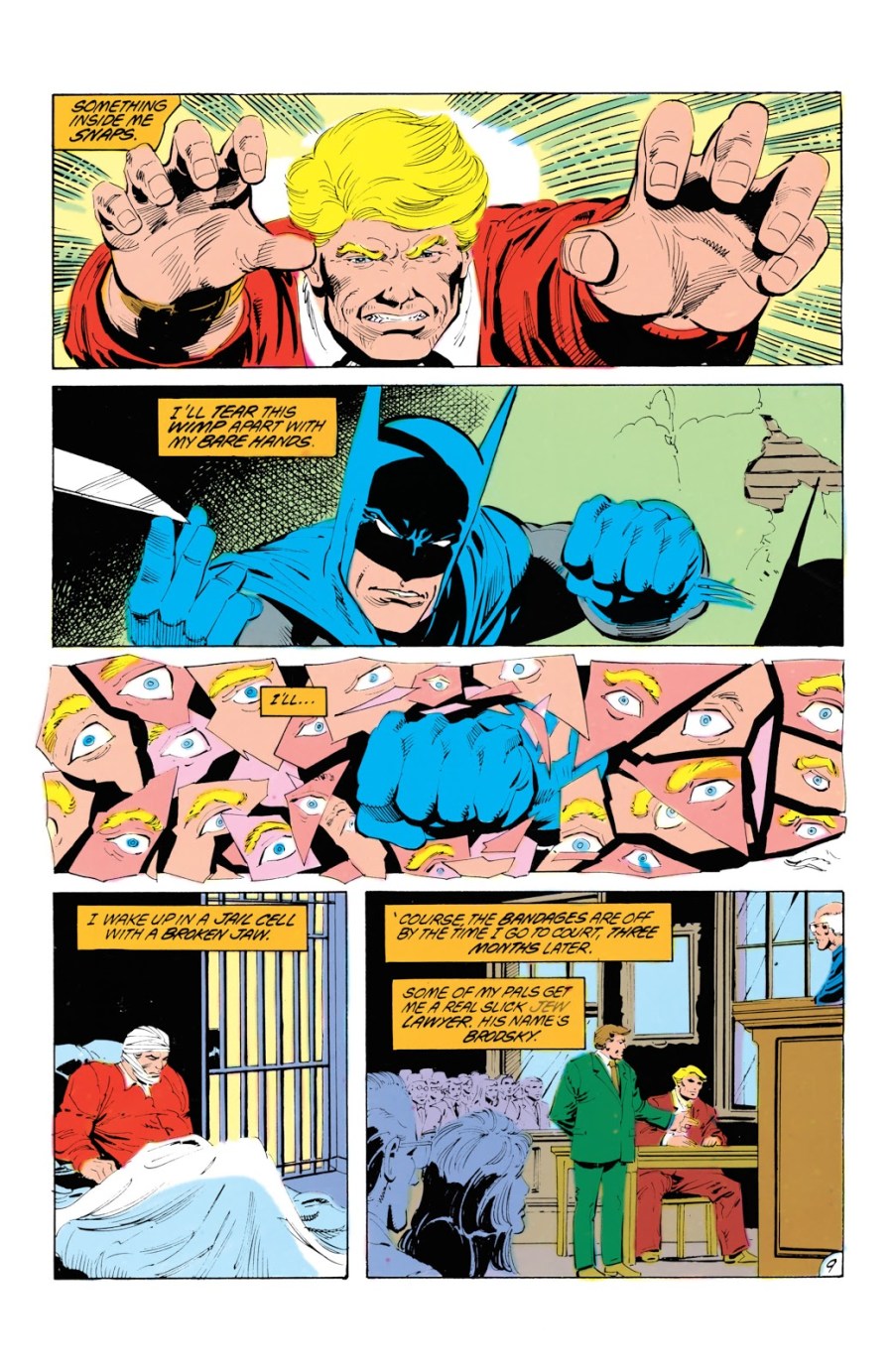
Obviously, this is just one example that lead to my formative appreciation of the comic book medium.* As much as many formative appreciations of comic books are based around the erotic artwork… sorry, lost my train of thought.
For another example of the combination of art and story, Nerdwriter made a particularly good video discussing Maus and how it is constructed as a story and piece of art. Every frame, every image, the whole page, has meaning.
When it comes to discussing the literary and artistic merit of comics the discussion often never moves past the capes, spandex, and insecurity inducing bulges. Some articles have argued that if we let graphic novels into literature we have to let in everything. They must defend Fort Literature from the invading Lesser Works. But comics are far more than the superficial observations of those dismissing them.
Well, at least I think they are cool.
*Please appreciate this post. It took me ages to figure out which comic I had owned. During high school, we were asked to bring in a comic book to be part of a creative writing project in English class. The class never eventuated and the comics were never returned to us. As a result, I couldn’t remember the details of this comic, and since there are a lot of Batman comics, it took a lot of effort to track down.
This also opened an old wound created by that high school English class. The wound of crushed creativity. The promise of being taught creative writing that went unfulfilled for decades. But thank goodness we got to learn how to write essays about ee cummings in Lit class instead.

From Veritable Hokum. Check them out!
And yes, this Emu War actually happened. Roughly 20,000 emus migrated into the Eastern Wheatbelt area, discovering newly cleared farmland filled with crops and watering points for sheep. They liked this supply of food and water and were ambivalent toward the soldier settler (and other) farmers’ tough run of grain prices and droughts.
Since these were ex-soldiers facing ruin (from drought, grain prices, broken subsidy promises, and emus – blame the killer emus!), they liked the idea of using machine-guns (2 Lewis Guns) against the birds in the same way they’d used them against opposing infantry in WW1. This didn’t go anywhere near as well as expected. Emus are faster, harder to kill outright, and generally not running straight at a machine-gun embankment; so their casualties were low.
Two attempts were made at an emu cull, but ultimately the government decided to offer a bounty on emus instead. Later they went with the tried and trusted move of building a fence to keep the emus out of agricultural areas (along with dingoes, wild dogs, rabbits, kangaroos – although the latter laugh at attempts to build a fence they can’t jump over).


 Richard Stark’s Parker Series by Darwyn Cooke
My rating: 5 of 5 stars
“Please…they’ll kill me.”
“I’ll kill you…worry about me.”
A long time ago Donald Westlake (aka Richard Stark) imagined an imposing figure with large hands storming over the bridge into New York. Who was he? Why was he so pissed off? Who was he intending to kill? And so was born Parker.
Fast forward past 24 novels, 8 film adaptations, and countless impersonators and homages, and we come to this graphic novel series by Darwyn Cooke. I’m not a fan of most of the film adaptations of the Parker novels as they don’t seem to understand the material – although Payback – Straight up: The Director’s Cut was pretty close to getting it right. But Cooke did understand the material.
This series didn’t just adapt the novels to the graphic novel format, it improved upon them. The artwork especially captured the grit of the original stories. This was done without compromising on the story, remaining very faithful to the originals.
I have previously read The Hunter, The Outfit, and Slayground, and managed to get my hands on an Omnibus edition to read The Score and re-read the others. It was a treat. At the end of Slayground is a short adaptation of The Seventh, a novella I have previously read. Cooke managed to capture much of the story with just a few panels on a handful of pages. I think this short work is emblematic of the skilful artwork and storytelling Cooke has brought to these adaptations.
Unfortunately both Cooke and Westlake are not longer with us. Just as there will be no more Parker novels, there will be no more graphic novel adaptations by Cooke. It is a pity.
When I think of literature I think of an older guy sporting a greying moustache, sipping a sherry, wearing a smoking jacket, seated in a library of leather-bound books in front of a simmering log fire. The guy speaks with an aristocratic English accent and expounds on the greatness of some book that other older men dressed like him, sitting in similar log-fire warmed libraries, also like to read when not shagging the maid.
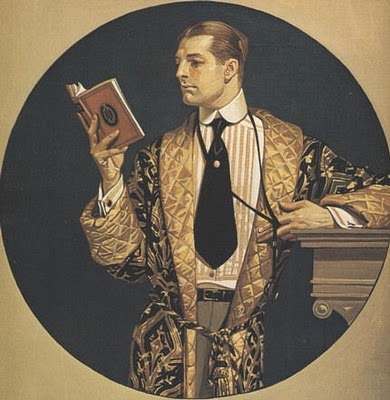
Now clearly not everyone who reads literature fits this image. Some probably can’t even afford a maid to shag. But it does appear to be an image that people aspire toward, an image that informs what they deem literature, and thus what they deem worthy of reading. Rather than judging any written work based upon its lasting artistic merit – although that definition is so subjective as to be useless and ideal for starting pointless arguments…. (cough) – people seem intent on creating boundaries before a work is allowed to be judged. They must defend Fort Literature from the invading Lesser Works.
Normally I’d launch into a whinge about how speculative fiction is unfairly maligned, or how I’ve read crime fiction that has more artistic merit than most literary works. But instead, I’m going to talk about graphic novels. In an article on The Conversation, Catherine Beavis explained how the graphic novel Maus came to be part of the literature curriculum.
Despite this explanation, there was always going to be someone in the comments telling us how a graphic novel can’t be literature. I assume they wrote their comments whilst wearing a smoking jacket and taking a break from shagging the maid.
Well well……..so it’s art as literature.
Why not a more well-known comic (sorry graphic novel).
Not saying this isn’t a worthy addition to any curriculum, but more as social comment rather than literature.
Surely the novels of great Australian writers should be preferable – Winton, Malouf, Carey etc.
Let’s break these points apart one by one. As will be seen from further comments, the argument primarily revolves around the feelpinion that because graphic novels contain pictures they are art and thus not literature. A similar argument could be made for movies being TV shows and thus we could abolish the Oscars… actually, that isn’t a bad idea. Anyway, I guess we’d better break the news to the literature professors that Shakespeare’s plays need to be taken off of the curriculum.
The argument then moves to the “I haven’t heard of it, so it can’t be good” assertion. Maybe because they realise this isn’t a great argument, they immediately distance themselves from it. But we start to see the “worthy“ argument being formed. I’ve argued many times that “worthy“ is a great subjective argument put forward by people who think they are worthy.
Of course, it wouldn’t be a literary argument if someone didn’t cite some authors they deem worthy. For those unfamiliar with Winton, Malouf, and Carey, they are award-winning Aussie authors who write “interior histories” and about “people rebuilding their lives after catastrophe” and “people who experience death and will never be the same again”. None of those statements could be applied to a graphic novel about someone who survived the Holocaust… No sir.
Their list of worthy authors is as subjective as their comments about graphic novels and Maus. I could similarly ask why the Hitchhikers Guide to the Galaxy isn’t on the curriculum. It has a lot to say about society and has entered the lexicon, which is more than can be said for any of the other authors mentioned nor the graphic novels being shunned. I could say the same again about Superman or Spiderman, which have implanted ideals and phrases of morality into society, regardless of whether people have read those graphic novels or not.
*Steps on soapbox*
I personally welcome any work into the class that will encourage kids to read, think and learn. And to anyone who derides graphic novels, they are clearly saying they don’t or haven’t read any.
*Steps down from soapbox*
The commenter responded to criticism of their subjective opinion:
That may be so, but my bigger point was that literature = words.
This is art with captions.
Not disputing that it may be hugely popular or good (even great)…
but literature it ain’t.
I think the appropriate response to this is a head shake. The problem is the black and white definition of what literature is, whilst ignoring the fact that the graphic novels fit the definition of literature. Pointing out the flaws in these opinions is as easy as saying that graphic novels, with very few exceptions, are composed of words. They also use graphics, but that is often a collaboration between the writer and the artists they work with. Thus, by the definition of “literature = words”, graphic novels are eligible to be classified as literature.
But anything to keep only the “worthy” books in contention as literature. Can’t have that kids stuff being called literary!
So I named three contemporary Australian writers – call me subjective.
I am not knocking the (art) form…just that it (to ME) is not literature.
Your opinion is obviously as valid as mine……don’t get huffy.
The last point here is one that irks me more than irksome irkers on an international irking junket. Opinions are not equally valid. That sort of subjectivism nonsense eats away at reality and suggests we “just don’t know, man”.
The commenter made a subjective list, so I put together some examples that were superior in quantifiable ways (impact on society, entering the lexicon, referenced by society) to show that the subjective claims were more worthless than a $9 note because clearly not much knowledge or thought was put into the claims.
There is also the idea of literary critique and argument, rather than stating feelpinions. I’ve stated an opinion and argued it, offering reasoning. The examples I countered with aren’t necessarily the best choices, but I have justified and quantified my argument, something you learn in high school literature class. Art Spiegelman won a Pulitzer, so clearly, someone in the literati agrees. And surely a Pulitzer prize winner is worthy of being on the curriculum. But of course all opinions are equally valid and “I’m entitled to my opinion”, dammit!
Surely the whole point of literature is that the reader has to imagine the scene described, the way words are spoken, the implications of what is said and much more. It’s all in the mind, which develops through reading.
A graphic novel presents the words and pictures with almost no imagining required. The number of words is hugely reduced to give way to often wasted space. In the example above there are 21 words, which if in normal lowercase type could be written in 10% of the space.
Sorry I’m not convinced graphic novels have any merit for senior students.
Shakespeare’s plays give stage directions and poetry is often deliberately obscure. So how do those examples fit this exclusionary definition of literature? I’m sure some artists would object to the idea that they aren’t conjuring a scene that develops in people’s minds. And is the idea to only allow readers to imagine a scene? Isn’t it about conveying ideas and emotions too? Isn’t this some great mental gymnastics to try to maintain Fort Literature from invasion by the Lesser Works?
The second paragraph is also exemplary of someone who hasn’t read many, if any, graphic novels. So, of course, this commenter wouldn’t be convinced that graphic novels are of any merit. First, they’d have to know something. But that doesn’t hold them back from commenting.
While I’m in the mood for alienating folks, let me also say that this is a good example of dumbing down literature.
Give the kids a picture with limited words and maybe they’ll get the idea.
Don’t kids these days have the attention span to read a novel?
The last graphic novel I read was 480 pages long and took many hours to read. It covered sexual identity, morality, the greater good argument, do evil deeds make us evil, etc, as issues. The last “literature” novel I read was about a woman who manipulated people to get what she wanted. It was ~300 pages long and took many hours to read.*
This argument is typical of people who have a snobbish attitude to something based upon pure ignorance of the topic. Similar statements have been made throughout time, decrying the dumbing down or declining standards of today’s youth. Oddly enough it has been proven false again and again only to be spouted once more.

There is a similar article on The Spectator – a home for uninformed opinion – which argues that if we let graphic novels into literature we have to let in everything. They must defend Fort Literature from the invading Lesser Works. Maybe I’ll address that one at some stage when I’m feeling masochistic, but I’m going to leave it there. The maid has arrived.
*This comparison was true at the time of my original comments on The Conversation. I’ve read many graphic novels since, but no further literature novels.
Update: Nerdwriter made a particularly good video discussing Maus and how it is constructed as a story and piece of art. Every frame, every image, the whole page, has meaning. Kid’s stuff indeed.
Update: A great video essay about how you can’t judge art objectively.
 Rick and Morty, Volume 4 by Kyle Starks
My rating: 4 of 5 stars
“If I’m being too vague, I’m talking about your penis here.”
Are you missing Rick and Morty? Can you believe it has been 1 year, 4 months, and 9 days since the cliffhanger of Season 2? Can you believe we still have a month to wait for Season 3?
Well this collection of short adventures will tide you over. So many of these stories feel like lost episodes that we missed out on. It’s a Ricklicious fix. Rick and Morty fans will enjoy this collection no end.
I received a digital copy of this collection ahead of release in exchange for an honest review, focussed on science.
Is The Crow one of your favourite cult movies? Well, it should be. CineFix discuss the movie and the comic it was based upon in this month’s What’s the Difference?
The Crow remains one of my favourite films, which probably says a lot about my teenage years. The comic it is based upon, however, was not a book I enjoyed reading.
As the video mentions, author James O’Barr wrote the comic as a way of coping with the death of his girlfriend at the hands of a drunk driver. The book is bleak, and when not being directly about revenge, it is darkly introspective and depressing. The main character is clearly a form of Super Id – drawn as lean, muscular, 6’5″, invulnerable, unstoppable – and acts as a form of cathartic revenge against a cruel world. That might be fine for a Steven Seagal movie, but there’s a reason why you had to look up who Seagal was just now.
The movie is an example of a great adaptation, especially considering the film couldn’t be completed as intended after the unfortunate death of Brandon Lee. They managed to capture so much of the tone and character of the book whilst not making a movie that would have you slitting your wrists halfway through. The video refers to this as Hollywoodising, but I think they are being too harsh. The story was a revenge tale, but the movie manages to create an actual character arc and have more compelling bad guys. Case in point: Michael Wincott’s Top Dollar. The movie also trims off the bleak stuff in favour of a more cohesive narrative. This is why I had a poster from the movie on my wall and gave the comic away.
Follow Fowl Language Comics and give them money.

 Tyson Adams