Let’s face it, a large chunk of literature and non-fiction sales are nothing to do with people reading and everything to do with being seen to read. It was no surprise to early e-reader adopters that the romance and erotica genres took off as people on the bus to work could now read the stuff they wanted to without being judged. The Guardian posted this survey of readers (although I can’t find the source) listing off everyone’s favourite reading cred books, you know, the ones you claim to have read but fell asleep at page 2.
A recent survey of 2,000 people suggests that the majority of people pretend to have read classic books in order to appear more intelligent, with more than half of those polled displaying unread books on their shelves and 3% slipping a highbrow cover on books they’d rather not be seen reading in public.
The books most likely to be lied about are, naturally, the books most often filmed, talked about and studied in school (some of the respondents must have been lying since GCSE onwards). Are any of them in your pretend-I’ve-read/never-finished pile, or do you save your literary fibbing for Finnegans Wake and Infinite Jest? Share your guilty secrets below.
1) 1984 by George Orwell (26%) I have actually read this classic. I read it because Animal Farm was one of the only books I had to read in English Lit class that I actually enjoyed (I’m not counting plays, you’re not meant to read plays, you’re meant to see them performed!!!). I enjoyed it, but I can see how people would battle to read this one.
2) War and Peace by Leo Tolstoy (19%) Haven’t read this one and have no intention of trying. People always talk about battling through it in small chunks because it is such an important and blah blah blah book. If it was really important it wouldn’t have been so boring as to necessitate reading it in small chunks.
3) Great Expectations by Charles Dickens (18%) I watched the old black and white film, does that count?
4) The Catcher in the Rye by JD Salinger (15%) I’ve read this many times and hated it every single time. Each time I’ve re-read it I’ve done so because I felt I was too young and/or stupid to get it, so I must re-read it because I’m so much older and smarter now. Although, John Green did manage to convince me of its literary merits via Crash Course Literature, not that I’ll bother revisiting this novel.
5) A Passage to India by EM Forster (12%) I can honestly say I’ve never heard of this book.
6) Lord of the Rings by JRR Tolkien (11%) I’ve read it, but I will admit that I did so only after seeing the first movie. I really enjoyed the book, but it was long and waffly and I can see why others wouldn’t actually finish it. I will also say that I started reading The Hobbit when I was in school and then realised that life was worth living and stopped.
7) To Kill A Mocking Bird by Harper Lee (10%) Okay, I’m guilty of this one. It is on my TBR pile. I have it on Kindle and DTB.
8) Crime and Punishment by Fyodor Dostoevsky (8%) See #2
9) Pride and Prejudice by Jane Austen (8%) I’m going to read the zombie version.
10) Jane Eyre by Charlotte Bronte (5%) If there is a zombie version of this I may read it.
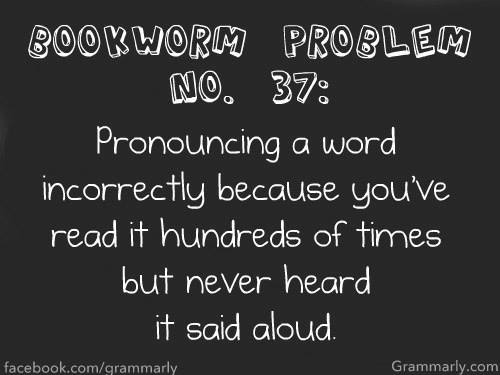
Have you ever suffered from this? I often have this problem with names, especially those from a Dravidian or Sino-Tibetan base. The earliest word I can remember reading but not knowing how to pronounce was acknowledge and its derivatives. It was a favourite verb of WE Johns in his Biggles books, using it instead of said in dialogue. I know, acknowledge is phonetic so there shouldn’t have been a problem, but I was young and my dictionary was very small.
It isn’t just reality TV, it is quite a bit of TV programming that is killing books and, thus, us.
Think about the worst book you’ve ever read. Now remember that, with few exceptions, the movie is always worse than the book. Now think about the best programming on TV being movies and high calibre drama shows. So what I’m insinuating is that the best programs on TV are inferior to just about any book.
For every half-hour wasted watching bad TV, that is 5-10% of a decent novel that you’ll never get to read. Scary, isn’t it!
NB: If people are interested I might write about my favourite TV shows, because not all TV sucks.
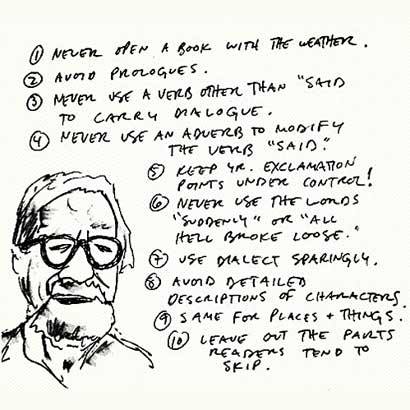
I was saddened to hear of Elmore Leonard’s passing at age 87. He leaves behind a legacy of fantastic writing and his influence will continue. As a tribute I’m posting his ten rules of writing, but I also recommend picking up one of his many works to see how he could impart more in a few sentences than others could in an entire chapter.
I’m not a fan of The Daily Fail. They really do seem to swim in the shallow end of the wading pool of intelligence. That said, today they featured an article from a very good novelist, someone with whom I’ve had some interesting conversations: David Thomas / Tom Cain. So like any good blogger, I’ve stolen the article and reposted it here. Enjoy!
All over the world, on countless flights, heading to an infinite number of sun-loungers people are burying their heads in stories about secret agents, serial killers, ace detectives, evil villains and sexy heroines.
Thrillers are a huge business. They make up about a third of all books sold, and 60 per cent of them are bought by women.
For the very top writers, the rewards are astonishing. In 2009, James Patterson signed a four-year, 17-book deal worth almost £100 million. At the peak of Da Vinci Code mania, Dan Brown was making more than £50 million a year.
For every one of those megastars, of course, there are hundreds of professional thriller writers who just about make it pay – even a best-selling paperback in the UK, shifting 100,000 copies won’t earn much above £50,000 in royalties – and thousands of wannabes. I’m lucky enough to come in the ‘make it pay’ category. So I know what the job entails. And trust me, it isn’t easy.
One Monday morning in June 2006 my literary agent sent out a book proposal to publishers: the first 150 pages of a thriller called The Accident Man that I’d written under the pseudonym Tom Cain. The book had a very simple, high-concept premise. Its hero, Sam Carver, was the man who killed Princess Diana. Her name appeared nowhere in the book. But on the night of August 31, 1997, Carver makes a black Mercedes saloon crash in Paris.
He’s been told the Merc’s passenger is a terrorist. But of course it’s actually a woman – the most famous woman in the world.
By lunchtime on Wednesday, I’d received a six-figure offer for the UK rights to the book and a sequel and Hollywood bought an option on the film rights.
Before you even try to write a thriller, take a good look at how other people have done it. It looked like an overnight success, but I’d spent two years producing one useless draft after another. My agent made it perfectly clear to me that I’d made a bundle of rookie mistakes. My plot didn’t hold together. My writing was hopelessly cluttered with unnecessary descriptions of Parisian streets and buildings as I tried to stuff all my endless research down on to the page.
The characters weren’t believable and the one the agency boss liked best – Carver’s love-interest, a Russian girl called Alix – was killed in the second act. The only crumb of comfort the agency boss could offer me was: ‘I never quite hated it enough to stop reading.’
In the end, we managed to fix all the problems. But in 25 years as a journalist and author, during which I’d written countless articles, edited three magazines and published half-a-dozen non-fiction books, nothing had been as difficult as writing a half-decent thriller.
But what if you want to write a thriller of your own? Here are ten tips that I would give to anyone who dreams of seeing their book piled up in airport bookstores . . .
1) Study the masters…
Before you even try to write a thriller, take a good look at how other people have done it. Read every book you can get your hands on, but watch great TV series and movies, too. The Accident Man was hugely influenced by the way the writers of 24 kept multiple storylines running simultaneously, each with its own cliffhanger, so there was always someone, somewhere, in desperate trouble. 24 was relentless, it never for one moment let you relax. And you always wanted more.
2) …but don’t overdose on them
I devoured Lee Child’s Jack Reacher books. I tried to imitate his terse, punchy, bone-dry style. The result was garbage. Then I realised that Lee writes the way he does because that’s how he naturally expresses himself. So I went back to the way I write naturally, and it made a huge difference. Your book will work best if it’s told in your voice.
3) Structure, structure, structure…
Property is all about location, thrillers are all about structure. Everything has to fit together with the precision of a Swiss watch, powered by a coiled spring. Frederick Forsyth’s The Day of The Jackal is a masterpiece of construction. I once drew a chart on a couple of sheets of A2 paper that consisted of a scene-by-scene analysis of Jackal, showing which characters appeared when, and how Forsyth balanced character development, plot and action over the course of the book. It really helped me understand the structural skeleton beneath the flesh and blood of the words.
4) Show, don’t tell
Always make your point through action and dialogue, rather than exposition. At the beginning of The Accident Man I had a few paragraphs explaining that Sam Carver was an assassin who created fatal ‘accidents’. An American publisher said: ‘Nice idea, but it would be much better if we could see him do it.’ So I wrote a new opening scene in which he killed a people trafficker by sabotaging his helicopter using a miniature spanner, a hacksaw and two blobs of Blu-Tack. So we saw Carver at work. Better.
Some thrillers are whodunits: the hero arrests the bad guy. Some are action thrillers: the hero kills the bad guy. Either way, you’re going to be thinking of new ways to kill people and cool weapons to kill them with
5) It’s the people, stupid
Stieg Larsson thought his Millennium Trilogy was all about the sexism and corruption at the rotten heart of Swedish society. But the millions who devoured The Girl With the Dragon Tattoo couldn’t care less about that. They just fell in love with an emaciated, autistic computer genius called Lisbeth Salander. It’s the characters in a book – and that means the villains, lovers and supporting cast, too – that make it work. So if you ever think, ‘I’ve got a great idea for a thriller,’ make sure you’ve got great characters for it too.
6) Grab them by the throat and their minds will follow
If you don’t grab your readers’ attention in the opening chapter, they’ll find another book. Robert Ludlum’s The Bourne Identity has one of the all-time great opening sequences: a man, fished from the Mediterranean, unaware of who or what he really is, unknowingly possessed of all the deadly skills of a CIA assassin. The men from Hollywood threw away 90 per cent of what Ludlum wrote in the Bourne trilogy. But they kept that opening and it gave them a billion-dollar franchise.
7) Think like a killer
Some thrillers are whodunits: the hero arrests the bad guy. Some are action thrillers: the hero kills the bad guy. Either way, you’re going to be thinking of new ways to kill people and cool weapons to kill them with. So clip grisly news stories. Read books about real killers. Go on the gun-nut channels on YouTube. And read books by Patricia Cornwell and Jonathan Hayes. They’re professional forensic pathologists. Dead bodies are, quite literally, their business.
8) Count the bullets in the gun
If you want your readers to believe your story, get the details right. Either write about what you know, or do your research properly. Don’t have your hero firing 15 bullets from a Walther PPK if it can only hold nine. And speaking of James Bond’s favourite gun, Ian Fleming pulled off a brilliant trick when he created 007. The idea of a cool, sophisticated, lady-killing assassin, touring the world On Her Majesty’s Secret Service, bumping off bad guys who wanted to rule the world was as much a fantasy as Harry Potter playing Quidditch. But because the details were so brilliantly observed – Bond’s cars, his Sea Island cotton shirts, the exotic locations – it all felt completely real.
9) Always think of Option C
The fun part of thriller writing is getting your characters into dangerous situations and then getting them out again. An editor once gave me a great tip: put your protagonist in a situation where they have to choose between two options, A and B. Then write option C. In one of my books, Carver is on holiday in the Greek islands with a girl. They’re having lunch. The restaurant is attacked by gunmen. The girl is shot. Carver just escapes, after a frantic chase. He stops for a second to think. Should he go after the gunmen, or should he get the hell off the island? That’s options A and B. Then the phone rings. He takes the call. It’s the girl – the one who’s just been shot dead. And that’s Option C.
10) If you’re a man, ditch the dumb blondes and tough girls
You have a male lead, and chances are he’s going to want a girl. And she’s going to be sexy, sultry and splendidly beddable. That’s fine – being ravished by the hunky hero works for girls too. Just don’t make her a cliché. Very few men now dare write a ditsy, screaming blonde. But many dream up superchicks who are as tough and deadly as any man. Most women don’t see themselves that way. Strong, yes. Gorgeous, certainly. But intelligent, complex and vulnerable, too, if you don’t mind. And if you’re a woman, bin the bad guys and the goody-goodies. Men are more complicated than that.
…but finally, and most importantly
Forget the rules . . . except one. The first four, clunkingly tabloid words of The Da Vinci Code, ‘Renowned curator Jacques Saunier’ tell you that Dan Brown can’t write for toffee. There’s not a character in the book that’s close to being interesting and the ‘facts’ on which the whole thing depends have been debunked. Yet somehow it’s is completely unputdownable. So in the end, the only rule that really counts is: keep the reader reading.
‘Revenger’, Tom Cain’s latest Sam Carver novel is published in paperback by Corgi, £6.99. ‘Ostland’, by David Thomas, is published by Quercus, £16.99
I don’t like to claim a lot of expertise in formatting, layout and graphic design. That isn’t to say I can’t do it, nor that I haven’t produced a couple of my own publications and newsletters. But I found myself in an argument recently defending using both serif and sans-serif fonts, which is like arguing over what colour black you want to wear to a metal concert (that’s a no-brainer: the darker one).
Anyway, there are plenty of anal retentive science nerds like me who have gone and done research into what fonts work best for which applications. There are actually a surprising number of research studies on fonts and readability.
First, let’s define what is meant by serif and sans-serif fonts. (From Scribe Consulting) Consider the following characters. The first is set in Georgia, a lovely serif font. The second is set in Verdana, an easy-to-read sans-serif font.
serif
sans serif
Notice the small decorative flourishes at the ends of the strokes in the left character. These are called serif. The right character does not have these strokes and is said to be a sans-serif font. Sans is the French word for without. So I could be currently sans-pants.
The most common examples of these two font types are Times New Roman (serif) and Arial (sans-serif). Bleeding Cowboys would be an example of an overused serif font that is for try-hards, whilst Comic Sans is an overused sans-serif that shows a lack of taste.
Now there are some simple rules of thumb when it comes to using serif and sans-serif fonts, which are backed up by science. The first rule is that thumbs only hit the space bar once. The second rule is:
This is because the serif make the individual letters more distinctive and easier for our brains to recognise quickly. Without the serif, the brain has to spend longer identifying the letter because the shape is less distinctive.
The commonly used convention for printed work is to use a serif font for the body of the work. A sans-serif font is often used for headings, table text, captions, and ransom notes.
The third rule is:
Use sans-serif for online work
An important exception must be made for the web. Printed works generally have a resolution of at least 1,000 dots per inch; whereas, computer monitors are typically around 100 dots per inch. Even Apple’s much vaunted retina display is only around 300 dots per inch — much lower than print.
This lower resolution can make small serif characters harder to read than the equivalent sans-serif characters because of their more complex shapes. Yes this does give you an excuse to buy a 4K monitor for your computer. Go nuts.
It follows that small on-screen text is better in a sans-serif font like Verdana or Arial.
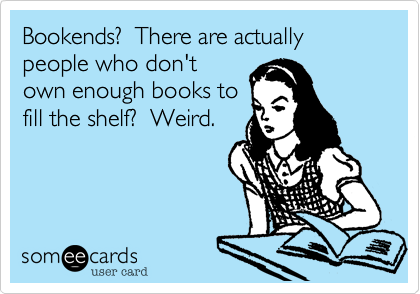
I still think that the best bookends are other books. Our bookshelves are actually two layers deep, and that isn’t accounting for the two boxes of young adult books that are sitting in a cupboard because they don’t fit on any shelves.
Okay, just to be serious for a moment: Do you see a difference between these two cartoons?
Some of you may have seen the awesomeness displayed on The Oatmeal in response to people stealing his cartoons and taking his authorship off of the picture. Well, here is another example. The second cartoon was the one I was going to post, but I realised that it didn’t have the creator’s signature on it and it would be good to make sure that they were able to be tracked down. Ideally, I’d link to the original, but that isn’t always possible, especially when someone has decided to edit out the part that would help us all identify the author. It is clear that the author isn’t even asking for money, the cartoon is freely published on the web, yet someone has decided to remove the content creator as though they aren’t important.
Free content is great, so many people with great ideas are creating stuff to entertain others just because they enjoy it. I’m going to try and make sure the authors (content creators) are acknowledged when possible, I hope everyone else does too.
This is a cool infographic from Laura E. Kelly. I definitely fall into the Book Cherisher genus, but I’m not sure if I’m of the species Hoarder or Compulsive Buyer.
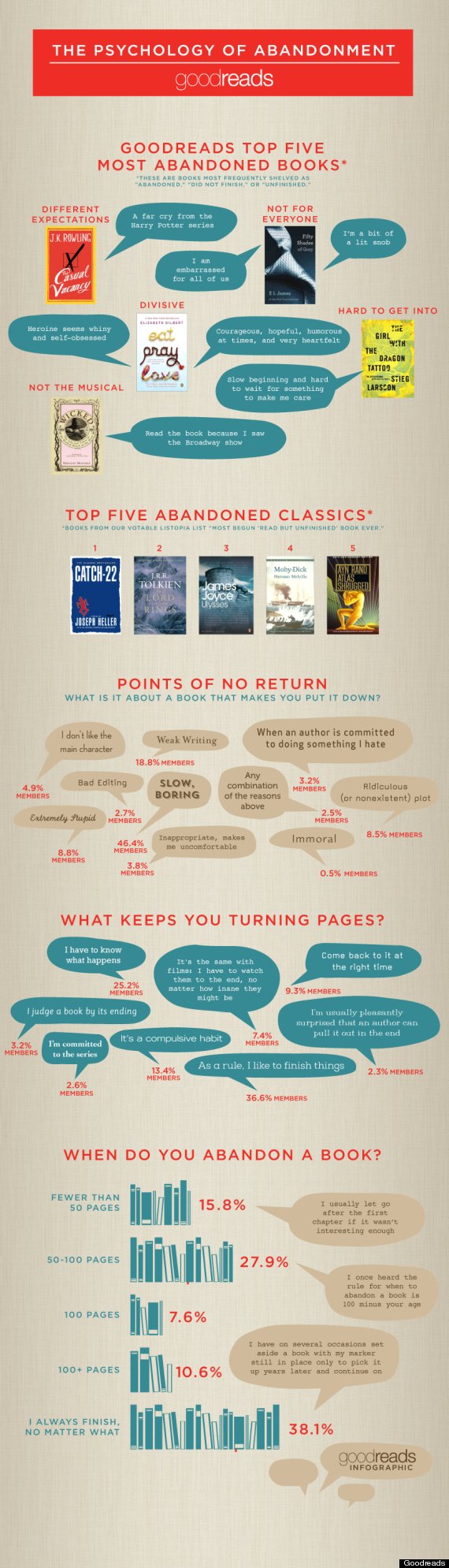
This is a great breakdown of why readers give up on reading and which books are the biggest culprits. I largely agree with most of the sentiments and books listed. It is very interesting to me that “slow and boring” is the #1 reason people abandon a book. Not just #1, it is number two and three as well, as the next reason had less than half the polling. I’ll offer a few comments on each part of the infographic.
Top Five most abandoned:
Casual Vacancy by JK Rowling – This is no surprise really. I’ve heard it is a particularly dark book and the remark that people were expecting it to be more like Harry Potter shows that no-one read the blurb.
Fifty Shades of Grey by EL James – Who’d have thought that Twilight fan-fiction would be poorly written?
Girl With the Dragon Tattoo by Stieg Larsson – When you have a trilogy that could have been edited down to a single book there are bound to be a few readers, like me, who think this ‘thriller’ is slow going.
I haven’t read or heard of anything to do with the other two on the list.
Top Five most abandoned classics:
Catch-22 by Joseph Heller – When people don’t get it then of course they will abandon it. One of the rejection letters for Catch-22 said, “I haven’t the foggiest idea about what the man is trying to say…Apparently the author intends it to be funny – possibly even satire – but it is really not funny on any intellectual level.”
Lord of the Rings by JRR Tolkien – I can see why some people wouldn’t like this book. While I loved it, there are unnecessary characters, events, chapters, scenes, language use… Okay, it’s long and waffly.
Ulysses by James Joyce – At a thousand pages, unless you like an abridged, tiny text, 600 page version, this was never going to be an easy read.
Moby Dick by Herman Melville – I read this when I was in primary school. It made my brain hurt. Very hard to read and spent a long time between the interesting scenes.
Atlas Shrugged by Ayn Rand – Great doorstop, selfish drivel to read.
Reasons for and against abandoning:
It really doesn’t surprise me that the reason most people give up reading a book is that it is boring and slow (46.4%). What does surprise me is that the reason people keep reading a book is not because people are enjoying the book but that they like to finish a book regardless (36.6%). Clearly too many people are reading books that they don’t like. Given the popular books, like the already mentioned Stieg Larsson and EL James, it shouldn’t be surprising. I’ve read instruction manuals with more action than The Girl With the Dragon Tattoo.
I remember working out roughly how many more books I could read in my life. I have averaged reading roughly 100 books per year for the last few years. Now excluding a major accident or the zombie apocalypse, I should be able to continue this average until I die peacefully in my car travelling the wrong way down the freeway at age 90. That means I can only read another 5,500 books in my life! There are more than 8,500 books published every year in Australia, so my chances of reading all the great books I’d like to are slim. We really don’t have time to waste on bad books.
On the internet there is a scam born every minute. Whilst I love to receive email from Nigerian royalty, ads for another penis enlargement (the first one was enough, thanks), and fat loss supplements that promise not to kill me, there is a line I have to draw in the sand: scamming writers.
Most writers are hobbyists, writing because they love it. The handful that do get paid enough to be full-time writers are few and far between. So targeting writers with scams means that somewhere a monkey at a keyboard is not being fed today.
Yesterday in a writers discussion group a question was raised about whether a New, Amazing, Adjective, program that promises to give you the tools to write a 400 word article in 7 minutes.
Dear Fellow Article Writer (TA: read as mark or sucker),
Did you watch the video above? It’s hard to believe so many people would send me such raving, unsolicited testimonials about my product, “How to Write an Article in 7 Minutes or Less“. (TA: Testimonials!? Wow! I’m sold!)
If you did watch the video, you saw with your own eyes how I was able to take people who spent more than an hour writing an article down to as fast as 5 minutes per article! (TA: 5 minutes? I thought you said 7 minutes. Does this mean I get a 2 minute abs program as a bonus?)
….. (TA: edited out promotional garbage about money back guarantees and how only the scammer found the secret or developed it or whatever)
Here’s how it works.
Open my 3 special research sites. (TA: Wikipedia?)
Use my “skim and grab” research technique to find your
3 main points (Takes about a minute). (TA: Yes, because reading comprehension is for suckers.)
Outline each main point with two “sub points.” (another minute here). (TA: What if there is only one point?)
Use the “opening paragraph” template to quickly create the first paragraph (About 30 seconds). (TA: Insert generic filler paragraph, got it.)
Use the “main point” template to write paragraphs for each of your three main points. (2-4 minutes total time) (TA: So, standard writing….)
Use the “conclusion paragraph” template to quickly create the conclusion. (another 30 seconds). (TA: Insert generic filler paragraph at the end.)
Proof read your article, and then submit it to the appropriate directory. (1-2 minutes) (TA: Click spellcheck and hope it doesn’t miss anything.)
The cool thing about using these templates is you never have to pause to think…but… you also enough leeway so each article remains 100% unique, and of the highest quality.(TA: Yes, why would you want to actually put any thought into your writing. Highly overrated for quality content.)
Don’t worry: My method has nothing to do with plagiarism! (TA: Of course not, copy and pasting clearly takes too long.)
Anyway, you can learn all about my 7 minute article technique by reading my special report, “How to Write an Article In 7 Minutes”, and by watching the videos I made showing step by step how I do it.
But that’s not all… (TA: Steak knives?)
My first thought upon seeing the claim that you could learn to write an article in 7 minutes was that it was bullshit. The fact that people would question if it would be possible left me a little stunned, a little thirsty and thinking about having a nap. Clearly some people are going to be taken in by these kinds of scams. So I want to just illustrate my critical thinking process and how I avoided being scammed for $37 (I know, huge amounts of money).
Drawing from personal experience, I know that I’d spend more than 7 minutes just copying in the links to the research I’d be citing, let alone reading those articles. So the first check is to understand just how long certain tasks actually take you. This scam works on the idea that you don’t really measure the time it takes for common activities. You may know how long you spend on a full article or day’s writing, but not on the little parts, like one paragraph or one sentence. So when someone presents you with some figures, you are bound to think, “Well, I do spend a lot of time staring at the screen and checking my Twitter feed.” Suddenly you are partly receptive to the con.
Let’s have a look how long writing actually takes the average person. Being a science nerd, I like to have a few figures around on writing, reading, average number of Facebook posts per hour; you know, important stats. The average person has a typing speed of 60-100 words per minute, which gives you 400-700 words written in 7 minutes. The page claims a 400 word article with 5 minutes actual writing time, which is 300-500 words written. So unless you are setting world speed records, then you won’t have time to do anything other than write.
What about editing? Nothing is perfect on a first draft, nothing! So even if this is a 400 word article written in 5 minutes, you still need to edit. Reading speed is not the same as proofreading speed, with average speeds of 180-200 words per minute. That’s another 2-3 minutes.
This program is essentially promising that you will achieve touch-typing dexterity and speed that will allow you to write fast. It is also promising that you’ll have fantastic reading comprehension skills at skim reading speeds. And yet you will also somehow acquire a time machine to allow you to also plan, research and create a concise article at the same time. The fact that the scam makes no mention of boosting your reading and writing speed and giving you keys to the Deloren, shows that someone is wanting your money and your credules.
In the meantime, send me $40 and I’ll send you some templates that I guarantee will add inches to your penis and bust size, whilst making you an awesome writer and friends with Nigerian royalty. Trust me, no-one lies on the internet.
I’ve just finished reading Carrie so Stephen King is inhabiting my brain. A friend posted a Pink Floyd video (Learning to Fly) and for some reason the video below was one of the suggested “view this next” videos. It’s hard to see the link between a Stephen King lecture and a Pink Floyd live performance, perhaps the members of Pink Floyd were terrorised by a monster clown in their youth.
Regardless, this lecture from Stephen King covers a range of topics in a Q&A format. The most important part is his opinion on the phenomenons of Twilight and 50 Shades of Grey. Don’t fast forward to 48:20 for his Twilight and 50 Shades of Shit comments.
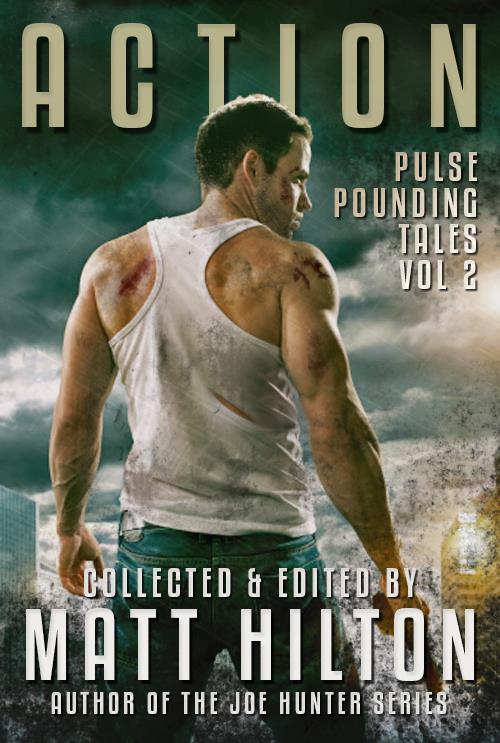
As I mentioned recently, my short story, Hard Wood, appears in the new compilation of Pulse Pounding Tales from Matt Hilton. You can get your copy from either:
CONTENTS
Introduction by Matt Hilton
Dirk Ramm: Unsheathed by Matt Hilton
Sins of Omission by Ian Graham
See Saw by James Oliver Hilton
Uninvited Guests by Rod Glenn
The Missionary by Paul D Brazill Hard Wood by Tyson Adams
Black Tuesday by Alex Shaw
.50 Contingency Plan by Jochem Vandersteen
Cold Redemption By Les Morris
Kokoro by Andrew Scorah
Get Cutter! By James Hopwood
Jardine Rides Again by Ian McAdam
Jack Be Nimble by Gavin Hunt
Exit Wound by Steve Christie
As Heroes Fall By Frank Sonderborg
Goofy Brings The House Down by Richard Godwin
Grand Central: Terminal by Terrence P. McCauley
The Fixer by Dean Breckenridge
Soup Sandwich by Christopher L. Irvin
Pasnuta Means Arena of Death! by Richard Prosch
Mududa’s Revenge by Graham Smith
97 Ways To Die In Istanbul by Paul Grzegorzek
It’s Noir or Never by Absolutely*Kate
Push by Kevin Michaels
You Only Die Once by Rhesa Sealy
Man About Town by Alan Griffiths
Hanoi Heat by Iain Purdie
Hammertime by Asher Wismer
When The Devil Catches Up by Lee Hughes
A while ago I had my short story, Hard Wood, accepted into the second Pulse Pounding Tales compilation by Matt Hilton. I’ve held off on making this announcement until the submissions were officially closed. For those unfamiliar with volume one of Pulse Pounding Tales, buy it now. You’ll thank me later. Volume 2 is due out later this month.
Cover for the second edition.
The first edition included short stories from many renowned and upcoming thriller authors, including: Matt Hilton (duh!), Zoë Sharp, Stephen Leather, Adrian Magson and Steven Savile. If the previous edition and my submission (Hey! I’m allowed to think I’m awesome) are anything to go by, this second installment should be just as awesome. For more on whose stories you will get to read, see here.
Hard Wood is about Steve: disabled in the war in outer Desert-stan, he now makes sure containers at a shipping yard aren’t lonely at night. Steve stumbles across some heavily armed smugglers and decides that he is the only one who can stop them escaping before the police can arrive. Pity that Steve is not heavily armed and is missing a leg. For a little background to the underlying topic of the short, read this little non-fiction synopsis about illegal logging.
I’d like to thank Matt for the opportunity to publish my story with him. I’d also like to congratulate my fellow authors who I will be sharing pages in the compilation with.
Update:
Here’s the final line-up to ACTION: Pulse Pounding Tales Vol 2 everyone:
CONTENTS
Introduction by Matt Hilton
Dirk Ramm: Unsheathed by Matt Hilton
Sins of Omission by Ian Graham
See Saw by James Oliver Hilton
Uninvited Guests by Rod Glenn
The Missionary by Paul D Brazill Hard Wood by Tyson Adams
Black Tuesday by Alex Shaw
.50 Contingency Plan by Jochem Vandersteen
Cold Redemption By Les Morris
Kokoro by Andrew Scorah
Get Cutter! By James Hopwood
Jardine Rides Again by Ian McAdam
Jack Be Nimble by Gavin Hunt
Exit Wound by Steve Christie
As Heroes Fall By Frank Sonderborg
Goofy Brings The House Down by Richard Godwin
Grand Central: Terminal by Terrence P. McCauley
The Fixer by Dean Breckenridge
Soup Sandwich by Christopher L. Irvin
Pasnuta Means Arena of Death! by Richard Prosch
Mududa’s Revenge by Graham Smith
97 Ways To Die In Istanbul by Paul Grzegorzek
It’s Noir or Never by Absolutely*Kate
Push by Kevin Michaels
You Only Die Once by Rhesa Sealy
Man About Town by Alan Griffiths
Hanoi Heat by Iain Purdie
Hammertime by Asher Wismer
When The Devil Catches Up by Lee Hughes
In mystery writing, plot is everything. Because readers are playing a kind of game when they read a detective novel, plot has to come first, above everything else. Make sure each plot point is plausible, and keep the action moving. Don’t get bogged down in back story or go off on tangents.
Introduce both the detective and the culprit early on. As the main character, your detective must obviously appear early in the book. As for the culprit, your reader will feel cheated if the antagonist, or villain, enters too late in the book to be a viable suspect in their minds.
Introduce the crime within the first three chapters of your mystery novel. The crime and the ensuing questions are what hook your reader. As with any fiction, you want to do that as soon as possible.
The crime should be sufficiently violent — preferably a murder. For many readers, only murder really justifies the effort of reading a 300-page book while suitably testing your detective’s powers. However, also note that some types of violence are still taboo including rape, child molestation, and cruelty to animals.
The crime should be believable. While the details of the murder — how, where, and why it’s done, as well as how the crime is discovered — are your main opportunities to introduce variety, make sure the crime is plausible. Your reader will feel cheated if the crime is not something that could really happen.
The detective should solve the case using only rational and scientific methods. Consider this part of the oath written by G.K. Chesterton for the British Detection Club: “Do you promise that your detectives shall well and truly detect the crimes presented to them using those wits which it may please you to bestow on them and not placing reliance on nor making use of Divine Revelation, Feminine Intuition, Mumbo Jumbo, Jiggery-Pokery, Coincidence, or Act of God?”
The culprit must be capable of committing the crime. Your reader must believe your villain’s motivation and the villain must be capable of the crime, both physically and emotionally.
In mystery writing, don’t try to fool your reader. Again, it takes the fun out. Don’t use improbable disguises, twins, accidental solutions, or supernatural solutions. The detective should not commit the crime. All clues should be revealed to the reader as the detective finds them.
Do your research. “Readers have to feel you know what you’re talking about,” says author Margaret Murphy. She has a good relationship with the police in her area, and has spent time with the police forensic team. Get all essential details right. Mystery readers will have read a lot of books like yours; regard them as a pretty savvy bunch.
Wait as long as possible to reveal the culprit. They’re reading to find out, or figure out, whodunit. If you answer this too early in the book, the reader will have no reason to continue reading.
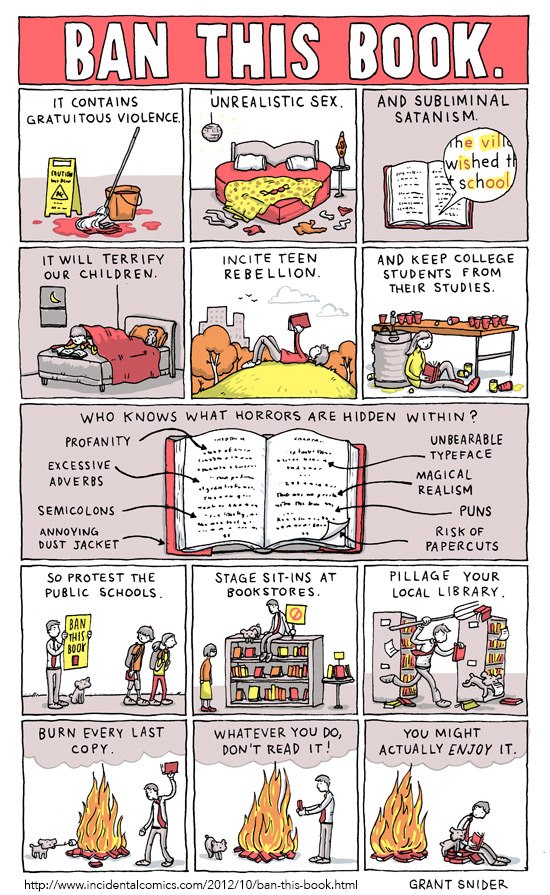
I’m against censorship. Unfortunately many are in favour of censoring books. You may have heard of the outcry over the decision to edit Mark Twain’s classic, Huckleberry Finn, to stop calling the main supporting character, N-word Jim. What you may not have heard is that schools had stopped teaching Huckleberry Finn because they didn’t want to have to explain the historical and racial undertones and themes of the book. We can’t have a literary book actually studied now, can we! Definitely don’t want to look at Twain’s biting commentary on racism in the south of America, because that would mean discussing racism, and we like to pretend it isn’t still an issue.
It isn’t just the school curricula that are being impacted, it is libraries and book stores as well. The list of frequently challenged books is far too long and the reasons cited are far too ridiculous. For example, Brave New World by Aldous Huxley is regularly objected to for being: insensitivity; nudity; racism; religious viewpoint; sexually explicit. Seriously? What about the other complaints?
I’m offended by the word ‘sustainable’ as it is ambiguous term that is used politically as a catch-cry to gloss over reality. Does that mean I can complain about books containing that word? And what is sexually explicit? Is it when two characters embrace for a passionate kiss, or when the ball-gag and whips make an appearance? Are parents really concerned about the level of “smut” in the books their kids read or are they trying to have books banned because readers might enjoy them?
I know I have a complaint about the Twilight books. Now, my reasons aren’t like the other complaints (Reasons: religious viewpoint and violence), I just don’t like them because I’ve been dragged to see four terrible films by my wife. Ban the Twilight books so that husbands and boyfriends everywhere aren’t tortured with Kirsten Stewart’s “acting.”