Book Review: Gone Girl by Gillian Flynn

Gone GirlGone Girl by Gillian Flynn
My rating: 5 of 5 stars

I normally hate literary styled books. They normally take all the fun stuff out of the book and replace it with tedious exposition masquerading as deep and meaningful prose. Award winning books are usually weighed down with this superfluous fluff.

This is a harsh statement, I know. Just because a book has won a literary award that doesn’t mean it has to suck. But it all comes back to some training I had in communication sciences at university. No-one cares about the methods, or process, or how long you spent doing this, and especially not how much research you did, they only care about what’s in it for them. Boil that down to a simple: readers are reading your book to be entertained. So all of that exposition is just getting in the way of entertaining the reader.

Gone Girl is as close to a literary styled novel I have read (to completion) in almost a decade. I used to read persevere with them all the time, now I have learnt my lesson. What makes Gillian’s book different is that she hasn’t forgone the plot, nor drawn out the story. So fans of crime novels will be captivated and literary fans might admit they need to read more genre books.

I put this novel off for a long time, buying it because of all the rave reviews and awards, then hearing it was very literary and baulking. I can see why this novel has been the big thing of 2012, it deserves the praise.

View all my reviews

Short stories now on Amazon

That’s right. I decided that there was no better way to learn how to publish my novellas than to practice with two of my short stories. I’m now prepared for the task of crossing the threshold into “professional author” territory, letting my creations escape the confines of my head and harddrive. I’ve priced both short stories at the Amazon standard $0.99, which is about what I think short stories should go for – novellas $2.99, novels somewhere between $7 and $10.

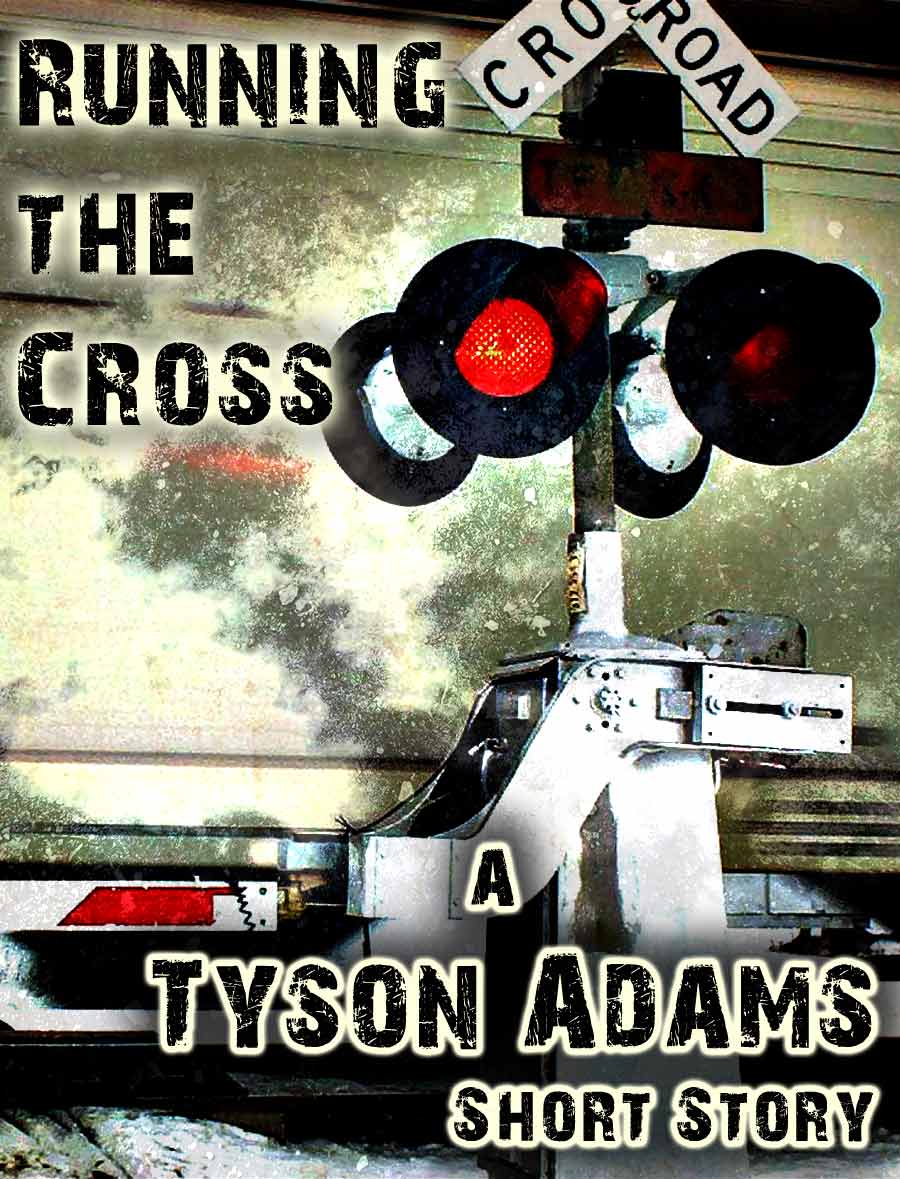
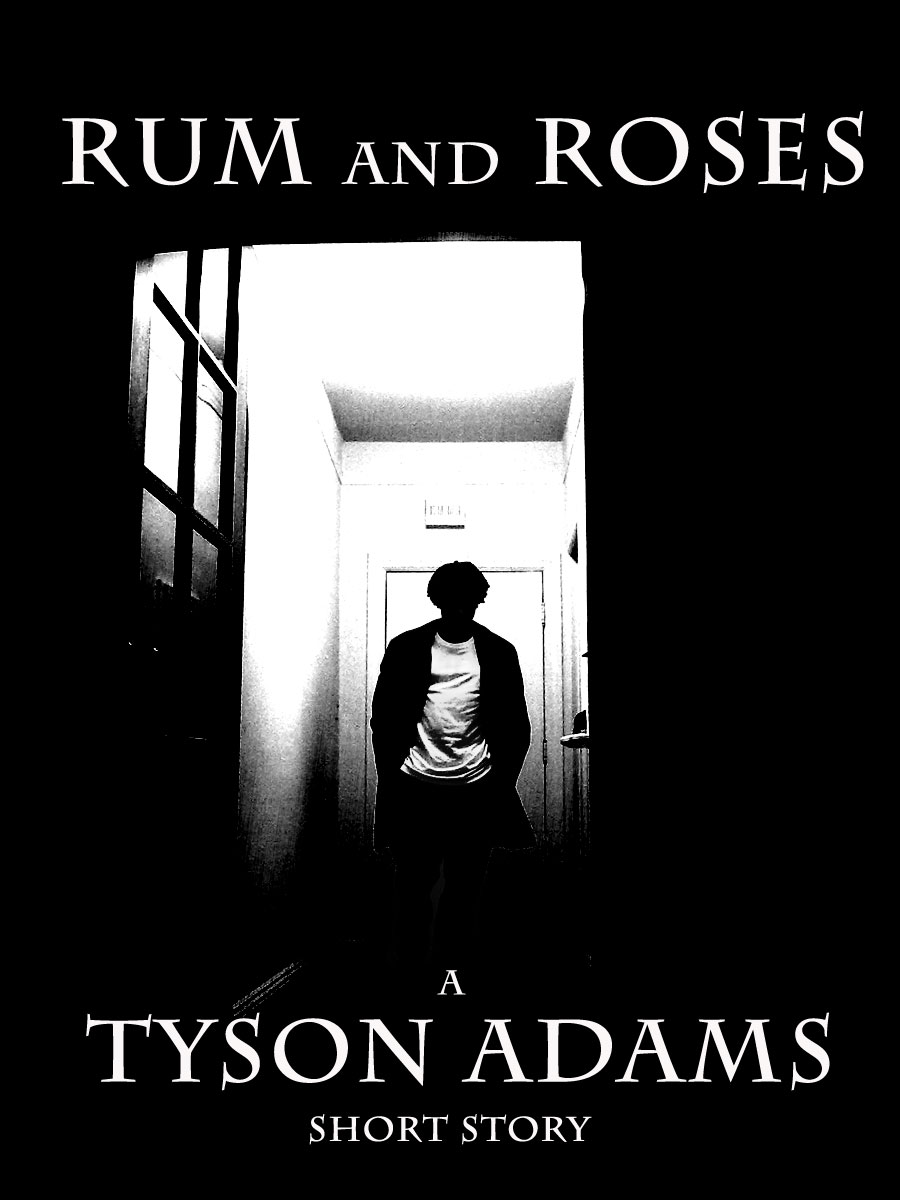
Running-the-Cross Rum-and-Roses

So if you would like to read some short stories, may I suggest you download mine from Amazon. Running the Cross is “A test of mind and body, running the cross is the ultimate test. A dozen rail lines, thousands of tonnes of freight trains travelling at high speed, a race across the tracks to prove yourself. Will you survive?” Rum and Roses “The police don’t like ‘Skinny’ McAfree, but they do like him for the disappearance and possible murder of his next door neighbour.”

I really enjoyed writing both of these, especially Running the Cross, and hope you enjoy reading them.
http://www.amazon.com/dp/B00B3WP0OK – Running the Cross

http://www.amazon.com/dp/B00B3XTKFO – Rum and Roses

Ten Indisputable Signs That You’re a Writer

Think you might be a writer but aren’t 150% sure? Here are ten signs that you may very well have a budding writer inside you.

  1. You constantly edit. Whether it’s while you’re driving down the street and pass a misspelled sign, or grammatical errors in Facebook posts, you fix errors constantly in your mind—and sometimes not so silently.
  2. You’re highly observant. And not only do you notice things all the time, but you file them away in your I could write about this later folder.
  3. You often ask, “How could I describe this?” You don’t ignore your life experiences—everything from walking outside during a torrential downpour, to burning yourself while cooking, to taking the first bite of a piping-hot homemade chocolate chip cookie can be used in your writing, and you often pause to think about how you would describe it in words.
  4. You have a hyperactive imagination. There’s never a dull moment in that head of yours—your imagination is always working on overtime to keep you entertained and give you fresh ideas.
  5. You feel inspired to write after reading a good book. Enough said.
  6. You often daydream about your Work In Progress. Your characters never completely leave you— they walk alongside you throughout the day and give you new ideas when you least expect it.
  7. You feel guilty if you haven’t written anything in a while. What a “while” is depends, but after a writing hiatus, a part of you begins to demand that you get back to the keyboard and reprimands you if you don’t.
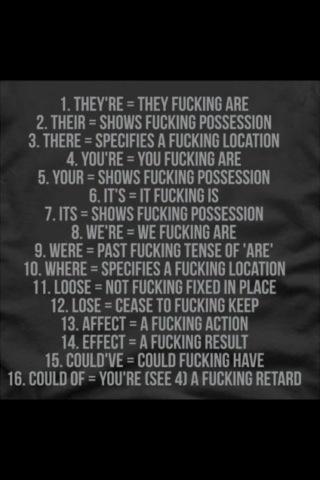
  8. Grammar jokes are funny. Well, they are
  9. You can’t get enough books. After all, every new book is a couple of hours worth of inspiration.
  10. You keep doing this writing thing. It doesn’t matter if you’re not published, if no one else cares if you continue to write, if you don’t make a penny off of the words that you put on the page—none of that matters, because you’ll continue to write anyway.

Reblogged from: Ten Indisputable Signs That You’re a Writer.

E-book statistics for 2012

I seem to be finding a bunch of cool infographics recently, they are the future of communication (warning, sarcasm may be in affect here). It is always interesting to see what the status of sales, especially e-book sales. Personally, I see the e-book becoming the new paperback within a few years, and I also think that backlists will be all e-books. What will be really interesting is whether authors will be the one controlling their backlists or whether publishing houses will want to grab hold of those. Then it becomes a case of what rates are paid on backlist, because the sunk costs are a frontlist issue, so you would expect a greater author share of sales (although it could be argued that sunk costs are sunk, thus trying to recoup those costs as part of the sale price is bad economics).

ebook-market-2012-us-uk-canada-australia_50291c7f807a7_w594

Reasons why writing is better than a real job

At the end of a day of writing you don’t feel like stabbing yourself in the eye with a pencil.

Writing can be done at any time, rather than nine till five, which is much better suited to sleeping.

Dressing for work is optional. And I mean optional.

Work shoes don’t have to have a safety rating or glossy shine, they only have to be wool lined and comfy.

If you spend all of the money your boss gives you and fail to complete your job on time, nobody is really that surprised.

All of that wasted time on the internet is “research”.

Drinking on the job is mandatory rather than discouraged.

Emailing, Facebooking, tweeting and blogging are important networking, not procrastination.

Shaving is no longer a daily chore, it is a sign you are going out in public for a change.

Work colleagues are people you only see at festivals, or chat to on Facebook when you can’t be bothered working.

Paperwork? What paperwork?

The arrival of the mail is a daily highlight, rather than something you check for as you arrive home.

Skill vs. Fame

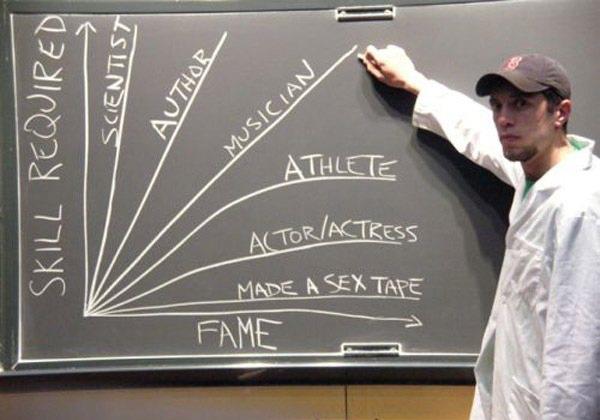
You can always trust a guy in a lab coat, they know stuff. This relationship of skill required versus fame really does show that I have really decided to limit my levels of fame. Scientists aren’t really cool enough to be famous, authors are similarly nerdy, just better with words. Maybe it is time for scientists and authors to start making sex tapes.

John Cleese on Creativity

Like everyone else with a pulse, I’m a Monty Python fan. Whether it be a killer white rabbit or a very naughty boy, there is nothing quite like the laughs that a Python sketch can illicit. I recently found this lecture that John Cleese gave on creativity. It is quite interesting the ground he covers and the conditions that are needed to be cultivated in order to be creative. Hope everyone gets as much out of this as I did.

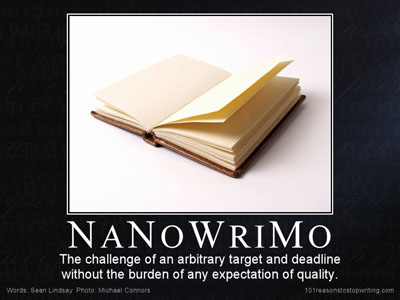
Good luck with NaNoWriMo this year!

NaNoWriMo starts again for another year tomorrow (the day after for everyone living in the past – being an Aussie is great). Good luck to everyone going crazy trying to write 1666 words per day.

Unfortunately I won’t be able to join the November madness. I really enjoyed last year, especially the part where I actually managed to write 52,000 words in a month. This year I have a 6 week old poop machine to look after. Have fun everyone!

I’m still working on my novels

At the moment I have three projects on the go. The first is the rewrites of my first novel, which I’m hoping to finish and try to find a publisher for sometime after Xmas. The second project is a sequel to the first novel. I never intended to make a series, but during the writing of the first novel I had several ideas that just needed to be written as well. The third project is a different tale entirely, not least of which is my choice of third person narrative, unlike the predominantly first person narrative of the other two. For a synopsis of my works in progress, click here.

The surprising decline in violence

Damn. How can a thriller or crime writer make a crust if violence is declining?

I know that we writers are generally known for writing fiction, but we readers – yes, I’m both – are also a fickle bunch who like things to have a level of realism to them. We need there to be a basis for our stories so that you can become more emotionally involved with the protagonists. If violence keeps declining then thriller and crime authors are going to have to look to the sensationalism of media reporting for story ideas. I think we can all agree that you can’t base fiction upon fiction.

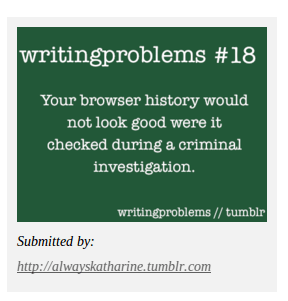
Don’t check my browser history

I’m sure you’ve noticed that when you haven’t cleared your browser history in a while, and then perform a Google or (insert your favourite search engine here) search, that a number of links are highlighted as pages you have been to before. This is just a friendly little reminder that you’ve asked the same, or a similar, question just recently and that, maybe, it is time for a screening for Alzheimer’s. But have you had a look through your browser history, or, more to the point, would you prefer no-one ever saw your browser history?

For the average person, I’m sure they don’t mind having eBay, Amazon and Rotten Tomatoes in your browser history is not a big deal. For the average crime or thriller author, the internet browser history would provide an interesting insight into the key plot points of the current work/s in progress. It would also encourage police and intelligence agencies to set up 24hr surveillance on the off chance the author was planning on murdering a key political figure to facilitate the buying of nuclear weapons to arm a terrorist cell that has ties to local organised crime figures who operate in drugs and prostitution; with plenty of pictures. This is slightly concerning.

Sci-fi authors don’t have quite as many concerns with their browser history. Anyone looking at it would fall asleep after the first ten pages of physics article links. Fantasy authors might receive some grief for the swords and leather searches. Romance authors would probably blush at the size of the list of “hard abs” pages. But it is going to be almost impossible for me to argue down a murder charge.

Lawyer: So you deny planning and executing the murder of the cast of Jersey Shore?
Tyson Adams: Of course I didn’t murder or plan to murder those morons.
L: Then why had you visited so many sites on forensics, samurai swords and human anatomy?
TA: Research for my book.
L: A book that you haven’t as yet published.
TA: Well the editor doesn’t like the scene with the cast of Boston Shore being beheaded.
Judge: I just don’t see the crime here. Although, Mr Adams, what is rotten.com?

So could any law enforcement people please keep in mind writers are likely to have a bizarre web history, and that it was very important that I know how to make meth in my backyard. For my novel…