Is cyberpunk dead or being revived?

http3a2f2fwww-francamentequerida-com-br2fwp-content2fuploads2f20182f022f1altered

It was only recently that I read Neuromancer. In my defence, I’ve seen all the different cuts of Blade Runner, which has to count for something. Right?

Anyway, there was an interesting video essay from Just Write that I thought I’d share. It discusses the cyberpunk genre and how the aesthetic has lost its relevance.

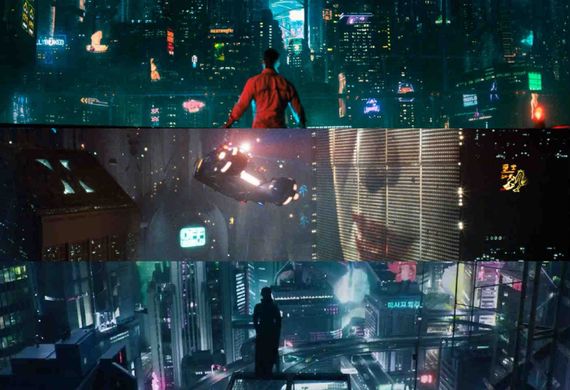
I actually quite enjoyed the Netflix series Altered Carbon, based on Richard Morgan’s novel of the same name. There were some interesting comments about inequality and inherited wealth that is often overlooked in discussions about living longer. But I have to agree with the video’s comments about the cyberpunk aesthetic of the show being off.

Not that it didn’t fit, but that it didn’t feel that different from what we have now, as the video stated. How can we watch a troublesome/dystopian future that is essentially our now?  These aesthetic elements then undermine much of the narrative comment by reminding us that many of the plot points have already happened. It is a little bit hard to have a cautionary tale of where we are headed in the future when we have already arrived at that point (e.g. wealth isn’t made but instead it tends to be inherited unless there is some sort of inheritance tax in play or dissipation – 1, 2, 3).

So does that mean that Mr Robot and other contemporary cyberpunk stories are the way forward for the genre? Are there other ways to update the genre? Do we need another Blade Runner movie?

Some things to ponder.

Update: Future Tense/Slate published an article suggesting cyberpunk has cast a long shadow over science fiction. It alludes to some of the same points whilst trying to discuss reinvigorating sci-fi. I think the point it fails to make is that the prefix-punk genres were never going to have the same impact as cyberpunk because they were prefix genres following in the wake. If you want to reinvigorate sci-fi* you have to start with something different, not just another prefix.

Update: CuckPhilosophy has an interesting video on the philosophy of cyberpunk that is worth watching if just for the thinkers referenced.

Works Cited:

Lessons from the Screenplay. “Blade Runner — Constructing a Future Noir.”
Extra Credits. “The Witcher III: Wild Hunt – Best Detective Game Ever Made.” Taxi
Extra Credits. “William Gibson: The 80s Revolution.”
Abrams, Avi. Dark Roasted Blend. “Epic 1970s French Space Comic Art.”
Sterling, Bruce. “Mirrorshades: the cyberpunk anthology.” New York: Arbor House, 1986.
Walker-Emig, Paul. The Guardian. “Neon and corporate dystopias: why does cyberpunk refuse to move on?” October 16, 2018.
NAZARE, JOE. “MARLOWE IN MIRRORSHADES: THE CYBERPUNK (RE-) VISION OF CHANDLER.” Studies in the Novel, vol. 35, no. 3, 2003, pp. 383–404. JSTOR, JSTOR,
Karen Cadora. “Feminist Cyberpunk.” Science Fiction Studies, vol. 22, no. 3, 1995, pp. 357–372. JSTOR
Sponsler, Claire. “Beyond the Ruins: The Geopolitics of Urban Decay and Cybernetic Play.” Science Fiction Studies, vol. 20, no. 2, 1993, pp. 251–265. JSTOR
Nixon, Nicola. “Cyberpunk: Preparing the Ground for Revolution or Keeping the Boys Satisfied?” Science Fiction Studies, vol. 19, no. 2, 1992, pp. 219–235. JSTOR
Whalen, Terence. “The Future of a Commodity: Notes toward a Critique of Cyberpunk and the Information Age (L’Avenir D’une Marchandise: Notes Sur Cyberpunk Et L’Ere De L’Information).” Science Fiction Studies, vol. 19, no. 1, 1992, pp. 75–88. JSTOR
Senior, W. A. “Blade Runner and Cyberpunk Visions of Humanity.” Film Criticism, vol. 21, no. 1, 1996, pp. 1–12. JSTOR
Usher, Tom. Vice. “How ‘Akira’ Has Influenced All Your Favourite TV, Film and Music.
Giles, Matthew. Vulture. “Taxi Driver, Girls, and 7 Other Big Influences on Mr. Robot.
The United Federation of Charles. “What is Cyberpunk?
The ‘Self-Made’ Myth: Our Hallucinating Rich by Sam Pizzigati

Updates recommended reading:

On “cyber-theory” in general:
M. Featherstone, R. Burrows – “Cyberspace/Cyberbodies/Cyberpunk – Cultures of Technological Embodiment
D. Kellner – “Media Culture: Cultural Studies, Identity and Politics Between the Modern and the Post-Modern
By Donna Haraway:
D. Haraway – “A Cyborg Manifesto
D. Haraway – “Simians, Cyborgs, and Women
By Fredric Jameson:
F. Jameson – “Archaeologies of the Future
F. Jameson – “Cognitive Mapping
By Sadie Plant:
S. Plant – “Zeroes and Ones

*I’m not sure I accept the argument that sci-fi needs reinvigorating. Has some of it disappeared up its own butthole? Quite possibly. But that’s a whole argument and discussion on its own… Come to think of it, I’m betting there are endless articles on that topic somewhere.
Book vs Movie: Dracula – What’s the Difference?

maxresdefault1

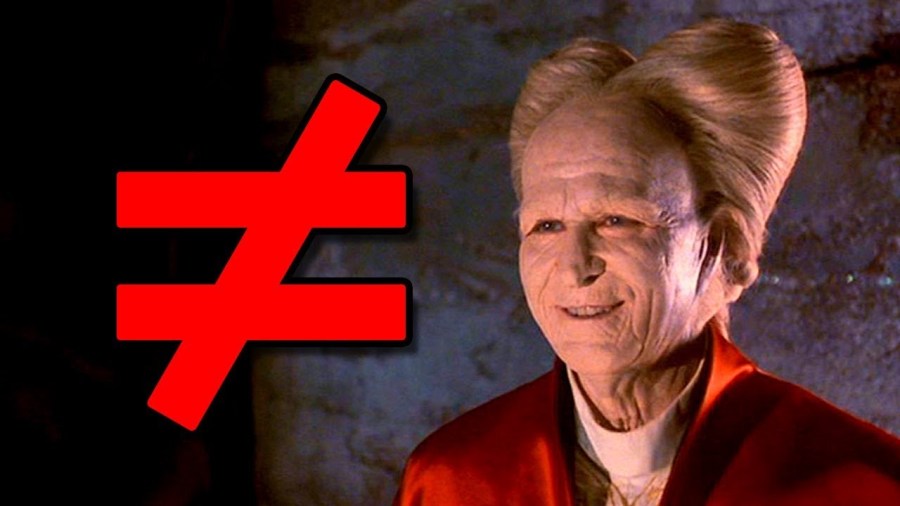
Since the annual American lolly festival is almost upon us, Cinefix is covering one of the classics. Bram Stoker’s Dracula and Francis Coppola’s 1992 Dracula.

Time for some straight talk. I don’t know how you discuss this particular adaptation without mentioning just how bad Keanu Reeves is in this film. Embarrassingly bad.

I actually tried to rewatch Dracula a couple of years ago and just couldn’t bring myself to sit through it all. Despite it being a bit of a who’s who of actors in the cast – and people like Tom Waits – it all feels so camp and silly. Even when I first saw it in high school, I remember Dracula being only average – with possibly the best visual explanation of the link between Dracula and Vlad the Impaler ever.

It is harder for me to talk about the book as I read it so long ago. And, let’s be honest here, I’ve since read way too many Anne Rice novels to not get the details confused. I read Dracula and Frankenstein at roughly the same time; because gothic horror novels are what pre-teen kids should be reading. Neither stood out for me as novels, but it is amazing how influential they have both been to genre fiction.

I wonder if there will be any modern equivalent. A novel that establishes an entire genre that is continuously reimagined, refined, and redefined such that we get analogues ranging from True Blood (coming out of the closet analogy) to Buffy (girl power).

Are good books made into bad films?

maxresdefault

The short answer is no.

The longer answer is Berkson’s Paradox/Fallacy applies.

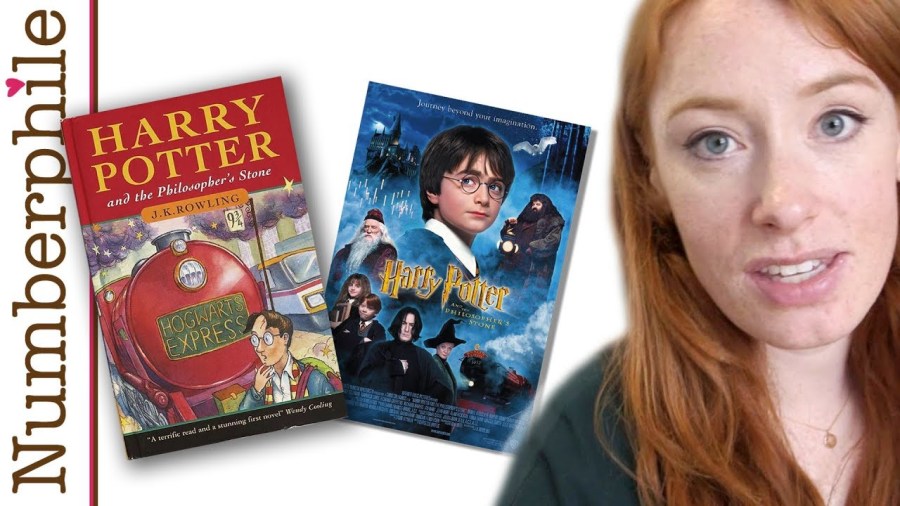
The even longer answer is explained in this video from Hannah Fry and Numberphile:

Comparing the book to the movie has been a long-standing blog topic of mine, which made this maths video pretty cool*. I’ve since developed a category list that relates to what Hannah discussed in the video about what gets made into movies.

  1. It is very unlikely that your novel will be published.
  2. It is very unlikely that your published novel will be optioned to be made into a movie (or TV show).
  3. It is very unlikely that the movie adaptation will actually be made.
  4. Most movies are average, so it is very unlikely that the movie adaptation will be above average.
  5. If the movie is above average, it is very unlikely that the movie will bear any resemblance to the book it was adapted from.
  6. Pointless arguments will ensue from the previous two points.

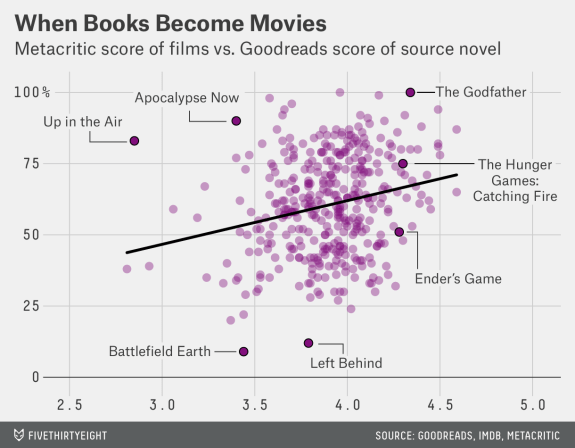
The Metacritic vs Goodreads analysis mentioned in the video is interesting and worth a read.

hickey-datalab-bestadaptations

*As always, I’m working from a definition of cool that includes the nerdy stuff I like.**

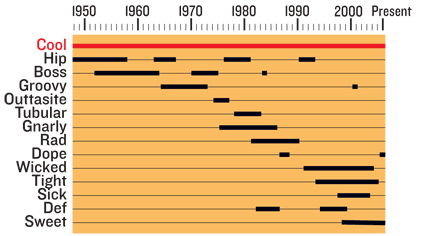
**Did you know that cool has always been cool?***

next_essay_chart
Source.

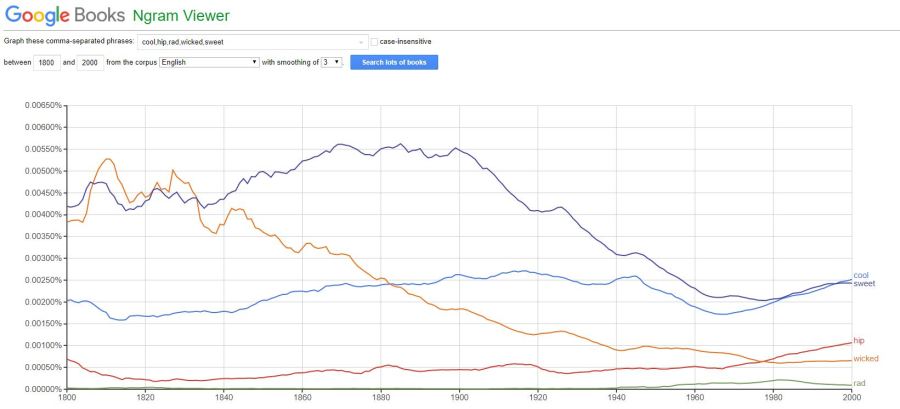
*** Well, unless you use Ngram Viewer to check Google Books for word usage over time like some sort of nerd…

Ngram Cool

Book vs Movie: Fear and Loathing in Las Vegas – What’s the Difference?

maxresdefault2

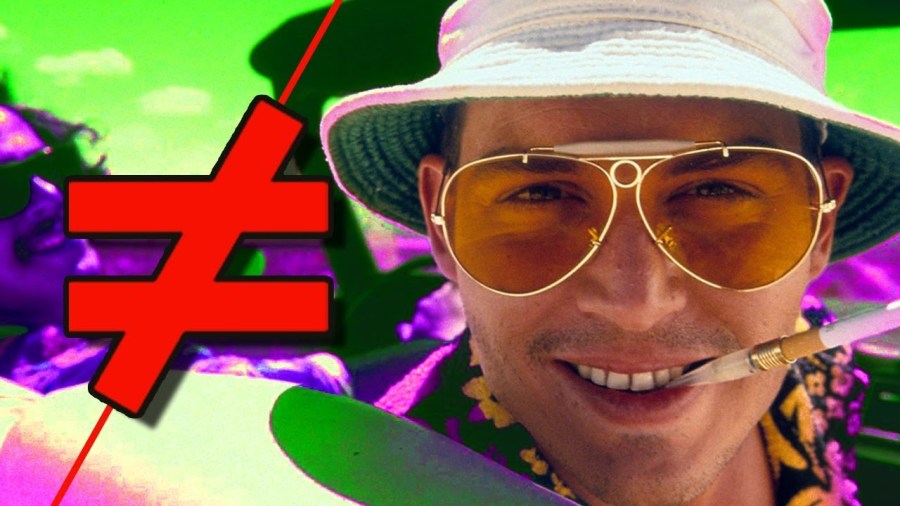
This month’s What’s the Difference? from Cinefix covers Fear and Loathing in Las Vegas.

This month I’m just sharing.

Yep, that means I’ve neither read the book nor watched the movie.

Feel superior in the comments.

20 years ago a new generation was introduced to the peak of Gonzo Journalism with Terry Gilliam’s adaptation of Hunter S. Thompson’s Fear and Loathing in Las Vegas. Really great filmmakers have tried and failed to bring the savage journey into the American Dream, so what makes Terry Gilliam’s version so successful? Time to get cracking and ask What’s the Difference?!

Why did I have to read that book in high school?

maxresdefault

This month Lindsay Ellis discusses the Literary Cannon, or how books become “worthy“, in It’s Lit.

I swear that when I started posting these videos that I didn’t know the series would cover one of my pet topics. Worthiness, important books, snobbery, guilty pleasures, are all things I love to bang on about. This video feels like a worthy addition to my posts on the topic.*

Let’s explore what makes a book “important.”

Literary critics, writers, philosophers, bloggers–all have tried to tackle where and why and how an author may strike such lightning in a bottle that their works enter the pantheon of “Classical Literature”. Why this book is required reading in high school, why other books are lost to history.

It’s Lit! is part of THE GREAT AMERICAN READ, an eight-part series that explores and celebrates the power of reading. This all leads to a nationwide vote of America’s favourite novel. Learn More Here: https://to.pbs.org/2IXQuZE

*Pardon the pun, it was father’s day recently.

Elves with swords

maxresdefault1

Is this the real life? Is this just fantasy? Caught in a landslide, no escape from reality. Open your eyes, look up to the skies and see… Some really awesome stories.

This month’s It’s Lit with Lindsay Ellis covers the much-maligned genre of fantasy.

Fantasy is a lens to explore what we as a society find important to our pasts, our presents, and future. Fantasy and science fiction often fall under the umbrella of “speculative fiction” – as a result they are often grouped together, especially in bookstores. But science fiction is a forward-looking genre propelled by the possibilities of technology (and the things that worry us about it), fantasy is … more backward looking.

Vote on your favorite book here: https://to.pbs.org/2Jes2X5

Book vs Movie: Ready Player One – What’s the Difference?

maxresdefault

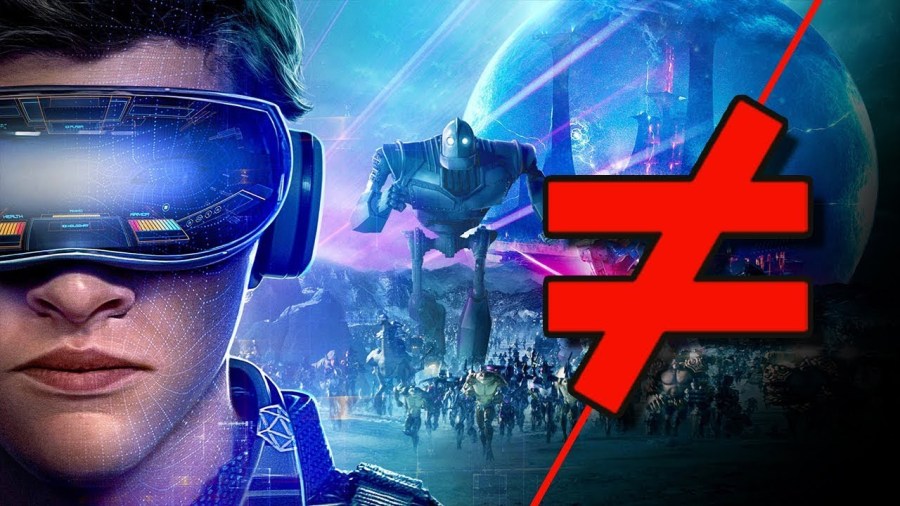
This month’s What’s the Difference? from CineFix covers Ready Player One.

Normally I’d add a few comments here about what I thought about the book and/or the movie, particularly the adaptation. But Ready Player One falls into an odd realm for me. I’d initially had the book on my TBR pile but ended up removing it after a discussion at a writers’ group. The gist was that the book is a great example of the “you’re not a real geek” toxicity that pervades geek culture, exemplified by rating pop culture references.

Then when the movie trailers came out, it too looked like one long list of pop culture references that only true geeks would appreciate… By appreciate, I mean argue and post overanalysed articles and Youtube videos online for weeks after most people have moved on.

Hey look, here’s a video of all the pop culture references:

This is a roundabout way of saying I haven’t read the book nor watched the movie, nor do I feel particularly inspired to do either. Enjoy the video anyway.

Update – This covers Ready Player One from a writer’s perspective:

Further Update – This video expands on my point above about toxic geek culture with reference to GamerGate.

An ode to the romance novel

maxresdefault1

Romance is one of the biggest selling and most popular genres, that apparently nobody reads…

The closest I come to reading romance is the Mercy Thompson series, so I’m not qualified to discuss it. Fortunately, PBS’s series It’s Lit has Lindsay Ellis to discuss it.

What actually makes a romance novel?

The romance novel has been the subject of intrigue, derision, and shame in literary discourse long before the modern genre as we know it today existed. Romance novels are relegated to your Aunt Muriel’s bathroom, thrift store book sections, and that one aisle in Barnes and Noble that you pretend to walk through because you got “lost” looking for cookbooks. But it deserves a closer look than that – it is after all the highest grossing of all literary genres, out-selling its next nearest competitor twice over.

Vote on your favorite book here: https://to.pbs.org/2Jes2X5 It’s Lit! is part of THE GREAT AMERICAN READ, a eight-part series that explores and celebrates the power of reading. This all leads to a nationwide vote of America’s favorite novel. Learn More Here: https://to.pbs.org/2IXQuZE

Where’s my hoverboard?

Ever wanted a six-minute overview of American science fiction? Well, here is Lindsay Ellis doing just that.

The History of Science Fiction!

Stories, tales, and myths from all around the world posing speculative questions around technologies have existed long before Ray Bradbury and Frank Herbert, from the time-traveling Japanese fairy tale “Urashima Tarō” to some of the speculative elements of 1001 Arabian Nights. But there are a few eras that begin to shape what we’ve come to know as science fiction today. Hosted by Lindsay Ellis.

Vote on your favorite book here: https://to.pbs.org/2Jes2X5

It’s Lit! is part of THE GREAT AMERICAN READ, a eight-part series that explores and celebrates the power of reading. This all leads to a nationwide vote of America’s favorite novel. Learn More Here: https://to.pbs.org/2IXQuZE

Correction: At 1:49, we accidentally said that Mary Shelley’s Frankenstein was published in 1918, when it was published in 1818.

Also, recently I called Mary Shelley’s Frankenstein a horror novel, whereas here it is called a science fiction novel. Technically it is both a science fiction and a horror novel. Moreover, it was written as a Gothic novel, a genre which is mostly known by its sub-genre of Gothic Horror. So while you could say Frankenstein is both science fiction and horror, you’d probably lean more toward horror if you had to pick between the two whilst ignoring the Gothic genre label.

Because accurate genre labels are very important. And novels are always composed of only one genre. Apparently.

Book vs Movie: American Pyscho – What’s the Difference?

5b38alyz-640

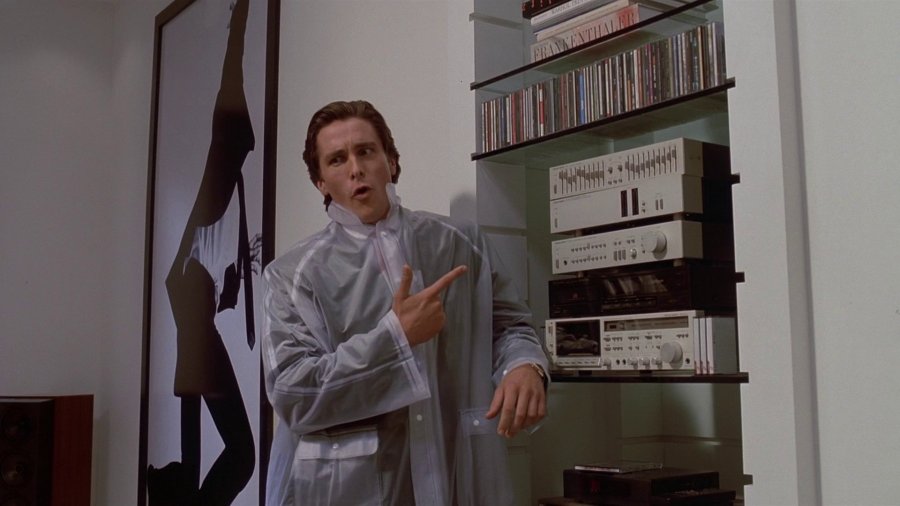
This month’s What’s the Difference? from Cinefix tackles the disturbing book and the amazing movie, American Pyscho.

I can’t remember the exact reason, but after hearing about the novel American Pyscho I decided I should read it. To the library! Where they didn’t have it. To the bookshop! Where they didn’t stock it. To the indie bookshop! Where I was able to find one copy being sold in shrinkwrap.

There’s a point to be made here about the value of indie bookstores. And having all the sick and twisted novels available for sale probably isn’t the point I intended.

And this is a sick and twisted novel. There are some scenes in there that would make a horror fan blanche – break free little rat, break free! The “satire” of the novel doesn’t feel like satire, it feels like gratuitous sadism that is there as an extreme juxtaposition to banality in a lazily made point about yuppies.

Which is why I regard the movie as far superior. It manages to skim through and grab the major elements of the book and put them on screen without becoming horror porn for vore fans – don’t look up that word, you don’t want to know. Ellis may not be a fan of the movie – because it is hard to tell if Bateman got away with it or imagined it – but his complaints are far too typical of the precious artists I’ve commented on in this series many times.

The irony is that many people would say that the movie is still ultra-violent. In which case, don’t read the book. Don’t do it. Or keep some lye on hand.

Update: Wisecrack did a great breakdown of some key differences between the book and film:

christian-bale-american-psycho-plastic-jacket-cover-up-picture
Do you like Huey Lewis and the News?

The Evolution of YA Fiction

Young Adult fiction is a term whose meaning has varied wildly over the years. It can apply to coming of age tragedies or serialized adventures of babysitters, or insert really dated twilight joke here. But where did this young adult genre come from? And why did it get so big?

The voting referred to in the video is here, but it is for North American people only. I mean, it is about the Great American Read after all. Which obviously means that the rest of the world’s opinion on that doesn’t count. Neither does South America’s.

Book vs Movie: The Lost World – What’s the Difference?

maxresdefault

This month’s What’s the Difference from Cinefix compares the book sequel written because the movie adaptation was successful and the director wanted more source material to ignore. Jurassic Park: The Lost World.

Honestly, I can never keep it straight in my head which parts of the novels ended up in which movie. As mentioned in the video, the opening scene of The Lost World was actually from the first book. There are other examples, like the “birdcage” scene in one of the other movies was in the first book… I think.

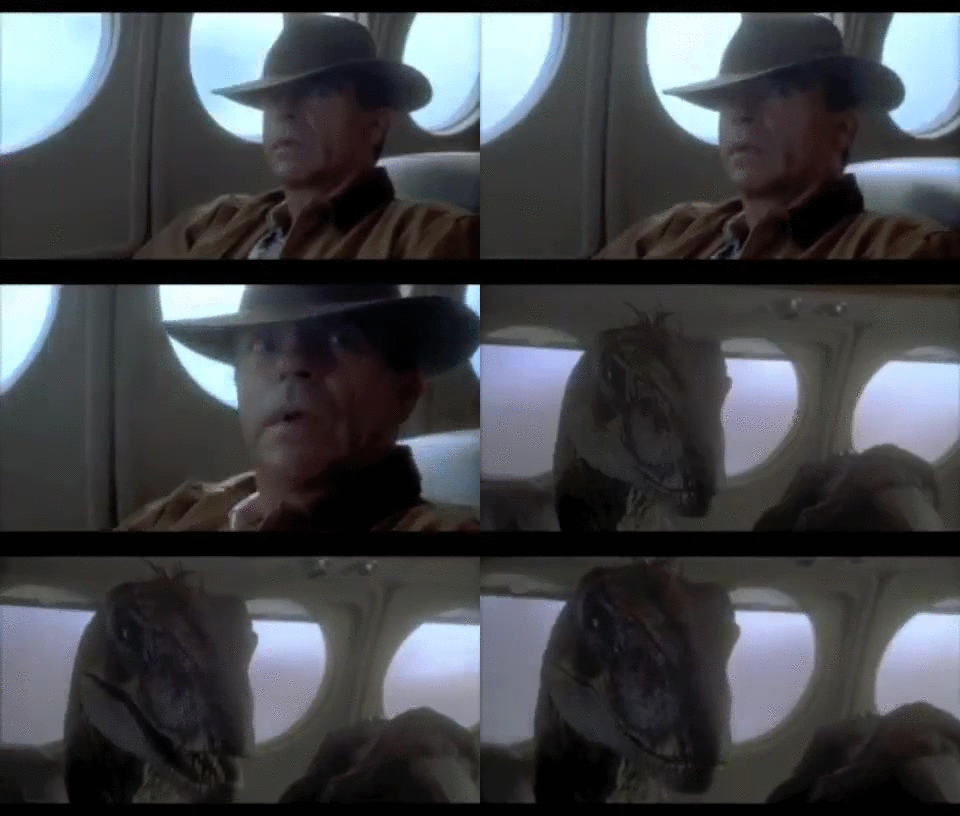
One thing is for certain: Spielberg knows how to make a film. He knows how to build tension, he knows how to establish sights, sounds, and characters so that sequences hang together, and he knows not to have a talking dinosaur in an aeroplane.

nwrb8yd
Yes, this is an actual scene from Jurrasic Park 3. Take a moment.

But The Lost World is an example of one the worst reasons you write or film a sequel: because the first one was successful. I don’t know exactly what Spielberg’s motivations were for the sequel – maybe he was under contract, maybe he needed a new wing on his house – but the film was dull. It was trying to recapture the lightning bottled in the first film. The same can be said of the book. Crichton didn’t originally want to write a sequel and was only convinced by Spielberg saying he’d give him lots of money that he would be keen to direct a movie adaptation of the sequel if one were written.

I’m on record as not being much of a fan of Michael Crichton’s books. He has a tendency to write solid thrillers that act as vehicles for anti-science rants by a raisonneur or mouthpiece. There is nothing wrong with doing this, per se, but science is awesome, so make sure your criticism is on point. Or don’t, depending on whether you want to impress me or someone who thinks chakras are a thing.

Needless to say, I was a fan of the first film, less so the book. The sequels… Put it this way, I haven’t bothered watching the new ones starring Chris Pratt yet.

We don’t know the world

A few years ago I saw a fantastic talk from Hans Rosling about the world and statistics. Okay, I probably lost a few people by implying statistics are fantastic, and now I’ll lose some more by saying statistics ARE fantastic. Unfortunately, Hans is no longer with us, but his son and daughter-in-law – Ola and Anna – are continuing his work with Gap Minder.

Recently they released the results of their 2017 survey of world knowledge. After looking at the results they decided to call it the Misconception Study.* You’ll see why.

That’s right, less than chance. People really don’t know that much about the world.

gms_2017inpage-1024x523

Do you think you could do better? Well, find out! Take the 2018 quiz here. Of course, this is the part where I say that I passed the test. Humble-brag. But in fairness, as I’ve already mentioned, I’ve been following Gap Minder and I like statistics.

Could you pass the test?

*They probably called it that prior, but I’m making a point here, dammit!

Book vs Movie: When the Book Is Better

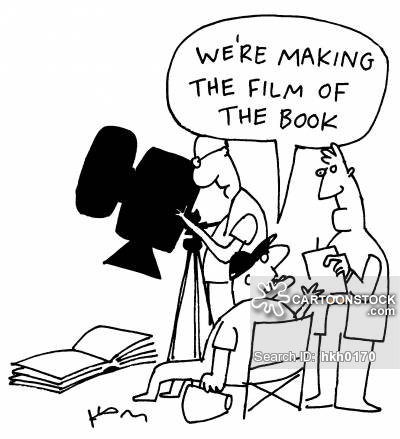
'We are making a film of the book.'

PBS Digital Studios have a new video series It’s Lit! which is part of The Great American Read, an eight-part series that explores and celebrates the power of reading. Featuring one of the premiere video essayists in Lindsay Ellis, this series should be brilliant.

The first video briefly discusses a topic I’ve frequently discussed here, what makes a good adaptation and why the book is so often regarded as better.

Lindsay has very concisely summarised why movies so often don’t make for good or faithful adaptations of the source material. But she also touches on why they can sometimes improve the book, or make an adaptation that uses the source material in an interesting way to tell a different story.

If you aren’t already subscribed to Lindsay or PBS Digital Studios, you may want to do so now.

Book vs Movie: Dr Strangelove – What’s the Difference?

dr-strangelove-whats-the-difference-image-5239079

This month’s What’s the Difference? from CineFix delves into one of the few Stanley Kubrick films I’ve enjoyed.

Everyone remembers Dr Strangelove but very few remember Red Alert, the novel that was the basis for Kubrick’s adaptation. Peter George’s book was an early nuclear war thriller and having got there first tended to be copied (or is that emulated?) by many other authors. This was an important point since Kubrick and George decided to sue the production of another movie based upon a nuclear war thriller that was deceptively similar to Red Alert. I’m not exactly sure why this was important as George teamed up with Terry Southern to change the super-cereal novel into a timeless satire.

Did you know that Dr Strangelove was originally going to end with a pie fight? Apparently, the farcical element involved in that was deemed too silly for a poignant satire, despite how metaphorical it was to the destruction of the human race. I guess many would have missed that point. Comedy needs to take itself more seriously if people are to get the point.

I think Dr Strangelove is a great example of a movie being better than the book. The way it does this is by not taking the source material seriously. What would have been another by-the-numbers thriller was elevated by satirising war. Landing not long after the Cuban Missile Crisis, the film managed to capture sentiments of the absurdity of mutually assured destruction and the ineptness of the cabals of military and political elites deciding fates.

Plus, Peter Sellers.

Do we consume media?

encoding_decoding_of_broadcast_structures

It is common for us to refer to books we read, movies and TV shows we watch, and whatever it is we do with news, in terms of consumption. But is that accurate? PBS Ideas Channel has an interesting video on this topic.

I like the idea of decoding as an explanation for how we interact with media. It certainly offers a better explanation for how some people will interpret something completely differently than if they were to merely consume it. Decoding also makes me feel much better about writing violent stories, and that is the important thing here: justifying stuff I already like.

What Makes A Good Story?

if-you-didnt-read-the-title-first_fb_526920

Recently a YouTuber discussed what makes for a good story, based upon three important pillars: pictures, feelings, and ideas. Or as he put it:

Hello and welcome to another instalment of “X lectures you on matters he himself knows nothing about”.

Screen Shot 2018-03-01 at 10.17.55 PM
Video removed, see why further down.

Like with everything that has a simple explanation (and even some complicated ones), I think the response to these sorts of posited arguments is “I think you’ll find it is a little bit more complicated than that.” But this one was funny, so points for effort.

A lot has been written on how to tell good stories. Seriously, every second creative person in history has a list of rules or advice. So here is a list of seven things that make for good stories, because seven is more than three, and it was on the first page of my Google search:

  • A central premise.
  • Strong three-dimensional characters who change over time.
  • A confined space — often referred to as a crucible.
  • A protagonist who is on some sort of quest.
  • An antagonist of some sort bent on stopping the hero.
  • An arch in everything — everything is getting better or worse.
  • And perhaps most important — Conflict. (Source: from Inducing Reality: The Holy Grail of Storytelling by Ken “frobber” Ramsley)

I think Ramsley’s explanation is more of a traditional checklist of things you need in your storytelling. X’s, in contrast, is a more generalist feel of where a story sits on one of those trinity diagrams. Neither, in my opinion, is right. And as a creative person, I’m now going to make a list of rules and advice….

Joking. Joking. Because I don’t think it works like that. I think that what makes a story good is the execution of the various story elements, done at the right time, finding the right audience, and being interesting enough to be remembered.

As an example, Star Wars is regarded as good, despite containing clunky dialogue, wooden acting, and passable directing. Why is it good? Because it hits all the story elements of the hero’s journey, it was one of the first space operas that hit the baby boomer generation and their kids, and had cool ideas like light sabres, space battles, The Force, and merchandising before that was really a big thing, to be remembered.

I’ve previously discussed how the luck factor of being a good story works. One example I cited was of Moby Dick and how it became good literature by accident/chance. Essentially one person dug it up, liked it, wrote favourably on it, and the rest is history. Shakespeare is in a similar boat, as his works were collected posthumously by 5 fans (750 copies, 250 surviving). These are examples of how finding the right audience is important, and how timing may not coincide with when something is made. How many other potentially good works were lost because they didn’t have an advocate who chanced upon them?

Of course, that’s just my thoughts. It’s probably more complicated than that.

Edit: When I originally posted this discussion on what makes a story good, I linked to a video by a YouTuber. Via Twitter I have learnt that this YouTuber sexually abused his former partner. Please take a moment to read her story in the links.

This isn’t behaviour any of us should condone, nor support. In this instance, I was sharing his video and promoting his profile – hence why his user name and video have been removed from this post. I was wrong to tacitly support abuse in this way. By not standing against abuse you might as well be condoning it.

Book vs Movie: The Running Man – What’s The Difference?

maxresdefault

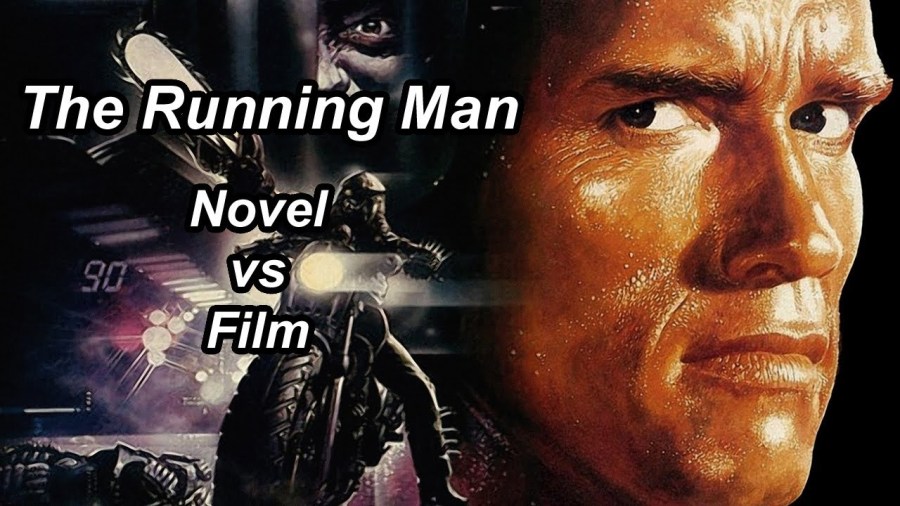
Given the impending authoritarian regimes and mega-media corporations forming, CineFix decided that this month’s What’s the Difference? would look at our near future. Reality TV will soon bring us The Running Man.

Back when I first saw Arnold Schwarzenegger in The Running Man the title sequence credited the source material as being written by Richard Bachman. One of the people with me, turned to us all with one of those know-it-all looks and said, “That’s really Stephen King.” So as we watched Arnie take down hulking professional killers with his trademark killer puns, we wondered if he was correct. Spoiler: he was.

Decades later I finally got around to reading and enjoying the novel. The movie and the novel were starkly different in so many ways. For starters, no half-starved, poverty stricken Running Man contestant is going to look like Arnie. But many of the themes are the same, if explored in differing ways.

This made The Running Man more than just a standard action film. By exploring the themes of totalitarianism, class subjugation, and media control while Arnie slices a guy in half with a chainsaw, we got a movie that was subversive and satirical. While not on the same level of social commentary as King’s novel, it does stand as an example of how you can do a loose adaptation of source material as an action movie but retain the exploration of themes.

And watch a guy with no pants get electrocuted when the fire sprinklers are set off. Way better than reading the description of Ben Richards’ entrails getting caught on plane seats.