“Quotations are useful in periods of ignorance or obscurantist beliefs.”
The Society of the Spectacle is an aphoristic set of polemic essays that examines the “Spectacle,” Debord’s term for the everyday manifestation of capitalist-driven phenomena; advertising, television, film, and celebrity. He argues that we have become alienated from ourselves and reality in order to have us serve the economy/capitalism with the production of commodities and accumulation of wealth.
I first encountered the idea of the Spectacle from Peter Coffin (see below) and his video essays related to what he terms Cultivated Identity. This is a fascinating idea and particularly relevant today in the age of mass media, late-stage capitalism, and the commodified zeitgeist. Look at how much of our society is obsessed with or based upon edifying upward mobility, celebrity, fame, reputation, and positions of power or prestige.
This ultimately means that our media has become the thing that tells us how to think and it is essentially inescapable within our modern society. Thus, the limits of our conversations and thinking have already been defined, which then becomes a feedback loop for the media we consume. Click “Like” if you already agree.
The only drawback of this work was that it is obscurus and jingoistic. Aphorisms might be cool for ancient philosophers, but they don’t make for great enlightenment nor clear communication of ideas. I’ve actually gained more from reading and watching related overviews of The Society of the Spectacle than from Debord’s actual work.
Sometimes you can create characters that are a little bit too realistic.
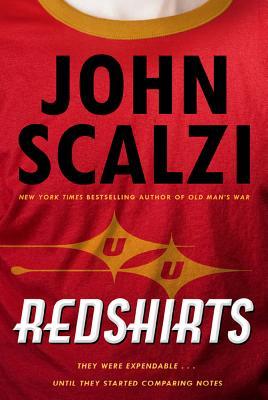
Ensign Andrew Dahl has just been assigned to the Intrepid as a xenobiologist. But from his first day onboard he notices that something is wrong with the rest of the crew. He and his fellow new recruits quickly realise that people on away missions have a nasty habit of dying. Except for a select handful of important crew members that is. They also notice that reality doesn’t make much sense at times when The Narrative takes over. Can Dahl and his friends figure it out before an away mission kills them too?
After reading the first chapter of Redshirts I had to consult with the interwebz to answer a question about this book: Is it worth reading the whole thing? Aside from one notable review that captured several of my concerns, the vast majority of my fellow readers loved Scalzi and this book. So I decided to persist and found myself at the end of Redshirts with the same reservations as I had at the end of the first chapter.
Firstly, this book was good enough to keep me reading. Redshirts has a very strong premise and the story is mostly well executed. The main story – more on the codas in a minute – steams along and is pretty entertaining. It won a Hugo, so clearly it has a lot to offer.
Now, let’s get to the buts.
For what is clearly a comedic novel, Redshirts is nowhere near as funny as it thinks it is. He said. He said. It has a cast of characters that are meant to be shallow and interchangeable, but they are so interchangeable that you wouldn’t know who was talking if you weren’t constantly reminded. He said. He said. The premise may be very strong, but I felt it wasn’t fully realised, which left me frustrated. And then the three codas arrived and shifted away from the previous 25 chapters’ lighthearted tone. All three, but especially 2 and 3, had a much more serious tone and felt like they belonged in a different novel.
So while I mostly enjoyed reading Redshirts, I feel it wasted its premise and wasn’t as well-executed as I’d have liked.
NB: My wife said I had to tell everyone that I’ve spent all day complaining about the ending to Redshirts. She feels it would be disingenuous of me not to mention that and to also give you an idea of how much she is looking forward to me reading something else.
Yeah, I haven’t read it, nor seen the musical nor the musical movie. A title that literally means the miserable and a narrative to match isn’t really my cup of tea. The issues discussed in Les Mis were very real, if romanticised somewhat, and still bear some relevance to the modern day. I discussed one such issue in a previous It’s Lit post.
Maybe I’ll read it one day. Meanwhile, quick overviews will have to suffice.
Victor Hugo’s Les Miserables is one of history’s most famous novels and one of the longest-running musicals in Broadway history. On this special episode of It’s Lit! we explore how Les Miserable became both a national and revolutionary anthem, and so publicly adored that all 1,900 pages never went out of print.
How will we have anyone to look down upon if we all work together to make a better and fairer society?
The “A Very Short Introduction” series explores the topic of Socialism promising exactly what the title suggests. Michael Newman seeks to give an overview of socialism; the good, the bad, the misunderstood, and the misrepresented.
In my continued effort to dig into a few of the current bogeymen of cultural discourse, I went looking for an introductory text on socialism that wouldn’t shy away from the flaws but would also be more honest than most detractors. I think Newman succeeds in this respect. Many discussions of socialism treat it as a monolith – which they ironically still manage to misrepresent – which Newman is able to dispell by discussing some of the many iterations. Socialism also tends to have many ills landed at its door without adequate context – e.g. Stalin’s totalitarianism and Lysenkoism are all treated as completely socialism’s fault whilst under other policial regimes we divorce or distance those issues (people starving under capitalism isn’t capitalisms fault… apparently). Newman discusses examples like Cuba and Sweden with enough context to show how internal and external forces impacted what we regard as socialism.
This was a handy overview of socialism and certainly one that people should be encouraged to read before espousing views on the subject.
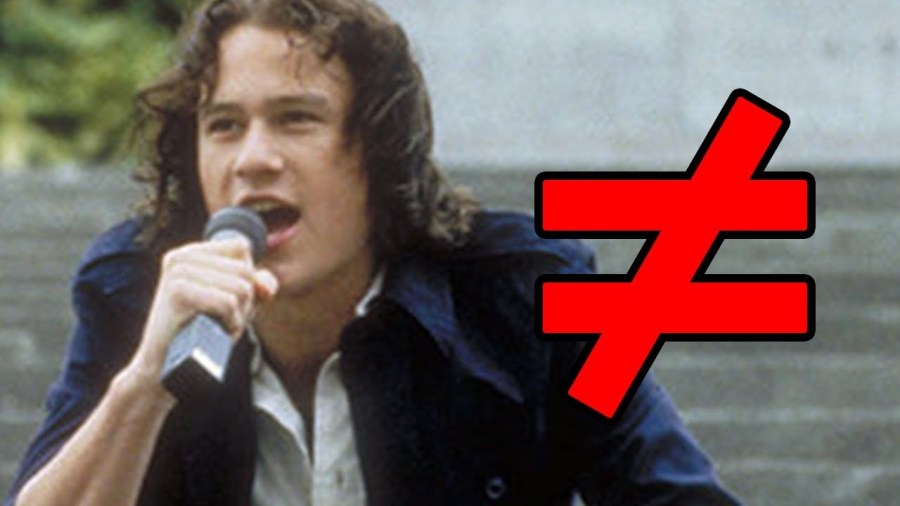
Do you love Shakespeare and 90s teen romantic comedies? If the answer is no… Well, you’ll probably hate this month’s What’s the Difference? from Cinefix on 10 Things I Hate About You. This is probably not the blog post for you. Maybe read one of my other posts.
And who hates Shakespeare anyway?
Is it just because they forced you to read his plays in school?
Because his stuff is worth revisiting.
I have to confess that I’m not a fan of the original Shakespeare play, Taming of the Shrew. For me, it has not dated well. But I am a firm fan of the adaptation, 10 Things I Hate About You.
For me, this is where adaptations shine. A contemporary adaptation of older works can not only offer novel takes on the original story, but they can also cut the dated material. I’m not sure too many contemporary romance stories would appeal to an audience if the women were essentially treated as property.
Another thing I enjoyed about this adaptation was seeing Heath Ledger in his first major film role since seeing him in his first play – Peter Pan – several years earlier. It was exciting to see him make that successful career transition.
“Work expands so as to fill the time available for its completion.”*
In Praise of Idleness is an essay written in between the two world wars and expands upon one of the points made in his Political Ideals essay. Once again, Russell manages to argue a challenging concept in an erudite and concise manner. Even if you disagree with him on the idea of work being overrated, there is value in engaging with what he is saying.
On inequality:
“Modern methods of production have given us the possibility of ease and security for all; we have chosen, instead, to have overwork for some and starvation for others.”
Variations of this statement are still being made today around inequality. They tend to use far more words.
On wasted efforts:
“Modern technique has made it possible to diminish enormously the amount of labour required to secure the necessities of life for everyone. This was made obvious during the war.** At that time all the men in the armed forces, and all the men and women engaged in the production of munitions, all the men and women engaged in spying, war propaganda, or government offices connected with the war, were withdrawn from productive occupations.”
I mean, could you be any more scathing of warmongering?
While I think he does make his argument well, there are some points that are taken as a given. The example of the wasted effort of war in the quote above is one of those. There is a valid point made about how society managed to function despite being asked to drop everything and fight a war, but the point about war being a waste of time and that standards of living were still okay just has to be taken as a given.
Worth a read, even if you disagree with Russell on some or all points.
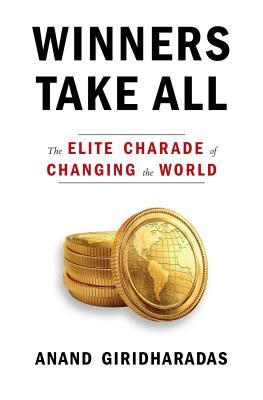
The first rule of MarketWorld is you do not criticise MarketWorld.
Winners Take All is a critique of the modern market-driven and capitalistic thinking that dominates the social and political landscape. Giridharadas focuses upon philanthropy in particular, as the more moralistic and benign problem of MarketWorld that is often used to whitewash the more obviously bad actions of those solely interested in the accumulation of wealth and power to the detriment of others.
This was a very interesting read and particularly insightful.* Throughout the book, Giridharadas is able to show us how MarketWorld created itself and now perpetuates and grows itself. And it doesn’t back away from being critical of people who think of themselves as doing good (and in a sense are) and of the system that allows this to happen.
Two topics in the book particularly resonated with me. The first was the idea of the immoral or amoral approach that is used to making money, which is then used for philanthropy later. This money is often made by exploiting people and the commons ruthlessly, and then is whitewashed of guilt by “giving back”, rather than, you know, not exploiting people/commons in the first place and thus negating the need for giving. I’ve previously come across this idea from a few philosophers and people like Alain de Botton who have discussed this on moral grounds.
The second topic was that of the Thought Leader. I’ve long been troubled by the happy-clappy approach to ideas and intellectual thinking we see in popular culture. Whether it be TED talks or deceptive pop-science authors like Malcolm Gladwell, there is a tendency in this field to be anti-intellectual or present a facile understanding of an issue/topic. So I especially enjoyed seeing the Thought Leader taken down a peg or two and the winning formula exposed.
Thought Leader 3-Step:
1) Focus on the victim, not the perpetrator.
In this way, you can avoid dealing with larger systemic issues and instead make smaller changes that have more direct and emotional appeal. Think, telling women to not dress too sexily so they won’t get raped** instead of addressing the issue of rape and rapists.
2) Personalise the political.
Or to put it another way, don’t be a critic pointing out systemic and collective issues, but instead make it about personal and individual dramas.
3) Be constructively actionable.
This is about having some nice and easy steps that people can do to make a difference. Remember to keep it at a personal level!***
This book wasn’t without fault. I’m not a particular fan of the narrative/literary journalism style employed. You commonly see this style in the pretentious long-form essays and “important” journalistic pieces. What it tends to do is obscure hard facts in the narrative and steer away from addressing points fully. This might make for a more “human” piece of writing that many would call more engaging and interesting, but it weakens just about any point and argument made.
I highly recommend this book.
Thanking our sponsors:
*The reason for the insightfulness is obvious if you are familiar with Giridharadas or read the Acknowledgements section. This is his playground. He is the son of a director of the McKinsey Institute consulting firm (they come in for a lot of flak in the book), worked there himself, he’s a Harvard alum, has given TED Talks (thought leader), and was a Henry Crown fellow of the Aspen Institute.
**And ironically, this is a great example of why this sort of focus just doesn’t work. It is a myth that clothing has anything to do with rape, but addressing rape and rapists would require a systemic change that makes many uncomfortable.
***This is why we see IPCC and other climate change reports making recommendations like installing solar panels, installing led lighting, and buying an electric car, rather than demanding a move away from fossil fuel usage at a society level.
Reality might not be what it seems, but at least it isn’t a simulation. Possibly.
Carlo Rovelli is a theoretical physicist and has a background in the history and philosophy of science. His field of research is quantum gravity. This makes him an ideal person to write a book about the history of quantum physics and the current state of affairs with scientists trying to reconcile quantum mechanics and general relativity.
Rovelli is one of the founders of loop quantum gravity theory, a candidate alongside string theory for an explanation of quantum gravity. As there are many books, videos, and proponents of string theory, Rovelli thought loop quantum gravity deserved a book too. So while string theory is mentioned, the focus is on the history of quantum physics leading to loop quantum gravity theory.
This was a particularly well-written book. The history, starting with my favourite thinker Democritus, and the explanations were (relatively) easy to follow. At no point did I feel lost in spin foam or uncertain about what is really complicated material.
But I also came away from the book feeling as though I’d missed a section. Maybe I need to re-read the book (doable, as it isn’t particularly long) as I felt like the discussion of loop quantum gravity was actually a brief overview* compared to the sections on the background to its development.
Reality is Not What It Seems is a very good overview of quantum physics, I just wanted a little bit more.
*Loop quantum gravity doesn’t try to string together gravity with quantum mechanics but extends quantum mechanics as a granular geometric equation into the macro realm of what we understand as special relativity.
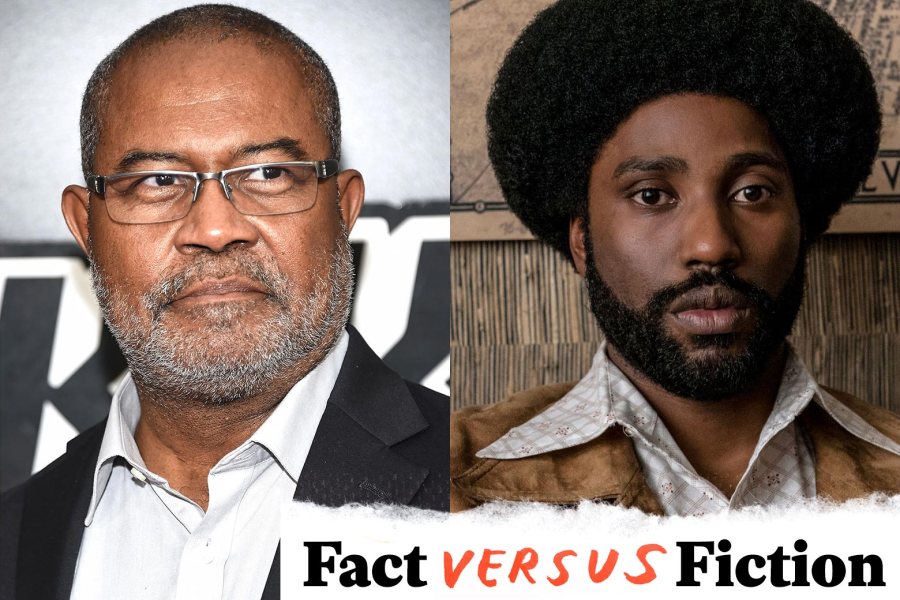
This month’s What’s the Difference? from Cinefix covers the amazing Spike Lee film based on the autobiography of the same name: BlacKkKlansman.
I have been reading quite a bit about fascism and racism lately. As someone who got lucky to be living in privileged skin, these are issues I feel we all need to be more aware of and actively standing against.
Instead of my normal comment on the film or book, I suggest watching the Vice coverage of the Charlottesville rally, Philosophy Tube’s videos on racism, Antifa and fascism, and reading the book on how to oppose fascism.
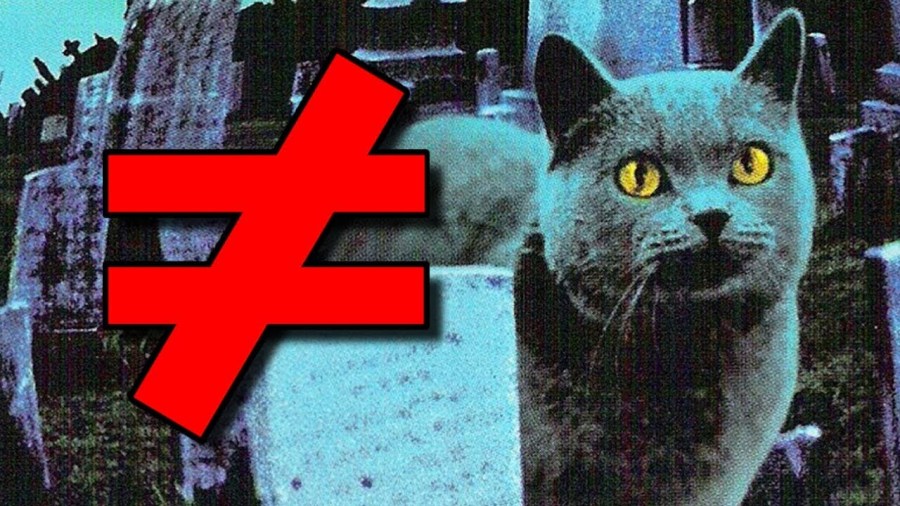
It was inevitable that someone in Hollywood would try to reanimate the corpse of yet another classic film. So with the upcoming release of the remake of Pet Cemetary, what better time for CineFix to discuss the original book and movie in What’s the Difference?
Pet Cemetary is one of the many books lingering on my shelf in the TBR pile. While I have decided that this year will involve a concerted effort to make a dent in said pile*, it is unlikely I’ll get to read this novel anytime soon. If I’m completely honest, I want to read The Stand first.
What about the movie, I hear you ask. Back when I was a young lad – walking the obligatory 10 miles (whatever a mile is in real measurements) to school through 10 feet of snow (why would there be feet in snow?) after working 10 hours at the coal mine – Stephen King novels and movies were all the rage. Whether it was Needful Things, Carrie, Misery, Lawnmower Man, IT, or Children of the Corn, there always seemed to be someone bringing a Stephen King VHS** to watch. And after my hard lesson learnt with IT, I tried to avoid the obviously scary films – hence I have seen Lawnmower Man and most of Needful Things, but not Children of the Corn.
At this point, I probably sound like a wimp. It is odd that I generally don’t find horror novels that bad, and even movies with horror elements are fine. But movies whose goal is to creep you out or gross you out (think Saw franchise or Hostel) just aren’t for me, particularly the latter. It’s a little hard to be entertained by that sort of thing.
Yes, yes, more excuses as to why I haven’t read or watched something. Don’t worry, plenty of horror in my TBR pile. Stay tuned.
*I’ve managed to read one from the pile and added two more to it this month. That counts as progress, right?
Is it okay to punch Nazis? What if I told you that is only one of the tactics for dealing with Nazis?
The Anti-Fascist Handbook aims to summarise the history of fascism and its opponents, the rise of more recent fascist groups, the lessons from history for dealing with fascism, the issue of “free speech” and fascism, and how to combat fascism today. Historian Mark Bray has detailed the tactics of the Antifa movement and the philosophy behind it through interviews and the compilation of history and research into fascism.
I’ve noticed that there are several topics that seem to be widely discussed but never with any actual knowledge. Antifa, Black Lives Matter, and other social movements are prime examples. So when I saw Abigail from Philosophy Tube’s video discussing this book (and other related work) I knew that Bray’s book on Antifa would be another of my must reads.
I think one of the most important takeaways from this book is that the rise of fascism to power hasn’t historically required huge support, just a lot of apathy from the masses. Too often debates will rage around “free speech” or “is it okay to punch a Nazis” while completely missing the point that fascists are loving being legitimised with any of these debates.
The five important lessons (my summary of the headings):
Fascist revolutions have never succeeded, they gained power legally.
Many interwar leaders and theorists did not take fascism seriously enough until it was too late. (Sound familiar?)
Political leaders/groups are often slower to react to fascism than those on the ground.
Fascism steals from left ideology, strategy, imagery, and culture (e.g. the liberal idea of “free speech”).
It doesn’t take many fascists to make fascism (Overton windows shift easily).
Whilst this was a very interesting and important book, it wasn’t perfect. The coverage of fascism outside of Europe was limited; something Bray acknowledged he wasn’t going to cover in detail and would have been a nice addition – something for the next instalment perhaps. Also, the defining traits of fascism were clearly made, but the differences between groups that fall under that banner, or are adjacent (and thus facilitate normalisation), weren’t discussed. I would have found it interesting to have the discussion of how alt-right and alt-lite differ and how you combat the latter. Minor points that might be in future editions.
So before you next hear a professional opinion-haver brand Antifa as terrorists, it would be worth reading this book.
This month’s It’s Lit! covers everyone’s favourite topic: food.
If it isn’t your favourite topic, just give yourself 48 hours without it and see if that changes your mind.
I’ve always found food scenes in books to fall into two categories: needless exposition, or important showing (Oliver Twist is a great example of this). While the video discusses the latter, it is all too common that the former is what we read most.
While I was watching the video I was reminded of something I read last year. The discussion of bread in Victor Hugo’s Les Misérables, particularly around the hard bread that needed to be soaked, was something that Karl Marx wrote about in Das Kapital. The hard bread was actually due to deliberate contamination to make cheap bread that workers could afford, knowing full well that it was bad for them to eat, and the employers knowing full well that the workers couldn’t afford to eat properly (keeping them hungry so they would work).
A great way to remind us future people of how society used to run.*
Food varies wildly from place to place and from culture to culture; since humans are such sensory creatures, using words to evoke the experience of eating is an excellent way to bring a text to life.
It’s Lit! is part of THE GREAT AMERICAN READ, an eight-part series that explores and celebrates the power of reading. Hosted by Lindsay Ellis.
*Let’s be honest, society would quite happily go back to those conditions, and in some areas of the world, it still is operating in that way.
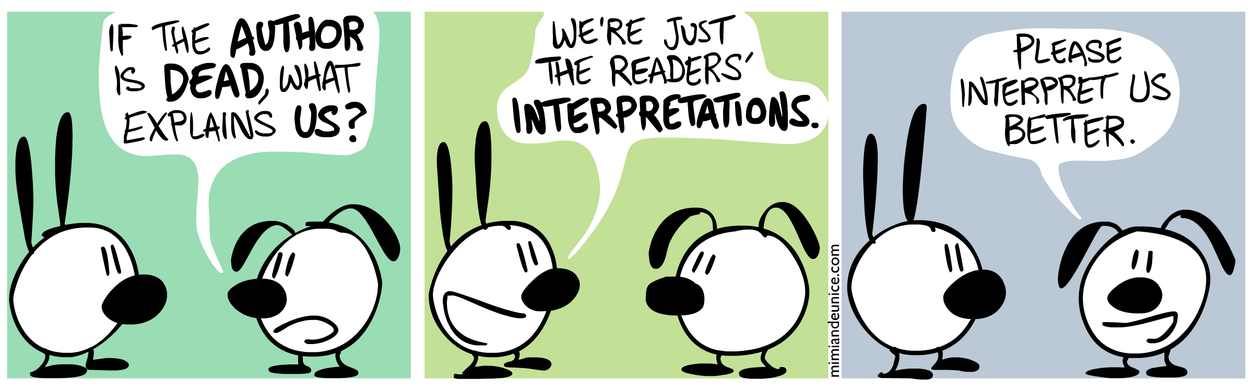
The birth of the reader must be at the cost of the death of the author… or so says Roland Bathes in his essay Death of the Author. Are we talking about literally killing authors? No, this is figurative (like most uses of literally). Can Death of the Author include killing the author? Sure, but get a good lawyer first.
Let’s let Lindsay Ellis (and John Green) explain:
My take on Death of the Author is somewhat complicated. I think there is relevant information that the author has that doesn’t make it into the story (think Elvish languages from Tolkien*), but I also think that quite often if it isn’t in the story it doesn’t really exist. I think that stories are really up to the readers to interpret, as viewpoints and interpretations will change over time**, but that doesn’t mean readers always interpret correctly.
This is a hedged way of saying that Death of the Author is probably too simple a way of thinking about how stories should be interpreted. At least, that’s my interpretation of it.
*Let’s not get into how “relevant” I think those languages are, or a lot of that world-building from authors in general is.
**You may remember book reviews here where I’ve discussed how older books haven’t aged well due to changing societal standards. Sexism and racism are obvious changes that have happened in the last 50 years which make formerly acceptable, even progressive, moments in a story seem backward and unacceptable now.
Another thing that can occur is changes to society changes interpretations. E.g. The Baby It’s Cold Outside controversy can be summed up as an old song made references to things that we are no longer familiar with, so our interpretation changes. This makes Death of the Author a truly bad thing for any artwork that is “consumed” outside of the social and temporal setting it was made within.
Update: Good article in Uncanny that captures some of my thoughts on Death of the Author.












 Tyson Adams