Apparently, covert operations groups keep an eye out for future killers on lacrosse teams.*
Mitch Rapp lost his high school sweetheart in the Pan Am Lockerbie terrorist attack. He then dedicates himself to becoming a covert operative to kill terrorists rather than grieve and move on to a professional sports career. For some reason, the government decide Rapp is totally mentally stable and they should train him to become an assassin and hope that decision doesn’t backfire.**
Okay, so I’m being a little unkind in my review of American Assassin. Flynn’s book is a pretty solid thriller with plenty of action. It avoids the common flaw of these sorts of thrillers by not painting the terrorists as one-dimensional zealots. Even the decidedly gauche flag-waving moments that any book with “American” in the title is obliged to have are well handled. As long as you accept the basic premise – that Rapp is awesome because everyone around him says so, despite Rapp himself being a rather bland character – you have a good time.
But ultimately this book fails to actually put a character arc in for Rapp. College athlete turns into an assassin should involve some sort of an arc, but Rapp just kinda glides through. At some points, Rapp is even described as not pushing himself, because this gruelling training is just that easy for him. That makes American Assassin all feel a bit flat.
*Think how many school shootings they’d be preventing if they were keeping an eye out for budding killers!
**Which it kinda does. I don’t know what happens in later books in this series, but you’d have to conclude from this one that Rapp will be a loose cannon.
So now you want to ride with me. I’m sure I won’t regret this…
John Russell is headed back to “civilisation”* on the last stagecoach headed north. Some of the folks onboard think Russell is an “Indian”* and don’t want to ride with him. But when bandits come for the stolen money one of the other passengers has with him, suddenly they want to ride with Russell.
Since this is an Elmore Leonard story, I really expected more from it. There isn’t anything bad about it, but this is far from Leonard’s best. It reminded me of a collection of Leonard’s short stories I own and how his best stories were immediately memorable, while the rest feel like just so many words in comparison.
It surprised me to learn that this story was turned into a Paul Newman film in the 60s. Given the positive reviews the movie has, it may be better than the book.
*I’ve used these terms as they relate to the text despite them being inaccurate.
This month Lindsay Ellis discusses the Literary Cannon, or how books become “worthy“, in It’s Lit.
I swear that when I started posting these videos that I didn’t know the series would cover one of my pet topics. Worthiness, important books, snobbery, guilty pleasures, are all things I love to bang on about. This video feels like a worthy addition to my posts on the topic.*
Let’s explore what makes a book “important.”
Literary critics, writers, philosophers, bloggers–all have tried to tackle where and why and how an author may strike such lightning in a bottle that their works enter the pantheon of “Classical Literature”. Why this book is required reading in high school, why other books are lost to history.
It’s Lit! is part of THE GREAT AMERICAN READ, an eight-part series that explores and celebrates the power of reading. This all leads to a nationwide vote of America’s favourite novel. Learn More Here: https://to.pbs.org/2IXQuZE
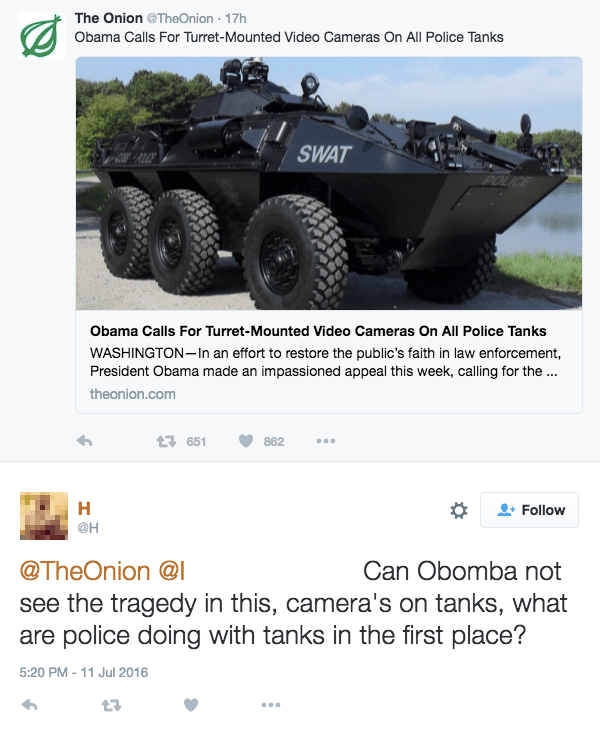
Does this sound familiar? You are looking at your social media feed and spot the latest hot-take from your favourite satirical comedy site. They have eloquently broken down the absurdity of recent events with biting insight and withering sarcasm. And then you read the comments.
Okay, so that is always a mistake. But bear with me here. You could also bare with me if you like, I can’t force you to wear pants while you read blog posts.
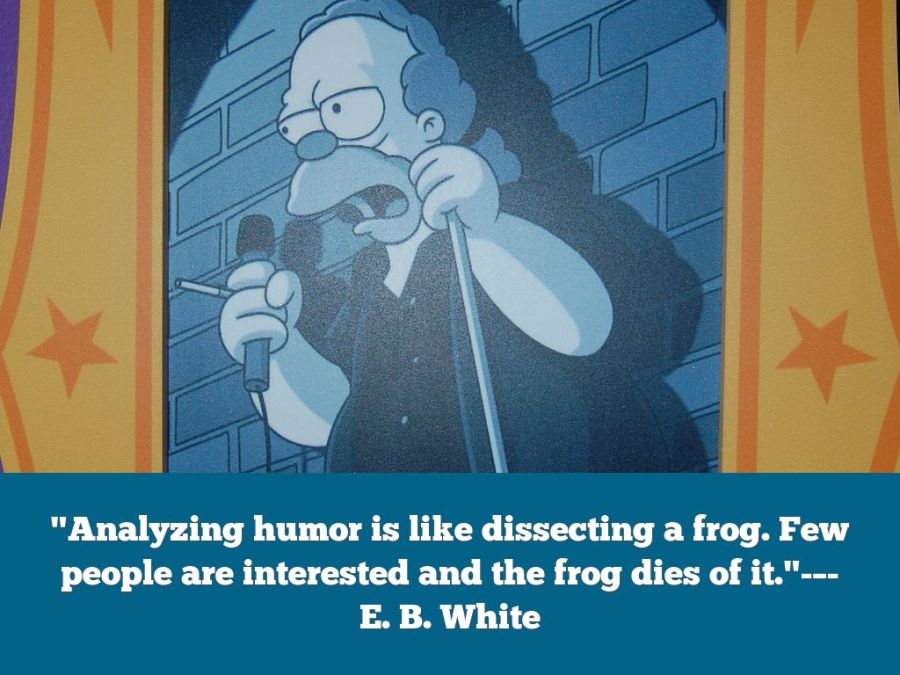
Inevitably in the comments, there will be someone explaining to everyone that the post is satire. This is like someone standing up in front of an audience with an applause sign, just in case you missed the right moment to show your appreciation. This is the canned laughter at appropriate moments in sitcoms to point out what was meant to be funny. This is the comedian who repeats the punchline of the joke…
Worse still are the people who jump in to explain how the joke works and why it is funny. These people are the equivalent of that annoying person in the middle of the cinema telling the movie character not to open the closet door in the creepy house.
Now I’d argue that this sort of comment is completely unnecessary. In fact, I wouldn’t be surprised if there was a statistical correlation between someone explaining the joke and that person suffering a sudden and unexplained death from choking on their phone.
At the heart of this problem are two groups of people. The first is a group of people who think they need to guide us mere mortals through life. Without their input, we would be lost, society would crumble, and within months they would be explaining how Thunderdome actually originated as a means to resolve conflict and provide entertainment in Bartertown. They don’t see it as condescension, they see it as imparting wisdom to the little people.
Then there is the second group. The second group are why the first group exist.
You see, invariably on every single satirical comedy comments section, you will find someone not realising the article they are commenting upon is a joke. They may be unsure, perhaps posting something like “The Onion?” or “I don’t understand, is this meant to be funny, am I missing the joke, did my mother’s alcoholism affect me somehow?” Or they may think the article is completely serious, and comment with outrage, indignation, or a rambling string of ideas that may belong in the comments of a different article. Clearly, the first category of menaces to society are preempting these posters.
But you aren’t meant to explain it to people. These poor fools are meant to be mercilessly mocked. They are, after all, on the internet, where civil discourse is disallowed, and a Google search to fact-check or see whether the site is satirical takes seconds. A semi-literate turtle should be able to find the About page or Other Articles links and from there it should be obvious. Even for the turtle. And its illiterate brethren.
Some of the semi-literate turtles have lost hope in humanity and decided to document the downfall of civilisation. They have started entire webpages devoted to documenting people not getting the joke.
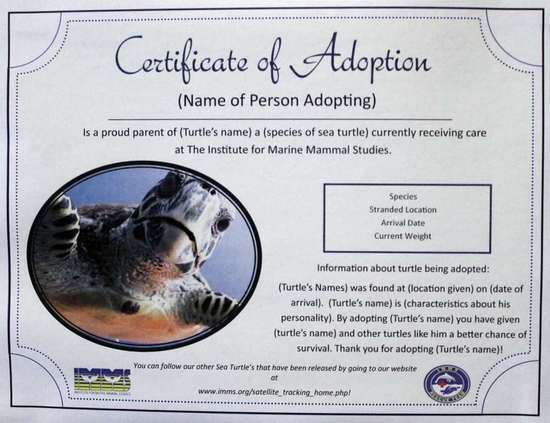
Let us hope that satire continues to entertain and that the confused commenters adopt a pet turtle. Then maybe we will see the end of people explaining the joke. And the end of homeless turtles.
That moment when you realise there is an age-old profession for people who want to tell others that their way of thinking is the best.
Great Minds of the Western Intellectual Tradition is an 84 lecture course on Western Philosophy. It covers the usual suspects while drawing in contemporary or subsequent criticisms, and it also adds in a few more modern thinkers (see links below for the full list). There is the added benefit that no one lecturer covers more than a few topics, so you get many perspectives and expert insights.
I’ve been on the road a lot lately and so +40 hours of audiobook seemed like a suitable way to keep myself entertained. There is also a good chance I learnt something, even if that thing was that even university lecturers pronounce Satre and Nietzsche incorrectly, just like everyone else.
It’s hard to offer up a substantial review of such a diverse mix of topics, lectures, lecturers, and background reading. I think some of the material was presented without enough critical examination (e.g. Nozik’s propositions are only dealt with on a superficial level and aren’t critiqued for how easily they would break down thanks to power accumulation), whilst other parts offered insights I wouldn’t have made otherwise (e.g. Nietzsche’s Ubermensch is clarified as being about “your best self”, which makes his work much more palatable).
The summary I’d offer is that I feel more educated. Do the course and you’ll understand how hilarious that sentence is.
Recently I was reading an article in Aeon Magazine about the challenges faced by the medicine industry – commonly referred to as Big Pharma or Big Pharma written in one of those fonts with blood dripping from it and a syringe being stabbed into a baby. One of the big changes in medicine development discussed was the patent period that allowed monopolies on new drugs, which in turn saw orphan drugs – not drugs for Oliver “please sir, can I have some more” Twist, but drugs for rarer conditions and illnesses – become more popular/profitable to develop.
It’s an interesting issue and the article is worth reading. But it got me to thinking about something a little tangential. No, not whether Oliver Twist needs a remake set in south-east Asian sweatshops. I wondered how much money is actually spent on things.
Drug development appears to take a backseat to marketing. But this depends on what section of the market, how big the company is, and other factors. Clearly, medicine development is still a big expense, but how much is spent on research and development overall?
Total global pharmaceutical research and development spending from 2008 to 2022 (in billions of U.S. dollars) Source.
That global pharmaceutical research spending is quite large at $165 billion. Or is it?
Suddenly the amount spent on medicine research and development seems rather small. The USA government alone could easily cover the expense of medicine research if it decided to change priorities, since it spends 3.7 times that much on defence.*
Would it be a good idea for governments to have a Department of Pharmaceuticals that researched, developed, and sold medicines? Would that be money better spent than stockpiling tanks in a desert? Certainly, it would address several of the issues raised in the Aeon Magazine article around how the profitability of drugs, rather than the consumer needs, drives research and development.
This sort of thinking could be applied to many industries. The reality is that there isn’t actually a shortage of money but a lack of incentive to invest money in some areas in favour of others. The solution doesn’t have to be the government taking over, nor does it have to be about private companies not being profitable. But maybe it does have to be about rethinking what we spend money on.
Richard Denniss made similar arguments in his Quarterly Essay Dead Right about the Australian economy.
So maybe it is time to stop accepting the argument “we can’t afford X” and start having the discussion about how we spend for the most good. Or not, I’m not your boss.
*To be clear, I’m not suggesting we stop all spending on something like defense, or that there aren’t reasons for spending money on things like tanks. But as Richard’s video suggests, we are making value judgments and assumptions without really questioning them.
Is this the real life? Is this just fantasy? Caught in a landslide, no escape from reality. Open your eyes, look up to the skies and see… Some really awesome stories.
This month’s It’s Lit with Lindsay Ellis covers the much-maligned genre of fantasy.
Fantasy is a lens to explore what we as a society find important to our pasts, our presents, and future. Fantasy and science fiction often fall under the umbrella of “speculative fiction” – as a result they are often grouped together, especially in bookstores. But science fiction is a forward-looking genre propelled by the possibilities of technology (and the things that worry us about it), fantasy is … more backward looking.
Future slavery gets around slavery laws by cleverly using a different word.
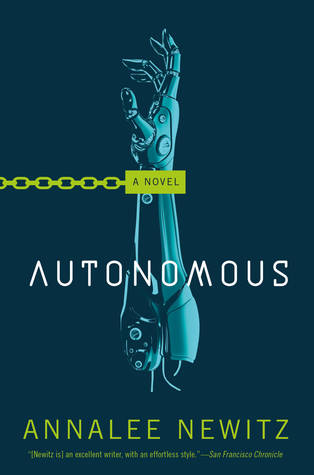
Jack reverse engineers pharmaceuticals so that poor people can afford life-saving drugs. She reverse engineered a new wonder work drug but finds out too late that a BigPharma company made it 100% addictive, and now people are dying. In this (dystopian) future, intellectual property and patents are protected by private armies with killer robots. One agent and his bot, Eliasz and Paladin, are hunting Jack down for her crimes as she is desperately trying to engineer a treatment for the addictive drug.
This book was difficult to review. As a novel, the writing, plotting, characters, and themes are all interesting and well done. On that basis, it is a solid 4-star book. But there was quite a bit about the premise and key plot devices/points that had me making squinty faces as my scepticism was triggered. And the more I think about those points and the premise, the more flaws I see with them.
For example, slavery is a theme discussed for humans and bots – giving rise to the title of the book. In the future companies and governments were so clever they were able to reintroduce* slavery by calling it “indentured”. This felt lazy and unrealistic. Especially since there was another part of this idea explored with franchising – parents paying to set their kids up with an education and ability to get a job – that extrapolates on the current situation for haves vs have-nots and draws upon the criticisms of capitalism. To my mind, the two ideas don’t sit together that well and meant the latter idea was wasted.
Others had some interesting things to say about the bot-human relationship. Suffice to say, it could have been done a bit better.
I suppose I was disappointed with this book. For a novel that was so well written and had clearly had a lot of thought put into it, Autonomous just couldn’t manage to drag itself away from lazy anti-corporate conspiracy ideas to the more interesting material it had on offer.
Reading old books reminds you that nothing has changed.
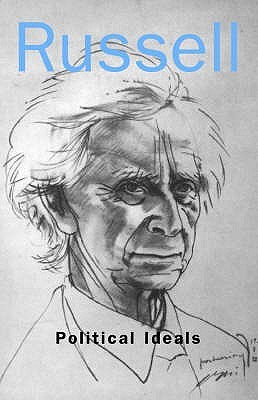
Political Ideals is an essay Bertrand Russell wrote during World War 1 – stay tuned for WW3 – that offers critiques of capitalism, socialism, nationalism, politics, education, and offers insights into how we should go about building a better society. He does this in less than 100 pages.
Russell’s essay is filled with interesting and insightful ideas. Even if you disagree with any of them, there is value in engaging with what he is saying. E.g.:
“Few men seem to realize how many of the evils from which we suffer are wholly unnecessary, and that they could be abolished by a united effort within a few years. If a majority in every civilized country so desired, we could, within twenty years, abolish all abject poverty, quite half the illness in the world, the whole economic slavery which binds down nine-tenths of our population; we could fill the world with beauty and joy, and secure the reign of universal peace. It is only because men are apathetic that this is not achieved, only because imagination is sluggish, and what always has been is regarded as what always must be. With good-will, generosity, intelligence, these things could be brought about.” Source.
This quote has been paraphrased, rephrased, and appropriated by many in the last century (although, I’m sure these thoughts weren’t original when he wrote them). It shows Russell’s reputation as a founder of modern analytic philosophy and as having made significant contributions to many subjects is well deserved. Few could so concisely state such a complex social idea.
Worth a read, even if you disagree with Russell on some or all points.
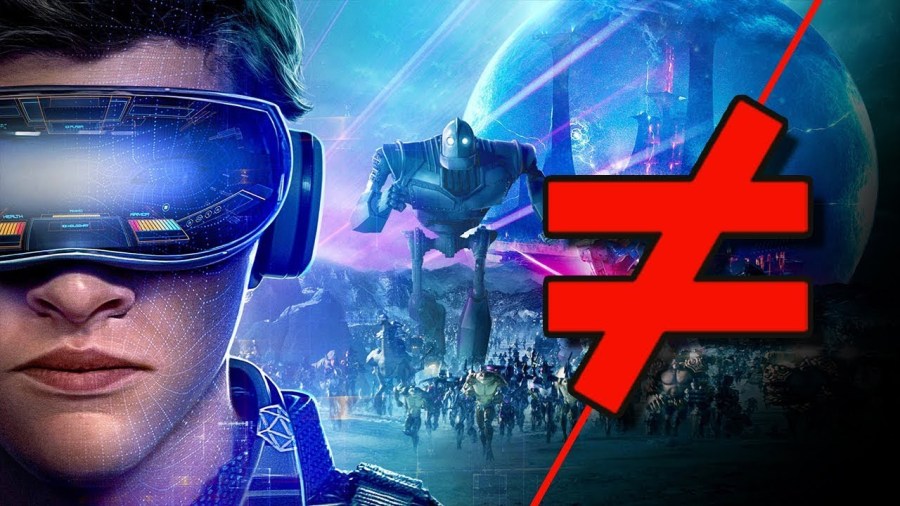
This month’s What’s the Difference? from CineFix covers Ready Player One.
Normally I’d add a few comments here about what I thought about the book and/or the movie, particularly the adaptation. But Ready Player One falls into an odd realm for me. I’d initially had the book on my TBR pile but ended up removing it after a discussion at a writers’ group. The gist was that the book is a great example of the “you’re not a real geek” toxicity that pervades geek culture, exemplified by rating pop culture references.
Then when the movie trailers came out, it too looked like one long list of pop culture references that only true geeks would appreciate… By appreciate, I mean argue and post overanalysed articles and Youtube videos online for weeks after most people have moved on.
Hey look, here’s a video of all the pop culture references:
This is a roundabout way of saying I haven’t read the book nor watched the movie, nor do I feel particularly inspired to do either. Enjoy the video anyway.
Update – This covers Ready Player One from a writer’s perspective:
Further Update – This video expands on my point above about toxic geek culture with reference to GamerGate.
Oppose the gravitational force with your phalanges if you value science.
Science communicator Neil deGrasse Tyson understands that most people don’t have time to read physics books – plus they are hard work to read. So he decided to package together some of his essays into a book that covers the major aspects of astrophysics in a way anyone could enjoy and learn from.
While reading this book I had a revelation. Could there be an explanation other than Dark Matter and Dark Energy for the gravity and expansion of the universe?
I’m going to propose Pratchett’s Theorem as an alternate hypothesis for the expansion of the universe and gravity. Since the universe is flat and there are unexplained gravity and expansion, I postulate that this flat universe is riding on the backs of four large elephants. This explains the gravity pulling everything down. These elephants are riding on the back of a large turtle who swims through the multiverse. The elephants are slowly moving away from one another – which explains the expansion – and walking down the curved shell of the turtle such that each step is larger than the last – which explains the increased speed of expansion.
This, of course, raises the questions of whether it was the elephants who were the prime movers behind the “Big Bang”, whether the elephants will keep walking down the shell until they fall off tearing the universe to shreds, or whether the elephants will eventually decide to walk back toward one another for a reunion? Do they also walk directly away from one another, or do they walk around the shell, such that the universe rotates? Given everything within the universe rotates, it would only make sense that this rotation is caused by the elephant’s motion.
Anyway, NDGT’s book was a good read. It doesn’t dumb things down, nor use too many lay terms, which was refreshing. But as a scientist, albeit in a completely different field, it felt like the book was aimed at a more general audience, particularly those who aren’t familiar with many of the topics discussed. Which made it only a good but not a great read for me.
Witches ride on brooms and wizards hold a staff in their hands. Nothing phallic about that.
Eskarina “Esk” Smith was born the eighth son of the eighth son and was bequeathed Drum Billet’s wizarding abilities and staff. Minor mixup. Esk is a girl. But too late for any take-backs, Esk’s magical talents have her training with Granny Weatherwax in witching. This isn’t enough for Esk as she is meant to be a wizard, she has the staff and everything, so she journeys to the Unseen University for training.
I’ve come at the Witches instalments of Discworld backward. The first one I read was The Shepherd’s Crown, Pratchett’s last novel before his death, in which Granny Weatherwax dies.* So to come to the first was overdue. I was somewhat disappointed with The Shepherd’s Crown – probably because it was unfinished in terms of Pratchett’s usual revision process – but not so with Equal Rites. This was highly enjoyable and tackled some interesting tropes of fantasy, as well as plotting the rise of grrl power on the Disc.
*That isn’t a spoiler, it’s pretty much the first chapter.**
**Not that Sir Terry was a big fan of using chapters, but you take my meaning.
If you get to the point does that make you bourgeoisie?
Karl Marx’s classic text is a historical, economic, sociological, and philosophical work. Marx tries to show the ways in which workers are exploited by the capitalist mode of production and argues that the capitalist system is ultimately unstable because it cannot endlessly sustain profits. And this takes 1,100 pages to say.
Since it has become popular to call anyone left of a third-generation venture capitalist with their cash in the Caymans and their Nazi gold in a Swiss vault a communist, I thought it was time to read some Marx. That way when people call someone a Post-Modern Marxist Communist I’ll have some idea of how little they know what any of those words mean.
I was actually surprised by this book since it was completely different from what I had expected. The sort of book I had been expecting was a philosophical or ethics text, instead, this is much more a history and economics book. The historical notes documented in Das Kapital are worth reading alone. They act as a reminder of what working/slavery conditions were deemed acceptable, and how similar the arguments from then are to the defences of sweatshops in poorer nations today.
But this book takes the long way round to make its points. If it had instead made its arguments and then offered up one example, then some appendixes, I’d have “enjoyed” this more. Too often it gets bogged down in labouring* the point rather than documenting history or encouraging you to join a union. Worth reading, but be prepared for a lot of waffle.
Romance is one of the biggest selling and most popular genres, that apparently nobody reads…
The closest I come to reading romance is the Mercy Thompson series, so I’m not qualified to discuss it. Fortunately, PBS’s series It’s Lit has Lindsay Ellis to discuss it.
What actually makes a romance novel?
The romance novel has been the subject of intrigue, derision, and shame in literary discourse long before the modern genre as we know it today existed. Romance novels are relegated to your Aunt Muriel’s bathroom, thrift store book sections, and that one aisle in Barnes and Noble that you pretend to walk through because you got “lost” looking for cookbooks. But it deserves a closer look than that – it is after all the highest grossing of all literary genres, out-selling its next nearest competitor twice over.
Vote on your favorite book here: https://to.pbs.org/2Jes2X5 It’s Lit! is part of THE GREAT AMERICAN READ, a eight-part series that explores and celebrates the power of reading. This all leads to a nationwide vote of America’s favorite novel. Learn More Here: https://to.pbs.org/2IXQuZE
"Hello! Do you have a minute to talk about Dracula?" "No- wait, Dracula?" "Yes!" "You're vampires?" "Yes. We have pamphlets." "Vampires have missionaries?" "Where else would new vampires come from?" "I assumed you bit people." "There are many hurtful stereotypes. May we come in?"
— Micro Flash Fiction (@MicroFlashFic) July 26, 2018
“To read carefully, and not to be satisfied with a superficial understanding of a book.”
[Insert superficial overview of Meditations here]
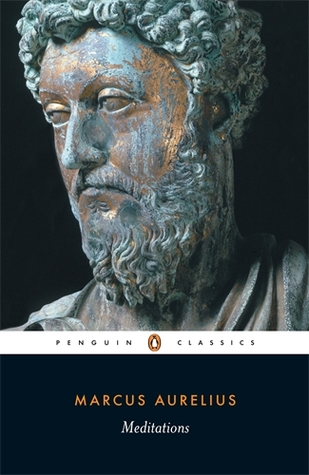
Meditations were something Marcus (we’re on a first name basis here) wrote for his own moral improvement, to remind himself of and cement the Stoic doctrines he wanted to live by. Things like the world is governed by Providence (which certainly lets him off the hook for all those people fed to the lions during his reign); that happiness lies in virtue and your will to follow it; and that you should not be angry at others. Journalling of this sort was something Epictetus advised, which has resulted in a collection of notes, reminders, aphorisms, and slogans for every occasion.
There is a lot to like about Meditations. It felt like a self-help book but written with a more philosophical bent and less of the “you too can achieve greatness (and give me lots of money) if you follow my twelve rules for life”. It isn’t without problems, such as those outlined in Russell’s History of Western Philosophy. I also found Marcus’ musings on the Deliberative Content Problem to swing between ideas and thus come off as confused.
This is my second major reading of Stoic philosophy. I’m coming to the conclusion that Stoicism does seem to have a lot to offer.
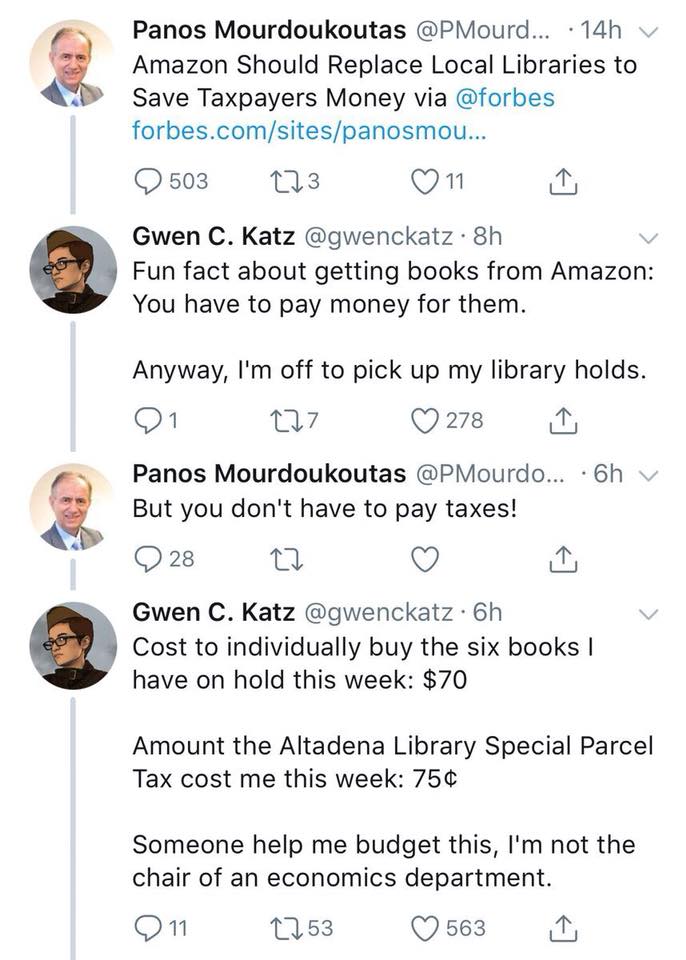
Most people who like their books and reading will probably have heard about an article in Forbes attacking libraries. I thought I’d present the article and a few rebuttals here, because I like libraries and books and how badly the author of the piece fared.
Amazon Should Replace Local Libraries to Save Taxpayers Money
Amazon should open their own bookstores in all local communities. They can replace local libraries and save taxpayers lots of money, while enhancing the value of their stock.
There was a time local libraries offered the local community lots of services in exchange for their tax money. They would bring books, magazines, and journals to the masses through a borrowing system. Residents could borrow any book they wanted, read it, and return it for someone else to read.
They also provided residents with a comfortable place they could enjoy their books. They provided people with a place they could do their research in peace with the help of friendly librarians. Libraries served as a place where residents could hold their community events, but this was a function they shared with school auditoriums. There’s no shortage of places to hold community events.
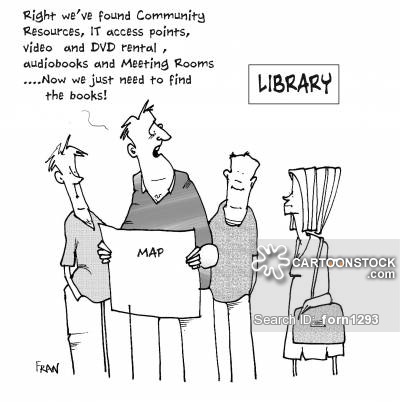
Libraries slowly began to service the local community more. Libraries introduced video rentals and free internet access. The modern local library still provides these services, but they don’t have the same value they used to. The reasons why are obvious.
One such reason is the rise of “third places” such as Starbucks. They provide residents with a comfortable place to read, surf the web, meet their friends and associates, and enjoy a great drink. This is why some people have started using their loyalty card at Starbucks more than they use their library card.
On top of this, streaming services such as Netflix and Amazon Prime have replaced video rentals. They provide TV and movie content to the masses at an affordable rate. Actual video rental services like Blockbuster have gone completely out of business.
Then there’s the rise of digital technology. Technology has turned physical books into collector’s items, effectively eliminating the need for library borrowing services.
Of course, there’s Amazon Books to consider. Amazon have created their own online library that has made it easy for the masses to access both physical and digital copies of books. Amazon Books is a chain of bookstores that does what Amazon originally intended to do; replace the local bookstore. It improves on the bookstore model by adding online searches and coffee shops. Amazon Go basically combines a library with a Starbucks.
At the core, Amazon has provided something better than a local library without the tax fees. This is why Amazon should replace local libraries. The move would save taxpayers money and enhance the stockholder value of Amazon all in one fell swoop.
As you can see, this article was terrible. The arguments are the sort you hear from the “let’s privatise everything” and the “what do you mean you won’t pay for the privilege of working in my asbestos mine?” crowd. They don’t believe in public goods, public benefits, nor that poor people are people.
Needless to say, the author of the piece proceeded to be mocked and ridiculed.
I hope he didn’t go to a public hospital for treatment of that burn.
To spell it out, Panos’ argument forgets that Amazon is a company whose goal isn’t to provide books to people, instead their goal is to make money. A library, however, is there to provide a community benefit of knowledge, education, and entertainment. Libraries are a key tool in creating a literate populous who are better able to contribute to our society. Plus, they have books. Books are awesome. Anywhere with books is awesome.
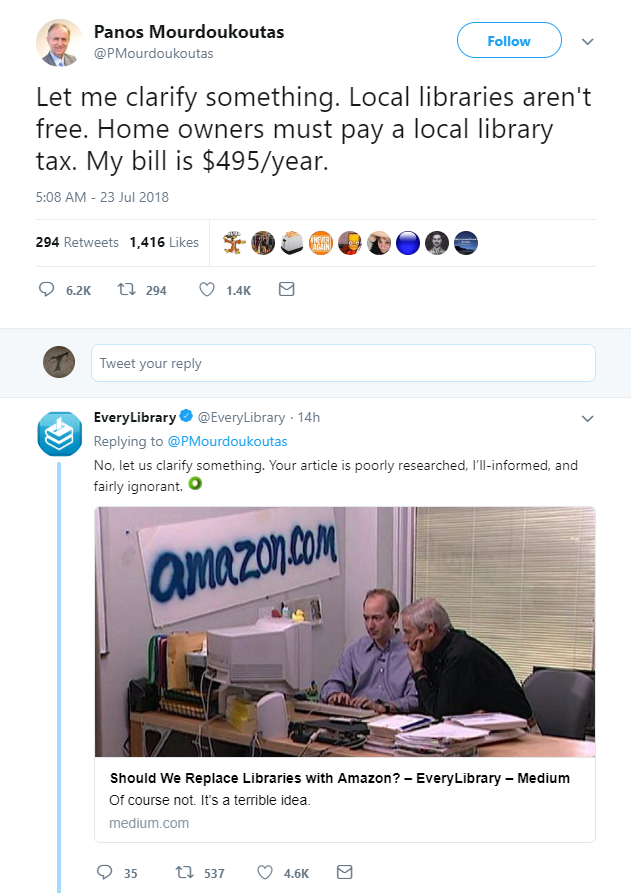
Panos, of course, couldn’t admit he might have made a mistake.
Seriously, EveryLibrary keeps going in showing how bad his research is.
I have no idea how he became a professor.
The desperate and nonsense defence he used for the cost of libraries was immediately debunked by the librarians at EveryLibrary:
There are, of course, many problems with this idea. First of all, libraries cost the average American taxpayer over 18 years old just $4.50 per month. An Amazon Prime subscription alone is nearly double that price and you get very little for free with that subscription because you still have to buy books or pay more to gain access to premium goods or services. Source.
Amazingly enough, Panos was correct in claiming that our taxes pay for libraries… This is the sort of insight I think only a Professor of Economics could give us. But he has rather overstated the cost of libraries (unless he has 10x the average property portfolio) and failed to understand how much buying books costs.
The USA does things a little differently to what we do here in Australia. The USA ties library funding to levies and property taxes, so richer areas get nicer better-resourced libraries, whilst poorer areas get about what they always do. In Australia, our libraries are funded out of the state government budget.
Do us Aussies get good value for money just throwing our regular tax dollars at libraries? Let’s look at the Western Australian State Library, which has a 2016-17 budget of $9.8 million, or $3.38 per person. Now, even if we account for only the third of people (2009-2010 ABS data) who go to libraries as paying for them, then it is $9.95 per person. In Australia that wouldn’t even buy one discounted paperback. And this doesn’t even account for all of the other things libraries do with that budget, like the reading programs, book launches, archiving, history preservation, and maintaining that fleet of Ferraris they drive to work. Seems like a good investment to me.
Fortunately, Forbes pulled the article, despite its popularity, because of the backlash. They realised, far too late, that Panos didn’t have a clue and his arguments were rubbish. Interestingly, that hasn’t stopped them from publishing climate change denial articles. At least we love libraries, if not the planet we live on.
You know you’ve been reading too much fantasy when a sci-fi book refers to their currency as Slugs and you just assume they use terrestrial gastropod molluscs as money.
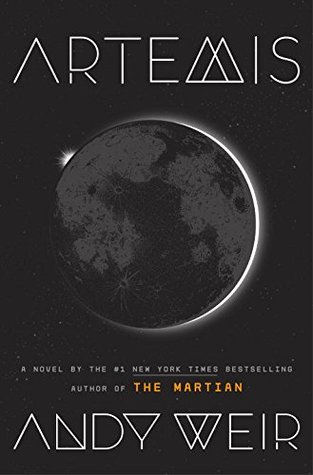
Jazz Bashara is barely making ends meet in Artemis, the moon colony. After a series of bad life decisions, she is living poor and having to hustle to survive. Then Trond Landvik offers her a lot of money to do something shady, a crime that could change her fortunes. Of course it will go smoothly…
Before Artemis was released I tried to get my hands on an Advanced Review Copy. I loved The Martian, the first hard sci-fi novel I’ve enjoyed in decades, so I was really looking forward to Andy’s follow up. Unfortunately, I missed out and had to buy the paper edition when it arrived in stores. My fortunes didn’t improve. Everyone in my family decided they needed to read my copy of the book, so over 6 months later I decided I’d have to get another copy, this time the audiobook read by Rosaria Dawson. No one stole this copy. Yay.
This is obviously a very different novel to The Martian. The narrative format, the main character, and the antagonist are all far removed from the Mark Watney diary about a man vs nature adventure. Instead, Jazz is more akin to a likeable antihero, one who has to use her big brain to solve the continuingly mounting problems.
While this was never going to be comparable to The Martian, this was another very entertaining novel from Andy Weir.

 American Assassin by Vince Flynn









 Tyson Adams