When I sat down at my desk to start work the other day, one of my colleagues came to my cubicle to tell me how disappointed they were with the finale of Game of Thrones. They were soon joined by another colleague. And then another. And then another.
It should be noted that I haven’t watched the show since about two-thirds of the way through the first season. But such is the importance of good storytelling to fans. At least my computer was able to install the updates while I heard about a season of TV I might never watch.
So, what did Game of Thrones do wrong?
How should I know? I don’t watch the show.
What I have managed to glean from several writer channels (see below) and from my disgusted work colleagues is that the show painted itself into a corner. The entire series was meant to be a subversion of the usual fantasy narratives and characters. Our archetypal protagonist was killed off. The archetypal antagonist was removed from power. Our ominous threat that drives the overarching plot… actually, that one appears to have been relatively normal. This makes things interesting but it also creates problems.
At some point, you have to try and make this subversive story have a narrative cohesion that feels rewarding. Otherwise, why are you watching other than to see who gets naked and/or dies this week? Many of the complaints come as a result of the show trying to make that switch to a narrative that could give the Game of Thrones a rewarding payoff.
Clearly, the showrunners weren’t able to do this to the satisfaction of the fans.
Non-fans? Meh.
Update: This post wouldn’t be complete without Lindsay Ellis’ take on things. She raises several points that the other videos don’t, especially the “Fantasy for people who don’t like fantasy” – or more accurately “Hot Fantasy That F**KS” – aspects of the series.
This month’s What’s the Difference? from Cinefix looks at the classic children’s story that became a(nother) Disney movie.
My memory of The Little Mermaid story is what you would call hazy. The Hans Christian Andersen tales, from my recollection of them, were a lot darker and nastier than would generally be acceptable for young children these days.
The movie is much easier for me to recall, as my daughter has recently taken a liking to the tale. Except for the bits with Ursula in them, which are far too scary. Fortunately, I’m usually on hand for hugs during those scenes.
The thing that has struck me the most about The Little Mermaid, and Disney kids films in general, is how much they have progressed in the last 30 years as compared to the 30 years prior. Several of the Disney films released in the 70s and 80s (The Little Mermaid, The Fox and the Hound, The Aristocats, Winnie the Pooh) bear a lot of similarities to earlier films (101 Dalmatians, Lady and the Tramp, Bambi*). The leap that was made after Toy Story is profound, such that newer films are just in a whole other league (Tangled, Frozen, Zootopia).
Almost as big of a leap as children’s book have made since Hans Christian Anderson was writing.
The source material behind Disney’s animated classic, Hans Christian Andersen’s The Little Mermaid, is a surprisingly metal fairy tale. Let’s take a look at all the ways the filmmakers changed the source material, talking crabs and all! It’s time to ask What’s the Difference?
* But not Dumbo. That film has aged badly. There is a lot to cringe at in Dumbo and the film itself climaxes with a very short scene, so it feels a little underdone.
Yeah, I haven’t read it, nor seen the musical nor the musical movie. A title that literally means the miserable and a narrative to match isn’t really my cup of tea. The issues discussed in Les Mis were very real, if romanticised somewhat, and still bear some relevance to the modern day. I discussed one such issue in a previous It’s Lit post.
Maybe I’ll read it one day. Meanwhile, quick overviews will have to suffice.
Victor Hugo’s Les Miserables is one of history’s most famous novels and one of the longest-running musicals in Broadway history. On this special episode of It’s Lit! we explore how Les Miserable became both a national and revolutionary anthem, and so publicly adored that all 1,900 pages never went out of print.
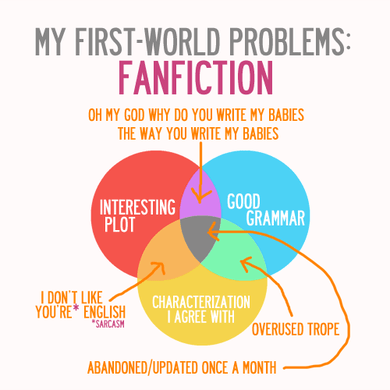
I’ve never understood authors, directors, or other creatives who have a problem with fan fiction (and other derivatives). What is wrong with fans showing their love for something you’ve created by creating something of their own? Sure, it won’t be canon, and they might not get the feel of your work right, but does it really matter?
With that, I give you a fan fiction short from Rocket Jump.*
*Yes, this post is just an excuse to share the above video, even if it is only for the Firefly reference.
With the recent spate of superhero movies, it is easy to forget that not every movie has a superhero in it. Even superhero films aren’t always about someone on steroids (Captain America) or weather presenters (Thor) but are instead about your everyday billionaire playboy (Batman, Ironman, Arrow). So it is easy to forget that feats of superhuman strength are not meant to be the norm in films.
Think about the scenes where the everyday hero is clutching the edge of a building by their fingertips whilst the love interest or bad guy is dangling from their other hand. Of course, the hero never loses their grip on the ledge, but the bad guy may slip from their grasp.
We accept that scene as plausible because we have been brainwashed into thinking that the average person can hold their own body weight with a single hand for extended periods. Double their body weight? They can hold that for the length of a dramatic moment – a period of time that is impossible to measure in real-time since dramatic speeches and slow motion really mess with reality.
The problem is that outside of gymnasts, rock climbers, or people who crush rocks with their bare hands for a living, the Average Joe wouldn’t even be able to hold their own weight for more than a few seconds, especially not if they caught themselves from a fall. Elite grip strength can be measured in a few ways, but the Captains of Crush grippers are one easy way to distinguish strong hands. The #1 requires 64kg (140lbs) of force to close, while the #3 gripper takes 127kg (280lbs) and is regarded as world-class grip strength. Just for shits and giggles, they made a #4 gripper that requires 166kg (365lb) of force to close and has been officially closed by 5 people. Ever.
Watch this world-class rock climber hold just over double his bodyweight with two hands, not one hand, for time as another example:
So let’s just assume that our generic action movie conforms to long-held stereotypes of protagonists. This movie stars an everyday hero who weighs a buff 80kg and his falling love interest is a lithe 55kg, and they totally get naked in the second act for purely artistic reasons. That’s 135kg hanging from the hero’s fingertips, a weight that even a really strong person wouldn’t have the grip strength to support. Two supposedly normal adults, which is certainly very relative in movies, are not going to be hanging onto that ledge for any length of time.
This brings us to the next amazing feat of strength in this scenario: lifting that falling love interest back to safety. For a strong person, the lithe love interest at 55kg isn’t exactly heavy. A buff 80kg hero could probably clean and jerk a dumbbell weighing that much…. assuming they work out, have some chalk on their hands, were able to get some leg drive happening, had decent technique, and that the dumbbell wasn’t particularly unwieldy. But most falling love interests are a tad unwieldy. I’m yet to see any love interests in a movie come equipped with appropriately knurled handles. And when dangling by your fingertips, there isn’t going to be a lot of leg drive happening. Yet without fail, the hero manages to get them both to safety using the power of his mighty biceps – without a single muscle or tendon tear. Well, unless it is one of those tragic character-defining moments, in which case the hero will be in the same situation later and will find the determination to succeed the second time. Sucks to be the first love interest in that scenario.
Interesting to think about just how many amazing feats of strength are passed off as normal in movies.
Update: A few videos that cover how impossible many of these feats are. Kyle Hill goes into some of these with a bit of physics.
Video: How it should have ended, which has a scene talking about how ridiculously strong Batman would have to be to lift someone.
Video: Kyle Hill covering the forces involved in lifting stuff like in the movies.
Video: Kyle Hill covering the forces involved in catching yourself from a fall.
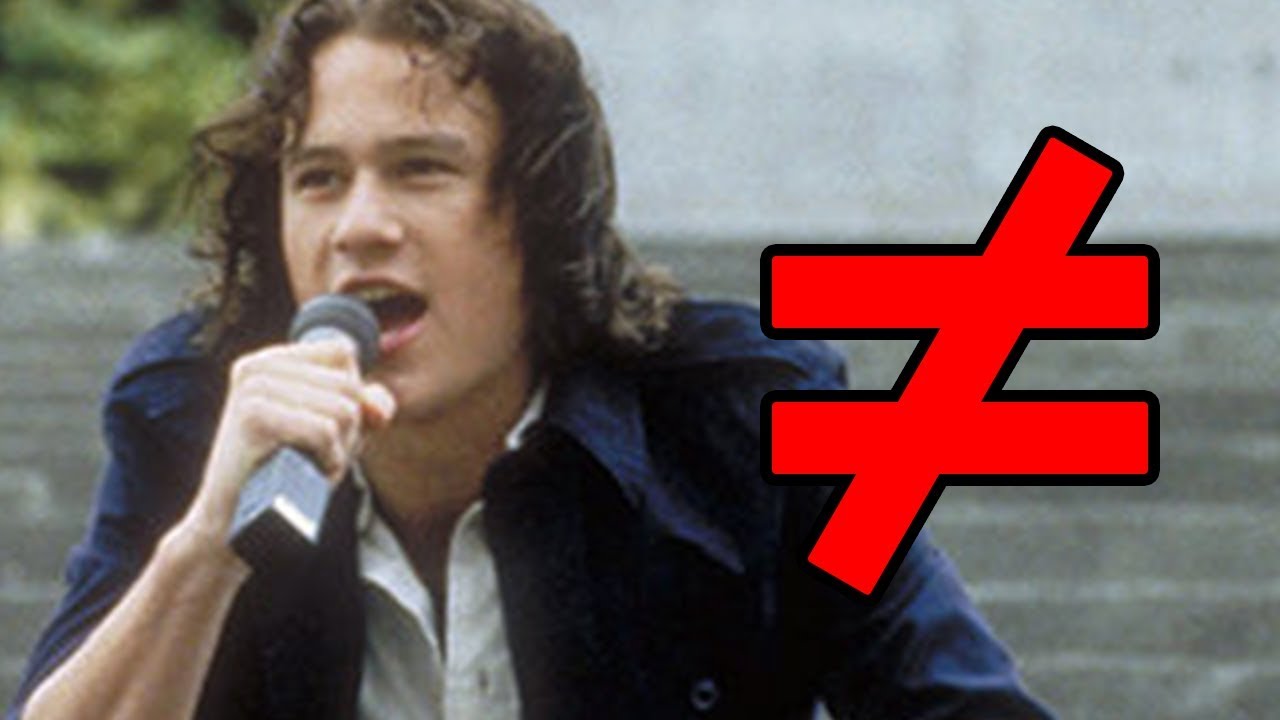
Do you love Shakespeare and 90s teen romantic comedies? If the answer is no… Well, you’ll probably hate this month’s What’s the Difference? from Cinefix on 10 Things I Hate About You. This is probably not the blog post for you. Maybe read one of my other posts.
And who hates Shakespeare anyway?
Is it just because they forced you to read his plays in school?
Because his stuff is worth revisiting.
I have to confess that I’m not a fan of the original Shakespeare play, Taming of the Shrew. For me, it has not dated well. But I am a firm fan of the adaptation, 10 Things I Hate About You.
For me, this is where adaptations shine. A contemporary adaptation of older works can not only offer novel takes on the original story, but they can also cut the dated material. I’m not sure too many contemporary romance stories would appeal to an audience if the women were essentially treated as property.
Another thing I enjoyed about this adaptation was seeing Heath Ledger in his first major film role since seeing him in his first play – Peter Pan – several years earlier. It was exciting to see him make that successful career transition.
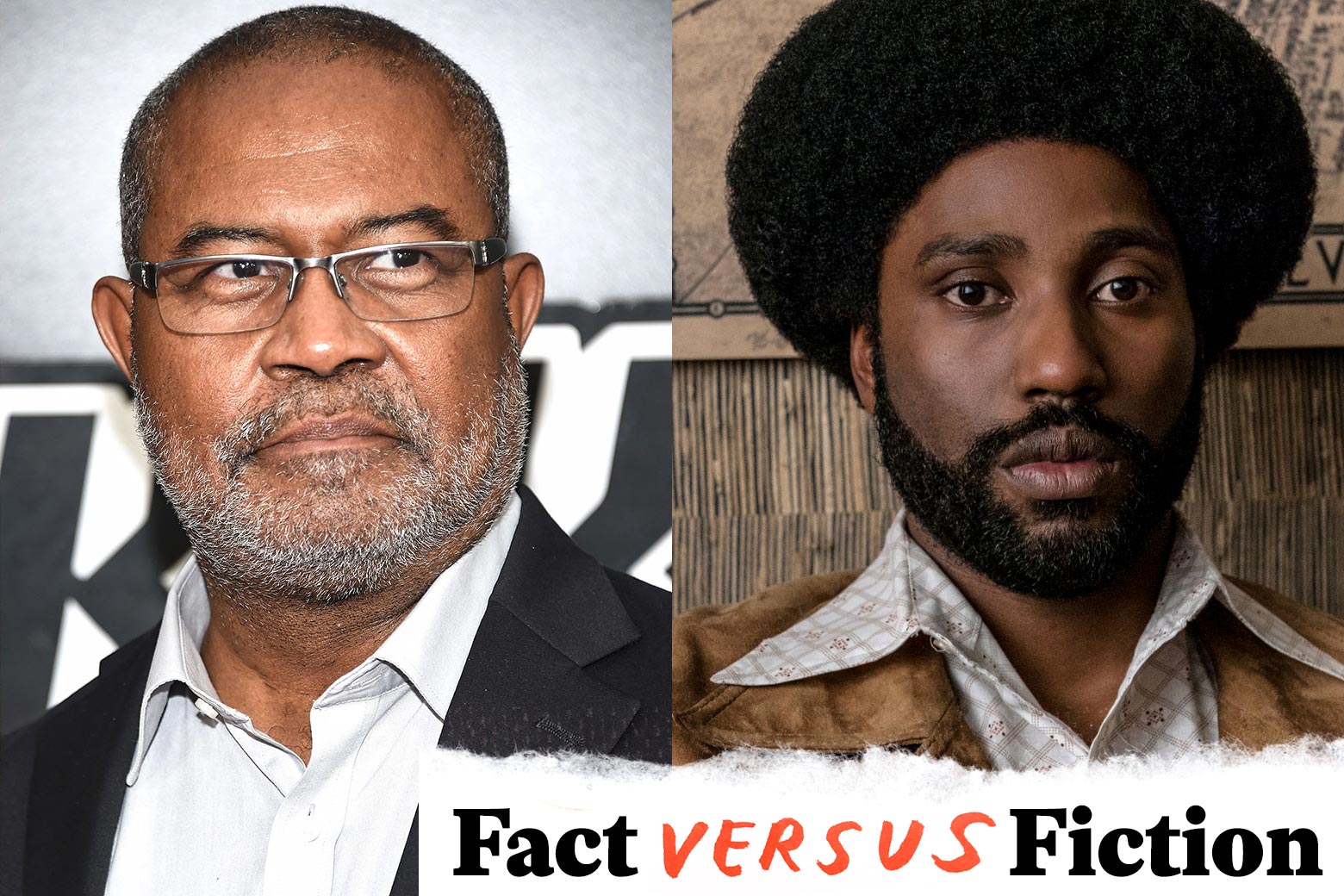
This month’s What’s the Difference? from Cinefix covers the amazing Spike Lee film based on the autobiography of the same name: BlacKkKlansman.
I have been reading quite a bit about fascism and racism lately. As someone who got lucky to be living in privileged skin, these are issues I feel we all need to be more aware of and actively standing against.
Instead of my normal comment on the film or book, I suggest watching the Vice coverage of the Charlottesville rally, Philosophy Tube’s videos on racism, Antifa and fascism, and reading the book on how to oppose fascism.
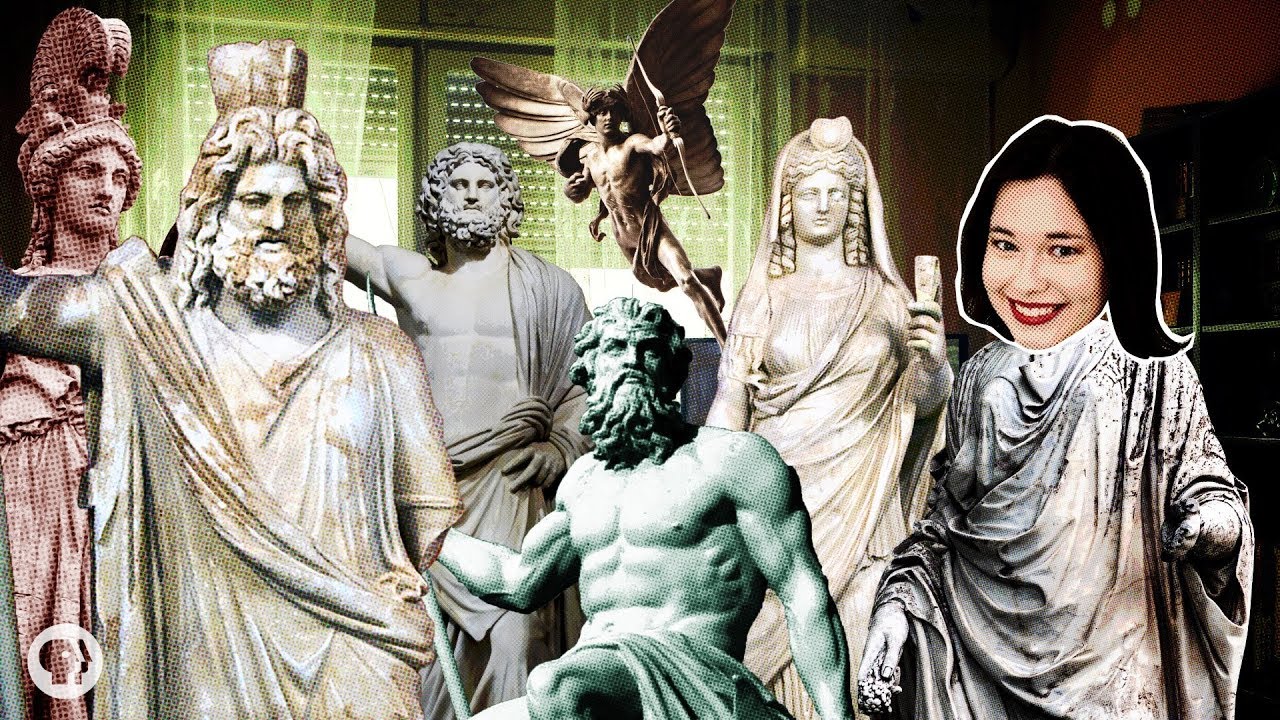
Did you know that James Joyce’s Ulysses is a (relatively) modern tale inspired by Ancient Greek Mythology? Well, even if you did know that, this video has something for you.
Given this video series has focussed on literature and books made into movies more than popular fiction, I knew that one of my favourite genres wouldn’t get a mention. The vigilante hero/anti-hero traces its origins back to the Ancient Greek Myths as well. The most obvious versions are The Wanderer or Knight Errant which draw upon themes and ideas from heroes like Perseus. This early creation underpins later takes on the hero. And thus, Jack Reacher could be slaying gorgons and saving royals.
Interestingly, the Knight Errant is also prevalent in literature not influenced by Ancient Greek Mythology. So it is possible that convergent ideas are at work.
Ancient Greek Mythology has worked its way into modern pop culture so deeply that it would be an almost Sisyphean task to compile every way it’s manifested!
It’s Lit! is part of THE GREAT AMERICAN READ, a eight-part* series that explores and celebrates the power of reading. Hosted by Lindsay Ellis
Finally, an episode of It’s Lit about everyone’s favourite Terry Pratchett character. Oh, and a few other versions of it from lesser authors.
Lindsay Ellis fans will have noticed similarities between this video and an earlier Loose Cannon video she did on the same topic. Worth watching both and noting what having a production budget allows for.
Death as a character reveals how we process one of life’s greatest mysteries, and there’s a lot more breadth to how the grim reaper is depicted than you might think.
It’s Lit! is part of THE GREAT AMERICAN READ, an eight-part series that explores and celebrates the power of reading. Hosted by Lindsay Ellis.
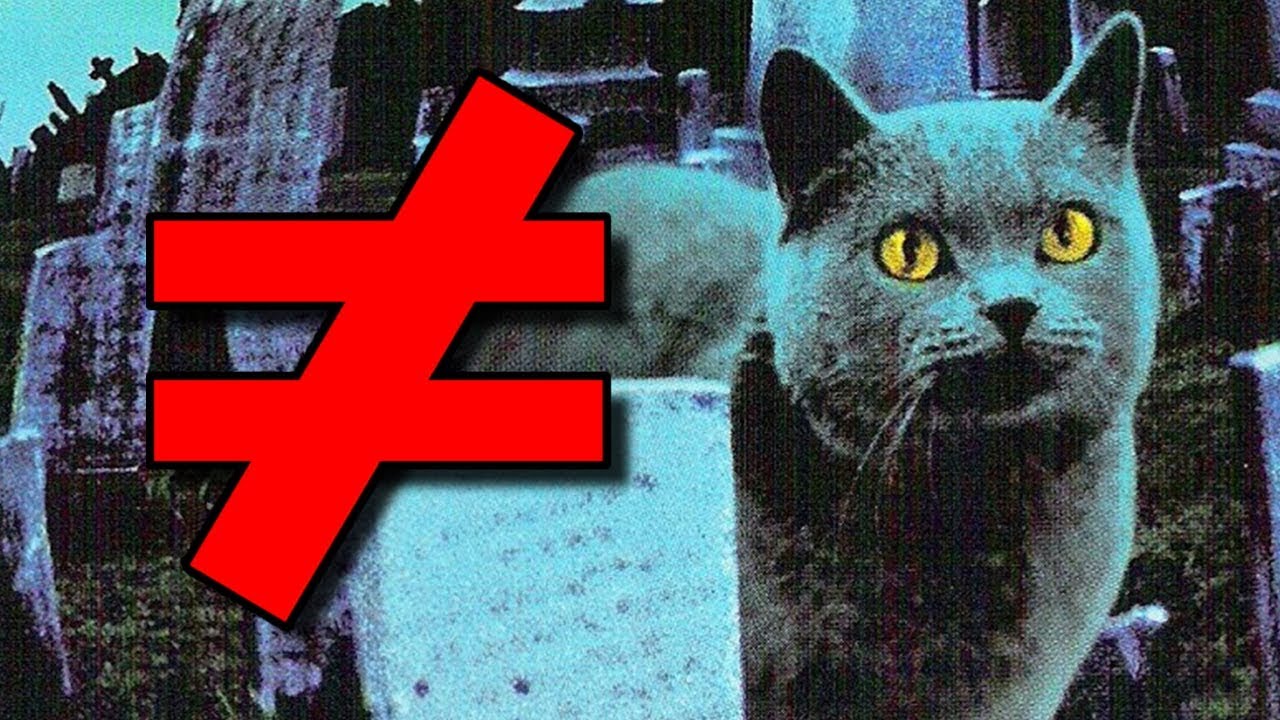
It was inevitable that someone in Hollywood would try to reanimate the corpse of yet another classic film. So with the upcoming release of the remake of Pet Cemetary, what better time for CineFix to discuss the original book and movie in What’s the Difference?
Pet Cemetary is one of the many books lingering on my shelf in the TBR pile. While I have decided that this year will involve a concerted effort to make a dent in said pile*, it is unlikely I’ll get to read this novel anytime soon. If I’m completely honest, I want to read The Stand first.
What about the movie, I hear you ask. Back when I was a young lad – walking the obligatory 10 miles (whatever a mile is in real measurements) to school through 10 feet of snow (why would there be feet in snow?) after working 10 hours at the coal mine – Stephen King novels and movies were all the rage. Whether it was Needful Things, Carrie, Misery, Lawnmower Man, IT, or Children of the Corn, there always seemed to be someone bringing a Stephen King VHS** to watch. And after my hard lesson learnt with IT, I tried to avoid the obviously scary films – hence I have seen Lawnmower Man and most of Needful Things, but not Children of the Corn.
At this point, I probably sound like a wimp. It is odd that I generally don’t find horror novels that bad, and even movies with horror elements are fine. But movies whose goal is to creep you out or gross you out (think Saw franchise or Hostel) just aren’t for me, particularly the latter. It’s a little hard to be entertained by that sort of thing.
Yes, yes, more excuses as to why I haven’t read or watched something. Don’t worry, plenty of horror in my TBR pile. Stay tuned.
*I’ve managed to read one from the pile and added two more to it this month. That counts as progress, right?
This month’s It’s Lit! covers everyone’s favourite topic: food.
If it isn’t your favourite topic, just give yourself 48 hours without it and see if that changes your mind.
I’ve always found food scenes in books to fall into two categories: needless exposition, or important showing (Oliver Twist is a great example of this). While the video discusses the latter, it is all too common that the former is what we read most.
While I was watching the video I was reminded of something I read last year. The discussion of bread in Victor Hugo’s Les Misérables, particularly around the hard bread that needed to be soaked, was something that Karl Marx wrote about in Das Kapital. The hard bread was actually due to deliberate contamination to make cheap bread that workers could afford, knowing full well that it was bad for them to eat, and the employers knowing full well that the workers couldn’t afford to eat properly (keeping them hungry so they would work).
A great way to remind us future people of how society used to run.*
Food varies wildly from place to place and from culture to culture; since humans are such sensory creatures, using words to evoke the experience of eating is an excellent way to bring a text to life.
It’s Lit! is part of THE GREAT AMERICAN READ, an eight-part series that explores and celebrates the power of reading. Hosted by Lindsay Ellis.
*Let’s be honest, society would quite happily go back to those conditions, and in some areas of the world, it still is operating in that way.
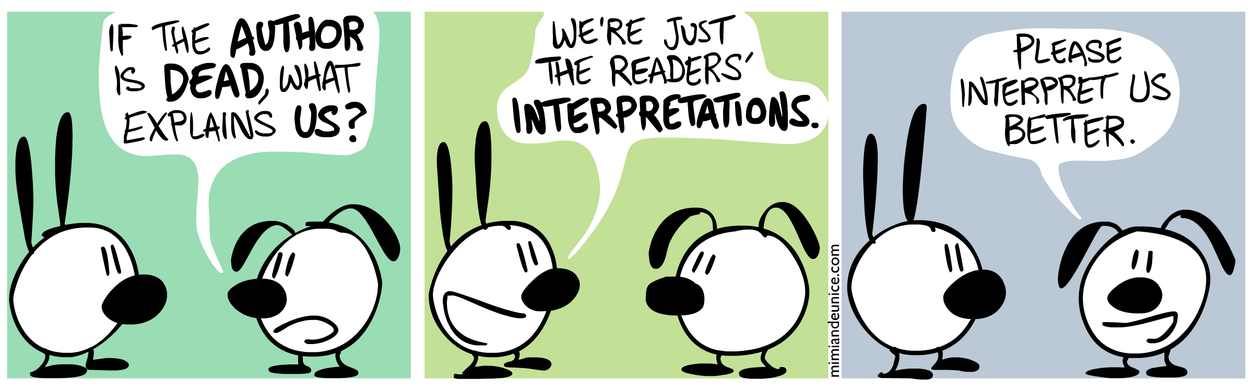
The birth of the reader must be at the cost of the death of the author… or so says Roland Bathes in his essay Death of the Author. Are we talking about literally killing authors? No, this is figurative (like most uses of literally). Can Death of the Author include killing the author? Sure, but get a good lawyer first.
Let’s let Lindsay Ellis (and John Green) explain:
My take on Death of the Author is somewhat complicated. I think there is relevant information that the author has that doesn’t make it into the story (think Elvish languages from Tolkien*), but I also think that quite often if it isn’t in the story it doesn’t really exist. I think that stories are really up to the readers to interpret, as viewpoints and interpretations will change over time**, but that doesn’t mean readers always interpret correctly.
This is a hedged way of saying that Death of the Author is probably too simple a way of thinking about how stories should be interpreted. At least, that’s my interpretation of it.
*Let’s not get into how “relevant” I think those languages are, or a lot of that world-building from authors in general is.
**You may remember book reviews here where I’ve discussed how older books haven’t aged well due to changing societal standards. Sexism and racism are obvious changes that have happened in the last 50 years which make formerly acceptable, even progressive, moments in a story seem backward and unacceptable now.
Another thing that can occur is changes to society changes interpretations. E.g. The Baby It’s Cold Outside controversy can be summed up as an old song made references to things that we are no longer familiar with, so our interpretation changes. This makes Death of the Author a truly bad thing for any artwork that is “consumed” outside of the social and temporal setting it was made within.
Update: Good article in Uncanny that captures some of my thoughts on Death of the Author.
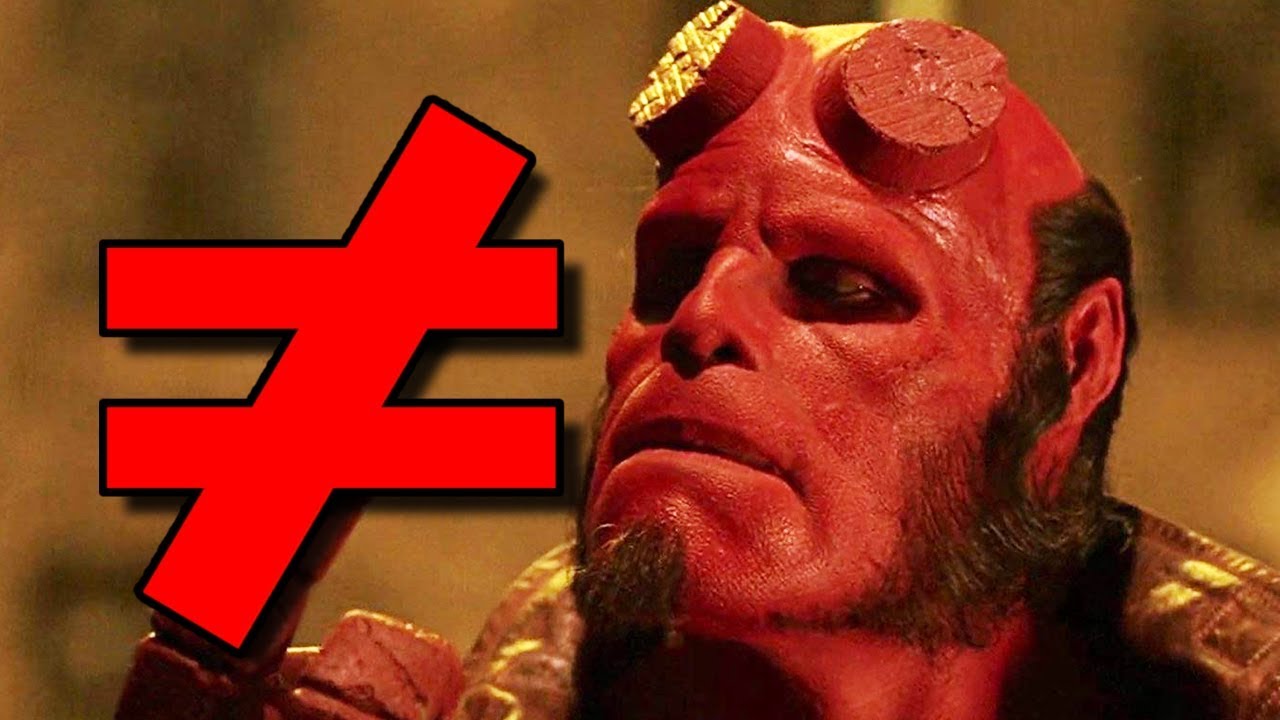
This month’s instalment of What’s the difference? from CineFix looks at Mike Mignola’s graphic novel and Guillermo Del Toro’s Hellboy?
In the interest of full disclosure, I’m not a fan of Hellboy: movie or comic. Yes, I know, how dare you not love Del Toro’s amazing artistic vision! I’ve watched both Hellboy movies multiple times and have not loved them (and despite liking the Blade trilogy, Blade 2 isn’t my favourite – but Pan’s Labyrinth was fantastic). The comics I probably didn’t give them a fair chance, as I tried reading one omnibus after not enjoying the first film.
Anyway, the point I wanted to highlight from the video was something I think too many adaptations fail to do. When you are talking about a series of comics or books, there is often some prevailing themes, motifs, and imagery to them that may be less noticeable in any one edition, but taken as a whole it is important.
Because movies are often only drawing on one book at a time, or drawing on one run (or story arc) of a comic, important aspects may be lost. An example would be the Tim Burton or the Adam West takes on Batman versus the Christopher Nolan version. The latter drew upon more of the Batman comics than the earlier adaptations (not that either of those adaptations was bad*).
So while this doesn’t necessarily result in a direct adaptation, it does result in an adaptation that is faithful to the source material in the elements that matter.
*I’m pretending that the Joel Schumacher adaptations don’t exist. Akiva Goldsman is probably more to blame, given he has a long track record of making everything he is attached to that bit worse.
The first rule of this month’s It’s Lit! is that you don’t talk about the narrator.
Unreliable narrators are an interesting topic. To some extent, I regard all narrators as flawed in some way. Unless you have omniscient narration you always have a limited viewpoint, and it could be argued that even with omniscient you still aren’t pulling away from the main narrative so it is limited as well. So I would argue that unreliable narrators are more a case of how unreliable are all narrators.
Who is the most powerful character in fiction? Villains may doom the world, heroes may save it, but no one has more control over the plot than the narrator – expositing the who, what, where, when and how directly into the reader’s mind. But how can you tell that the person telling you the story is telling you the whole story?
It’s Lit! is part of THE GREAT AMERICAN READ, a eight-part series that explores and celebrates the power of reading.
This month’s What’s the Difference? from Cinefix looks at one of the movies that you probably only realised was based on a book when they made a film pointing that fact out: Mary Poppins.
Having not read the books, I don’t have much to say about this month’s What’s the Difference? I would like to segue into a topic that the recent Saving Mr Banks raised. I think there are some interesting points to be made about the differences between mediums when it comes to how and what is remembered.
Truly great books will generally be read by fewer people than the number who will watch a middling film adaptation. Make a great film from a great book and you will still reach more people with the film. I’ve previously mentioned how as many people saw the final Harry Potter movie as there were sales of all of the Harry Potter series of novels. So even if we just go on audience size alone, it is fair to say that a movie adaptation will shape people’s memory of an artwork.*
Of course, it is worth noting that the movie Saving Mr Banks is somewhat revisionist. Tad important to know this as large media companies dominate the landscape of society. I mean, next thing you know Americans will use movies to try and tell us they turned the war by capturing an Enigma machine…
This video essay by Lindsay Ellis talks about the Revisionist World of Disney:
*Further to this point is should this influence the author’s decision to allow a movie/TV adaptation knowing that their writing will take second place to the more popular medium?
Is ghostwriting cheating? Well, this edition of It’s Lit discusses just that.
I think the most interesting point raised in the video is around the idea of the solitary author. This is the creative genius whose work you love or the dolt whose work you loathe. All praise and ridicule can be easily directed at one person. But outside of some indie authors, a book (or series of books) isn’t the work of one person. A lot goes into bringing a story to life and placing it in front of us readers for our entertainment. From the cover art to the editing, from the writer’s group feedback to the publisher’s request for a sequel, lots of people are involved in influencing, shaping, and ultimately creating a book.
Now, I have been known to take a dig at authors like James Patterson for their co-authoring ways. And I find it a little unseemly that Tom Clancy is still releasing new books despite having been dead for five years – seriously, half as many as his releases while alive. But that is probably as much about the mass-produced book under a name-brand that we used to associate as the domain of pulp titles. To have that become part of the big-name author stable cheapens the experience somewhat.
That cheapened feeling is probably related back to the idea of the solitary author. Or possibly that I’m not a huge fan of Patterson or Clancy. You know, one of those.
You might being asking yourself– Why do ghostwriters even exist? Isn’t that cheating? Isn’t literature supposed to be the result of one person’s agonizing need to create? Aren’t books supposed to be the blood, sweat, and tears of the tortured auteur? Well, the answer is more complicated than you think!
It’s Lit! is part of THE GREAT AMERICAN READ, an eight-part series that explores and celebrates the power of reading. Hosted by Lindsay Ellis.
Whenever I hear about one of my favourite novels being adapted for the big screen, or the moderate screen that fits in my house, I’m wary. Not wary in a “I hope they don’t mess this up” kind of way, but wary in a “They had better not mess this up” kind of way.
Well, one of my favourite novels was adapted for a TV show (again) and I’ve seen the first season. And I have thoughts…
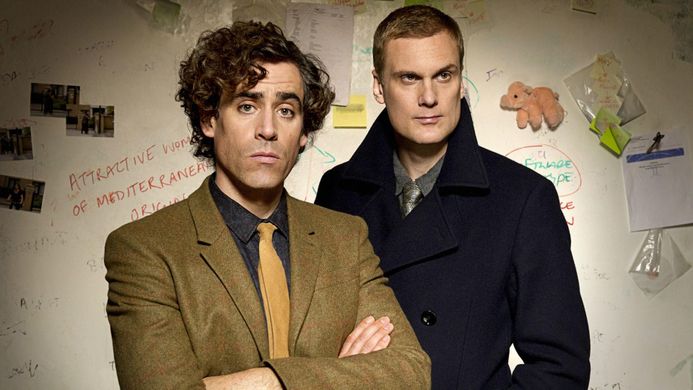
I was very wary of clicking play on the trailer for the BBC America Dirk Gently series. I removed all sharp objects from my immediate vicinity before watching. If you’re a fan of Douglas Adams’ novels, you may want to do the same. Out of wariness.
Well, at least they won’t be butchering Dirk Gently, because I’m not sure that this is Dirk Gently.
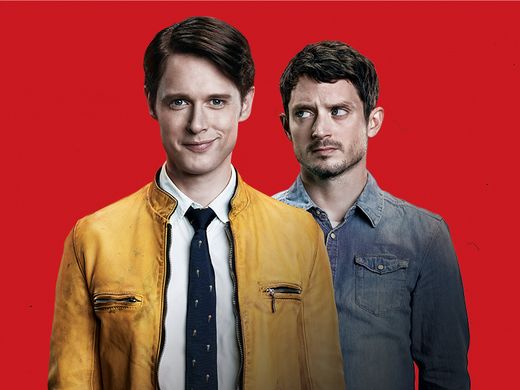
This wouldn’t be the first time we’ve seen a book adaptation with the lead character portrayed by someone who doesn’t physically match the role. I’m talking about Tom Cruise playing Jack Reacher. Twice. Anyway, I’m not sure that Samuel Barnett really fits the Svlad Cjelli (aka Dirk Gently) middle-aged, overweight, poorly dressed, loser mould.
He is portrayed as a pudgy man who normally wears a heavy old light brown suit, red checked shirt with a green striped tie, long leather coat, red hat and thick metal-rimmed spectacles. Source
And after viewing the first season, I’m even less convinced this was a portrayal of Dirk Gently. Okay, so clearly Max Landis and his team are going for more of a “youth” vibe. Landis obviously thinks that the only way to write a quirky character (quirky being code for annoying bellend) is to have them bounce off of the walls with manic energy. Which is not something a pudgy middle-aged guy in a dirty suit does.
Then we have not-MacDuff. Elijah Wood is portraying a character named Todd. He’s meant to be more of an everyman for us to relate to (see video below for discussion). So no symphony of nature, no Susan, and no hallway couch. Todd’s relationship to “Dirk” is the typical cliched odd-couple, with the non-quirky character being inexplicably fond or loyal to the person ruining their life.
So two characters that aren’t that great* who get up to weird adventures. Right? Well, the adventures are… kinda… dull. Douglas Adams had Dirk save the world from a ghost of the people who created life on Earth, and the Norse Gods who are a bit peeved about not being admired anymore. Landis has Dirk investigating gifted people swapping bodies… and stuff.
I’m really not sure what Landis was going for. But then again, I’ve watched Bright, which leads me to conclude Landis probably doesn’t know what he’s trying to do either.
After watching this panel discussion you’d be forgiven for thinking that everyone involved had a good grasp of the material they were adapting. Landis professes to being a big fan of Douglas Adams’ writing… Yet his takeaway from Dirk Gently is manic energy guy running around being weird. The panel discusses capturing the essence of Dirk Gently, but I didn’t see the loser conman and his intricate adventures that really were holistic.
It often baffles me why screenwriters diverge so far from the source material – it feels as though I discussed this recently. Do they buy the rights but forget to buy a copy of the book for the screenwriters? In this instance that doesn’t appear to be the case. Is it just that they aren’t usually looking to do a direct adaptation but more of an “inspired by” screenplay? In which case, why buy the rights and use the character names? Landis did moan about the lack of original ideas in cinema – but this is also the same guy who talks up sequels to films nobody wanted to see. Are writers trying to avoid a direct comparison between book and adaptation? Again, why buy the rights, since the screenwriters clearly have an idea for a movie/TV show and the source material is essentially made irrelevant?
In many instances, a direct adaptation would make more sense. Beloved books would often be best served by being faithfully adapted to please fans and appeal to new fans. The source material has proved itself already: so use it! Some changes are necessary, either for run-time, or translation between mediums, but this can still be done faithfully. So why doesn’t it happen more often? I personally suspect that the screenwriters aren’t being asked to do faithful adaptations for a variety of reasons, including having bosses who don’t care about the source material. In the case of Landis, I question his abilities… I sat through this adaptation, his movies Bright and American Ultra, and think it is fair to conclude his abilities are lacking.
Maybe one day we’ll see a good adaptation of Douglas Adams’ work.**
Yeah, this adaptation wasn’t much better.
*The characters aren’t that great, but the acting is on point. So can’t blame the actors.
**Yes, I am aware of his various radio plays and the old Hitchhiker’s Guide TV series. I can’t even remember what the latter was like it has been so long since I’ve seen it.
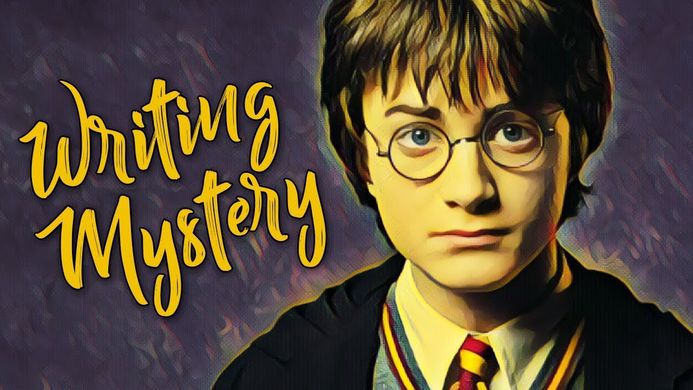
We don’t often think of fantasy novels as being mysteries. And yet, in JK Rowling’s Harry Potter novels, the mystery elements are cornerstones of the plot.
Mystery isn’t easy to do well, either, as we will see in the two videos below from Just Write. In the Harry Potter novels we see the elements Rowling used to great effect, and in the new Fantastic Beasts movies, we see how Rowling bungles those elements.
I suppose the big takeaway is that even a master writer* can mangle the craft.
*Feel free to disagree with this assertion and point out to me Rowling’s various flaws as an author in painful detail that assumes I’ve never read the Potter books. That’s why they invented the comments section.
The new episodes of It’s Lit are finally making it to YouTube. In this episode, Lindsay Ellis discusses book covers.
It is interesting that everyone in the reading industry* talks about not judging a book by its cover. Yet the entire industry is built around judging books by their covers.
We have the publishers and their creative team designing covers to attract readers. We have the readers browsing the stores and picking something that catches their eye. There are plenty of statistics around showing the improved sales based upon book placement in stores, whether they are face out or not, and whether they are in big piles – which makes all sorts of subconscious suggestions to shopping readers.** All of these factors are about presenting us readers with the cover of the book in the hopes that we’ll be interested enough to buy it.
But don’t judge it by its cover!!
*I honestly think we should stop using the term publishing industry and refer to the end user instead. I think we lose sight of who matters at times.
**Online stores have similar sales statistics related to cover design. Indie authors will often talk about the success of changing covers and improving sales.
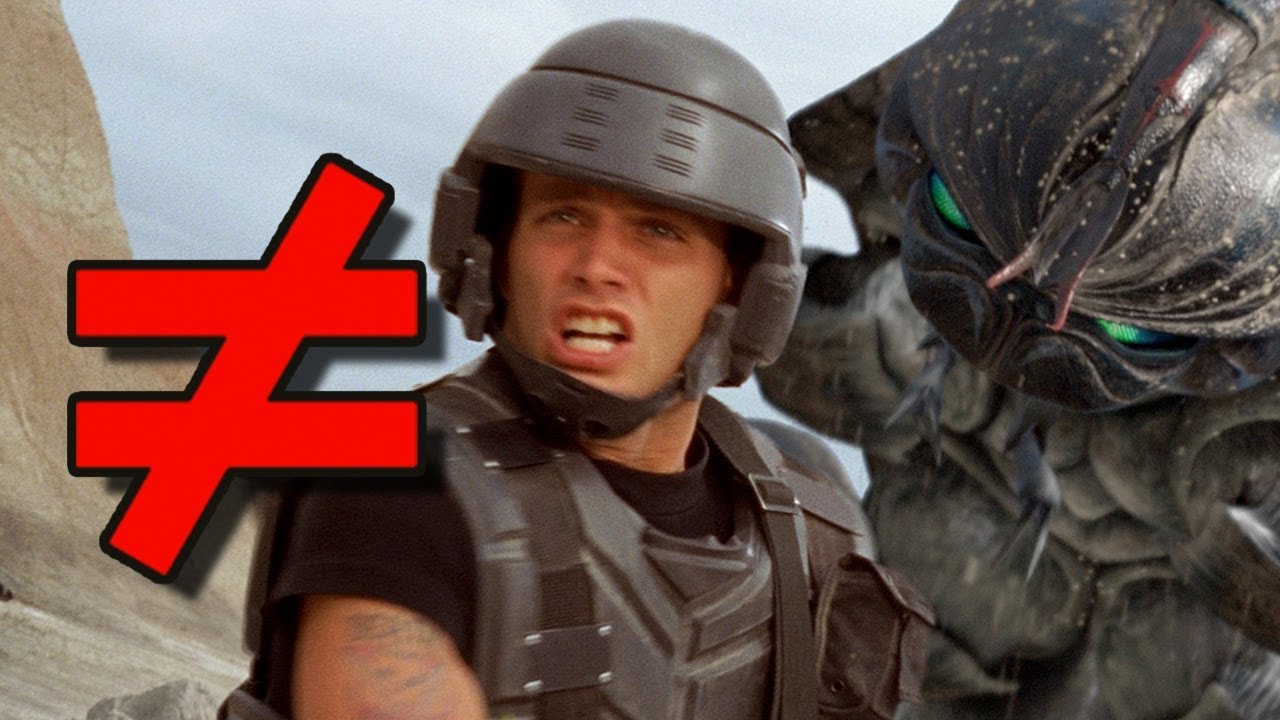
This month’s What’s the Difference? from Cinefix looks at one of the more blatantly different book adaptations: Verhoeven vs Heinlein’s Starship Troopers.
The first time I watched Starship Troopers all I saw was a cheesy B-grade action movie. This was also what many movie reviewers thought at the time. Many years later I finally read the book and it clicked.
Verhoeven’s film only made sense to me after I’d read the book as it is as much a critique of the material as it is an adaptation.
“I stopped after two chapters because it was so boring,” says Verhoeven of his attempts to read Heinlein’s opus. “It is really quite a bad book. I asked Ed Neumeier to tell me the story because I just couldn’t read the thing. It’s a very right-wing book. And with the movie we tried, and I think at least partially succeeded, in commenting on that at the same time. It would be eat your cake and have it. All the way through we were fighting with the fascism, the ultra-militarism. All the way through I wanted the audience to be asking, ‘Are these people crazy?’ Source
The cheesy propaganda segments riff on the heavy-handed philosophical lecturing Heinlein does. The proud militarism is given consequence by utilising Heinlein’s own references to disabled veterans and by showing horrible training injuries and battlefield scenes. The fascist elements are played up for farce in the uniforms and sequences mirroring actual Nazi propaganda films.
Michael Ironside asked, “Why are you doing a right-wing fascist movie?”
Verhoeven replied, “If I tell the world that a right-wing, fascist way of doing things doesn’t work, no one will listen to me. So I’m going to make a perfect fascist world: everyone is beautiful, everything is shiny, everything has big guns and fancy ships, but it’s only good for killing fucking Bugs!” Source
Now, I did actually enjoy the book. It is very interesting and many of the ideas were challengingly different. The portrayal of future warfare was, at the time, as imaginative as I’d come across. So Verhoeven’s reaction to satirise the book – one that Heinlein dashed out as an angry response to the US stopping nuclear tests – was probably overwrought by his childhood in the Nazi-occupied Netherlands. But if the movie adaptation had been faithful we’d probably have seen the worst elements of Heinlein’s ideas paraded around like something produced by the Ministry of Enlightenment.
Well, either that or a schlocky B-grade action movie about the military killing alien bugs.
Update: Here’s another take on the movie that, whilst missing Verhoeven’s critique, shows how much imagery and rhetoric is utilised. Although, it makes a good point that Verhoeven may have missed the mark a little in his critique.






 Tyson Adams