Sometimes my worlds collide and produce awesome stuff. Today I present science smashing into writing and producing a revision of the periodic table of elements (did you know that the periodic table should actually be seen as cylindrical?).
Apparently this gem has been doing the rounds of the internet for at least a year, which shows you how out of touch with reality kids makes you. But recently the Periodic Table of Storytelling has become interactive, with James Robert Harris taking his design of storytelling tropes to the next level. Serial killer name aside, James has created a fun tool that is worth checking out.
I love technology. So many cool things have been made during my lifetime that it is hard to believe that as a 30-something I can remember a time before mobile phones, laptops, CDs, DVDs, tablets, and even personal computers. Since I love technology and love to read, it is a no-brainer for me to keep abreast of the latest developments via tech articles, especially since these articles are so woefully out of touch with the average person that they are comedy gold.
The article that tickled my funny-bone this time was all about Google’s new internet service. As part of Google’s plans for world domination, whilst not being evil of course, they are entering the market with an optical fibre broadband rollout in the USA. This video explains the deal with Google Fibre (video a little old now):
The funny part is the article author lamenting his current internet pricing and speeds relative to the service offered by Google:
My $52-per-month plan bestows me with the unheralded power of 30Mbps down and 5Mbps up, a depressing far cry from the (Google Fibre) $70 (and 1 Gbps up and down).
Sorry, not funny ha-ha, but funny sad. According to the reports into global internet speeds, the average US internet user is downloading at 10Mbps, with only 34% of users getting speeds above that (see figure below), ranking them top 10 in the world for speed.
Akamai State of the Internet Report Q4 2013
Meanwhile my Aussie internet is ranked 44th in the world, with average speeds of 5.8Mbps and 9.7% of users having average speeds higher than that.
Akamai State of the Internet Report Q4 2013 – Asia
So the tech author was lamenting internet that not only ranks as some of the best in the world, but is also some of the cheapest. In Australia we have some the most expensive broadband in the world (although not as a % of income) and the service is quite possibly far worse than our average speeds would suggest. Just a few kilometres from where I’m sitting, deep in rural Australia, there are people who can’t get the internet. Whilst I have above average internet at work and at home – although that average bar is low enough for an asthmatic 2 year old with no coordination to jump over – the copper network is antiquated and slows the speed of internet down the further you get from the hub. Once you are 20-30 kilometres out of town, the internet is so slow that you are running dialup speeds, which is ridiculous and annoying when most of the web assumes broadband speeds. These slow speeds means that most people not in town have satellite broadband, which is speed limited by the number of users at any one time, is really expensive, and even the top speeds are capped at 800kbps. No, I’m not kidding.
Australia isn’t even in a position to climb the internet rankings in any great hurry either. There were two broadband plans taken to the last Australian election: Fibre to the Home and Fibre to the Node. Since optic fibre (that stuff Google is rolling out) is only going to the node, that means people in cities will have to pay to get their connection upgraded, while we can now expect to see most rural areas of Australia covered by satellite plans (the ones I just told you sucked). Both of these options are more expensive regionally or where the “node” is a long way from the “home”. See the outline below (source):
Access to the internet is a wonderful thing: information at your fingertips, streaming news and entertainment, commerce on a global scale, and lots of porn. Australia is not really in the digital age, limping along with second-rate connections, political plans for second-rate upgrades, and monopolies charging big $$ for second-rate services. Which is why the tech articles are so interesting in the way they show the massive disconnect between the writers, tech services, and the rest of the world.
As with most things Hank and John Green are involved with, I have become a fan of Mentalfloss. Their recent article on embarrassing things we all do was interesting, but had one point in it that made me think “what the hell is wrong with you people”.
By “you people” I obviously mean it in the pejorative dissociative sense, in that I’m not having a shot at you, or Mentalfloss, just the ubiquitous and ethereal “them” and “you”. Unless of course what I’m about to write does hit home, in which case, stop it now!
One of the items listed as an embarrassing thing that everyone does, was people claiming to have read books and watched movies they haven’t in order to appear more intelligent. I have previously discussed the list of books people claim to have read and I’m not ashamed to say I’ve haven’t read certain “classics”. I do have to admit to having claimed to have read a book I haven’t, To Kill a Mockingbird (still on my TBR pile), but that is also why I’m coming out against the practice.
And that is the point I wish to make here, there is no shame in not having read a classic book or watched a classic film. Maybe you don’t like extraordinarily long and self-indulgent wedding scenes in a movie (Deer Hunter). Maybe you don’t like novels with more than 450 main characters (War and Peace has over 500). There isn’t any shame in that. And how many “classics” have gone unread because they were in the wrong language, poorly translated, never got published, or just lucked out (John Green made mention of this recently).
Essentially we are worried about our subjective taste disagreeing with someone else’s subjective taste. The stupidity here is that we are being judged for something we haven’t done, rather than a strong opinion one way or the other on the actual topic. If we came out and said “Well, I hated 1984, it was rubbish” or conversely “Well, I loved 1984, and anyone who says it’s rubbish is a poo-poo head” we’d get into deep arguments about the relative merits of the novel. That is perfectly acceptable. But if we say “I haven’t read that one (yet)” or “Never seen it” then the response is something along the lines of calling us crazy, implying we have lived too sheltered a life, and/or that we have missed out on something great.
They could be right, of course. We may have missed out on the single most impressive book or movie ever. Our lives may be dramatically improved by reading or watching the work in question.
Or not.
The reality is that it really doesn’t matter. Some people will never have enjoyed a Jack Reacher adventure, or clung to the edge of their seat reading a Matthew Reilly novel, because they have been busy reading all the “great literary works”. Who is to say that their choice of entertainment was superior? Some people prefer to watch sports: are they any less entertained?
I think we have to stop pretending that our subjective opinions are something to be ashamed of. Like what you like, don’t be ashamed to say so either. I’m always amazed at the number of closeted Buffy fans there are, which only shows how damaging this mindset of “worthiness” is.
Pro: They are easy to entertain with just about anything.
Con: They want to turn everything you own into a sticky, finger-mark covered, toy.
Pro: They make charming noises as they play, running around being delighted by any and everything.
Con: They make noise the entire time about any and everything, usually at ear splitting volumes.
Pro: You’ll have so many social events to attend that you’ll be flat out partying.
Con: All of those social events involve other people’s toddlers, usually mashing food into the carpet.
Pro: You will have everyone buying your toddler clothes and toys so you won’t have to spend much on clothes and toys.
Con: Everything costs more with a toddler and you won’t be able to walk through your house without tripping over all of the crap your toddler has been given.
Pro: They spend a lot of the day sleeping, so you get plenty of down-time.
Con: You spend most of the day trying to get them to sleep because they refuse to take a nap despite being so tired they just want to cry.
Con: All that down-time is spent cleaning, cooking and basic personal hygiene that can’t be managed whilst the toddler is awake.
Pro: Someday they’ll be grown up and able to support you as you age.
Con: You’ll probably do a crap job of raising them and they’ll decide to put you in a home with only one staring window.
The internet is a wonderful place to find information on just about any topic you can imagine and few you can’t. From the latest scientific study to the grumpiest cat, from insightful commentary to rule 34: the internet has it all. The problem is that not everyone is rational, logical, nor well informed, and they still have internet connections and the ability to make webpages and comment on social media.
As someone who tries to share science and knowledge with people, I love to engage and discuss topics. If I can help someone understand or learn something about a complex topic, then I feel like I’ve accomplished something. The more science communicators out there doing the same thing, the slightly better the world becomes. This better understanding leads to better decisions, better ideas, better inventions, better cat photos.
The problem is that not everyone appreciates being told that they are mythtaken or wrong. Others are adamant that they aren’t wrong. People will argue against the overwhelming scientific evidence on topics like climate change (real, man-made, we need to do something about it), genetic modification (breeding technique, cool innovation that is more precise and has great potential), modern medicine (seriously!?!), evolution (as solid a theory as gravity), and even the shape of the Earth (yes, flat-Earthers still exist). This anti-science nonsense is thankfully on the losing team, they just aren’t playing with a full deck.
It is these science deniers that are the most frustrating to deal with on social media and the internet. There is no evidence you can show them that won’t be dismissed – often as a conspiracy – and there is no rationality to their arguments. But they can also be very convincing to people who don’t know enough about a topic, which is how myths get started. And that is dangerous, once myths are started they are very hard to get rid of. So it is actually important to make sure that the science deniers aren’t existing in an echo chamber, which the internet has facilitated to some extent – I’m looking at you Alex Jones, Mike Adams and Joseph Mercola!
These science deniers can be a menacing drain of time, effort and inner calm. The easiest way to deal with them would be to block them, excise the wound, possibly burn the evidence of their existence. But then the science deniers have won. Their echo chamber is just that little bit more echo-y. But the echo chamber is going to keep echoing regardless, as discussed above. But won’t somebody think of the children!
I really hate blocking people on social media. The science denier drivel may pollute my newsfeeds, but blocking them also leaves me open to my own echo chamber. Sure, I might think I’m good at picking good information from bad, but if my thinking is never challenged, how can I be confident I’m not falling for confirmation bias? I guess this is the Catch 22 of the modern age, but with more cats.
There is only really one thing I miss about living in the city and that is going to the cinema. Of course, I’d miss that even more if there were movies worth shelling out this month’s mortgage repayments to see. The idea of paying big bucks to sit in a seat that has probably been used for sex by strangers, eating snacks that have a 2000% markup, after forgetting your earplugs and going partially deaf, which is a blessing after the pre-movie ads, is just not that appealing. Now Australian cinemas have decided they aren’t charging movie goers enough money and have decided to blame an easy target to justify their cash grab.
Cinema executives have blamed piracy on the recent price rises of ticket prices in Australia. Because of course it is piracy that is to blame, and not the marginalising of the customer base with exorbitant pricing regimes. Nor could it possibly be that people have more alternate entertainment options, including waiting a few months to watch the latest “blockbuster” in their own home cinema. Nor could it be the rubbish that so many movie studios are turning out.
Let’s dissect this nonsense like the original reports in the media should have done. There are many factors at play in the decline of cinema. The first real problem is that there hasn’t really been a change in the proportion of the population that go to the cinema in 40 years, but the number of times per year they go has been steadily declining since the 90’s.
ATTENDANCE
(% BEEN TO THE CINEMA IN THE LAST 12 MONTHS)
FREQUENCY
(AVERAGE NO. VISITS PER YEAR)
So rather than keeping audiences entertained regularly, audiences are clearly becoming more occasional customers. Underneath that general trend are some interesting changes in the demographics of cinema attendance. It is no secret that Hollywood movies are made for teenagers. Teens are a huge chunk of the cinema audience. But, the biggest change in the repeat attendees is in the teen market, which has been in steady general decline since the 70’s. Which part of the market is going to be most impacted by price rises? Go on: guess!
ATTENDANCE RATE
(% BEEN TO THE CINEMA IN THE LAST 12 MONTHS)
FREQUENCY
(AVERAGE NO. VISITS PER YEAR)
Another way to look at this is in the proportion of the population going to cinemas in the age demographics. Below you can see the 14-17 and 18-24 age groups are overrepresented as cinema goers, this starts to even out in the 25-34 group (also known as the settling down and going out less demographic), is at parity in the 35-49 group (also known as the parenthood has stolen my social life demographic), and people over 50 clearly don’t like all the loud noises.
AGE PROFILE OF CINEMA-GOERS COMPARED TO THE AUSTRALIAN POPULATION
OVER THE AGE OF 14, 2012
So while the proportion of the population that have been going to the cinema each year has been pretty steady across the entire population, it is the number of times people go that is making the difference, especially in that much coveted teen “I want to see explosions and car chases” market. (Interesting aside: when you look at the age group breakdowns you do see that the over 25 audience since the 70’s have generally increased in their likelihood to attend the cinema, but this has been static for most demographic groups since the mid 90’s.) To put some hard numbers on that difference in the number of times a teen goes to the cinema each year, in 1974 the 14-24 demographic averaged 16.4 visits to the cinema, in 2012 that had dropped to 6.6 visits.
Obviously there are a lot of changes in the marketplace that have occurred over this time. TV has expanded, cable TV is a thing now, home rental or ownership of movies is a thing (VHS succeeded by DVD, now being superseded by Streaming, which will probably be superseded by actors coming to your house to perform on demand), computer games have grown in leaps and bounds, the internet, all vying for our attention and wallets. Just look at the change in households with various alternatives to cinema (NB: the game consoles data doesn’t tell the full gaming story, see this for more about that market):
I alluded to this above, but one big change has been the home cinema. Some people will remember a time when some cinema screens were actually not much bigger than the ones installed in many homes now. Sound systems have improved greatly over the crappy little speaker that was the drive-in experience. Now we have high quality TVs and projection units that rival anything you can get in a cinema complex, and these come with a pause function, easy access to food that doesn’t kill your wallet nor beat your heart with belly flab, and sound settings lower than jackhammer. Then you have all the other possible entertainment options available, suddenly the list of movies (not) to see just isn’t as appealing.
The one thing cinemas still have going for them is windowing. For the first few months after opening, there is no other (legal) way to watch the film, you have to watch it in the cinema or wait for the DVD release. Although it seems clear people are more willing to wait, let the dust settle after opening weekend, and figure out what is worth watching, whether that be at the cinema, on DVD, when it makes it to TV, or at all. And now I’m going to contradict myself and say that piracy proves people aren’t willing to wait for those other options, preferring simultaneous releases. Both arguments still point out that people just aren’t as interested in paying big(ger) bucks to see movies in the cinema. Of course movie studios and distributors don’t like that idea, since windowing is great for their bottom line, especially opening weekend.
Now the reason for the price rise could be something to do with this chart, showing that 21% of the market is in the highest income households. Cinemas are obviously betting that their price elasticity is low and will take the price increase in their stride. What this ignores is the age demographic data above, which shows a sizeable chunk of the audience may be from affluent households, but that doesn’t mean their teenage bank account is bulging with lots of cash.
Equivalised gross household income quintiles
No. cinema-goers (‘000)
Share of cinema-goers (%)
Attendance rate (%)
Lowest quintile
1,010.6
9.7%
47.2%
Second quintile
1,305.6
12.5%
50.8%
Third quintile
1,879.1
18.0%
66.6%
Fourth quintile
2,106.4
20.2%
75.3%
Highest quintile
2,199.2
21.1%
80.0%
Unknown
1,930.5
18.5%
65.8%
Total
10,431.4
100%
65.2%
So we see that cinema audiences are becoming more occasional consumers, the trip to the movies is a special event, not a regular event. Teens are a big chunk of the cinema market and they aren’t the repeat customers they used to be. This is what happens when you price customers out of the market, you bite the hand that feeds. You also have them turn to other entertainment mediums. Blaming piracy for what is demonstrably a long term trend is a pretty big reach. I’d also argue that piracy is a reaction to consumer demand for lower pricing and simultaneous releasing, so that audiences can consume the movies in the way they want to, not the way they are being forced to, at a price that is commensurate with the utility received (e.g. people pay as much or more for a DVD – less if you consider it a couple or family purchase). If cinemas have anyone to blame it is themselves and their suppliers (distributors and studios). Using piracy to justify a price increase is clearly unfounded.
Of course, what needs to be mentioned is that films are essentially a loss leader for cinemas so that they can make money selling snacks and beverages. This ticket price increase is probably driven through the supply chain rather than by the cinemas themselves. But this also shows how cinemas have to adapt in order to survive. Going out to a movie is an experience. People are more willing to pay for experiences rather than stuff (DVDs). So if cinemas can get serious about screening experience at a fair price, they might get the audience back, or at least stop the decline.
The Australian media have a few targets they rely upon to generate readers: dole bludgers, terrorists, boat people, terrorist boat people, dole bludging terrorist boat people. Today Tracey Spicer decided to add men to that list with her article: I don’t want my kids sitting next to a man on a plane.
Now clearly, whilst men are to blame for most wars, most economic problems, most political problems…. Okay, men are shit. But it is just a little bit sexist to declare all men are pedophiles. It is even more misleading of Spicer to make arguments justifying the myths and misconceptions about child sexual abuse. She starts her article by insisting that despite 90% of abuse being perpetrated by someone the child knows, that a stranger on the plane better not be male and sitting next to her kids. Let’s just ignore that entire issue of proximity of people on a plane not changing that much by moving one seat away.
Spicer is very concerned about the “more and more” unaccompanied minors flying and how airlines should be making kids as safe as possible on flights. First of all: “more and more”, seriously? I did a search for some statistics on unaccompanied minors flying and came up as empty as the “more and more” statement. Secondly, the safest possible option would be for a suitable guardian to travel with the kids when flying. Preferably this person accompanying the child would be unrelated to the child, over the age of 40 and Tasmanian. But I guess it is too much to ask for concerned parents like Spicer to travel with their kids.
The big problem with the article is that it buys into the common myths and misconceptions associated with child sex offenders. The Australian Institute of Criminology study listed the top five:
not all child sex offenders are ‘pedophiles’. That is, child sex offenders are a heterogeneous group with varying offender profiles;
children are usually abused by someone they know, although data suggest that strangers comprise nearly one in five perpetrators of child sexual abuse against males;
not all child sex offenders have been victims of sexual abuse themselves and there are complex relationships between being a victim of child sexual abuse and becoming a perpetrator, which require further research. It is important to recognise that while many offenders report a history of being sexually abused, most victims of child sexual abuse do not become perpetrators later in life;
while not all child sex offenders have high rates of recidivism, a specific subset—those who target extrafamilial male children—do frequently reoffend; and
although it is difficult to accurately determine how many children a child sex offender has already offended against by the time he is detected for an offence, this number varies according to offending profiles and is unlikely to be as high as is commonly assumed. There is, however, a subset of extrafamilial male offenders who abuse high numbers of victims.
Now it is true that child sex offenders are mostly men in a father – child relationship with the victim. But let’s also remember that not all men are rapists, only about 0.012% of us (rate of 12.6 per 100,000 Aussies*). It should also be noted that sexual assault has been decreasing, whilst reporting of assault has improved (probably linked, in my opinion), although sexual assault is still a big problem. So trying to say that kids are in danger of sexual assault from an unknown male in the next seat whilst flying on a plane is nothing more than fear mongering.
The reason Spicer wrote the article is because there have been a few instances on Australian airlines of male passengers being asked to change seats. Most people would be glad to not be sitting next to someone else’s unaccompanied brat, but branding all men as pedos is not really justified, unless it gets the individual blokes a free upgrade to first class, then it’s okay. But articles like this aren’t just pedaling myths and misconceptions, they are ingraining the idea that all men are evil, and that kids aren’t safe around men.
For another indication of how this is impacting society, take a look at some of the gender ratios of teachers: the rate of men teaching in primary and secondary schools is declining, and the younger the student, the less male teachers there are. How can you encourage men to become teachers when people like Spicer are essentially saying that all men are pedos? Spicer admits she is being sexist, but doesn’t realise she is also pedaling myths and misconceptions that hurt more than her sexism.
Of course, since all men are evil, it probably doesn’t matter. Maybe we should just kill all men at birth and save ourselves the trouble.
Do you have demonstrated experience in clicking Like on inane/interesting newsfeed items and well developed procrastination skills? This is an opportunity to faff about on the internet and justify Facebook’s share price. I am currently seeking applicants for an exciting opportunity to become my Facebook friend. This role could be expanded in the future to include other social media, such as Twitter and Google+, based upon the relevant qualifications and performance in the primary role.
In this newly established position, you will be joining an international team responsible for strategic reposting and Liking of science articles, social interest pieces and pictures of my children and pets.
Utilising recommended and innovative social media interaction you will play an integral role in supporting my ego, stupid social campaigns I signed and forwarded, and clickbait articles from around the internet.
Key responsibilities include:
1) Clicking Like on everything I post;
2) Sharing everything I post with your other hapless friends;
3) Establishing and maintaining relationships with people you only know via the comments on my posts;
4) Contributing to regional and internet-wide best practice outcomes for social media activities.
The successful applicant will contribute to further my social media organisational strategic goals by taking a broader view of my posts and their future directions and reassess how the delivery of social media sycophantry contributes towards that.
Preferential consideration will be given to candidates who:
1) Have met me before;
2) Whose company I actually enjoy;
3) Can write a sentence that makes sense;
4) Understand and respect restraining order guidelines.
Benefits of being my Facebook friend: In addition to the warm glow of my aura offered, other benefits include your posts being Liked, someone who will actually appreciate the distraction of your posts as a means of procrastination, and access to some of my more shady friends who can arrange body disposal. I am a progressive and innovative Facebook friend that offers family-friendly flexible Liking conditions and where personal and professional development is continuously Liked and received with “congratulations” posts.
Take advantage of this opportunity to Friend a Facebook profile that is committed to achieving a progressive, innovative and procrastinated online presence.
There is nothing worse than picking up a book, movie, whatever, expecting to be entertained based on the cover. The above example is the movie Far Cry, starring Til Schweiger, in what looks like a cool action flick. The description even makes you look past the fact that this is a video game adaptation, promising a slick action-eer:
An ex-special forces soldier turned boatman is hired by a journalist to investigate a top-secret military base on a nearby island.
The problem with this packaging is that this is a film by Uwe Boll. Til Schweiger is a fantastic actor and a major box office draw card, especially in his home country of Germany. He was also the driver behind one of my favourite films of all time, Knocking on Heaven’s Door. Yet not even Til can save us from the worst director of all time.
One of the things that amazes me about Uwe Boll is not so much the fact that he is still making films (petition to stop him making films) but the fact that he is able to attract the money and star power to his movies. You would think that actors would be keen to avoid working with Uwe so that they don’t sign a career death note. But Til, Ron Perlman, Burt Reynolds, Jason Statham, Ray Liotta, Eric Roberts, Christian Slater, Stephen Dorff, Claire Forlani, Leelee Sobieski, John ‘Gimli’ Rys-Davies, and Ben Kingsley (although, Kingsley may be an Oscar winner, but he has appeared in some truly awful films), have all lined up to appear in a Uwe Boll production. Why!?! Rys-Davis has implied that the money is good and Uwe is easy to work for. No mention of exactly how good Uwe is to work with; I’m going to assume running hot and cold hookers and blow.
This speaks to the underlying problem with picking good entertainment. We can be easily mislead with a cool blurb, impressive trailer, a spot at the front of the store, a stand that tackles you to the ground and forces you to buy the movie/book. It is why movie stars are paid big money, because they have a brand that audiences recognise, and that can guarantee box office sales. In publishing you have name brand authors like James Patterson occupying the front of the store because they are reliable bestsellers. And Lee Child was recently shown to have the strongest brand in publishing, with fans following him from book to book more than any other author, because of his reliably entertaining books. Uwe Boll is the opposite of this brand of success and reliability.
Essentially media consumers like us are less likely to try a new author, or watch a film by a new director, or one that stars actors we haven’t heard of, because of the Uwe Boll’s of this world. We want our entertainment to be entertaining – I know, not much to ask really – and we hate being mislead by slick tricks. We see a cool poster or cover, we see a big name actor attached, or read a cool blurb, only to be sorely disappointed. So instead of trying something new, we stick with what we know and trust.
I guess that is why I promote books I’ve read and liked on this site. That is why we need people to review books, movies, TV shows and music. That is why we need to find people with similar tastes to make recommendations to us. If we can’t stop Uwe Boll making films, at least we can tell people about the films that are worth watching.
I’ve lifted weights for a couple of decades now. The challenge of lifting heavy stuff is cool and the added side effects of being stronger, fitter, healthier and sexier are awesome.
Fitness is sexy
After being around gyms and fellow fitness junkies this long you start to realise that articles on how to get in shape are as numerous as new programs claiming to be the best program ever. There is nothing wrong with different programs with different ideals, they allow you to have some variety, or at least someone to laugh at. The biggest belly laughs come from the articles that are written by people who clearly don’t lift. They make statements that are naïve or ridiculous, they don’t understand what fit or strong are, and they don’t really remember past the last hot fitness fad. One article that caught my eye recently was this one on the “new” and “better than Crossfit” program that is all the rage. By all the rage, I’m sure it will be after enough of these promotional articles are paid for written.
The first thing that struck me about this exercise article written by a non-exerciser was just how many times this particular wheel has been reinvented. In the few decades I’ve been going to gyms I can’t remember a time when there wasn’t a circuit class on offer, well, except for the powerlifting gyms whose idea of cardio is walking from the car to the gym. I don’t know what is so revolutionary about another circuit class, which is essentially what this new program is. Circuit classes just have you move from one exercise to the next at timed intervals with little rest in between, so variations on this are not new, so they can’t be revolutionary. But you have to love a good celebrity endorsement!
Okay, I’ll admit that the article is a promotional piece on a new exercise program, so I shouldn’t hate on it too much. Instead, I’ll get to the statements that I wish would disappear from fitness articles, preferably by having authors who know something about exercise write the articles.
Derp 1:“This isn’t about lifting 90kg weights…..” You mean, a warm-up?
Many fitness articles, especially those with a female audience in mind, pick an arbitrary number and decide that this weight is heavy. In this article, it is 90kg, which is not actually that heavy depending on which exercise that weight is being used with. This just shows how little lifting experience the author has, or how lame they are at it.
Derp 2:“New scientific research…..HIIT…..” 2005 is calling, they want to tell you about this new thing called Facebook.
The article is trying to lend some credibility to the new program by citing science and by pretending this is all brand new. The problem is that HIIT (High-Intensity Interval Training) has been around as a method since the 1970s and modern science since the 1990s. So unless you are a time-displaced quantum physicist, you can’t call this stuff new.
Derp 3:“Holistic, functional fitness….” So doing more than one exercise?
Advertising slogans are always funny. Holistic is all new-age-y and sounds comprehensive-y. Functional fitness is straight out of the Crossfit advertising material, so somebody thinks this term is meaningful. What the statement actually means is doing a bunch of things, but that isn’t as sexy or likely to impress the marketing department.
Derp 4:“We focus on strength, respiratory and flexibility….” By focus we mean unfocussed.
This sort of meaningless nonsense is rife in an industry represented by people who failed high school; you know, athletes. You either focus on one thing, or you aren’t focussing at all. The fact that using the term focus at the same time as holistic and functional fitness just shows how little the author understands exercise or writing a logical article.
Derp 5:“Chiropractors warn about…..” How chiropractic is pretty much a scam?
The fitness industry isn’t just filled with nonsense, it also likes to promote medical nonsense. Many of these fitness articles lend credence to quack medicine or use quack medicine to support their claims. The advantage of using quack claims is that it doesn’t require real evidence, which makes it easy to sell people on the new fitness fad.
Essentially there is nothing amazing or new about how you can get in shape, get stronger, or become sexier. Exercising in a progressive way (i.e. getting better) and eating healthily in amounts that match your energy needs/expenditure is how it’s done. So be wary of these marketing claims and articles written by non-exercisers.
This latest video from the Ideas Channel raises an interesting point about how there appears to be more complex narratives in TV shows now.
Of course, there are several problems with this idea. The first is perception. For every Breaking Bad and Justified we have CSI Whatever and the banality of reality TV. So without some hard data on the number of shows and relative audiences, it is really hard to say how real that perception is.
The second problem is that TV shows run a continuum from pure episodic shows, where everything is wrapped up in an episode and the next episode has little to no changes evident to the characters or larger show, through to serials, which have more complex plot lines that often take at least a season to develop and resolve with character arcs building over the course of the entire series. The key word is continuum, as most shows have some aspects of the serial and episodic about them. Again, without breaking down each show on this continuum, and then comparing shows now versus the past, we don’t have any idea of what has changed, if anything has changed.
The third problem is the good old sample or selection bias, especially as it relates to our favourite shows and the shows we remember. E.g. Survivor has been running since 2000 (or 1997 if you are in the UK), yet without looking that up I’d have had no idea when the show started, let alone whether it is still running. I don’t remember it because I’m not a fan. But I will still complain bitterly about the cancellation of Firefly. My frame of reference is biased, so I’m going to remember some shows more than others and think more favourably of some of the ones I remember than others.
The final problem I see is assigning time shift technologies and marathon watching as the driver of a change in our demands for more complex narratives. The idea itself is sound, as I can’t think of thing less interesting than watching the same episode with minor changes in a marathon. That would be like watching 9 hours of hobbits walking. The recording, DVD buying, streaming and subsequent marathon TV show watching would indeed favour shows that have more to them, that more complex narrative that will keep you pressing play on the next episode.
I don’t know that the time shifting, or recording, or DVD buying, or other methods of marathon watching, is driving a demand for more complex narratives. As I said above, I think the more complex shows lend themselves more to the marathon than other shows. But if we assume there are more of these shows worth grabbing a blanket and a couch dent, then I still think there are other things at play. I think we’ve seen more avenues for creativity come to the fore, such as Youtube channels, computer games, and the like that didn’t exist a decade ago as they do now. As a result, entertainment such as TV shows have a need to engage the audience on a deeper level. So while episodic shows like CSI Whatever are still huge, they don’t attract the same devotion and fan adoration as a good serialised show. Plus, the advantage of the more complex narratives is that it allows for more interesting characters, plot lines, etc, which is turn allows for better acting, direction, writing, etc, which creates a feedback loop that may one day cause fandom to implode due to awesome achieving gravitational singularity. I’m assuming this will happen when Netflix reboots Firefly.
NB: I hate the term binge watching and as such haven’t used it in this article. Binge implies that there is something wrong with what you are doing. There is nothing wrong with watching a TV show or movie series you enjoy, so we should stop implying there is something wrong.
With the rebirth of Cosmos on TV, Neil DeGrasse Tyson and the team have brought science back into the mainstream. No longer is science confined to the latest puff piece on cancer research that is only in the media because a) cancer and b) the researchers are pressuring the funding bodies to give them money. The terms geek and nerd have stopped being quite the derogatory terms they once were. We even have science memes becoming as popular as Sean Bean “brace yourself” memes.
This attention has also cast a light on the scientific process itself with many non-scientists and scientists passing comment on the reliability of science. Nature has recently publishedseveral articlesdiscussing the reliability of study’s findings. One article shows why the hard sciences laugh at the soft sciences, with the article talking about statistical errors. I mean, have these “scientists” never heard of selection and sample bias? Yes, there is a nerd pecking order, and it is maintained through pure snobbishness, complicated looking equations, and how clean the lab-coat remains.
A Shocking Amount of Medical Research Is Complete Bullshit
#6 – Kinda true. There are two problems here: media reporting of medical science and actual medical science. The biggest issue is the media reporting of medical science, hell, science in general. Just look at how the media have messed up the reporting of climate science for the past 40 years.
Of course, most of what is reported as medical studies are often preliminary studies. You know: “we’ve found a cure for cancer, in a petri dish, just need another 20 years of research and development, and a boatload of money, and we might have something worth getting excited about.”The other kind that gets attention isn’t proper medical studies but are spurious claims by someone trying to pedal a new supplement. So this issue is more about the media being scientifically illiterate than anything.
Another issue is the part of medical science that Ben Goldacre has addressed in his books Bad Science and Bad Pharma. Essentially you have a bias toward positive results being reported. This isn’t good enough. Ben goes into more detail on this topic and it is worth reading his books on this topic and the Nature articles I previously referred to.
Many Scientists Still Don’t Understand Math
#5 – Kinda true. Math is hard. It has all of those funny symbols and not nearly enough pie charts. Mmmm, pie! If a reviewer in the peer review process doesn’t understand maths, they will often reject papers, calling the results “blackbox“. Other times the reviewers will fail to pick up the mistakes made, usually because they aren’t getting paid and that funding application won’t write itself. And that’s just the reviewers. Many researchers don’t do proper trial design and often pass off analysis to specialists who have to try and make the data work despite massive failings. And the harsh reality is that experiments are always a compromise: there is no such thing as the perfect experiment.
Essentially, scientists are fallible human beings like everyone else. Which is why science itself is iterative and includes a methods section so that results are independently confirmed before being accepted.
And They Don’t Understand Statistics, Either
#4 – Kinda true, but misleading. How many people understand the difference between statistically significant and significance? Here’s a quick example:
This illustrates that when you test for something at the 95% confidence interval you still have a 1 in 20 chance of a false positive or natural variability arising in the test. Some “science” has been published that uses this false positive by doing a statistical fishing trip (e.g. anti-GM paper). But there is another aspect, if you get enough samples, and enough data, you can actually get a statistically significant result but not have a significant result. An example would be testing new fertiliser X and finding that there is a p-value of 0.05 (i.e. significant) that the grain yield is 50kg higher in a 3 tonne per hectare crop. Wow, statistically significant, but at 50kg/ha, who cares?!
But these results will be reported, published, and talked about. It is easy for people who haven’t read and understood the work to get over-excited by these results. It is also easy for researchers to get over excited too, they are only human. But this is why we have the methods and results sections in science papers so that calmer, more rational heads prevail. Usually after wine. Wine really helps.
Scientists Have Nearly Unlimited Room to Manipulate Data
#3 – True but misleading. Any scientist *could* make up anything that they wanted. They could generate a bunch of numbers to prove that, for an example of bullshit science, the world is only 6000 years old. But because scientists are a skeptical bunch, they’d want some confirming evidence. They’d want that iterative scientific process to come into play. And the bigger that claim, the more evidence they’d want. Hence why scientists generally ignore creationists, or just pat them on the head when they show up at events: aren’t they cute, they’re trying to science!
But there is a serious issue here. The Nature article I referred to was a social sciences study, a field that is rife with sampling and selection bias. Ever wonder why you hear “scientists say X is bad for you” then a year later it is, “scientists say X is good for you”? Well, that is because two groups were sampled and correlated for X, and as much as we’d like it, correlation doesn’t equal causation. I wish someone would tell the media this little fact, especially since organic food causes autism.
Other fields have other issues. Take a look at health and fitness studies and spot who the participants were: generally, they are university students who need the money to buy tinned beans and beer. Not the most representative group of people and often they are mates with one of the researchers, all 4 of them. Not enough participants and a biased sample: not the way to do science. The harder sciences are better, but that isn’t to say that there aren’t limitations. Again, *this is why we have the methods section so that we can figure out the limitations of the study.*
The Science Community Still Won’t Listen to Women – Update
#2 – When I first wrote this I disagreed, but now I agree, see video below. As someone with a penis, my mileage on this issue is far too limited. That is why it was only when a few prominent people spoke out about this issue that I realised science is no better than the rest of society. It hurts me to say that.
There is still a heavy bias toward men in senior positions at universities and research institutes, women get paid less, women are guessed to be less competent scientists, and apparently, it is okay to ogle female scientists’ boobs… Any of these sound familiar to the rest of society? This is gradually changing, but you have to remember what age those senior people are and what that generation required of women (quit when they got married, etc). That old guard may have influence but they’ll all be dead or retired soon where their influence will be confined to the letters to the editor in the newspaper. After seeing the video below, especially the way the question was asked, I think it is clear that the expectations for women create barriers into and through careers in science (the racism is similar and is one I see as a big issue). So it starts long before people get into science, then it continues through attrition.
Fast forward to 1:01:31 for the question and NDGT’s* answer (sorry, embed doesn’t allow time codes).
Recently there has been a spate of very public sexist science moments. Whether it be telling female scientists they should find a male co-author to improve their science, or Nobel Laureates who don’t want to be distracted by women in the lab, it is clear that women in science don’t get treated like scientists. Which is why I find the Twitter response to the Tim Hunt debacle, #distractinglysexy, to be exactly the sort of ridicule required. Recent events seem to imply at least repercussions are occurring now.
Scientists are meant to be thinkers, they are meant to be smart, they are meant to follow the evidence. They aren’t meant to behave like some cretin who hangs out on the men’s rights movement subreddit discussion. Speaking of which, watch science communicator Emily Graslie discuss the comments section of Youtube.
Here’s another from Thought Cafe and Dr. Renée Hložek.
Update: After the first photo of a black hole was published, women in STEM were back in the headlines, with people wanting to again marginalise women in STEM – not to mention how the media love to promote the “lone genius” when science is a team thing. Vox had a great article on it which included some great graphs from Pew Research.
It’s All About the Money
#1 – D’uh and misleading. Research costs money. *This is why we have the methods section, so that we can figure out the limitations of the study.* Money may bring in bias, but it doesn’t have to, nor does that bias have to be bad or wrong. Remember how I said above that science is an iterative process? Well, there is only so big a house of cards that can be built under a pile of bullshit before it falls down in a stinky mess. Money might fool a few people for a while (e.g. climate change denial) but science will ultimately win.
Ultimately, science is the best tool we have for finding out about our reality, making cool stuff, and blowing things up. Without it we wouldn’t be, this article wouldn’t be possible, we wouldn’t know what a Bill Nye smack down looks like. Sure, there is room for improvement, especially in the peer review process and funding arrangements, and science is flawed because it is done by humans, but science is bringing the awesome every day: we have to remember that fact.
After a recent discussion about gun myths, I realised that my last blog post hadn’t covered anywhere near enough of the myths that are floating around (this article will mainly be about US guns, but parallels from the resources and science cited can be drawn to other countries). This is obviously because stuff is much easier to make up than to research, just ask Bill “tides go in, tides go out” O’Reilly. One of the big problems with research in the US on guns is that the National Rifle Association has effectively lobbied to cut off federal funding for research and stymieing data collection and sharing on gun violence. As a result there are a lack of hard numbers and research often tends to be limited in scope. Scope: get it? So like a lost rabbit wandering onto a shooting range, or a teenager wearing a hoody, it’s time to play dodge with some of these claims.
Myth: Guns make you safer, just like drinking a bit of alcohol makes you a better driver.
The myth I hear the most often is that guns make you safer; just like the death penalty is a great deterrent, surveillance cameras stop crime, and the internet is a good source of medical advice. The problem with this myth is that people like having a safety blanket to snuggle. What they don’t realise is that guns don’t make you safer, they make you 4.5-5.5 times more likely to do something stupid to someone you know and love than be used for protection.
I want to be clear here: there’s nothing wrong with going shooting at the range, or hunting vermin. The problem is thinking that you can use a gun for self-defence, when it actually makes the violence problem worse. That gun escalates the violence because people have it there: why not use it? To wit the criminals enter into an arms race and a shoot first policy.
Owning a gun has been linked to higher risks of homicide, suicide, and accidental death by gun. For every time a gun is used in self-defense in the home, there are 7 assaults or murders, 11 suicide attempts, and 4 accidents involving guns in or around a home. 43% of homes with guns and kids have at least one unlocked firearm, and in one experiment it was found that one third of 8-to-12-year-old boys who found a handgun pulled the trigger, which is just plain unsafe.
As for carrying around a gun for self-defence, well, in 2011, nearly 10 times more people were shot and killed in arguments than by civilians trying to stop a crime. In one survey, nearly 1% of Americans reported using guns to defend themselves or their property. However, a closer look at their claims found that more than 50% involved using guns in an aggressive manner, such as escalating an argument. A Philadelphia study found that the odds of an assault victim being shot were 4.5 times greater if they carried a gun. Their odds of being killed were 4.2 times greater.
It is even worse for women. In 2010, nearly 6 times more women were shot by husbands, boyfriends, and ex-partners than murdered by male strangers. A woman’s chances of being killed by her abuser increase more than 7 times if he has access to a gun, and that access could be the woman keeping one around just in case her attacker needs it. One US study found that women in states with higher gun ownership rates were 4.9 times more likely to be murdered by a gun than women in states with lower gun ownership rates; funny that.
There is also the action hero delusion that often gets trotted out when talking about guns for self-defence. The idea is that everyone is a good guy, so give them a gun and you have a bunch of action heroes ready to fight off the forces of evil. This has worked so well that all governments are thinking of getting rid of the military….
The reality is that the average person is not an action hero and would fail miserably in a high stress situation with actual bad guys. You only have to look at the statistics:
Mass shootings stopped by armed civilians in the past 30 years: 0
Chances that a shooting at an ER involves guns taken from guards: 1 in 5
I’ve seen several examples cited of “citizens” shooting someone who looked intent on killing everyone they could (with a gun…). But in every instance the “citizen” was actually an off-duty police officer, or a person in law enforcement, or someone in the military. In other words, the people who stop mass shootings or bad-guys with guns, are trained professionals.
There have also been a few studies done that claim X million lawful crime preventions, therefore guns must be good; notably by researchers Lott and Kleck. To say that their research is flawed is like saying Stephen King has sold a few books. Lott’s work has been refuted for extrapolating flawed data. Kleck’s research has similarly been refuted by many peer reviewed articles:
“The myth of millions of annual self-defense gun use: A case study of survey overestimates of rare events” Chance –American Statistical Association, 1997
Myth: Guns don’t kill people, people kill people, quite often with a gun, because punching someone to death is hard work.
If this myth were true we wouldn’t send troops to war with weapons. I get where people are coming from with this myth, because the gun itself is an inanimate object and is only as good or bad as the person using it. Yes, I did just quote the movie Shane: thanks for noticing. But here is the thing, in a society we are more than just a bunch of individuals, we are a great big bell-curve of complexity. So when you actually study the entire population you find that people with more guns tend to kill more people—with guns. In the US, states with the highest gun ownership rates have a gun murder rate 114% higher than those with the lowest gun ownership rates. Also, gun death rates tend to be higher in states with higher rates of gun ownership. Gun death rates are generally lower in states with restrictions such as firearm type restrictions or safe-storage requirements.
Gun deaths graph: The three states with the highest rate of gun ownership (MT, AK, WY) have a gun death rate of 17.8 per 100,000, over 4 times that of the three lowest-ownership states (HI, NJ, MA; 4.0 gun deaths per 100,000).
The thing is that despite guns being inanimate objects, they affect the user/owner’s psyche. It’s like waking up one morning with a larger penis or bigger boobs: you not only want to show them off, you act differently as a result. Studies confirm this change in behaviour. Drivers who carry guns are 44% more likely than unarmed drivers to make obscene gestures at other motorists, and 77% more likely to follow them aggressively. Among Texans convicted of serious crimes, those with concealed-handgun licenses were sentenced for threatening someone with a firearm 4.8 times more than those without. In US states with Stand Your Ground and other laws making it easier to shoot in self-defence, those policies have been linked to a 7 to 10% increase in homicides.
Now people also like to try and red herring the argument against guns by pretending that video games or mental health is the problem. The NRA tried to claim video games were to blame after the Newtown shootings. Of course we’d be able to see this relationship by looking at gun ownership versus video game playing, like by comparing the USA to Japan.
Myth: They’re coming for your guns to stop our freedom and tyranny and democide and Alex Jones said so and aliens made me do it!
As I stated above, the statistics on guns and gun violence is hazy. No one knows the exact number of guns in America, but it’s clear there’s no practical way to round them all up (never mind that no one in Washington is proposing this). Those “freedom” loving gun owners – all 80 million of them – have the evil government out-gunned by a factor of around 79 to 1. If government were coming for the guns, you’d think they’d have done so before being this grossly out-gunned.
Yes, 80 million gun owners is a minority! I find it interesting that from 1989 to 2000 there was a decline in gun ownership of 46% to 32%. Now the decline in ownership rebounds to hover between 34 and 43% for 2000-2011 (notably the high point in 2007 was after the Virginia Tech shooting which the NRA did a lot of campaigning around), which shows why the decline didn’t continue. Now compare those rates of ownership to the recent report from the US Bureau of Justice Statistics sums up the rates of gun violence. You can clearly see a decline in gun violence from 1993 to 2000 before a plateau that has pretty much held since. This is confirmed by other studies. This is an important take home point: all the research shows violence and gun violence is on the decline. The idea that people need a gun for protection is becoming more and more ridiculous. This is despite the global decline in violence, and trends seen in countries like Australia (more Aussie stats here). On a side note, in the last lot of statistics you see that the more female, educated, non-white, and liberal you are, the less likely you are to own a gun.
So scare campaigns may work to boost sales of guns for a while, but overall, most people don’t want or need a gun. The long term trend has nothing to do with the government coming for the guns and everything to do with people realising they don’t need one and prefer to read a good book, or watch a movie, instead of going to the range.
The simple fact is that more guns in society is the best predictor of death, thus it is time to rethink the reasons for owning a gun, especially if that reason is in case you have to John McClane a situation.
Within science fiction and the wider society there is this idea that we’ll find aliens. I always find it funny when humans talk about discovering “other” intelligent life in the universe. Just a wee bit arrogant to consider ourselves intelligent. Yes, I do realise that I’m arguing that point using technology based on quantum mechanics, probably being read on a device that weighs less than 200g and fits in your pocket, linked by a distributed network, connected by orbital satellites. Science: it works….. bitches.
But I would continue my argument by saying that to some people that amazing interface of technology, that is allowing this blog post to be read around the world, might as well be explained as “magic, magic, magic, magic, magic, god did it.” I certainly couldn’t explain how quantum mechanics works, nor how it applies to communications technologies, let alone how it manages to stream all of my favourite porn media to my phone. Thus Arthur C Clarke’s third law – Any sufficiently advanced technology is indistinguishable from magic – holds true for the vast majority of people on this planet.
Now the argument against Clarke’s third law is that technology isn’t magic. In fact, in the entire history of human civilisation, with all the things that have been attributed to magic, all the great mysteries of the universe, once investigated, have turned out to be not magic. But I’m talking about the knowledge gap between the average person and the specialist in the field who develops all this cutting edge stuff that allows other specialists to do cool stuff; like making a hoverboard. We are surrounded by everyday items that most of us would struggle to explain the concept of how they work – magnets, how do they work? – let alone understand the complexities involved – magnets, this is how they work.
Douglas Adams brilliantly satirised this idea in his novel Mostly Harmless. Arthur Dent crash lands on an alien planet where the local humanoid populace are rather backward in comparison to us humans. Arthur comes from a planet of television, cars, planes, computers: all sorts of neat stuff. But he doesn’t know how any of it works, nor how to go about reverse engineering any or it. So he becomes the sandwich maker.
Essentially, we point to all of our human achievements to show how smart we are, but in reality most of us haven’t the first clue about any of those achievements. We just aren’t as smart as we would like to think.
Now compare this to aliens. Humans are pretty proud of having gone to the moon, cashing in on all 12 of us who have done so, but to be visited by aliens requires interstellar travel. That requires technology we probably haven’t even dreamed of yet (possibly not, e.g. warp). An alien race that can do that is so far beyond human achievement and intelligence. Thus, I’m suggesting that even at our best, we would be babbling morons in comparison to an intelligent life-form that has managed interstellar travel.
Sure, the aliens that decide to cross interstellar space may be the Cleatus of their species. Their technology may actually have reached the point of sentience and doesn’t require anything of its “makers”. But think of how advanced such a species would be, not to mention how arrogant (rightly or wrongly). There is no reason for them to look upon Earth and see humans as intelligent (e.g. climate change and reality TV). There is also no reason to believe that we’d even notice these aliens. An intelligent life-form travels between star systems, has the technology for that not to have taken billions and billions of years, and some dude with an out of focus camera is going to be the only person to see them?
So I think that humans are rather egotistical to think of ourselves as intelligent life in the universe. I also think that it is arrogant to believe that an alien species would regard us as intelligent. I also think that we’d have little chance of encountering intelligent alien life unless they wanted to be encountered. This is just my view, but the main thing is, Neil DeGrasse Tyson agrees with me (or is that I agree with him?):
In the tradition of nutritionists – the toothyologists of dietary advice – I have developed a new free diet plan to help people lose weight. Just like all other fad diets, my diet promises to help you lose weight or your money back. And just like other fad diets, I have come up with an overly simple way of losing weight that is guaranteed to not work in the long term.
Introducing the Dodgy Kebab Diet™
The relationship between an alcoholic binge-fest and a stop for a dodgy kebab before heading home has long been known. But have you ever wondered why it is that people don’t gain pudgy spare tires around their middle from their night of drunken debauchery? Well, thanks to not-science and pure speculation, I have discovered that it is the dodgy kebab that keeps people thin and ready for another night of drinking your paycheck.
You see, the dodgy kebab contains a quantum field of dietary entanglement. This means that the dodgy kebab sneaks up on all of that alcohol and redefines its aura, changing it from calories to vomit, which I call the Gastro™ effect.
Now this may work for the overindulgence evenings, but a diet has to be every day for 10 days or 1 dress size, so how can the Dodgy Kebab Diet™ work without the need to get plastered every day? Well, the dodgy kebab’s quantum field of dietary entanglement works just as well on your stomach lining as it does on alcohol.
The diet is very simple: eat one dodgy kebab per day for 10 days and I guarantee you will lose weight.* That’s it! You will feel better ** and look better ***.
Don’t just take my word for it: here is one of my satisfied victims customers.
Shane: I started the Dodgy Kebab Diet™, caught Gastro™ and lost 5kg.
With the Dodgy Kebab Diet™ you pay no money for access to my fully unqualified nutritionists (we’d have to be dieticians to be qualified). You only pay $59.95 per month for access to our extensive database of Dodgy Kebab Diet™ endorsed vendors. No need to spend every Saturday night wandering around to find the one with Gastro™. I’ve done all the research for you, compiling all the dodgy kebab vendors from the Food Safety Authority. All you have to do is send me $59.95 and I will send you the mobile phone app and simple instructions on how to get the most out of your bout of Gastro™.
What if kebabs aren’t my thing? For an extra $9.95 I can include Chinese, Thai, and all of the least cooked chicken restaurants in your area.
Order now to avoid disappointment at eating well cooked food and gaining weight like a mug.
* We don’t guarantee weight loss on this diet.
** You will only feel better if you make it to the hospital emergency room on time.
*** Looking better is determinant upon surviving the food poisoning and proper application of makeup.
Thanks to Shane Nixon for helping inspire this diet.
Born to write? Born to be an athlete? Born to be a rocket scientist? People love to talk about “natural” ability or talent as the be all and end all of achievement. Since I actually own a genetics text book – it props up my DVD collection on the shelf – and once watched someone do manual labour, I feel qualified to comment on the talent vs. work debate.
Genetics is a big, complicated, topic, so I’m going to provide a facile overview of it. Genetics is that thing that means some people have higher baselines, are higher responders to training/learning, and are likely to achieve more (see this and read this for sports examples). For some the opposite is true, they have low baselines, don’t respond well to training/learning, and are likely to suck no matter what they do. There isn’t much you can do about your genetics, unless you happen to have a time machine and can play matchmaker to get better parents.
But that isn’t to say that you shouldn’t try to get good at stuff. Until you are tested and start training, you don’t really know what your “ability” is. And just because you might continue to suck, you will suck less than you did before, which means you will be better than those around you who didn’t even try. Take an example from sports – because people actually do science on athletes, the arts talk about their feelings too much – athletes tend to live longer than normal because they are more likely to be fitter, which lowers cardiovascular mortality. You don’t get fit sitting on a couch, watching TV, snacking on corn chips, in your underwear: you have to train.
So let’s take this into the writing field. You may have been born with a massive brain, nimble fingers, and an imagination that rivals college students tripping on acid, but that doesn’t mean much if you never learn to read, or write, or are too poor to have access to materials for writing, or the persistence to share that writing with the world. All that talent and ability counts for nothing if you don’t do something with it. You have to train. The difference between the talented individual and the untalented individual can often just be a lot of hard work by the untalented. I mean, who has sold more books: James Paterson or any of theBooker Prize winners?*
But let’s not get carried away. We have to acknowledge that any “talent” is a GxE interaction (genetics by environment interaction). Genetics, or that innate ability, is still a factor that we can’t dismiss, but so is the environment. So all of that skill development and training will come more easily, more quickly, and possibly progress further for some, but that isn’t an excuse for not doing the hard work.
* Not that I’m insinuating that winning a Booker Prize actually makes you a talented or good writer. I actually use those prize lists to figure out what not to read.
Recently I wrote about the TV shows that have been keeping me entertained, or at least giving my eyeballs some much-needed exercise. One of the TV shows I’d failed to get into was a little sci-fi on Fox called Almost Human. It appears that the reason I’d had trouble appreciating this new show is that Fox is up to its old tricks.
That’s right, Fox is airing the episodes of Almost Human out of order. And before you ask, I did check to see if Joss Whedon was in any way involved in the show: apparently not. So Fox can’t use the “we have to dick Joss’ show around” excuse, like they did with Firefly, Dollhouse, etc.
Obviously I’m not a highly paid TV executive, so my opinion on this topic is really inconsequential. Unless, of course, viewers of TV shows – that reason TV shows are made, aside from selling ad-space – are regarded as important in any way. Sure, I don’t have a degree in TV programming, but I would have thought airing a TV show in order would be the sensible thing to do. I’m not sure if the degree at MITV, the TV university located next to MIT, can be done online yet, but I would like to see their syllabus to get some idea of the inner workings of TV networks.
I know when I write a story I always like to start with the fifth chapter, then come back to the second chapter after I’ve written six or so chapters. I especially like to do this in a story which has a lot of new stuff in it, like sci-fi, and where there is any sort of story arc. This way you can really do your best to alienate readers and confuse them.
Not being privy to the inner workings of TV networks, it is hard to say exactly why they would do this, or how often they do this. With some TV shows you just wouldn’t notice. Take a formulaic story capsule like CSI Wherever. There isn’t usually an episode or season spanning story line; dead bodies show up, someone puts on glasses after making a pun, someone wears a lab coat near some magic ‘science’ boxes, they get the bad guy to confess during a flashback. So you would never know if they were aired out-of-order – which also raises the idea of them actually having an order to begin with. This is the sort of show you could just chop and change around to suit whatever excuse is used for butchering a show. But you can’t do this to a serialised TV show.
This isn’t just about annoying and confusing viewers. This isn’t about the disdain the TV executives are showing toward the show’s fanbase, you know, those people they need to sell stuff to. This is about a lack of respect for the creators of the show, especially the writers. Someone has gone to the trouble of crafting a story, an episodic story that needs to build upon previous instalments in order to continue to attract fans. Almost Human has enough of a “stand-alone” nature to the show to not be damaged too much by the lack of continuity (WTF is ‘the wall’??) but plenty of shows have been damaged or destroyed by these sorts of airing decisions.
Bring back Firefly!
Update: It appears that Fox has cancelled Almost Human, despite renewing The Following which had similar ratings. This shouldn’t be surprising since the network has essentially been trying to cancel the show since they first aired it. Fox didn’t make the show, so there is some chance a network like SyFy might pick it up.
At the moment there is a lot of talk about Paul Verhoeven’s ‘trilogy’ of sci-fi movies being remade. I think the terms used to discuss the remakes are stupid, banal, and facile. Verhoeven made three fantastic social satires, that were also science fiction action films: Robocop, Total Recall, and Starship Troopers*. Okay, only two were fantastic, Starship Troopers was stupid. They were also all made at a time when you could make a grossly violent film and not be shunned by cinemas and TV in favour of PG13 violence – you know, the violence that is heavy on explosions and pew-pew noises, but light on the consequences of that violence, which raises kids to believe that violence doesn’t hurt anyone.
Robocop: The Reboot has just hit the cinemas, spurring people the internet over to complain about a movie they haven’t seen (new Robocop), a movie that hasn’t been made yet (new Starship Troopers – not to be confused with Super Troopers), and how terrible the recent Total Recall movie was. Anyone would think that Colin Farrell had personally shagged Arnie’s housekeeper the way they talk about the Total Recall remake.
So I did something unthinkable: I rewatched the remake, the Verhoeven/Schwarzenhamneggnburger version, and read the Phillip K Dick short story (or is it a novella?). The reason for doing so? Because these remakes were being derided so heavily. Nothing inspires people to touch wet paint like putting a wet paint sign on it.
Let’s start with the Total Recall remake. It is an action film: good start. It is a sci-fi: in that it doesn’t have a talking dragon in it, thus it can’t be fantasy, despite the lack of ‘science’ in the science fiction, making it closer to fantasy. It has half decent actors in it: I’d watch just about anything with Kate Beckinsale in it since seeing Shooting Fish, as long as the movie doesn’t have Ben Affleck in it – yes that one, let us not speak it’s name. It also appears to have a plot: I could be mistaken.
As a film the Total Recall remake is fine. All the right things explode, all the good guys live, all the bad guys die horribly, most of the needless violence is against robots so we don’t get caught up in the mass genocide that the hero performs. As an adaptation of the short story, you could be forgiven for thinking the film makers only read the first few pages; much like the original movie. As compared to the original Total Recall, it is a pale, facile shadow.
The Arnie version worked as both a straight up action movie, but also had a much better secondary plot about whether it was all happening or all in his head. This part is what makes the original movie closer to a Phillip K Dick adaptation than the new movie. Although the original movie being closer to the source material is probably because the screenwriter and Verhoeven had read the dust jacket of the story, whereas Len Wiseman and his screenwriter just took Verhoeven’s word for it that there was an original story to base the movie upon.
Dick’s story actually has a really funny and interesting twist ending, which neither movie used because the movies and story diverge at about the time when Doug Quaid (Quail in the book) arrives home after visiting Rekall. In fact, We Can Remember If For You Wholesale bears so little resemblance to the movies that you’d more call it an inspiration for them rather than source material. I don’t have a problem with this, as long as they handed Dick a great big cheque, maybe a signed picture of Arnie to go with it, maybe some Planet Hollywood shares as well.
The movies are both good fun, both are entertaining, both are well made, both had dubious understandings of physics. There is nothing wrong with the new movie as a piece of entertainment. But it won’t last the way the original movie has. This comes down to Verhoeven’s handling of the secondary plot, which might as well not exist in the remake. I certainly look forward to the even more facile Total Recall movie that will come out in another 20 years, which will probably not even have a three boobed woman in it.
* I could write an entire essay on how Heinlein’s original novel differed from the movie and how its social comment was far deeper and insightful than the movie.
I don’t know if you’ve heard, but there are these things called electronic books now, e-books for short. Now these are brand new (invented 1971, possibly as early as 1949) and understandably the devices to read them are even newer (first e-reader released 1998). So it may come as a shock to many of you that quite a few people read e-books on e-readers now instead of paper books. It will come as even more of a shock to you that the Sony e-reader has become a thing of the past.
That’s right my fellow book lovers – lovers in the adoration sense, not in the brace yourself, oh yeah, uh-huh, uh-huh, chikka bow-wow, sense – it appears that Sony has decided it doesn’t want a dedicated e-reader, in fact it doesn’t even want an e-book store. They have announced that they are pulling out and customers are being transferred to the Kobo store.
Of course, I don’t think anyone is particularly surprised by this decision. Raise your hand if you’ve ever actually seen a Sony e-reader. Now keep it up if you’ve actually owned one. If you can see anyone with their hand still raised, I’d question how you manage to turn people’s web cams on. Sony has been playing at the bottom end of the market for e-readers and e-books for quite a while now. The chart below from Goodreads shows Sony were picking up Kobo’s scraps in the market.
So what does this mean for us readers? Well, it means the big dedicated e-readers remain, the Kindle and Nook. It also means Kobo could pick up a bit more of the e-reader and e-book market. But that isn’t particularly interesting to me, I’ll discuss why in a moment. What is interesting is the Sony e-reader is probably the victim of the modern device market.
I read an interesting tech article that was discussing mobile phones. They pointed out that the companies making money on phones weren’t actually making money on the phone sales, especially at the mid to lower price points, but instead cashing in on the app stores and downloads. The phone is a loss leader for the software business they run. Nokia and their deal with Microsoft is a classic example of this, with Nokia battling to compete for market share and profits.
Translate that to e-readers and the same thing applies. It was even worse for Sony, as the other competitors were/are selling their Kindle, Nook, Kobo, etc, as a loss leader to get people using their store or affiliates. This meant that the big stores attract the users, who buy the associated tech, which locks them to the stores (to some extent at least), leading to e-book sales profits. Terrific! As long as you don’t think too hard about the slave labour making the devices.
The reason I don’t find the market positioning of the e-reader devices of much interest is down to a few things. The first is a little statistic that has been showing up in surveys from Goodreads and The Pew Institute; namely that 29-37% of people read books on their phone (23% on a tablet). A dedicated reading device is only really in the book space now because the e-reader screen has less eye fatigue. At the moment! Watch this bubble burst as phones and tablets eat away at the readability technology, such that e-reader screens become redundant. Mobile devices also don’t have to be linked to any one e-book store, so interesting times are on the horizon.
There is a storm brewing. In the latest of the long line of insults by literary fiction against genre fiction, Isabel Allende has taken a pot shot at crime fiction. Now apparently she hates crime fiction because:
It’s too gruesome, too violent, too dark; there’s no redemption there. And the characters are just awful. Bad people.
But that didn’t stop her writing a crime mystery. It also didn’t stop her saying that the book was a joke and ironic. I think the word she was actually looking for was hypocrite.
I’ve never really understood the people who read or write stuff they don’t enjoy. Sure, I read some really boring science journal articles, but that’s because I enjoy knowing stuff. If I’m going to sit down and read a book, I want that 10-20 hours of entertainment to be, well, entertaining. If I’m writing, which is a much longer and more involved process, why would I invest that much time in something I’m not enjoying doing?
So to some extent, I understand why Isabel decided that her mystery had to be a joke and ironic. But that is also the crux of the problem, she doesn’t seem to understand that she is also insulting readers and fans of genre fiction. I think the book store in Houston, Murder by the Book, that had ordered 20 signed copies of her novel, did the right thing in sending them back.
Now you can write a satirical or ironic take on a particular genre or sub-genre of fiction. But when you do so it has to be because of your love of all those little things you’re taking the piss out of. If you do it out of hate then you can’t turn around and try to sell it to the audience you are taking a pot shot at. I think this stuff is stupid, you’re stupid for reading it, but I still want you to pay me for insulting you.
I get a little sick of snobbishness toward genre readers and writers. Do genre readers and writers take pot shots at literary authors for their lack of plots, characters who have to own a cat and be suffering, and writing that is there to fill pages with words and not actually tell a story? No. We’re too busy reading something exciting.
It would be great if people just enjoyed what they enjoyed and stopped criticising others for enjoying what they enjoy. Enjoy.

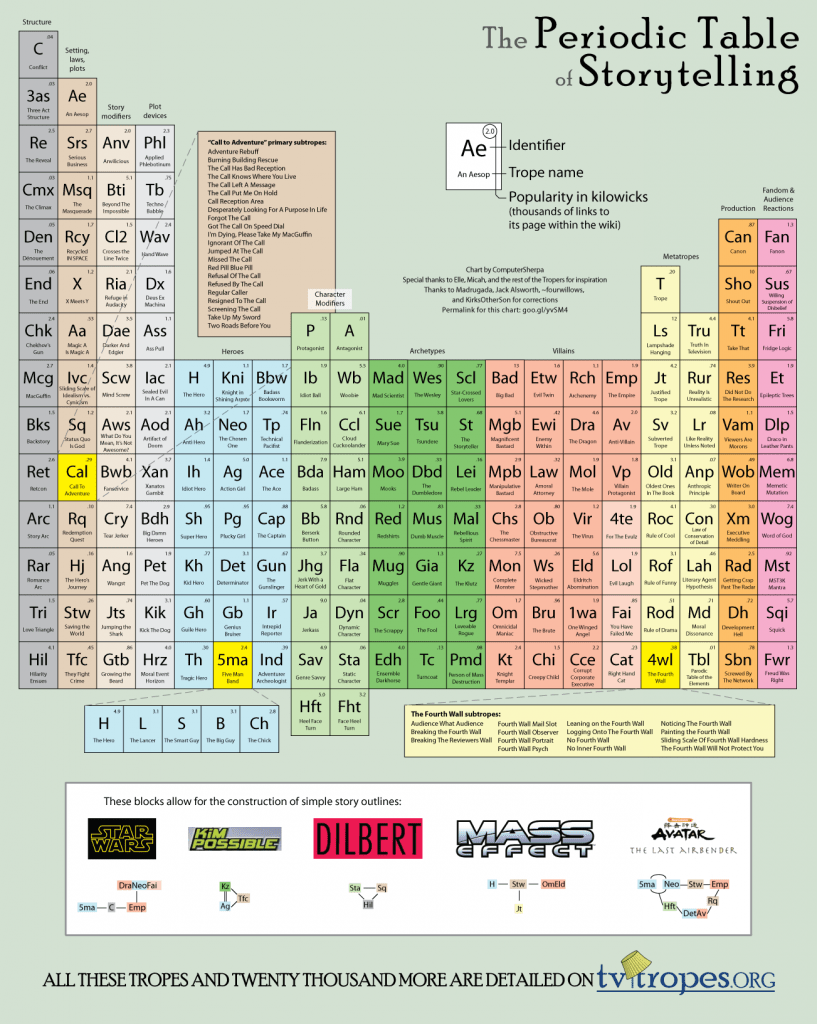
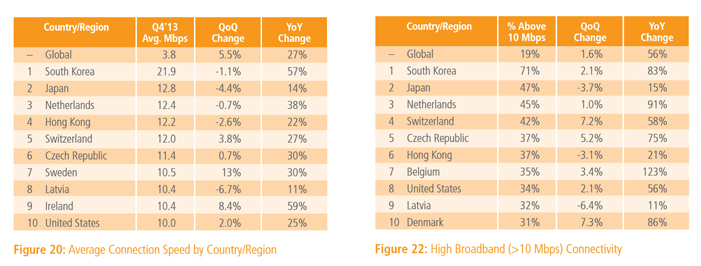
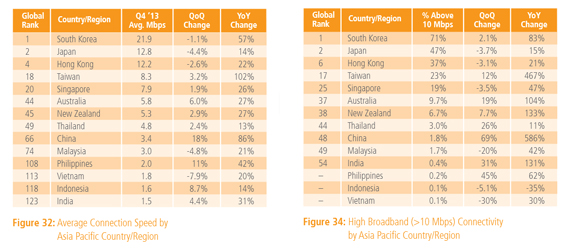




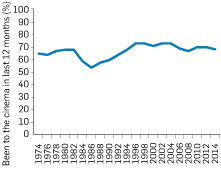

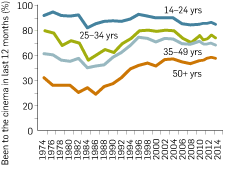
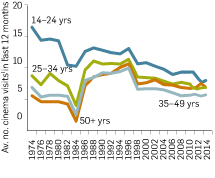




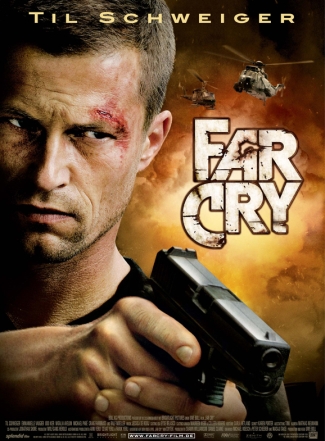

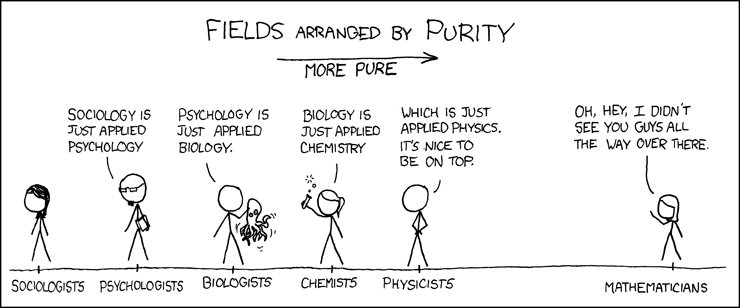
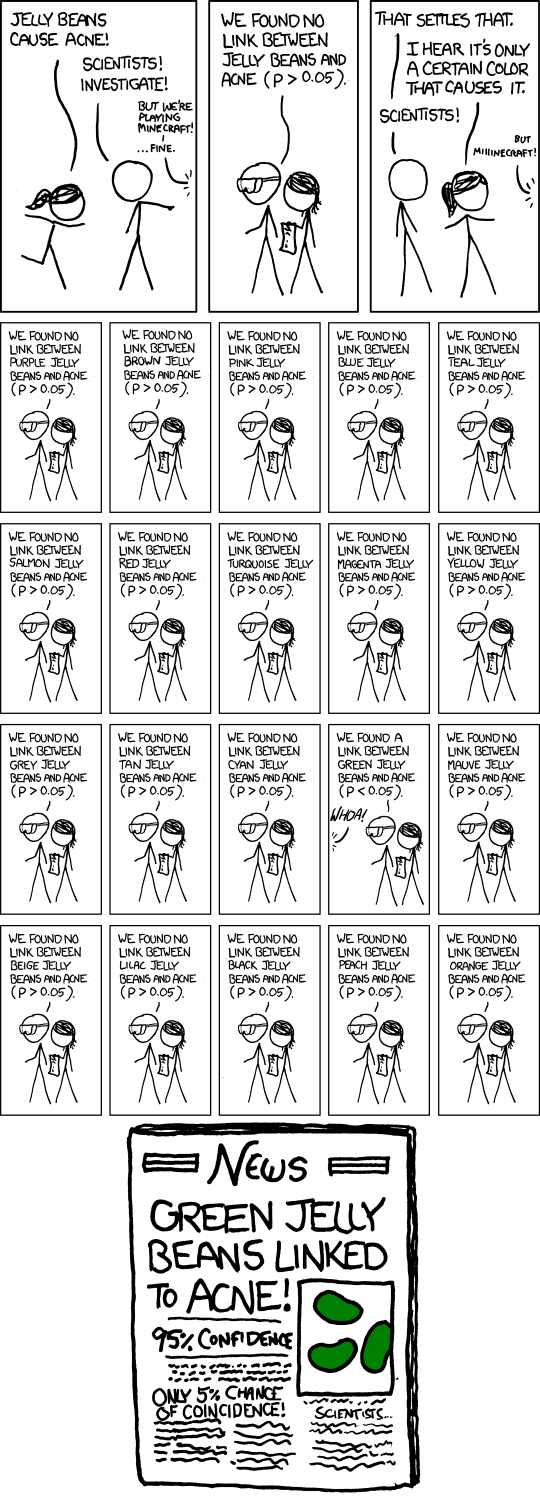
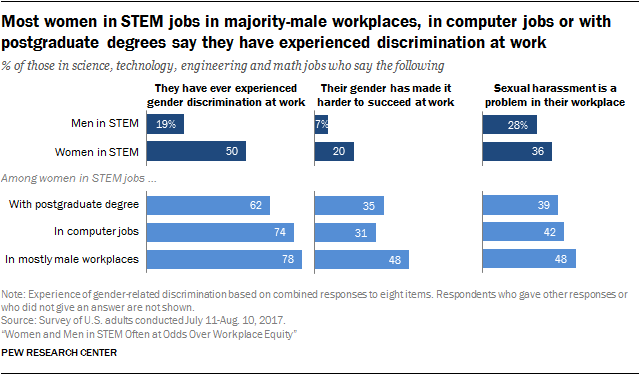
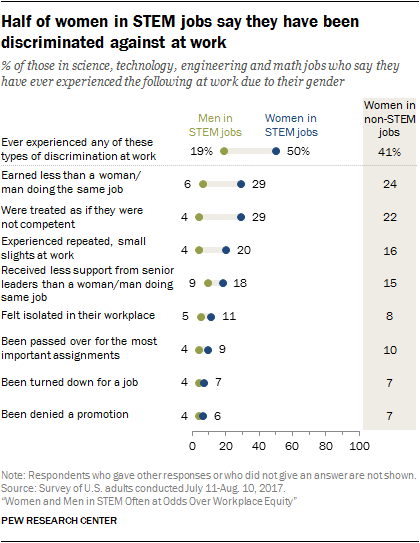
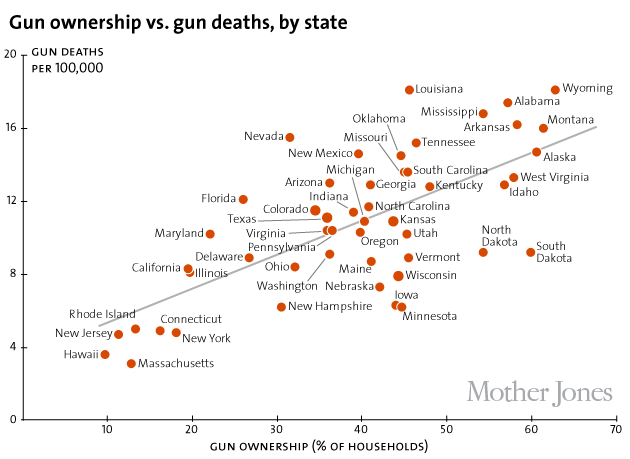





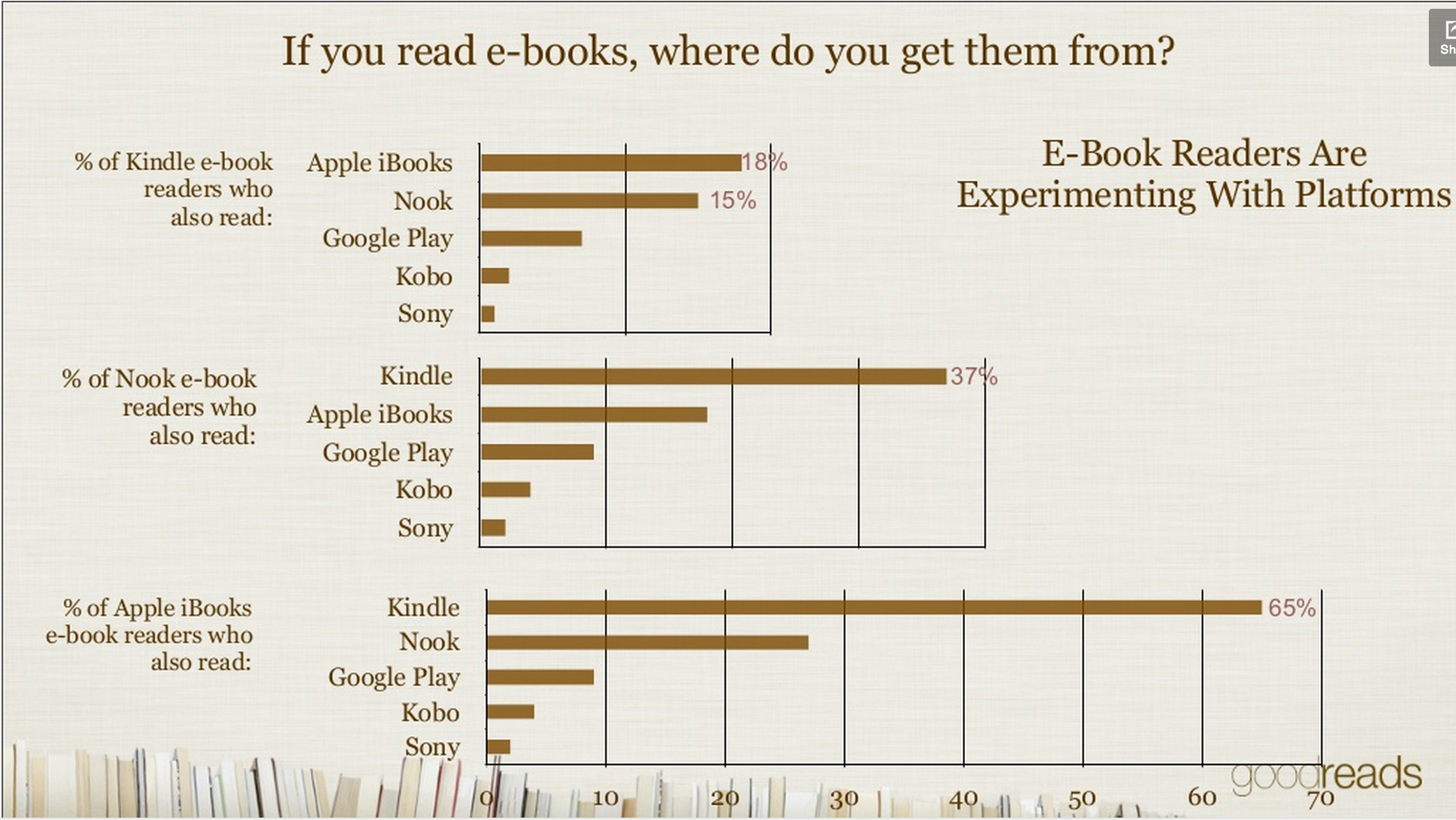
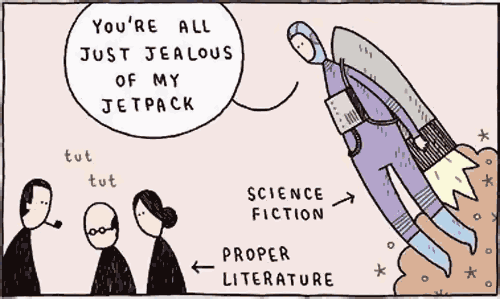
 Tyson Adams