Why it is (almost) impossible to teach creativity

File 20181119 44274 v4jiya.jpg?ixlib=rb 1.1
Relishing the independence of the mind is the basis for naturally imaginative activity.
Shutterstock

Robert Nelson, Monash University

Industry and educators are agreed: the world needs creativity. There is interest in the field, lots of urging but remarkably little action. Everyone is a bit scared of what to do next. On the question of creativity and imagination, they are mostly uncreative and unimaginative.

Some of the paralysis arises because you can’t easily define creativity. It resists the measurement and strategies that we’re familiar with. Indisposed by the simultaneous vagueness and sublimity of creative processes, educators seek artificial ways to channel imaginative activity into templates that end up compromising the very creativity they celebrate.

For example, creativity is often reduced to problem-solving. To be sure, you need imagination to solve many curly problems and creativity is arguably part of what it takes. But problem-solving is far from the whole of creativity; and if you focus creative thinking uniquely on problems and solutions, you encourage a mechanistic view – all about scoping and then pinpointing the best fit among options.

It might be satisfying to create models for such analytical processes but they distort the natural, wayward flux of imaginative thinking. Often, it is not about solving a problem but seeing a problem that no one else has identified. Often, the point of departure is a personal wish for something to be true or worth arguing or capable of making a poetic splash, whereupon the mind goes into imaginative overdrive to develop a robust theory that has never been proposed before.

For teaching purposes, problems are an anxious place to cultivate creativity. If you think of anyone coming up with an idea — a new song, a witty way of denouncing a politician, a dance step, a joke — it isn’t necessarily about a problem but rather a blissful opportunity for the mind to exercise its autonomy, that magical power to concatenate images freely and to see within them a bristling expression of something intelligent.
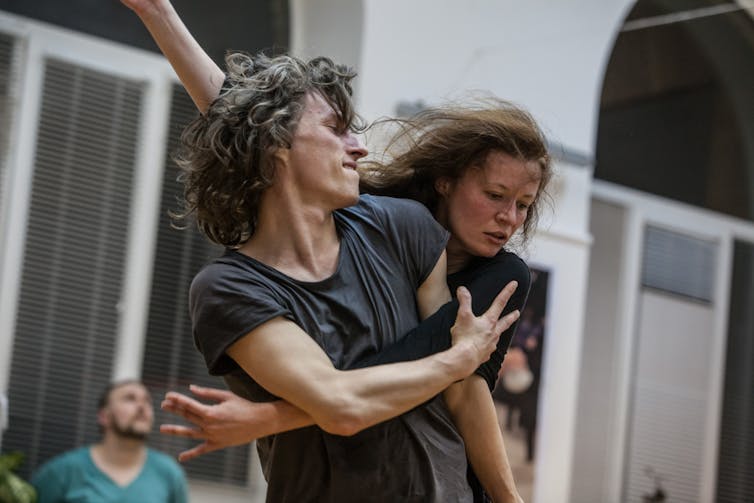
New ideas are more about a blissful opportunity for the mind to exercise autonomy.
shutterstock

That’s the motive behind what scholars now call “Big C Creativity”: i.e. your Bach or Darwin or Freud who comes up with a major original contribution to culture or science. But the same is true of everyday “small C creativity” that isn’t specifically problem-based.


Read more:
Creativity is a human quality that exists in every single one of us


Relishing the independence of the mind is the basis for naturally imaginative activity, like humour, repartee, a gestural impulse or theatrical intuition, a satire that extrapolates someone’s behaviour or produces a poignant character insight.

A dull taming

Our way of democratising creativity is not to see it in inherently imaginative spontaneity but to identify it with instrumental strategising. We tame creativity by making it dull. Our way of honing the faculty is by making it goal-oriented and compliant to a purpose that can be managed and assessed.

Alas, when we make creativity artificially responsible to a goal, we collapse it with prudent decision-making, whereupon it no longer transcends familiar frameworks toward an unknown fertility.

We pin creativity to logical intelligence as opposed to fantasy, that somewhat messy generation of figments out of whose chaos the mind can see a brilliant rhyme, a metaphor, a hilarious skip or roll of the shoulders, an outrageous pun, a thought about why peacocks have such a long tail, a reason why bread goes stale or an astonishing pattern in numbers arising from a formula.
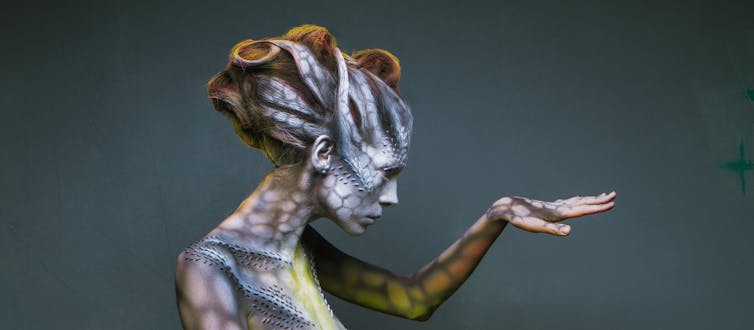
We pin creativity to logical intelligence as opposed to fantasy.
Shutterstock

Because creativity, in essence, is somewhat irresponsible, it isn’t easy to locate in a syllabus and impossible to teach in a culture of learning outcomes. Learning outcomes are statements of what the student will gain from the subject or unit that you’re teaching. Internationally and across the tertiary system, they take the form of: “On successful completion of this subject, you will be able to …” Everything that is taught should then support the outcomes and all assessment should allow the students to demonstrate that they have met them.

After a lengthy historical study, I have concluded that our contemporary education systematically trashes creativity and unwittingly punishes students for exercising their imagination. The structural basis for this passive hostility to the imagination is the grid of learning outcomes in alignment with delivery and assessment.

It might always be impossible to teach creativity but the least we can do for our students is make education a safe place for imagination. Our academies are a long way from that haven and I see little encouraging in the apologias for creativity that the literature now spawns.

My contention is that learning outcomes are only good for uncreative study. For education to cultivate creativity and imagination, we need to stop asking students anxiously to follow demonstrable proofs of learning for which imagination is a liability.
The Conversation

Robert Nelson, Associate Director Student Experience, Monash University

This article is republished from The Conversation under a Creative Commons license. Read the original article.
How JK Rowling writes mystery

https3a2f2fi-ytimg-com2fvi2fd_y0nfhnhgg2fmaxresdefault

We don’t often think of fantasy novels as being mysteries. And yet, in JK Rowling’s Harry Potter novels, the mystery elements are cornerstones of the plot.

Mystery isn’t easy to do well, either, as we will see in the two videos below from Just Write. In the Harry Potter novels we see the elements Rowling used to great effect, and in the new Fantastic Beasts movies, we see how Rowling bungles those elements.

I suppose the big takeaway is that even a master writer* can mangle the craft.

*Feel free to disagree with this assertion and point out to me Rowling’s various flaws as an author in painful detail that assumes I’ve never read the Potter books. That’s why they invented the comments section.

My Fellowship at KSP


IMG_0836
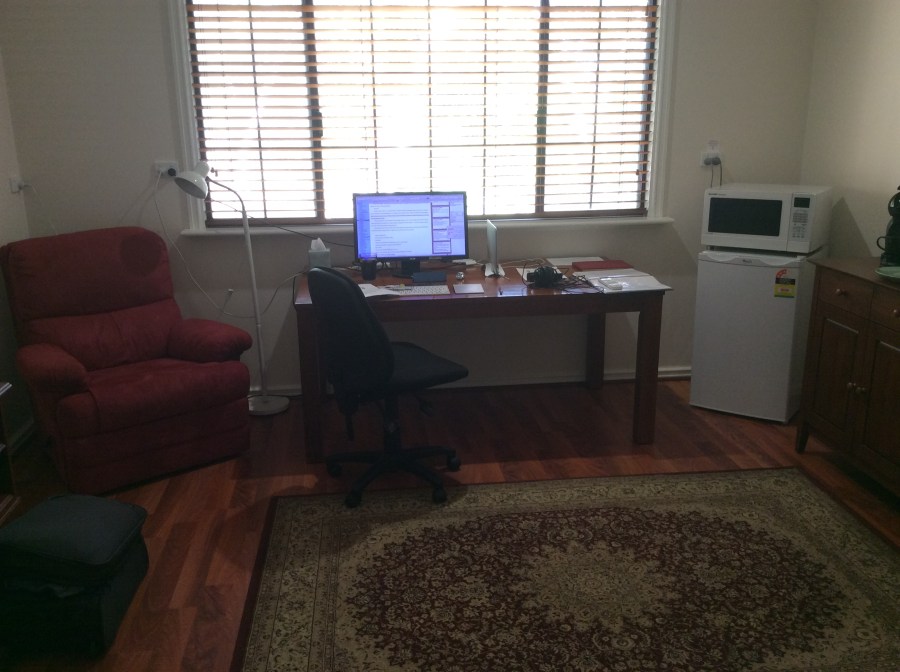
A room for writing.

It feels like only yesterday, but it’s actually just over a week since I finished my Fellowship at the KSP Writers’ Centre. What’s a Fellowship? I hear you ask. Actually, I didn’t hear you, but I do hear voices in my head – no, I have an adequate sufficiency of matches, so be quiet. Anyway, I applied for a writing retreat to focus on (finishing….) my novel Evil Corp. Twelve-and-a-half days to do nothing but writing in a purpose built hut.

The writing huts are modeled after Katharine Susannah Pritchard’s own writing retreat and are very much focussed on having a room to write in. Your desk faces out onto the garden – I had a view of a gum tree with a beehive in its trunk – you have amenities for snacks and drinks, a chair for quiet contemplation, and a bed for… well, you know what beds can be used for.

IMG_0838
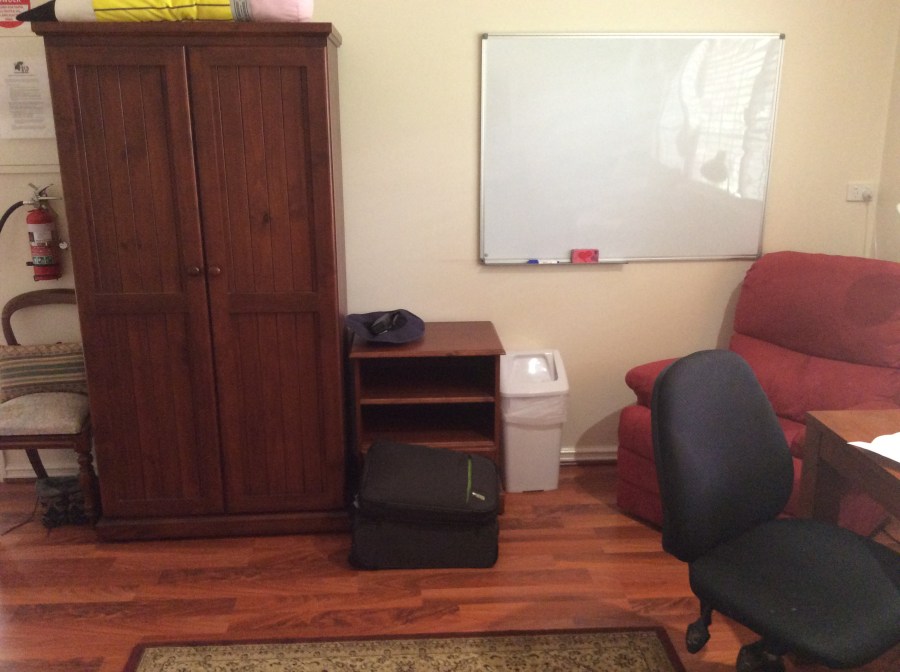
I had a whiteboard… which I didn’t end up using. And a giant pencil… which I also didn’t use.

The hut was quiet and felt ideally suited to writing. Or painting. Or reading. Or slowly going mad and deciding to live like a hermit. All good options.

IMG_0837
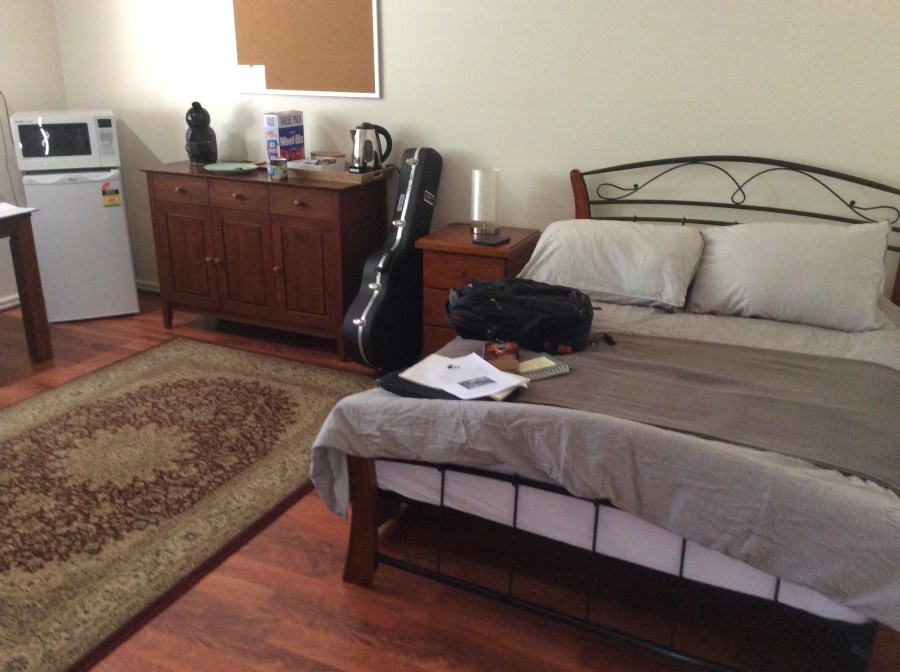
Yes, I brought a guitar.

The best feature was definitely the lack of adjoining accommodation for young children, who slowly steal your hopes and dreams as they consume more of your life than you’d ever imagine, such that you wake up at 40 wondering why you haven’t published a novel yet.

IMG_0835
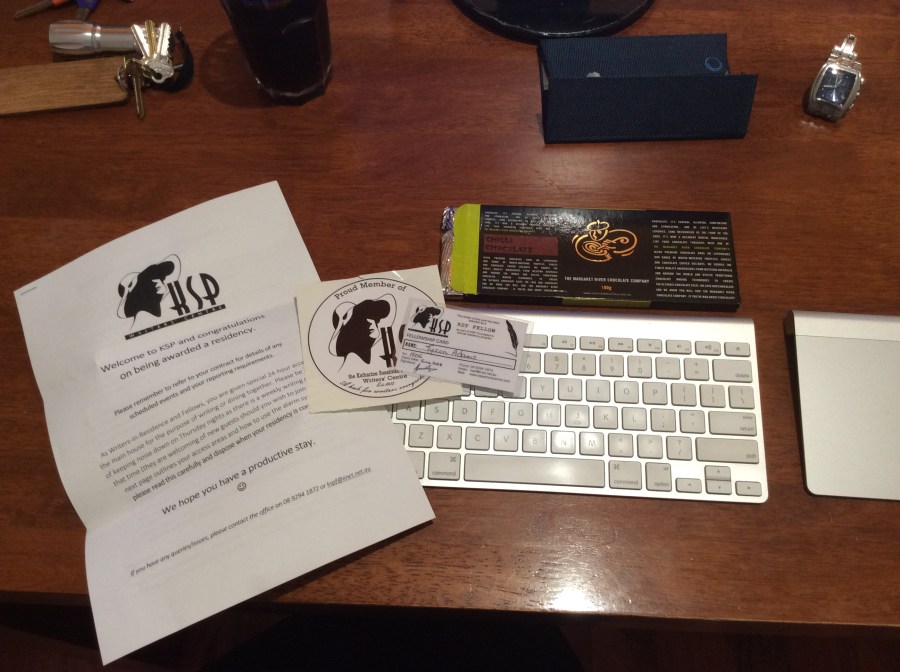
Welcome Pack: Welcome letter, KSP sticker, KSP Fellow card, CHOCOLATE!

With the welcome letter in hand, my computer set up, I was ready to right write!

Getting my author on

Reading Anne's story at KSP Open day 2018
Not sure if I made this picture blurry by drinking too much caffeine, or if it was the wrong lighting for the camera to focus.

For my stay at KSP I had set a few hard and soft goals. Hard goals were things like: relax and enjoy being able to pursue my hobby uninterrupted for a fortnight; not wake up at 5am because my kids weren’t going to be there; refrain from buying a beret and neck-scarf; write more than 1,000 words per day. Soft goals were things like: wake up before noon; eat properly; get some exercise; try not to feel guilty about leaving my wife alone with our kids; write 20,000 words during my stay. Try to guess which goals I achieved.

I didn’t want to place too much pressure on myself to, say, “finish my novel” or “write 5,000 words a day”, because that would have sucked the fun out of the Fellowship. Having previously won NaNoWriMo, I knew I could write 2,000 words a day for a sustained period, but I was surprised at how having more time to write didn’t necessarily increase output. I’m going to claim that it was higher quality than NaNoWriMo writing though. A low bar I’m willing to jump over. But I did manage to write 20,000 words, do some plotting, create a few characters, outline several chapters for the future, review a couple of books, and come up with two plots for other projects, so it felt productive.

On the first weekend of my Fellowship the KSP Writers’ Centre held their open day. It was a fun event and well attended despite the threats of rain. As the above photo shows, I was asked to do a reading for the event on behalf of one of my writing groups. I read Werespoon by my fellow Fantasy Sci-Fi Horror group author Anne Forbes. Gillian Clarke read on behalf of my other author group, the Thursday Night group.

Another thing that made me feel authorly was mingling with other authors.

Surrounded by other authors

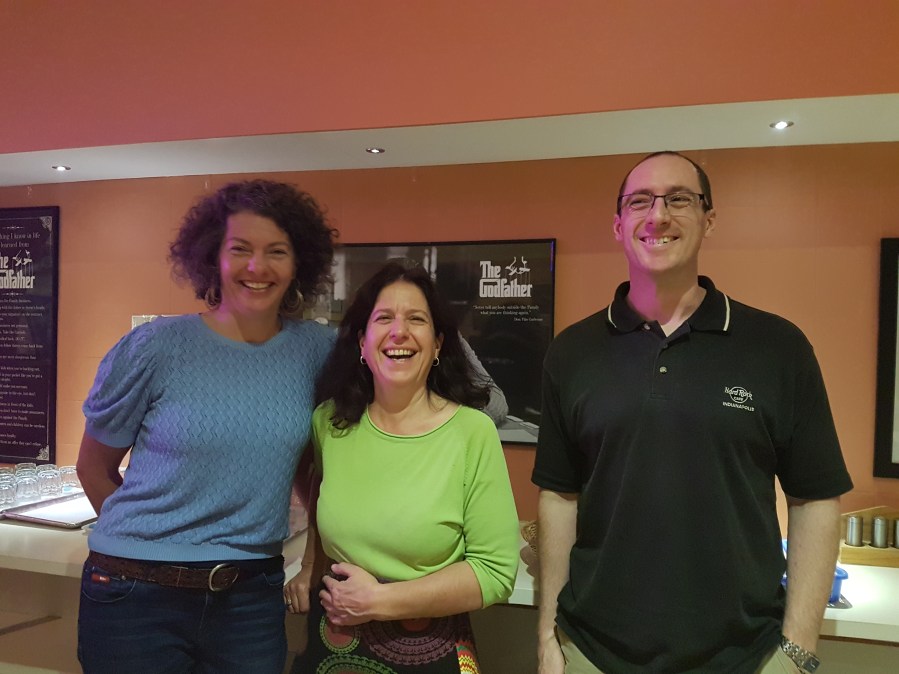
Me Kaaron Warren and Rachel Mead
Rachael Mead, Kaaron Warren, me being told to smile more.

Writing is generally regarded as a lonely occupation. Well, unless you take your laptop to a coffee shop so you can tell anyone who has the misfortune of coming too close that you’re an author and that sitting in a coffee shop telling people about your WIP counts as writing. The KSP cabins were decidedly setup for writing. On your own. Uninterrupted. I brought a guitar. But I still managed to hang out with other authors.

Kaaron Warren and Rachael Mead were also at KSP doing a Residency and Fellowship respectively. Kaaron has been publishing stories since before I’d figured out Coco-Pops didn’t need extra sugar. She was shortlisted for an Australian Shadow Award while she was in residence, and just last week released Tide Of Stone. One evening we were discussing awards (she is a judge for the World Fantasy Awards this year) and she casually mentioned being beaten by luminaries Stephen King and KJ Parker… I’m not sure that counts as losing.

Rachael has a PhD in creative writing and, like Kaaron, an impressive list of awards to her name. She has published multiple poetry collections, including one that came out earlier this year, and regularly contributes arts reviews to magazines. She also writes short stories and was working on what appears to have become a collection themed around paramedics during her time at KSP.

Which made me the bumbling rookie trying not to sound like an amateur around the two pros.

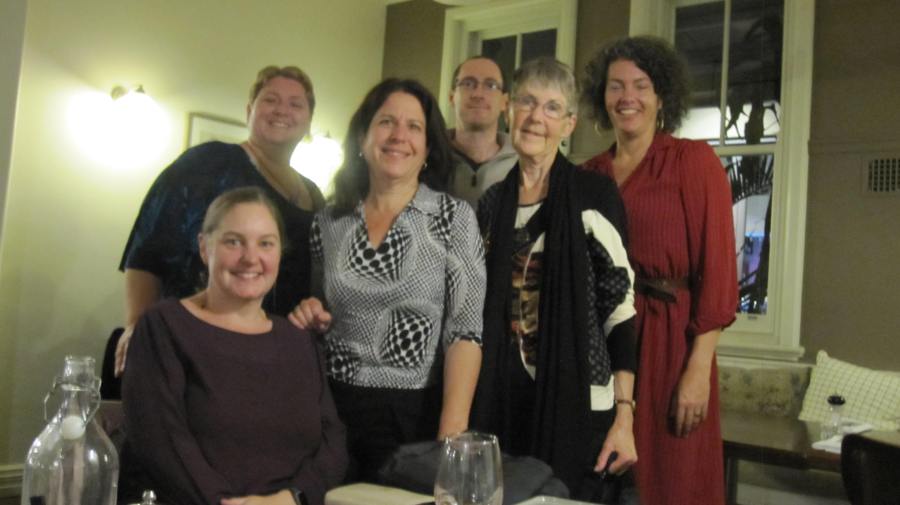
It was invaluable to chat with them over dinner, or at drink-o-clock, or at procrastination time. For example, Rachael helped me with a chapter I was headed in the wrong direction with. But it was also good just to be able to have a chat and socialise, including catching up with an old friend who is a mutual friend of Kaaron’s. If that wasn’t enough wordsmiths to hang out with, we also had a lovely dinner out with some other KSP Fellows. See the blurry photo below that proves kids aren’t necessarily good with technology.

2018-05-10 20.10.41
Dinner with some other KSP Fellows.

Summary

It was great to have the opportunity to feel like a writer and make some progress on (one of) my works in progress. I met some lovely people, got some writing done, and didn’t get woken up by a toddler wanting to find the teddy that is lying right next to them in bed even once. I very much appreciate the board and staff at the KSP Writers’ Centre for awarding me the Fellowship.

Creativity Explained

file-20180114-101518-1wckavo

Last week I reblogged an article about some new research into what makes us creative. This week I’m sharing a video from one of my favourite YouTube channels, which essentially covers the same work. But this one is a video!

Since this is going to be a three part series, I’ll update this post as the other videos are released.

Part 2:

Further reading:

Kidd, C., & Hayden, B. Y. (2015). The psychology and neuroscience of curiosity. Neuron, 88(3), 449-460.

De Pisapia, N., Bacci, F., Parrott, D., & Melcher, D. (2016). Brain networks for visual creativity: a functional connectivity study of planning a visual artwork. Scientific reports, 6.

The Real Neuroscience of Creativity – Scientific American.

Eagleman, D., & Brandt, A. (2017). The Runaway Species: How human creativity remakes the world.

Catapult. Durante, D., & Dunson, D. B. (2018). Bayesian inference and testing of group differences in brain networks. Bayesian Analysis, 13(1), 29-58.

Li, W., Yang, J., Zhang, Q., Li, G., & Qiu, J. (2016). The Association between Resting Functional Connectivity and Visual Creativity. Scientific reports, 6.

Bendetowicz, D., Urbanski, M., Aichelburg, C., Levy, R., & Volle, E. (2017). Brain morphometry predicts individual creative potential and the ability to combine remote ideas. Cortex, 86, 216-229.

Writing in Western Australia

dsc_0019-3

Two months ago (November 2017) the Western Australian Government released its Writing Sector Review. Okay, most of the readers here are international, so you’re probably shrugging your shoulders and reaching for an atlas – atlases are still a thing, right? But after my recent post on support for the arts (I was in favour as long as the support was for all authors, not just those deemed worthy/literary enough), I thought this review highlighted many of the same points and might be interesting.

Okay, that’s probably my West Aussie bias talking. But if it is a problem, just mentally substitute your local area name in place of Western Australia. The points raised appear to be universal. Well, Earthiversal. Well, Writerversial.

The Department of Culture and The Arts had nine recommendations in their report:

Recommendation 1: Maintain current levels of State Government funding to the writing sector
This point is at odds with the rest of the list. Lots of new stuff to fund but no extra funding to go with it. But I guess this is why they are writers and not economists.

Recommendation 2: Create a hub for writing and creative thinking at the State Library of Western Australia building
This makes sense, especially if this extends resources out to the larger library network in the state. And a coffee machine, this needs a coffee machine to be a creative hub.

Recommendation 3: Conduct a distinctive annual Western Australian Premier’s Book Awards The Western Australian Premier’s Book Awards
This is something that used to happen but became biennial. I’ll have more to say on this point, mark my words.

Recommendation 4: Use investment in the writing sector to achieve synergies with existing Statewide library services to extend and enhance community engagement in the reading of Western Australian writers
Honestly, why wasn’t this already a thing? “Sorry, we don’t have room for you West Aussie authors on the shelves, James Patterson just published 12 new books.”

Recommendation 5: Foster professional development for writers to enable them to navigate the increasingly complex areas of rights and multimedia opportunities
This is already available, but an expansion would be welcome news to all of the state scribblers. The isolation of Western Australia from the rest of Australia, let alone the rest of the world, is something that needs to be addressed. I wonder if there is a worldwide… network that could be used in some way to facilitate this.

Recommendation 6: Foster an environment to maximise the potential of Western Australian writers to be published
Like reminding the rest of the world that we exist. Or giving us decent internet. Or a can with a string attached.

Recommendation 7: Enhance data collection about Western Australian writing to provide benchmarks and evidence for policy development
Enhance? Starting would be good. As noted in the report, the Australia Bureau of Statistics stopped collecting data in 2003-04. Also great to see a report admitting they didn’t have evidence to base their recommendations upon.

Recommendation 8: Provide support for screenwriting and playwriting
Aside from all of those tax breaks that film and theatre already get….

Recommendation 9: Establish writer-in-residence opportunities at National Trust properties (Source)
This is a specific focus thing about promoting literature with a local history emphasis. I’m sure that will make someone happy. Like sleep medicine specialists.

The overall emphasis of the report is that Western Australia isn’t a cultural backwater yet it is treated as one. So the state government should do something about that by promoting locals writers, local stories, and more people to wear neck scarves and beret caps.

This is very similar to the calls from The Guardian last month, which I covered in my recent post, Literary Fiction in Crisis. The government should be doing more to support, develop, and nurture artists. The publishing industry is somehow not being asked to do this. Apparently, they are all tapped out, and definitely not owned by the biggest and most profitable media organisations.

There are a couple of big assumptions built into this report. The first most obvious one is that Western Australia isn’t a cultural backwater. Having lived here my entire life, I can confirm we are a backwater, and not just culturally. I think we need to accept this fact. Maybe if we grabbed a couple of cold beers and watched some sport it would help us get over ourselves.

The second big assumption is that writers in Western Australia are worth funding. Why? What exactly is the government trying to promote with this funding? Is there a return on investment intended? These things aren’t really defined, just asserted as true. Now, don’t get me wrong, everyone loves a government handout, just ask the banks who nearly destroyed the world’s economy. But I’d like to think that this funding is a bit better justified than it appears.

The other big assumption is that support should be directed at literary works. This is a common theme to these reports and the articles I discussed previously.  The report recommends the Premier’s Book Awards be annual again, which they want to be used to promote West Aussie authors and Western Australia as a successful writing habitat – possibly with the inclusion of an emphasis on “emerging” and “developing” authors. I note that they aren’t proposing to support genre authors, nor have awards to promote them.

Why wasn’t there a conclusion that the Premier’s Book Awards should include Spec-Fic, Crime, Thriller, Romance, and YA segments? Are these not worthy? Do these genres lack enough subplots about recovering from cancer and relationships with cats? Because we can fix that.

As I noted in my Literary Fiction in Crisis piece, we could acknowledge that arts are an important aspect of our culture and support ALL artists with grants – not just the “important” literary ones. The initiatives that are meant to grow and sustain the writing sector always seem to be only for part of the writing sector. IF writing is to receive government assistance then it would be nice to see it not playing favourites without some damned good justifications. Until then it appears that some animals are more equal than others.

Edit: A recent article touched on a point about art vs sport and the taxation of people in those fields in Australia. Interesting what we promote as important.

5.1 CONCLUSIONS

In framing initiatives that will grow and sustain the writing sector, the following issues arising from the research and consultation process have influenced the consultants’ advice.

 The creative process – the act of writing – is severely hampered by lack of time and money

 Market development is a critical issue for everyone working in this sector in Australia, and one which WA needs to address with some urgency. WA’s isolation from decision-makers and peergroups exacerbates this

 Proximity to Asia and the alignment of significant time zones offers a considerable opportunity for WA writers (and to the creative industries in WA more generally)

 Market forces are causing publishers to become more conservative and mean they are not building writers careers in the same way. How is this gap to be filled?

 Collaboration between allied and sometimes competing parties is an emerging model in Australia and internationally. With the disruption of internet and digital technologies there is a greater need for publishers to cooperate and negotiate with other firms, including competitors, or others such as games, software and media companies in order to create new products.

 For emerging and small publishers, distribution can be a major hurdle

 Self-publishing without an experienced guiding hand is a minefield for new writers

 While authors still seek traditional publisher relationships there has been an increase in publishing innovation and technology driving new models. Australian publishers are experimenting across digital platforms with changes to royalty and subscription agreements, and providing free ebook downloads which helps make niche publishing projects viable

 Digital opportunities are encouraging a more direct relationship between writers and readers, publishers and readers, booksellers and readers

 Sales opportunities in the digital marketplace do not fundamentally alter the economics of publishing but have provided more opportunities for scholarly publishers

 The WA writing sector is supported by a range of community-based writers’ centres, facilitating organisations and by writingWA

 Throughout WA there are also 231 public libraries which provide a nexus for writers and readers in a geographically challenging state.

 There is a strong regional literary festival culture in regional WA – often initiated or supported by the public library. Geraldton, Kununurra, Avon Valley, Broome, Margaret River and Mandurah Festivals are all initiatives of, or have strong links with, their public libraries, and funding from DCA, DRD and Royalties for Regions, delivered via writingWA

 The history and capacity for publishing Aboriginal stories by Aboriginal people is a strength of WA writing

 There is a need to increase the diversity of voices and participants in the writing community

 Recent and current infrastructure developments, plus the proposed reconfiguration of SLWA offer opportunities for increased writing-based activity and activation

 Changes to governance arrangements at Screenwest and its greater emphasis on the telling of WA stories offer opportunities for writers

How Audiobooks Are Recorded

audio-books-56a324b93df78cf7727c00f5

This is an interesting short video featuring Suzy Jackson, voice artist, recording an audiobook at Audible Studios.

Joanna Penn has also interviewed a number of people on her podcast about audiobooks, which are worth listening to.

I’m quite the fan of audiobooks. Being able to read a book while I’m exercising or commuting has been a life changer for me. There is something about having headphones in that stops people interrupting you to ask what you’re reading. Sorry, not stops, but certainly lowers the number of interruptions.

New study reveals why some people are more creative than others

File 20180114 101518 1wckavo.jpg?ixlib=rb 1.1
The question has long eluded researchers. agsandrew/Shutterstock.com

Roger Beaty, Harvard University

Creativity is often defined as the ability to come up with new and useful ideas. Like intelligence, it can be considered a trait that everyone – not just creative “geniuses” like Picasso and Steve Jobs – possesses in some capacity.

It’s not just your ability to draw a picture or design a product. We all need to think creatively in our daily lives, whether it’s figuring out how to make dinner using leftovers or fashioning a Halloween costume out of clothes in your closet. Creative tasks range from what researchers call “little-c” creativity – making a website, crafting a birthday present or coming up with a funny joke – to “Big-C” creativity: writing a speech, composing a poem or designing a scientific experiment.

Psychology and neuroscience researchers have started to identify thinking processes and brain regions involved with creativity. Recent evidence suggests that creativity involves a complex interplay between spontaneous and controlled thinking – the ability to both spontaneously brainstorm ideas and deliberately evaluate them to determine whether they’ll actually work.

Despite this progress, the answer to one question has remained particularly elusive: What makes some people more creative than others?

In a new study, my colleagues and I examined whether a person’s creative thinking ability can be explained, in part, by a connection between three brain networks.

Mapping the brain during creative thinking

In the study, we had 163 participants complete a classic test of “divergent thinking” called the alternate uses task, which asks people to think of new and unusual uses for objects. As they completed the test, they underwent fMRI scans, which measures blood flow to parts of the brain.

The task assesses people’s ability to diverge from the common uses of an object. For example, in the study, we showed participants different objects on a screen, such as a gum wrapper or a sock, and asked to come up with creative ways to use them. Some ideas were more creative than others. For the sock, one participant suggested using it to warm your feet – the common use for a sock – while another participant suggested using it as a water filtration system.

Importantly, we found that people who did better on this task also tended to report having more creative hobbies and achievements, which is consistent with previous studies showing that the task measures general creative thinking ability.

After participants completed these creative thinking tasks in the fMRI, we measured functional connectivity between all brain regions – how much activity in one region correlated with activity in another region.

We also ranked their ideas for originality: Common uses received lower scores (using a sock to warm your feet), while uncommon uses received higher scores (using a sock as a water filtration system).

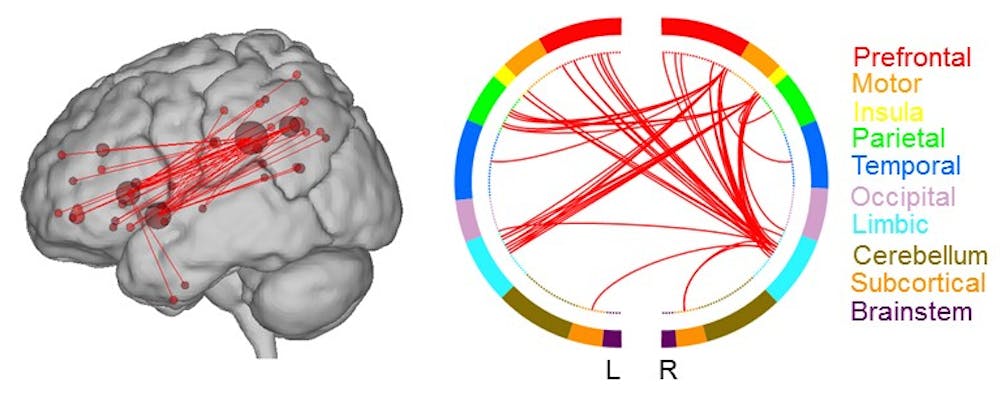
Then we correlated each person’s creativity score with all possible brain connections (approximately 35,000), and removed connections that, according to our analysis, didn’t correlate with creativity scores. The remaining connections constituted a “high-creative” network, a set of connections highly relevant to generating original ideas.

Two renderings show the lobes of the brain that are connected in the high creative network.
Author provided

Having defined the network, we wanted to see if someone with stronger connections in this high-creative network would score well on the tasks. So we measured the strength of a person’s connections in this network, and then used predictive modelling to test whether we could estimate a person’s creativity score.

The models revealed a significant correlation between the predicted and observed creativity scores. In other words, we could estimate how creative a person’s ideas would be based on the strength of their connections in this network.

We further tested whether we could predict creative thinking ability in three new samples of participants whose brain data were not used in building the network model. Across all samples, we found that we could predict – albeit modestly – a person’s creative ability based on the strength of their connections in this same network.

Overall, people with stronger connections came up with better ideas.

What’s happening in a ‘high-creative’ network

We found that the brain regions within the “high-creative” network belonged to three specific brain systems: the default, salience and executive networks.

The default network is a set of brain regions that activate when people are engaged in spontaneous thinking, such as mind-wandering, daydreaming and imagining. This network may play a key role in idea generation or brainstorming – thinking of several possible solutions to a problem.

The executive control network is a set of regions that activate when people need to focus or control their thought processes. This network may play a key role in idea evaluation or determining whether brainstormed ideas will actually work and modifying them to fit the creative goal.

The salience network is a set of regions that act as a switching mechanism between the default and executive networks. This network may play a key role in alternating between idea generation and idea evaluation.

An interesting feature of these three networks is that they typically don’t get activated at the same time. For example, when the executive network is activated, the default network is usually deactivated. Our results suggest that creative people are better able to co-activate brain networks that usually work separately.

Our findings indicate that the creative brain is “wired” differently and that creative people are better able to engage brain systems that don’t typically work together. Interestingly, the results are consistent with recent fMRI studies of professional artists, including jazz musicians improvising melodies, poets writing new lines of poetry and visual artists sketching ideas for a book cover.

Future research is needed to determine whether these networks are malleable or relatively fixed. For example, does taking drawing classes lead to greater connectivity within these brain networks? Is it possible to boost general creative thinking ability by modifying network connections?

The ConversationFor now, these questions remain unanswered. As researchers, we just need to engage our own creative networks to figure out how to answer them.

Roger Beaty, Postdoctoral Fellow in Cognitive Neuroscience, Harvard University

This article was originally published on The Conversation. Read the original article.

Literary Fiction in Crisis

man-smoking-jacket

Literary Fiction in Crisis was the headline lede for a series of articles in The Guardian last month. Long known as a balanced and inclusive arts publication (/sarcasm) they sought to highlight a serious problem and a solution for literary fiction.

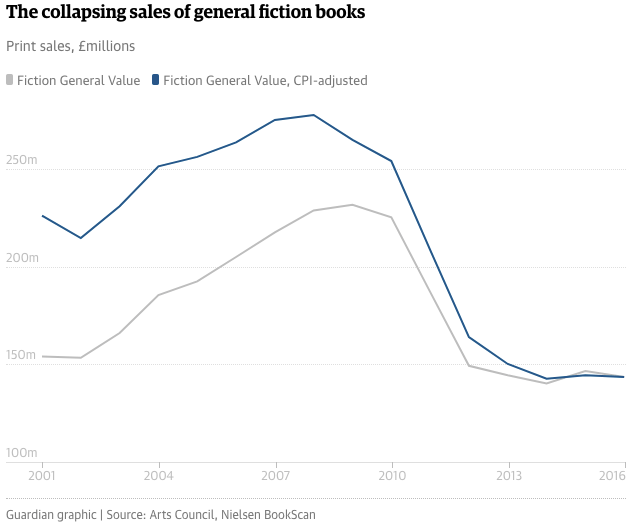
In case you haven’t heard, people aren’t reading literary fiction. Book sales are dropping. I covered this in my post on Australian Fiction, and US Fiction, and the Guardian article covered the UK figures in its first piece in the series.

Screen Shot 2018-01-03 at 11.40.25 AM

Let’s try not to think too hard about sales being in value terms and not volume. I mean, ebooks aren’t usually priced cheaper or anything and would hardly contribute to this revenue figure whilst being more profitable. Clearly, we need to get onto blaming the real culprits. Stupid kids these days are playing Tweeters and Facepage instead of buying books.

One reason suggested by the report for the decline in literary fiction sales is the recession, happening at the same time as the rise of cheap and easy entertainment. “In comparison with our smartphones, literary fiction is often ‘difficult’ and expensive: it isn’t free, and it requires more concentration than Facebook or Candy Crush,” the report’s authors write.

Won’t someone thinking of the starving artists!!

The researchers looked at the 10,000 bestselling fiction titles over the last five years and found: “Outside of the top 1,000 authors (at most), printed book sales alone simply cannot provide a decent income. While this has long been suspected, the data shows unambiguously that it is the case. … What’s more, this is a generous assessment. After the retailer, distributor, publisher and agent have taken their cut, there won’t be a lot of money left from 3,000 sales of the 1,000th bestselling title. That we are returning to a position where only the best-off writers can support themselves should be a source of deep concern.”

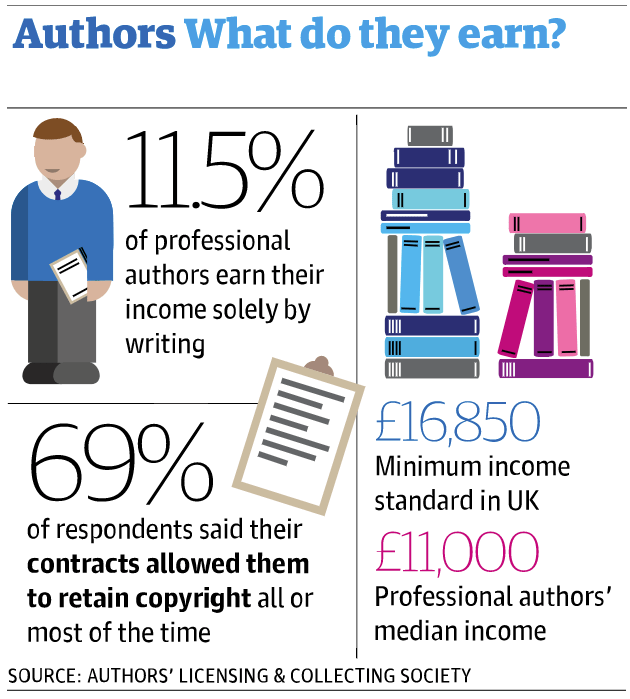
OMG, you’re telling me that artists have to have day jobs?* Oh the humanity! Surely this must be a new thing… Unless it has literally always been a thing. If only there was a graphic somewhere that could highlight the proportion of authors who make a living writing…

Screen Shot 2018-01-03 at 12.40.34 PM
Source: A 3.5 year old Guardian article…

The second article covers some of the same ground before highlighting a couple of important points.

This continuity imperative has long been built into the foundations of commercial publishers, who expect many of their most successful writers to cough up a book a year. And as publishing has become more centralised, with much of its power now concentrated in three giant conglomerates, it has become more ruthless.

The brutal truth is that through the 1980s and 90s it was possible for the literary novelist to make a living on advances that didn’t “earn out”. They were supported by an old-fashioned value system that sanctioned the write-off of losses for the kudos of association with an “important” writer and a belief that literary value could be offset against the profits of more pragmatic publishing.

These points are ones which are not made often enough. In an industry that runs on the work of part-timers (88.5%), the proceeds to these employees are decreasing, the time commitments are increasing, and the investment in their careers is decreasing. Where are the three articles criticising this problem?

Of course, we need to steer the ship away from that iceberg of issues. The second article instead makes the argument that the UK Arts Council should fund more authors (and let’s assume the implication is that other governments around the world should do the same).

Unlike the performing arts, publishing has always been a largely commercial sector that has had to square its own circles. This is reflected in the fact that it gets only 7% of the funding cake handed out by the Arts Council, compared with 23% to theatre and 11% to dance.

Personally, I want to see Arts Council funding to be decided in a Thunderdome. It would be great to see starving artists facing off against one another for grants. The fit and agile dancers doing battle against the people who spend all day sitting and typing. They could stream it on Pay Per View and raise some extra arts funds.

There will be those who argue that this just shows that literary fiction is a hangover from the past, and the poor dears should knuckle down and resign themselves to writing what people actually want to read. But few would dare to make the same argument about experimental theatre or dance.

Yes, I’d argue this. And I would dare to make the same argument for theatre and dance. Thun-der-dome, Thun-dur-dome, Thun-der-dome!

The third article in this series makes just this argument – just to be clear, for writing what people want to read, not fighting in the Thunderdome. It doesn’t mince words and goes straight for the jugular.

Following the announcement from Arts Council England that sales of literary fiction are plummeting, it is suggested that arts subsidies be deployed to help writers survive. I have another idea. They should write better books.

This article goes on to imply that literary authors could put some effort into writing stuff people want to read, mainly via utilising compelling plots, which the author feels is a major flaw in literary works. I think he misses an important point. Authors can write whatever they want. But I do agree that authors can’t expect to earn a living from this unpopular writing, nor have people like it, nor have it be accepted as appropriate (e.g. racism). Pleasing a small club of literary snobs with worthy books doesn’t entitle authors to a full-time career.

Of course, nobody is proposing supporting genre authors. They aren’t writing important fiction and are thus not real authors. They deserve to starve! This is the main issue I have with the argument to fund literary fiction. Somehow we’ve glossed over all the authors who aren’t making a living writing genre, as though they have nothing to contribute to society, and are thus unworthy of arts funding. Admittedly, a very good study, mentioned in the second article, does show there are clear empathy differences between readers of genre and literary novels** – although why is still a question to be answered. So there is an argument to be made for literature support.

As I see it, there are a few paths we could tread. The reading industry could acknowledge that most authors are part-timers and do more to support this reality while they balance a day job with their art. Or we can acknowledge that arts are an important aspect of our culture and support ALL artists with grants – not just the “important” literary ones. This latter option could be easily and justifiably funded by taking government funding out of popular high-level sports – i.e. no more free stadiums for you football! Let’s just hope that sports don’t go up against arts in the Thunderdome.

*Side note: we could probably even refer to the artistic projects as the Side Hustle. This piece by Zen Pencils is quite good and captures the idea behind the author dream.

**Worth reading this paper, which I’ve linked directly. I expected this to be a small sample, poorly analysed, poorly reasoned, paper that was written to elevate snobbery with pseudoscience. It was actually a very solid study. Although, it is worth noting that literary merit was on a spectrum, so literary could be found in many titles. This included Raymond Chandler in the top third of literary titles, which surprised me (last spot was James Patterson, which should surprise no one).

Edit: A recent article touched on a point about art vs sport and the taxation of people in those fields in Australia. Interesting what we promote as important.

Edit: A Twitter thread about the origins of what we call literature versus genre caught my eye. The basic summary is that after the industrial revolution you had class divides between readers. Workers got to read one type of magazine, whilst richer managers (but not the capitalists) got a fancier magazine. The stories that were published in the fancier magazines became literary, whilst the rest was genre. So when I say that literature is based on snobbery, it is quite literally the snobbery of class divides in “Western culture”.

See also: Author Earnings

KSP Writer’s Fellowship

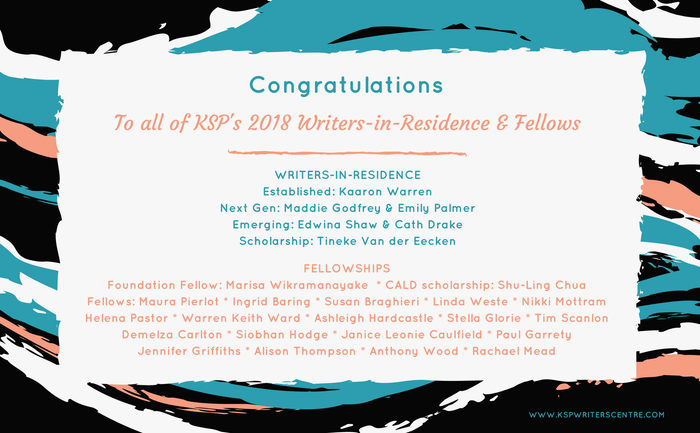
The Katherine Susannah Pritchard Writers’ Centre have announced their Writers-in-Residence and Fellows for 2018. I’ve been awarded a Fellowship to work on a satirical novel titled Evil Corp.

image

This will be a wonderful opportunity to have time and space to write. Here’s the blurb for the story:

Evil-Corp

Here at Evil Corp we have been successfully carving a path toward world domination for 15 years. With our dedicated staff we want to have you serve our every whim.

Your family deserves the security and friendly authoritarian rule that you could expect from an organisation like Evil Corp, but with the personal touches that only a caring and understanding community minded team can offer.

Have you bowed down to Evil Corp?

Update: The list of residencies and dates with author profiles are now available. I’m afraid it appears I’m the only one who didn’t take their profile seriously.

A Place To Write

IMG_0690
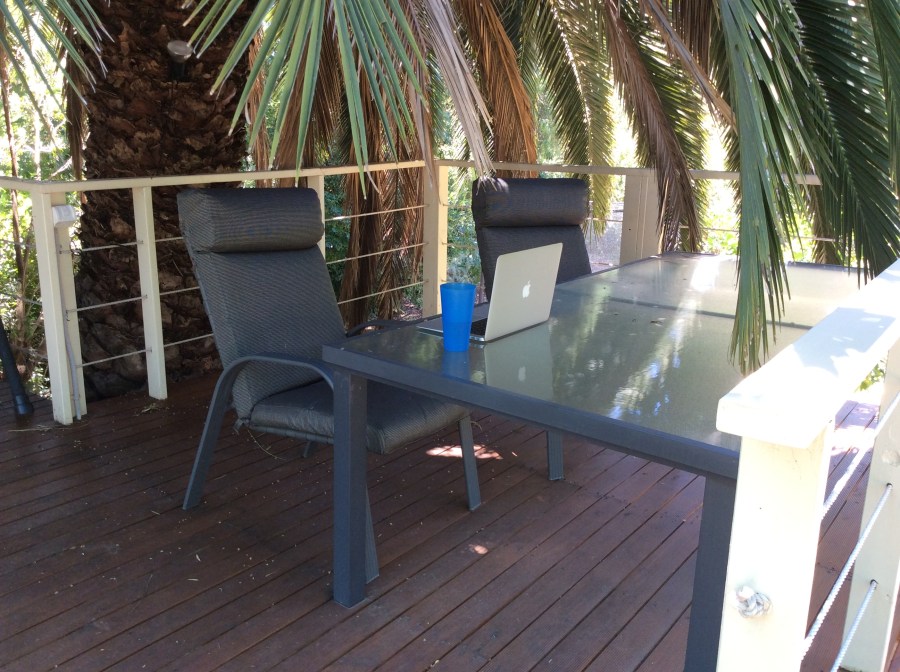
Where I pretend I write. Nice, isn’t it. (Not pictured: mosquitoes, noisy kids, actual desk the computer usually resides on.)

Of late I have noticed a disturbing trend occurring on writing blogs and groups: Write Shaming.

Write Shaming is when writers post images of their favourite place to write. Usually they attach some little story – because they’re writers, they can’t resist – about how inspiring the location is. The story about how awesome the local cafe is compared to their purpose-built study. Or how the desk was secretly trying to kill the author. The goal is that people become envious and to have them start thinking “I could write well/heaps/both if only I had a setup like that.”

This all got me thinking about an article from Patricia Briggs’ site and a recent discussion we had at my local writers’ group: What are all the cool kids writing with? Whether it be the latest liquid-cooled PC with a display that makes the term UltraHD seem quaint, or your chisel set and pile of clay tablets, every writer has their own setup for crafting masterpieces. Well, everything from Twilight fan-fic through to masterpieces.

So what better way to procrastinate during prime writing time than to discuss all the writing toys you could be buying.

Portable writing tools

This list includes:

  • Pen and notebook
  • Laptop
  • Phone
  • Tablet

In Australia Pilot Press created a Diary for Writers. It has writing prompts, weekly ideas pages, writing tips, contact details for writers’ centres, and dates for competitions, events and festivals. Of course, there are plenty of other notebooks made specifically for writers… they just kinda seem feeble in comparison now, don’t they.

The big advantage of a notebook and pen is that it gives you a consistent place to record ideas. Many famous novelists are known to have a notebook on their bedside table for that inevitable just-before-sleep brilliant idea that you’ll totally remember in the morning… More’s the pity that some of those ideas weren’t lost.

Phones and tablets are taking over the role of notebooks in this modern age. With synching programs like Evernote, Dropbox, Google Docs, etc, able to run on all your devices, your ideas are safe to embarrass you when you rediscover them ten months from now. Phones and tablets are more than powerful enough to be your primary writing tool as well. Phones have defied the pre-smart phone trend of getting smaller, and are now sporting screens big enough to be seen by some stranger two rows back on your commute. Let’s hope the police believe you’re a writer when that stranger reports you for that twisted thing you wrote. You know the one.

Tablets and small laptops are starting to become interchangeable now. No longer are these highly portable devices in possession of processors that run at the speed of two tortoises passing notes to each other across a football field. Writing isn’t exactly a hardware draining or intensive software activity, so the choice really comes down to how much you like typing on a tablet versus a laptop. And which one has the coolest games and other procrastination tools. Even Scrivener has launched an iOS friendly app for iPhone and iPad.

One caveat to tablets and laptops is the keyboard. Some keyboards are not full-sized and can be challenging or plain infuriating to use, especially if you touch type. Although they also act as a great excuse for your pathetic typing skills. Another issue is that some keyboards aren’t real keyboards, and much like typing on a tablet or phone screen, they don’t have any tactile feedback and can lead to some hilarious typos. Turn predictive text on for sentences that make even less sense than your drunken uncle discussing politics and the economy.

coffeeshoplaptop

The writing desk and computer

Yes, yes, I know, there are some people who prefer to write things out longhand. They spend countless hours with pen/pencil in hand writing on thinly sliced dead trees only to have to spend even more hours transcribing it into an electronic format that is of any use. So excuse me if I acknowledge that this is 2017 and talk about computers for writing.

While portability can be awesome, having a dedicated space with a full-sized – possibly “ergonomic” – keyboard, a screen that doesn’t induce eyestrain from having to read documents in 4 point text size, and an internet connection that doesn’t drop out every time a car drives past and blocks the Wi-Fi signal has advantages. As above, computers are more than capable of handling the pressures of word processing, which makes the choice more about budget and what graphics package you need to run Netflix* in UltraHD. Laptops can fill the role of desktop computer here with a base station connecting a decent sized monitor, etc.

These articles cover some of the options:

http://www.patriciabriggs.com/articles/writing/computers.shtml

http://mattgemmell.com/a-laptop-for-writers/

https://techspectacle.com/best-laptop-for-writers/

starbuck_full

Writing Software**

Writing software is still oddly dominated by the “my computer came with it” word processors. Needless to say, MS Word is highly popular because people don’t know any better. Word is a highly versatile program that can do just about anything, integrates with all the plugins and add-ons you can imagine, and does a perfunctory job of being useful. In its favour it is the most supported program, which means updates actually happen, integration with programs like referencing software is a thing (hey, us science nerds care about that stuff!), and editing with tracking and commenting is excellent. MS Word is the jack-of-all-trades, and thus master of none, and has so many features there are entire lists to point out the stuff you didn’t know it had.

Of course Mac OS have their own less popular versions of the MS Office programs. But Apple admitted people liked Microsoft and let MS Office come play on their OS.

Linux users and anyone liking freeware have long utilised the MS Office knockoffs of OpenOffice and LibreOffice. Since the demise of OpenOffice and the limping of ApacheOpenOffice toward the same fate, LibreOffice is as close to MS Office you’ll get without feeling too dirty.

There are plenty of online options that all have limitations and benefits. Google Keep, Evernote, Onenote, etc, fill differing roles. These aren’t just writing and note tools, but can also save documents and webpages. Since they are cloud based, anything you have saved there is accessible anywhere, anytime. Well, unless you have third world internet like us Aussies.

The online options also extend to apps that are made for writing and not just note taking. Google Docs is the most obvious, especially with its sharing capability. Novlr is an online/offline subscription based app made by writers for writers. ApolloPad is an online writing app with features like cork-boarding and timelines – pity it is still in beta. Novel Factory is another online subscription based writing app made by writers for writers. Apparently writers don’t get paid unless they can also code software.

Dedicated writing apps aren’t always best served in the cloud or online. Feature rich programs tend to play better when they can hog your RAM directly rather than through your browser. Novel Factory has a Windows version that isn’t subscription based. Bibisco is an open source (yay, free!) dedicated writing app with some cool but standard features. WriteItNow has a lot of features, including an events chart to help with planning. And what blog on writing tools would be complete without flagellation over how awesome Scrivener is? Personally I’ve used Scrivener for years and love it. I didn’t even get paid to say that – hint to any of the app developers out there, I will cash for comment.

Like any good procrastination effort, there is a lot to compare, contrast, analyse, and digest here. I’ve barely scratched the surface. There is an entire list of add-ons and plug-ins that are great tools for writers (e.g. Hemmingway) that I may cover in another blog if people are interested. I may cover it even if people aren’t interested. That’s just how I roll.

*Netflix being the PG friendly term for any of those streaming sites you’ll be accessing.
** Thanks to Gary from my Spec-Fic writing group for his list of writing apps.

The Hero’s Journey

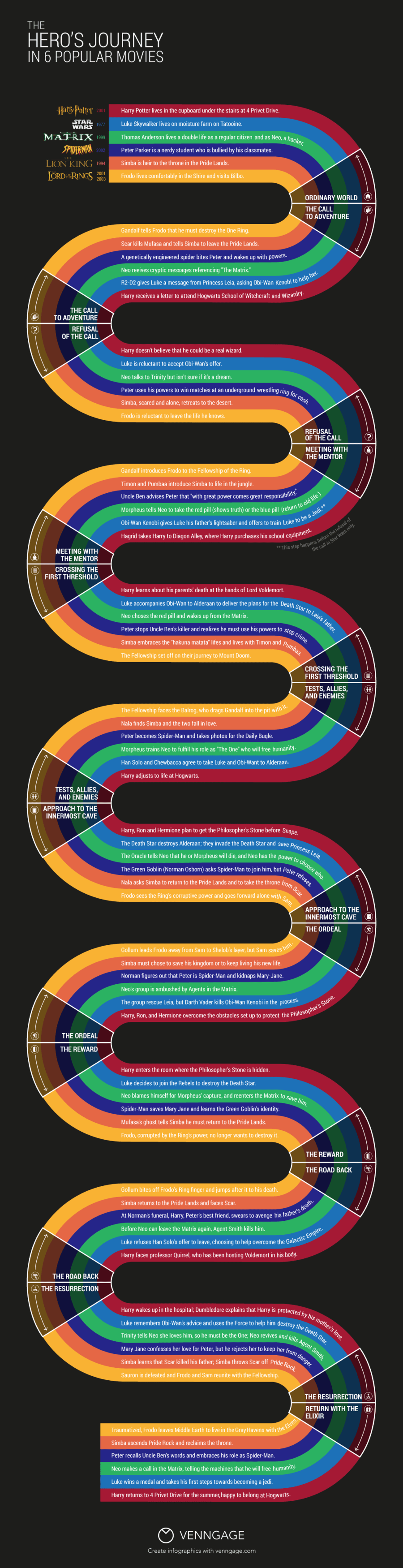
Ever thought that Harry Potter’s adventures shared a lot in common with Luke Skywalker’s? Ever thought that Simba and Neo were soul mates? Can you believe I just used the term soul mates?

The reason so many of the stories we know and love feel familiar is because of one of the most popular narrative structures writers like to use. The Hero’s Journey is explained below using Harry Potter, Star Wars, The Matrix, Spiderman, The Lion King, and The Lord of the Rings. Worth also seeing how this structure fits into the 6 Story Arcs.

herosjourney10

Source: https://venngage.com/blog/heros-journey/

Let’s Get Legible


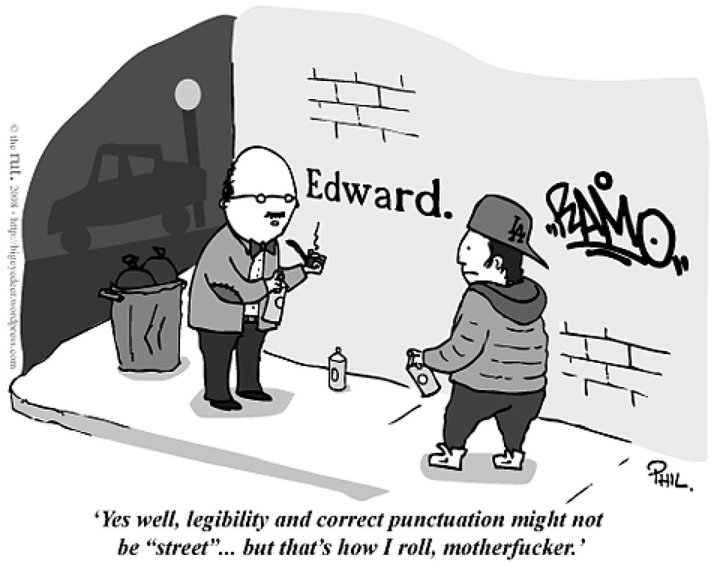
If you have ever spent any time in the comments sections anywhere on the internet, you will be aware that people’s grammar and spelling sucks. Sometimes it appears to be laziness. Sometimes the content makes it clear the person slept through their English and Science classes. And other times that is just how that person “communicates”.

But it isn’t isolated to the internet. The borderline illiterate retired football player who is now a TV personality. The weather presenter whose qualifications start and end with how white their teeth are. The cut and paster reporter who now relishes the fact that their company’s sub-editors were laid off. We seem to be surrounded by lazy or solecistic people.

This is a problem.

How can we effectively communicate in the marketplace of ideas if we can’t utilise proper grammar and spelling? Are we really going to wade through a 3000 word rebuttal argument that lacks paragraphs and capitalisation at the start of a sentence – seriously, try to not respond with “Would it kill you to use paragraphs?” How good will our comprehension of the points be if we struggle to understand what is written, let alone what is meant?

Now grammar isn’t as “proper” as we’d like to think. There is no reason to chastise someone for using literally in place of figuratively when the intention was for hyperbole. But damn you to spend an eternity watching Suicide Squad in a theatre full of people talking on their phones if you use theory when you mean hypothesis.

Language evolves over time. Generally language has become more concise and simplified to aid in communication. For example, if you read Robinson Crusoe in 1719, you may have noticed a few differences to the current version. Such as the title. Could you image the latest thriller using this snappy title?

The Life and Strange Surprizing Adventures of Robinson Crusoe, of York, Mariner: Who lived Eight and Twenty Years, all alone in an un‐inhabited Island on the Coast of America, near the Mouth of the Great River of Oroonoque; Having been cast on Shore by Shipwreck, wherein all the Men perished but himself. With An Account how he was at last as strangely deliver’d by Pirates.

Don’t worry, the novel is still boring laborious to read. In fact, just read the original title, saves you reading the whole book.

So being a Grammar Nazi* isn’t really the goal. But demanding that ourselves and others try to communicate clearly is a worthwhile goal. Because how am I to know if I agree with DeadMeatSlab45’s points about immigration unless I’m able to parse them through the all caps and intemperate use of exclamation points? It’s time to be legible.

I look forward to spotting my grammar and spelling errors after this post is published.

*Hasn’t that term taken on some new meaning this week!

Why The Hobbit Sucks

maxresdefault

Before anyone starts, I’ve always thought The Hobbit sucked. I was never a fan of the book, so even a semi-faithful movie adaptation was going to underwhelm me. But there are lessons to be learned by writers (and readers) from The Hobbit movies.

Recently I had a series of posts (1, 2, 3) about The Lord of the Rings movie adaptations, in which I discussed how much I enjoyed them. The movies managed to be awesome and cut out the long waffly bits. The movies were better than the book. But what about the 3 movie adaptation of the 1 book story? Well, here’s a 6 video discussion of the 3 movie adaptation of the 1 book story!

Just Write/Sage Rants dissects the flaws in The Hobbit movies. The videos highlight some of the more important aspects of storytelling and payoffs for the reader, and how they weren’t well handled.

The Characters – The Dwarves

Tensionless Action

Unresolved Plot Lines

Bad Romance

Philo$ophy of Adaptation

Comments and the Extended Editions