In this month’s What’s the Difference the CineFix team have covered the horror classic The Thing.
Did you realise that The Thing was based on a book/novella? No? Me neither.
Obviously, I don’t have much to add to the video this month. I haven’t read Who Goes There? by John W Campbell Jr. I’m not even that big a fan of the original movie. The less said about the 2011 prequel the better.
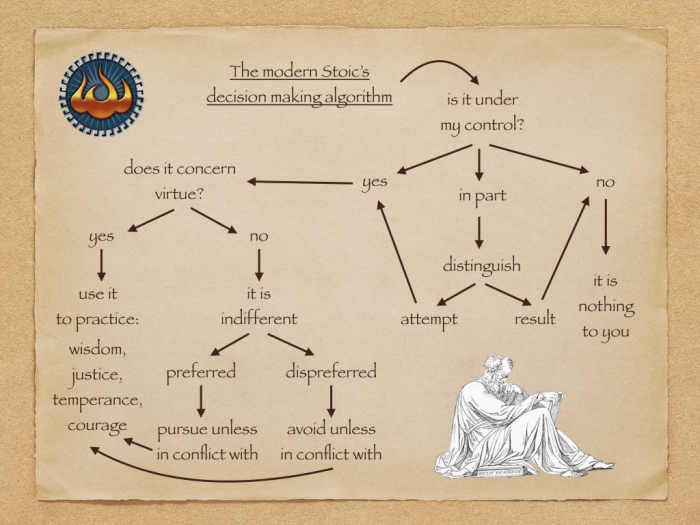
I’m still unclear if reading for pleasure is virtuous. I’m going to pretend that it is.
The former biologist and current philosopher, Massimo Pigliucci, guides us through stoicism and lots of conversations with his imaginary friend, Epictetus. I probably shouldn’t write book blurbs, because this was way more interesting than my previous sentence implies.
Before reading this book, my only understandings of stoicism came from Bertrand Russell. That is to say, I had a snarky and somewhat dismissive understanding of stoicism because Russell wasn’t a fan. Massimo dispelled my misunderstandings and also showed how stoicism could be applied to modern life. Book title goal achieved!
There are two highlights from this book. The first is that Massimo has managed to communicate his philosophy clearly and in a way that I think most people would be able to understand and engage with. The second is that he also manages to upsell readers on the idea of becoming a stoic. I’m not saying I’m rushing out to join Cult Stoic, but there are a lot of good ideas here for people to learn.
If you’re only three adventures into your life and already have innumerable enemies seeking vengeance, is it time to stop setting stuff on fire?
Harry Dresden has been trying to figure out why ghosts have been tearing up Chicago. The veil between the real world and the Never Never is in turmoil. His godmother wants him to come and play fetch with her. And the Red Court of vampires want him to come over for a meal. Things are going so well that a war might break out.
I’m admittedly late to the Harry Dresden fan club. Now having completed my second book in the series, I can see that Jim Butcher loves to stack the odds against Harry. No depths are deep enough, no insurmountable challenges big enough for Harry. Or as Murphy’s Law states: anything that can go wrong, does go wrong. Can’t wait to read more of this series.
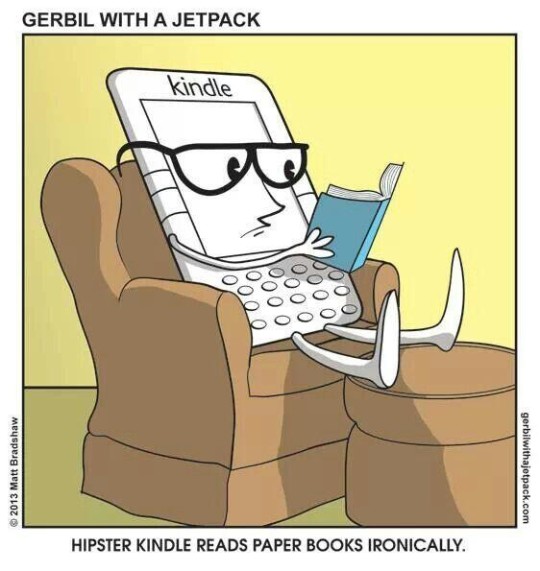
I’ve been pulling out my Kindle more often of late. So many advantages, especially when it comes to getting my hands on Advanced Review Copies to read.
Blood is thicker than water, unless you stab a relative, then it needs to be washed off with water.
Tess and Po have stumbled upon a potential murder victim and are all set to investigate this puzzling crime when Po receives a call. His dying mother wants to see him. His mother’s husband swore an oath to kill him. The rest of the family is ready to help. Except his sister, who has just gone missing near a new oil pipeline development, who Po has just been tasked to find.
Having been a long time fan of the Joe Hunter series by Matt Hilton, I was keen to read this new series from Matt. Much like the Hunter series, Matt has given us a solid crime thriller with plenty of action. The hard moulded Po is a lived in character, and Tess feeling like someone who is still trying to adjust to her new life as an ex-cop. They feel like good characters to follow for more adventures.
I received a review copy of this book in exchange for an honest review.
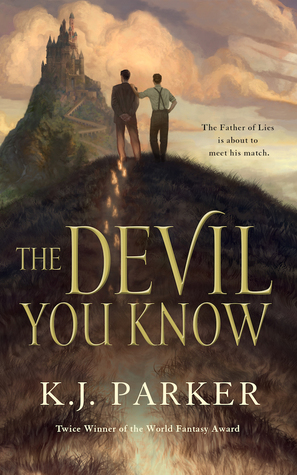
The greatest trick the devil ever pulled? Never messing with a philosopher.
Saloninus is the greatest philosopher of all time. But nearing the end of his life he wants another 20 years to complete his final works. So he does a deal with the devil. But the devil is suspicious. They might have an airtight contract for Saloninus’ soul, but there is something amiss. Is the devil about to be swindled by the greatest thinker?
A couple of years ago my uncle recommended KJ Parker to me. I’ve finally gotten around to reading one of Parker’s books. My uncle clearly has good taste.
This was an interesting and often humorous tale. After a recent letdown with an odious fantasy novel, this was refreshing. Briskly paced, world building without the laborious exposition, and characters that felt like real people, topped off a solid and interesting story. I’ll have to schedule some more KJ Parker reading for the near future.
Have you ever read a book review and been baffled by the jargon the reviewer uses? Like any profession, book reviewers have their own jargon that is meaningless and annoying to anyone not steeped in the mire of that profession. Since I’m a scientist and science communicator, I’m very familiar with how terrible the media are at explaining science. I’m also familiar with interpreting jargon for an audience. So allow me to elucidate.
.
Page-turner: Meets the bare minimum standards for a book.
Gripping: I got this from a library where kids are allowed to play.
Poignant: Something sad happened in this book, most likely a character gets cancer.
Compelling: I spent so much time reading this book I had to finish it despite wanting to hurt myself after every sentence.
Nuanced: I have no idea what this book was about but I liked it.
Lyrical: Should be a poem instead so that it isn’t as long and self-involved.
Tour de force: The book is too long and waffly.
Readable: Boring but better than watching TV.
Haunting: Either used to describe a book that made the reviewer actually think, or, more likely, is meant to make you think but is just pretentious.
Deceptively simple: Could have been written by a 10 year old.
Rollicking: Something actually happens in this book.
Fully realised: The book has a beginning, middle and end.
Timely: Makes passing reference to something that happened 2 years ago.
X meets Y meets Z: The reviewer hasn’t read the book so is quoting the sales blurb.
Sweeping: Long.
That said: I’ve just insulted this entire book but it is popular for some unknown reason (e.g. Twilight).
Riveting: Was able to finish reading it.
Unflinching: Unpleasant.
Powerful: I read the hardcover.
Unputdownable: Reviewer is unfamiliar with English.
Masterfully or Masterful: The author is familiar with English.
Beautifully written: A lot of long words were used.
Startling: Reviewer was surprised the book was published.
Bold: Controversial.
Accessible: Written for kids.
Memorable: Reviewer didn’t have to look up the author or title to write the review.
Epic: Really, really, long.
A tale of loss and redemption: Someone dies, the protagonist gets over it, the end.
I’m not going to review this book. It’s a few thousand years old, I don’t really have anything to add.
What I found interesting about this book was what it got wrong. Obviously Aristotle is one of the most influential thinkers of all time, he was one of the earlier people to grapple with determinism (Democritis and Leucippus got there first). But in Aristotle’s arguments on the Four Causes and the Four Elements, it was interesting that he rejected Leucippus’ and Democritus’ Atomism, a theory that was ultimately proven correct. Which got me to thinking.
How would anyone describe fire – one of the four elements – without our modern knowledge? How would we explain or seek to understand (rationalise) the workings of fire without chemistry, physics, and all of that other knowledge we take for granted?
Reading the arguments melding the four causes and elements into an understanding of change and decay in the modern age, it is easy to point and laugh. Stupid philosophers can’t science! But as I was reading I realised I could counter the arguments only based upon the accumulated knowledge of the natural world. If I was to remove that knowledge and just go by observation, could I do better? The answer is clearly no. At best I could come up with different, but probably not better. Because I’m definitely in the same league as one of the greatest thinkers of all time….
This realisation then had me thinking about how we don’t value our modern age and modern knowledge as much as we should. As Douglas Adams noted, we are surrounded by wonders of technology and science, but could we explain it and rebuild it, or would we have to settle for being a sandwich maker from the stars?
If AI essentially become gods does that make humans the prime mover?
Thorvald Spear died 100 years ago in the war with the Prador. Fortunately, this is the future, so death is less final than it used to be. But Spear is less than happy with how he died at the hands of the black AI, Penny Royal, and decides to destroy it. Along the way he manages to piss off Isobel Satomi, who has also got a carapace to pick with Penny Royal. So she adds Spear to her list of things to destroy. Meanwhile, Penny Royal is up to something, and everyone wants to know what.
This was my first outing with Neal Asher and his Polity universe. Asher was recommended to me by a fellow blogger – Bookstooge – so I found this recent series in the library. There is much I enjoyed about this book, and by extension the universe Asher has created. The details that give this universe a lived in feel, the cyberpunk sensibilities, the interesting sci-fi technology, are all fantastic. The story and characters are also interesting. So why only 3 stars?
There were two things that really stopped me enjoying this novel more: the length; and the anachronisms.
Sci-fi has a habit of being long because someone decided that that was okay for spec-fic genres. Dark Intelligence made me notice that this was a long book. Usually if you are really enjoying a book, the length goes unnoticed. So I had the sense that there was too much padding, unnecessary exposition, and side plots. It all fits together nicely, but I’m sure that this could come in much shorter without losing anything.
The second problem I had was with the constant anachronisms. Sounds being described as like a domino being slapped on the board… because dominoes is so popular right now, let alone a few centuries into the future. The Polity universe is filled with hyper-intelligent AIs that can do just about anything… but apparently cars still need a human to drive them. Tesla had that covered two years ago. After noticing one anachronism the floodgates opened, to the point where I started to question if this was Asher having a joke. But I doubt this is the case, since he criticised Greg Bear for doing the same thing in a book review.
Perhaps I’ll enjoy The Skinner more, which Bookstooge originally recommended.
This is an interesting short video featuring Suzy Jackson, voice artist, recording an audiobook at Audible Studios.
Joanna Penn has also interviewed a number of people on her podcast about audiobooks, which are worth listening to.
I’m quite the fan of audiobooks. Being able to read a book while I’m exercising or commuting has been a life changer for me. There is something about having headphones in that stops people interrupting you to ask what you’re reading. Sorry, not stops, but certainly lowers the number of interruptions.
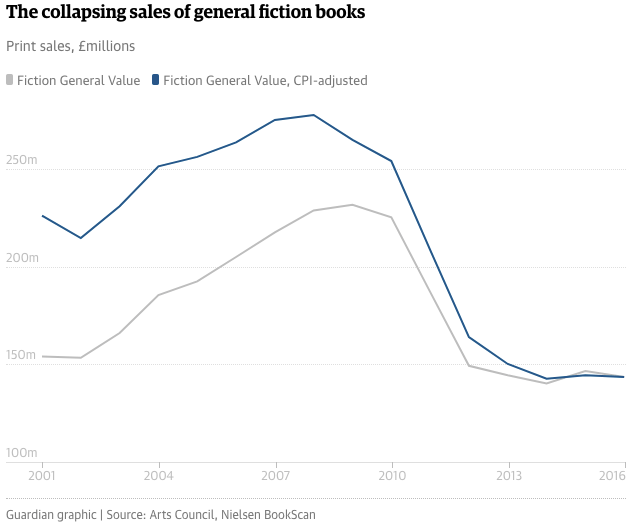
Literary Fiction in Crisis was the headline lede for a series of articles in The Guardian last month. Long known as a balanced and inclusive arts publication (/sarcasm) they sought to highlight a serious problem and a solution for literary fiction.
In case you haven’t heard, people aren’t reading literary fiction. Book sales are dropping. I covered this in my post on Australian Fiction, and US Fiction, and the Guardian article covered the UK figures in its first piece in the series.
Let’s try not to think too hard about sales being in value terms and not volume. I mean, ebooks aren’t usually priced cheaper or anything and would hardly contribute to this revenue figure whilst being more profitable. Clearly, we need to get onto blaming the real culprits. Stupid kids these days are playing Tweeters and Facepage instead of buying books.
One reason suggested by the report for the decline in literary fiction sales is the recession, happening at the same time as the rise of cheap and easy entertainment. “In comparison with our smartphones, literary fiction is often ‘difficult’ and expensive: it isn’t free, and it requires more concentration than Facebook or Candy Crush,” the report’s authors write.
Won’t someone thinking of the starving artists!!
The researchers looked at the 10,000 bestselling fiction titles over the last five years and found: “Outside of the top 1,000 authors (at most), printed book sales alone simply cannot provide a decent income. While this has long been suspected, the data shows unambiguously that it is the case. … What’s more, this is a generous assessment. After the retailer, distributor, publisher and agent have taken their cut, there won’t be a lot of money left from 3,000 sales of the 1,000th bestselling title. That we are returning to a position where only the best-off writers can support themselves should be a source of deep concern.”
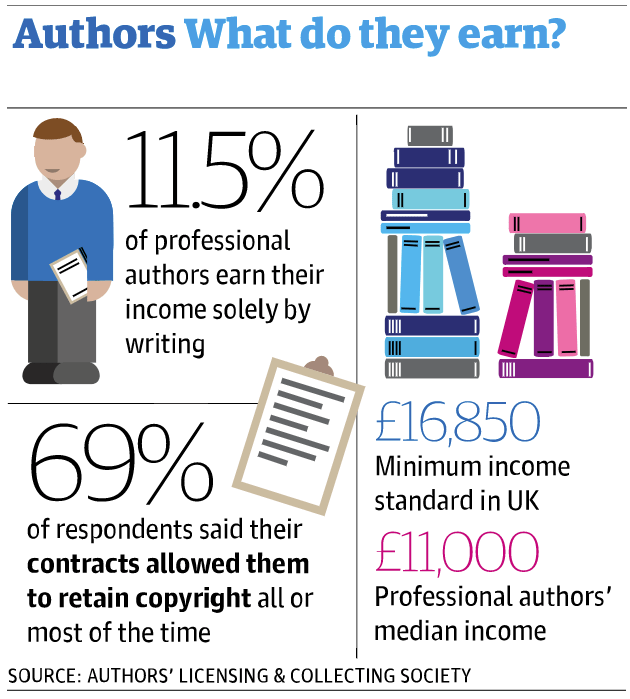
OMG, you’re telling me that artists have to have day jobs?* Oh the humanity! Surely this must be a new thing… Unless it has literally always been a thing. If only there was a graphic somewhere that could highlight the proportion of authors who make a living writing…
The second article covers some of the same ground before highlighting a couple of important points.
This continuity imperative has long been built into the foundations of commercial publishers, who expect many of their most successful writers to cough up a book a year. And as publishing has become more centralised, with much of its power now concentrated in three giant conglomerates, it has become more ruthless.
The brutal truth is that through the 1980s and 90s it was possible for the literary novelist to make a living on advances that didn’t “earn out”. They were supported by an old-fashioned value system that sanctioned the write-off of losses for the kudos of association with an “important” writer and a belief that literary value could be offset against the profits of more pragmatic publishing.
These points are ones which are not made often enough. In an industry that runs on the work of part-timers (88.5%), the proceeds to these employees are decreasing, the time commitments are increasing, and the investment in their careers is decreasing. Where are the three articles criticising this problem?
Of course, we need to steer the ship away from that iceberg of issues. The second article instead makes the argument that the UK Arts Council should fund more authors (and let’s assume the implication is that other governments around the world should do the same).
Unlike the performing arts, publishing has always been a largely commercial sector that has had to square its own circles. This is reflected in the fact that it gets only 7% of the funding cake handed out by the Arts Council, compared with 23% to theatre and 11% to dance.
Personally, I want to see Arts Council funding to be decided in a Thunderdome. It would be great to see starving artists facing off against one another for grants. The fit and agile dancers doing battle against the people who spend all day sitting and typing. They could stream it on Pay Per View and raise some extra arts funds.
There will be those who argue that this just shows that literary fiction is a hangover from the past, and the poor dears should knuckle down and resign themselves to writing what people actually want to read. But few would dare to make the same argument about experimental theatre or dance.
Yes, I’d argue this. And I would dare to make the same argument for theatre and dance. Thun-der-dome, Thun-dur-dome, Thun-der-dome!
The third article in this series makes just this argument – just to be clear, for writing what people want to read, not fighting in the Thunderdome. It doesn’t mince words and goes straight for the jugular.
This article goes on to imply that literary authors could put some effort into writing stuff people want to read, mainly via utilising compelling plots, which the author feels is a major flaw in literary works. I think he misses an important point. Authors can write whatever they want. But I do agree that authors can’t expect to earn a living from this unpopular writing, nor have people like it, nor have it be accepted as appropriate (e.g. racism). Pleasing a small club of literary snobs with worthy books doesn’t entitle authors to a full-time career.
Of course, nobody is proposing supporting genre authors. They aren’t writing important fiction and are thus not real authors. They deserve to starve! This is the main issue I have with the argument to fund literary fiction. Somehow we’ve glossed over all the authors who aren’t making a living writing genre, as though they have nothing to contribute to society, and are thus unworthy of arts funding. Admittedly, a very good study, mentioned in the second article, does show there are clear empathy differences between readers of genre and literary novels** – although why is still a question to be answered. So there is an argument to be made for literature support.
As I see it, there are a few paths we could tread. The reading industry could acknowledge that most authors are part-timers and do more to support this reality while they balance a day job with their art. Or we can acknowledge that arts are an important aspect of our culture and support ALL artists with grants – not just the “important” literary ones. This latter option could be easily and justifiably funded by taking government funding out of popular high-level sports – i.e. no more free stadiums for you football! Let’s just hope that sports don’t go up against arts in the Thunderdome.
*Side note: we could probably even refer to the artistic projects as the Side Hustle. This piece by Zen Pencils is quite good and captures the idea behind the author dream.
**Worth reading this paper, which I’ve linked directly. I expected this to be a small sample, poorly analysed, poorly reasoned, paper that was written to elevate snobbery with pseudoscience. It was actually a very solid study. Although, it is worth noting that literary merit was on a spectrum, so literary could be found in many titles. This included Raymond Chandler in the top third of literary titles, which surprised me (last spot was James Patterson, which should surprise no one).
Edit: A recent article touched on a point about art vs sport and the taxation of people in those fields in Australia. Interesting what we promote as important.
Edit: A Twitter thread about the origins of what we call literature versus genre caught my eye. The basic summary is that after the industrial revolution you had class divides between readers. Workers got to read one type of magazine, whilst richer managers (but not the capitalists) got a fancier magazine. The stories that were published in the fancier magazines became literary, whilst the rest was genre. So when I say that literature is based on snobbery, it is quite literally the snobbery of class divides in “Western culture”.
When people have had enough of a white guy as the hero, make them an albino.
Solomon Creed, dressed in a handmade suit sans shoes, is walking into the desert town of Redemption when a plane crashes on the road behind him. And then he’s running away from the fire and into a town of crooked business leaders and cops. Solomon is here to save a man who was just buried. Guess he’ll just have to save the town instead.
When I spotted this novel on my local library shelf I was intrigued. After the opening few chapters, I was strapped in and ready for more. But somewhere along the way, I started noticing things that lowered my enjoyment of this thriller. There is a brisk pace to Toyne’s writing, and that is coupled with short chapters and plenty of action. Though the pacing is oddly coupled with a drawing out of events, and some scenes that feel like diversions from the narrative. For example, the opening fire is still raging until 30% of the way through the novel, which means we don’t really narratively move forward despite plenty occurring.
The other part that didn’t work for me was the final “twist”. While there were hints of the supernatural dropped throughout the novel, the last supernatural elements that tied the plot together and told us who Solomon Creed was (kinda) felt like they weren’t foreshadowed well enough. This could just be me being mean to a novel I was only half enjoying, but it could also be why I was only half enjoying it.
Those comments aside, this is a fast-paced thriller, and it does offer a slightly different take on the Knight Errant or Walking the Earth stories.
Do lost cities get social media pages when they are discovered so archaeologists can check-in?
Nina and Eddie are again inexplicably searching for the lost relics of myth and legend. This time King Solomon’s lost treasures – which have previously not turned up, because reasons – are the McGuffins that could fall into the wrong hands. What could possibly go wrong with a post-Brexit rogue MI6 (SIS) spy and a Congolese warlord hot on your tail?
It has been a while since I’ve read a Nina Wilde and Eddie Chase adventure. The last Andy McDermott novel I read was the excellent Persona Protocol. Slipping back into the cozy comfort of a Nina and Eddie novel wasn’t just welcoming but reminded me I’ve missed this. Implausible and over-the-top is something very few authors manage to keep interesting, but Andy does it with ease. I hope Andy doesn’t start phoning these Artefact McGuffin Adventures in, I’m looking forward to reading more.
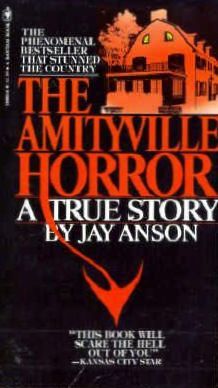
Because some people are obsessed about the official candy holiday based upon on former harvest festival, Halloween brings about the discussion of the horror genre. This month’s What’s the Difference? from CineFix covers the movie based upon a hoax, The Amityville Horror.
One great thing about horror novels is the ability to go wild with creepy ideas that will scare people. Blood suckers, flesh eaters, scary clowns in the closet, demonic possession, crazy inbreds, mild mannered fathers who go crazy and murder their family: all great ways to scare people and haunt their dreams.
But it is always hilarious to see the line “Based on a True Story” or similar at the start of a book or movie. Any time that has to be stated up front you can guarantee that the tale is pure fiction. It’s like how smart people don’t go around having to tell people they have a high IQ, or people who are successful don’t have to go around telling people how rich they are.
Needless to say, The Amityville Horror has long been known to be a hoax cooked up by the Lutzs and their lawyer, and then sensationalised in the “totally non-dramatised” book by Jay Anson.
To this day, the fact that The Amityville Horror story was an admitted hoax is still not widely known — as we often say, the truth never stands in the way of a good story. Though the story was made up by the Lutzes and further sensationalized by Anson, there were real victims of The Amityville Horror (the film, not the demons). In addition to the murdered DeFeo family, the subsequent occupants of the Amityville home have suffered a continual stream of harassment by curiosity seekers, horror fans, and gawkers who want to photograph and tour their infamous house. Then there are the people who, fooled by the films’ and book’s tagline, think they are partaking of works based on true events. (Source)
It is no secret that I like to write book reviews. Except when I’m sleepy. Or if I’m busy. Or if I get distracted by… Where am I?
Anyway, I wrote this blog a year or so ago addressing an example of people conflating book reviews with book promotion. I’m reposting it because of a recent discussion I had where several people were angry that a Mythcreants article failed to mention the authors of books being used as examples.
The issue that people seemed to have with the names being omitted was that it “wasn’t how reviews are meant to be written”….* Apparently the important details of a book review are listing the Title, Author, Publisher, Publication Date, etc, so that people can find the books easily. Yeah, an article on the internet referencing well-known books isn’t making it easy enough to find the books. Their irony meter must have been lost with the demise of Altavista.
Let me state up front: to my mind, book reviews are about helping people find good stuff to read and promoting authors whose work you’ve enjoyed. Of course some reviewers use it as a an opportunity to break away from the internet commenter stereotype and be jerks to others. This can be frustrating for authors and readers, but about par for the course as far as internet comments goes.
Fortunately an author has written a blog post advising people how to properly review books. Because you’re doing it wrong…
As a reader, reviewer, and occasionally sober writer, I don’t think authors should be telling readers what to do or how to do it, so the post doesn’t sit right with me. Actually, a lot of things don’t sit right with me, especially if they aren’t single malt and well aged.
Who are book reviews for?
You might be forgiven for thinking that writing a book review is primarily to flatter the author, or thank the author for writing an enjoyable book.
Book reviews are for prospective readers; to inform those buyers who are browsing the Amazon bookstore, chatting on Goodreads or following on-line bloggers, to decide if they might enjoy the book as much as the reviewer did.
The first major point is one I agree with: book reviews are for readers. But maybe not the readers the author thinks. Reviews are primarily about that reader and their thoughts. Sure, they may be trying to communicate with other readers and make recommendations, but let’s face facts, it is mostly just about sharing an opinion. Or is that shouting into the void? I can never remember the difference.
My philosophy on book reviewing – helping and promoting good stuff – is probably shared by many, or not, I haven’t checked. But I see it as an important aspect of being a reader and writer. Thanks to the wonders of technology we have access to more books than we’ll ever be able to read, and some of them are worth reading. Sharing your opinion of a book can help others find stories that will entertain them. Personally I’m not a fan of sharing reviews of books I haven’t enjoyed, just the ones I think others will enjoy reading, but negative and positive reviews are both helpful.
But, that’s just me. Readers aren’t obligated to say nice things about a book, nor promote it, nor make sure there are links to anything (except references, those are damned important I tells ya!).
The next points:
What to include:
The best single rule to remember is this: Only write about the actual book!
You can include a very brief outline of the story, but remember the book description is already right there, so consider these points:
Was the story believable, did it keep you engaged right to the last page?
Did the structure of the plot work for you?
If it’s a mystery, was there one?
The characters. Did they seem real, multi-dimensional people?
The author’s writing style. How was it for you?
The first point on this list is, frankly, rubbish. A book does not exist in a vacuum. Well, unless it was taken into space, but why would anyone do that? Unless they are an astronaut, but they’d want the book in the ship with them.
Anyway, all art/media is a product of the space it was created in, it has cultural and philosophical underpinnings that are part and parcel. And following on from that, the cultural landscape changes over time and individuals consuming the art/media are going to evolve as a result. So you can’t just write only about the book in a review, you will always bring baggage with you. Want an example? Try watching the original Ghostbusters movie without thinking Bill Murray’s character isn’t just a tad rape-y by today’s standards.
The next points about the story and how it is written are fair enough advice on things you could include. But you could include all or none of those things and still write a good review. The review has a subject and you only really need to include the stuff relevant to that subject – which means you might never mention the author, publisher, publication date, major or minor characters, etc.
The next part is where this blog post gets juicy:
What not to include:
Your possible relationship to the author, however vague.
If you need to reference the author, then use the surname only or call them the author or include their full name. Never use Christian names as it may compromise the validity of the review and some sites will remove them permanently.
Imagine if you saw this review on the latest Dan Brown: Hello Dan love, fabulous book, Five stars! I expect the vast majority of us would laugh, Dan Brown would most certainly cringe – but most importantly, would this sort of review help you form a decision to buy the book if you’d not read it?
I don’t know about the last point, I’ve read Dan Brown’s Inferno; I’m not sure he knows how to cringe.
There are two points to unpack here: the first is the idea that your relationship with the author doesn’t have any bearing on a review; the second is the idea that you’re trying to help the author sell books. To suggest that there is a way to refer to an author or that you shouldn’t mention conflicts of interest is wrong. If I like someone I will naturally be inclined to think their book is better than someone whom I don’t know or like. Similarly, if I already like someone’s writing, their lesser works are likely to be viewed more favourably than a new author’s work.
It also irks me that the blog is implying that the author is off-limits for criticism. That is rubbish. If I know that the book or author is controversial, then that will also colour my review and is worth raising. An example was James Frey’s Lorian Legacies series published under a pseudonym. During my reading of I Am Number Four I noticed several very lazy factual inaccuracies and wanted to know who the author actually was. It was then that I found out that Frey had scammed a bunch of writing students to produce the series. Not only did that colour my (lack of) appreciation of the novel, but it was information I felt other readers should know. Because screw that guy.
This links nicely into the next point about reviews helping to sell books. It is true that book reviews help sell books: who’d have thunk? It is also true that if you want to see more great material from an author one of the things you can do is make sure people know you enjoyed the book. But since when is it the reader/reviewer’s obligation to help sell books for an author? Shouldn’t an author be happy that you bought and enjoyed their book? Well, unless you borrowed the book from a library, friend, or got a freebie. I understand the desire of authors to encourage people to review their book/s, and what it can help do in terms of recognition and thus sales, but a review isn’t about selling a book. The review is about the reader sharing their thoughts on a book they have read. Book store clerks get paid, readers don’t. Worth remembering.
The weather! I’m being tongue-in-cheek here but really, no honestly, there’s no need to mention the weather…
How long the book took to arrive in the post, or that it was damaged. This isn’t the fault of the author – stick to reviewing the book.
Likewise, problems with your Amazon account: It won’t download. This is not the author’s fault and should never form part of a book review.
These next few comments are mainly about Amazon reviews and how people talk about the buying of the book in their review. While it is completely understandable for an author to be frustrated with comments in a review that are unrelated to the story they wrote, this recommendation is not only self-serving drivel, it forgets who the review is for.
If someone orders a book from Amazon and the shipment is not filled quickly, or won’t download, or the pricing is ridiculous, or the bonus “massager” didn’t arrive with the romance novel order, then that is a legitimate gripe. Other readers on the Amazon store will want to know this stuff. But even if this wasn’t on the Amazon store, there is legitimate griping to be done. For example, in Australia several major publishers price their ebooks based upon the currently available paper version’s price.** So if the hardcover is out, you pay hardcover prices for an ebook. Where else but a book review are you going to express your consumer discontent on this? Well, aside from in a blog post like this one. Or if you are talking to one of the publishers at a writers’ festival. Or if you know someone, who knows someone, who is related to a publisher.
I’d agree that there needs to be a distinction made been the store’s service, the publisher’s pricing, and the novel itself, in site reviews. Having those categories un-lumped would be something I’d support. Along with free hats. Everyone loves a free hat. But that I can’t go along with blaming the reviewers for not making that distinction.
Spoilers: giving away crucial parts of the plot and therefore spoiling it for other readers, e.g. I’m glad Susan was dead by chapter three.
Copying and pasting the entire book description – please dont.
And the worst of all: I haven’t read it yet… so one star. Why on earth do sites allow these ‘reviews’ to remain?
Some people really hate spoilers, others love them, others still are ambivalent, others still still will hunt you down and kill you with your own keyboard for posting them. As such there is an etiquette to posting spoilers in a review. If you are an undefeated Muay Thai fighter with a decent ground game, then you can post whatever spoiler you like. If you are anyone else, you can post spoilers as long as you warn people you are going to do it. Then people can read or skip the spoilers to their heart’s content, assuming the Muay Thai fighter hasn’t ripped their heart out of their chest for posting a spoiler.
I’m not sure I’ve ever seen someone post a book review that includes a copy and paste of the book description. If this actually happens then it is either a compliment to the blurb author for capturing the book perfectly so as to act as an appropriate review, or someone needs to learn how to type their own thoughts.
The final point is about the dismissive one star review. Now some people, such as the blog post author, complain that these sorts of reviews are not legitimate. Nonsense. Books have a cover, a blurb, the reader might have read other books by the author, etc, all of which can be more than enough information for the reviewer. For example, let’s say that someone has written a book – fiction or non-fiction, it doesn’t really matter – that claims climate change is a hoax perpetrated by the Chinese, NWO, Zionist Bankers to something something profit-gravy-train. Do I really need to leave a long and extensive review once I’ve read the book? Or can I just point out that it is nonsense? Is that not legitimate comment?
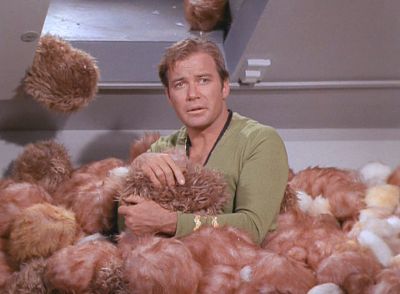
Now these have all been relatively minor gripes to quibble with. Fun fact: Quibbles are the Earth equivalent of Tribbles. Bonus fact: the most famous Quibble currently sits on the President of the USA’s head.
Tribbles: your reward for reading this far.
Quibbles and Tribbles aside, let’s talk about complaining about book reviews not being done the way you want, when you yourself don’t review books. There is that inspiring – or is that insipid? – quote about being the change you want to see which applies here. The author of the blog post has exactly zero book reviews on their site, not counting the promotion of reviews of their own novels. The author’s Goodreads page has no books listed as having been rated or reviewed.*** Do as I say, not as I do. I mean, sure, that isn’t demanding at all.
In summary, it’s best to be thankful for readers writing reviews, even the bad reviews.
*Let’s just ignore that the article in question wasn’t a book review but an article that was using famous books as examples to make a larger point. The poor dears are having enough problems with conflating reviews with promotion.
**Not sure this is still the case in 2017. It was the case for many years though.
*** Update: As of 2020, the author whose post inspired this piece has made a few changes to their Goodreads page. In June 2020, it appears they have added 11 reviews, ~90 ratings, and ~560 books to their read profile. No one star ratings, but plenty of ratings only “reviews”. I wonder if they saw this post and decided to walk the walk a bit more?
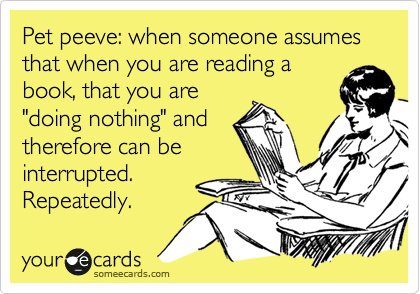
You’d think people would take a hint. If they were as interesting as the book we’d be talking to them. Kids are the worst for this. Second worst are the people who have left their book at home.
After the first nine plagues, is the tenth plague free?
A missing archeologist reappears out of the desert in a semi-mummified state. With him he brings a biblical disease that threatens to yadda yadda the world. A brilliant businessman has designs on using the disease for his own ends. Only Sigma can uncover the ancient McGuffin to you get the idea before ticking clock.
I’m going to preface this review by saying that I’m a long time fan of James Rollins’ blend of pseudo-science, mythicism, and tehcno-thriller. His Artefact McGuffin Adventures are usually very entertaining reads.
Here’s the but. I don’t know if I just had a lower tolerance for the narrative this time, or if Rollins has introduced a bash the reader over the head style to his writing now. Regardless, it is annoying and hackneyed, and something I’d expect from Dan Brown, not James Rollins. It makes you notice the other problems, like the factual errors in the story. The suspension of disbelief is always high with these sorts of novels, so to have Dan Brown-ified the writing lowers my enjoyment and rating.
An example of what I’m talking about was an exchange early on between the Sigma members about disease categories. We’ve just been told that this is a super deadly disease with X% death rate, and we’re then told the disease death categories, which again states this is super deadly. Okay, so us dumb readers need to be informed that this disease is really bad. But to imply that the Sigma team of science experts who deal with this sort of problem semi-regularly would have to be bashed over the head with the explanation the way they were is silly. I immediately had in mind four or five ways to write that section that weren’t out of character, repetitive, and mind-numbing to the reader.
That all said, this was still a reasonably well paced thriller, with decent tension, especially into the final act. If you like Artefact McGuffin Adventures, then this is an okay instalment.
If you kill enough people you become a god. Still makes you a jerk though.
Agents Will Brody and Claire McCoy are hunting a serial killer. But he is unlike any serial killer who has ever come before. He is always a step ahead. He has power. And he has help. I could give more away, but the title gives you the idea.
Afterlife is an intriguing book. The ideas underpinning this supernatural speculative fiction story are as original as you will see. And mixed with this are two interesting characters and their relationship. It hangs together nicely whilst not becoming bogged down with the sort of world-building that spec-fic can bore readers with.
That said, I almost gave up on this book. The first chapter didn’t grab me at all. It isn’t until later in the novel that you understand why that chapter is there at all. Similarly the semi-ambiguous ending may also throw some people given the setup prior to the penultimate chapter. These points, particularly the first one, could discourage people. Normally I don’t say this – since I’m big on giving up on books ASAP to make room for good books – but stick with this for a few chapters. Don’t be put off by the opener, it will make sense soon.
NB: I was provided a review copy of this novel in exchange for an honest review.











 Tyson Adams