Who Reads?

creative-bookshelf-design-ideas-43__700

Us readers know how awesome we are. And if we ever socially interacted with people everyone would realise that. We also want to know that we’re not alone. In a holistic sense. Obviously alone in the physical sense because otherwise, someone would try to interrupt our reading.

Sensing our need for connection to a nationwide community of book nerds, The Australian Arts Council commissioned a report to figure out who was reading books. The report surveyed 2,944 people to see who read, how much, how they found books, and whether they preferred waiting for the movie adaptation. Let’s see what they found.

Firstly they wanted to establish how often people read and how that compared to other leisure activities. Reading was obviously less popular than dicking around on the internet and watching TV, but apparently beat out exercise. Although they excluded sport, and Aussies have a funny definition of sport. But this finding is similar to 2006 ABS figures that suggest Aussies spend 23 minutes per day reading, versus 21 minutes for sport and outdoor activities, and 138 minutes for Audio/Visual Media (Table 3.3).

Screen Shot 2017-10-08 at 8.28.22 PM

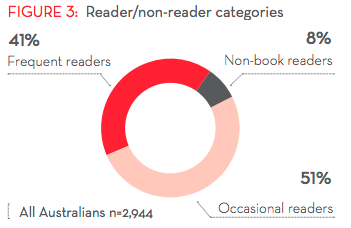
Next are the reader categories. Non-readers were actually a small group, mostly male and more likely to have less education (although I wouldn’t read too much into that last detail). Occasional readers made up half the population and were defined as reading 1 to 10 books in the last 12 months. Frequent readers were a surprisingly large segment, were defined as reading more than 10 books in a year, and were mostly female, older, better educated, and clearly better looking with tonnes of charisma.
Screen Shot 2017-10-08 at 8.28.32 PM

Screen Shot 2017-10-08 at 8.29.09 PM

Reading is to intellectuals what the bench press is to lifters. On the surface, they might appear to be a good representation, but most exaggerate how much to appear better than they really are. Oh, and they generally aren’t fooling anyone… So I’m a little suspicious of the popularity of reading suggested by the above figures.

For one, only 34% of Aussies have visited a library in the last 12 months (2009-2010 ABS data) and 70% of them attended at least 5 times. Yet this new survey suggests 39% of people borrowed one or more books from a library in the last month. That’s roughly comparative figures of 24% from the ABS and 39% from this survey.

I’m suspicious. This survey might not be as representative as claimed. Or reading may have suddenly risen in popularity since 2010… Doubtful given that both the ABS and this survey suggest otherwise. ABS suggested the amount of time spent reading had decreased by 2 hours between 1997 and 2006, whilst this survey suggested the book reading times were roughly the same as 5 years ago (Figure 8 – not presented).

The next figure of average reading rates either suggests Aussies are reading quite a bit, or inflating their numbers like an “all you” bench press. The average Aussie is reading 7 hours a week (5 of those for pleasure) and getting through 3 books a month (36 a year: not bad). Occasional readers are reading one book a month from 5 hours a week, compared to the Frequent readers who are reading 6 books a month from 11 hours per week (72 books a year: nice).

Screen Shot 2017-10-08 at 6.24.23 PM

But I’m not sure how accurate these claims are. I cited ABS figures above that suggested Aussies spend 23 minutes per day reading, or 2hrs 41mins (161 minutes) per week. So either one of these two samples is unrepresentative, or some people just love to inflate how much they read. I’m leaning toward the latter.* But you can trust me on my bench press numbers. Totally accurate and “all me”.

The final figure I found interesting was of favourite reading genre. When you included non-fiction and fiction genres there were two clear winners: Crime/Mystery/Thrillers; and Science Fiction/Fantasy.

Screen Shot 2017-10-08 at 6.25.07 PM

These are our favourites yet our bookstores would suggest that Sci-fi and Fantasy are niche and only deserving of a shelf at the back of the store. Cookbooks, memoirs, literature, and the latest contemporary thing that isn’t quite literature but isn’t exciting enough to be genre, are typically dominating shelves in stores. This would annoy me more if I wasn’t already suspicious of how representative this survey was, or how honest the respondents were being.

It could well be that people enjoy reading Thrillers and Fantasy but feel compelled to read other things. Maybe people are brow-beaten by the literary snobs to read only the worthy stuff and not the guilty pleasures. Maybe the snobs in Fort Literature have successfully turned favour against the invading Lesser Works. This might not be the case though, as 51% in this survey say they are interested in literary fiction but only 15% actually read it.

It could be that people are borrowing books from libraries or friends. Borrowing books is popular with 41% borrowing one or more books per month, mostly from friends (43%) and libraries (39%). But 39.5% bought at least one book in the last month (92% of 43% buying for themselves). So the tiny niche sections in bookstores for the most enjoyed genres still doesn’t make much sense.

I’m not sure what to make of all this. I mean, aside from Yay, Reading!

For comparison, the USA Pew Research’s 2016 annual survey of readers data is presented below. This suggests that Aussies read more than Americans. Assuming people are being honest.

This slideshow requires JavaScript.

“Key” insights from the Aussie research:

•  We value and enjoy reading and would like to do it more – 95% of Australians enjoy reading books for pleasure or interest; 68% would like to read more, with relaxation and stress release the most common reason for reading; and almost three-quarters believe books make a contribution to their life that goes beyond their cost. Over 80% of Australians with children encourage them to read.

• Most of us still turn pages but many are swiping too –  While print books still dominate our reading, over half of all readers in-clude e-books in the mix, and 12% audio books. Most Australians (71%) continue to buy books from bricks-and-mortar shops, while half (52%) are purchasing online. Word of mouth recommendations and browsing in a bricks and mortar bookshop are our preferred ways to find out what to read next. At the same time, nearly a third of us interact with books and reading through social media and online platforms.

•  We are reading more than book sales data alone suggests – each month almost as many people borrow books (41%) as those who buy them (43%) and second-hand outlets are the third most popular source for buying books (39%), after major book chains (47%) and overseas websites (40%). Those who borrow books acquire them almost as frequently from public libraries as they do by sharing among friends.

•  We value Australian stories and our book industry – 71% believe it is important for Australia children to read books set in Australia and written by Australian authors; and 60% believe it is important that books written by Australian authors be published in Australia. While there is a common perception among Australians that books are too expensive, more than half believe Australian literary fiction is important. Almost two-thirds of Australians believe books by Indigenous Australian writers are important for Australian culture.

•  We like mysteries and thrillers best – the crime/mystery/thriller genre is the most widely read and takes top spot as our favourite reading category. We also love an autobiography, biography or memoir. (Source)

* I’m biased toward the ABS survey results over the Australian Arts Council for a few reasons. The first is that the ABS data is part of a larger Time Use Survey (How Australians Use Their Time, 2006, cat. no. 4153.0), so this removes a few biases in how people would answer questions (i.e. ask people specifically about how awesome books are, you’re going to talk up your reading more). It is also the larger survey covering 3,900 households. The methodology was also more likely to produce better data since respondents were filling in a daily diary and being interviewed. The Arts Council methodology wasn’t bad, but the survey was developed by interest groups, so the questions were presuming some things.
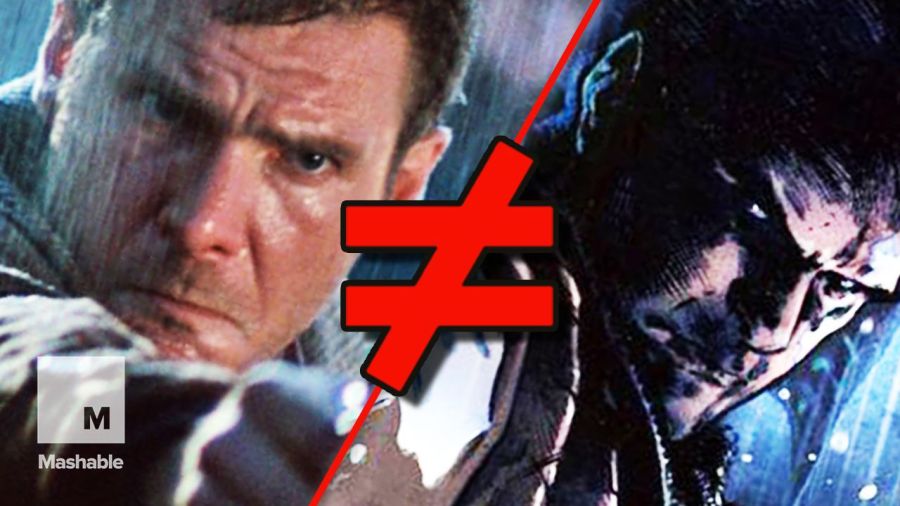
Book vs Movie: Blade Runner – What’s the Difference?

https3a2f2fblueprint-api-production-s3-amazonaws-com2fuploads2fvideo_uploaders2fdistribution_thumb2fimage2f819902f97f8b20c-fbe6-4286-ba92-722eb5dc6bd4

Since Blade Runner 2049 is coming out soon, CineFix have dedicated this month’s What’s the Difference? to breaking down Blade Runner and Do Androids Dream of Electric Sheep?

I can’t remember the first time I watched Blade Runner. I do know that it sucked. So that early experience was of a version of the movie that was about shooting androids rather than about empathising with them. I later watched the director’s cut and the Ridley Scott preferred version and concluded that this was a classic movie. I know, how prescient of me.

The novel, Do Androids Dream of Electric Sheep?, was something I read a long time ago. I have a very poor recollections of it, in fact the only bit I can remember was the section where Deckard hooks himself up to the Voight-Kampff machine. The idea of humans not really being able to empathise with others, that we are just playing a meaningless game of life, whilst other beings would love to be human, is an interesting idea I should probably revisit. I’m sure I’ll get a chance before 2049.

I also read the sequel, Blade Runner: Edge of Human, which was more a sequel to the movie than the book. Again it has been a long time since I read this. I have more memories of borrowing this from the library than I do of reading it. This sequel was a gritty crime noir that was all about hunting down androids, double crosses, and absolutely nothing deep and meaningful.

Blade Runner is a good example of the “inspired by” version of movie adaptation. Very little of the book remains in the film and you could be forgiven for thinking they were unrelated. Yet neither the movie nor the book suffer as a result. Kinda like the Bourne films. And like Bourne, you honestly wonder why they bothered licensing the property when the screenwriters took so little material from the book.

Book review: A Little History of Philosophy by Nigel Warburton

A Little History of PhilosophyA Little History of Philosophy by Nigel Warburton

My rating: 5 of 5 stars

If by doubting your existence you prove that your doubting thoughts exist, what happens if you then doubt your doubts?

A Little History of Philosophy is pretty much summed up by its title. It spends a chapter on each famous Western philosopher or movement (e.g. Aristotle gets a chapter; Sartre, Camus, and de Beauvoir share one) and takes a shallow dive into each. Nothing more, nothing less.

After recently reading Bertrand Russell’s A History of Western Philosophy I thought I’d read a book that covered the same topic with less of the surrounding history and more of the philosophy overview. Nigel Warburton does this well in a brief, clear, and accessible manner. A strength of the overview is how he ties theories and influences together (e.g. Brentham to Mill, Mill to Russell) so that you can see how thinking has evolved. A negative is the sometimes tenuous segues Warburton uses to end a chapter. Seriously, you really start to notice it and laugh.

This was a great way to dip my toes into philosophy. Between Russell and Warburton I feel I’ve been given enough to start the journey down the rabbit hole. Made me think.

View all my reviews

Book Review: Babylon’s Ashes by James SA Corey

Babylon's Ashes (The Expanse, #6)Babylon’s Ashes by James S.A. Corey

My rating: 4 of 5 stars

Take my love, take my land.
Take me where I cannot stand.
I don’t care, I’m still free.
You can’t take the sky from me.
No parallels at all.

The Free Navy have demolished Earth. They’ve taken over the system with their surprise attack utilising the latest Martian technology. Now Earth and Mars are fighting back. Cracks are appearing in the Free Navy’s plans, like the fact that they have wiped out food production and have 3 years left before humanity collapses. Great time for Marco – hubristic leader of the Free Navy – to pursue his grudge against Holden, Naomi, and the rest of the Rocinante crew.

I’ve been looking forward to reading Babylon’s Ashes since finishing Nemesis Games. The staging of a war, the political conflicts, the host of interesting and complicated characters; this was set to be a ripper of a novel. So I was a little disappointed and found myself plodding through some of the story.

This was partly my own fault, as I have less concentrated reading time currently. When I did get quality reading time the book was as entertaining as anything in this series. It was also partly that the character of Marco Inaros was fully revealed for a narcissistic authoritarian populist who is more intent on punishing minor sleights than running the galaxy (gee, wonder if he’s modelled after any particular political leader). It didn’t help that there was a tinsy bit of plot contrivance – albeit one that has had quite a bit of setup – in the final moments of the plot.

Despite these points, I did actually enjoy Babylon’s Ashes. It wasn’t the strongest instalment in The Expanse, but this still remains a stellar series.

View all my reviews

Reading is good for the brain…. d’uh

I may have mentioned it before, but I am a science nerd. It may also be painfully obvious that I like reading. And before you ask, yes I do wear glasses and own a lab coat. I can fancy dress as anything from a doctor to a scientist.

What I love about science is the way it goes about trying to understand the universe. In fact science even came up with a few studies on how reading is fantastic for you. Psychologists from Washington University used brain scans to see what happens inside our heads when we read stories. They found that ‘‘readers mentally simulate each new situation encountered in a narrative”. The brain weaves these situations together with experiences from its own life to create a mental synthesis. Reading a book leaves us with new neural pathways – although that’s hardly surprising nor unique.

Nicole Speer, also from Washington University, utilized brain-imaging to look at what happens inside the brains of participants while they read. She discovered that as people read, they are constructing a virtual reality inside their heads every time they read. That’s a fancy way of saying they imagined the stuff they were reading.

A reader’s brain in action.

So. The book is better… Who’d have thunk?

It is good to have some evidence that our brains get more out of reading. Without evidence, claims are not worth the air they consume. Just ask anyone who has tried to get conspiracy theorists to provide evidence for their claims.

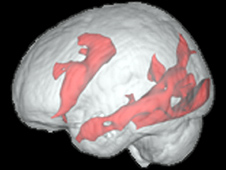
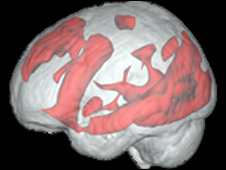
Another study scanned readers’ brains to see how reading compared to web browsing (reading plus).*

Each volunteer underwent a brain scan while performing web searches and book-reading tasks.

Both types of task produced evidence of significant activity in regions of the brain controlling language, reading, memory and visual abilities.

However, the web search task produced significant additional activity in separate areas of the brain which control decision-making and complex reasoning – but only in those who were experienced web users. (Source)

Brain activity in a personal not used to using the web while reading

Brain activity in web newcomers: similar for reading and internet use
Surfing the net brain in action.

The researchers said that, compared to simple reading, the internet’s wealth of choices required people to make decisions about what to click on in order to get the relevant information. So not only is reading good, but exploring and interacting with what you are reading is even better. Surfing the net, getting lost in a fictional world…. wait that is the same point twice. Anyway, it leads to even more brain activity.

Now before you all go in search of internet porn to enlarge your brain, remember that you’re meant to be reading the porn sites for the articles.


* It took me a bit of searching to find the original journal paper for this study. The BBC article and original press release were easy. A personal gripe of mine is when press releases and news articles fail to link to the original article so that we can fact check the claims. So as part of growing your brain with reading and internet browsing, please spend some time searching for and reading the original scientific papers that are reported. And if it wasn’t peer reviewed, then it could have been made up, like that rubbish about us only using 10% of our brain.

Book review: Gridlock by Sean Black

Gridlock (Ryan Lock, #3)Gridlock by Sean Black

My rating: 4 of 5 stars

That moment when you recognise an actor/actress but can’t admit it.

Adult film star Raven Lane has a stalker. Not the leave flowers kind of stalker, the kind that leaves bodies in the back of your car. The police are only mildly interested in catching someone killing people in the adult industry, so Raven hires Lock and Ty. Ryan Lock reluctantly takes the job, sensing that something is off about it all. There is. In the worst way possible.

It has been a while since I’ve read anything from Sean Black. His first Lock thriller novel was recommended to me by thriller author Matt Hilton, and I loved it. Sean has since branched out into writing a mystery-comedy series – Malibu Mystery – that I’ve got on my TBR (at some point I’m going to have to admit I have a book buying problem). Reading another Ryan Lock novel was like putting on a comfy pair of shoes. Sean keeps the narrative interesting, keeps the pacing fast, and isn’t afraid to land plot punches most authors would avoid.

Although, when Sean says he loves to do hands on research, I kinda wonder what he did for Gridlock.

Highly recommend this novel for thriller and crime-thriller fans.

View all my reviews

Valuable reading time

acf8512e10630f1720959e21e0c964f3

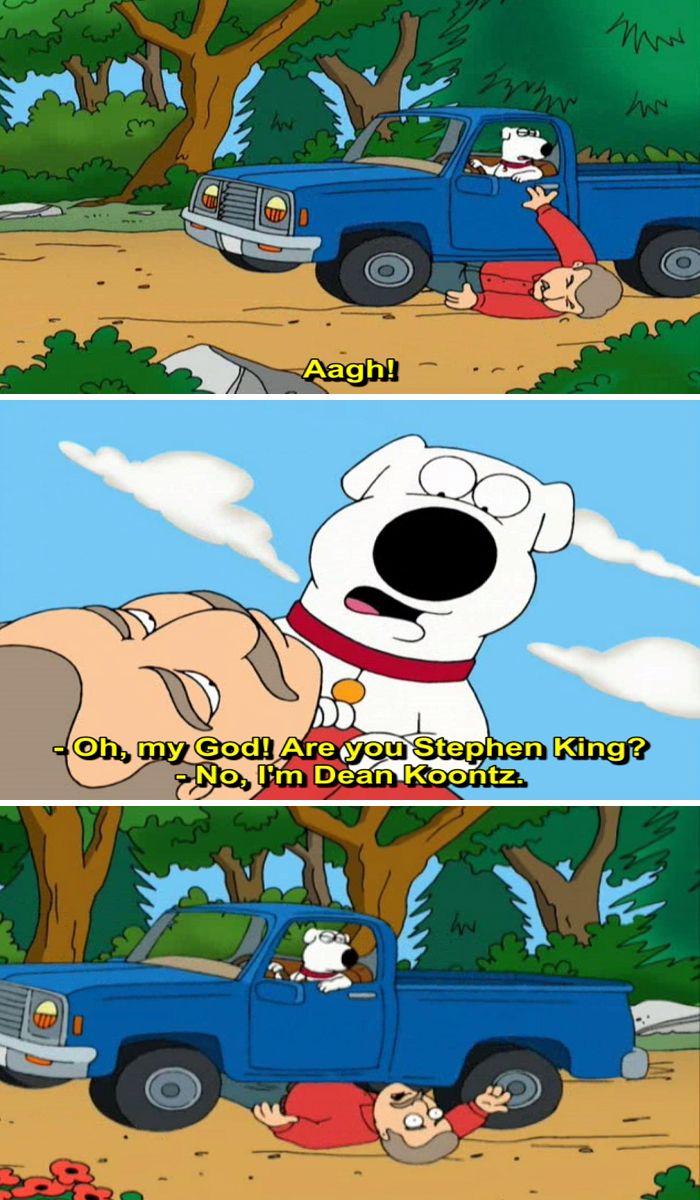
I love this bit from Family Guy. This isn’t the first time I’ve posted this pic. Last time I used it in a post musing why I hadn’t read more Dean Koontz novels.

Koontz acted as my archetypal author whom I haven’t read. We all have more books to read than we’ll ever have time to. So there will be some authors who we’ll gloss over or miss. I also made a point about not wasting time on bad books and mediocre authors. Being a nerd I used some math:

  • Let’s use two averages 50 books per year and 100 books per year.
  • Assume average reading lifespan is between age 10 and 80 = 70 years.
  • Assume you only read any one novel once.
  • Assume that you aren’t tragically hit by a car and can’t read.
  • Thus, in a reading lifetime you can read between 3,500 and 7,000 books.
  • There were over 300,000 books published in the USA last year. Over 8,000 in my home country of Australia.

If we do waste time on bad books then the list of authors we’ll gloss over will be longer. We may miss out on something we really love just so we can trudge through something we don’t.

But the best part of posting the pic last time was an author friend sending the post to Dean Koontz. And I still haven’t read Odd Thomas…

Book review: Peril at End House by Agatha Christie

Peril at End House (Hercule Poirot, #8)Peril at End House by Agatha Christie

My rating: 4 of 5 stars

If you try to kill someone five times and fail, does the intended victim have to at least feign injury?

Hercule Poirot the world’s best detective thought he had retired. Then a bullet intended for Nick Buckly lands at his feet. He can’t very well continue to modestly claim the title of world’s best detective if he doesn’t solve a case that literally lands at his feet, now can he?

I’ve not previously read any Agatha Christie novels, so it was interesting to galavant off to 1930s England for a mystery. It is hard not to be familiar with the Christie tropes, what with the countless plays, radio, TV, and movie adaptations, not to mention the imitators. But seeing the tropes in their original form was entertaining in and of itself, whilst also grounding a lot of the other works.

Recently I had the pleasure of seeing The Play That Goes Wrong. Probably one of the funniest shows I’ve ever seen, and one that wouldn’t have worked without the influence of Christie. That alone probably added to my enjoyment of this novel. And the mystery itself was actually quite well layered. So as long as you don’t mind the slight quaintness of the characters (rich English people from 1930s high society) and the tropes (let’s go to the drawing-room, sit around the log fire, and I’ll slowly reveal who did it) this is well worth a read.

View all my reviews

Book Review: No Time Left by David Baldacci

No Time LeftNo Time Left by David Baldacci

My rating: 1 of 5 stars

If you time travel how can you have no time left?

It is pretty hard to review this book without spoilers, and quite honestly you’ll want to read the spoilers so you won’t waste your time. This short story is about an assassin who is hired to kill his own mother in the past. He does so, he ceases to exist. End of story.

Don’t worry, I didn’t ruin anything for you.

This was so predictable as to be confusing. How could such a popular author churn out such a generic waste of space as this story? Baldacci offers no unique take on this well worn trope, he doesn’t give us an interesting character to follow, his story has massive plot holes, and he doesn’t even offer money back…. Okay, I did get this from the library, but I still feel he owes me money.

The positive reviews I have read for this story appear to be from long time fans. This is my third underwhelming outing with Baldacci. There won’t be a fourth outing.

NB: I do apologise for posting a negative review. Normally I avoid mentioning the books I haven’t enjoyed. I’m making an exception with this review because this story reeks of a big name author and their publisher putting out any old dross they feel like.

View all my reviews

Reading format

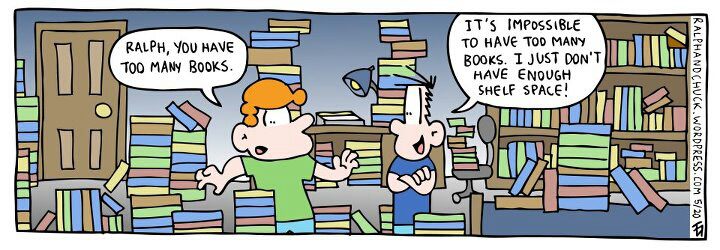
ralph-and-chuck-cartoon

One pointlessly heated discussion that seems to occur with painful regularity in reading circles is which book format is superior. Do you prefer audio, or digital, or paper, or papyrus, or clay tablets? Personally I can’t see anyone topping the long-term data retention of carving stuff into stone cave walls. Bit time-consuming for authors though.

When this discussion starts everyone rolls out their usual banal reasoning for their preferred format. Without fail someone will talk about the smell of dead tree books (DTB), or the feel of eviscerated tree flesh in their fingers, or refer to some dodgy research that denigrates e-books. For some reason the reading world is filled with technophobic troglodytes intent on proving that their old-fashioned way of doing things is better.

Currently I read books in three different formats: DTB, e-book, audiobook. I like reading all three formats and they have various advantages and disadvantages. I have many fond memories of dead trees. The time I used one to level a table with an uneven leg. The time I threw one at the TV on election night. The time I used a bag full of them to prop open a door with a hydraulic hinge. Good times. I’m sure I have some fond memories of e-books and audiobooks…

Let’s run through a few pros and cons of the three formats.

DTB Pros:

  • They are a book.
  • You can read them.
  • They make you look smart/nerdy when you have lots of them on shelves.
  • Can turn to the end of the book to see if that character actually died.

DTB Cons:

  • Being a physical entity they have to be physically moved to your house.
  • Generally more expensive than an e-book.
  • Are heavy and awkward to hold.
  • Hate having tea spilt on them.
  • Can’t stop a .45 slug, despite claims to the contrary.

E-book Pros:

  • They are a book.
  • You can read them.
  • When you want another you just download it instantly.
  • Everyone thinks you are reading the latest political biography when you are really engrossed in the love triangle between a teenage girl, a 100-year-old pedophile, and a smelly dog (yes I got dragged to the Twilight films by my wife).
  • Text can be resized.

E-book Cons:

  • E-books can’t be used to start a fire in a life threatening situation.
  • E-book files won’t be forever, but the database will be, which means updating your collection.
  • E-readers cost money too.
    • Dedicated e-readers are the domain of avid readers, everyone else can just read on their phone or tablet.
  • Hate having tea spilt on them.
  • E-readers are even less likely to stop a .45 slug.

Audiobook Pros:

  • They are a book.
  • You can read them.*
  • Can be read when you’re doing something else.
    • Exercising and reading is a personal favourite.
    • Certainly a better way to read when driving.

Audiobook Cons:

  • Can be expensive.
    • Are becoming cheaper in digital versions.
  • Some voice actors don’t have great voices, nor acting.
  • Takes longer to read… unless you read by sounding out the vowels still.
  • Are probably the least likely to stop a .45 slug.

What is my key point out of all of this? If you like reading you will like reading regardless of the format. The medium isn’t the message.

The reality is that we have to stop with the snobbery of the format wars. Every format has benefits to enjoy. Every person I have met who has bravely tried e-books and audiobooks has commented that they were unsure until they made the leap. Then they fell in love with all the formats.

I love books in all their forms, you should too.

*Yeah, go ahead and try and argue that point. I dare you.

Book to Movie: All You Need Is Kill – What’s the Difference?

maxresdefault

This month Cinefix’s What’s the Difference? tackles the underappreciated Edge of Tomorrow, and it’s source material, All You Need Is Kill. I’d so watch a film called All You Need Is Kill, even if it did have Tom Cruise in it.

Unfortunately I haven’t read the Manga, which appears to have some differences between it and the novel. I read the light novel of All You Need Is Kill before watching the movie. Whilst there are major similarities between the two, they are quite different. Edge of Tomorrow flirts with comedy, while anything with the title All You Need Is Kill is clearly going to have a darker tone. A film starring Tom Cruise is always going to have a Hollywood glamour to it that a novel can dispense with.

The biggest difference between the two is the ending. I said in my review of the film that they should have stuck with the book’s ending. The way the movie ended was the equivalent of “it was all a dream”, whilst the book ending had consequence and substance. Admittedly, watching Tom Cruise kill Emily Blunt would have had audiences outraged (#TeamBlunt) but I’m sure they could have deus ex machina-d something better than what was served up.

Interestingly, Hiroshi is writing a Manga sequel and they’ve announced a movie sequel. I wonder how similar those two will be?

Book review: A History of Western Philosophy by Bertrand Russell

A History of Western PhilosophyA History of Western Philosophy by Bertrand Russell

My rating: 5 of 5 stars

An important point was left out of this book: The history of philosophy is also a history of drunks.

Bertrand Russell has attempted to give a brief overview of the History of Western Philosophy. In this 900 page tome he touches on the major figures, major fields of thought, and the socio-political backgrounds that influenced (and were influenced by) them. Russell also offers up some critique on these aspects, because it wouldn’t be a philosophy book if it wasn’t doing so.

This description sounds like anathema to entertaining reading, and it would be if it wasn’t being tackled by someone like Russell. Bertrand has a very clear, concise, and accessible writing style, and is easily able to explain in plain language even the most complex of philosophical ideas. Normally reading philosophy reminds me of reading genetics textbooks, as it is overstuffed with pedantry and jargon, Russell makes it feel like he is uses no jargon or technical terms.

It should also be noted that Russell is snarky to the point that you find yourself having to laugh and share his comment with someone. His comments are withering and witty, but they also serve as a great way of highlighting the flaws with certain arguments or “great” thinkers. If there are a few takeaway points from this book it is that the great minds were way ahead of their time, but that those same minds were confined by the structures of their time. It makes you wonder how many of today’s ideas are going to look silly and biased to future peoples.

This isn’t really a book to read about certain philosophers, nor fields of thought. A History of Western Philosophy is more a cliff notes version of several thousand years of thinking. Definitely an emphasis on the history and context. And it is all viewed through Russell’s eyes, his snarky, snarky, eyes.

View all my reviews

That isn’t literature

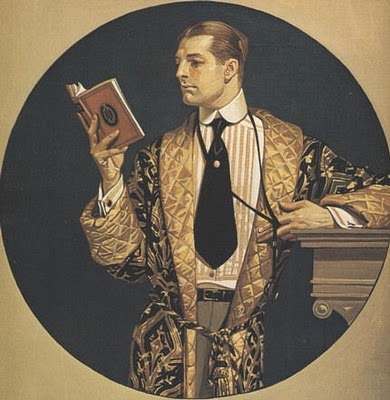
When I think of literature I think of an older guy sporting a greying moustache, sipping a sherry, wearing a smoking jacket, seated in a library of leather-bound books in front of a simmering log fire. The guy speaks with an aristocratic English accent and expounds on the greatness of some book that other older men dressed like him, sitting in similar log-fire warmed libraries, also like to read when not shagging the maid.

man-smoking-jacket
Aspiring literary snob reader

Now clearly not everyone who reads literature fits this image. Some probably can’t even afford a maid to shag. But it does appear to be an image that people aspire toward, an image that informs what they deem literature, and thus what they deem worthy of reading. Rather than judging any written work based upon its lasting artistic merit – although that definition is so subjective as to be useless and ideal for starting pointless arguments…. (cough) – people seem intent on creating boundaries before a work is allowed to be judged. They must defend Fort Literature from the invading Lesser Works.

Normally I’d launch into a whinge about how speculative fiction is unfairly maligned, or how I’ve read crime fiction that has more artistic merit than most literary works. But instead, I’m going to talk about graphic novels. In an article on The Conversation, Catherine Beavis explained how the graphic novel Maus came to be part of the literature curriculum.

Despite this explanation, there was always going to be someone in the comments telling us how a graphic novel can’t be literature. I assume they wrote their comments whilst wearing a smoking jacket and taking a break from shagging the maid.

Well well……..so it’s art as literature.

Why not a more well-known comic (sorry graphic novel).

Not saying this isn’t a worthy addition to any curriculum, but more as social comment rather than literature.

Surely the novels of great Australian writers should be preferable – Winton, Malouf, Carey etc.

Let’s break these points apart one by one. As will be seen from further comments, the argument primarily revolves around the feelpinion that because graphic novels contain pictures they are art and thus not literature. A similar argument could be made for movies being TV shows and thus we could abolish the Oscars… actually, that isn’t a bad idea. Anyway, I guess we’d better break the news to the literature professors that Shakespeare’s plays need to be taken off of the curriculum.

The argument then moves to the “I haven’t heard of it, so it can’t be good” assertion. Maybe because they realise this isn’t a great argument, they immediately distance themselves from it. But we start to see the worthy argument being formed. I’ve argued many times that worthy is a great subjective argument put forward by people who think they are worthy.

Of course, it wouldn’t be a literary argument if someone didn’t cite some authors they deem worthy. For those unfamiliar with Winton, Malouf, and Carey, they are award-winning Aussie authors who write “interior histories” and about “people rebuilding their lives after catastrophe” and “people who experience death and will never be the same again”. None of those statements could be applied to a graphic novel about someone who survived the Holocaust… No sir.

Their list of worthy authors is as subjective as their comments about graphic novels and Maus. I could similarly ask why the Hitchhikers Guide to the Galaxy isn’t on the curriculum. It has a lot to say about society and has entered the lexicon, which is more than can be said for any of the other authors mentioned nor the graphic novels being shunned. I could say the same again about Superman or Spiderman, which have implanted ideals and phrases of morality into society, regardless of whether people have read those graphic novels or not.

*Steps on soapbox*
I personally welcome any work into the class that will encourage kids to read, think and learn. And to anyone who derides graphic novels, they are clearly saying they don’t or haven’t read any.
*Steps down from soapbox*

The commenter responded to criticism of their subjective opinion:

That may be so, but my bigger point was that literature = words.

This is art with captions.

Not disputing that it may be hugely popular or good (even great)…
but literature it ain’t.

I think the appropriate response to this is a head shake. The problem is the black and white definition of what literature is, whilst ignoring the fact that the graphic novels fit the definition of literature. Pointing out the flaws in these opinions is as easy as saying that graphic novels, with very few exceptions, are composed of words. They also use graphics, but that is often a collaboration between the writer and the artists they work with. Thus, by the definition of “literature = words”, graphic novels are eligible to be classified as literature.

But anything to keep only the “worthy” books in contention as literature. Can’t have that kids stuff being called literary!

So I named three contemporary Australian writers – call me subjective.

I am not knocking the (art) form…just that it (to ME) is not literature.

Your opinion is obviously as valid as mine……don’t get huffy.

The last point here is one that irks me more than irksome irkers on an international irking junket. Opinions are not equally valid. That sort of subjectivism nonsense eats away at reality and suggests we “just don’t know, man”.

The commenter made a subjective list, so I put together some examples that were superior in quantifiable ways (impact on society, entering the lexicon, referenced by society) to show that the subjective claims were more worthless than a $9 note because clearly not much knowledge or thought was put into the claims.

There is also the idea of literary critique and argument, rather than stating feelpinions. I’ve stated an opinion and argued it, offering reasoning. The examples I countered with aren’t necessarily the best choices, but I have justified and quantified my argument, something you learn in high school literature class. Art Spiegelman won a Pulitzer, so clearly, someone in the literati agrees. And surely a Pulitzer prize winner is worthy of being on the curriculum. But of course all opinions are equally valid and “I’m entitled to my opinion”, dammit!

Surely the whole point of literature is that the reader has to imagine the scene described, the way words are spoken, the implications of what is said and much more. It’s all in the mind, which develops through reading.

A graphic novel presents the words and pictures with almost no imagining required. The number of words is hugely reduced to give way to often wasted space. In the example above there are 21 words, which if in normal lowercase type could be written in 10% of the space.

Sorry I’m not convinced graphic novels have any merit for senior students.

Shakespeare’s plays give stage directions and poetry is often deliberately obscure. So how do those examples fit this exclusionary definition of literature? I’m sure some artists would object to the idea that they aren’t conjuring a scene that develops in people’s minds. And is the idea to only allow readers to imagine a scene? Isn’t it about conveying ideas and emotions too? Isn’t this some great mental gymnastics to try to maintain Fort Literature from invasion by the Lesser Works?

The second paragraph is also exemplary of someone who hasn’t read many, if any, graphic novels. So, of course, this commenter wouldn’t be convinced that graphic novels are of any merit. First, they’d have to know something. But that doesn’t hold them back from commenting.

While I’m in the mood for alienating folks, let me also say that this is a good example of dumbing down literature.

Give the kids a picture with limited words and maybe they’ll get the idea.

Don’t kids these days have the attention span to read a novel?

The last graphic novel I read was 480 pages long and took many hours to read. It covered sexual identity, morality, the greater good argument, do evil deeds make us evil, etc, as issues. The last “literature” novel I read was about a woman who manipulated people to get what she wanted. It was ~300 pages long and took many hours to read.*

This argument is typical of people who have a snobbish attitude to something based upon pure ignorance of the topic. Similar statements have been made throughout time, decrying the dumbing down or declining standards of today’s youth. Oddly enough it has been proven false again and again only to be spouted once more.

XKCD on declining writing standards
See the full original here: https://xkcd.com/1227/

There is a similar article on The Spectator – a home for uninformed opinion – which argues that if we let graphic novels into literature we have to let in everything. They must defend Fort Literature from the invading Lesser Works. Maybe I’ll address that one at some stage when I’m feeling masochistic, but I’m going to leave it there. The maid has arrived.

*This comparison was true at the time of my original comments on The Conversation. I’ve read many graphic novels since, but no further literature novels.

Update: Nerdwriter made a particularly good video discussing Maus and how it is constructed as a story and piece of art. Every frame, every image, the whole page, has meaning. Kid’s stuff indeed.

Update: A great video essay about how you can’t judge art objectively.