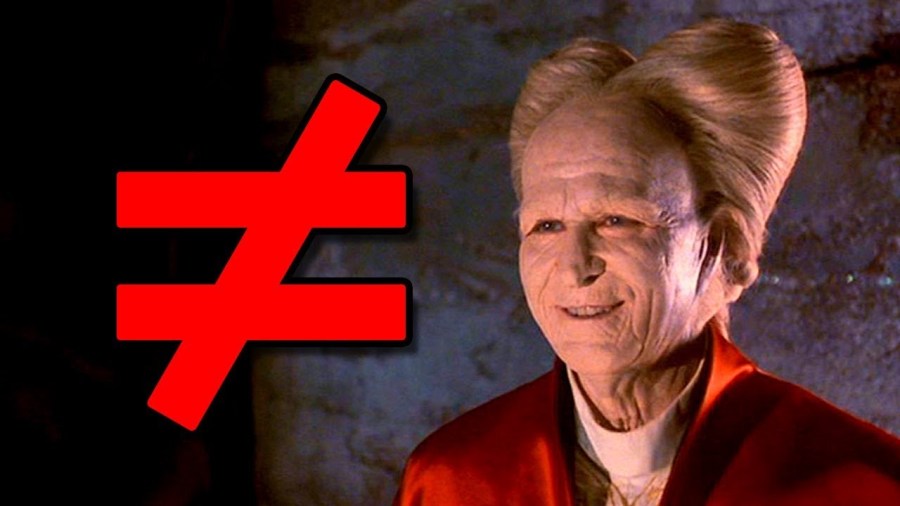
Since the annual American lolly festival is almost upon us, Cinefix is covering one of the classics. Bram Stoker’s Dracula and Francis Coppola’s 1992 Dracula.
Time for some straight talk. I don’t know how you discuss this particular adaptation without mentioning just how bad Keanu Reeves is in this film. Embarrassingly bad.
I actually tried to rewatch Dracula a couple of years ago and just couldn’t bring myself to sit through it all. Despite it being a bit of a who’s who of actors in the cast – and people like Tom Waits – it all feels so camp and silly. Even when I first saw it in high school, I remember Dracula being only average – with possibly the best visual explanation of the link between Dracula and Vlad the Impaler ever.
It is harder for me to talk about the book as I read it so long ago. And, let’s be honest here, I’ve since read way too many Anne Rice novels to not get the details confused. I read Dracula and Frankenstein at roughly the same time; because gothic horror novels are what pre-teen kids should be reading. Neither stood out for me as novels, but it is amazing how influential they have both been to genre fiction.
I wonder if there will be any modern equivalent. A novel that establishes an entire genre that is continuously reimagined, refined, and redefined such that we get analogues ranging from True Blood (coming out of the closet analogy) to Buffy (girl power).
‘Don’t do that! You’ll disturb the carpet people.’
The Munrungs have just had their village destroyed by fray, a natural phenomenon from above The Carpet. In the aftermath, Glurk and Snibril try to help their village flee the attacking Mouls, a people who regard all others as animals and rather good eating. It is then they realise that fray is pushing a path of destruction through The Carpet and that the Mouls are attacking every city and town in its wake. Can they save civilisation so that people don’t go back to hitting each other?
While I was reading this novel I kept having to remind myself that it was the heavily revised edition written by the 40-something Pratchett, not the 20-something of the original edition. This was Pratchett’s first novel and as an ode to fantasy fiction had just the right amounts of absurdism and humour, which I can’t see a 20-something nailing. If Pratchett was this good out of the gate then every other author would be left weeping into the keyboard. Hopefully, someone who has read both versions can point out the differences.
This is, of course, not a Discworld novel. Apparently, all reviewers have to point this out for some reason. As such, Pratchett’s style, particularly his satire, is less pronounced here. While I thoroughly enjoyed reading The Carpet People, for long-time Discworld fans this may feel a little light or insubstantial. Or maybe they just feel guilty about having vacuumed their house.
ABS brakes were the first step. The last will be us humans in observation cages next to the monkeys.
Jerry Kaplan is an expert in Artificial Intelligence and Computational Linguistics and attempts to guide the reader through what impacts AI and Robots will have on our future. In doing so, he raises many of the economic, ethical, and societal problems we are going to have to start addressing.
I first became aware of this book via CGP Grey’s short documentary of the same name (see below). To say there is a storm coming is an understatement. Kaplan guides us through the technological aspects of this topic with knowledge and skill. Where this book falls down is in his blind adherence to free-market solutions – ironically whilst pointing out several examples of where the free-market has failed in the past.
For example, some of his ideas about education are problematic. What he proposes with “job mortgages” is essentially traineeships and cadetships* that in my parents’ and grandparents’ generations were paid for by employers, with his modern twist being that employees should take out a job mortgage for. In other words, all of the cost and risk is moved from employers to employees.** How can anyone suggest that sort of thing as though they aren’t talking about slavery or indentured servitude?*** Sci-fi has been imagining that sort of scenario for decades and they weren’t calling it a good idea.
His comments about how rich people being in charge isn’t all bad, like back in ancient Eygpt… Because monarchies worked so well for everyone, who was a monarch.
Another gem was the idea that the free market could be in charge of wealth redistribution… Because it does such a great job of that right now. Now, in fairness, his plan was actually pretty good, but there were built in assumptions he didn’t really question despite laying out the framework with his discussion of automation taking our jobs.
Kaplan spent most of his book outlining what amounts to a post-scarcity world, a world where human “work” would essentially cease to exist, and thus cost, value and products become meaningless. How can you maintain our current economic system in that world? Don’t we need to be rethinking about what utopia we wish to design and the machines that will make that happen?
The final chapter has some interesting questions and ideas about what role humans can play in a world that the robots run and own. Whilst the ideas aren’t new, since science fiction has been prodding that topic for the best part of 70 years, he has grounded them in reality. If there is one takeaway from this book, it is that we all need to start planning the future now.
Overall, this was a fascinating book that is well worth reading.
* A point he acknowledges he is updating to be free-market and more “beneficial”…
** It could be argued that this has already happened and Kaplan is just taking it one step further.
*** Again, a point he acknowledges with reference to AIs becoming free of ownership.
Do sugar lumps disappear or were they never there in the first place?
Sam Vimes is making sure The Watch is moving with the times and keeping Ankh-Morpork in line when Lord Vetinari summons him for a new job: ambassador. He is despatched to Uberwald for the upcoming coronation of the Low King. It isn’t long before he is using diplomacy to take care of bandits, solve a mystery, break traditions, and stop a coup. As Vimes says, “So this is diplomacy. It’s like lying, only to a better class of people.”
The first Discworld novel I read was Guards! Guards! so the City Watch series are always among my favourites. The Fifth Elephant is more plot orientated than some other Discworld novels, so it feels more streamlined and ordered than some others. That doesn’t mean that the humour or satire are lacking, even if they can be a bit subtle at times (e.g. feudalism vs capitalism commentary is rife but takes a backseat to the plot).
I really enjoyed this novel. Nothing more to say really.
I wonder if new sex partners actually enjoy being told how much you love your ex?
In the affluent town of Paradise, someone has decided to start killing people. Two shots to the chest. The victims are unconnected and there are no clues for Jesse Stone to investigate. As the pressure mounts, he has to balance the murder investigation against getting justice for the rape of a high school girl, and his love life. Especially when one of Jesse’s sex partners becomes a victim of the serial killer.
I’ve been meaning to read some of Robert B Parker’s novels for quite some time. Parker was regarded as one of the best detective crime novelists in contemporary (American*) fiction, like Michael Connelly or James Lee Burke. I can see the similarities between Parker and Connelly, both having a relatively bleak and realism to their investigative tales. The life of an investigation is important to Parker and Connelly’s narratives, which often involves waiting on the lab results, or going home without having solved the crime, or going on a drive to chase a dead-end – a Connelly staple. Parker tends to pare back the prose, however, which made this feel like quite a short and fast-paced novel.
I’m not sure if Stone Cold is a good representation of Parker’s writing or not, but this was only a serviceable crime novel. Nothing really elevated it above okay to my mind.
*An important caveat that is often left out of these accolades for American authors.
Hank Janson spots an old friend who has a new mentalist act they claim is really clairvoyance. He offers to promote the friend and his female assistants’ act via a test. Meanwhile, a woman approaches Janson about helping her find her sister’s killer. Also meanwhile, another woman approaches Janson about helping her brother with a pornography conviction. Then finally, the police contact Janson about covering a gruesome suicide – no women needing help with this one, so he was a bit disappointed. How are all of these things linked? Janson intends to find out.
A friend from my writers’ group recommended the Hank Janson novels to me last year. Janson was the pseudonym of Stephen D Frances and was used as the main character in a series of highly successful pulp crime novels in the 40s and 50s. It is immediately obvious why these novels were popular: fast-paced, women wanting Janson, intriguing plot, women wanting Janson, noir sensibilities, and women wanting Janson.
Noir, particularly crime noir, doesn’t date as badly as some other genres. Even with the dated attitudes and ideas, Torment didn’t make you start shaking your finger in admonishment of the -isms on display. For example, a subplot about going to prison for possessing (run-of-the-mill) porn might seem ridiculous today, but it doesn’t feel odd here.
These re-released 50th Anniversary Janson novels by Telos Publishing are worth a read for anyone chasing a crime noir or great pulp crime novels from yesteryear.
Suddenly I have a sudden urge to suddenly write a review of this book. Very sudden.
Shane “Scarecrow” Schofield has been dispatched to Wilkes Station after receiving their distress call. Some of the Wilkes science team have mysteriously disappeared after finding an unidentified “alien” craft deep under the ice. His crack team of Marines arrive to find they aren’t the only ones who responded. Clearly, more than one nation are interested in securing the craft, less so rescuing the scientists. With no support, and enemies coming from everywhere, Scarecrow will have to stay alive long enough to be in even more danger.
I can’t remember exactly when I first read Ice Station, but it must have been roughly a decade ago. It has been interesting to revisit a novel I enjoyed from an author who reinvigorated my love of reading. Some books lose their magic the second time around, and Ice Station, despite its fun and fast-paced narrative, wasn’t the novel I remembered.
Ice Station was still entertaining but the flaws stuck out this time. I found myself laughing a little bit every time Reilly used the word sudden or suddenly. I’m not sure if I’m being too harsh or too forgiving – I derided a book for using a phrase I saw in this book – so I’ll have to revisit all of Reilly’s novels to check.
This month’s What’s the Difference? from Cinefix covers Fear and Loathing in Las Vegas.
This month I’m just sharing.
Yep, that means I’ve neither read the book nor watched the movie.
Feel superior in the comments.
20 years ago a new generation was introduced to the peak of Gonzo Journalism with Terry Gilliam’s adaptation of Hunter S. Thompson’s Fear and Loathing in Las Vegas. Really great filmmakers have tried and failed to bring the savage journey into the American Dream, so what makes Terry Gilliam’s version so successful? Time to get cracking and ask What’s the Difference?!
Zen in the Age of Anxiety is a guidebook and teaching manual that focuses on how to deal with stress, anxiety, and address the underlying mental behaviours that cause them. Burkett lays out the teachings and key points with easy to follow explanations and a series of anecdotes from his +50 years as a Zen practitioner and draws on his background in psychology.
This was a very interesting book. I originally borrowed a copy from the library because I’d previously read Lao Tzu’s Dao De Jing. Okay, a bit of a leap between the two, but Zen teachings have their roots in Buddhism, which in turn has roots in the Dao (Tao), something Burkett mentions in passing. There are a lot of helpful insights and practices in this book that could help most people in their lives. At the very least, it was interesting to read something with such a different perspective on life.
My only gripe was a minor one. A lot of practices and philosophies, especially those with “Eastern” origins, tend to be tied up with spiritualism and mysticism. As a result, there tends to be a blending of nonsense (both ancient and modern) with the good stuff. As an example, in a later chapter, there is an example given that involves an analogy with how vaccines and homoeopathy work. Except that it incorrectly describes how vaccines work, and incorrectly describes homoeopathy as working at all. So best to use a critical eye when reading.
With the rise of social media and smartphone use, we are all reading fewer books than we once did. All, not just those pesky millennials. Some people are worried about what this means for the future of literature and, well, our brains. But is it true that we are really reading less? And should I care?
Above The Noise recently did a video in which Myles covers some of the research on reading.
I always appreciate it when a Youtuber or Journalist manages to discuss a topic without devolving into head-shaking admonishment, especially when it comes to the topic of reading and books. Too often these sorts of videos and articles cite bad research or buy into industry propaganda.
And yet, there were still some things in the video that I hadn’t been aware of. So I think it is worth sharing. Enjoy.
From the video:
Reading has been an important part of the human experience for thousands of years, but believe it or not, that’s not a long time on the evolutionary timescale. Before the internet, it made sense to read long texts in a linear fashion, but that’s now changing as people are adapting to skimming shorter texts on their computers or phones. But what does this mean for the future of books?
What is literary reading?
Literary reading is, quite simply, the reading of any literature. This includes novels, short stories, poetry, and plays.
Are we reading less?
The rate at which Americans are reading literature for fun is down around 14% from the early 1980s. This doesn’t necessarily mean we are reading less, however. Many people still have to read for school or work. Then there are all the words, sentences, and messages we read on the internet from emails to texts to tweets. Some people believe that this means we are possibly reading more individual words than ever. It’s just being done in a different way. I’ve also discussed the decline of literature.
And this is changing our brains?
Some neuroscientists believe that scanning shorter texts the way we do on the internet, often jumping from hyperlink to hyperlink, is actually changing the wiring in our brains. We are becoming better at searching for key terms and scanning for information, but this means it can become more difficult to read a longer text all the way through without missing major points.
Apparently, covert operations groups keep an eye out for future killers on lacrosse teams.*
Mitch Rapp lost his high school sweetheart in the Pan Am Lockerbie terrorist attack. He then dedicates himself to becoming a covert operative to kill terrorists rather than grieve and move on to a professional sports career. For some reason, the government decide Rapp is totally mentally stable and they should train him to become an assassin and hope that decision doesn’t backfire.**
Okay, so I’m being a little unkind in my review of American Assassin. Flynn’s book is a pretty solid thriller with plenty of action. It avoids the common flaw of these sorts of thrillers by not painting the terrorists as one-dimensional zealots. Even the decidedly gauche flag-waving moments that any book with “American” in the title is obliged to have are well handled. As long as you accept the basic premise – that Rapp is awesome because everyone around him says so, despite Rapp himself being a rather bland character – you have a good time.
But ultimately this book fails to actually put a character arc in for Rapp. College athlete turns into an assassin should involve some sort of an arc, but Rapp just kinda glides through. At some points, Rapp is even described as not pushing himself, because this gruelling training is just that easy for him. That makes American Assassin all feel a bit flat.
*Think how many school shootings they’d be preventing if they were keeping an eye out for budding killers!
**Which it kinda does. I don’t know what happens in later books in this series, but you’d have to conclude from this one that Rapp will be a loose cannon.
So now you want to ride with me. I’m sure I won’t regret this…
John Russell is headed back to “civilisation”* on the last stagecoach headed north. Some of the folks onboard think Russell is an “Indian”* and don’t want to ride with him. But when bandits come for the stolen money one of the other passengers has with him, suddenly they want to ride with Russell.
Since this is an Elmore Leonard story, I really expected more from it. There isn’t anything bad about it, but this is far from Leonard’s best. It reminded me of a collection of Leonard’s short stories I own and how his best stories were immediately memorable, while the rest feel like just so many words in comparison.
It surprised me to learn that this story was turned into a Paul Newman film in the 60s. Given the positive reviews the movie has, it may be better than the book.
*I’ve used these terms as they relate to the text despite them being inaccurate.
This month Lindsay Ellis discusses the Literary Cannon, or how books become “worthy“, in It’s Lit.
I swear that when I started posting these videos that I didn’t know the series would cover one of my pet topics. Worthiness, important books, snobbery, guilty pleasures, are all things I love to bang on about. This video feels like a worthy addition to my posts on the topic.*
Let’s explore what makes a book “important.”
Literary critics, writers, philosophers, bloggers–all have tried to tackle where and why and how an author may strike such lightning in a bottle that their works enter the pantheon of “Classical Literature”. Why this book is required reading in high school, why other books are lost to history.
It’s Lit! is part of THE GREAT AMERICAN READ, an eight-part series that explores and celebrates the power of reading. This all leads to a nationwide vote of America’s favourite novel. Learn More Here: https://to.pbs.org/2IXQuZE
That moment when you realise there is an age-old profession for people who want to tell others that their way of thinking is the best.
Great Minds of the Western Intellectual Tradition is an 84 lecture course on Western Philosophy. It covers the usual suspects while drawing in contemporary or subsequent criticisms, and it also adds in a few more modern thinkers (see links below for the full list). There is the added benefit that no one lecturer covers more than a few topics, so you get many perspectives and expert insights.
I’ve been on the road a lot lately and so +40 hours of audiobook seemed like a suitable way to keep myself entertained. There is also a good chance I learnt something, even if that thing was that even university lecturers pronounce Satre and Nietzsche incorrectly, just like everyone else.
It’s hard to offer up a substantial review of such a diverse mix of topics, lectures, lecturers, and background reading. I think some of the material was presented without enough critical examination (e.g. Nozik’s propositions are only dealt with on a superficial level and aren’t critiqued for how easily they would break down thanks to power accumulation), whilst other parts offered insights I wouldn’t have made otherwise (e.g. Nietzsche’s Ubermensch is clarified as being about “your best self”, which makes his work much more palatable).
The summary I’d offer is that I feel more educated. Do the course and you’ll understand how hilarious that sentence is.
Is this the real life? Is this just fantasy? Caught in a landslide, no escape from reality. Open your eyes, look up to the skies and see… Some really awesome stories.
This month’s It’s Lit with Lindsay Ellis covers the much-maligned genre of fantasy.
Fantasy is a lens to explore what we as a society find important to our pasts, our presents, and future. Fantasy and science fiction often fall under the umbrella of “speculative fiction” – as a result they are often grouped together, especially in bookstores. But science fiction is a forward-looking genre propelled by the possibilities of technology (and the things that worry us about it), fantasy is … more backward looking.
Future slavery gets around slavery laws by cleverly using a different word.
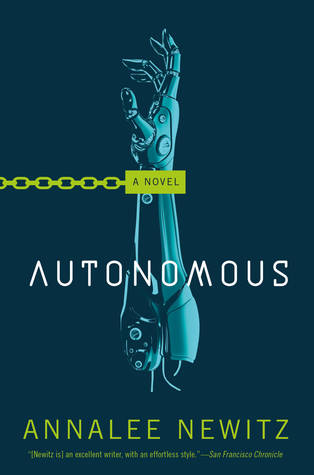
Jack reverse engineers pharmaceuticals so that poor people can afford life-saving drugs. She reverse engineered a new wonder work drug but finds out too late that a BigPharma company made it 100% addictive, and now people are dying. In this (dystopian) future, intellectual property and patents are protected by private armies with killer robots. One agent and his bot, Eliasz and Paladin, are hunting Jack down for her crimes as she is desperately trying to engineer a treatment for the addictive drug.
This book was difficult to review. As a novel, the writing, plotting, characters, and themes are all interesting and well done. On that basis, it is a solid 4-star book. But there was quite a bit about the premise and key plot devices/points that had me making squinty faces as my scepticism was triggered. And the more I think about those points and the premise, the more flaws I see with them.
For example, slavery is a theme discussed for humans and bots – giving rise to the title of the book. In the future companies and governments were so clever they were able to reintroduce* slavery by calling it “indentured”. This felt lazy and unrealistic. Especially since there was another part of this idea explored with franchising – parents paying to set their kids up with an education and ability to get a job – that extrapolates on the current situation for haves vs have-nots and draws upon the criticisms of capitalism. To my mind, the two ideas don’t sit together that well and meant the latter idea was wasted.
Others had some interesting things to say about the bot-human relationship. Suffice to say, it could have been done a bit better.
I suppose I was disappointed with this book. For a novel that was so well written and had clearly had a lot of thought put into it, Autonomous just couldn’t manage to drag itself away from lazy anti-corporate conspiracy ideas to the more interesting material it had on offer.
Reading old books reminds you that nothing has changed.
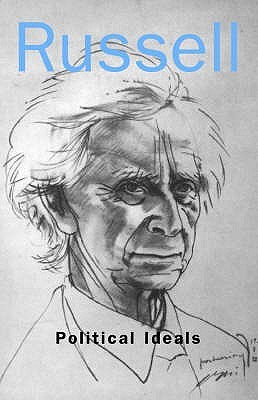
Political Ideals is an essay Bertrand Russell wrote during World War 1 – stay tuned for WW3 – that offers critiques of capitalism, socialism, nationalism, politics, education, and offers insights into how we should go about building a better society. He does this in less than 100 pages.
Russell’s essay is filled with interesting and insightful ideas. Even if you disagree with any of them, there is value in engaging with what he is saying. E.g.:
“Few men seem to realize how many of the evils from which we suffer are wholly unnecessary, and that they could be abolished by a united effort within a few years. If a majority in every civilized country so desired, we could, within twenty years, abolish all abject poverty, quite half the illness in the world, the whole economic slavery which binds down nine-tenths of our population; we could fill the world with beauty and joy, and secure the reign of universal peace. It is only because men are apathetic that this is not achieved, only because imagination is sluggish, and what always has been is regarded as what always must be. With good-will, generosity, intelligence, these things could be brought about.” Source.
This quote has been paraphrased, rephrased, and appropriated by many in the last century (although, I’m sure these thoughts weren’t original when he wrote them). It shows Russell’s reputation as a founder of modern analytic philosophy and as having made significant contributions to many subjects is well deserved. Few could so concisely state such a complex social idea.
Worth a read, even if you disagree with Russell on some or all points.
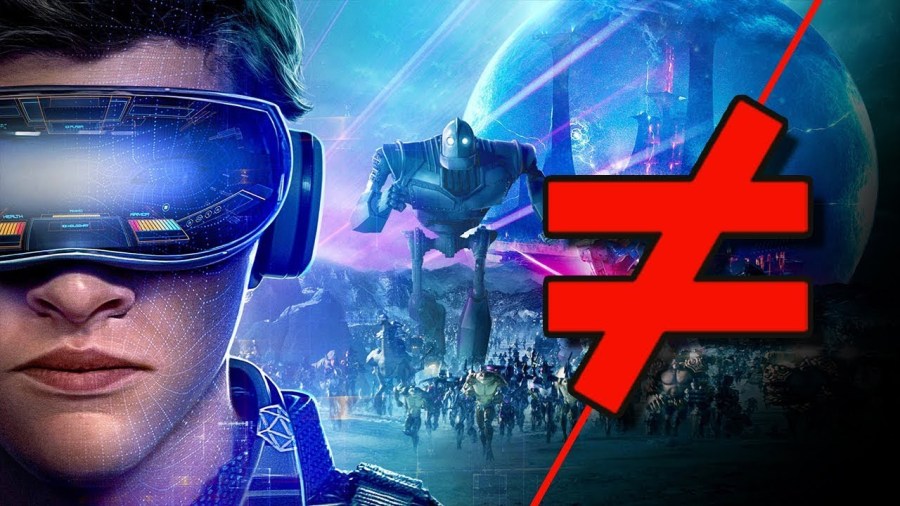
This month’s What’s the Difference? from CineFix covers Ready Player One.
Normally I’d add a few comments here about what I thought about the book and/or the movie, particularly the adaptation. But Ready Player One falls into an odd realm for me. I’d initially had the book on my TBR pile but ended up removing it after a discussion at a writers’ group. The gist was that the book is a great example of the “you’re not a real geek” toxicity that pervades geek culture, exemplified by rating pop culture references.
Then when the movie trailers came out, it too looked like one long list of pop culture references that only true geeks would appreciate… By appreciate, I mean argue and post overanalysed articles and Youtube videos online for weeks after most people have moved on.
Hey look, here’s a video of all the pop culture references:
This is a roundabout way of saying I haven’t read the book nor watched the movie, nor do I feel particularly inspired to do either. Enjoy the video anyway.
Update – This covers Ready Player One from a writer’s perspective:
Further Update – This video expands on my point above about toxic geek culture with reference to GamerGate.
Oppose the gravitational force with your phalanges if you value science.
Science communicator Neil deGrasse Tyson understands that most people don’t have time to read physics books – plus they are hard work to read. So he decided to package together some of his essays into a book that covers the major aspects of astrophysics in a way anyone could enjoy and learn from.
While reading this book I had a revelation. Could there be an explanation other than Dark Matter and Dark Energy for the gravity and expansion of the universe?
I’m going to propose Pratchett’s Theorem as an alternate hypothesis for the expansion of the universe and gravity. Since the universe is flat and there are unexplained gravity and expansion, I postulate that this flat universe is riding on the backs of four large elephants. This explains the gravity pulling everything down. These elephants are riding on the back of a large turtle who swims through the multiverse. The elephants are slowly moving away from one another – which explains the expansion – and walking down the curved shell of the turtle such that each step is larger than the last – which explains the increased speed of expansion.
This, of course, raises the questions of whether it was the elephants who were the prime movers behind the “Big Bang”, whether the elephants will keep walking down the shell until they fall off tearing the universe to shreds, or whether the elephants will eventually decide to walk back toward one another for a reunion? Do they also walk directly away from one another, or do they walk around the shell, such that the universe rotates? Given everything within the universe rotates, it would only make sense that this rotation is caused by the elephant’s motion.
Anyway, NDGT’s book was a good read. It doesn’t dumb things down, nor use too many lay terms, which was refreshing. But as a scientist, albeit in a completely different field, it felt like the book was aimed at a more general audience, particularly those who aren’t familiar with many of the topics discussed. Which made it only a good but not a great read for me.
Witches ride on brooms and wizards hold a staff in their hands. Nothing phallic about that.
Eskarina “Esk” Smith was born the eighth son of the eighth son and was bequeathed Drum Billet’s wizarding abilities and staff. Minor mixup. Esk is a girl. But too late for any take-backs, Esk’s magical talents have her training with Granny Weatherwax in witching. This isn’t enough for Esk as she is meant to be a wizard, she has the staff and everything, so she journeys to the Unseen University for training.
I’ve come at the Witches instalments of Discworld backward. The first one I read was The Shepherd’s Crown, Pratchett’s last novel before his death, in which Granny Weatherwax dies.* So to come to the first was overdue. I was somewhat disappointed with The Shepherd’s Crown – probably because it was unfinished in terms of Pratchett’s usual revision process – but not so with Equal Rites. This was highly enjoyable and tackled some interesting tropes of fantasy, as well as plotting the rise of grrl power on the Disc.
*That isn’t a spoiler, it’s pretty much the first chapter.**
**Not that Sir Terry was a big fan of using chapters, but you take my meaning.













 Tyson Adams