Witches ride on brooms and wizards hold a staff in their hands. Nothing phallic about that.
Eskarina “Esk” Smith was born the eighth son of the eighth son and was bequeathed Drum Billet’s wizarding abilities and staff. Minor mixup. Esk is a girl. But too late for any take-backs, Esk’s magical talents have her training with Granny Weatherwax in witching. This isn’t enough for Esk as she is meant to be a wizard, she has the staff and everything, so she journeys to the Unseen University for training.
I’ve come at the Witches instalments of Discworld backward. The first one I read was The Shepherd’s Crown, Pratchett’s last novel before his death, in which Granny Weatherwax dies.* So to come to the first was overdue. I was somewhat disappointed with The Shepherd’s Crown – probably because it was unfinished in terms of Pratchett’s usual revision process – but not so with Equal Rites. This was highly enjoyable and tackled some interesting tropes of fantasy, as well as plotting the rise of grrl power on the Disc.
*That isn’t a spoiler, it’s pretty much the first chapter.**
**Not that Sir Terry was a big fan of using chapters, but you take my meaning.
If you get to the point does that make you bourgeoisie?
Karl Marx’s classic text is a historical, economic, sociological, and philosophical work. Marx tries to show the ways in which workers are exploited by the capitalist mode of production and argues that the capitalist system is ultimately unstable because it cannot endlessly sustain profits. And this takes 1,100 pages to say.
Since it has become popular to call anyone left of a third-generation venture capitalist with their cash in the Caymans and their Nazi gold in a Swiss vault a communist, I thought it was time to read some Marx. That way when people call someone a Post-Modern Marxist Communist I’ll have some idea of how little they know what any of those words mean.
I was actually surprised by this book since it was completely different from what I had expected. The sort of book I had been expecting was a philosophical or ethics text, instead, this is much more a history and economics book. The historical notes documented in Das Kapital are worth reading alone. They act as a reminder of what working/slavery conditions were deemed acceptable, and how similar the arguments from then are to the defences of sweatshops in poorer nations today.
But this book takes the long way round to make its points. If it had instead made its arguments and then offered up one example, then some appendixes, I’d have “enjoyed” this more. Too often it gets bogged down in labouring* the point rather than documenting history or encouraging you to join a union. Worth reading, but be prepared for a lot of waffle.
Romance is one of the biggest selling and most popular genres, that apparently nobody reads…
The closest I come to reading romance is the Mercy Thompson series, so I’m not qualified to discuss it. Fortunately, PBS’s series It’s Lit has Lindsay Ellis to discuss it.
What actually makes a romance novel?
The romance novel has been the subject of intrigue, derision, and shame in literary discourse long before the modern genre as we know it today existed. Romance novels are relegated to your Aunt Muriel’s bathroom, thrift store book sections, and that one aisle in Barnes and Noble that you pretend to walk through because you got “lost” looking for cookbooks. But it deserves a closer look than that – it is after all the highest grossing of all literary genres, out-selling its next nearest competitor twice over.
Vote on your favorite book here: https://to.pbs.org/2Jes2X5 It’s Lit! is part of THE GREAT AMERICAN READ, a eight-part series that explores and celebrates the power of reading. This all leads to a nationwide vote of America’s favorite novel. Learn More Here: https://to.pbs.org/2IXQuZE
"Hello! Do you have a minute to talk about Dracula?" "No- wait, Dracula?" "Yes!" "You're vampires?" "Yes. We have pamphlets." "Vampires have missionaries?" "Where else would new vampires come from?" "I assumed you bit people." "There are many hurtful stereotypes. May we come in?"
— Micro Flash Fiction (@MicroFlashFic) July 26, 2018
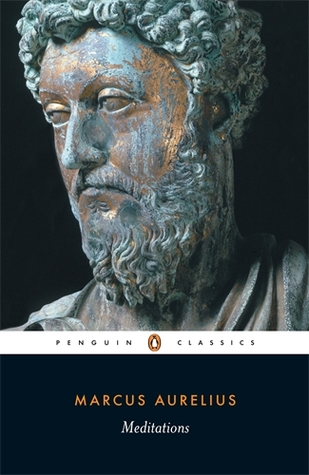
“To read carefully, and not to be satisfied with a superficial understanding of a book.”
[Insert superficial overview of Meditations here]
Meditations were something Marcus (we’re on a first name basis here) wrote for his own moral improvement, to remind himself of and cement the Stoic doctrines he wanted to live by. Things like the world is governed by Providence (which certainly lets him off the hook for all those people fed to the lions during his reign); that happiness lies in virtue and your will to follow it; and that you should not be angry at others. Journalling of this sort was something Epictetus advised, which has resulted in a collection of notes, reminders, aphorisms, and slogans for every occasion.
There is a lot to like about Meditations. It felt like a self-help book but written with a more philosophical bent and less of the “you too can achieve greatness (and give me lots of money) if you follow my twelve rules for life”. It isn’t without problems, such as those outlined in Russell’s History of Western Philosophy. I also found Marcus’ musings on the Deliberative Content Problem to swing between ideas and thus come off as confused.
This is my second major reading of Stoic philosophy. I’m coming to the conclusion that Stoicism does seem to have a lot to offer.
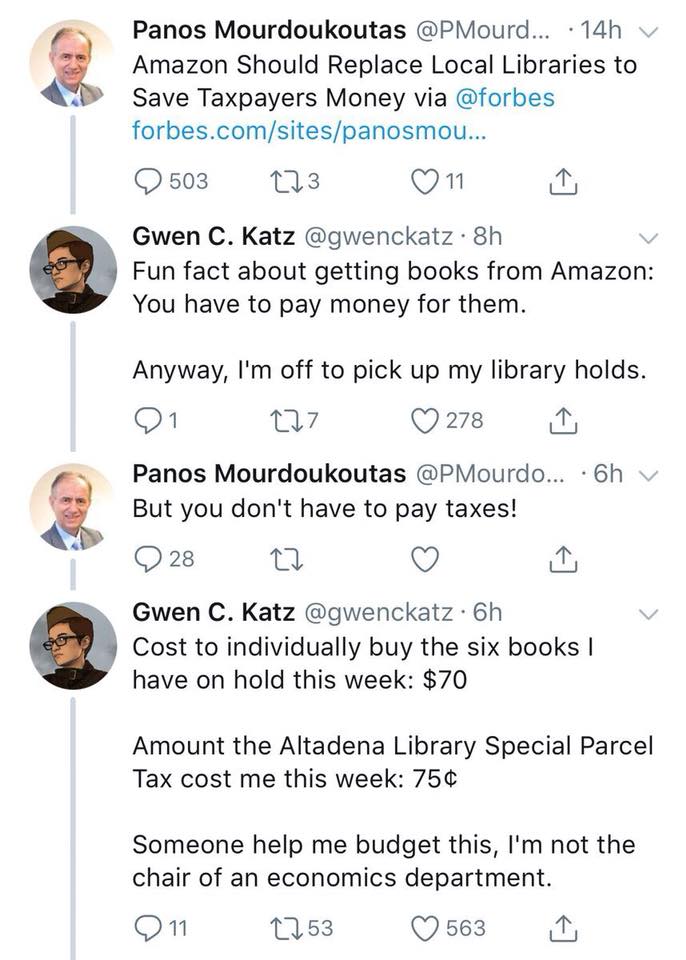
Most people who like their books and reading will probably have heard about an article in Forbes attacking libraries. I thought I’d present the article and a few rebuttals here, because I like libraries and books and how badly the author of the piece fared.
Amazon Should Replace Local Libraries to Save Taxpayers Money
Amazon should open their own bookstores in all local communities. They can replace local libraries and save taxpayers lots of money, while enhancing the value of their stock.
There was a time local libraries offered the local community lots of services in exchange for their tax money. They would bring books, magazines, and journals to the masses through a borrowing system. Residents could borrow any book they wanted, read it, and return it for someone else to read.
They also provided residents with a comfortable place they could enjoy their books. They provided people with a place they could do their research in peace with the help of friendly librarians. Libraries served as a place where residents could hold their community events, but this was a function they shared with school auditoriums. There’s no shortage of places to hold community events.
Libraries slowly began to service the local community more. Libraries introduced video rentals and free internet access. The modern local library still provides these services, but they don’t have the same value they used to. The reasons why are obvious.
One such reason is the rise of “third places” such as Starbucks. They provide residents with a comfortable place to read, surf the web, meet their friends and associates, and enjoy a great drink. This is why some people have started using their loyalty card at Starbucks more than they use their library card.
On top of this, streaming services such as Netflix and Amazon Prime have replaced video rentals. They provide TV and movie content to the masses at an affordable rate. Actual video rental services like Blockbuster have gone completely out of business.
Then there’s the rise of digital technology. Technology has turned physical books into collector’s items, effectively eliminating the need for library borrowing services.
Of course, there’s Amazon Books to consider. Amazon have created their own online library that has made it easy for the masses to access both physical and digital copies of books. Amazon Books is a chain of bookstores that does what Amazon originally intended to do; replace the local bookstore. It improves on the bookstore model by adding online searches and coffee shops. Amazon Go basically combines a library with a Starbucks.
At the core, Amazon has provided something better than a local library without the tax fees. This is why Amazon should replace local libraries. The move would save taxpayers money and enhance the stockholder value of Amazon all in one fell swoop.
As you can see, this article was terrible. The arguments are the sort you hear from the “let’s privatise everything” and the “what do you mean you won’t pay for the privilege of working in my asbestos mine?” crowd. They don’t believe in public goods, public benefits, nor that poor people are people.
Needless to say, the author of the piece proceeded to be mocked and ridiculed.
I hope he didn’t go to a public hospital for treatment of that burn.
To spell it out, Panos’ argument forgets that Amazon is a company whose goal isn’t to provide books to people, instead their goal is to make money. A library, however, is there to provide a community benefit of knowledge, education, and entertainment. Libraries are a key tool in creating a literate populous who are better able to contribute to our society. Plus, they have books. Books are awesome. Anywhere with books is awesome.
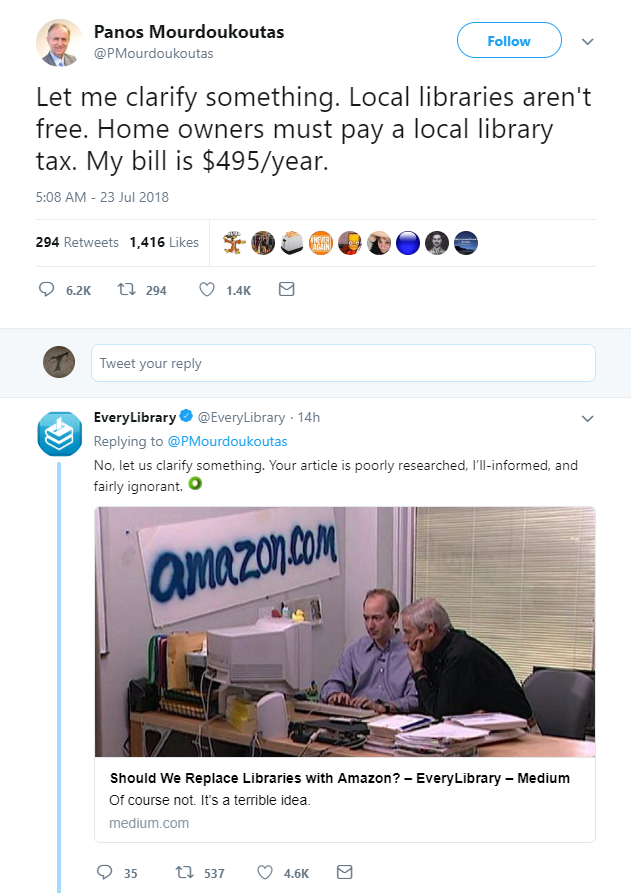
Panos, of course, couldn’t admit he might have made a mistake.
Seriously, EveryLibrary keeps going in showing how bad his research is.
I have no idea how he became a professor.
The desperate and nonsense defence he used for the cost of libraries was immediately debunked by the librarians at EveryLibrary:
There are, of course, many problems with this idea. First of all, libraries cost the average American taxpayer over 18 years old just $4.50 per month. An Amazon Prime subscription alone is nearly double that price and you get very little for free with that subscription because you still have to buy books or pay more to gain access to premium goods or services. Source.
Amazingly enough, Panos was correct in claiming that our taxes pay for libraries… This is the sort of insight I think only a Professor of Economics could give us. But he has rather overstated the cost of libraries (unless he has 10x the average property portfolio) and failed to understand how much buying books costs.
The USA does things a little differently to what we do here in Australia. The USA ties library funding to levies and property taxes, so richer areas get nicer better-resourced libraries, whilst poorer areas get about what they always do. In Australia, our libraries are funded out of the state government budget.
Do us Aussies get good value for money just throwing our regular tax dollars at libraries? Let’s look at the Western Australian State Library, which has a 2016-17 budget of $9.8 million, or $3.38 per person. Now, even if we account for only the third of people (2009-2010 ABS data) who go to libraries as paying for them, then it is $9.95 per person. In Australia that wouldn’t even buy one discounted paperback. And this doesn’t even account for all of the other things libraries do with that budget, like the reading programs, book launches, archiving, history preservation, and maintaining that fleet of Ferraris they drive to work. Seems like a good investment to me.
Fortunately, Forbes pulled the article, despite its popularity, because of the backlash. They realised, far too late, that Panos didn’t have a clue and his arguments were rubbish. Interestingly, that hasn’t stopped them from publishing climate change denial articles. At least we love libraries, if not the planet we live on.
You know you’ve been reading too much fantasy when a sci-fi book refers to their currency as Slugs and you just assume they use terrestrial gastropod molluscs as money.
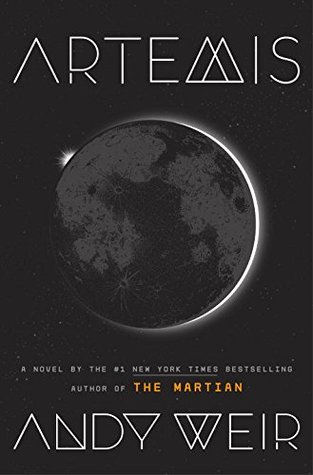
Jazz Bashara is barely making ends meet in Artemis, the moon colony. After a series of bad life decisions, she is living poor and having to hustle to survive. Then Trond Landvik offers her a lot of money to do something shady, a crime that could change her fortunes. Of course it will go smoothly…
Before Artemis was released I tried to get my hands on an Advanced Review Copy. I loved The Martian, the first hard sci-fi novel I’ve enjoyed in decades, so I was really looking forward to Andy’s follow up. Unfortunately, I missed out and had to buy the paper edition when it arrived in stores. My fortunes didn’t improve. Everyone in my family decided they needed to read my copy of the book, so over 6 months later I decided I’d have to get another copy, this time the audiobook read by Rosaria Dawson. No one stole this copy. Yay.
This is obviously a very different novel to The Martian. The narrative format, the main character, and the antagonist are all far removed from the Mark Watney diary about a man vs nature adventure. Instead, Jazz is more akin to a likeable antihero, one who has to use her big brain to solve the continuingly mounting problems.
While this was never going to be comparable to The Martian, this was another very entertaining novel from Andy Weir.
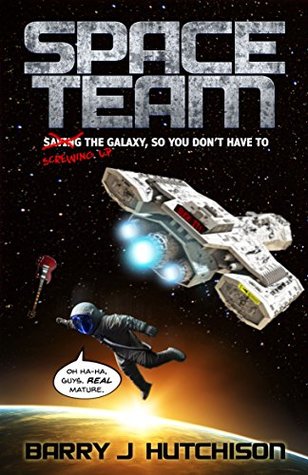
Cal Carver is all charm. That’s why as a low-level crook the warden decides he should spend the night in a cell with the most ruthless cannibal on the planet. This would have been a concern if he wasn’t accidentally recruited for a team whose goal is to stop a pathogenic outbreak that could start a war. In space! Cal is teamed up with a by-the-book rookie, a mechanoid whose abilities are dialled in, a humanoid wolf, and a Splurt. Together they are Space Team… when they aren’t trying to kill each other.
This was lots of fun. As Hutchinson notes in his author comments, this story was meant to be entertaining escapism. No deeper meanings, nothing serious, just fun. And it succeeds masterfully. The pacing is quick, the jokes come thick and fast, and the adventure keeps you entertained.
I’ll be reading more from Barry and this series for sure.
For us readers, the answer is “Never! How could you ask such a silly question? What’s wrong with you? Do you even book, bro?” But the reality is that a significant chunk of the population have not read a book in the last year, and/or aren’t regular readers. We have to admit: some people don’t like reading.*
I have a pet hypothesis** on this. During school, mainly high school, kids start to hate reading. This is because teachers, academics, literary people, policy makers, and general busybodies, start to decree what kids should and shouldn’t be reading. As a result, kids are “forced” to read books that they aren’t interested in or that have won an award or are a “classic” or that fill a certain level of appropriate snootiness that appeases book snobs.
One of the authors, Annie Ward, presented at a readers summit recently and one of her slides has made it to social media. It covers some key points for how educators become “book wardens” who restrict reading and undermine reading ownership and choice. Book Wardens tend to:
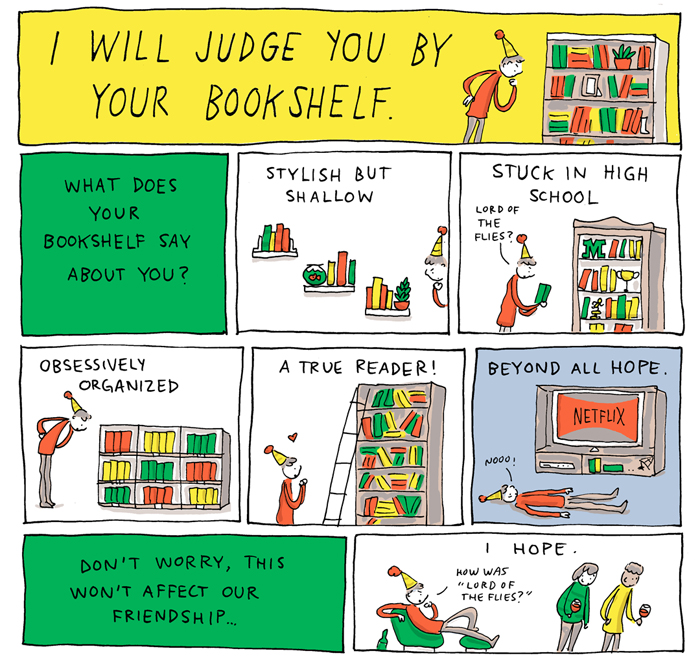
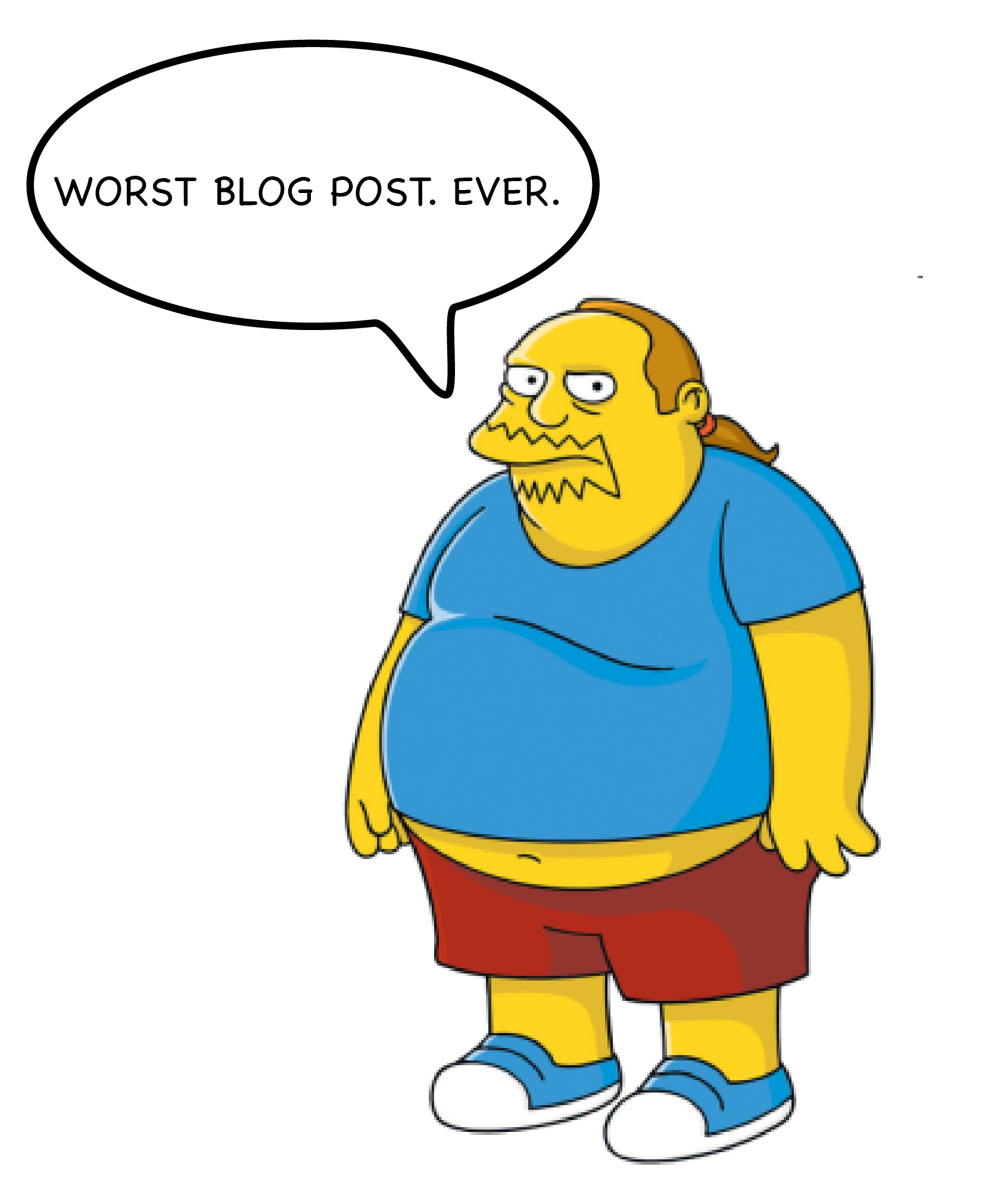
While I have frequently focussed on the snobbery aspect to this problem, particularly from the reading/publishing industry itself, there is more to this. Take for example “just right” books and adults. What image do we conjure up when someone mentions comic book readers? Pimply teenage boy? An obese virgin loser who still lives with his parents? You know, this guy:
The problem with that series of assumptions is that it is a form of reading snobbery. How could a comic be entertaining to anyone who isn’t a loser? Or similar statements that you’ll hear from people who have never read a comic book and battle to wrap their head around the art form.
In other words, even as adults, we are encouraging people not to read.
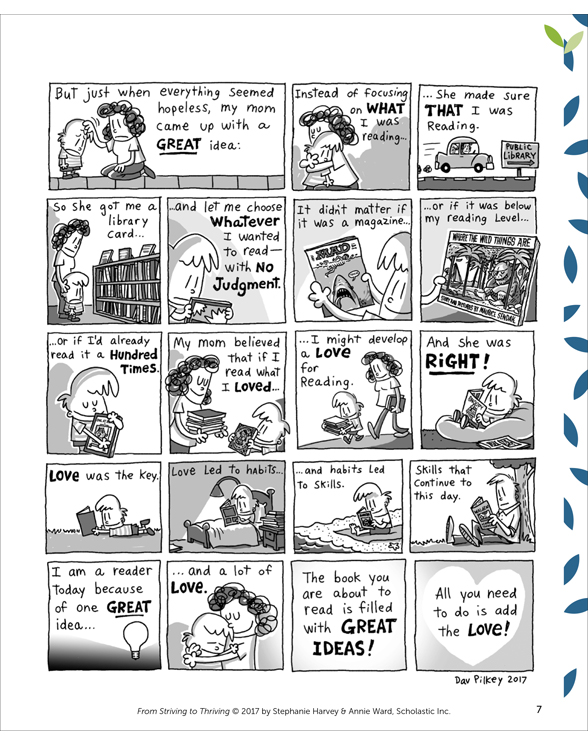
But don’t worry, as Dav’s second-page shows, we can all make a difference to people by encouraging them.***
*A quarter of people (24-26%) haven’t read a book recently. I’ve previously discussed the reading figures for the US, UK, and Australia and it is interesting how the figures come together. Suffice to say, reading is not a favourite hobby for most people.
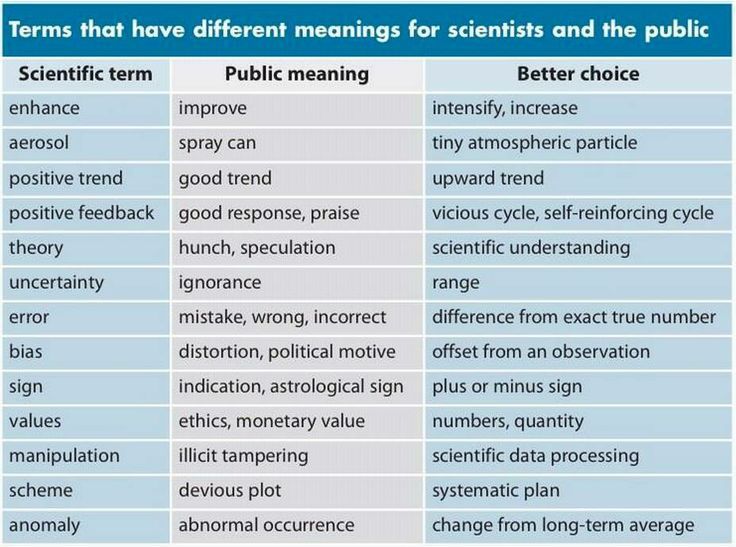
**Hypothesis because a theory is something pretty solidly supported, whereas a hypothesis is a question you want to answer. Join me in my scheme to change the values that will stop the positive feedback of the colloquial usage of theory today!
***Although in fairness, the literary snobs are trying to encourage people to read. Their failing is that they think what they like should be what everyone reads. They have us talking about guilty pleasures and judging what we read by their standards rather than just letting us read stuff we enjoy.
Prosper Gregory “Spur” Leung wakes up in a hospital. All he can remember is the fire and his skin burning. After the docbot patches him up he makes a few calls and heads home to his farm on the utopia of Walden – a planet being gradually terraformed to forest, orchards, and farms. Those few calls make the homecoming… interesting.
Every time I put this book down I made the same comment, ‘I don’t know what this book is about.’ Even now that I’ve finished I’m still at a loss as to what the point of it all was. In the background, there are some ideas. In the foreground, there is a naive protagonist you could use to explore those ideas, but I’m not sure the ground overlapped at any point.
That isn’t to say that this book isn’t well paced, exciting, and entertaining; it is. There are some interesting themes as well, like environmentalism and competing interests. I breezed through and enjoyed reading the book, but can’t help but feel that the story was missing something.
I received an advanced review copy of this book in exchange for an honest review.
Wizards with synesthesia hearing octarine would be an interesting experience.
Twoflower arrives in Ankh-Morpork with his sapient luggage filled with gold. After years in inn-sewer-ants he is looking to become the first tourist on the disc. Rincewind makes his acquaintance thanks to his gift for languages, and they bumble into adventure.
Having read some of the last instalments in the Discworld novels I thought it was time to go back to read the earlier instalments. The writing in the books has changed over the course of the series. Most of the Discworld novels I’ve read so far have been directly satirising a modern-day topic or institutions, but The Colour of Magic is much more concerned with satirising fantasy novels themselves.
It is hard to give this novel a higher rating, however, as it does what all annoying fantasy series do: continue in the next book. Yes, great joke, but it does mean that until I’ve read The Light Fantastic there are no five stars from me.
Every now and then I like to look back through older posts on my blog. It’s a form of masochism built upon equal parts fascination with forgotten ideas and revulsion at missed typos and awkwardly phrased run on sentences that really don’t know when to end, that should have ended sooner, and aren’t something I do anymore. One snarky post caught my eye and I thought I should retread that ground.
The post was based upon an article in The Guardian, one of the last bastions of book snobbery that manages to not trip over its own superiority complex – sometimes. The article had decided that all of these new-fangled e-readers weren’t filled with the right kinds of books.
Kindle-owning bibliophiles are furtive beasts. Their shelves still boast classics and Booker winners. But inside that plastic case, other things lurk. Sci-fi and self-help. Even paranormal romance, where vampires seduce virgins and elves bonk trolls.
Ahh, good, they’ve figured out what people actually enjoy reading. Do go on.
The ebook world is driven by so-called genre fiction, categories such as horror or romance. It’s not future classics that push digital sales, but more downmarket fare. No cliche is left unturned, no adjective underplayed.
“So-called” genre fiction categories of horror and romance… This article was published by a so-called newspaper.
At this point, you can see why I originally wrote about this article. Like many of these worthiness arguments, the article is quick to deride any genre book, particularly e-books in this case, as not having “classic” potential. You know, classics like The Godfather (crime), Lord of the Rings (fantasy), The Hitchhiker’s Guide to the Galaxy (science fiction), Frankenstein (horror), or Pride and Prejudice (romance). Why would anyone ever read dreck like genre fiction?
As I’ve said before, I could easily write a post-a-week pulling apart one of these articles. They are very common and rely on the same handful of bad arguments. In my original response to the article, I wrote that literary fiction – the preferred genre of the authors of these sorts of articles – and biography markets have been kept afloat by this sort of snobbery. People like to be seen reading high-brow stuff, and people like to give worthy books to friends and family. Not one person has ever bought a political memoir to read, they are always a Father’s Day gift. And as the article states, e-book readers don’t have to let people see what they are reading, so they don’t have to pretend any longer.
The reading public in private is lazy and smutty. E-readers hide the material. Erotica sells well. My own downmarket literary fetish is male-oriented historical fiction (histfic). Swords and sails stuff. I’m happier reading it on an e-reader, and keeping shelf space for books that proclaim my cleverness.
Well, maybe people will pretend just a bit longer…
Since this was an article from 2012, the talk of e-books was as they were ascending in popularity. Growth in the e-book market has since slowed, with the market being 20% of the total sales for the major publishers, down from a high of 28% five years ago. Of course, in the fiction market e-books are more like 50% of sales for the Big 5 publishers. And those publishers are having trouble with new fiction titles, as they haven’t had any “big titles” selling well, instead relying on genre fiction backlists and the sudden interest in political books… Wait, what?
It puzzles me why the author of this article insisted that e-readers are filled with garbage, particularly since the arguments supporting the claim lack evidence. A large chunk of book sales from major publishers are e-books, so it can’t all be the dreck titles, can it? What proof do we have that e-readers only contain Twilight fan-fiction and Dan Brown* novels? The proof we are offered is that anything genre is garbage: checkmate person who reads books! So maybe these article writers at The Guardian are onto something, maybe e-readers like the Kindle are filled with garbage.
*Sorry Dan**, you and James Paterson are my go-to punching bags here. If I’ve offended you or James by suggesting your books aren’t high-quality writing, then I’m quite happy to edit out those comments from my blog for a small six or seven figure fee. Just post me one of the bags of money you use as a pillow, that should cover it.
**Language expert take on Dan Brown novels: “A renowned male expert at something dies a hideous death and straight away a renowned expert at something quite different gets a surprise call and has to take an unexpected plane flight and then face some 36 hours of astoundingly dangerous and exhausting adventures involving a good-looking (and of course expert) member of the opposite sex and when the two of them finally get access to a double bed she disrobes and tells him mischievously (almost minatorily) to prepare himself for strenuous sex. Where are we?” And another.
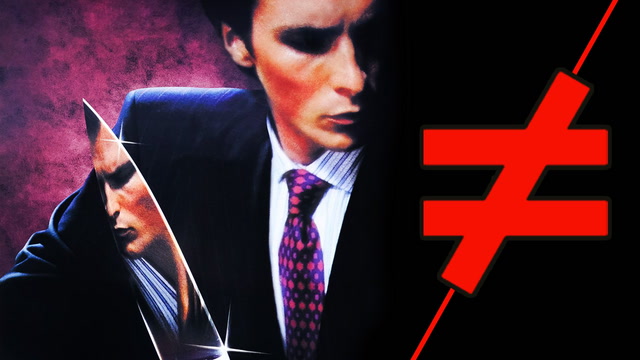
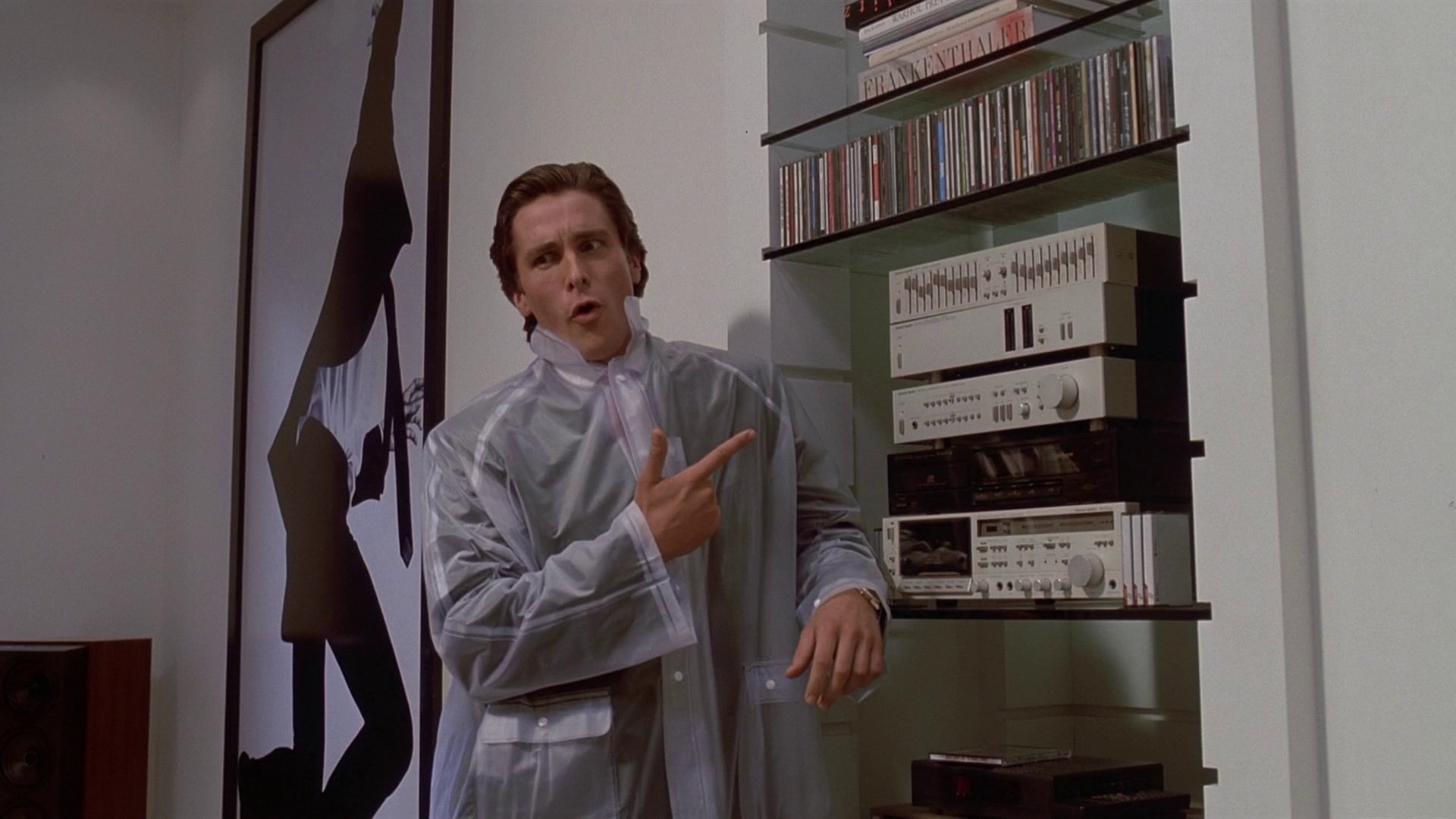
This month’s What’s the Difference? from Cinefix tackles the disturbing book and the amazing movie, American Pyscho.
I can’t remember the exact reason, but after hearing about the novel American Pyscho I decided I should read it. To the library! Where they didn’t have it. To the bookshop! Where they didn’t stock it. To the indie bookshop! Where I was able to find one copy being sold in shrinkwrap.
There’s a point to be made here about the value of indie bookstores. And having all the sick and twisted novels available for sale probably isn’t the point I intended.
And this is a sick and twisted novel. There are some scenes in there that would make a horror fan blanche – break free little rat, break free! The “satire” of the novel doesn’t feel like satire, it feels like gratuitous sadism that is there as an extreme juxtaposition to banality in a lazily made point about yuppies.
Which is why I regard the movie as far superior. It manages to skim through and grab the major elements of the book and put them on screen without becoming horror porn for vore fans – don’t look up that word, you don’t want to know. Ellis may not be a fan of the movie – because it is hard to tell if Bateman got away with it or imagined it – but his complaints are far too typical of the precious artists I’ve commented on in this series many times.
The irony is that many people would say that the movie is still ultra-violent. In which case, don’t read the book. Don’t do it. Or keep some lye on hand.
Update: Wisecrack did a great breakdown of some key differences between the book and film:
In the late 1980s, Stephen Hawking became the name synonymous with smart people, science, and computerised voices when he released A Brief History of Time. In the intervening 27 years (this book was published in 2005) a lot of progress has been made in physics and our understanding of the universe, so this is an update on curved space, quantum gravity, black holes, Newtonian physics, relativity, the Big Bang (everywhere stretch), wormholes and time travel, and the search for a grand unifying theory of reality.
Obviously, this all sounds like very complicated stuff that you’ll battle to wrap your head around. I have to admit, when I read A Brief History of Time in my 20s I struggled with it. Imagining 4-dimensional space was confusing, imagining another 6 dimensions on top of that with string theory was just too much for me. So maybe I’m older, wiser, smarter, and have added centimetres to my head circumference, because I found this book clear and easy to understand. Or maybe this updated version is clearer than the original. Or maybe I’m just more familiar with physics now and can kid myself that it isn’t that hard to understand.
Either way, I found this to be a clear, concise, and easy to understand overview of spacetime physics.
Young Adult fiction is a term whose meaning has varied wildly over the years. It can apply to coming of age tragedies or serialized adventures of babysitters, or insert really dated twilight joke here. But where did this young adult genre come from? And why did it get so big?
The voting referred to in the video is here, but it is for North American people only. I mean, it is about the Great American Read after all. Which obviously means that the rest of the world’s opinion on that doesn’t count. Neither does South America’s.
If Western Philosophy is just footnotes to Plato, does that mean western society is just all Greek to us?
Professor Roochnik presents 24 lectures as an introductory course to Greek Philosophy… as it says in the title. This was quite a good overview of the pre-Socratics, Socrates, Plato, and Aristotle. Like any lecture, insights are given into the further scholarship that can inform a topic – such as how Plato structures his writing so as to make you think rather than tell you what he thinks – and some points are hammered repeatedly for the sleepy students in the back row.
Having recently read The Republic, the insights this book offered would have been handy beforehand. The advantage of having a philosophy professor step you through philosophy rather than just winging it yourself is well worth it. So as a background pre-reading, this is a good place to start.
I was also reminded during one of the earlier chapters of how much knowledge has been lost to history. We have this common misconception about great works rising to the top and being revered through the ages. But the example of the prolific writer Democritus whose works have largely been lost shows us how even recognised intellectual giants can’t be guaranteed their works will be preserved.
This month’s What’s the Difference from Cinefix compares the book sequel written because the movie adaptation was successful and the director wanted more source material to ignore. Jurassic Park: The Lost World.
Honestly, I can never keep it straight in my head which parts of the novels ended up in which movie. As mentioned in the video, the opening scene of The Lost World was actually from the first book. There are other examples, like the “birdcage” scene in one of the other movies was in the first book… I think.
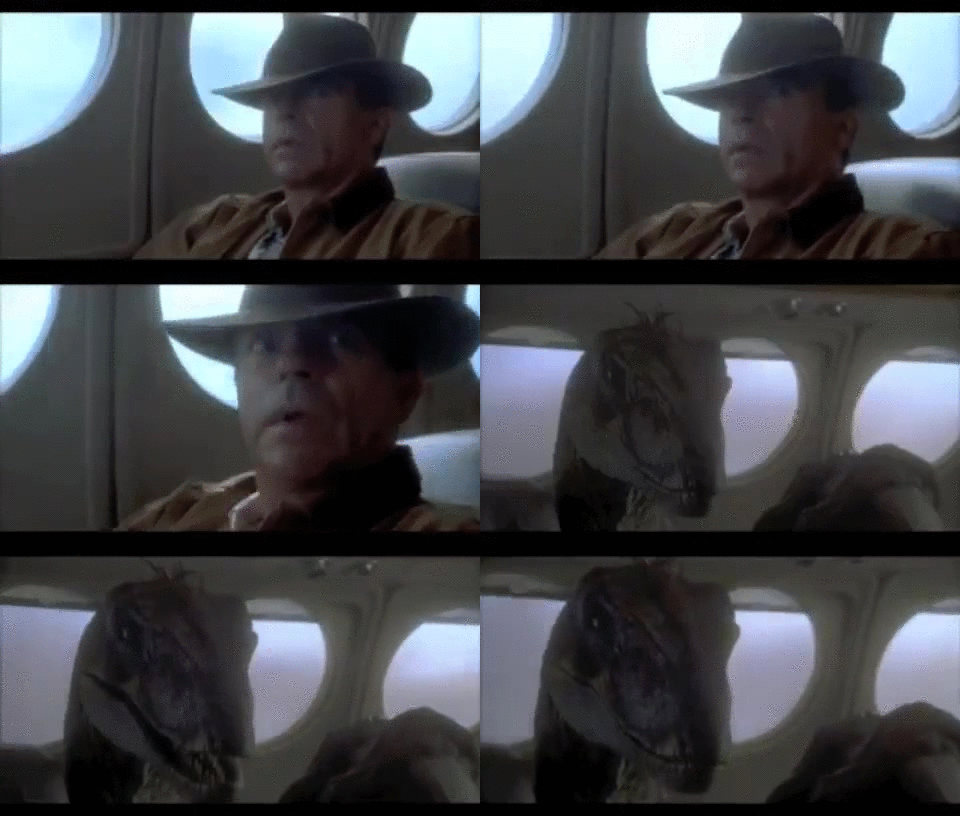
One thing is for certain: Spielberg knows how to make a film. He knows how to build tension, he knows how to establish sights, sounds, and characters so that sequences hang together, and he knows not to have a talking dinosaur in an aeroplane.
Yes, this is an actual scene from Jurrasic Park 3. Take a moment.
But The Lost World is an example of one the worst reasons you write or film a sequel: because the first one was successful. I don’t know exactly what Spielberg’s motivations were for the sequel – maybe he was under contract, maybe he needed a new wing on his house – but the film was dull. It was trying to recapture the lightning bottled in the first film. The same can be said of the book. Crichton didn’t originally want to write a sequel and was only convinced by Spielberg saying he’d give him lots of money that he would be keen to direct a movie adaptation of the sequel if one were written.
I’m on record as not being much of a fan of Michael Crichton’s books. He has a tendency to write solid thrillers that act as vehicles for anti-science rants by a raisonneur or mouthpiece. There is nothing wrong with doing this, per se, but science is awesome, so make sure your criticism is on point. Or don’t, depending on whether you want to impress me or someone who thinks chakras are a thing.
Needless to say, I was a fan of the first film, less so the book. The sequels… Put it this way, I haven’t bothered watching the new ones starring Chris Pratt yet.
Dr Gillian Ryan is frustrated. She is trying to develop a brain scanning technique in order to help her daughter to avoid the same fate as her late husband. Losian’s disease is thought to be caused by the rapidly increasing environmental destruction and affects memory and concentration. Then a team from NASA show up promising money and technology to help her work if she agrees to go to a space station to figure out what is wrong with their crew. Of course, NASA hasn’t been completely honest with her about where they are going and the risks involved, but that’s okay, she didn’t tell them about her painkiller addiction.
This novel was a lot of fun. Joe Hart has mixed together sci-fi, thriller, and suspense in good measures. The main character’s addiction and frustrations pour out on the page as you wonder if she is going mad or something more nefarious is happening. Added to that is the brisk pacing that doesn’t get bogged down like some novels with similar themes tend to. I don’t know what a hydro is, but after reading this novel I feel like I need one.
Well worth a read for sci-fi and thriller fans.
NB: I received an advanced review copy in exchange for an honest review.

 Equal Rites by Terry Pratchett










 Tyson Adams