Is cyberpunk dead or being revived?

http3a2f2fwww-francamentequerida-com-br2fwp-content2fuploads2f20182f022f1altered

It was only recently that I read Neuromancer. In my defence, I’ve seen all the different cuts of Blade Runner, which has to count for something. Right?

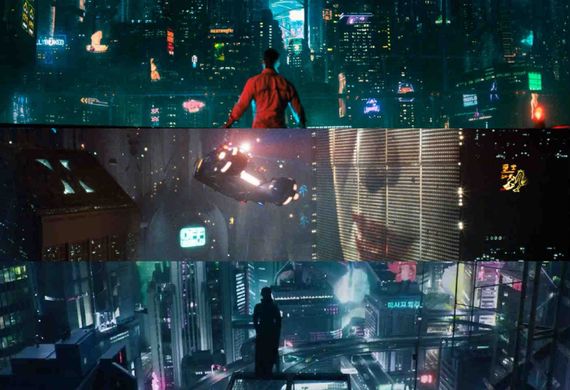
Anyway, there was an interesting video essay from Just Write that I thought I’d share. It discusses the cyberpunk genre and how the aesthetic has lost its relevance.

I actually quite enjoyed the Netflix series Altered Carbon, based on Richard Morgan’s novel of the same name. There were some interesting comments about inequality and inherited wealth that is often overlooked in discussions about living longer. But I have to agree with the video’s comments about the cyberpunk aesthetic of the show being off.

Not that it didn’t fit, but that it didn’t feel that different from what we have now, as the video stated. How can we watch a troublesome/dystopian future that is essentially our now?  These aesthetic elements then undermine much of the narrative comment by reminding us that many of the plot points have already happened. It is a little bit hard to have a cautionary tale of where we are headed in the future when we have already arrived at that point (e.g. wealth isn’t made but instead it tends to be inherited unless there is some sort of inheritance tax in play or dissipation – 1, 2, 3).

So does that mean that Mr Robot and other contemporary cyberpunk stories are the way forward for the genre? Are there other ways to update the genre? Do we need another Blade Runner movie?

Some things to ponder.

Update: Future Tense/Slate published an article suggesting cyberpunk has cast a long shadow over science fiction. It alludes to some of the same points whilst trying to discuss reinvigorating sci-fi. I think the point it fails to make is that the prefix-punk genres were never going to have the same impact as cyberpunk because they were prefix genres following in the wake. If you want to reinvigorate sci-fi* you have to start with something different, not just another prefix.

Update: CuckPhilosophy has an interesting video on the philosophy of cyberpunk that is worth watching if just for the thinkers referenced.

Works Cited:

Lessons from the Screenplay. “Blade Runner — Constructing a Future Noir.”
Extra Credits. “The Witcher III: Wild Hunt – Best Detective Game Ever Made.” Taxi
Extra Credits. “William Gibson: The 80s Revolution.”
Abrams, Avi. Dark Roasted Blend. “Epic 1970s French Space Comic Art.”
Sterling, Bruce. “Mirrorshades: the cyberpunk anthology.” New York: Arbor House, 1986.
Walker-Emig, Paul. The Guardian. “Neon and corporate dystopias: why does cyberpunk refuse to move on?” October 16, 2018.
NAZARE, JOE. “MARLOWE IN MIRRORSHADES: THE CYBERPUNK (RE-) VISION OF CHANDLER.” Studies in the Novel, vol. 35, no. 3, 2003, pp. 383–404. JSTOR, JSTOR,
Karen Cadora. “Feminist Cyberpunk.” Science Fiction Studies, vol. 22, no. 3, 1995, pp. 357–372. JSTOR
Sponsler, Claire. “Beyond the Ruins: The Geopolitics of Urban Decay and Cybernetic Play.” Science Fiction Studies, vol. 20, no. 2, 1993, pp. 251–265. JSTOR
Nixon, Nicola. “Cyberpunk: Preparing the Ground for Revolution or Keeping the Boys Satisfied?” Science Fiction Studies, vol. 19, no. 2, 1992, pp. 219–235. JSTOR
Whalen, Terence. “The Future of a Commodity: Notes toward a Critique of Cyberpunk and the Information Age (L’Avenir D’une Marchandise: Notes Sur Cyberpunk Et L’Ere De L’Information).” Science Fiction Studies, vol. 19, no. 1, 1992, pp. 75–88. JSTOR
Senior, W. A. “Blade Runner and Cyberpunk Visions of Humanity.” Film Criticism, vol. 21, no. 1, 1996, pp. 1–12. JSTOR
Usher, Tom. Vice. “How ‘Akira’ Has Influenced All Your Favourite TV, Film and Music.
Giles, Matthew. Vulture. “Taxi Driver, Girls, and 7 Other Big Influences on Mr. Robot.
The United Federation of Charles. “What is Cyberpunk?
The ‘Self-Made’ Myth: Our Hallucinating Rich by Sam Pizzigati

Updates recommended reading:

On “cyber-theory” in general:
M. Featherstone, R. Burrows – “Cyberspace/Cyberbodies/Cyberpunk – Cultures of Technological Embodiment
D. Kellner – “Media Culture: Cultural Studies, Identity and Politics Between the Modern and the Post-Modern
By Donna Haraway:
D. Haraway – “A Cyborg Manifesto
D. Haraway – “Simians, Cyborgs, and Women
By Fredric Jameson:
F. Jameson – “Archaeologies of the Future
F. Jameson – “Cognitive Mapping
By Sadie Plant:
S. Plant – “Zeroes and Ones

*I’m not sure I accept the argument that sci-fi needs reinvigorating. Has some of it disappeared up its own butthole? Quite possibly. But that’s a whole argument and discussion on its own… Come to think of it, I’m betting there are endless articles on that topic somewhere.
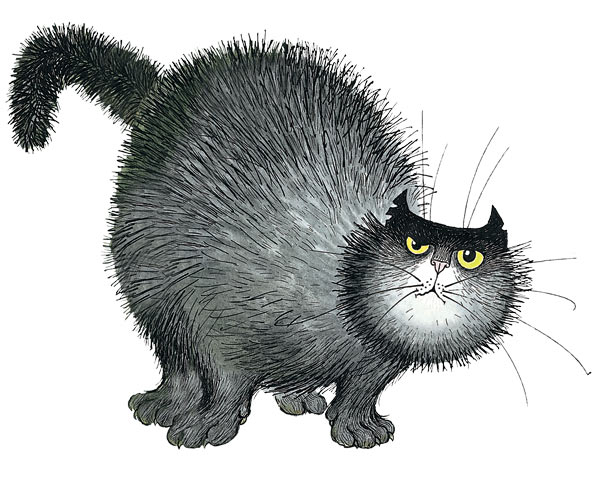
Scarface Claw – Too Serious

interstitial-01a
Scarface Claw: The Toughest Tom In Town.

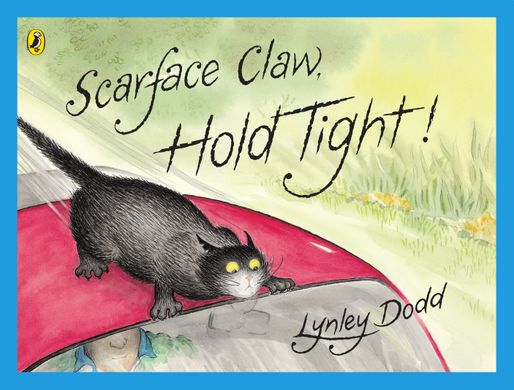
This time last year (2017) my family and I attended the book launch of the latest instalment in the Hairy Maclary (from Donaldson’s Dairy) series by Lynley Dodd. Hairy Maclary and his friends have been entertaining people, particularly younger people with an as yet undeveloped world-weariness, for 30 years. The latest book in the series is titled Scarface Claw, Hold Tight! and I’m left with some very important questions.

For those who aren’t aware, Scarface Claw is the toughest tomcat in the town where Hairy Maclary and his friends live. Which town this happens to be and the relative toughness of the other tomcats living there is not explored in any detail in the series, which could be regarded as an oversight. Scarface Claw has, on more than one occasion, threatened or utilised violence against the cats and dogs in town. This has seen scatters of paws and clatters of claws from Schnitzel von Krumm with a very low tum, Bitzer Maloney all skinny and bony, Muffin McClay like a bundle of hay, Bottomley Potts covered in spots, Hercules Morse as big as a horse, and Hairy Maclary from Donaldson’s Dairy.

Obviously, this nasty, violent, and abusive cat makes for an ideal protagonist in a children’s book. Scarface Claw, Hold Tight! marks the tomcat’s second outing as the hero.

https3a2f2fcdn2-penguin-com-au2fcovers2foriginal2f9780143770985

This adventure sees our cranky and crotchety hero sunning himself on top of Tom’s car. Somehow, Tom manages to not see the rather large black tomcat sprawled on the roof of his red car and hurries off to somewhere very important – another detail unexplored by the narrative. Since this is the inciting incident of the story, you would expect it to be more believable. Are we to seriously believe that Tom doesn’t notice old Scarface? As we soon discover, literally everyone else in the town notices Scarface Claw clinging to the roof of the car, so either Tom should be required to acquire prescription lenses for driving or he knew Scarface Claw was there all along.

That Tom knowingly drove around town with a cat on his roof is not inconceivable. Scarface Claw has a long and infamous history, particularly amongst the resident town pets, so mistreatment of the tomcat may be a common occurrence. It may be that this mistreatment is what makes Scarface Claw the nasty cat he is. Maybe with extensive therapy, Scarface Claw could become a lovable and friendly cat who would be invited to Slinky Malinky’s house in a tail waving line. We can only hope.

We also have to question why everyone in town noticed Scarface Claw clinging to the roof and wanted to “rescue that cat”. Presumably, the townfolk recognised Scarface Claw, so either they are more kind and caring than Tom – plausible given my previous points about potential mistreatment – or they are starved for excitement such that waving a sock at a driver with a cat on his car roof would make it into a lifetime highlights list. But that doesn’t excuse the next issue.

I know that many animal lovers would support the use of police and fire and rescue for animal emergencies, but you have to question Constable Chrissie’s response. Did the Constable honestly have nothing better to do with her time than pull Tom over? What laws has he broken? If Tom has broken some laws, why wasn’t he charged with an offence? And why didn’t she call for a licensed animal controller, such as the Ranger, instead of relying on the ever conveniently helpful Miss Plum?* Does Constable Chrissie suspect that Tom is an abusive pet owner and is wanting to compile a list for a potential animal welfare case?**

There are so many questions left unanswered, so many details not covered, that I am left at a loose end. I can only hope that future books in the series will address these issues in some way.

*Miss Plum has a long habit of helping the town pets out of their adventurous mishaps. She seems to always conveniently arrive in the nick of time. A more suspicious person would suspect that something more sinister is at play here. Is Miss Plum stalking the town pets? Is she behind the pets’ misadventures? Hopefully, these questions will be addressed in later instalments in the series.

**Or at least intervene where possible to stop animal abuse events.***

***And it is possible that Constable Chrissie keeps an eye on Tom and his activities – possibly Miss Plum does as well – because she suspects Tom’s animal abuse may morph into something more serious. Best to catch a killer early.

How many famous states does Australia have?

791px-australia_states_and_territories_labeled-svg
Source.

All of the Australian states and territories are famous, but for varying reasons. I’ll focus on the six main states and the two mainland territories, because I don’t know anything about the other places.

Australian Capital Territory (ACT): famous for being infested with politicians and bureaucrats. In keeping with tradition, the Aboriginal lands of Kamberra – meaning ‘meeting place’ – were stolen and renamed Canberra when we built our nation’s capital there.

New South Wales (NSW): famous for containing Sydney, the only Aussie city foreigners know, and the only part of Australia Sydney-siders think exists. Also, a great place for backpackers to rest for eternity in a state forest.

Northern Territory (NT): made famous, for better or worse, by Crocodile Dundee. Also famous for the highest (or nonexistent for a short while) speed limits on highways that results in four times the road death toll.

Queensland (QLD): famous for being approximately 50 years behind the rest of the country and being incredibly proud of that fact. See Katter Australia Party and Pauline Hanson’s One Nation for a clearer picture.

South Australia (SA): famous for their banking and barrels. Adelaide is okay.

Tasmania (Tas): famous for having lots of trees and people trying to save them. Also famous for gun control.

Victoria (Vic): famous for not being New South Wales. The state capital, Melbourne, is similarly famous for not being Sydney.

Western Australia (WA): famous for being so far away from everywhere else. Also has lots of mines and people wearing hi-vis clothing.

This post originally appeared on Quora.

Paw Patrol – Too Serious

250px-paw_patrol_logo

Recently my family went to the Paw Patrol movie. My youngest is a (relatively) big fan and as a result, I found myself finally sitting down and watching a complete Paw Patrol adventure. And I’m left with some very important questions.

For those who aren’t aware, Paw Patrol is a rescue team that spans police, fire, construction, recycling, aquatic, and aviation – with later seasons adding snow and forest services and a robotic helper. This rescue team are based in the aptly named Adventure Bay and run by Ryder and his team of puppies.

Oh, was that not clear? The rescue team are composed of puppies with a series of catchphrases and dog houses that convert into vehicles. These catchphrases are very important to the show as they comprise roughly 60% of each episode; there is very little new content in any given adventure.

Ryder
“No job is too big, no pup is too small!”
Chase
“Chase is on the case!”
Marshall
“I’m fired up!”
Skye
“Let’s take to the sky!”
Rocky
“Don’t lose it, Reuse it!”
Rubble
“Rubble on the double!”
Zuma
“Let’s dive in!”
Everest
“Ice or snow, I’m ready to go!”
Tracker
“I’m all ears!”/”Todo Oidos!”

1046364-nick-renews-paw-patrol-blaze-rusty-rivets-top-wing

This brings me to the crux of the issue with Paw Patrol. Adventure Bay is riddled with people in need of rescue, and in later seasons there are even nefarious plots by royalty and rival mayors to cause havoc. So it is odd that this bustling town has decided to entrust major rescue efforts, law enforcement, and fire management to a 10-year-old and his team of puppies.

I’m not sure it is wise to allow Ryder to operate with such autonomy given his age. And as much as the pups have proved themselves capable, surely they are also too young and inexperienced for such important roles.* You have to question who allowed Ryder to establish the Paw Patrol and why he is allowed to continue.

Obviously, it helps that the mayor – one Mayor Goodway and her purse chicken Chickaletta – are often in need of assistance due to their own incompetence. This would certainly make Ryder and his pups endearing to Goodway. She seems willing to overlook Ryder’s repeated risk-taking and near catastrophic failures, even when it inspires others to wreak havoc. Would this fly in any other town?

Ryder also seems to have a suspiciously large amount of resources for a 10-year-old. The custom transforming dog houses are a marvel of technology that must have cost a fortune to make. Even if we are to believe that Ryder builds them all himself, this would require funds from somewhere, and knowledge that would have any tech company begging him to come and work for them. But new adventures see new technology introduced, seemingly overnight. Where does Ryder find time to design, engineer, and build aerial, submersible, etc, versions of equipment for his pups?** And when did he find time to be on the cutting edge of robotics and AI to create a robotic assistant dog?

I would contend that Ryder’s activities are not as altruistic as first appears. He seems to have infiltrated Adventure Bay and bribed his way to power using money and goodwill. The mayor looks the other way whilst he trains a team of puppies to do his bidding. His recklessness is all fun and games for the moment, but we will no doubt see Ryder’s true colours when one of the rescues fails and he has to show accountability.

Let us hope that on that day his puppies are able to be true heroes and save Ryder from himself.

*Sidenote: what happens when they are no longer puppies? Do they age out of the Paw Patrol team? Are they suddenly unemployed? Are there nearby towns/cities that take dogs with transforming dog houses, or are they abandoned to become strays? Will we one day see former Paw Patrol members return to Adventure Bay as bitter and twisted dogs bent on exacting revenge upon their former master who abandoned them?

**And I haven’t even touched on his ability to defy the laws of physics with some inventions. E.g. Marshall seems to have an unlimited supply of fire suppressant in a backpack that he can comfortably carry. Is it powered by as yet undiscovered physics, or does it tap into a well of magic? Why isn’t he sharing this technology with the world?

Update: According to reliable news sources, Chase has been in an officer-involved shooting. It has been confirmed that Zuma, the black Lab, was shot 17 times in the back after Chase mistook Zuma’s bone for a gun.

Update: The Misogyny and Authoritarianism of ‘Paw Patrol’.

Video: Paw Patrol examined as copaganda by Skip Intro.

Book vs Movie: Fear and Loathing in Las Vegas – What’s the Difference?

maxresdefault2

This month’s What’s the Difference? from Cinefix covers Fear and Loathing in Las Vegas.

This month I’m just sharing.

Yep, that means I’ve neither read the book nor watched the movie.

Feel superior in the comments.

20 years ago a new generation was introduced to the peak of Gonzo Journalism with Terry Gilliam’s adaptation of Hunter S. Thompson’s Fear and Loathing in Las Vegas. Really great filmmakers have tried and failed to bring the savage journey into the American Dream, so what makes Terry Gilliam’s version so successful? Time to get cracking and ask What’s the Difference?!

How Is Tech Changing the Way We Read?

maxresdefault1

With the rise of social media and smartphone use, we are all reading fewer books than we once did. All, not just those pesky millennials. Some people are worried about what this means for the future of literature and, well, our brains. But is it true that we are really reading less? And should I care?

Above The Noise recently did a video in which Myles covers some of the research on reading.

I always appreciate it when a Youtuber or Journalist manages to discuss a topic without devolving into head-shaking admonishment, especially when it comes to the topic of reading and books. Too often these sorts of videos and articles cite bad research or buy into industry propaganda.

I’ve previously discussed the misrepresentations made about reading ebooks, the overstating of the benefits of reading – when there are some well-researched benefits documented –  and even the way we write. And the Pew Research into reading was one of several references I’ve used in my discussion of Who Reads, something I cover quite a bit here.

And yet, there were still some things in the video that I hadn’t been aware of. So I think it is worth sharing. Enjoy.

From the video:

Reading has been an important part of the human experience for thousands of years, but believe it or not, that’s not a long time on the evolutionary timescale. Before the internet, it made sense to read long texts in a linear fashion, but that’s now changing as people are adapting to skimming shorter texts on their computers or phones. But what does this mean for the future of books?

What is literary reading?

Literary reading is, quite simply, the reading of any literature. This includes novels, short stories, poetry, and plays.

Are we reading less?

The rate at which Americans are reading literature for fun is down around 14% from the early 1980s. This doesn’t necessarily mean we are reading less, however. Many people still have to read for school or work. Then there are all the words, sentences, and messages we read on the internet from emails to texts to tweets. Some people believe that this means we are possibly reading more individual words than ever. It’s just being done in a different way. I’ve also discussed the decline of literature.

And this is changing our brains?

Some neuroscientists believe that scanning shorter texts the way we do on the internet, often jumping from hyperlink to hyperlink, is actually changing the wiring in our brains. We are becoming better at searching for key terms and scanning for information, but this means it can become more difficult to read a longer text all the way through without missing major points.

SOURCES:
Children, Teens, and Reading
The long, steady decline of literary reading
Who doesn’t read books in America?
Serious reading takes a hit from online scanning and skimming, researchers say

Explaining the joke

60920367

Does this sound familiar? You are looking at your social media feed and spot the latest hot-take from your favourite satirical comedy site. They have eloquently broken down the absurdity of recent events with biting insight and withering sarcasm. And then you read the comments.

Okay, so that is always a mistake. But bear with me here. You could also bare with me if you like, I can’t force you to wear pants while you read blog posts.

Inevitably in the comments, there will be someone explaining to everyone that the post is satire. This is like someone standing up in front of an audience with an applause sign, just in case you missed the right moment to show your appreciation. This is the canned laughter at appropriate moments in sitcoms to point out what was meant to be funny. This is the comedian who repeats the punchline of the joke…

Worse still are the people who jump in to explain how the joke works and why it is funny. These people are the equivalent of that annoying person in the middle of the cinema telling the movie character not to open the closet door in the creepy house.

ead1775f2a_1448161683065

Now I’d argue that this sort of comment is completely unnecessary. In fact, I wouldn’t be surprised if there was a statistical correlation between someone explaining the joke and that person suffering a sudden and unexplained death from choking on their phone.

At the heart of this problem are two groups of people. The first is a group of people who think they need to guide us mere mortals through life. Without their input, we would be lost, society would crumble, and within months they would be explaining how Thunderdome actually originated as a means to resolve conflict and provide entertainment in Bartertown. They don’t see it as condescension, they see it as imparting wisdom to the little people.

Then there is the second group. The second group are why the first group exist.

You see, invariably on every single satirical comedy comments section, you will find someone not realising the article they are commenting upon is a joke. They may be unsure, perhaps posting something like “The Onion?” or “I don’t understand, is this meant to be funny, am I missing the joke, did my mother’s alcoholism affect me somehow?” Or they may think the article is completely serious, and comment with outrage, indignation, or a rambling string of ideas that may belong in the comments of a different article. Clearly, the first category of menaces to society are preempting these posters.

But you aren’t meant to explain it to people. These poor fools are meant to be mercilessly mocked. They are, after all, on the internet, where civil discourse is disallowed, and a Google search to fact-check or see whether the site is satirical takes seconds. A semi-literate turtle should be able to find the About page or Other Articles links and from there it should be obvious. Even for the turtle. And its illiterate brethren.

Some of the semi-literate turtles have lost hope in humanity and decided to document the downfall of civilisation. They have started entire webpages devoted to documenting people not getting the joke.

tumblr_oa7oh1nci51qkt6yoo1_1280

Let us hope that satire continues to entertain and that the confused commenters adopt a pet turtle. Then maybe we will see the end of people explaining the joke. And the end of homeless turtles.

level1photo

Loving reading and book wardens

When do people start to hate reading?

For us readers, the answer is “Never! How could you ask such a silly question? What’s wrong with you? Do you even book, bro?” But the reality is that a significant chunk of the population have not read a book in the last year, and/or aren’t regular readers. We have to admit: some people don’t like reading.*

I have a pet hypothesis** on this. During school, mainly high school, kids start to hate reading. This is because teachers, academics, literary people, policy makers, and general busybodies, start to decree what kids should and shouldn’t be reading. As a result, kids are “forced” to read books that they aren’t interested in or that have won an award or are a “classic” or that fill a certain level of appropriate snootiness that appeases book snobs.

Or as Blackadder put it:

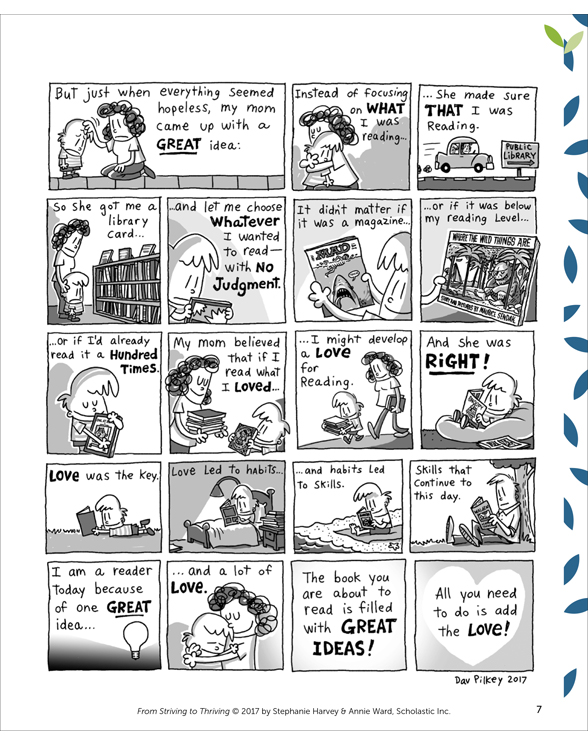
In the academic text – From Striving to Thriving: How to Grow Confident, Capable Readers – Stephanie Harvey and Annie Ward discuss this issue. They outline this problem and have summarised reluctant readers with a cartoon from Dav Pilkey (of Captain Underpants fame).

dhwb8aivqaalz80
Cartoon by Dav Pilkey in From Striving to Thriving by Stephanie Harvey and Annie Ward

One of the authors, Annie Ward, presented at a readers summit recently and one of her slides has made it to social media. It covers some key points for how educators become “book wardens” who restrict reading and undermine reading ownership and choice. Book Wardens tend to:

Sound familiar?

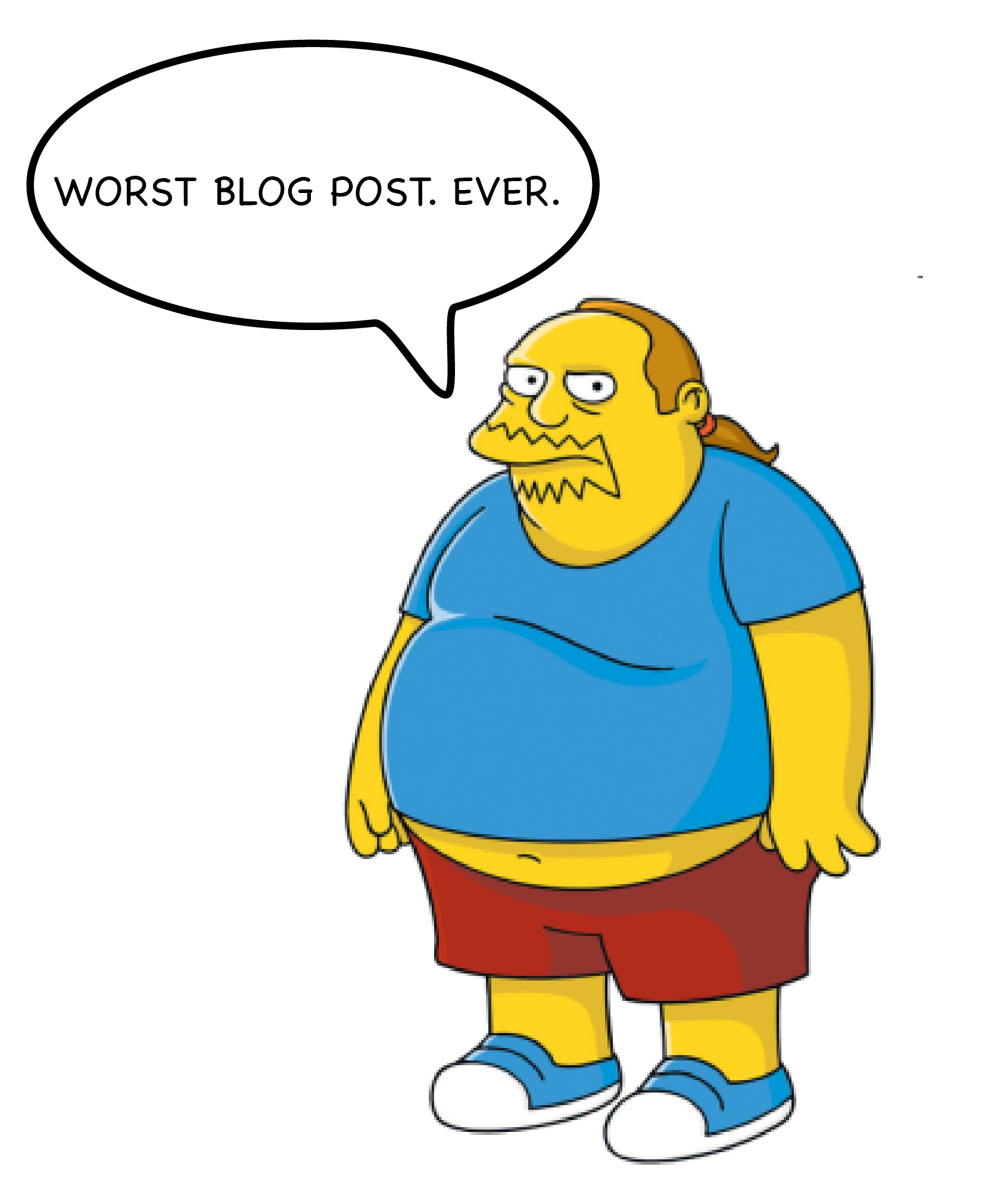
While I have frequently focussed on the snobbery aspect to this problem, particularly from the reading/publishing industry itself, there is more to this. Take for example “just right” books and adults. What image do we conjure up when someone mentions comic book readers? Pimply teenage boy? An obese virgin loser who still lives with his parents? You know, this guy:

img_6115

The problem with that series of assumptions is that it is a form of reading snobbery. How could a comic be entertaining to anyone who isn’t a loser? Or similar statements that you’ll hear from people who have never read a comic book and battle to wrap their head around the art form.

In other words, even as adults, we are encouraging people not to read.

But don’t worry, as Dav’s second-page shows, we can all make a difference to people by encouraging them.***

9781338051964_si06_588x745

*A quarter of people (24-26%) haven’t read a book recently. I’ve previously discussed the reading figures for the USUK, and Australia and it is interesting how the figures come together. Suffice to say, reading is not a favourite hobby for most people.

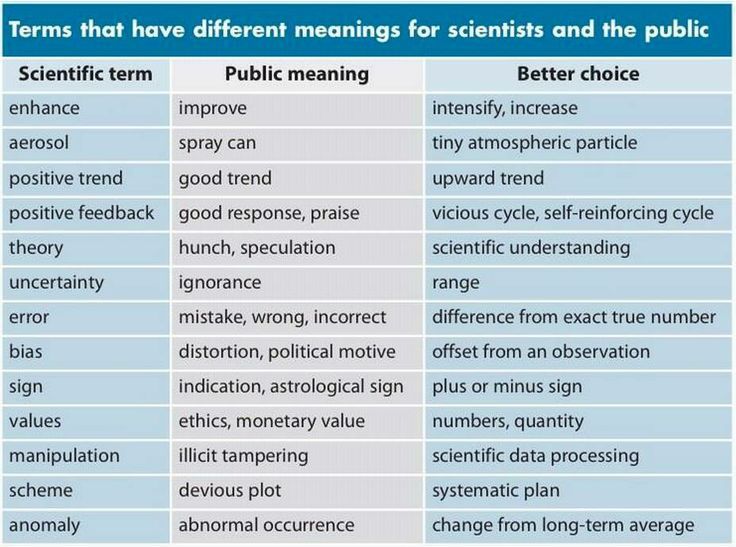
**Hypothesis because a theory is something pretty solidly supported, whereas a hypothesis is a question you want to answer. Join me in my scheme to change the values that will stop the positive feedback of the colloquial usage of theory today!

***Although in fairness, the literary snobs are trying to encourage people to read. Their failing is that they think what they like should be what everyone reads. They have us talking about guilty pleasures and judging what we read by their standards rather than just letting us read stuff we enjoy.

8cf0bc8be9f426c74d4f7ed5eadd7792

Are e-readers filled with garbage?

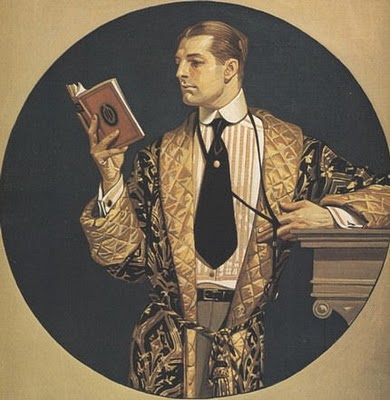
man-smoking-jacket

Every now and then I like to look back through older posts on my blog. It’s a form of masochism built upon equal parts fascination with forgotten ideas and revulsion at missed typos and awkwardly phrased run on sentences that really don’t know when to end, that should have ended sooner, and aren’t something I do anymore. One snarky post caught my eye and I thought I should retread that ground.

The post was based upon an article in The Guardian, one of the last bastions of book snobbery that manages to not trip over its own superiority complex – sometimes. The article had decided that all of these new-fangled e-readers weren’t filled with the right kinds of books.

Kindle-owning bibliophiles are furtive beasts. Their shelves still boast classics and Booker winners. But inside that plastic case, other things lurk. Sci-fi and self-help. Even paranormal romance, where vampires seduce virgins and elves bonk trolls.

Ahh, good, they’ve figured out what people actually enjoy reading. Do go on.

The ebook world is driven by so-called genre fiction, categories such as horror or romance. It’s not future classics that push digital sales, but more downmarket fare. No cliche is left unturned, no adjective underplayed.

“So-called” genre fiction categories of horror and romance… This article was published by a so-called newspaper.

At this point, you can see why I originally wrote about this article. Like many of these worthiness arguments, the article is quick to deride any genre book, particularly e-books in this case, as not having “classic” potential. You know, classics like The Godfather (crime), Lord of the Rings (fantasy), The Hitchhiker’s Guide to the Galaxy (science fiction), Frankenstein (horror), or Pride and Prejudice (romance). Why would anyone ever read dreck like genre fiction?

As I’ve said before, I could easily write a post-a-week pulling apart one of these articles. They are very common and rely on the same handful of bad arguments. In my original response to the article, I wrote that literary fiction – the preferred genre of the authors of these sorts of articles – and biography markets have been kept afloat by this sort of snobbery. People like to be seen reading high-brow stuff, and people like to give worthy books to friends and family. Not one person has ever bought a political memoir to read, they are always a Father’s Day gift. And as the article states, e-book readers don’t have to let people see what they are reading, so they don’t have to pretend any longer.

The reading public in private is lazy and smuttyE-readers hide the material. Erotica sells well. My own downmarket literary fetish is male-oriented historical fiction (histfic). Swords and sails stuff. I’m happier reading it on an e-reader, and keeping shelf space for books that proclaim my cleverness.

Well, maybe people will pretend just a bit longer…

Since this was an article from 2012, the talk of e-books was as they were ascending in popularity. Growth in the e-book market has since slowed, with the market being 20% of the total sales for the major publishers, down from a high of 28% five years ago. Of course, in the fiction market e-books are more like 50% of sales for the Big 5 publishers. And those publishers are having trouble with new fiction titles, as they haven’t had any “big titles” selling well, instead relying on genre fiction backlists and the sudden interest in political books… Wait, what?

It puzzles me why the author of this article insisted that e-readers are filled with garbage, particularly since the arguments supporting the claim lack evidence. A large chunk of book sales from major publishers are e-books, so it can’t all be the dreck titles, can it? What proof do we have that e-readers only contain Twilight fan-fiction and Dan Brown* novels? The proof we are offered is that anything genre is garbage: checkmate person who reads books! So maybe these article writers at The Guardian are onto something, maybe e-readers like the Kindle are filled with garbage.

Guardian on Amazon


*Sorry Dan**, you and James Paterson are my go-to punching bags here. If I’ve offended you or James by suggesting your books aren’t high-quality writing, then I’m quite happy to edit out those comments from my blog for a small six or seven figure fee. Just post me one of the bags of money you use as a pillow, that should cover it.

**Language expert take on Dan Brown novels: “A renowned male expert at something dies a hideous death and straight away a renowned expert at something quite different gets a surprise call and has to take an unexpected plane flight and then face some 36 hours of astoundingly dangerous and exhausting adventures involving a good-looking (and of course expert) member of the opposite sex and when the two of them finally get access to a double bed she disrobes and tells him mischievously (almost minatorily) to prepare himself for strenuous sex. Where are we?” And another.


Book vs Movie: American Pyscho – What’s the Difference?

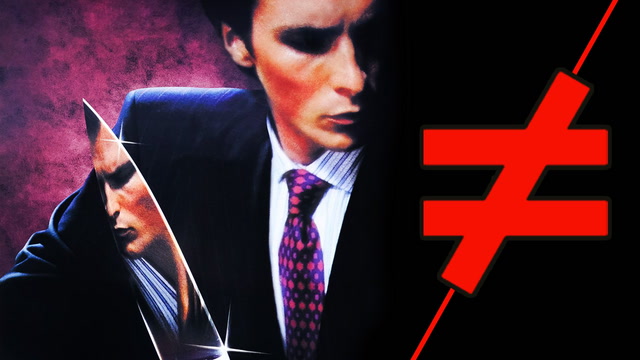
5b38alyz-640

This month’s What’s the Difference? from Cinefix tackles the disturbing book and the amazing movie, American Pyscho.

I can’t remember the exact reason, but after hearing about the novel American Pyscho I decided I should read it. To the library! Where they didn’t have it. To the bookshop! Where they didn’t stock it. To the indie bookshop! Where I was able to find one copy being sold in shrinkwrap.

There’s a point to be made here about the value of indie bookstores. And having all the sick and twisted novels available for sale probably isn’t the point I intended.

And this is a sick and twisted novel. There are some scenes in there that would make a horror fan blanche – break free little rat, break free! The “satire” of the novel doesn’t feel like satire, it feels like gratuitous sadism that is there as an extreme juxtaposition to banality in a lazily made point about yuppies.

Which is why I regard the movie as far superior. It manages to skim through and grab the major elements of the book and put them on screen without becoming horror porn for vore fans – don’t look up that word, you don’t want to know. Ellis may not be a fan of the movie – because it is hard to tell if Bateman got away with it or imagined it – but his complaints are far too typical of the precious artists I’ve commented on in this series many times.

The irony is that many people would say that the movie is still ultra-violent. In which case, don’t read the book. Don’t do it. Or keep some lye on hand.

Update: Wisecrack did a great breakdown of some key differences between the book and film:

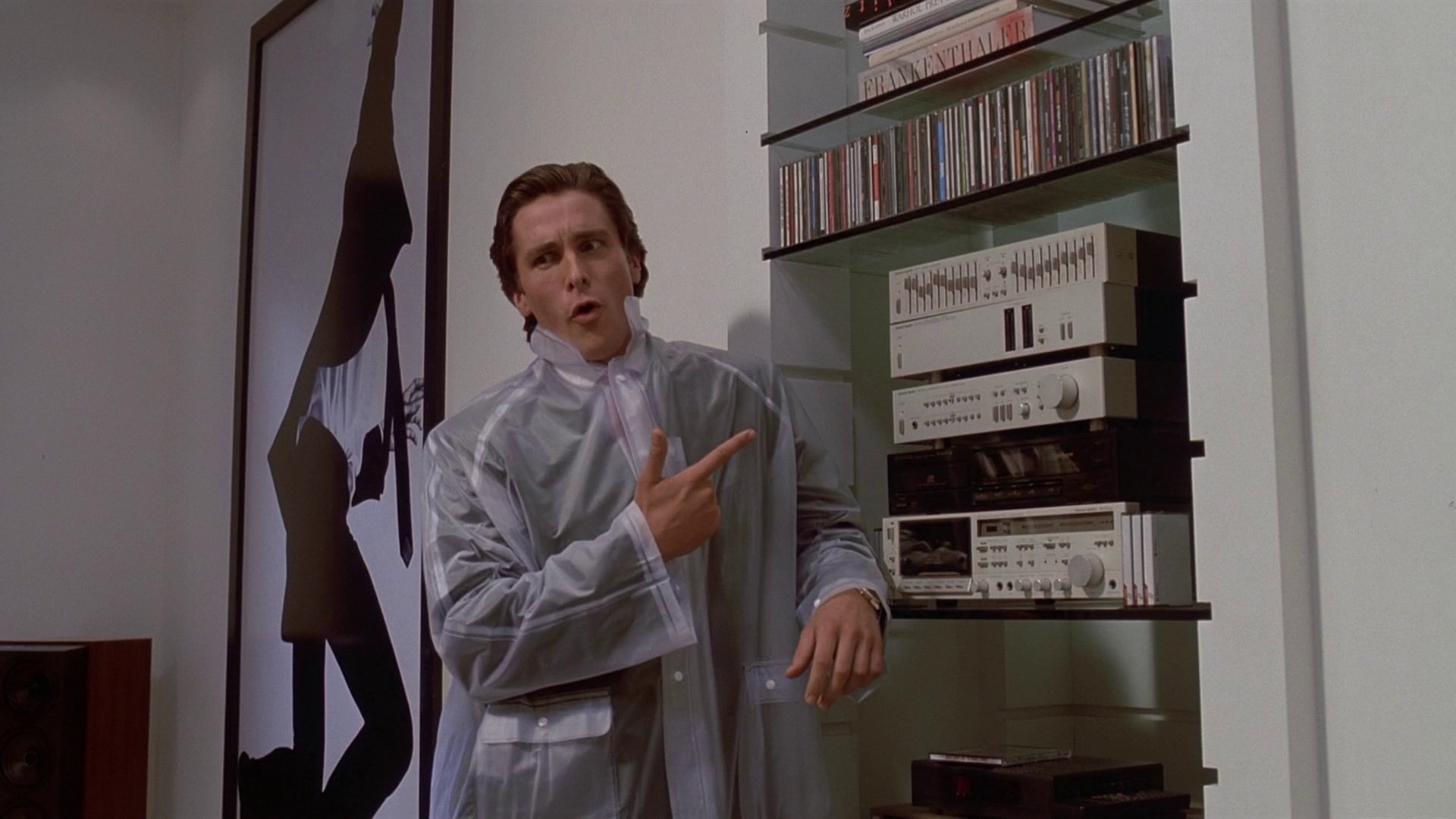
christian-bale-american-psycho-plastic-jacket-cover-up-picture
Do you like Huey Lewis and the News?

We don’t know the world

A few years ago I saw a fantastic talk from Hans Rosling about the world and statistics. Okay, I probably lost a few people by implying statistics are fantastic, and now I’ll lose some more by saying statistics ARE fantastic. Unfortunately, Hans is no longer with us, but his son and daughter-in-law – Ola and Anna – are continuing his work with Gap Minder.

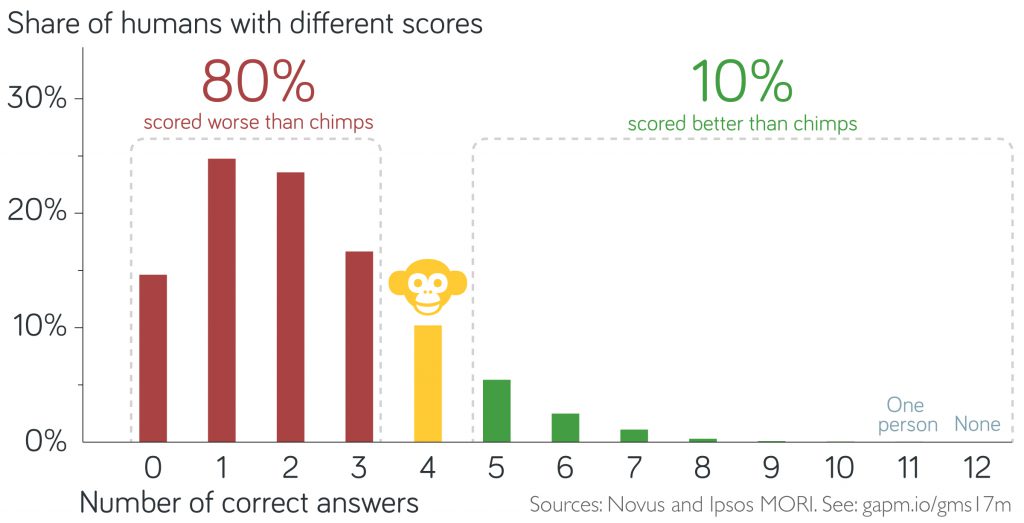
Recently they released the results of their 2017 survey of world knowledge. After looking at the results they decided to call it the Misconception Study.* You’ll see why.

That’s right, less than chance. People really don’t know that much about the world.

gms_2017inpage-1024x523

Do you think you could do better? Well, find out! Take the 2018 quiz here. Of course, this is the part where I say that I passed the test. Humble-brag. But in fairness, as I’ve already mentioned, I’ve been following Gap Minder and I like statistics.

Could you pass the test?

*They probably called it that prior, but I’m making a point here, dammit!

When is the future?

I came across a very cool article about when the future is for science fiction. The question is interesting because we often think of THE FUTURE as being a long way away, but as the saying goes, some infinities are larger than others.

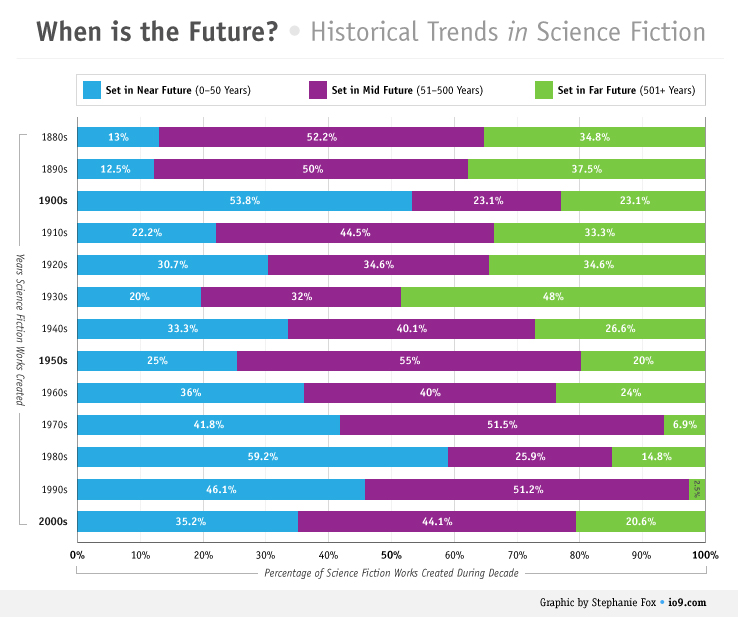
In response to a Tweet, iO9 and researchers Ben Vrignon and Gordon Jackson decided to look at the proportions of science fiction set in the near-future (0-50 years), mid-future (51-500 years) and far-future (+501 years). They took a random sample of 250 science fiction works (books, comics, movies, and TV) created between 1880 and 2010 that were available in the USA in English. Because only the USA matters. Eye rolls are appropriate here.

The results are interesting and broken into decades:

17n10jse1jq77jpg

As you can see, some periods of time emphasise some futures more than others, whilst other periods are more equally spread. The most notable of these is the shrinking of far-future science fiction from the 1970s until the late 1990s. It could be argued that the lack of far-future sci-fi in the 1990s could have been due to the rapid rise of technological change in society, such that everyone viewed the future as being just around the corner. Then after that time, we start to realise the technology just gave us cat memes and we still had a long way to go.

In the original article, they suggest that the changes were due to uncertainty about the future post-2001.

It’s possible that during periods of extreme uncertainty about the future, as the 00s were in the wake of massive economic upheavals and 9/11, creators and audiences turn their eyes to the far future as a balm.

Now it would be remiss of me to draw too many conclusions from this, nor try to offer explanations for any “trends”. We are talking about a dataset that only covers an average of 2 works per year. Two is hardly enough to be representative of any year, and 20 works is at best a smattering of any given decade. E.g. Futurama could be the only representative of far-future sci-fi in the 1990s yet Asimov’s Foundation Series was still going (he wrote his final novel for the series in 1993), the Xeelee Sequence had just started, as had the Hyperion series. Clearly, there were many works not being counted.

It would be interesting to see someone add more data to this analysis and do some breakdowns by media type. Make it so.

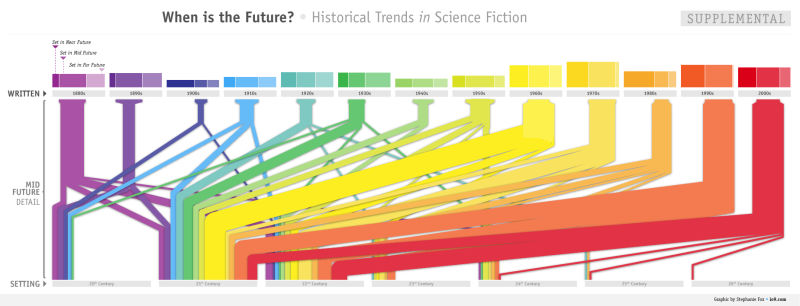
Supplemental Materials: More Detail on Middle Future Dates

One of the interesting discoveries we made was that the mid-future (51-500 years in the future) seems to be the most popular period for science fiction, across the last 130 years. So Stephanie created this chart breaking out our data on mid-future SF so you can get a sense of which periods are most popular — you can see that the 100-200 year future is common.

17n10jyb3rfjzjpg

How literate are we?

An argument that is often raised among the head shaking admonishment brigade, is that there is a woeful level of literacy in society. The argument usually points to comments on social media as examples of falling literacy, or to emoji laden messages, or is writ large in speciously reasoned blog posts like this one.

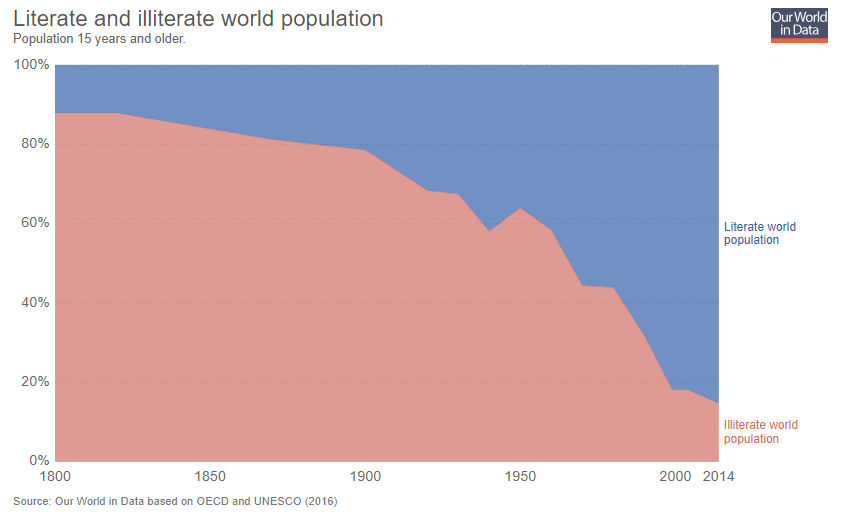
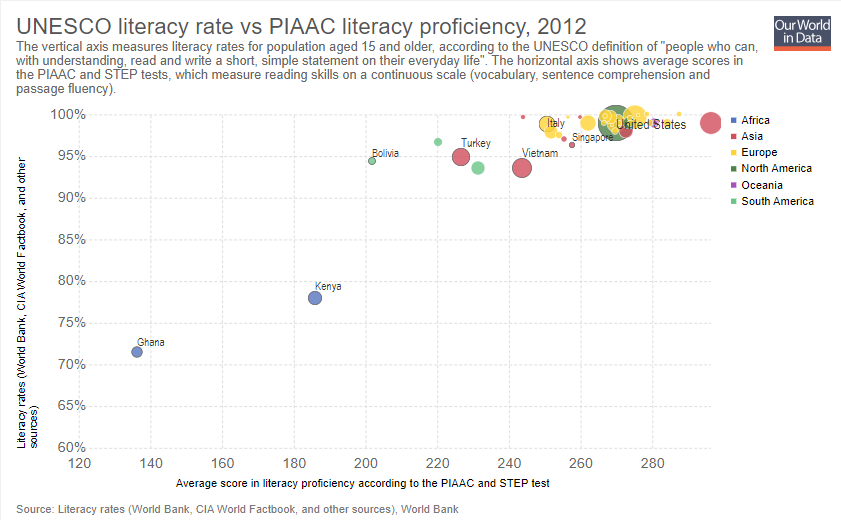
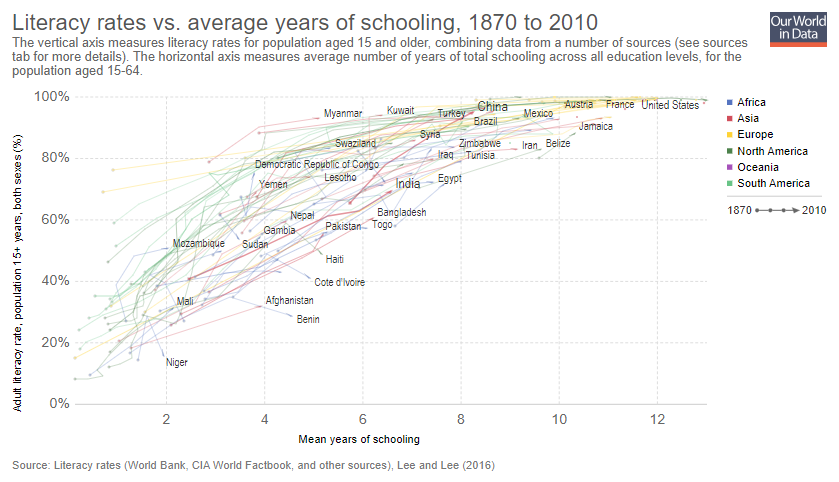
The reality is held within these charts:

Literate

Literacy scoreLiteracy rates by school year

Yes, as you can see, for over 200 years the world’s literacy rate has been improving. If you go to the source article at Our World In Data you will be able to highlight the 1870-2010 trends. This shows that even quite well-educated nations have improved their literacy rates.

So what exactly are people complaining about? Well, let’s take some of the examples that are often proffered.

I recently reread a number of pulp novels from the sixties and seventies (with an occasional eighties and nineties thrown in for fun) – not literary fiction by any means, just thrillers the likes of which I grew up reading. What immediately struck me is how erudite the books were compared to modern fare. They were written at a much higher grade level than current popular fiction, because, bluntly, the average person was more literate, and the assumption was that folks wanted a little intellectual stimulation with their car chases and explosions – that words with more than a couple of syllables could be salted through a tome without fearing a slew of one star reviews written in Pidgin English bemoaning that the author was trying too hard or must have once seen a thesaurus. Source.

This is, of course, a personal opinion expressed by the blogger rather than hard data. You only have to look at the above charts to see that the average person they are referring to is actually more likely to be literate now than in the 1960’s. I think the blogger has leapt to the assertion that people are less literate now as an explanation for a style change that has occurred. Or just wants to whine about kids these days. Because what blogger doesn’t want to do that?

Now, why would a style change occur in the last 30 (or more*) years? Interestingly, some research suggested that the way we write changes the style of our writing. With the rise of word processors and computers, writers measurably changed their styles.

But has anything else has changed in that time period that could have impacted writing styles? I’m not sure if these are familiar to people or not, but television, gaming, internet, media, are all more popular now than they were 30 years ago. I.e. books now have to compete with more entertainment than ever. So stylistic changes will occur to capture and keep an audience’s attention, lest it strays from the latest literary masterpiece about a dog caring for its cat with terminal cancer to a YouTube video about how white nationalism is okay now for some reason (because of post-modern cultural marxism apparently).

Has reading and writing (literacy) actually changed much, though? It is one thing to say that people have passed the minimum standard level, but it is quite another thing to suggest high levels of literacy are being achieved by more/less people.

Studies on this were actually hard to come by. Yet there is certainly concern about reading and writing proficiency for high-school and university level students:

Three-quarters of both 12th and 8th graders lack proficiency in writing, according to the most recent National Assessment of Educational Progress. And 40 percent of those who took the ACT writing exam in the high school class of 2016 lacked the reading and writing skills necessary to complete successfully a college-level English composition class, according to the company’s data.

Poor writing is nothing new, nor is concern about it. More than half of first-year students at Harvard failed an entrance exam in writing — in 1874. Source.

Given the last sentence in that quote, it is probably more accurate to say that the standards are changing. We now expect more of our literacy because more people are schooled and meeting basic literacy standards. For example, in the USA Master’s degrees are now as common as Bachelor’s degrees were in the 1960’s. People are expecting more of education and setting different standards than were held previously.

As an article on The Conversation concluded on this topic:

In 1997 academic Paul Brock gave an enlightening address to educators in which he carefully recounted the ways each generation has bemoaned the falling literacy standards of the younger generation whilst laying the blame at the feet of modern educational methods.

Apparently, we’ve been doing this since literacy first became a thing back with the Sumerians some 5,000 years ago.

The problem is not that literacy standards are falling, it is that literacy demands are changing – and we are not keeping up.

Schools have their role to play, and they can up their game in order to keep up with the times. But employers must also realise that workplace literacy is their core work, not a supplementary remedial program, and plan their businesses accordingly. Source.

In other words, declining literacy standards are a perennial myth that people love to complain about. Styles have changed. Literacy demands have changed. But that doesn’t mean things are going backwards. Much like kids these days arguments, we can expect to see these same points raised again and again with no evidence to support their claims. Because if there is one thing that never gets old, it is complaining about how things are different now than the good old days.

*The blogger’s larger post talks about a change occurring in the more recent 20-30 year period, despite referencing books from the 1960-70’s. You’ll also notice more links to evidence in my post… just saying.


Writer Advice: Alcoholism

ice-tea
Ice Tea or Whisky? Your friends won’t know either, and after the first four, you won’t notice the lemon ruining the flavour.

Tip #1: Ice Tea looks just like whisky.

Do you need to hide just how much you are drinking from friends and family but can’t bring yourself to drink gin or vodka? Then “Ice Tea” might be your new preferred drink.

Tip #2: As long as you drink wine from a glass people will assume you are a connoisseur.

Wine is regarded as a classy drink, so as long as you drink it in a classy way, few will notice that some glasses can fit an entire bottle in them.

Tip #3: Don’t use crystal decanters.

Crystal decanters may look classy but they are expensive and are slowly giving you lead poisoning. Instead, just rub the label off of one of your bottles. A cheap and easy solution that won’t be poisoning you.

Tip #4: Wine and Whisky Clubs are your friends.

Even if no-one else loves you, subscription wine and whisky clubs love sending you a new supply of alcohol direct to your house. There is no longer a need to be reminded just how much you hate the rest of the world by having to venture out to the liquor store when home delivery is now a reality.

Tip #5: These lists always need to be five or ten items long.

Seriously, have you ever noticed that? Never four or seven, always five or ten. Sometimes if people are feeling keen, or have an auto-amalgamating post generator, they will stretch to twenty or thirty. Magazines used to do fifty and one hundred lists. Remember that? Of course, no one really cared to read the whole list. Usually, you’d just scan through for things that would catch your attention and then make note of the number one spot. And then write a comment arguing how the list was rubbish.

Banned books

Recently in Australia, there was a lot of moralising outrage about books being banned in school libraries. Was this Political Correctness Gone Mad?

No. No, it wasn’t.

Yes, that’s right, the moral outrage brigade hadn’t even bothered to check any details. That shouldn’t be particularly surprising to anyone who, you know, thinks, but what I did find interesting is the sort of hyperbole used on this issue that never seems to make it to the actual censorship that exits.

I’ve previously discussed the Banned Books Week, an awareness-raising campaign in the USA. Since the USA is a big and influential book market, there are flow-on effects of books being challenged and banned there – although the Streisand Effect can apply here and be a net positive, just ask Dan Brown. Australia also has a censorship board and historical lists of previously banned books have been made public.

When you read through the lists of books that were previously banned in Australia but are now available, you can see how we aren’t/weren’t allowed to talk about sex. We also don’t talk about Aboriginal history. Not talking about sex is still a common theme in today’s Australian censorship standards:

Publications will be refused classification (RC) that:

  1. describe, depict, express or otherwise deal with matters of sex, drug misuse or addiction, crime, cruelty, violence or revolting or abhorrent phenomena in such a way that they offend against the standards of morality, decency and propriety generally accepted by reasonable adults to the extent that they should not be classified; or
  2. describe or depict in a way that is likely to cause offence to a reasonable adult, a person who is, or appears to be, a child under 18 (whether the person is engaged in sexual activity or not); or
  3. promote, incite or instruct in matters of crime or violence

Publications (except RC publications) will be classified as Category 2 Restricted that:

  1. explicitly depict sexual or sexually related activity between consenting adults in a way that is likely to cause offence to a reasonable adult; or
  2. depict, describe or express revolting or abhorrent phenomena in a way that is likely to cause offence to a reasonable adult and are unsuitable for a minor to see or read

Publications (except RC publications and Category 2 restricted publications) will be classified as Category 1 Restricted that:

  1. explicitly depict nudity, or describe or impliedly depict sexual or sexually related activity between consenting adults, in a way that is likely to cause offence to a reasonable adult; or
  2. describe or express in detail violence or sexual activity between consenting adults in a way that is likely to cause offence to a reasonable adult; or
  3. are unsuitable for a minor to see or read. Source.

Now obviously the classifications could be very broadly interpreted and implemented. Plenty of books have themes around drug use and abuse, crime is an entire genre, cruelty is in any political memoir, and violence could be retitled thriller. We don’t tend to see those titles banned or restricted. So what does get restricted? As an example, American Psycho has a Category 1 restriction on it and is sold in shrink-wrapping… you know, just in case the words leak out and accidentally encourage someone to take up cannibalism or investment banking.

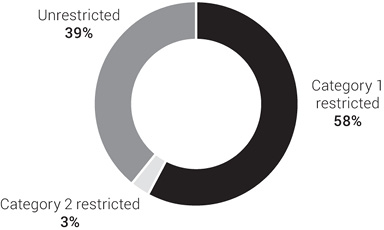
The number of books impacted by an RC classification is minimal. The 2016-17 figures show none were banned, as compared to video games which had 2 titles banned.

2017-figure01
Publications Classified in 2016-17. Source.

But it does show that a large number of titles were restricted in some way. This is without even touching on the censorship that occurs in access to titles, such as which titles are stocked in stores, which sites can be accessed to buy books, and what ends up in libraries. The restricted categorisation is clearly going to have impacts on where those titles will be available. So I wonder where the moral outrage is over this. Isn’t this Political Correctness Gone Mad? Or is it okay because the people who got outraged in the above video would be the “reasonable adults” who would be offended by these restricted titles?

Or maybe this would all require too much reading on behalf of those wanting to complain about books being banned.


Book vs Movie: When the Book Is Better

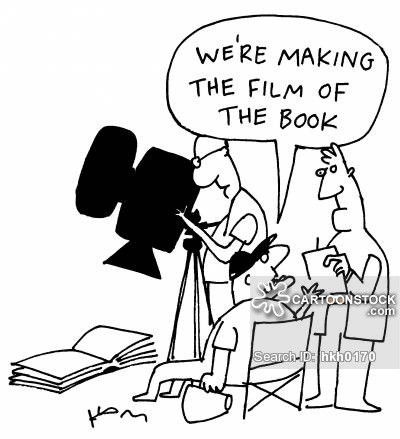
'We are making a film of the book.'

PBS Digital Studios have a new video series It’s Lit! which is part of The Great American Read, an eight-part series that explores and celebrates the power of reading. Featuring one of the premiere video essayists in Lindsay Ellis, this series should be brilliant.

The first video briefly discusses a topic I’ve frequently discussed here, what makes a good adaptation and why the book is so often regarded as better.

Lindsay has very concisely summarised why movies so often don’t make for good or faithful adaptations of the source material. But she also touches on why they can sometimes improve the book, or make an adaptation that uses the source material in an interesting way to tell a different story.

If you aren’t already subscribed to Lindsay or PBS Digital Studios, you may want to do so now.

Reading is awesome even when you don’t do it…

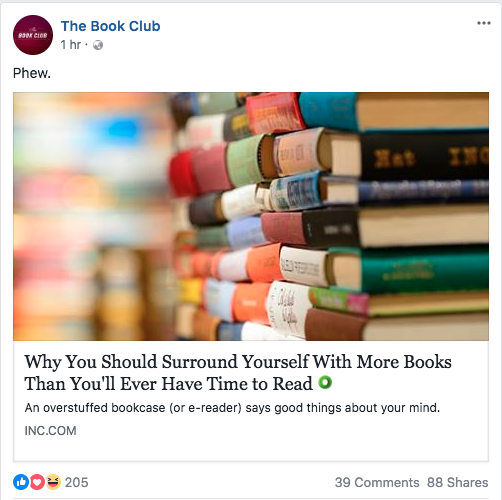
Scrolling through my feed I came across this little gem:

Screen Shot 2018-05-07 at 8.29.58 am

How could I not click on this article? I have several years supplies of paper books on my shelf to read, and even more on my e-reader. Justifying this state of affairs is clearly something I need.

Pity the article is rubbish.

The first hint that this story is nonsense is how they start by commending readers as smart – softening everyone up a bit. They list a few famous people who read and say you too can be just like them if you read. Somehow reading = lifelong learning, so you’ll be happier, earn more, stay healthier, and become president – I’m tempted to dive into those claims for a fact check, but one piece at a time. I’m willing to accept the claim that reading = lifelong learning… for now.

Lifelong learning will help you be happier, earn more, and even stay healthier, experts say. Plus, plenty of the smartest names in business, from Bill Gates to Elon Musk, insist that the best way to get smarter is to read. So what do you do? You go out and buy books, lots of them.

Then it suddenly announces you don’t have to read.

But if it’s simply that your book reading in no way keeps pace with your book buying, I have good news for you (and for me; I definitely fall into this category): Your overstuffed library isn’t a sign of failure or ignorance, it’s a badge of honor.

Oookaaaayyy. Please explain to me how not reading is just like reading.

That’s the argument author and statistician Nassim Nicholas Taleb makes in his bestseller The Black Swan. Perpetually fascinating blog Brain Pickings dug up and highlighted the section in a particularly lovely post. Taleb kicks off his musings with an anecdote about the legendary library of Italian writer Umberto Eco, which contained a jaw-dropping 30,000 volumes.

Did Eco actually read all those books? Of course not, but that wasn’t the point of surrounding himself with so much potential but as-yet-unrealized knowledge. By providing a constant reminder of all the things he didn’t know, Eco’s library kept him intellectually hungry and perpetually curious. An ever-growing collection of books you haven’t yet read can do the same for you, Taleb writes.

An antilibrary is a powerful reminder of your limitations — the vast quantity of things you don’t know, half-know, or will one day realize you’re wrong about. By living with that reminder daily you can nudge yourself toward the kind of intellectual humility that improves decision-making and drives learning.

This is what is commonly referred to as a non-sequitur, or a bullshit argument. Nassim Taleb is notorious for these sorts of nonsense arguments. That and blocking people on Twitter* for not agreeing with him and praising the ground he deadlifts upon.

It is hard to decide where to start with this. The irony of suggesting you need to surround yourself with knowledge in an article on the internet is amazing. Even if we take it, as Taleb implies, as requiring a physical reminder, we already have libraries, bookshops, universities, experts, friends, enemies, who all exist with knowledge we don’t have. It isn’t about the reminder, it is about awareness.

I’m not sure you can take people seriously when they talk about knowledge in terms of what you don’t know. One list is considerably larger than the other. If I was to provide a resume of what I didn’t know it would run to libraries worth in length. Who would suggest we think in those terms?

“People don’t walk around with anti-résumés telling you what they have not studied or experienced (it’s the job of their competitors to do that), but it would be nice if they did,” Taleb claims.

Of course he would suggest that. I guess I’ll mail Taleb a résumé of the Dewey codes** for the stuff I don’t know to become his deadlift partner.

How do they rationalise this anti-library?

Why? Perhaps because it is a well-known psychological fact that it’s the most incompetent who are the most confident of their abilities and the most intelligent who are full of doubt. (Really. It’s called the Dunning-Kruger effect.) It’s equally well established that the more readily you admit you don’t know things, the faster you learn.

So stop beating yourself up for buying too many books or for having a to-read list that you could never get through in three lifetimes. All those books you haven’t read are indeed a sign of your ignorance. But if you know how ignorant you are, you’re way ahead of the vast majority of other people.

Actually, the Dunning-Kruger Effect is about how people with low cognitive ability are exactly those who lack the ability to realise they are of low cognitive ability so they will rank themselves more highly. High cognitive ability people incorrectly assume others are at their level, so will rank themselves lower (see also Imposter Syndrome). You can see from this explanation of the effect why surrounding yourself with knowledge doesn’t really achieve anything.

It’s about awareness.

You would have to be aware that your knowledge is lacking, not just have a reminder of it. If you are ignorant or arrogant then you won’t benefit from the stacks of books around you. We are already surrounded by knowledge in our society – I mean, we’re on the internet here, you can look up literally anything and potentially get the correct answer… potentially. But this article – and Taleb himself – are proposing a form of arrogance. Surround yourself with books and you’ll be better than the vast majority of people.

I’m not saying you shouldn’t buy heaps of books, I myself already own more than I’ll probably be able to read in a lifetime. But don’t be fooled by these sorts of feel-good pieces that give you a pseudo-justification for doing so. It doesn’t say good things about your mind, nor make you better, it just says you like books and would like the authors to be able to afford to eat this week.

* Seriously, check out his profile or this search to see how often he justifies blocking people. As someone whom he has blocked, I can say that he really hates engaging in discourse. Oh, and the reason I was blocked was that he Tweeted about disease resistance in plants and how it works, except he got it massively wrong. When I pointed this out I was immediately blocked.
**Get it? The joke is that there are more library classification systems than just Dewey Decimal. I’m hilarious!

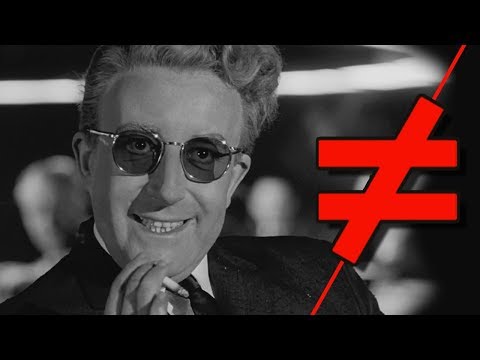
Book vs Movie: Dr Strangelove – What’s the Difference?

dr-strangelove-whats-the-difference-image-5239079

This month’s What’s the Difference? from CineFix delves into one of the few Stanley Kubrick films I’ve enjoyed.

Everyone remembers Dr Strangelove but very few remember Red Alert, the novel that was the basis for Kubrick’s adaptation. Peter George’s book was an early nuclear war thriller and having got there first tended to be copied (or is that emulated?) by many other authors. This was an important point since Kubrick and George decided to sue the production of another movie based upon a nuclear war thriller that was deceptively similar to Red Alert. I’m not exactly sure why this was important as George teamed up with Terry Southern to change the super-cereal novel into a timeless satire.

Did you know that Dr Strangelove was originally going to end with a pie fight? Apparently, the farcical element involved in that was deemed too silly for a poignant satire, despite how metaphorical it was to the destruction of the human race. I guess many would have missed that point. Comedy needs to take itself more seriously if people are to get the point.

I think Dr Strangelove is a great example of a movie being better than the book. The way it does this is by not taking the source material seriously. What would have been another by-the-numbers thriller was elevated by satirising war. Landing not long after the Cuban Missile Crisis, the film managed to capture sentiments of the absurdity of mutually assured destruction and the ineptness of the cabals of military and political elites deciding fates.

Plus, Peter Sellers.