“You can’t pull yourself up by your bootstraps if you have no boots.”
Rutger Bregman’s Utopia for Realists starts with a simple premise: since we are already living in the utopia imagined by previous generations, what’s the utopia we’re aiming for now? We need big ideas to strive toward in order to keep progressing forward.
I have been meaning to read Utopia for Realists for several years now. Prior to the book’s publication, I read the sections Bregman had made available from two of his chapters on Medium. Those were my first introduction to the concept of a Universal Basic Income and how there was some fairly compelling, if limited, evidence for just giving people money to fix just about every problem. Poverty, it seems, isn’t a moral failing or a lack of work ethic, it’s a lack of cash. Since then I have watched several of his interviews and discussions (yes, including the Davos inequality panel) and still managed to gain more insights from his book.
It seems odd to note that we’ve stopped thinking about our future utopia. Outside of Star Trek*, most of our future visions are of dystopias which warn us of our mistakes, but also underline what happens when we stop thinking of a utopia to strive for. We can only see the negative futures, not the potentially great futures.
Bregman spends a lot of Utopia for Realists outlining several of our current societal problems and then introduces some of the evidence for his utopian vision of a Universal Basic Income, lower inequality, and a shorter working week as solutions. These are not new ideas – Mill, Russell, and Keynes have all written on these topics – but they are the utopia that Bregman thinks we need to be aiming for. In outlining the evidence in favour of this vision, he also shows how close we have come on several occasions to implementing some of these reforms and how easy it is for naysayers to win the day.
Utopia for Realists is very well written**, is easy to read, and not particularly long. The only reason I didn’t finish this quickly was that I kept tracking down the extensive references and surrounding literature for further reading. My own fault for being a giant nerd. One of my favourite references was this one on the value created by various professions, which suggests that we are rewarding some who are actively bad for the economy, whilst under-paying those who are good for the economy.
* Although, how much of a utopia is Star Trek, what with the wars, the planet of hats, and Borg collectives? Discussed further here.
** Not sure whether to credit this to Bregman or his translator – Elizabeth Manton.
Tedious job, flexible hours, remuneration package includes invisibility powers, some harassment involved, and if quotas not met world will end in darkness.
Charlie Asher’s world is turned upside down the day he becomes a father. His wife dies, he becomes a grim reaper, his daughter can kill by pointing at things, and he may never get laid again. His new job is confusing – the JDF is in the mail – the forces of darkness are calling to him from the sewers and people are starting to suspect he’s a serial killer. At least the pay is good.
Over the last month, I’ve tried to read several humorous novels, and have only managed to complete two of them. The two I have finished – A Dirty Job and Redshirts – have had similar pros and cons. Both have had a strong premise, were mostly well executed and were reasonably entertaining. But neither were as funny as they thought they were.
Moore’s absurdist writing style is a strength to this novel. But I couldn’t help but feel he didn’t capitalise on that with more humour. And some of the humour that he does inject… Let’s just say that cringy white guy jive-talking or ethnic caricatures probably don’t amuse me as much as they used to.*
I think it was because of this only mildly amusing level of humour that I started nitpicking aspects of the story. The continuous references to ‘beta males’ became tiresome as, aside from being scientifically debunked, it made the author sound like he was posting on Reddit subforums. Another was the use of weapons against the forces of darkness.** Whilst the humour of this was done well, it did trivialise the threat at several points.
So, much like I said in my review of Redshirts, I think A Dirty Job wasted its potential as a comedic novel and was only okay.***
* I’m going to pretend it wasn’t deliberately racist.
** Also, since when does an American not have access to an arsenal of firearms? One handgun? One?
*** I feel as though I’m being a bit too harsh/critical of humorous novels of late. Maybe all the Terry Pratchett I’ve been reading has spoiled regular books for me.
This month’s What’s the Difference? from Cinefix looks at the classic children’s story that became a(nother) Disney movie.
My memory of The Little Mermaid story is what you would call hazy. The Hans Christian Andersen tales, from my recollection of them, were a lot darker and nastier than would generally be acceptable for young children these days.
The movie is much easier for me to recall, as my daughter has recently taken a liking to the tale. Except for the bits with Ursula in them, which are far too scary. Fortunately, I’m usually on hand for hugs during those scenes.
The thing that has struck me the most about The Little Mermaid, and Disney kids films in general, is how much they have progressed in the last 30 years as compared to the 30 years prior. Several of the Disney films released in the 70s and 80s (The Little Mermaid, The Fox and the Hound, The Aristocats, Winnie the Pooh) bear a lot of similarities to earlier films (101 Dalmatians, Lady and the Tramp, Bambi*). The leap that was made after Toy Story is profound, such that newer films are just in a whole other league (Tangled, Frozen, Zootopia).
Almost as big of a leap as children’s book have made since Hans Christian Anderson was writing.
The source material behind Disney’s animated classic, Hans Christian Andersen’s The Little Mermaid, is a surprisingly metal fairy tale. Let’s take a look at all the ways the filmmakers changed the source material, talking crabs and all! It’s time to ask What’s the Difference?
* But not Dumbo. That film has aged badly. There is a lot to cringe at in Dumbo and the film itself climaxes with a very short scene, so it feels a little underdone.
The words you don’t want to hear from someone with superpowers: Because I can.
The Boys series by Garth Ennis shows us a world where superheroes are a marketing gimmick for a military-industrial company – Vought America – and these all-powerful beings – such as The Homelander – have to be kept from overindulging in hedonism, vice, and collateral damage. But there is more at stake, as Vought scheme and The Homelander plots.
It was interesting to revisit this series 7 years later as the TV series is set to commence. I remember enjoying the series for its interesting take on superheroes. Much like Irredeemable and Incorruptible, The Boys tries to imagine a more realistic scenario for how people with superpowers would behave. This gives Ennis a chance to pour in his trademark nudity, sex, violence, and toilet humour.
But underneath that facade is a much more interesting story. The Boys team are comprised of trauma victims who (mostly) have interesting story arcs. The superheroes are portrayed in a way that feels much truer to life; especially if you take them as a stand-in for actors, models, rich socialites or the like and the shady stuff we know they get up to. The political and business machinations throughout stands as a cautionary tale. And the series is pretty much one big swipe at the military-industrial complex.
I think I appreciated the depth of this series more on the second read. The Boys is worth reading, especially if you’ve seen other Ennis comics and ever wondered what he really thinks of superheroes.
A quick comment on the TV show: I’m hoping the series is good. From the trailer, it appears they’ll be doing some things a bit differently to the comics, notably The Homelander’s personality and the more prominent corporate criticism. Karl Urban, Antony Starr*, and Elizabeth Shue are great actors, so just their presence should make it worthwhile.
* Antony was the lead in the criminally underappreciated Banshee. If you haven’t watched that series, do so.
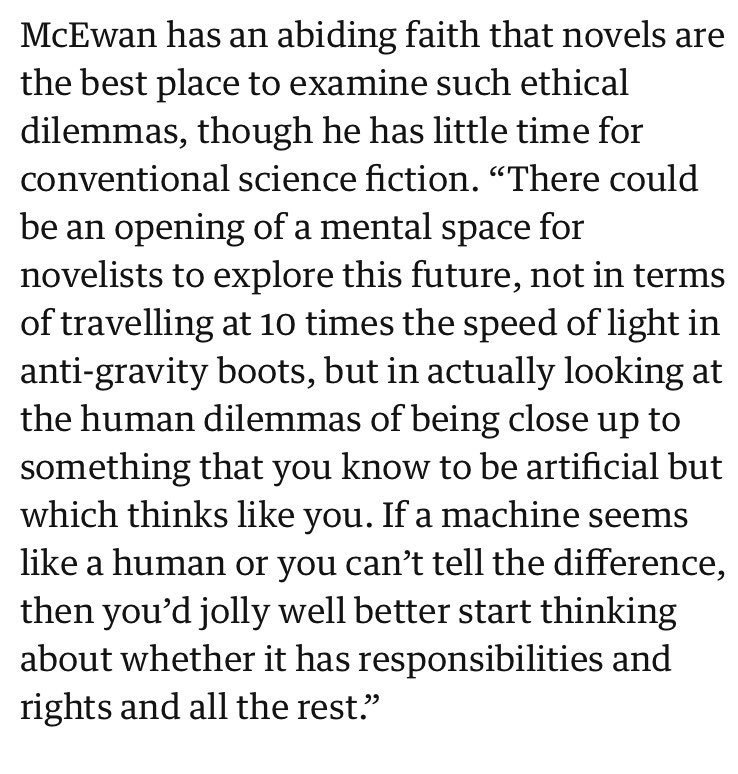
I’ve previously written about how some literary authors don’t really understand nor respect genre fiction. Of course, that doesn’t appear to give them pause before sitting down with their quill and parchment – literary authors exclusively use olde timey equipment: true fact – to knock out a genre novel. Their attempts at writing genre tend to reflect this disdain and ignorance of the form, and they end up doing a poor job of writing it.
Well, at least we know he’s treading on well-worn paths and reinventing all the tropes he’s painfully unaware of with his latest novel. But good on him for flying the ignorance flag so high so we don’t waste our time as readers.
It gets better. I received the monthly recommended review books from Penguin and saw McEwan’s new novel, Machines Like Me, on the list. This was the publisher’s blurb:
Our foremost storyteller returns with an audacious new novel, Machines Like Me.
Britain has lost the Falklands war, Margaret Thatcher battles Tony Benn for power and Alan Turing achieves a breakthrough in artificial intelligence. In a world not quite like this one, two lovers will be tested beyond their understanding.
Machines Like Me occurs in an alternative 1980s London. Charlie, drifting through life and dodging full-time employment, is in love with Miranda, a bright student who lives with a terrible secret. When Charlie comes into money, he buys Adam, one of the first batch of synthetic humans. With Miranda’s assistance, he co-designs Adam’s personality. This near-perfect human is beautiful, strong and clever – a love triangle soon forms. These three beings will confront a profound moral dilemma. Ian McEwan’s subversive and entertaining new novel poses fundamental questions: what makes us human? Our outward deeds or our inner lives? Could a machine understand the human heart? This provocative and thrilling tale warns of the power to invent things beyond our control. Source.
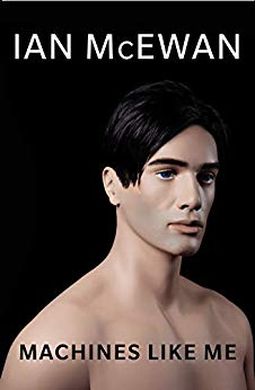
Yes, it even has a love triangle. This is certainly not a bog-standard sci-fi novel at all. No sir. This explores big ideas… This is the cover art…
Looks very professional. Not a first attempt at self-publishing nor creepy at all.
There are several potential explanations here:
McEwan is one of the arrogant literati who would never stoop to reading such crass material as genre fiction. Of course, when they write it, it is very important literature that you should absolutely buy and praise them for writing it.
McEwan is painfully ignorant to the point that someone really should have taken him aside during the (above quoted) interview and shown him the Wikipedia page for Science Fiction on the magical communication box they carry in their pocket.
McEwan is hoping that his comments will stir controversy that will help sell more copies of his books.
Now I am a bit late to the internet pile-on that inevitably results from modern faux pas as it is reactionary and lowers the quality of discourse. Definitely not because I got distracted on other things. Anyway, the reason why I have come back to this incident is that it ties into a thread I have been commenting on for several years now: Literary snobbery, or the Worthiness argument.
But the most interesting argument I have seen defining the difference between literature and genre fiction was around the class divide. The snobbery was literally built into the divide because genre stories were published in cheaper books for the workers and the more literary stories were published in fancier books for the new middle class.*
So it is quite possible that the reason why we have comments like McEwan’s is because they are tapping into 150 years of class snobbery that disallows them from reading or appreciating genre fiction. If they do read some, it will be classed as a guilty pleasure, because they can’t be seen actually acknowledging genre as having substance.
Or it could just be about attention seeking to sell some books.
* The argument doesn’t really discuss what rich people read. I assume that the rich people were too busy counting money to be bothered reading either genre or literature.
“Quotations are useful in periods of ignorance or obscurantist beliefs.”
The Society of the Spectacle is an aphoristic set of polemic essays that examines the “Spectacle,” Debord’s term for the everyday manifestation of capitalist-driven phenomena; advertising, television, film, and celebrity. He argues that we have become alienated from ourselves and reality in order to have us serve the economy/capitalism with the production of commodities and accumulation of wealth.
I first encountered the idea of the Spectacle from Peter Coffin (see below) and his video essays related to what he terms Cultivated Identity. This is a fascinating idea and particularly relevant today in the age of mass media, late-stage capitalism, and the commodified zeitgeist. Look at how much of our society is obsessed with or based upon edifying upward mobility, celebrity, fame, reputation, and positions of power or prestige.
This ultimately means that our media has become the thing that tells us how to think and it is essentially inescapable within our modern society. Thus, the limits of our conversations and thinking have already been defined, which then becomes a feedback loop for the media we consume. Click “Like” if you already agree.
The only drawback of this work was that it is obscurus and jingoistic. Aphorisms might be cool for ancient philosophers, but they don’t make for great enlightenment nor clear communication of ideas. I’ve actually gained more from reading and watching related overviews of The Society of the Spectacle than from Debord’s actual work.
Sometimes you can create characters that are a little bit too realistic.
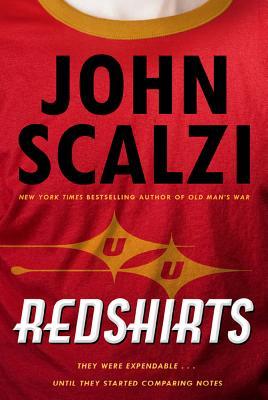
Ensign Andrew Dahl has just been assigned to the Intrepid as a xenobiologist. But from his first day onboard he notices that something is wrong with the rest of the crew. He and his fellow new recruits quickly realise that people on away missions have a nasty habit of dying. Except for a select handful of important crew members that is. They also notice that reality doesn’t make much sense at times when The Narrative takes over. Can Dahl and his friends figure it out before an away mission kills them too?
After reading the first chapter of Redshirts I had to consult with the interwebz to answer a question about this book: Is it worth reading the whole thing? Aside from one notable review that captured several of my concerns, the vast majority of my fellow readers loved Scalzi and this book. So I decided to persist and found myself at the end of Redshirts with the same reservations as I had at the end of the first chapter.
Firstly, this book was good enough to keep me reading. Redshirts has a very strong premise and the story is mostly well executed. The main story – more on the codas in a minute – steams along and is pretty entertaining. It won a Hugo, so clearly it has a lot to offer.
Now, let’s get to the buts.
For what is clearly a comedic novel, Redshirts is nowhere near as funny as it thinks it is. He said. He said. It has a cast of characters that are meant to be shallow and interchangeable, but they are so interchangeable that you wouldn’t know who was talking if you weren’t constantly reminded. He said. He said. The premise may be very strong, but I felt it wasn’t fully realised, which left me frustrated. And then the three codas arrived and shifted away from the previous 25 chapters’ lighthearted tone. All three, but especially 2 and 3, had a much more serious tone and felt like they belonged in a different novel.
So while I mostly enjoyed reading Redshirts, I feel it wasted its premise and wasn’t as well-executed as I’d have liked.
NB: My wife said I had to tell everyone that I’ve spent all day complaining about the ending to Redshirts. She feels it would be disingenuous of me not to mention that and to also give you an idea of how much she is looking forward to me reading something else.
Yeah, I haven’t read it, nor seen the musical nor the musical movie. A title that literally means the miserable and a narrative to match isn’t really my cup of tea. The issues discussed in Les Mis were very real, if romanticised somewhat, and still bear some relevance to the modern day. I discussed one such issue in a previous It’s Lit post.
Maybe I’ll read it one day. Meanwhile, quick overviews will have to suffice.
Victor Hugo’s Les Miserables is one of history’s most famous novels and one of the longest-running musicals in Broadway history. On this special episode of It’s Lit! we explore how Les Miserable became both a national and revolutionary anthem, and so publicly adored that all 1,900 pages never went out of print.
How will we have anyone to look down upon if we all work together to make a better and fairer society?
The “A Very Short Introduction” series explores the topic of Socialism promising exactly what the title suggests. Michael Newman seeks to give an overview of socialism; the good, the bad, the misunderstood, and the misrepresented.
In my continued effort to dig into a few of the current bogeymen of cultural discourse, I went looking for an introductory text on socialism that wouldn’t shy away from the flaws but would also be more honest than most detractors. I think Newman succeeds in this respect. Many discussions of socialism treat it as a monolith – which they ironically still manage to misrepresent – which Newman is able to dispell by discussing some of the many iterations. Socialism also tends to have many ills landed at its door without adequate context – e.g. Stalin’s totalitarianism and Lysenkoism are all treated as completely socialism’s fault whilst under other policial regimes we divorce or distance those issues (people starving under capitalism isn’t capitalisms fault… apparently). Newman discusses examples like Cuba and Sweden with enough context to show how internal and external forces impacted what we regard as socialism.
This was a handy overview of socialism and certainly one that people should be encouraged to read before espousing views on the subject.
Lifetime villains just don’t know the recipe for being good.
Max Damage was at ground zero the day the Plutonian went berserk. But Max knew it was coming, he’s known the Plutonian’s secret since the day he was sent down the path of criminality. Now with his own superpowers, he realises that if the world’s greatest hero has switched sides, he has to become a hero. It was never going to be that simple though.
Incorruptible is the companion series to Mark Waid’s fantastic Irredeemable. When I originally read both series in 2011-12, I thought they were both very comparable, but that I enjoyed Max’s story more. Now upon re-reading, I’ve switched sides.
The story for Incorruptible deals with more of the consequences to the world after Superman/Plutonian turns villain. The redemption of such a despicable and immoral character is much more interesting than good guy turns bad. But where Irredeemable looks at the repercussions on multiple characters, Incorruptible mostly focuses on Max. This would be fine if Max was actually the protagonist. Unfortunately, Max is merely along for the ride, with major plot points and decisions taken away from him by the events in Irredeemable.
So if you are going to read Incorruptible, do so at the same time as Irredeemable.
“Why does everyone treat me like I’m a bomb about to go off?” He shouts unironically.
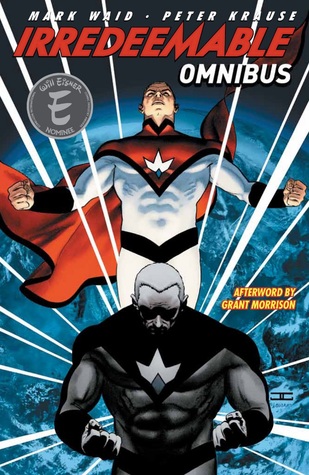
Irredeemable asks the question: What if Superman became evil? We watch the fall of the world’s greatest superhero, the Plutonian, how his friends and fellow superheroes attempt to find a way to stop his rampage while dealing with their own problems of betrayal and hopelessness. And being a superhero comic, there are alternate dimensions, aliens, supervillains, myths become real, and the spirit realm for good measure.
I originally read this and the companion series Incorruptible in 2011-12, toward the end of their run. It was also one of the first comic series I bought in e-format. Originally, I found this take on superheroes to be far more interesting and rewarding than the sort of stories we usually see. The old Spiderman quote, “With great power comes great responsibility”* butts heads with “Absolute power corrupts absolutely” in this story to great effect.
Whenever I think of superheroes, I always think of this series.** Re-reading the series in one sitting made me appreciate more of the story. During my first read through, I thought segments of the series in the run-up to the final arc got bogged down in their own intricacy and lack of relevance to the main story. But this time, I appreciate their inclusion more, even if it did slow the pacing a bit.
If you like superhero stories, then this will probably be a refreshing shot in the arm.
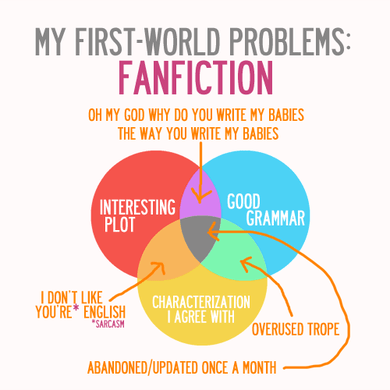
I’ve never understood authors, directors, or other creatives who have a problem with fan fiction (and other derivatives). What is wrong with fans showing their love for something you’ve created by creating something of their own? Sure, it won’t be canon, and they might not get the feel of your work right, but does it really matter?
With that, I give you a fan fiction short from Rocket Jump.*
*Yes, this post is just an excuse to share the above video, even if it is only for the Firefly reference.
With the recent spate of superhero movies, it is easy to forget that not every movie has a superhero in it. Even superhero films aren’t always about someone on steroids (Captain America) or weather presenters (Thor) but are instead about your everyday billionaire playboy (Batman, Ironman, Arrow). So it is easy to forget that feats of superhuman strength are not meant to be the norm in films.
Think about the scenes where the everyday hero is clutching the edge of a building by their fingertips whilst the love interest or bad guy is dangling from their other hand. Of course, the hero never loses their grip on the ledge, but the bad guy may slip from their grasp.
We accept that scene as plausible because we have been brainwashed into thinking that the average person can hold their own body weight with a single hand for extended periods. Double their body weight? They can hold that for the length of a dramatic moment – a period of time that is impossible to measure in real-time since dramatic speeches and slow motion really mess with reality.
The problem is that outside of gymnasts, rock climbers, or people who crush rocks with their bare hands for a living, the Average Joe wouldn’t even be able to hold their own weight for more than a few seconds, especially not if they caught themselves from a fall. Elite grip strength can be measured in a few ways, but the Captains of Crush grippers are one easy way to distinguish strong hands. The #1 requires 64kg (140lbs) of force to close, while the #3 gripper takes 127kg (280lbs) and is regarded as world-class grip strength. Just for shits and giggles, they made a #4 gripper that requires 166kg (365lb) of force to close and has been officially closed by 5 people. Ever.
Watch this world-class rock climber hold just over double his bodyweight with two hands, not one hand, for time as another example:
So let’s just assume that our generic action movie conforms to long-held stereotypes of protagonists. This movie stars an everyday hero who weighs a buff 80kg and his falling love interest is a lithe 55kg, and they totally get naked in the second act for purely artistic reasons. That’s 135kg hanging from the hero’s fingertips, a weight that even a really strong person wouldn’t have the grip strength to support. Two supposedly normal adults, which is certainly very relative in movies, are not going to be hanging onto that ledge for any length of time.
This brings us to the next amazing feat of strength in this scenario: lifting that falling love interest back to safety. For a strong person, the lithe love interest at 55kg isn’t exactly heavy. A buff 80kg hero could probably clean and jerk a dumbbell weighing that much…. assuming they work out, have some chalk on their hands, were able to get some leg drive happening, had decent technique, and that the dumbbell wasn’t particularly unwieldy. But most falling love interests are a tad unwieldy. I’m yet to see any love interests in a movie come equipped with appropriately knurled handles. And when dangling by your fingertips, there isn’t going to be a lot of leg drive happening. Yet without fail, the hero manages to get them both to safety using the power of his mighty biceps – without a single muscle or tendon tear. Well, unless it is one of those tragic character-defining moments, in which case the hero will be in the same situation later and will find the determination to succeed the second time. Sucks to be the first love interest in that scenario.
Interesting to think about just how many amazing feats of strength are passed off as normal in movies.
Update: A few videos that cover how impossible many of these feats are. Kyle Hill goes into some of these with a bit of physics.
Video: How it should have ended, which has a scene talking about how ridiculously strong Batman would have to be to lift someone.
Video: Kyle Hill covering the forces involved in lifting stuff like in the movies.
Video: Kyle Hill covering the forces involved in catching yourself from a fall.
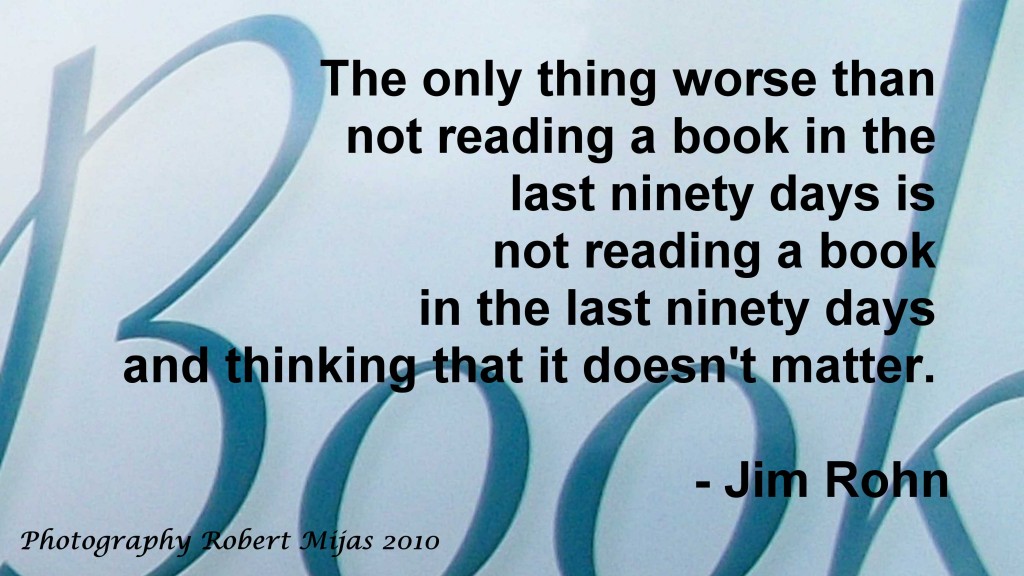
Obviously, I’m preaching to the choir a bit with this one.
But, and this is a big but, how much do you actually read? How much do those reading fans actually read?
If you go by the statistics, which I’ve covered before (US, UK, Australia), you see that even reading fans aren’t actually reading that much. I was reminded of this fact as I looked through a few of the Goodreads Reading Challenges for this year. At one end, you had readers who were going to be downing a book every other day, and at the other end, you had readers who were going to check in with one every other month.
Now, there is nothing wrong with either end of that reading spectrum. But why aren’t we reading more? Not just the general public, us reading fans as well.
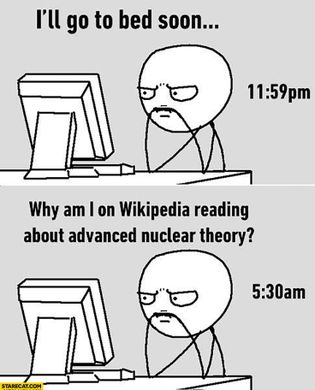
He says on the ultimate distraction tool ever created.
You have to live within your means unless you are a bank, then you get someone else to pick up the tab.
Austerity: The History of a Dangerous Idea is pretty much as the title implies. Mark Blyth lays out the history of austerity economics, the arguments for its use, and then counters those arguments. Job done: let’s have cake.
In general, the deployment of austerity as economic policy has been as effective in bringing us peace, prosperity, and crucially, a sustained reduction of debt, as the Mongol Golden Horde was in furthering the development of Olympic dressage.
I first became aware of Mark Blyth as one of a handful of experts who were explaining the European sovereign debt crisis and why countries like Greece were mad at the austerity measures. He and others were the only ones who managed to accurately cut through the econobabble and victim-blaming. Before then, various people involved in causing the Global Financial Crisis seemed intent on pointing fingers at out-of-control government spending, or nation-states who were riddled with debt and no major industry. This was, of course, a distraction.
As an Aussie, I clearly remember during the Global Financial Crisis our treasurer dusting off his copy of Keynes and stopping us from being on the list of victims of the banks. As much as I quibble with some of the details of that economic stimulus, it worked. So it has puzzled me why so many financial experts seem to want to beat the economy to death in order to save it.
This book offered the explanation. It was eye-opening and expanded upon tackling the concept of austerity for sovereign nations who were forcibly saddled with the debt of multinational banks. For such a highly supported and enacted policy you would have thought there would be some very solid economics underpinning it… Yeah, not so much. As Mark outlines, pretty much every case of its use is purely ideologically driven and has rarely worked. In fact, quite often it has been a disaster.
Well worth a read. Or you could just watch a 5-minute version of the book:
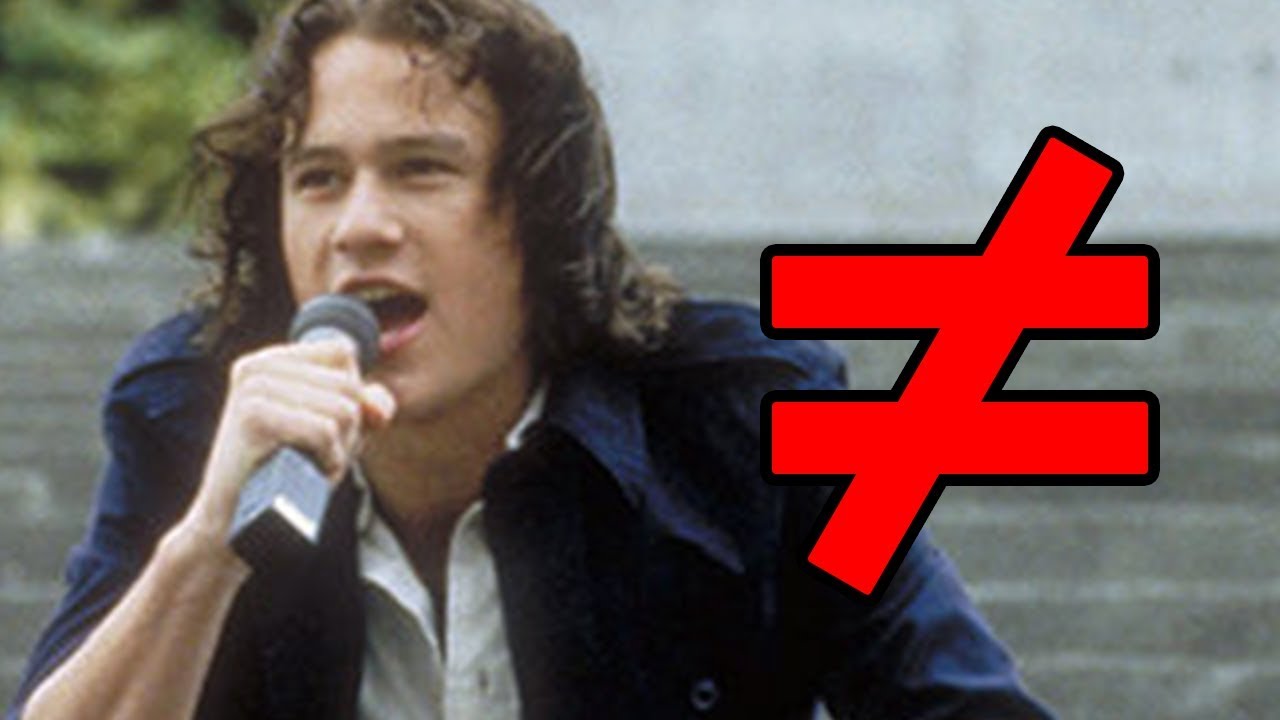
Do you love Shakespeare and 90s teen romantic comedies? If the answer is no… Well, you’ll probably hate this month’s What’s the Difference? from Cinefix on 10 Things I Hate About You. This is probably not the blog post for you. Maybe read one of my other posts.
And who hates Shakespeare anyway?
Is it just because they forced you to read his plays in school?
Because his stuff is worth revisiting.
I have to confess that I’m not a fan of the original Shakespeare play, Taming of the Shrew. For me, it has not dated well. But I am a firm fan of the adaptation, 10 Things I Hate About You.
For me, this is where adaptations shine. A contemporary adaptation of older works can not only offer novel takes on the original story, but they can also cut the dated material. I’m not sure too many contemporary romance stories would appeal to an audience if the women were essentially treated as property.
Another thing I enjoyed about this adaptation was seeing Heath Ledger in his first major film role since seeing him in his first play – Peter Pan – several years earlier. It was exciting to see him make that successful career transition.








 Tyson Adams